Punting Cambridge

Ah, Cambridge.  Two weeks ago, I was there.  This week, I wish I was still there.
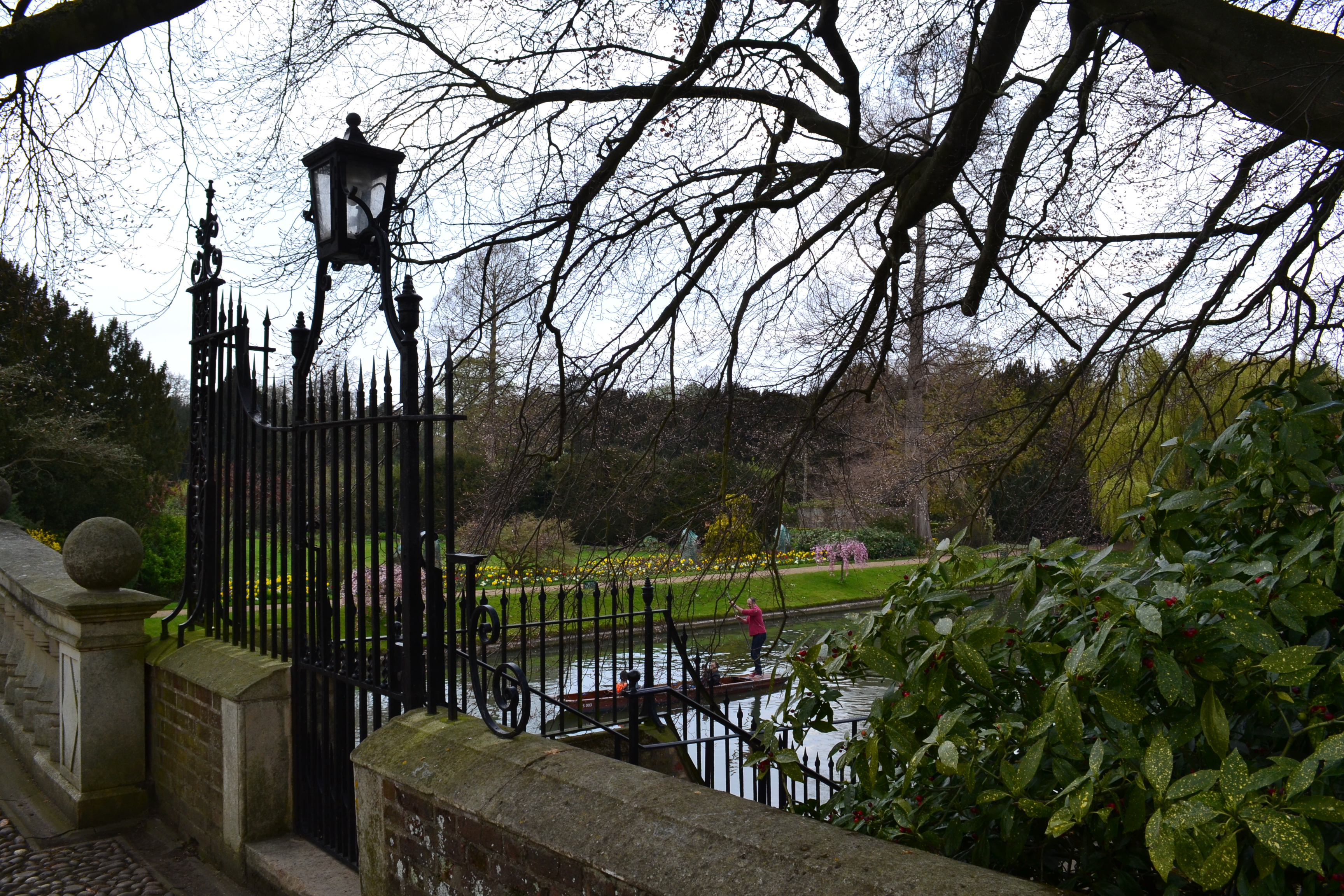
DSC_0184 - Copy

A few days ago, my corner of Germany was a mess. Rain/snow/hail falling in scissor patterns (like the wind was blowing two directions at once), followed by a more languid thunder storm (minus the storm, because at that point the precipitation mostly left and only the thunder came swaggering through).  It was absolutely infuriating weather to have at the end of April. . . and with the pollen full out and everyone’s eyes swollen to the size of grapefruits.  Mother Nature is beating us senseless here!

So I’m meditating this week to keep my wits about me.  I’m closing my itchy eyes and thinking back to the bright evening we spent punting on the Cam in Cambridge, when the world was beautiful and spring was a given.
DSC_0219 - Copy
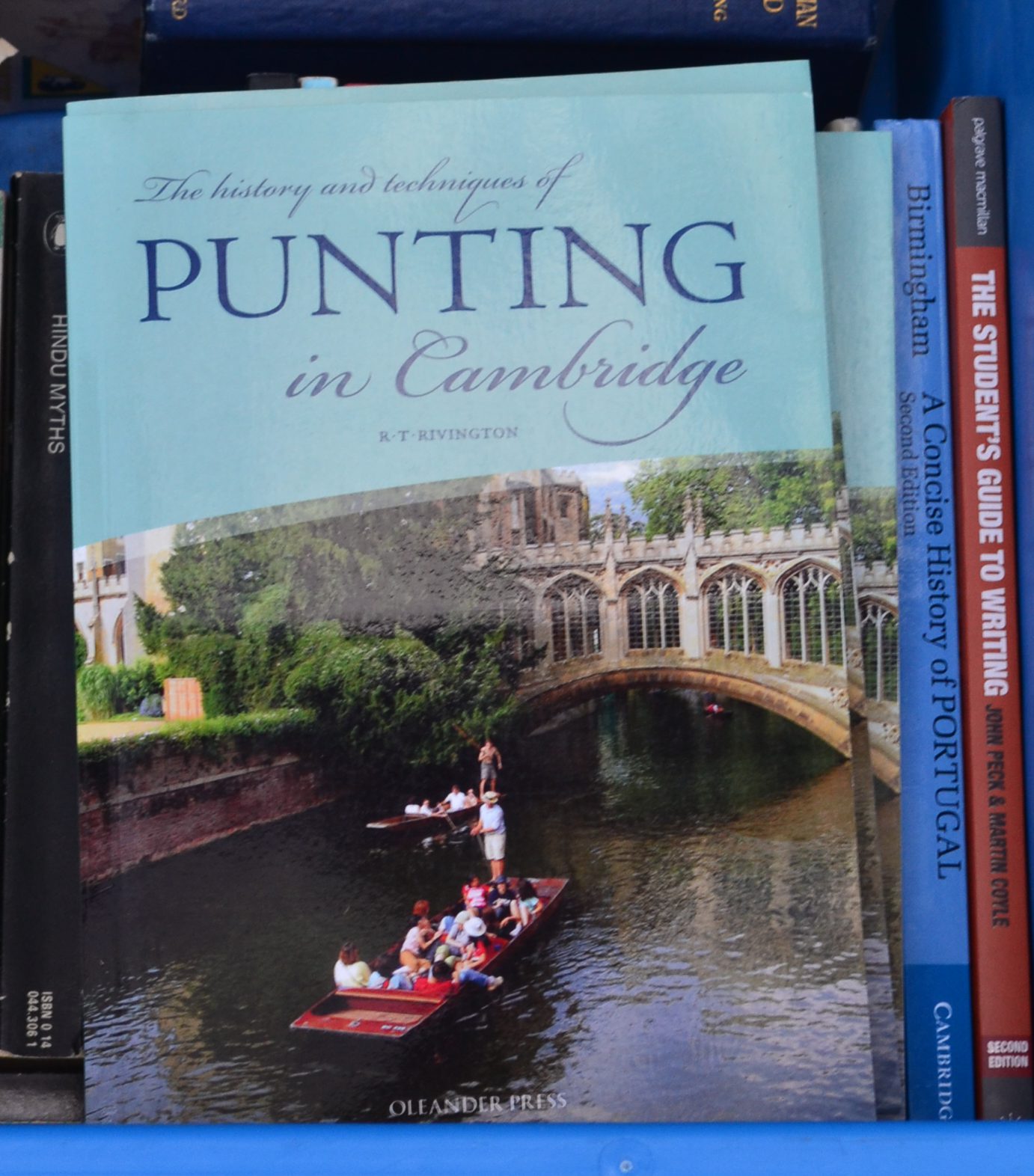
A book in the window of G. David Bookseller, St. Edward’s Passage, Cambridge

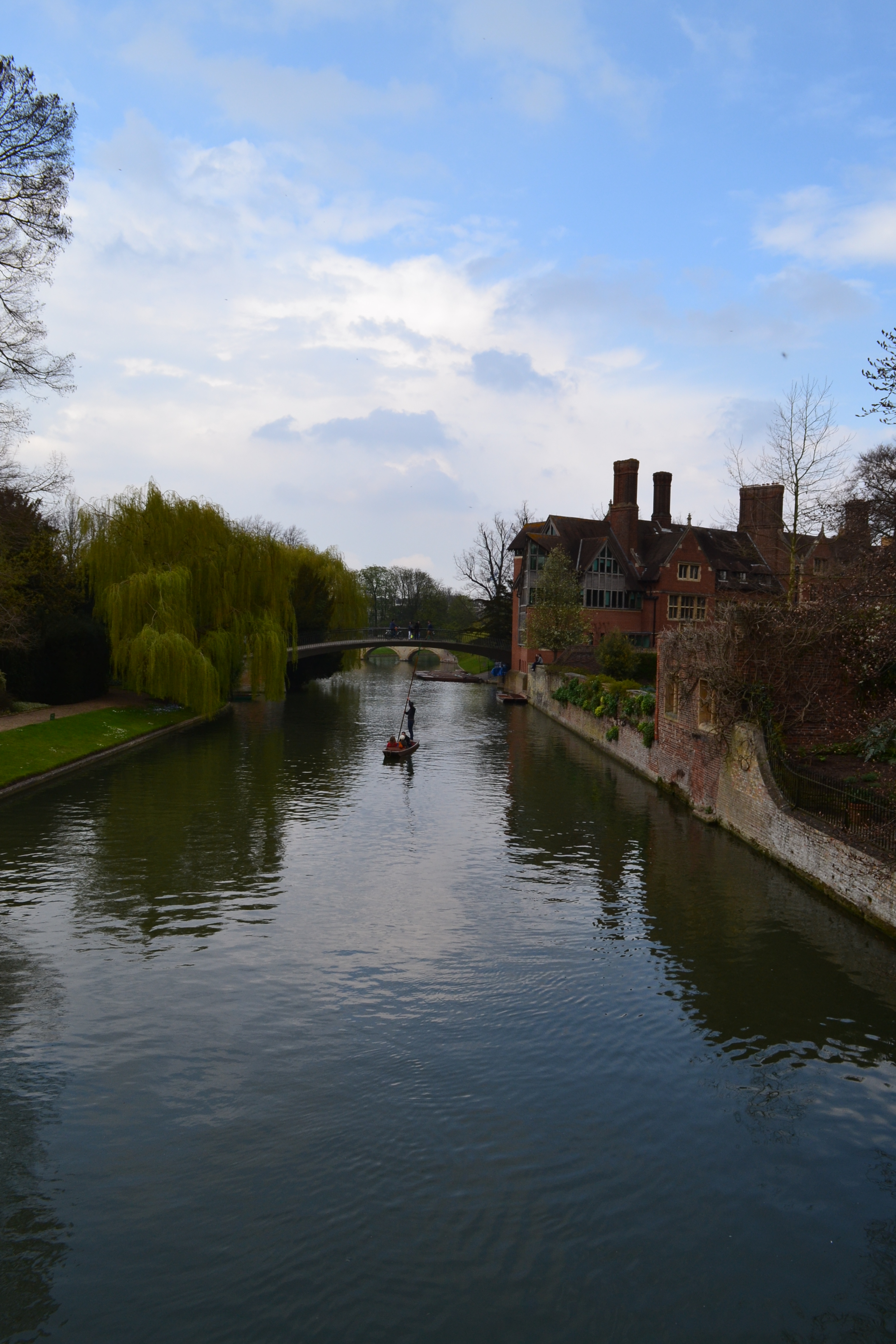
If “punting on the Cam” is a phrase that leaves you scratching your head, not to worry.  It has that effect on many people.  The Cam is the river that runs through Cambridge, and punt boats are traditional flat bottomed (square and stodgy looking) boats.  The “punter” is the unlucky bloke who stands at the back of the boat and both steers and propels the small vessel with a long pole.

It looks easy enough, but I’m told it’s a little tricky and tiring for beginners.  Conventional wisdom in Cambridge: if you live there, take the time to learn to punt and then enjoy self-hire boats at your liesure; if you’re a tourist, pay the boatman and enjoy the ride.  Most of the punting guides will offer their “puntees” a bit of history and Cambridge trivia along with the beautiful ride.
DSC_0190 - Copy
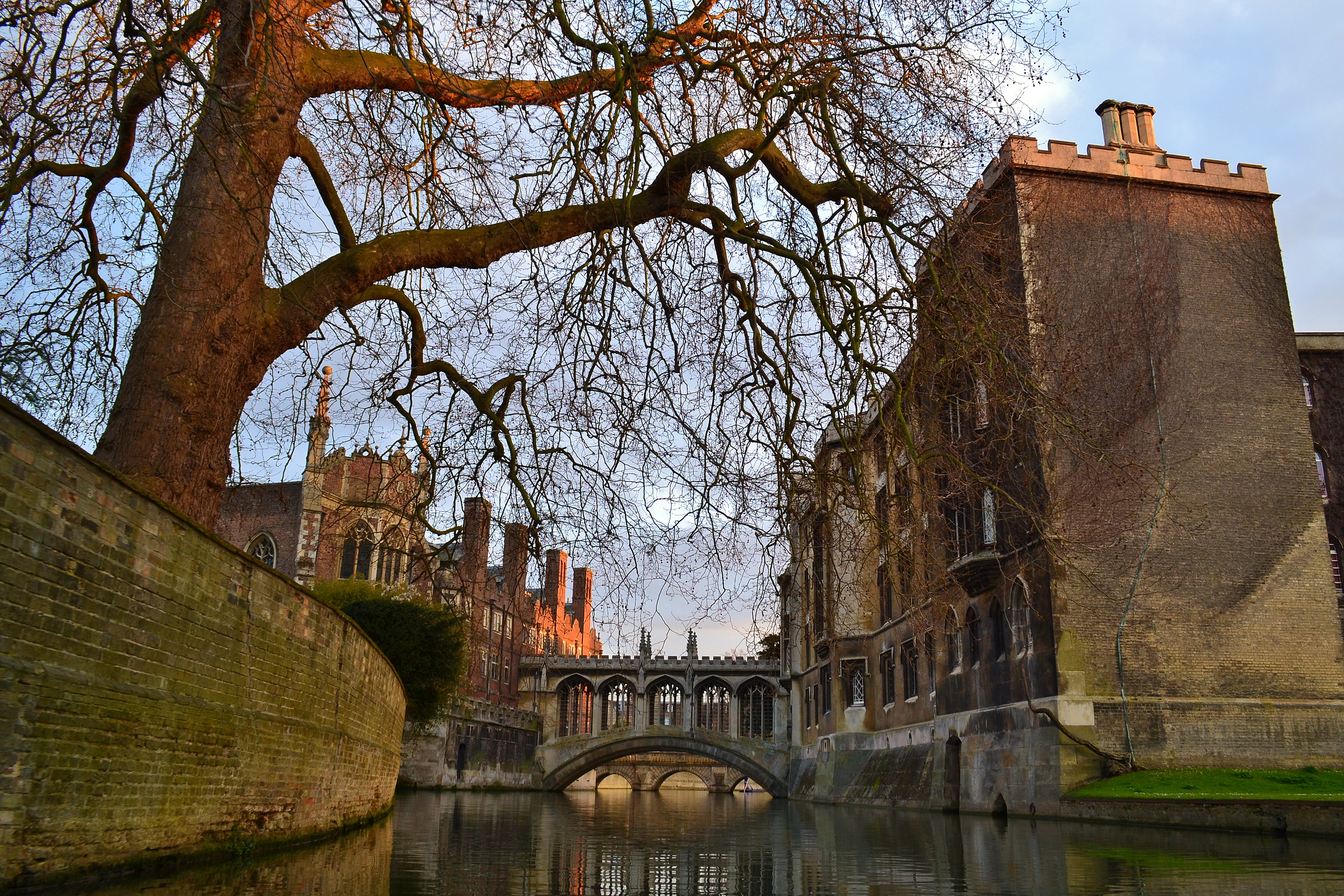
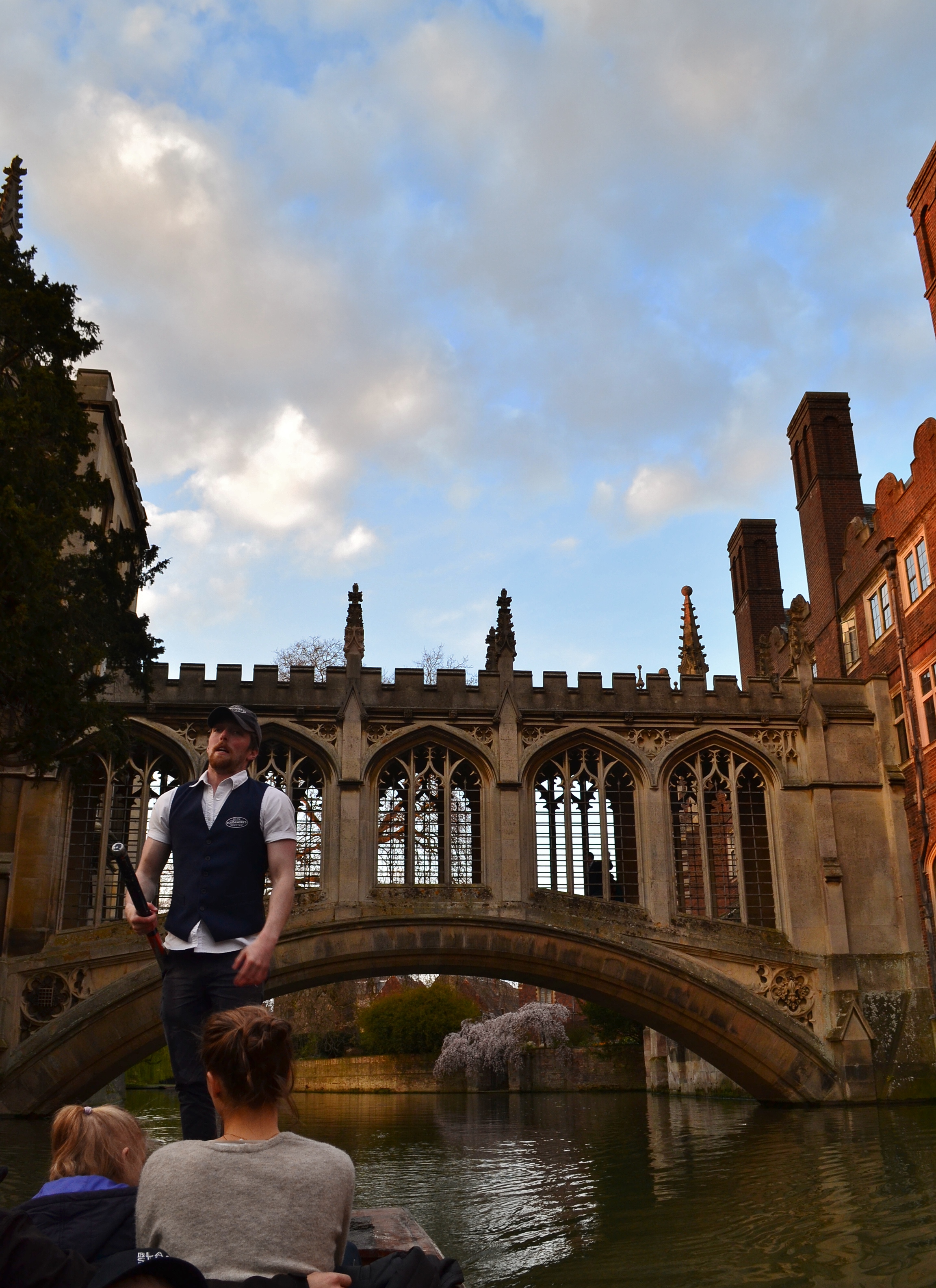
Punting under the Bridge of Sighs at St. Johns College, Cambridge U
DSC_0174
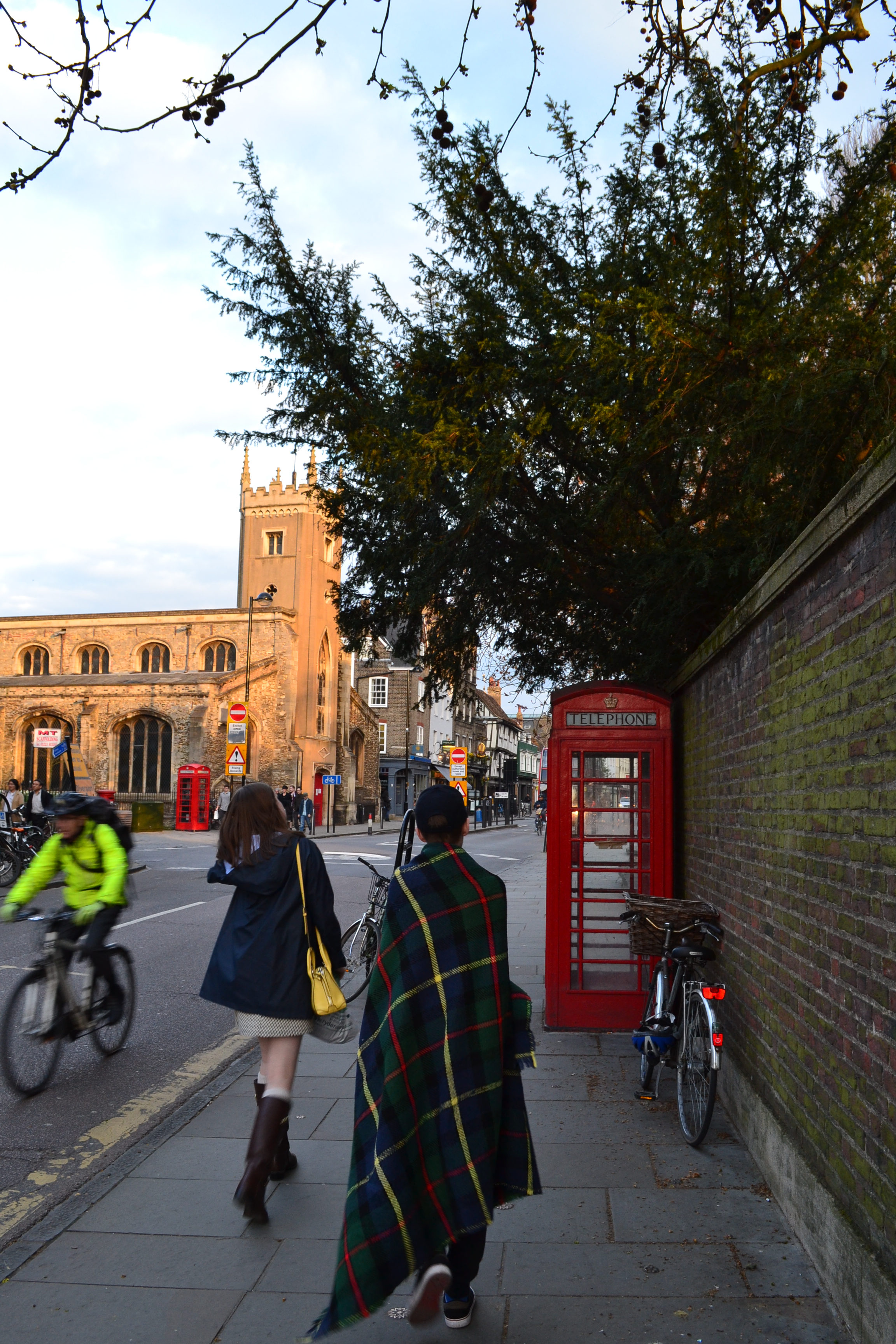
Church spires, red phone booths, and tartan blankets– very British.

We did our punting in the early evening.  It was still bright,  but it was a weeknight  and campus was mostly quiet along the backs by the river.  The air was growing crisp, to the point that our punter had to lend my son a blanket while we strolled around the block and waited for him to prepare our boat.


Pretty soon, we were afloat and learning about the many colleges that make up Cambridge University, ohhhing and ahhhing at the fabulous architecture, and occasionally being heckled by beer swilling students on the banks–which, as long as it’s done in lovely British accents, still sounds pretty posh to Americans.  (It’s embarassing, but true–it hardly matters whether a Brit is performing a Shakespearean sonnet, reading from the phone book, or berating us, we Americans will swoon regardless.)
DSC_0191 - Copy
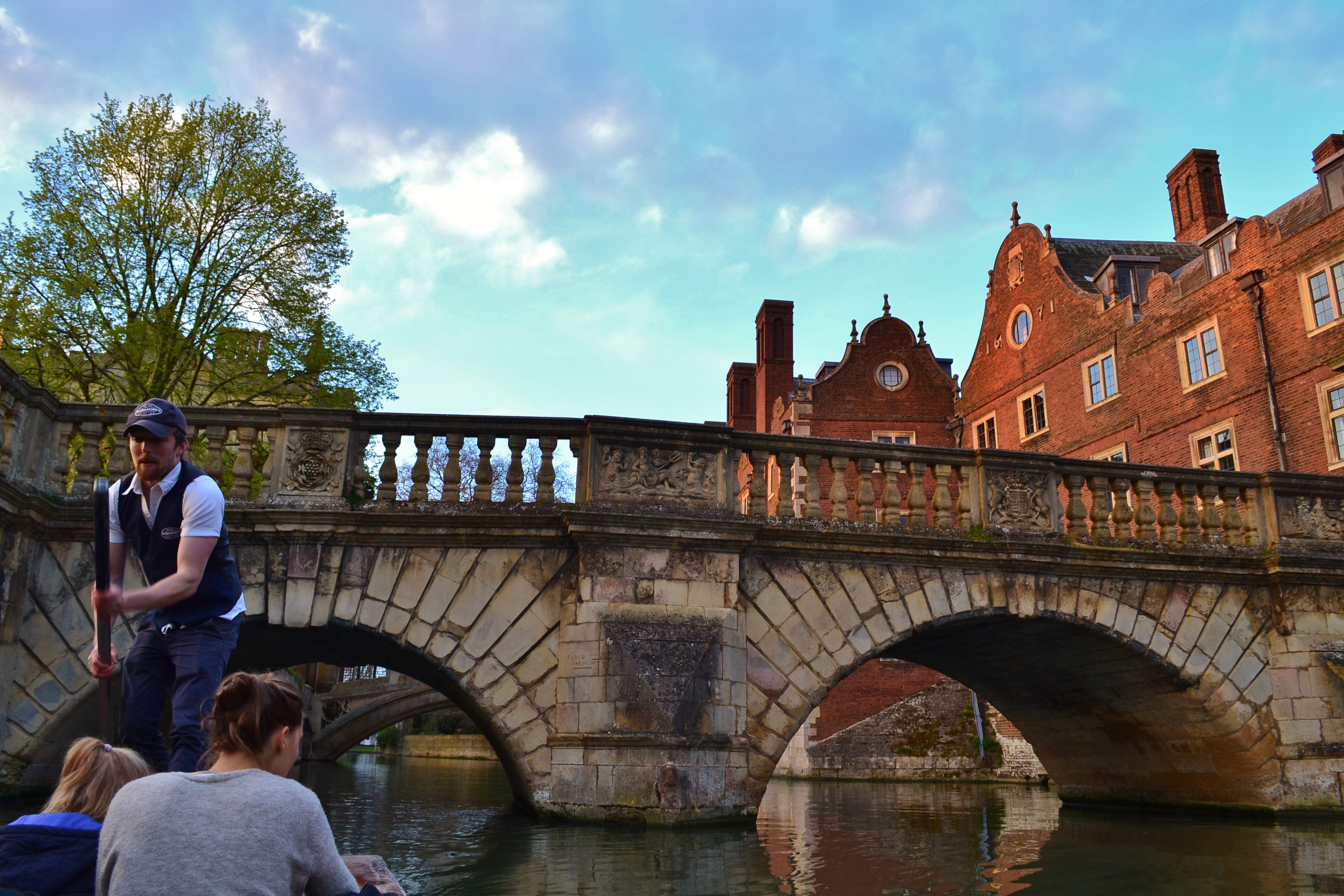
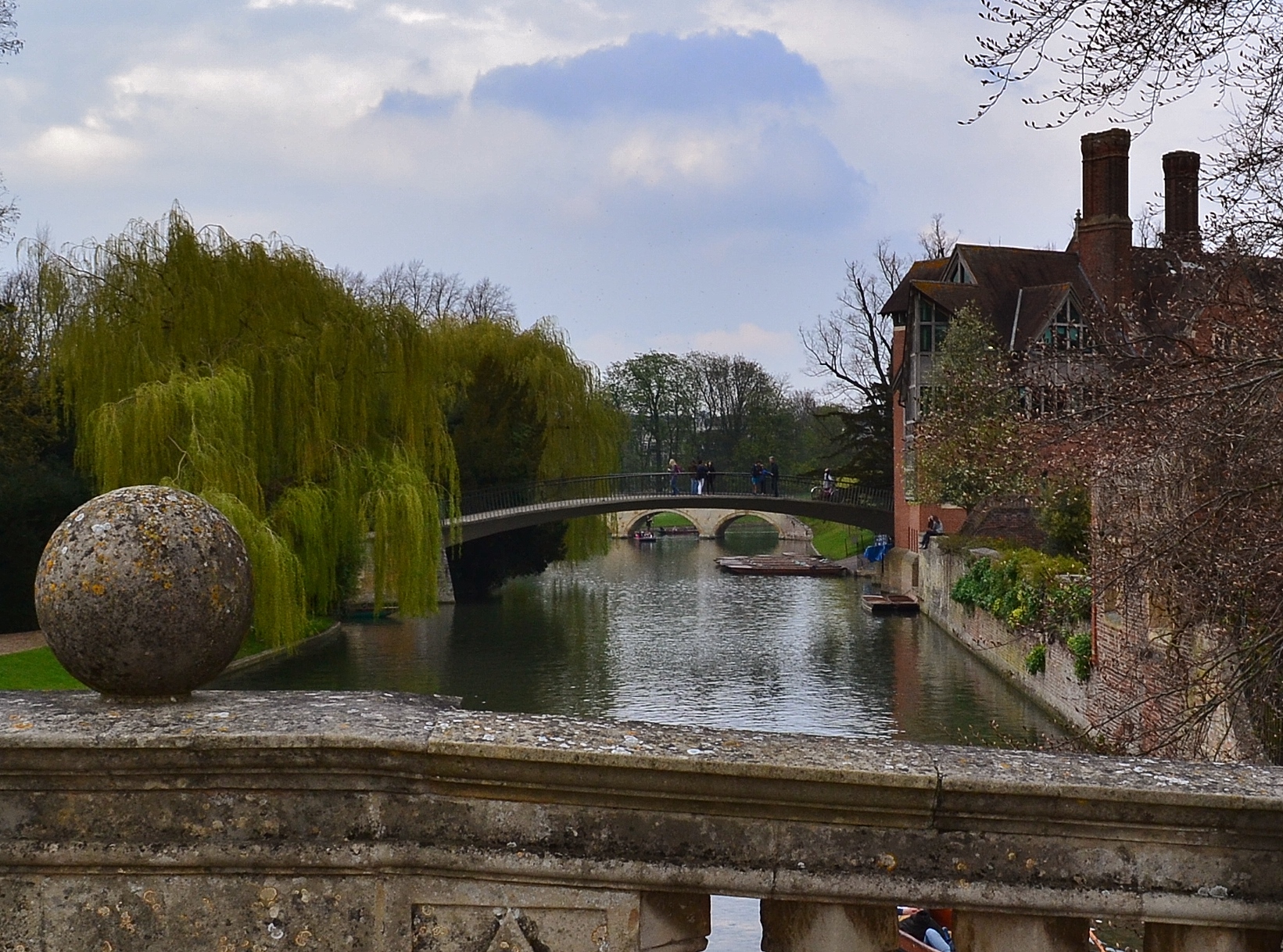
Under another bridge we go. (Still looking at St. John’s College, I think.)

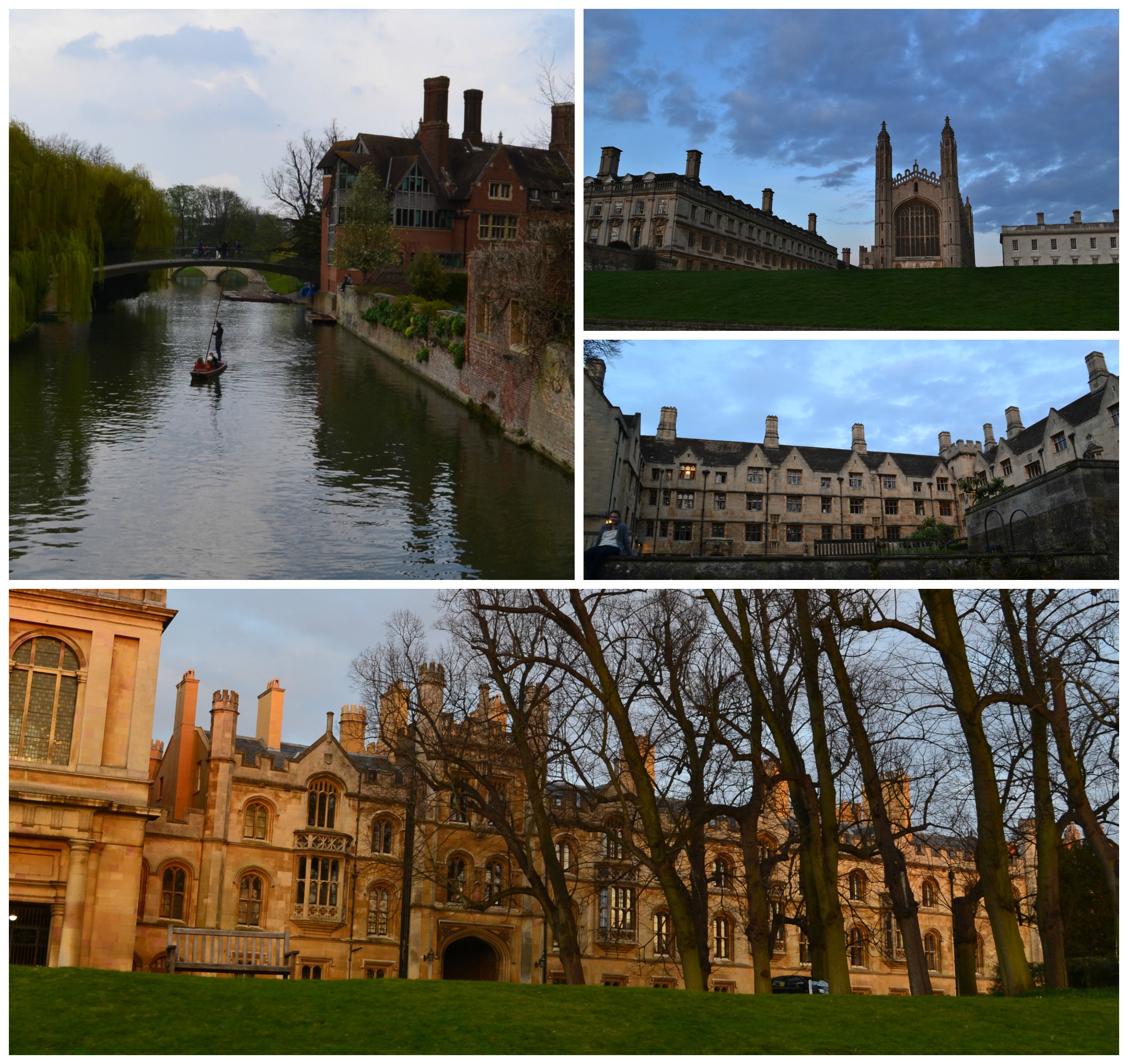
Cambridge University is made up of 31 colleges, many of which have backs along the River Cam.  Each college has its own architectural character, and even modern buildings (usually dormatories) occasionally pop up next to Tudor arches and ruddy red brick.
PicMonk camb b

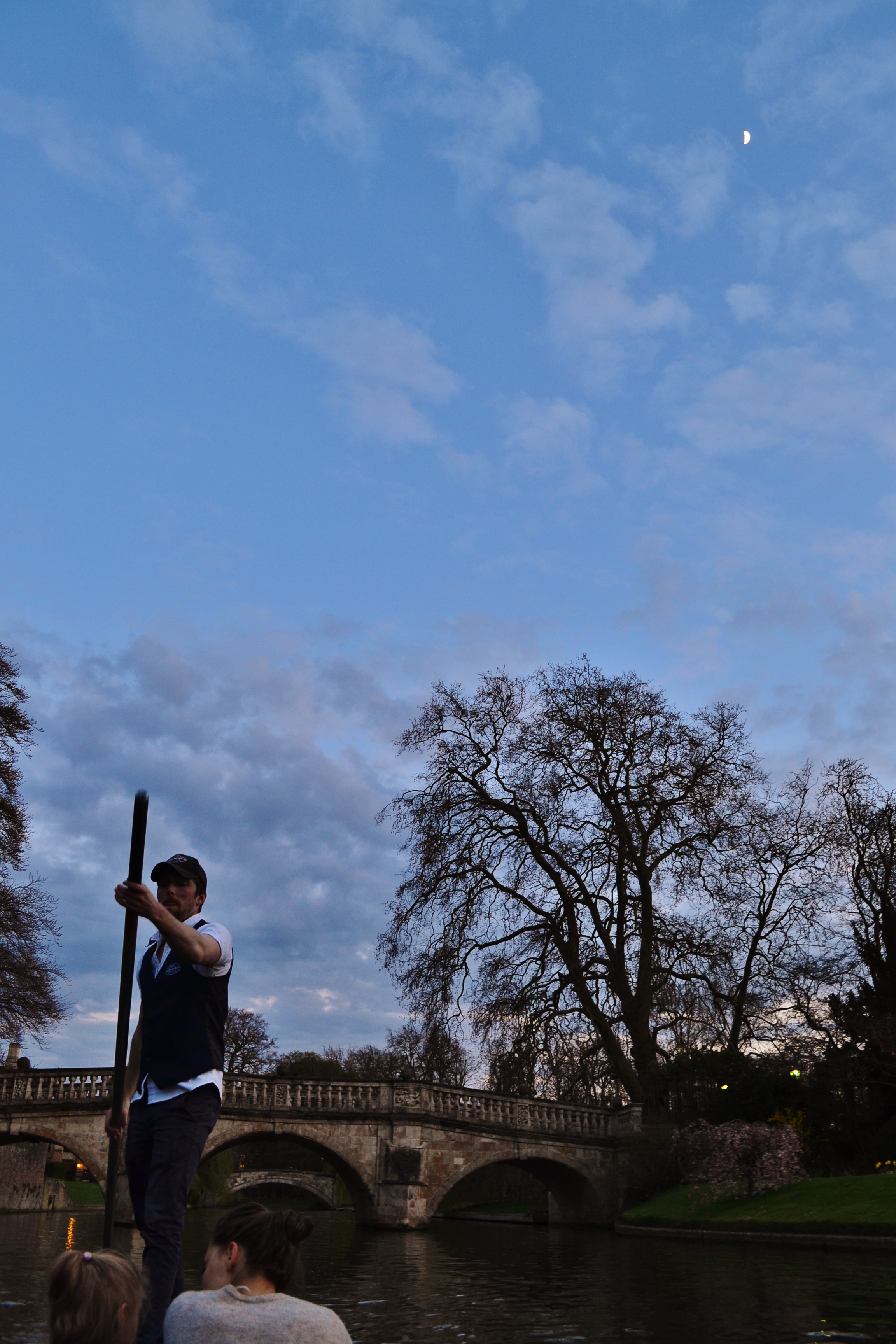
Our punt ride lasted just under an hour, and that was perfect– no time to get fidgety, plenty of time to be lulled into a serene trance on the tranquil river, to soak up a little history,  to nibble at the edges of tales of Kings, Queens, scholars, actors, and socialites.  As the sun began to fall over Cambridge and a sliver of moon showed itself in the sky, our punt, having come to the halfway point of our journey, turned itself around and we retraced our steps. This slow boat ride home offered us the chance to see the backs once again, from another angle, in another light. . . it seemed fitting in a place like this, where so much history has turned and turned again, and the water keeps dreamily floating its passengers on by.
DSC_0212 - Copy

St. Martin-in-the-Fields

London, by Trafalgar Square

DSCN0834 - Copy

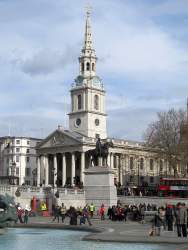
Clearly no longer in-the-fields, St. Martin’s Church bustles with the energy of London.  It sits just at the edge of Trafalgar Square, one of the busiest spots in a busy city.

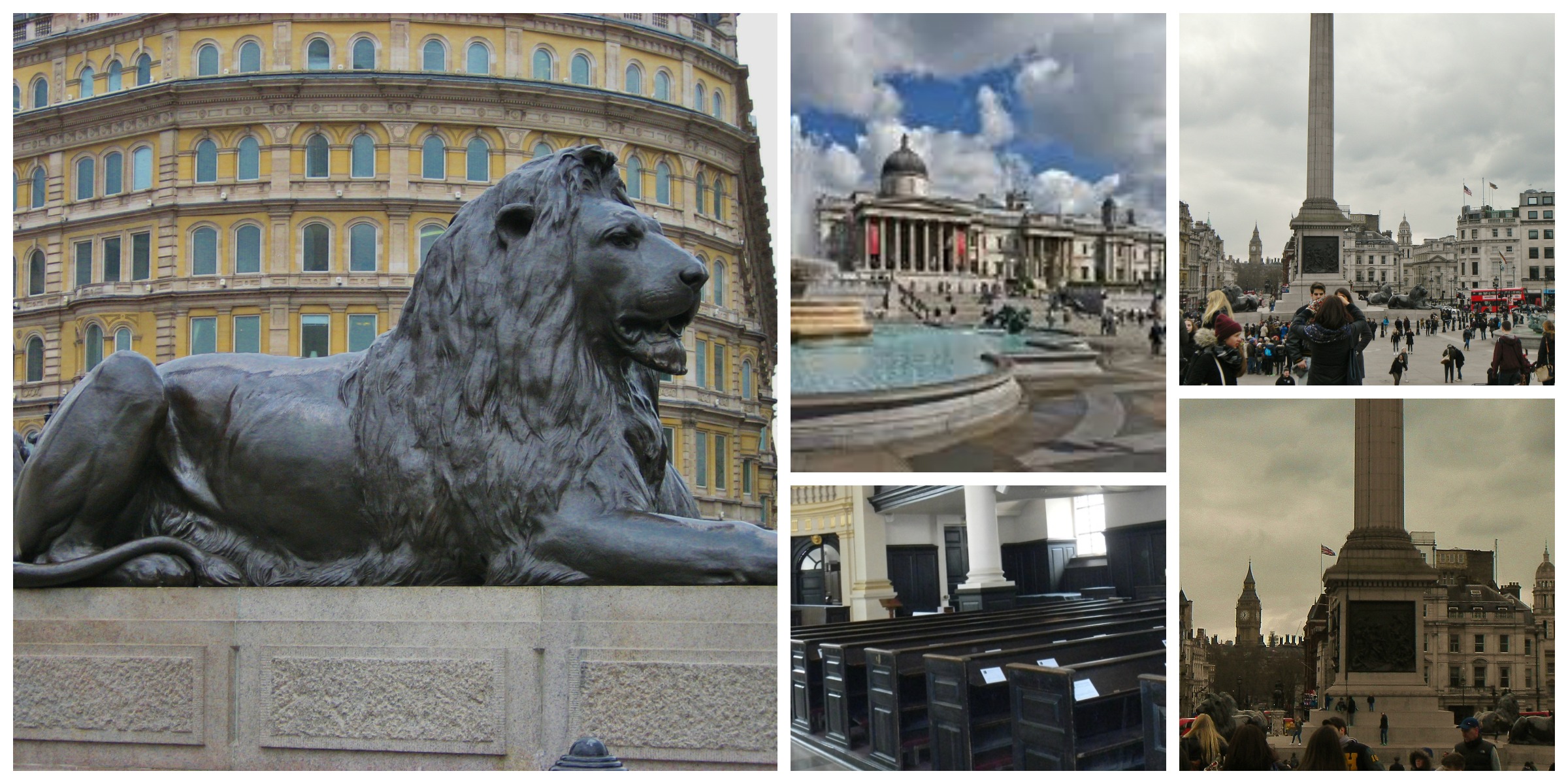
Trafalgar Square images

You’ll know Trafalgar Square from photos:  Admiral Nelson’s column anchors its center, surrounded by those fierce lions, and the National Gallery sits to its back, while traffic circles all around.  It is a manically busy spot, but also a fabulous place to catch the heart of London.  If you look from the National Gallery to Nelson’s

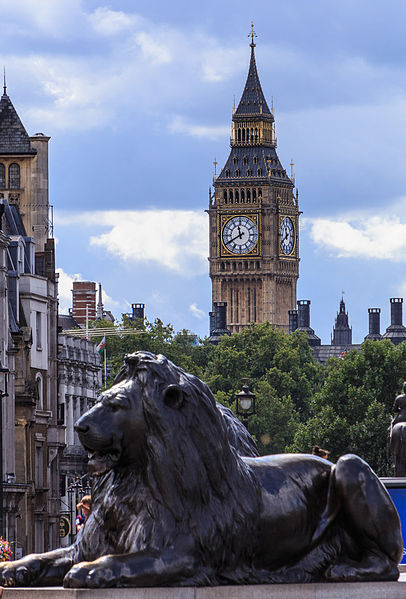
Creative Commons image

Column, you see Big Ben in the distance.   Then, if you walk to your right, you walk toward Buckingham Palace.  The other direction, you’ll find the Strand (with its West End theaters) and St. Martin-in-the-fields.

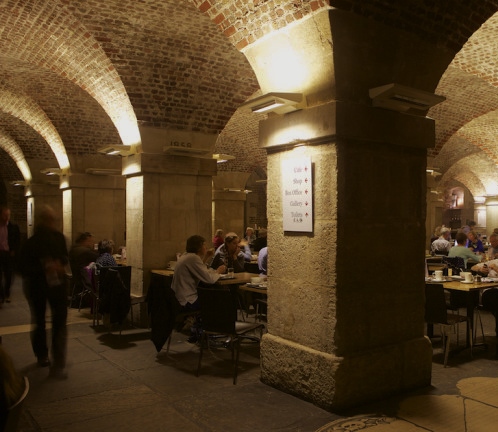
The beautiful stone church seems to have embraced its new “not at all in the fields, but at the heart of the crowd” identity very well.   It is well known for its continued ministering to the city, and in so many ways.  It has, historically, had a strong mission for working with the homeless.  It’s also popular for its concert series.  In fact, music is at the heart of much of St. Martin’s reputation– it’s Cafe in the Crypt is a hot spot for jazz lovers.  The Cafe (open the week through for diners) has Jazz Nights on

Cafe in the Crypt
Cafe in the Crypt

Wednesdays.  If you like Swing, Dixieland, or R&B, this is the spot for you.  I can’t vouch for the food, having not eaten there, but I can tell you that many of these “crypt cafes” in British churches are quite good.  We’ve frequented dozens of them over the years, a few underwhelming and a few really spectacular.  They are always worth a try–especially if a jazz night is thrown into the  mix!

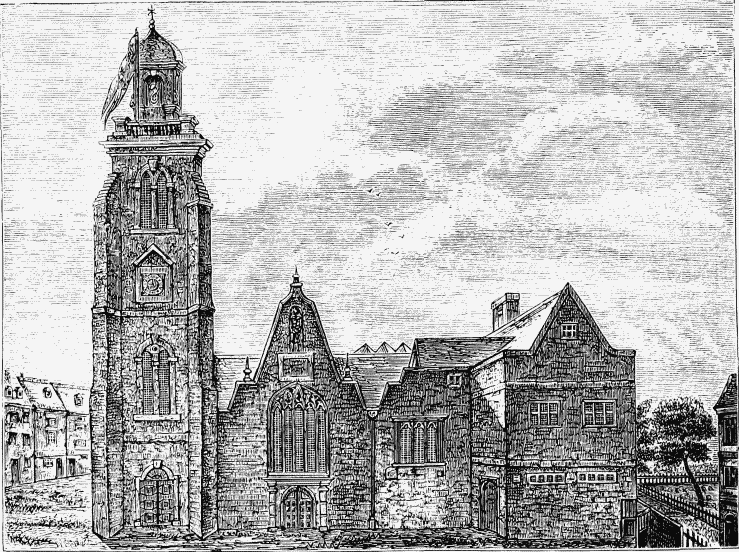
Earliest references to St. Martin-in-the-fields are traced back to records from 1222, but excavations have uncovered gravesites from about 400 A.D, when there was a Roman settlement in present day London.  (At which point, this area would certainly have been “in the fields” and far from the small town’s city limits.)   The church has undergone many changes through the centuries–some dramatic.

From a JT Smith print, published 1808

As the fields turned to city sprawl, Henry VIII extended the parish of St. Martin’s and made changes to the structure.  The church survived the Great Fire of London (1666, I think), which was no small feat.  Still, the old facade was pulled down in 1721 and the new marble structure was put into place.  I’m a fan of the “new” neo-classical church, but it still seems a shame to me that a church could survive the fire that leveled so much of the city, just to be pulled down a few years later.  But there were reasons for that–structural decay chief among them . . . and who can argue with that?

stmartinitf3s
St. Martin-in-the-fields as it now stands

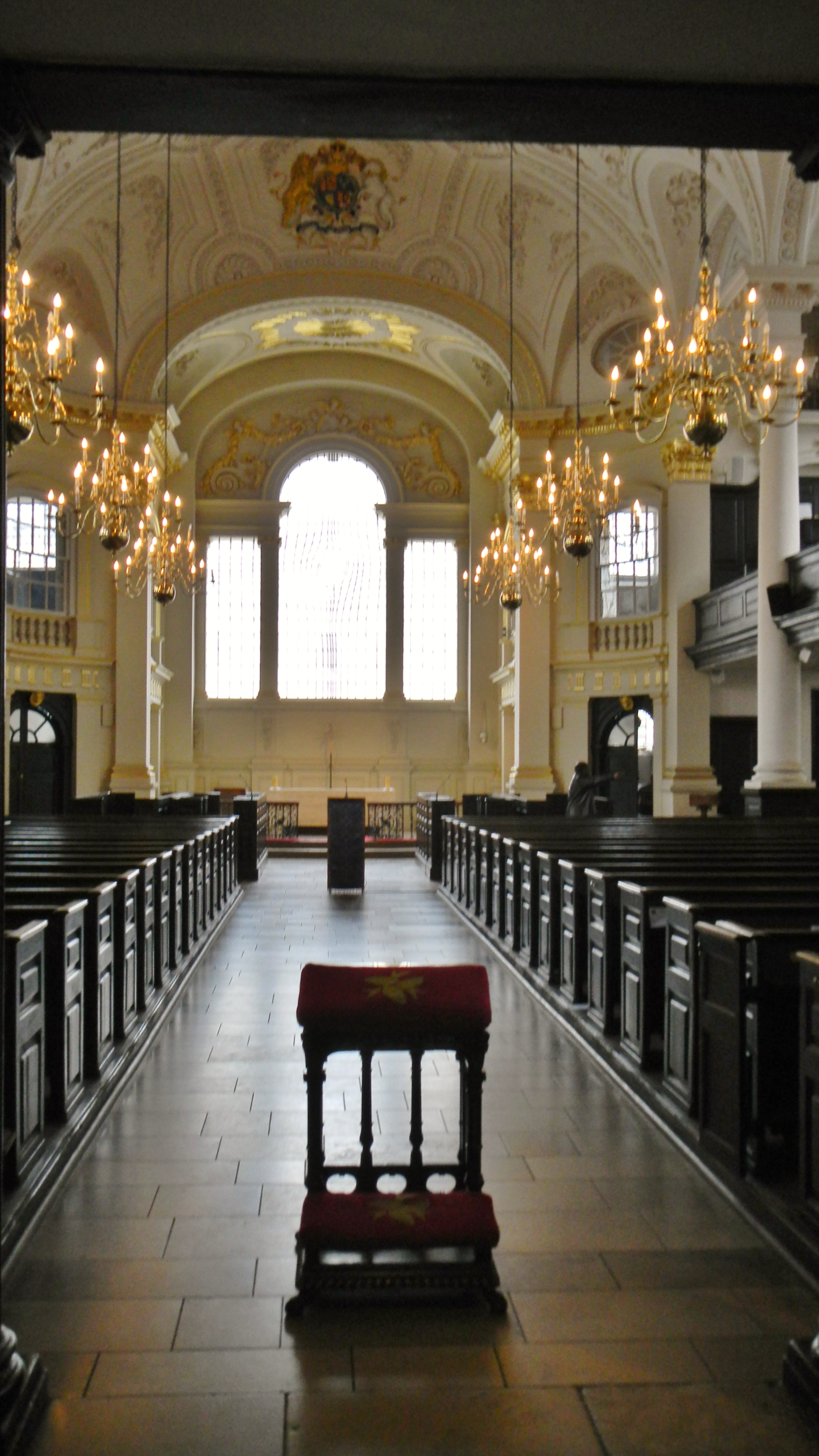
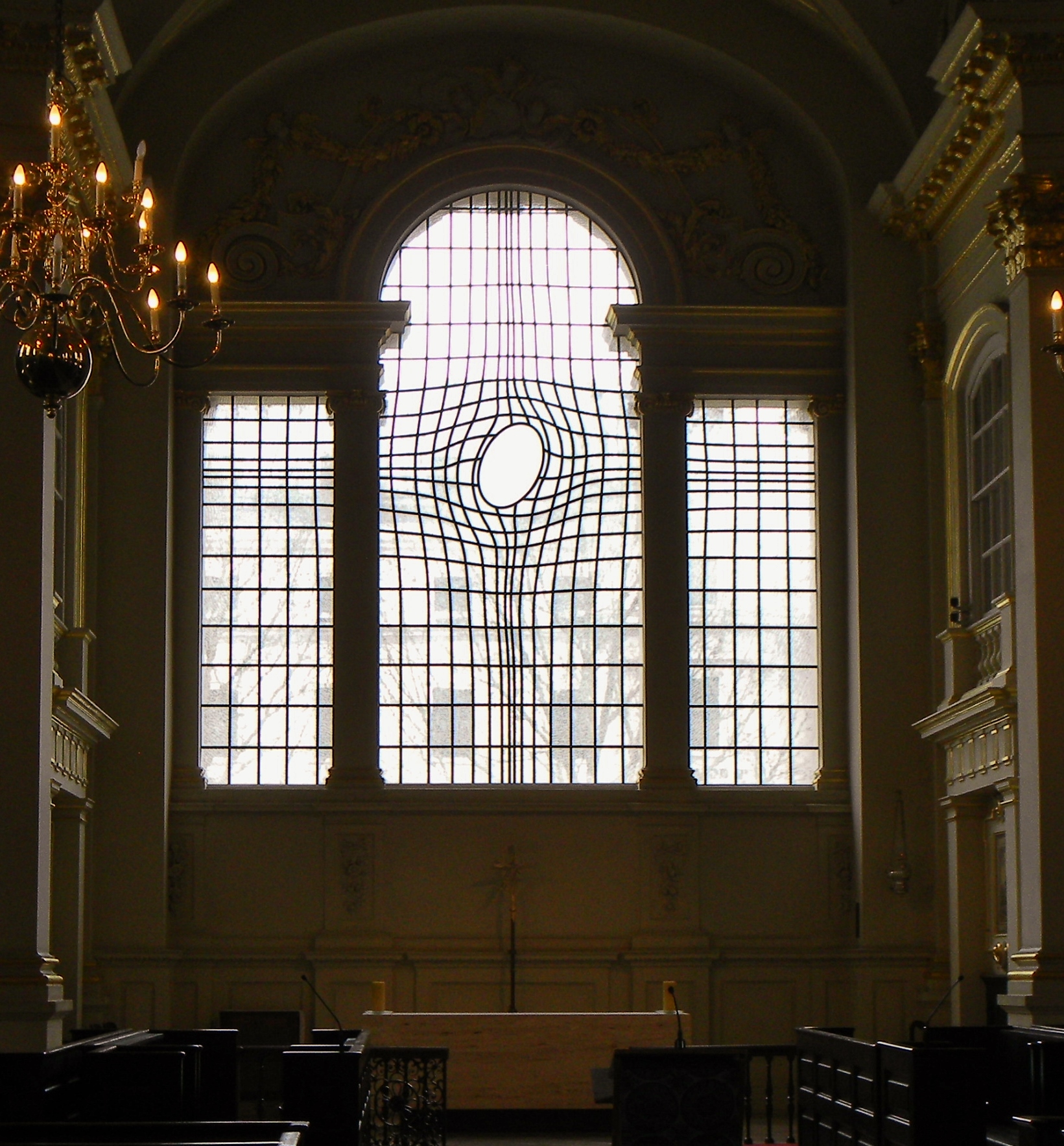
For us, St. Martin-in-the-fields was a great find as we meandered from Trafalgar Square toward the Strand and Covent Garden.  We didn’t take the time to learn much history or eat in the crypt.  We didn’t stumble into a service in progress (which would have been nice), but we knew the name and were curious to just have a look inside.  And what we found made us curious to know more.  We opened the doors of the old church, expecting to see what we usually see, but were greeted, instead, with a uniquely bright take on church windows.  The East Window, sat directly behind the altar area, and the visual centerpiece of the church, looks like this:

DSCN0831 - Copy

It’s modern, but traditional at the same time.  It’s so spare, but still manages to look like a cross.  And the light it lends to the space is fantastic.  You see something like this in London, and you immediately think the windows must have been bombed out in WWII, and apparently that was the case.  And then you think, this window almost looks like it’s being hit with a shock–of sound or schrapnel– something that bends its fibers.  And yet, it’s beautiful.

And then, if you are a slightly nerdy English major, like me, you hear the poetry of Yeats: “Things fall apart/The centre cannot hold.”  The window appears to have a gapping hole at its center, and Yeats’s post WWI poem conjured the same image.  But here, in St. Martin’s, the fantastic ovoid center holds.  An entire world war later, and the center holds.  With the bustle of this great city, and the enduring attacks that humans perpetuate on each other, and the center holds.  In a community of faith, in a busy corner of tourism, in a jazz hot spot, with all of the sacred and profane met in this one thriving building, and the center holds, despite the evidence of warping and instability on its edges.

And this is why I love St. Martin-in-the-fields.  Her facade has withstood fires, only to decay and be rebuilt and stand still.  Her fields have given way to asphalt and traffic, but still a sort of urban beauty.  Her focal point, so often anchored by predictable images in stained glass windows, has warbled, has warped, has shed its coloring, but let in more light, and, yes, it has held.

Oh how I love this church.