Our house sparks a little interest, a little concern, and a little inquisitiveness in folks. So I thought I’d answer a few queries and concerns here.
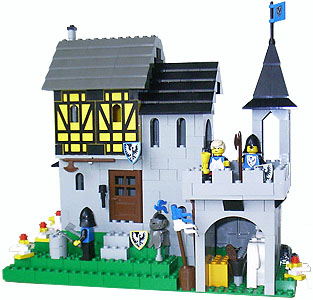
Question Number One: A friend came over for dinner with us and brought his eight year old son. When we answered the front door, the son just stood there, looking up, then to the left and right. “Is this a castle?” he asked.
Answer: No, this is not a castle. But it could play one on TV.
Question Worrisome Observation Number Two: I was standing in the kitchen, looking out the front window the other day when my son and daughter came walking home from school. They stopped in front of the house and had a very animated conversation with a couple of kids from down the street. Then those kids ran off quick as lightening. When my brood came inside, I asked them what that was all about. “They said our house looks spooky,” was the response I got.
In answer: Yeah, I guess it is a little spooky. And you haven’t even seen the utility bills. Aiieee!
(Drum Roll)The Most Frequently Asked Question: Is it haunted?
Answer: Thank goodness, nothing scary so far. Some very creaky floor boards, and a few weird smells (possibly the house, possible my tweenage son), but nothing ghoulish. If that ever changes, you’ll hear all about it.
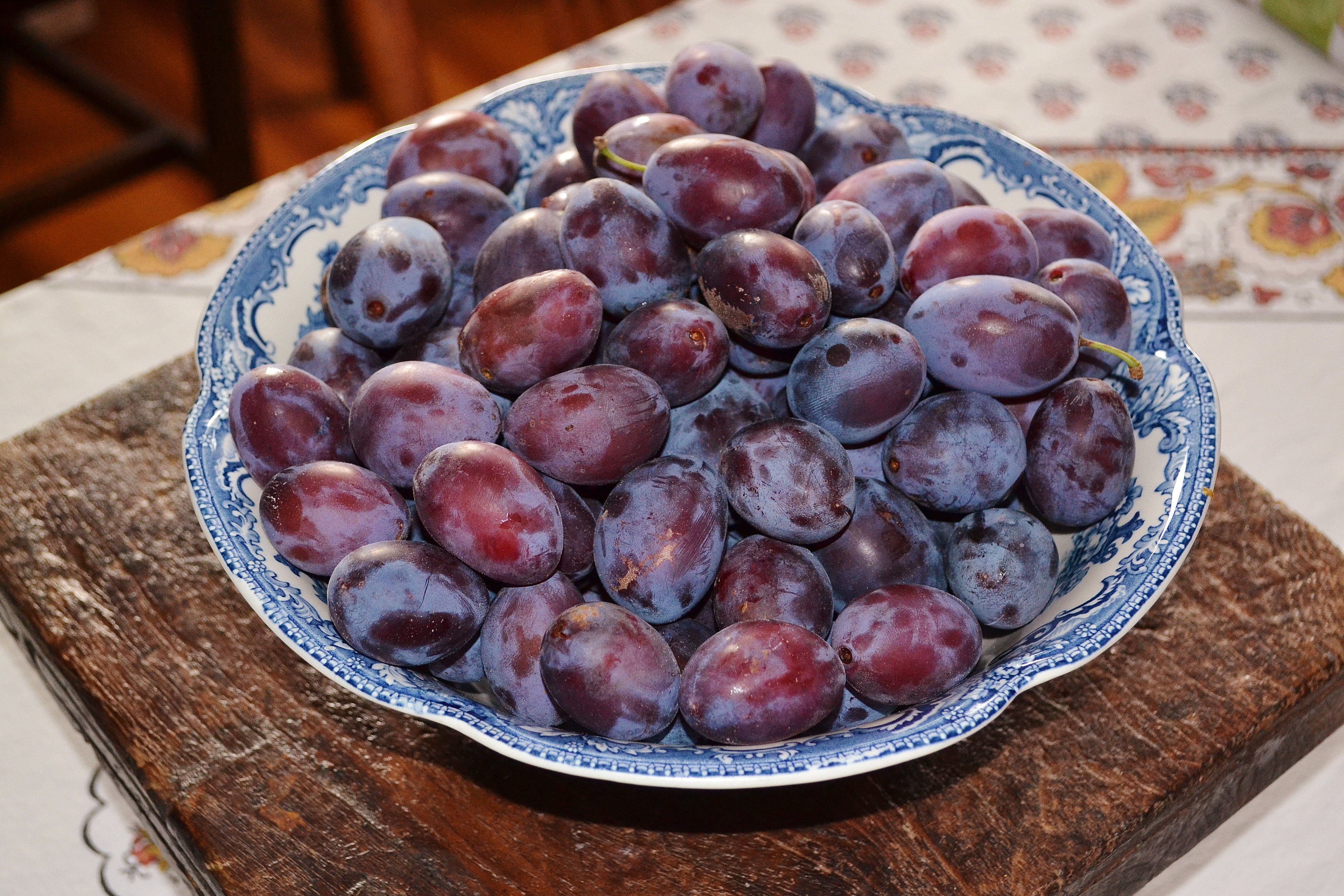
Our German landlord just brought us a bucket of plums from his property. I would love to make a great plum kuchen, a tart, some jam, etc. Any favorite recipes out there? I’d love it if you’d share.
So a Roman and two nuns walk into a wine barge. . .
Oh, no, no–this is a serious post about a day trip we took some weeks ago, and I’m just now getting around to writing this. We loved the day we spent in Trier, and this fabulous city deserves a closer look than I’m giving you here, but I wanted to get some impressions down before they fade from my addled brain.
I’ll focus on just a few things from our trip: the fact that Trier is an ancient Roman town (and plenty of its Roman heritage is still a vibrant part of daily life in the city), the beautiful churches and religious heritage here, and the wine culture that abounds in the region and town.
But not in that order. Let’s start with the wine. All the best parties start with the wine, right? Besides, our approach to Trier was through the winding roads of the Mosel Valley, flanked by beautiful green vineyards, and our walk into the old section of the city lead us past an intriguing first site:
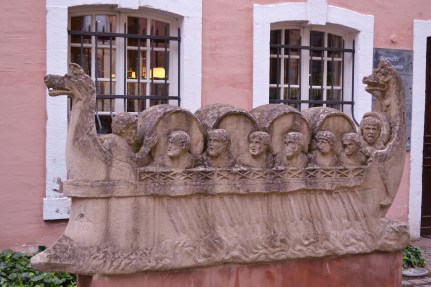
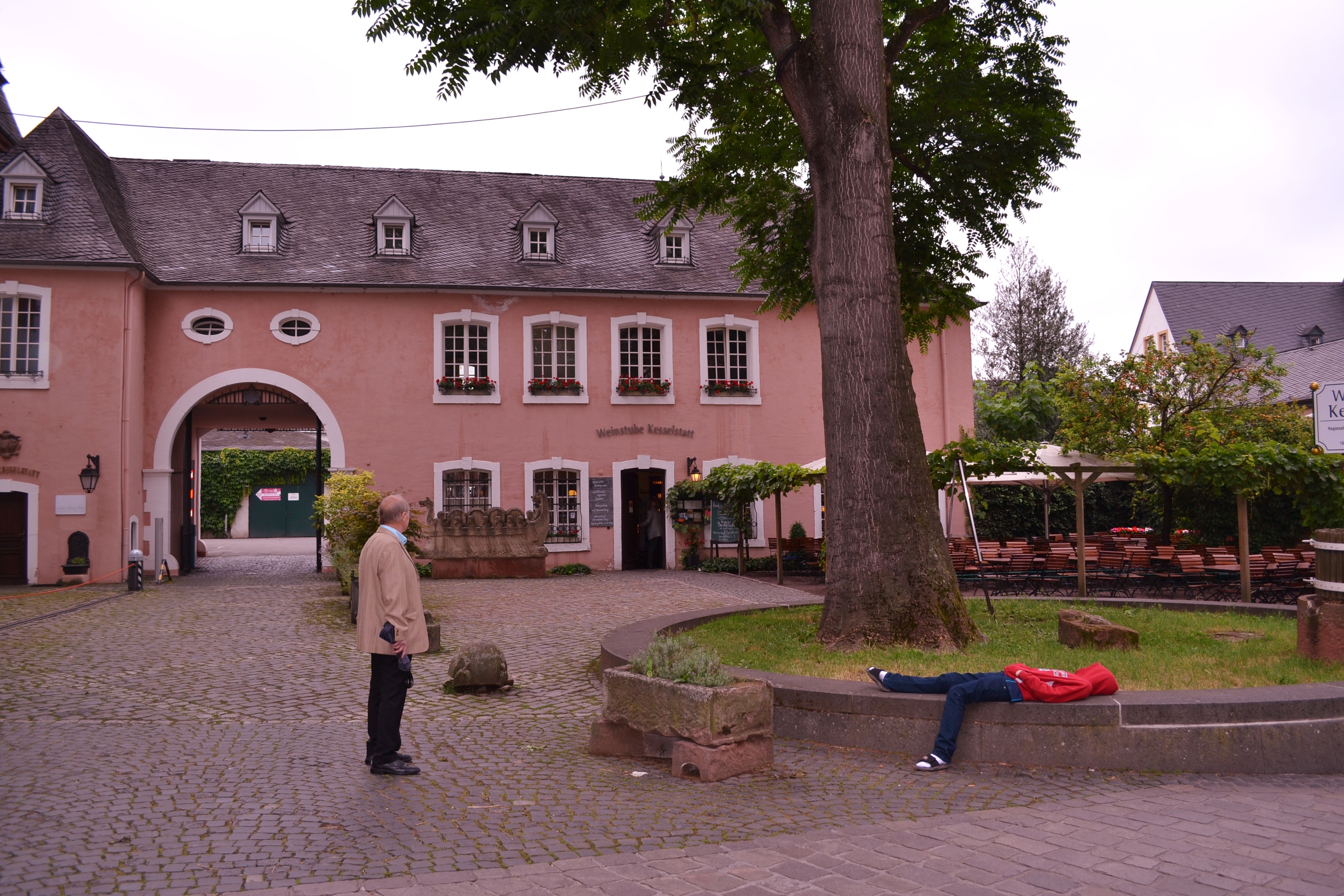
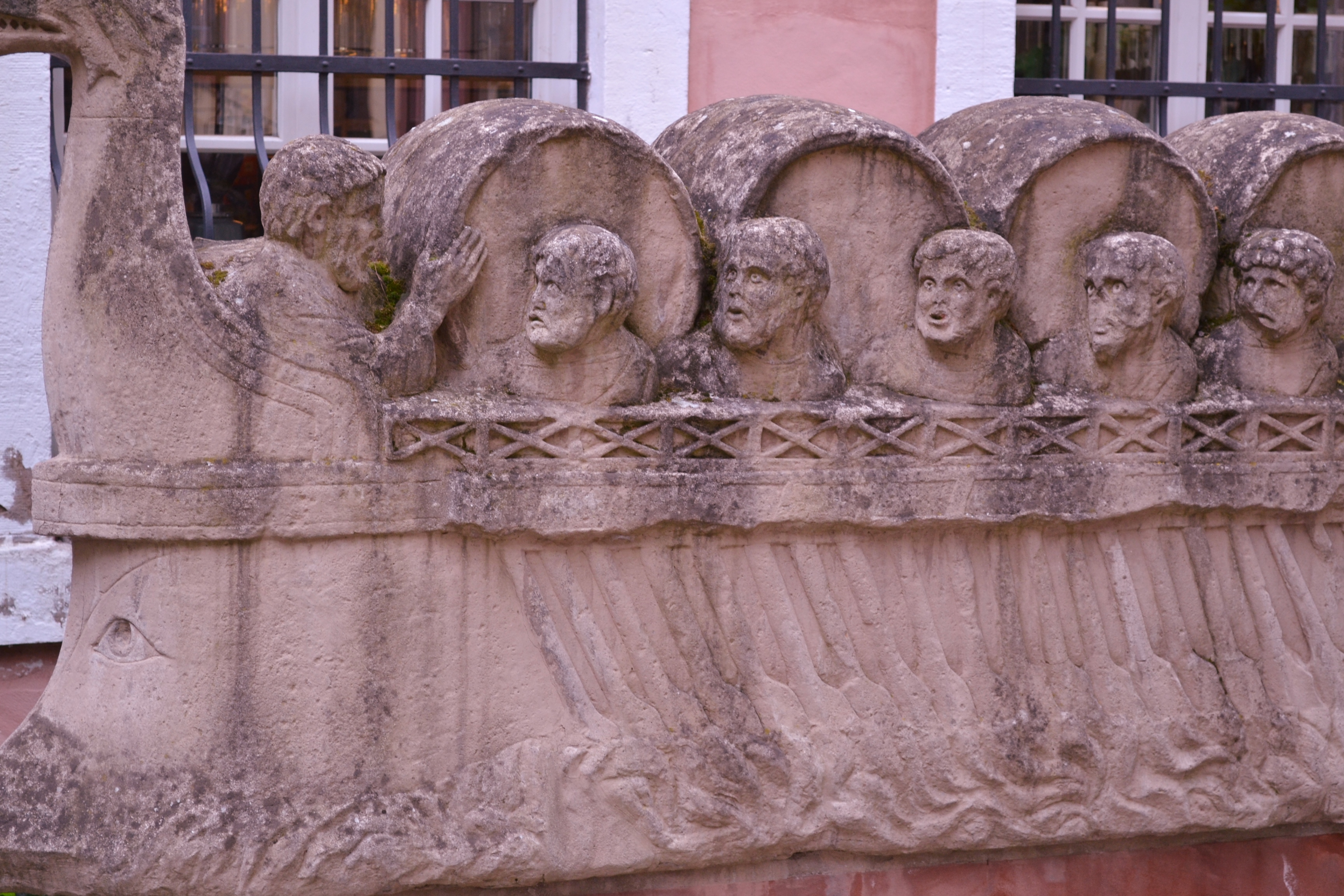
The Wine Barge and its Rowers: We entered the pedestrian zone of the Town Center close by Weinstube Kesselstatt (a wine garden). Of course, I had to stop and take a photo. Not because the wine garden was picturesque, although it was. (And serene, as you might guess from my sleeping son in the foreground.) But because of the large Roman stone carving out front: a Roman barge loaded down with wine barrels and oarsmen.
It’s enchanting both for the reminder of how deeply ensconced in its wine culture this region is, and also for the quality of life in its faces. The oarsmen’s excertion is so vivid that a moment’s pause will have you pulling out a hanky to wipe the beads of sweat from their foreheads. (It did appear there, didn’t it? I could swear I saw it…)
And, to be sure, these oarsmen should be breaking a sweat. The Romans planted vineyards along the Mosel and the Rhine to produce wine for their many garrisons. . .and production hasn’t stopped since. I’ve read somewhere that the Mosel region is Germany’s third largest wine producer, but first in terms of presitige. Reislings from this area are quite good!
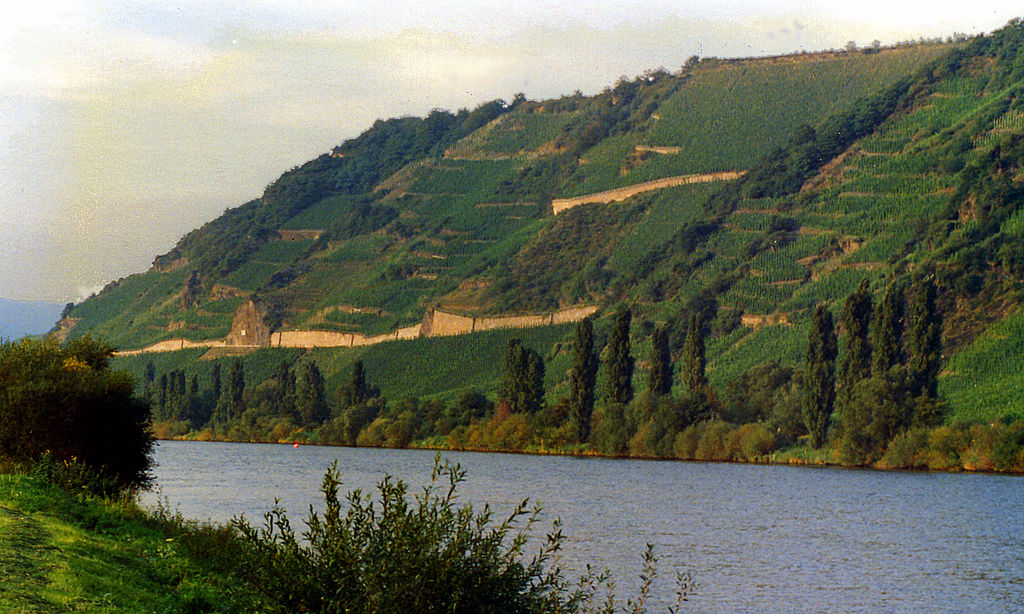
The wine country in the Mosel: As you drive toward Trier, you’ll wind through the lovely Mosel wine region. Both sides of the road and the river are flanked by vineyards. It’s absolutely beautiful country, and the trip would be worthwhile even if you did nothing but amble around and enjoy the scenery. I can’t offer much insight into the individual wineries here–I’ll have to research that on a more liesurely trip–but the drive is heaven!
Vineyards along the Mosel River
The Nuns: I’m sure that few people would consider a superfluity of nuns to be a tourist attraction. But they did add atmosphere, and more than a little gravitas, to the cathedral. Coupled with the fact that the cathedral was mostly closed off for a service when we were there, they also served as a reminder that we were visiting a living place, not just a tourist attraction or an historical artifact. That always breathes some life and enchantment into a place.
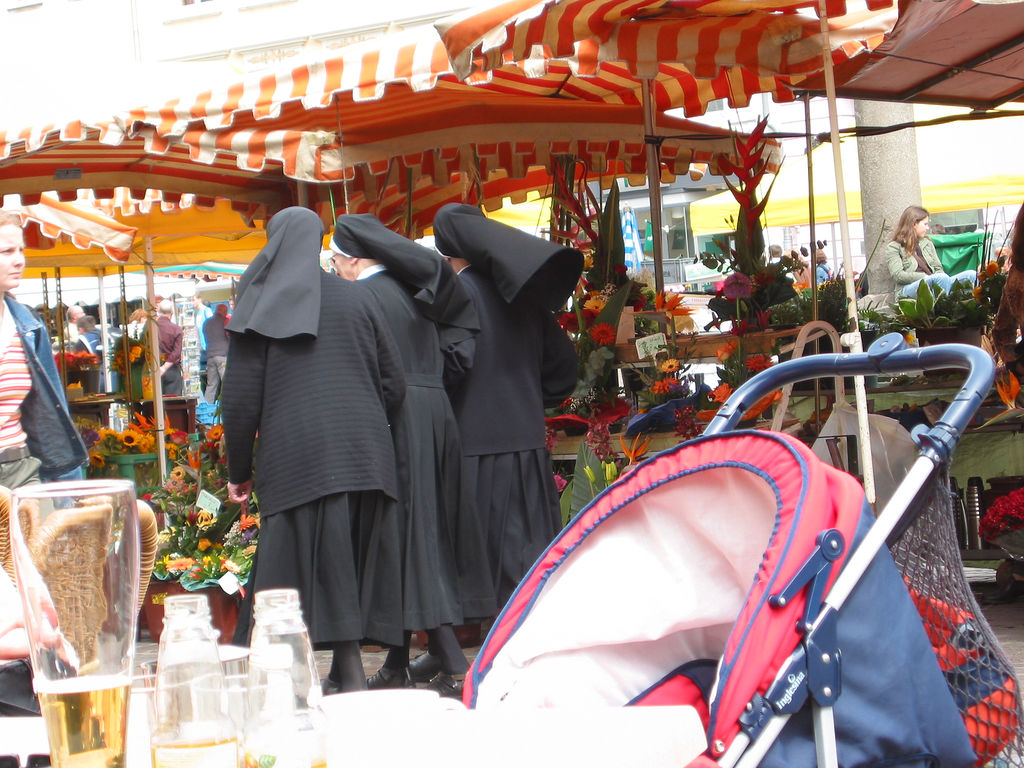
I wasn’t able to capture the nuns on film, as they were surprisingly quick footed and I was busy explaining the concept of a nun to my son. But I found this fabulous photo of nuns in Trier on Flicker. After Maria von Trapp, we always knew that nuns were up for a little fun. And here they are browsing the market in Trier, pausing at a flower stall and headed toward the carousel. (Anyway, I’d like to assume that they’re headed to the carousel.)
Nuns in town square, flickr.com
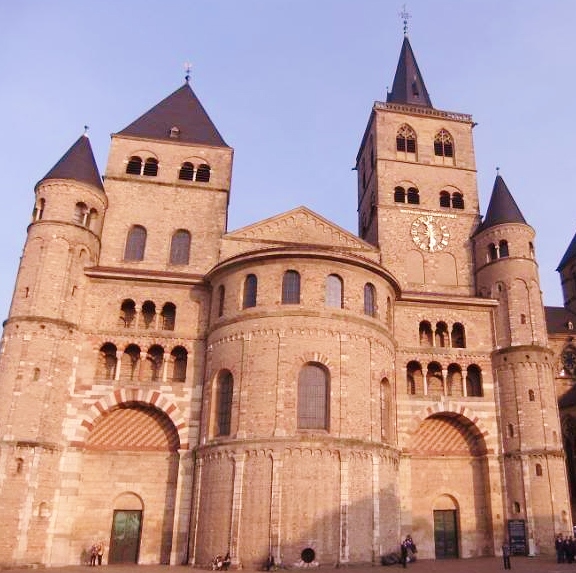
The Cathedral and Chapel: Because there were services going on, I didn’t pull out my camera for many photos, but the Trierer Dom and the Liebfrauenkirche (Church of Our Lady) are exquisite, and boast the title of oldest cathedral in the country. It was built upon the foundations of an older Roman structure. The structure sits only a few blocks from the Roman basilica (the Aula Palatina–the old throne hall of the emperor), a structure that impresses by virtue of both size and beauty. But the cathedral seems larger and more beautiful still–I’m sure the Roman Emperors would roll over in their graves at that comparison.
The Romans: If you Google Trier, one of the first things you discover is that it is an ancient Roman town–perhaps the oldest city in Germany. The Romans called the town Augusta Treverorum, and it was an important economic center–surely because of the river and a Roman road that came through the town (including a bridge over the Mosel).
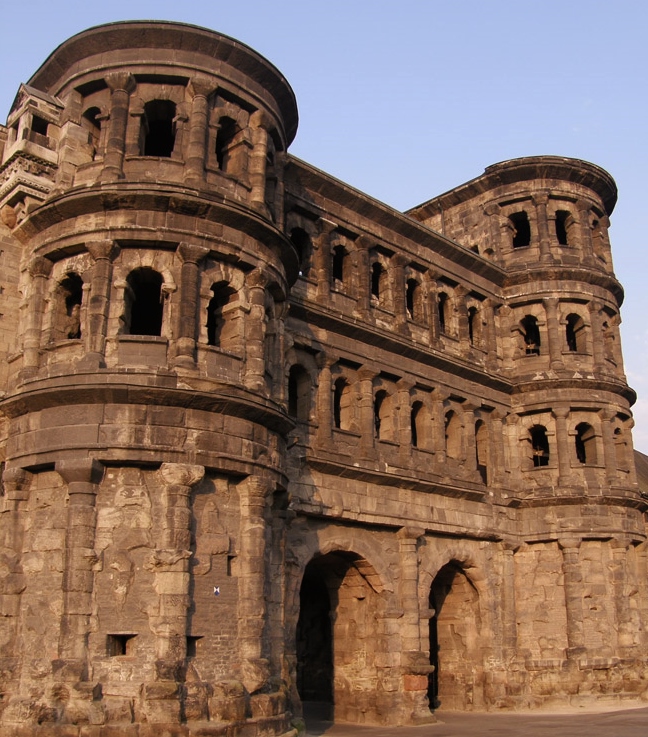
The most dramatic reminder of this history is the Porta Negra gate (photo below). It may no longer guard the city walls, but it’s certainly still a focal point for those who visit. Although my son knows a little Roman history–largely thanks to the British Horrible Histories series and its treatment of the Rotten Romans–he was more intrigued by his ability to find odd shapes and “pictures” in the walls of the stone structure than by the structure’s powerful mass, architectural prowess, or historical import. Puts those Rotten Romans in perspective, doesn’t it?
I open my mouth in a European market, and out comes a confusion of speech, a jumble of gibberish–here a French word, there a German, then a mischeivous Turkish phrase. I’ve lost all control over my tongue.
I’m trying to reign in this problem, but it is hard. We stepped over the border into France again Saturday, and this is where the big troubles always begin. In Germany, I speak lots of English and the splattering of German that I can manage so far. (Still studying up!) Sometimes French or Turkish words sneak into my speech, but they are the odd escapee from under the fence. I have some control over my language.
Then I step over the border, and all hell breaks loose. My brain seems incapable of releasing only the French words from their cell block. No, that would be too orderly. The gates fall and all the imprisoned words escape at once–a melee of language, a fracas of phrasing. A mess. Really. Or is it?
Mess-peranto. A new international language for people who make a mess of languages. Let’s start a movement! This could be like Esperanto for people who are enterprising enough to know smatterings of a few languages, but too lazy to actually order and develop their linguistic skills.
Bad idea?
I’m pretty sure the French cashier I practiced on thought so.
I pulled the rouladen (German rolling shutters) down tight before bed last night. Not to darken our rooms, but to keep the chill out. Then I woke hungry this morning–hungry for heat and sun. For summer. The rouladen were holding back the chill of a 44 degree (Fahrenheit) morning.
This is liquid yum! See the recipe below for a Pimms Cup.
Summer has been hesitant in the Rhineland these past two weeks–she’s given in way too early to cold and wet autumn. But I’m hopeful. I’m hopeful that she’ll be back for what we southerners call Indian Summer–an unseasonably late heat wave. I’d like to be scorched, for just a few days, to complain about the heat, the sweat that begins at 7 a.m., the stifling humidity. I’d settle for a day without a jacket and for an evening on the balcony, sleeveless and sipping Pimms.
The perfect summer drink–a Pimms Cup. Millions of Brits think so, and so does this one time transplant from the South. It’s not just for wedding parties or Wimbledon or the Royal Ascot. It’s pure summer deliciousness on a balmy day, OR the perfect taste of balmy-berry-sweetness-and-ginger-bite-sunshine when the day needs some reminding that it is, in fact, summertime.
According to the BBC, James Pimm, a London restaurateur, began selling the elixir in the 1840’s. Within a few decades the drink had become outrageously popular. If marketing slogans can reliably note a product’s popularity, consider this slogan from the 1930’s: We had to let the west wing go, but thank heavens we can still afford our Pimm’s.
Yes, we all have to have our priorities, and there are days when I might have traded my kingdom for a Pimms. . . especially if that Pimms came with a warm and sunny day attached.
Pimms No. 1 is a gin based drink with an infusion of bitters and herbs. I’m not a gin girl–it’s always tasted like pine needles to me–but the magic they work on Pimms is undeniable. Over the years, other recipes have been introduced, featuring whiskey, brandy, rum, rye, and vodka. At present, only Pimms No. 1 and Pimms No. 6 (vodka based) are being produced.
A traditional take on the Pimms Cup:
Mix one part Pimm’s with two or three parts ginger ale (preferably a strong ginger ale) over ice.
Add mint leaves, strawberry slices, thin cucumber slices, and raspberry or orange slices if you like. (We’ve even dropped a little watermelon in, and it was very tasty.)
You can mix this by the glass or by the pitcherful.
I know a few folk who love a good Pimms Royal, which is a mix of Pimms and Champagne. I haven’t tried it, but if the weather ever turns back to summer here, I’ll try a spot on my balcony and then get back to you with my thoughts.


 Our house sparks a little interest, a little concern, and a little inquisitiveness in folks. So I thought I’d answer a few queries and concerns here.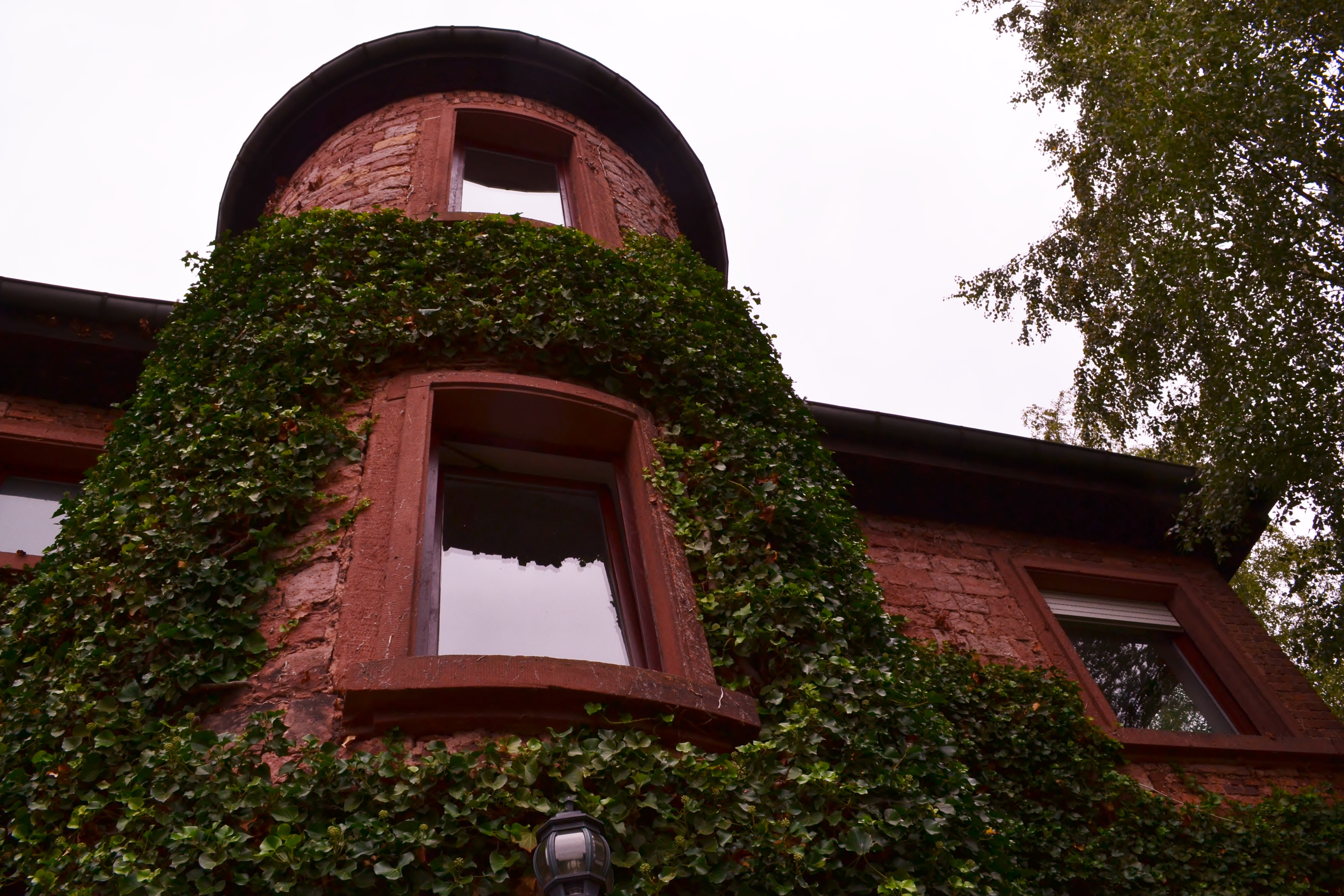


 Travels and Tomes: One Expat's Amblings and Ramblings