Today’s Yesterdays, Around the World: November 19th

I am waking slowly to an overcast Saturday in Florida, a day that holds the promise of slow motion, relaxation.  A day that belies the power of this date.

November the 19th has seen its share of action over the years and across the continents.  Columbus discovered Puerto Rico.  The Mayflower reached Cape Cod.  The Battle of Stalingrad reached a turning point.  Indira Ghandi and Calvin Klein were born.  Franz Schubert and Mike Nichols died.  Apollo 12 astronauts walked on the moon (the ultimate extreme-travel destination).

abraham-lincoln-1863-head-shotAnd my favorite moment from the time and space capsule of November 19th: U.S. President Abraham Lincoln delivered the Gettysburg Address in 1863 as the Civil War raged on.  He stood at the cusp of the one-time battlefield, he dedicated a national cemetery for soldiers, and he reflected on the task of rededicating ourselves to the democratic ideal of equality and resolving that this new nation “by the people, of the people, and for the people shall not perish from the earth.”

Lincoln mused that “the world will little note nor long remember what we say here,” but he was mistaken.  His speech feels like part of the bedrock of our culture– inspiring on our good days, re-centering on our bad days, and acting as a touchstone when the stresses of maintaining our union and healing its fissures weigh heavy.

Who knows what November 19, 2016 will bring to your life and your corner of the world . . . but you could do worse than to start your day with the words of Abraham Lincoln:

The Gettysburg Address

Four score and seven years ago our fathers brought forth on this continent a new nation, conceived in liberty, and dedicated to the proposition that all men are created equal.

Now we are engaged in a great civil war, testing whether that nation, or any nation so conceived and so dedicated, can long endure. We are met on a great battlefield of that war. We have come to dedicate a portion of that field, as a final resting place for those who here gave their lives that that nation might live. It is altogether fitting and proper that we should do this.

But, in a larger sense, we can not dedicate, we can not consecrate, we can not hallow this ground. The brave men, living and dead, who struggled here, have consecrated it, far above our poor power to add or detract. The world will little note, nor long remember what we say here, but it can never forget what they did here. It is for us the living, rather, to be dedicated here to the unfinished work which they who fought here have thus far so nobly advanced. It is rather for us to be here dedicated to the great task remaining before us—that from these honored dead we take increased devotion to that cause for which they gave the last full measure of devotion—that we here highly resolve that these dead shall not have died in vain—that this nation, under God, shall have a new birth of freedom—and that government of the people, by the people, for the people, shall not perish from the earth.

There is Joy in Mudville!

AP Photo/Charles Rex Arbogast

“Don’t let anyone say that it’s just a game/ For I’ve seen other teams and it’s never the same.”  Eddie Vedder about the Chicago Cubs


Well, my reading tribe, the Chicago Cubs just won the World Series — there is a landslide of joy in Mudville!!!   Well done, Cubs!  You’ve made Chicago and all of your fans proud.

This isn’t news to you Americans, and it may grab you  international readers with all of the excitement that  the  news of Snookers Finals grab most of us.  But if you knew the underdog story, and the absolute loyalty of this underdog’s fan base, you’d come around.

One of my early blog posts (when only my parents read) was about Wrigley Field: Wrigley Field, Chicago–100 Years Old Today.  That was two years ago, when The Billy Goat Curse still had it’s grip on the Cubs.  It was a powerful curse, too.  But it was broken spectacularly, and in no small measure by true love and utter belief from Cubs fans.  They never lost faith, they never lost hope.  The Friendly Confines will make that sort of fan out of you.

It’s been a week in need of some joy here in America, and the Cubs could hardly have planned a more uplifting win:  after 108 years of championship drought, 71 years of a billy goat curse, decades of being the butt of jokes, a full 7 games of World Series, and a final game of near certain win turned into a nail-biter of extra innings and torrential rain and rain delays, this is the stuff of operatic crescendo, of Hollywood movies,  of tears of joy and dancing in the streets.

The Cubs have always shown good sportsmanship, and now no one can question their showmanship– I’d trade a hundred other consistently good enough teams for this jewel.  *Love-Joy-Cubs*

Eddie Vedder’s song “All the Way” captures the spirit of the Cubs, the classic Wrigley Field, and all those loyal Cubs fans.

Pingback: https://dailypost.wordpress.com/prompts/base/


Send ‘Em to Whitby! (Happy Halloween)

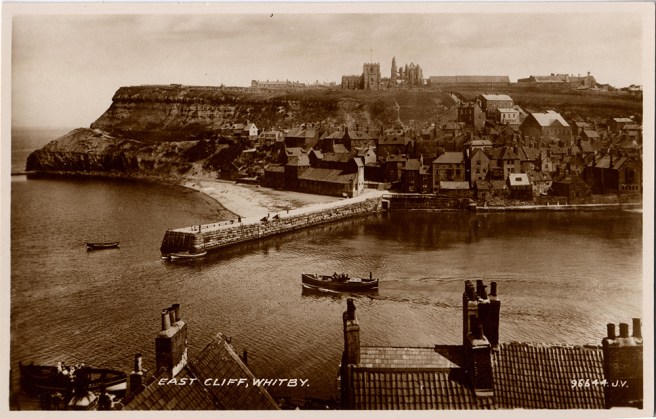
whitby-post-1
Whitby, England. Beautiful . . . and a little spooky. (old postcard)

If you’re yearning for an atmospheric English town with cobbled and winding streets, hugging the seaside in crannies and cliffs, and teaming with a sense of menace as the sun goes down, then you’re due a trip to Whitby.

Can you find Scarborough? (red dot)
Can you find Scarborough?

Whitby lies in the northern corner of North Yorkshire, a close neighbor to Scarborough, and is a popular seaside retreat.  But it’s not all sea spray and fish and chips here.  It’s not all Victorian boardwalks, either.  No,  Whitby’s greatest claim to fame may be as part of the setting of Bram Stoker’s Dracula. (And you thought you were safe this Halloween if you just steered clear of Transylvania.  Wrong!)

In the gothic tale, Dracula is aboard the ship The Demeter and is shipwrecked on the Yorkshire shore.   He then storms Whitby in the form of a dark dog, runs up the hill to St. Mary’s Church and the Abbey and graveyard above the city,  and soon terrorizes his victims as the vampire that he is.

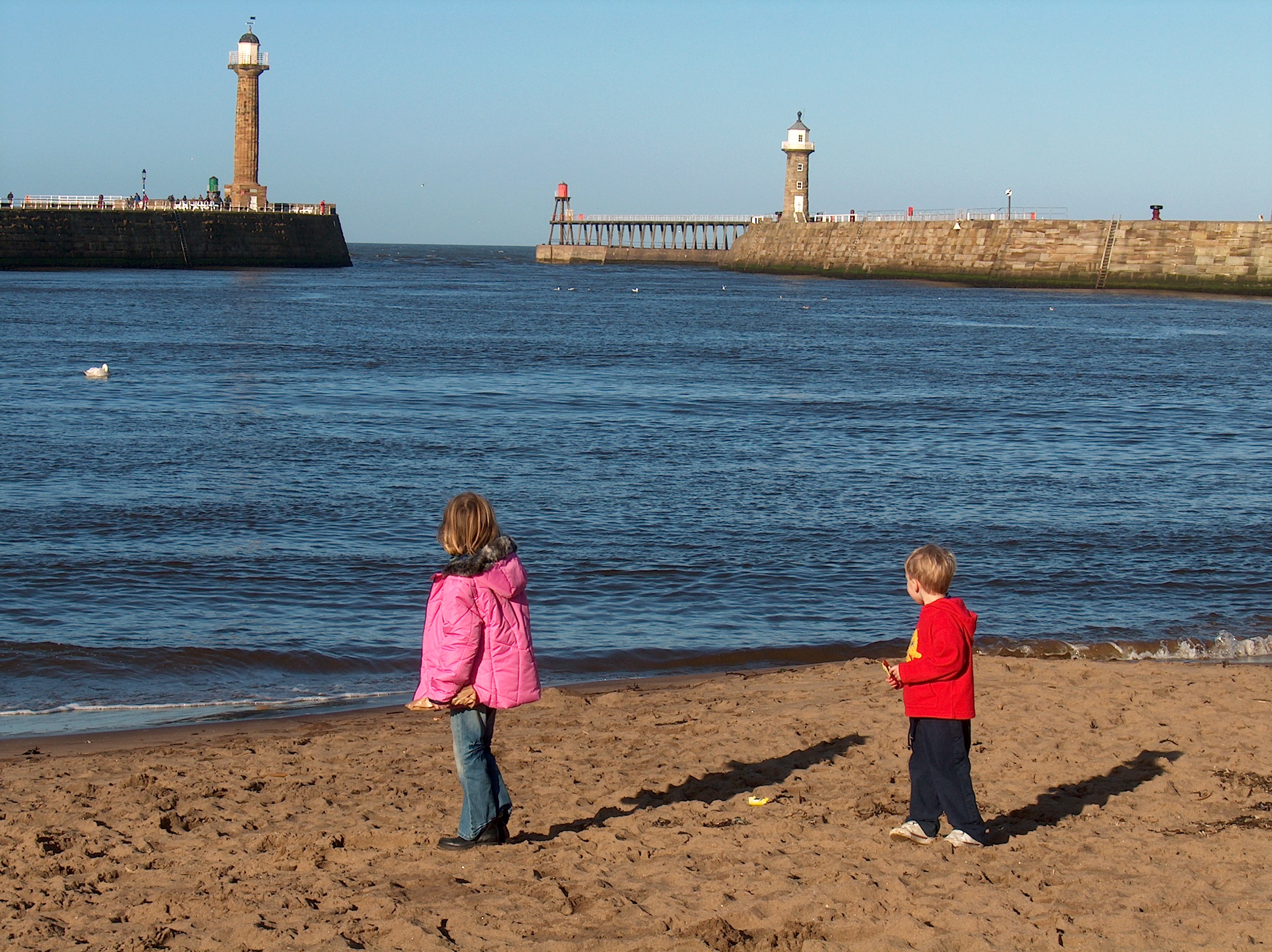
Looking out to the mouth of the harbor, thinking of Dracula's shipwreck.
Looking out to the mouth of the harbor, thinking of Dracula’s shipwreck.

In fact, Bram Stoker did visit Whitby, and it seems to be where much of his story took root in local history and scenery.  The Demeter  shipwreck was based on a true incident — the shipwreck of The Demetrius, a ship full of coffins being transported for burial . . . a grim cargo that proceeded to wash ashore on the town’s beaches for days after the accident.

The city of Whitby is lovely and would certainly survive as a traveler’s destination without the legend of Dracula, but she has been forever tied to the story now.  And the city is all too happy to play up its link to the blood-thirsty Count.  There are plenty of Dracula tours, books, and plaques to remind visitors of the city’s link to the gruesome story.  It’s all in fun.

Unless, of course, you are excessively squeamish . . . or  roughly four years old.

My children were taking this all in, and William, very young at the time, was growing a little skittish about Whitby.  He constantly looked over his shoulder, he stayed close by our sides (unusual for the  turbo-charged kid who usually ran yards ahead of us), and by the end of the day he was loudly and frequently proclaiming his dislike of Whitby.

My son never mentioned Dracula in his complaints; still, he was very clear about his feelings: he would never go back to Whitby.  Never.  Ever.  It wasn’t his kind of town at all.

So we never did go back to Whitby.   But we came close.

A few months after our visit to the sinister town, we had an unwanted visitor in our house.  A small, furry, unwanted visitor.  A mouse was stalking my son’s bedroom and, it seemed, spending time under his bed while William was asleep.  While this didn’t make me any too happy, it really upset Will.  We wanted to catch this rodent and catch him fast.  However, I have a soft spot for animals and was hoping that a catch and release plan would be possible.

My son and I walked to the local hardware store one morning to discuss humane mousetraps and my desire to re-house this mouse.  The owner looked at me like I was a truly daft American.  He produced a humane trap from his backroom, but shook his head at my plan.  “It won’t work,” he said.  “You won’t get rid of that mouse,” he continued, “unless you take it many  miles away, it will just come back to its home.”  (Its home, of course, being my  home.)

I imagine this man was overstating just how far a little mouse’s legs could carry him, but before I could question the store owner  my tiny son shouted out, “Let’s take him to Whitby!  We’ll take him to Whitby!”  (I should note that Whitby was an hour and a half from our home.)

The store owner looked at my son, then returned his gaze to me– registering that we Americans were even more daft than he had originally suspected.  I was in no mood to fight his assessment:  I took the trap, told my son that was a great idea, and quickly left the shop.*

For years after, whenever someone at our house was badly behaved, they were told that they’d better straighten up  or we’d take them to Whitby.   A terrible fate indeed– a place only fit for the  worst and most wicked.

whitby-bones-theguardian
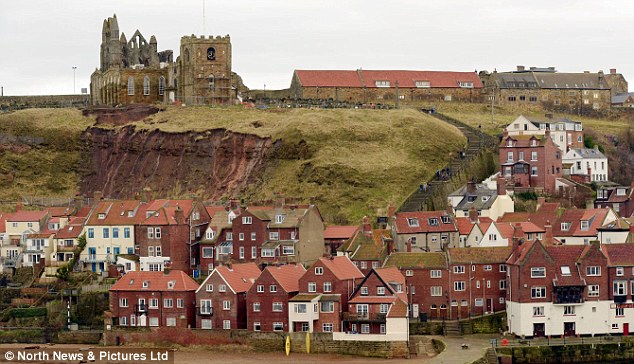
Photo of erosion, from the Daily Mail

Although not really–it’s a very nice town.  Except that. . . well, it almost does seem that something is a little off about Whitby.  The cliffs over Whitby began crumbing just three years ago:  a potential disaster for the church.  If they can’t stop the erosion, St. Mary’s could soon tumble into the sea.  Locals are watching the situation with concern, and more than a little dread and disgust:  the homeowners below the eroding cliff report that skulls and bones  are falling from the sky into their backyards.  The crumbling cliff is the church’s graveyard!  This is like the wreck of The Demetrius all over again.  It doesn’t bode well, my friends. . . it doesn’t bode well.

So a word to the wise:  if you are naughty enough to get sent to Whitby any time soon, make sure to pack your garlic necklace.    Happy Halloween!

*   *   *  *

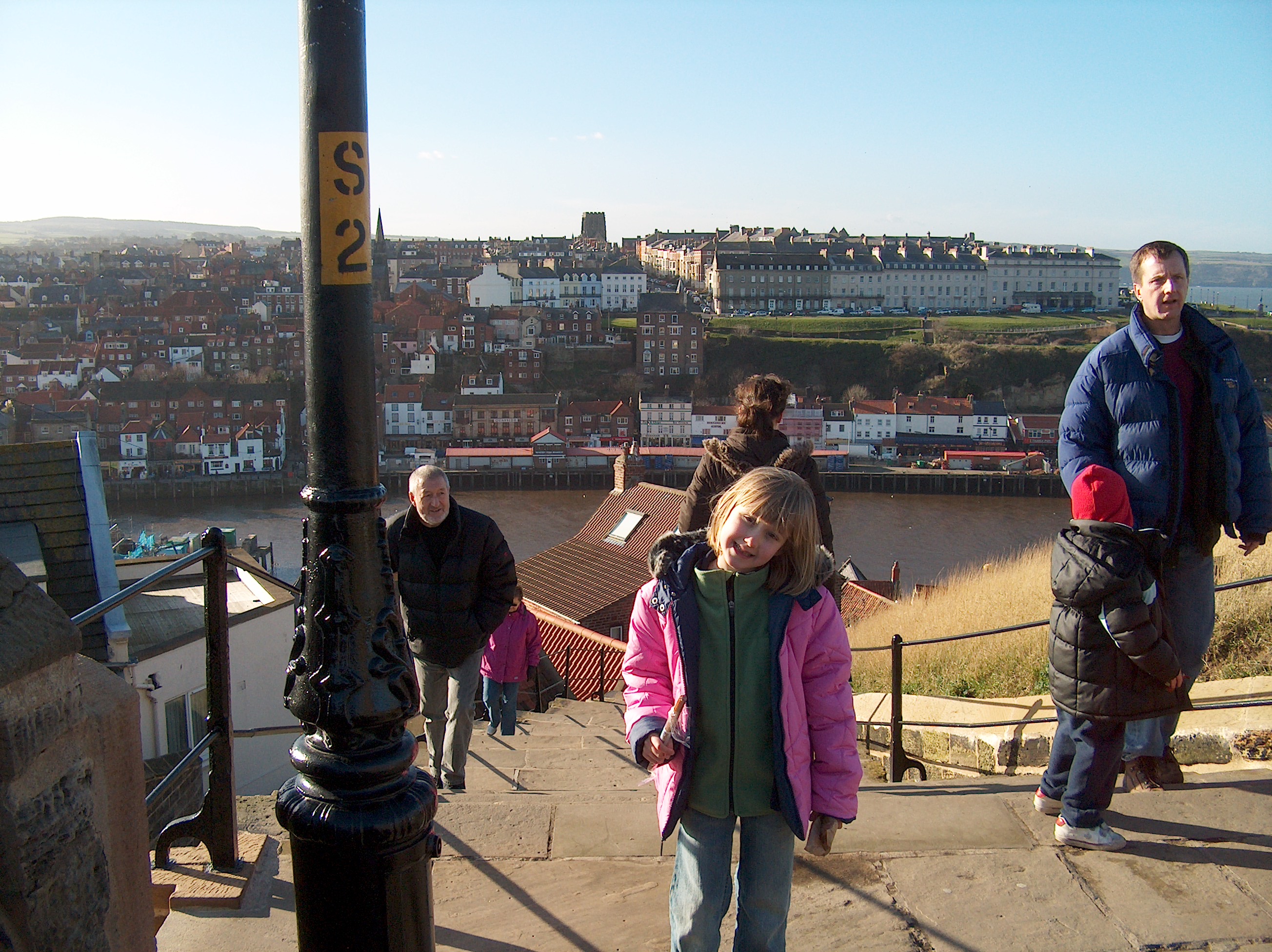
A few more photos from Whitby:

2007-001-copy


2007-003
Near the top of the 199 steps up to Whitby Abbey.


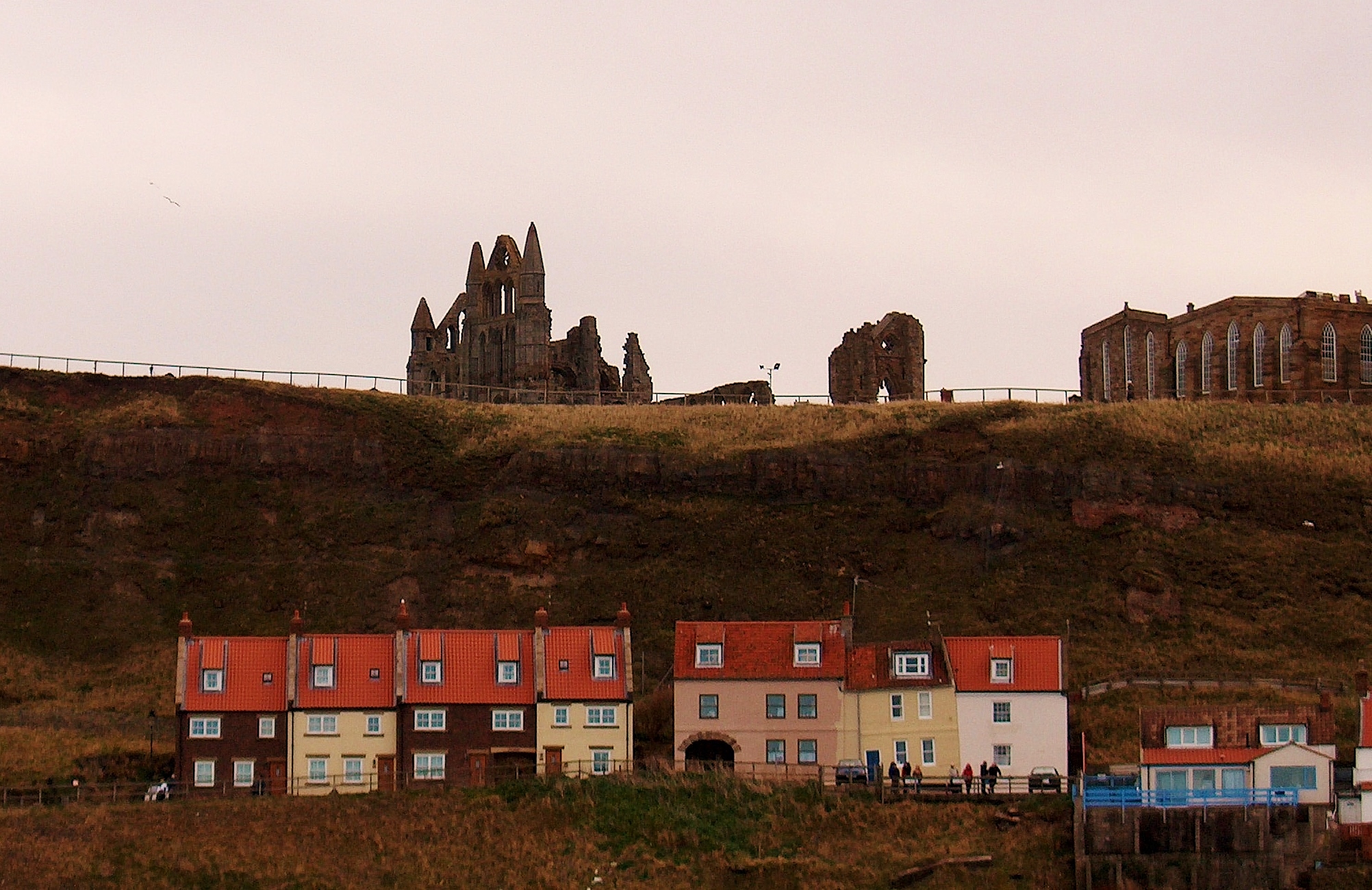
Above the harbor at Whitby, high up on the cliffs, sits Whitby Abbey– or the ruins of it, anyway.  It was to the abbey and graveyard that Dracula ran, up 199 stairs that are still there today.

If you make it up the stairs (not such a bad climb), you have a great view of the city and the harbor below.


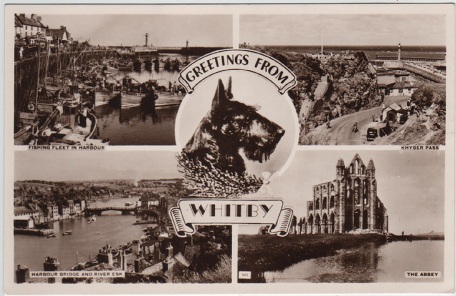
whitby%20multiview


If I were designing this postcard, it would have a little grey mouse at its center!


*Our little mouse never did make it to Whitby.  He met a different, but sad, end that  I’d rather not discuss.

Eating Local: Breaking Bread in Turkey

antik road family
On the “Antik Road” in Cappadocia. (1998) A local family cooking flatbread over an outdoor oven in Guzelyurt, Turkey. They shared the bread with us–it was delicious!

via Photo Challenge: Local

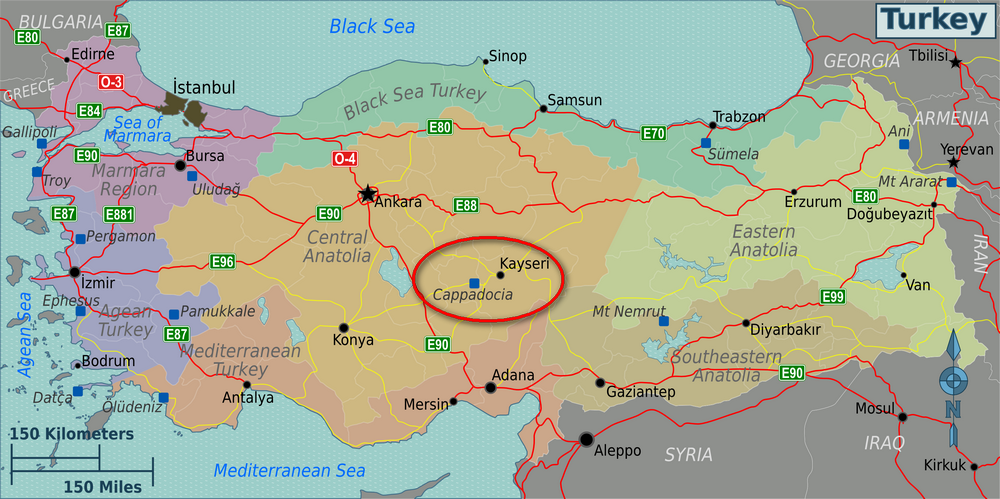
It was a crisp day in the Cappadocia region of Turkey, and my husband and I were out walking through the town of Guzelyurt– a small town set outside of the larger and more tourist-populated areas of Cappadocia.  (“Guzelyurt” means beautiful valley.)

We would often visit and stay in Otel Karballa there: a lovely structure that

had once been a Greek monastery, but was now converted to a small hotel with a fantastic chef and the ability to give its guests an authentic taste of life and history in this enchanting region.

turkey_regions_map3-1

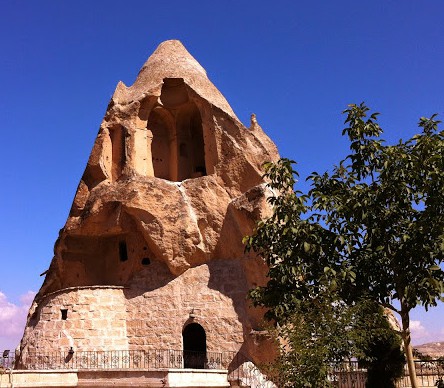
goremeThis area of Turkey is fascinating– so well known for its natural beauty and unusual landscape, as well as its long and illustrious history.   In fact, the two things go hand in hand.  The famous “fairy chimneys” of Cappadocia housed the cave dwellers of the Bronze Age, and later housed early Christian refugees and gave rise to the thousands of cave churches that dot the region.

dsc_0060
A fuzzy photo from one trip to Cappadocia: at the mouth of a cave church, with dwelling areas above it.

alanya-turkeye-193Once inside these churches, you are often  met with once-beautiful frescoes that (while still beautiful) are severely weathered by both age and ordeal.  Age, because most of the churches here date to between the 6th and 11th centuries; ordeal, as they were intentionally defaced because of religious aniconic sentiments.

If the cave dwellings and the colorful history weren’t enough to make Cappadocia a fantastic destination, it has this going for it:  it’s no artifact, it’s still living.  The potteries of the region are thriving, the people are hospitable, and many locals still live in the hollowed out cave dwellings (and have wired them for electricity!).

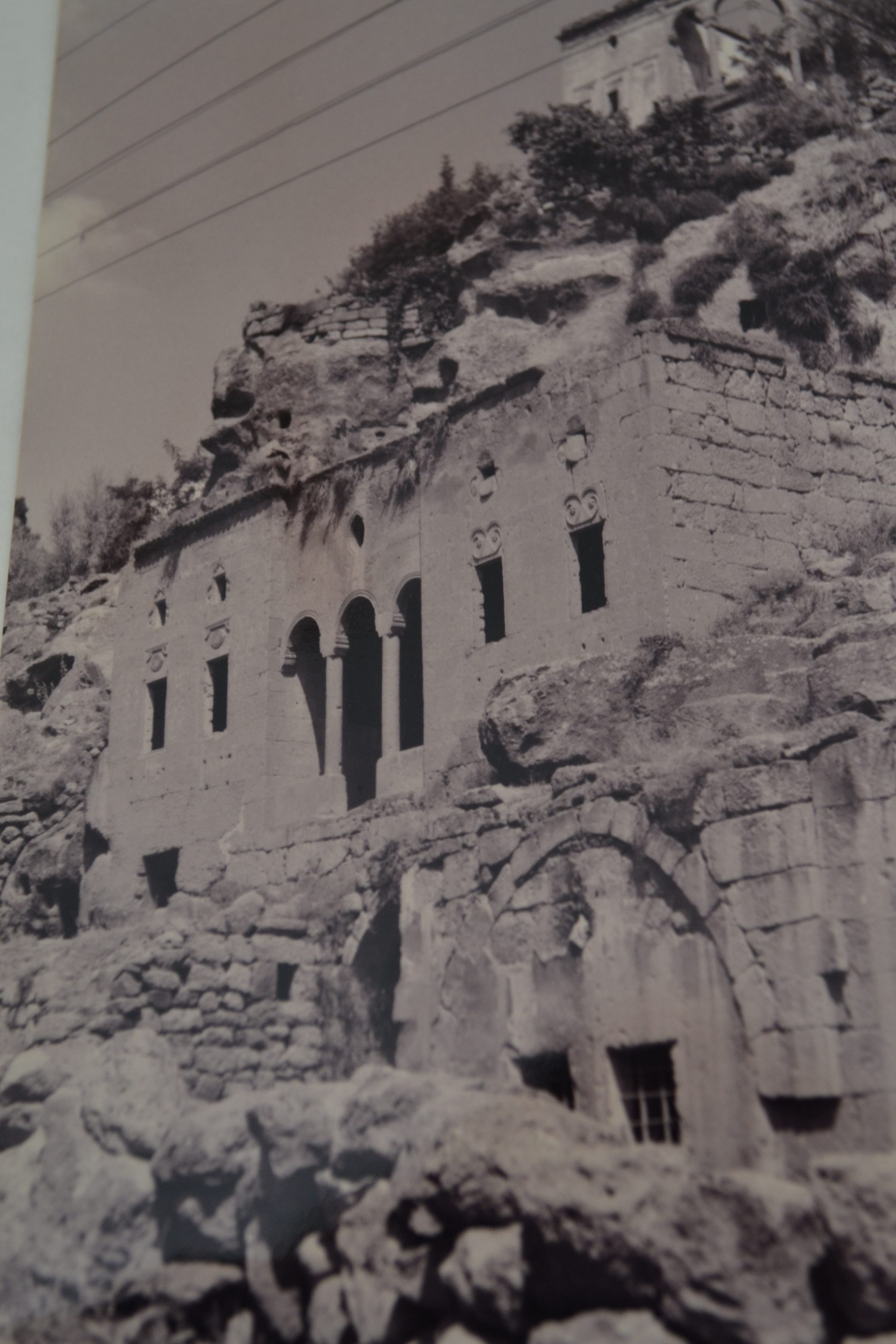
Walking down one ancient road in Guzelyurt, you might look up to see this:

dsc_0059

only to believe that you are passing by empty, ancient buildings (but note the electrical wires that run the length of the road).  Then the next thing you stumble upon, two doors down, is the family from the lead photo on this post, huddled in the doorway of another ancient structure and adjoining cave and making their daily flatbread over a simple fire and dome of hot metal.


The ancient meets the everyday in the streets and valleys of Cappadocia,  the modern meets the miraculous.  For my husband and me, who grew up in the tidy convenience of suburban America and were more likely to take dinner  from a casserole dish hot out of a Kenmore oven, or even from a drive-through  fast food window,  this family, hard at work to make their daily bread, kneaded and rolled on a board on the ground and cooked over an open fire on a humble metal dome, this moment was extraordinary.  And so very ordinary too.

We stopped and spoke to the family.  We shared what little language we knew, and they shared some of their bread , warm and crisp from the fire. I don’t think anything has ever been more delicious than those few bites shared on an ancient road.  What an incredible way to eat local.