All Hallows Week: The Ghosts of Wartimes Past

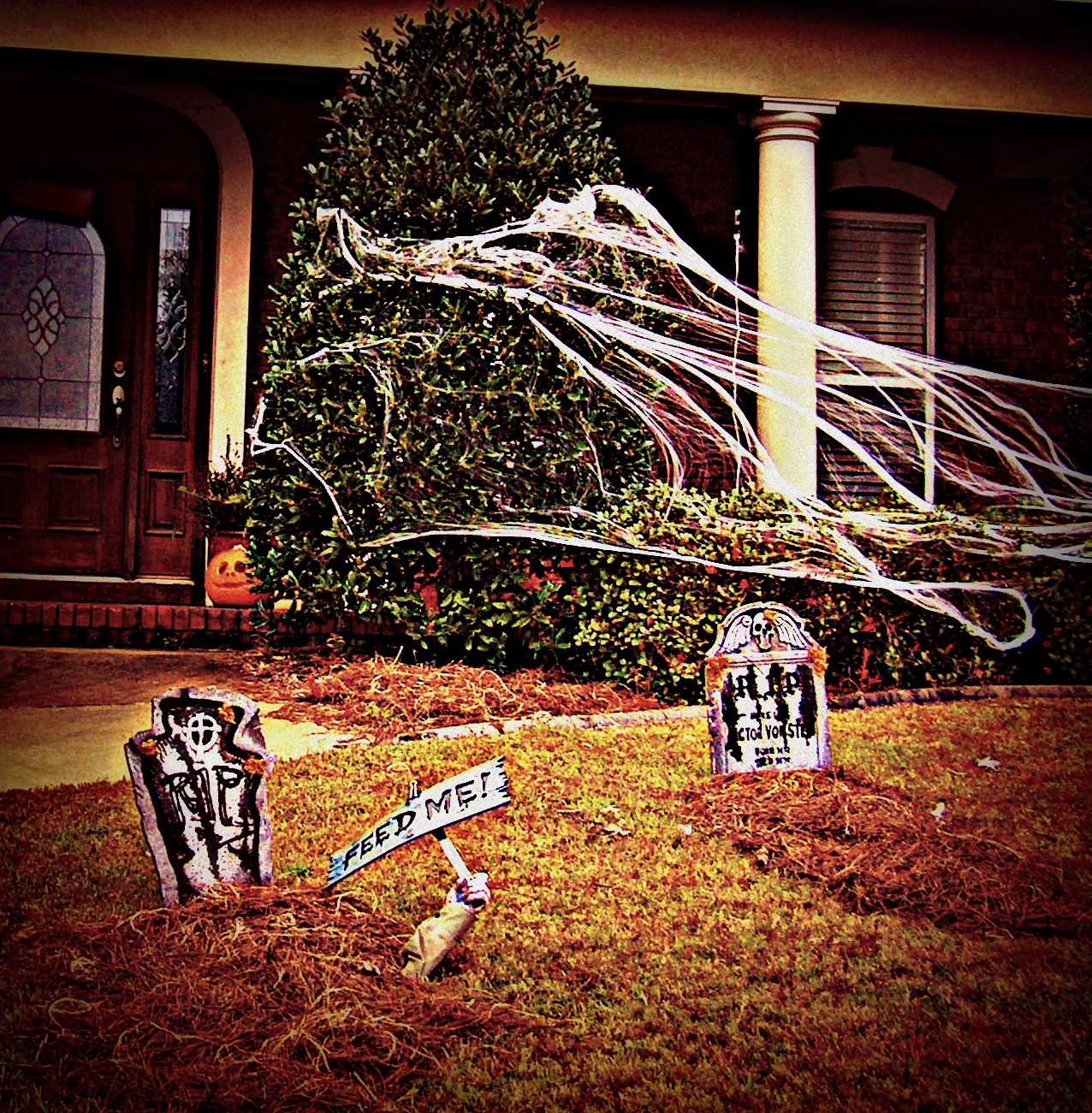
creepy halloweenThe pumpkin sits, uncarved, on the front steps, and the massive bowl of Halloween candy sits undisturbed near the door–so, surely, it’s too early in the season to invoke Charles Dickens and A Christmas Carol.

But here I go–because it’s never wrong to call on  Dickens (!), and because Europe is a haunted continent.  At Halloween, on Christmas, or any given day, its history is rich and messy, and its ghosts,  like Jacob Marley, won’t be silenced.  In our experience, these specters whisper at you from around each corner.
DSC_0925

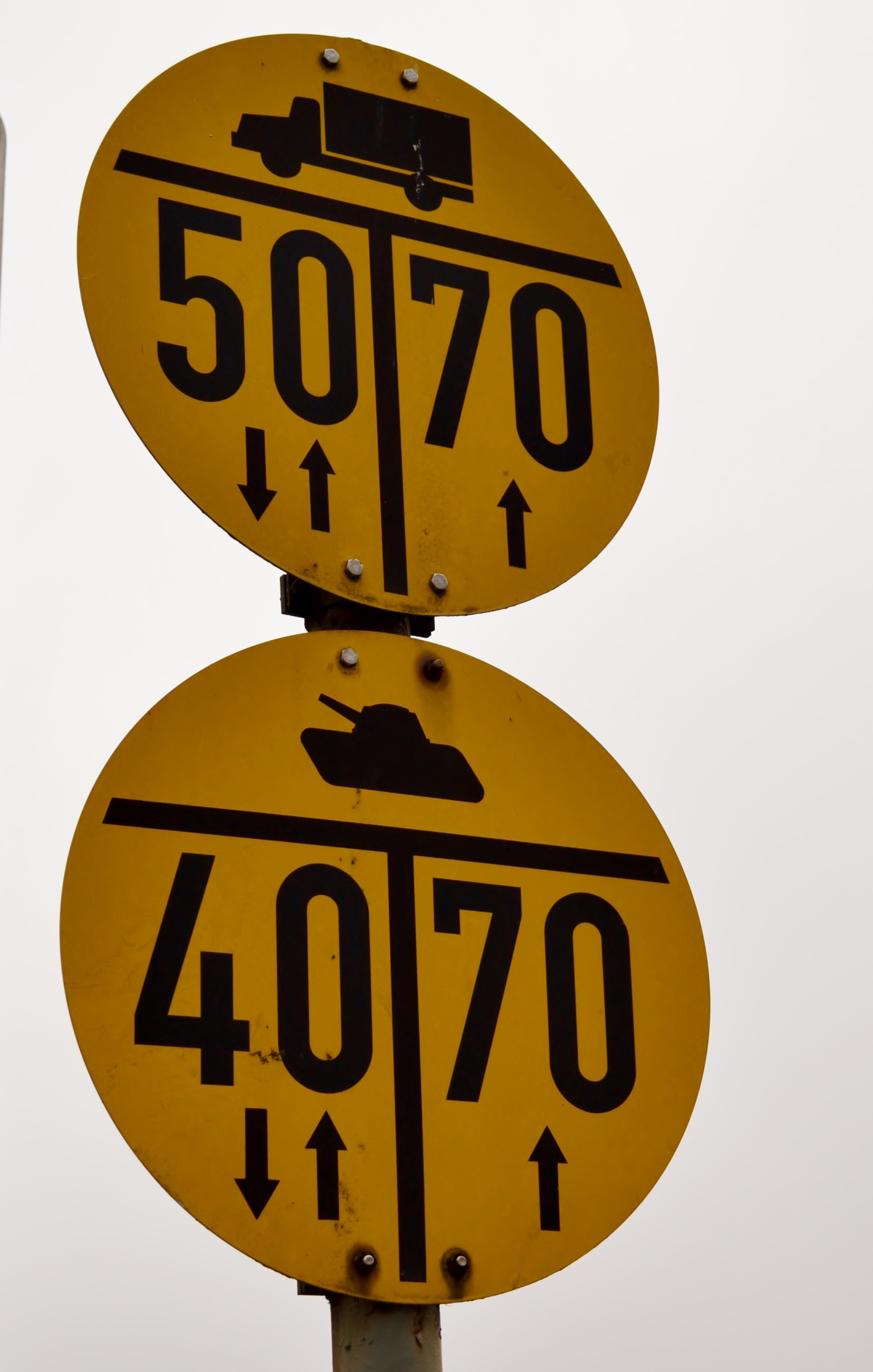
In a nearby town  there is an odd sign designating a speed limit for tanks.  I occasionally pass this, and I always laugh and cringe at the same time.   I assume it is a remnant of  Cold War times, although this is just a guess. Maybe troop movements around here are frequent enough that this is still warranted?  Either way, I find the sign both amusing and jarring.  Do I need to be worried about tanks rolling through the city center?  Probably not, but it does make me think of the citizens of Ukraine, where the everyday reality is more raw; and it also conjures a not so distant past in this historically complicated country.
DSC_0787


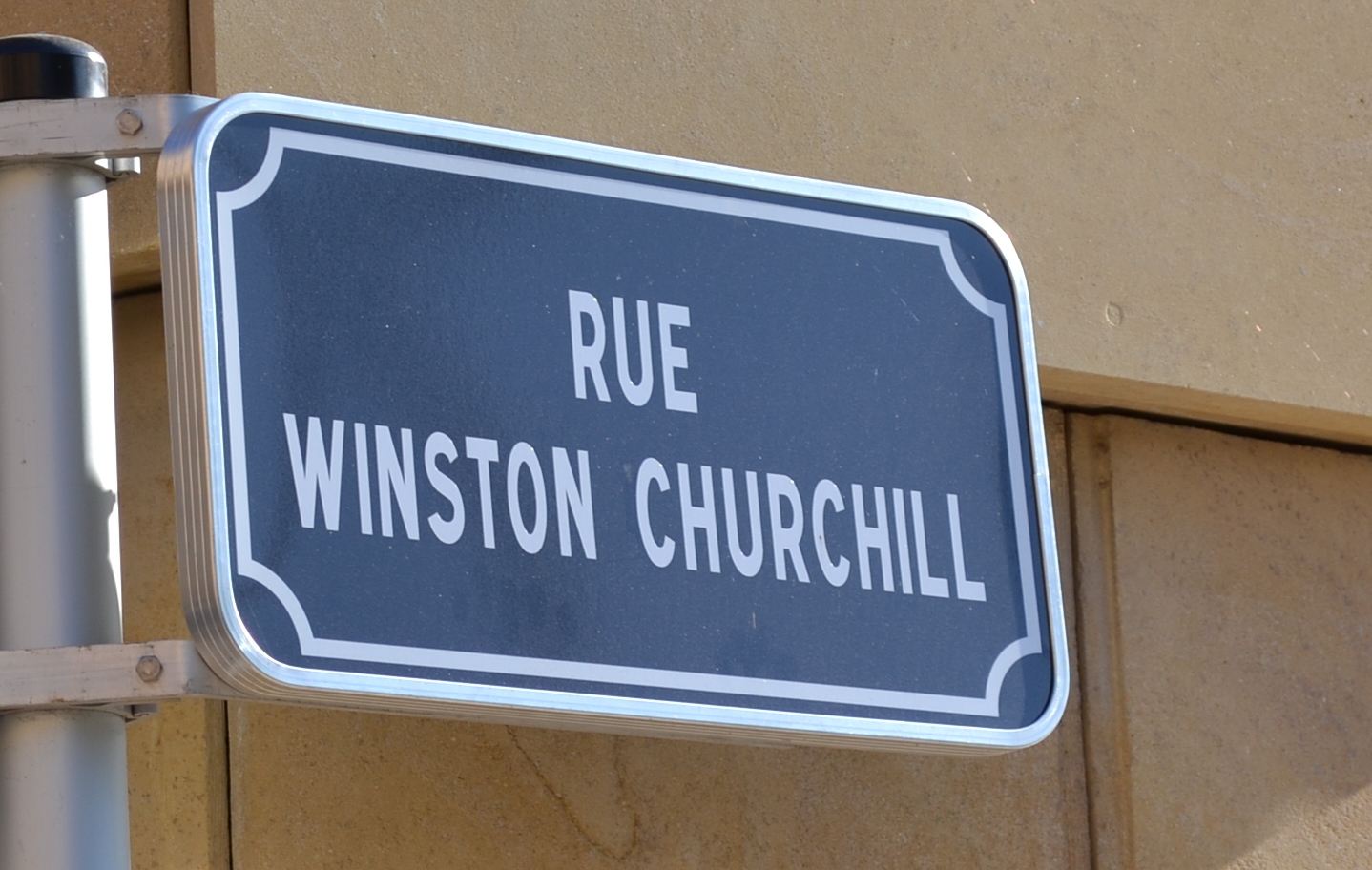
In Metz, France–the city that brought us a war hero in the unlikely guise of the baker Harelle (see post “The Bread is Mightier than the Sword”)–you can’t help but see the ghosts of the past on each block, beginning with the chapel  of the Knights Templar (to the right)DSC_0775 and running up through the Second World War and the present day streets honoring the likes of Winston Churchill.
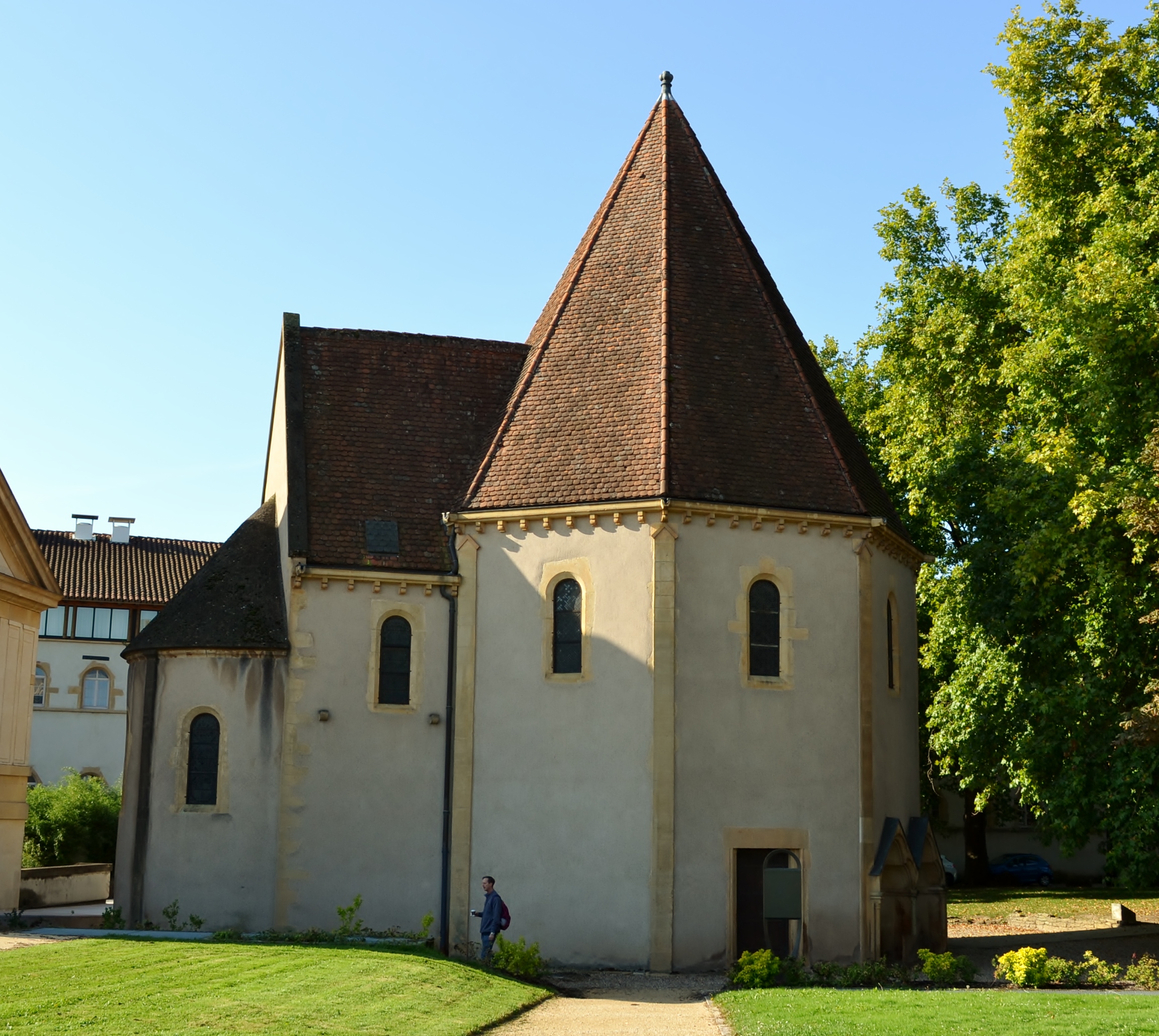
I’m always stunned by my ability in Europe to walk a city block in space  and feel that I’ve walked a thousand years through time and history.   William Faulkner may have had the American South in mind when he wrote, “The past isn’t dead; it isn’t even past,” but his words seem to reverberate off the stone streets of Europe.  We tread on hallowed ground and haunted ground–and I couldn’t tell you were the one starts and the other stops.   Especially regarding the somber ghosts of the Second World War.

I find myself pulling against visiting the concentration camps, at the same time that my conscience keeps telling me that this is something I need to do.  I can’t imagine setting foot on those grounds and not feeling physically ill,  possessed of the anguish of the souls who were tortured there. But those anguished souls need us to remember, don’t they?  We owe it to them.   I can tell you, my own Marley-esque specters are visiting me on this one.

Not all ghosts are war-torn and tortured souls, however.   Our historical imps deserve to be noticed too.

So, as a sidenote on Dickens and his ghosts, here’s a travel tip for London:  The George Inn in Southwick.  It sits on the south bank of the Thames, is an old (400 years old, give or take) pub that’s been in business all these long years.
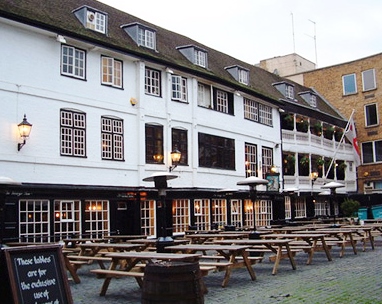
The George Inn, Southwark London

We stumbled on this pub in 2010.  Although we didn’t stumble, really–I dragged my family out of their way to have lunch here, and it was a very good call.

Why make a grand effort to eat at this pub in a city full of pubs?  Partly because of its general history–in business since the 1600’s; still boasting a gallery of balconies where plays and concerts used to take place, it is reported to be the last remaining galleried inn in London; and (here’s the kicker) an old favorite of Charles Dickens.  The food here was great; I had a grilled goat cheese salad that I remember 4 years later! Granted, our waitress was less “waitress” and more “table wench” in attitude–but, if nothing else, it added a Dickensian touch to the meal.  And our inquiries about the history of the inn and its famous patrons lead to a journey behind the bar, where there is a framed document bearing Charles Dickens’s signature.  If my rusty memory serves, it was a copy of his Last Will that he gave to the Inn owner (knowing it would have some value), in lieu of actually paying his bar tab.

In the style of a worthy “old haunt,” this speaks of both mischief and misfortune.  Our Charles Dickens was both debtor and darling, making him the perfect drinking buddy for anyone who might find themselves at the bar here and lifting a glass to old Charlie’s Last Will.  Talented as he was, his life wasn’t perfect.  Nor was it infinite:  so raise a pint and lean in toward the framed document, and I’ll wager that you’ll hear him whispering, “Cheers and carpe diem!”

(Lore has it that Shakespeare may also have been a customer–his Globe theater was close by–but the veracity of this is lost to the haze of time gone by.)

Some ghosts loom large (the scars of a world war);  some ghosts are more personal (unpaid debts).  But in this season of hauntings, it’s best to give them all their due.

Happy Halloween!

Boo!
In Praise of the Random… or, How I stumbled on Frankenstein Castle

frk castle

Sometimes days don’t turn out quite the way you planned.  And those unexpected things that crop up…well, in Europe, they can take an interesting turn.

A few days ago we hopped in the car to head off to a wine festival just 50 minutes away.  We went early with kids in tow, expecting to catch a little wine and food and a few rides for the kids, but not the raucous, full-on wine lover’s equivalent of Oktoberfest.  “Fest-light” was our goal.

What we got was “Fest-Ultra-Light.”  It seems we arrived the morning after the big parade, and the morning before the evening’s concluding fireworks gala.  The place was a ghost town.  A few other early risers were taking in the food and drink, and we had the rides all to ourselves.  Sure, there are advantages to skipping the crowds, but it felt like we’d missed the party and showed up for the hangover.  Hmmm…

The fest was a bit of a wash for us.

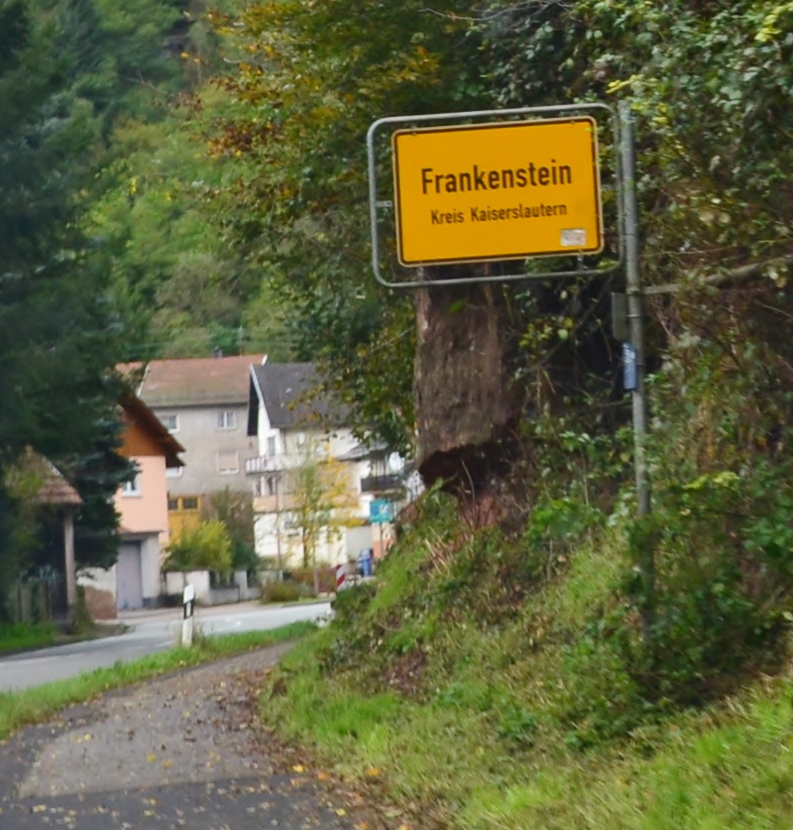
But that didn’t matter to me  because on our way over the river and through the woods to the Fest that wasn’t, we drove through Frankenstein village.  Are you listening?  We drove through Frankenstein Village!   Who knew?DSC_1037 - Copy

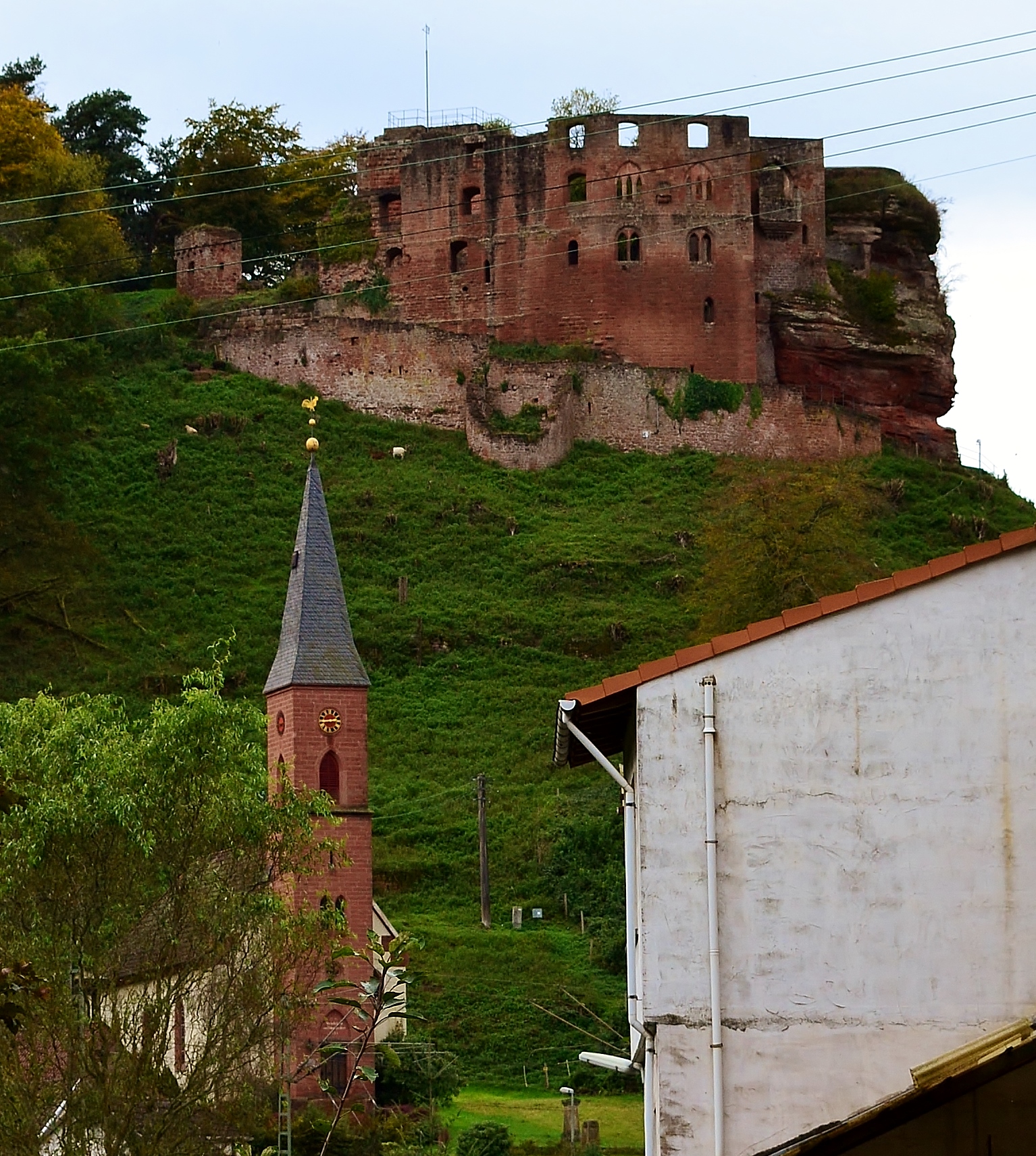
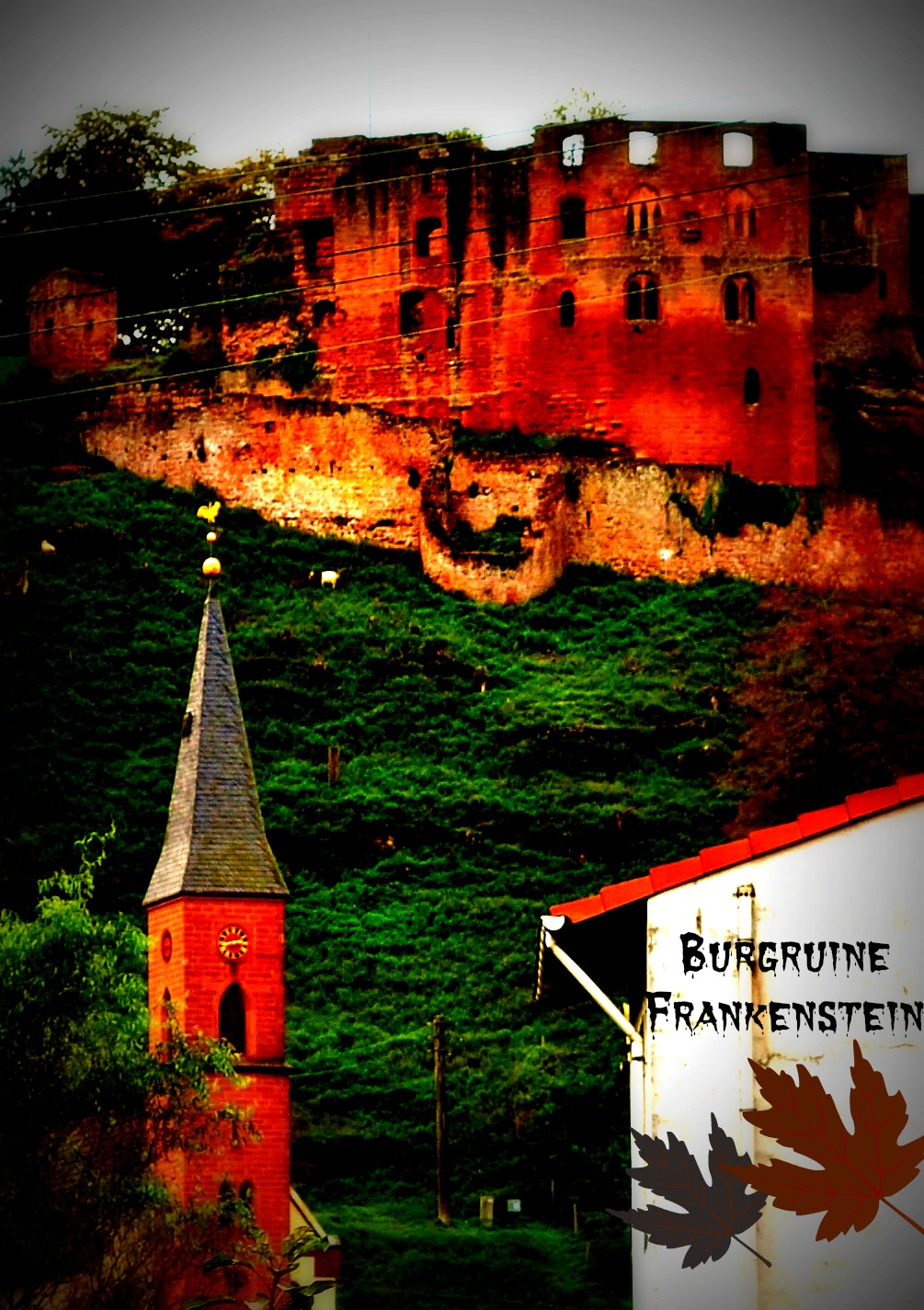
This humble village lies on a winding road, cozied in tight between hills and streams, high trees, and old homes.  It is close to Durkheim and Speyer in the Palatinate Forest of Germany.   And as we drove through the Palatinate Forest, the fog just beginning to lift, the road twisting  us until we were dizzy, we saw a flash of sign reading “Frankenstein,” and then looked up to see this:

DSC_1042

If that isn’t a great October morning eye opener, then there’s no such thing!   You can keep your tootsie rolls, candy corn, and bit-o-honey–I’ve had my Halloween treat!!!!

(But I’d still take some wax lips, if you’re handing them out. . .)

Here are a few notes on Frankenstein Castle:

*It dates from the 12th century, and was under the administration of the von Frankensteins.

*It lies on a strategic outcropping, began as a fortified tower, and was added to and then damaged in many skirmishes from the 1200’s through the 1500’s.

*The castle is presently more of a ruin than a castle, but it’s now owned by the Rhineland-Palatinate state and some foundational restoration has been done.

**HERE’S THE THING: A lot of confusion arises because there is another, more intact, castle near Darmstadt (in Muhltal) that bills itself as Frankenstein Castle.  It seems likely that it was an inspiration for Mary Shelley’s story.  A man named Dippel was born in that castle, and stories surrounded Dippel and his claims to have created an oil that was an “elixir of life.”   An earlier owner of this house was the founder of the Barony of Frankenstein, but now this castle hosts Halloween parties and capitalizes on the Frankenstein tale.   Both castles, however, trace back to the Frankenstein name.

Ultimately, the name Frankenstein was chosen by Shelley for her fictional tale.  If it took these German rumors or atmosphere as its starting point, that’s great, but Shelley was the doctor who breathed  life into the story.

Maybe the inspiration struck her on the way home from a wine fest.   Maybe.


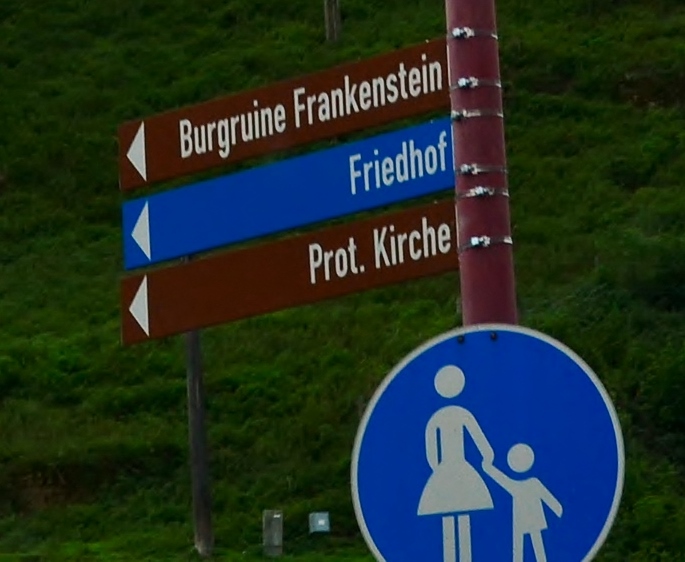
One more photo for you.  This has got to be one of my favorite sign-clusterings.  Ever.

DSC_1045 - Copy Frankenstein’s Castle.  

Cemetery.  

Protestant Church.  

Pedestrian Path.

Because what pedestrian wouldn’t want to walk past the church, the cemetery, and Frankenstein’s Castle ruins as dark falls?

Throwback Thursday, Music Man in Adana, Turkey

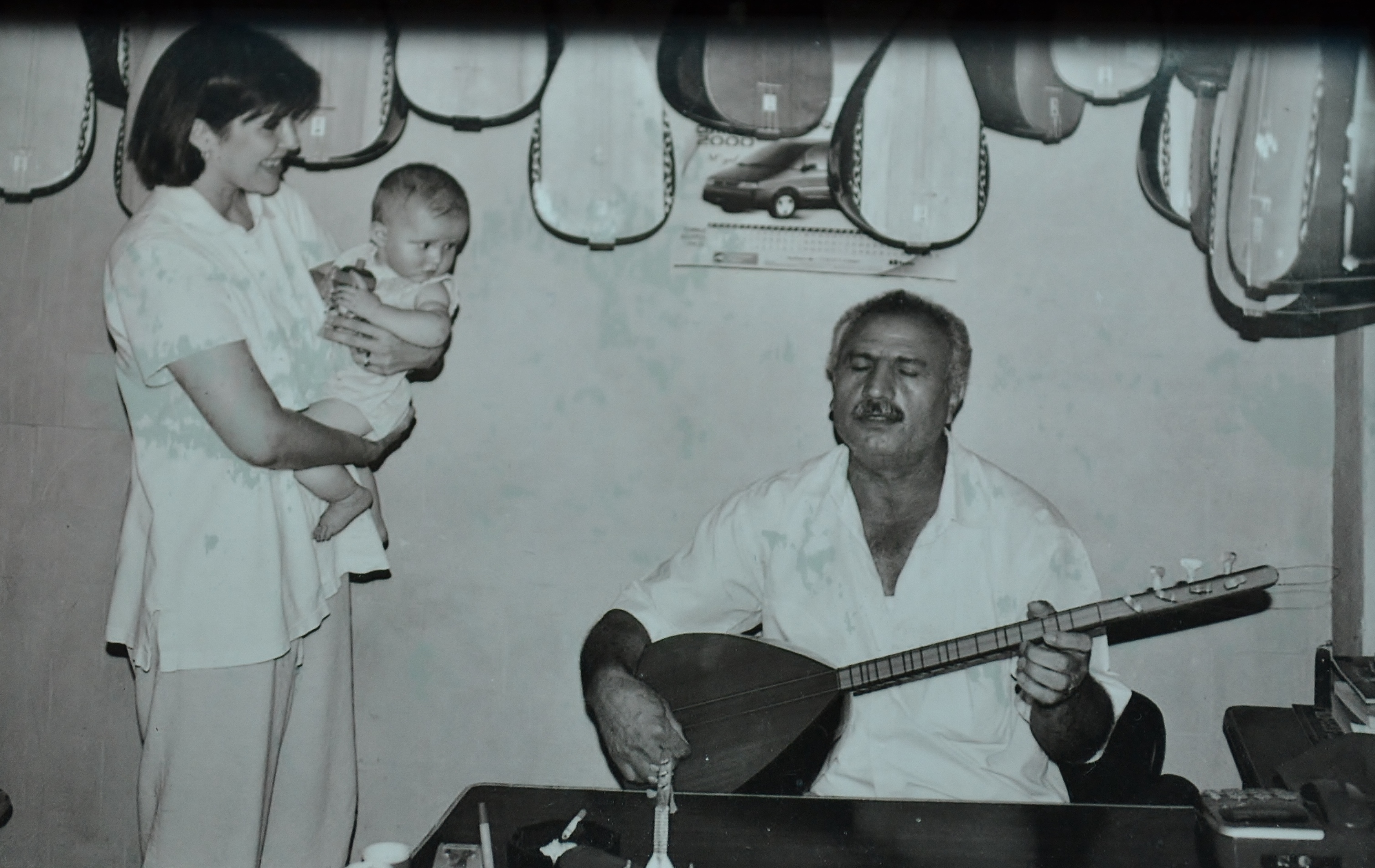
14 years ago, baby and me.  This kind man plays his Turkish Saz for us.
14 years ago, baby and me. This kind man is playing his Turkish Saz for us.

The year is 2000.  The day is hotter than Hades in downtown Adana, Turkiye. .  .but just when we think we will melt into the dust and sand, never to be seen again, we meet up with a very cool man and his storeful of Saz.    (Sazes?  Sazi?  Sazzzzzs? What would the plural be?)

He serenandes us and gives us a cassette tape of his songs to take with us  so that we can remember him after we get back on an airplane and return to our life in the States.  Which we will do just a few weeks later.

Fourteen years have passed, and my daughter won’t remember this moment. . . but I do.  So vividly that it still cools me on a hot day and reminds me what it felt like to hold her as a tiny child in my arms.


The Bread is Mightier Than the Sword

DSC_0811
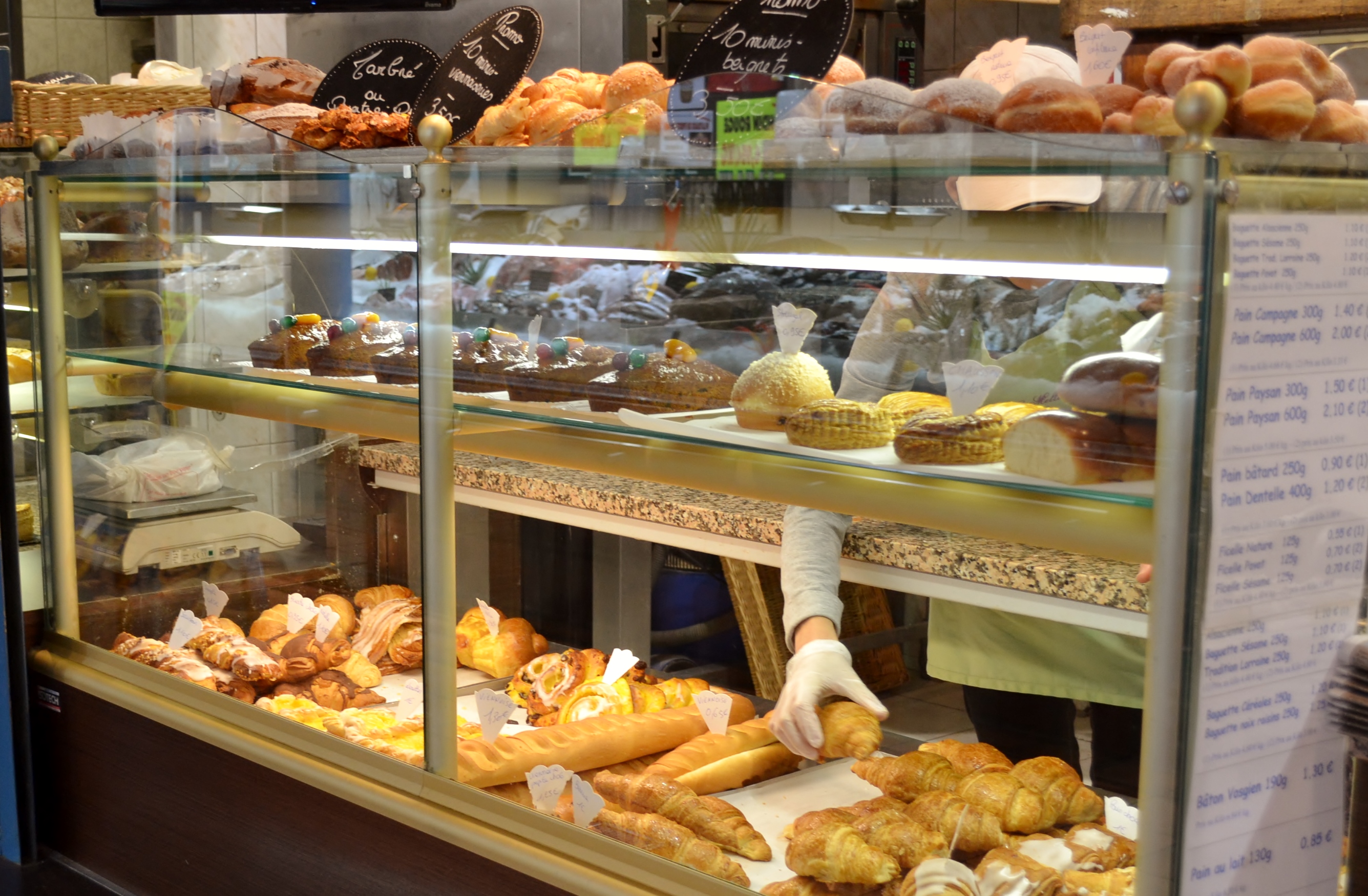
Metz, France–bakery in the covered market

As the French say,  le pain is mightier than the sword.

Okay, so they don’t say that, but somebody should, because:

DSC_0771 - CopyNumber one —  YUM

Number two—   You catch more flies with honeybuns

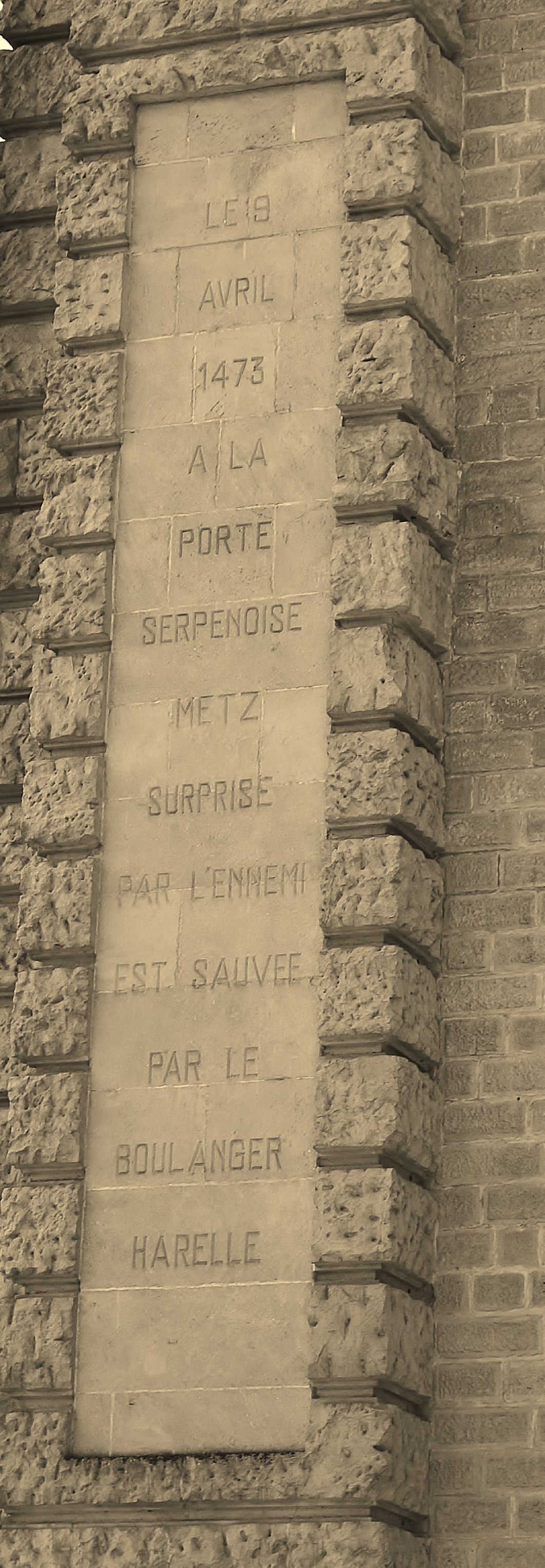
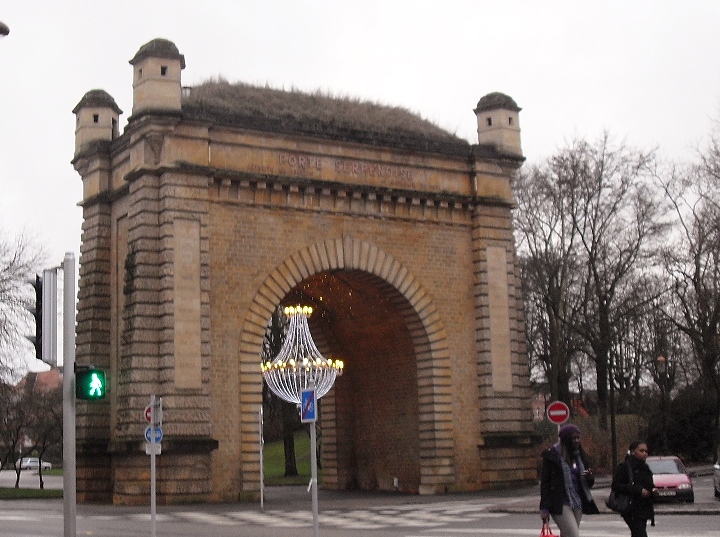
and Number three—   There is historical proof that it’s true.  In Metz, France, there is a gate in the Imperial Quarter that proves the point.  Down the side of the gate (the Porte Serpenoise), there is  a column commemorating an heroic event on April 9, 1473– “Surprised by the enemy, Saved by the baker Harelle.”

Now that’s history you can sink your teeth into!

Porte Serpenoise, from Wikipedia


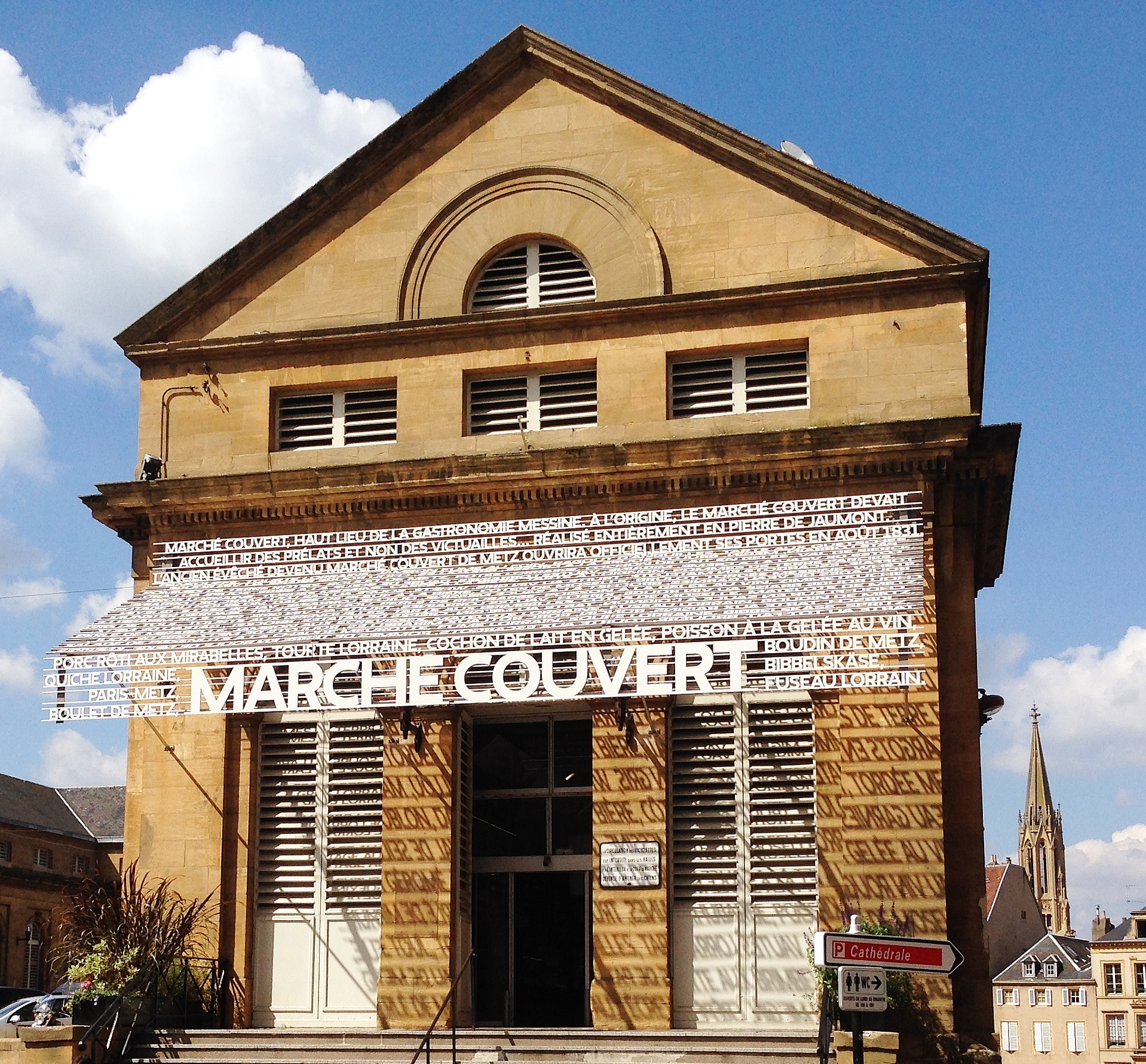
The fabulous Marche Couvert in Metz.

The fabulous Marche Couvert in Metz.

If you visit Metz, swing by the Porte Serpenoise.   Then visit the incredible cathedral, and stop in at the Marche Couvert (the covered market)– it’s a great place to eat lunch; pick up fresh meats, cheeses, or produce; or nibble at the bakeries and pay tribute to the heroic baker Harelle.