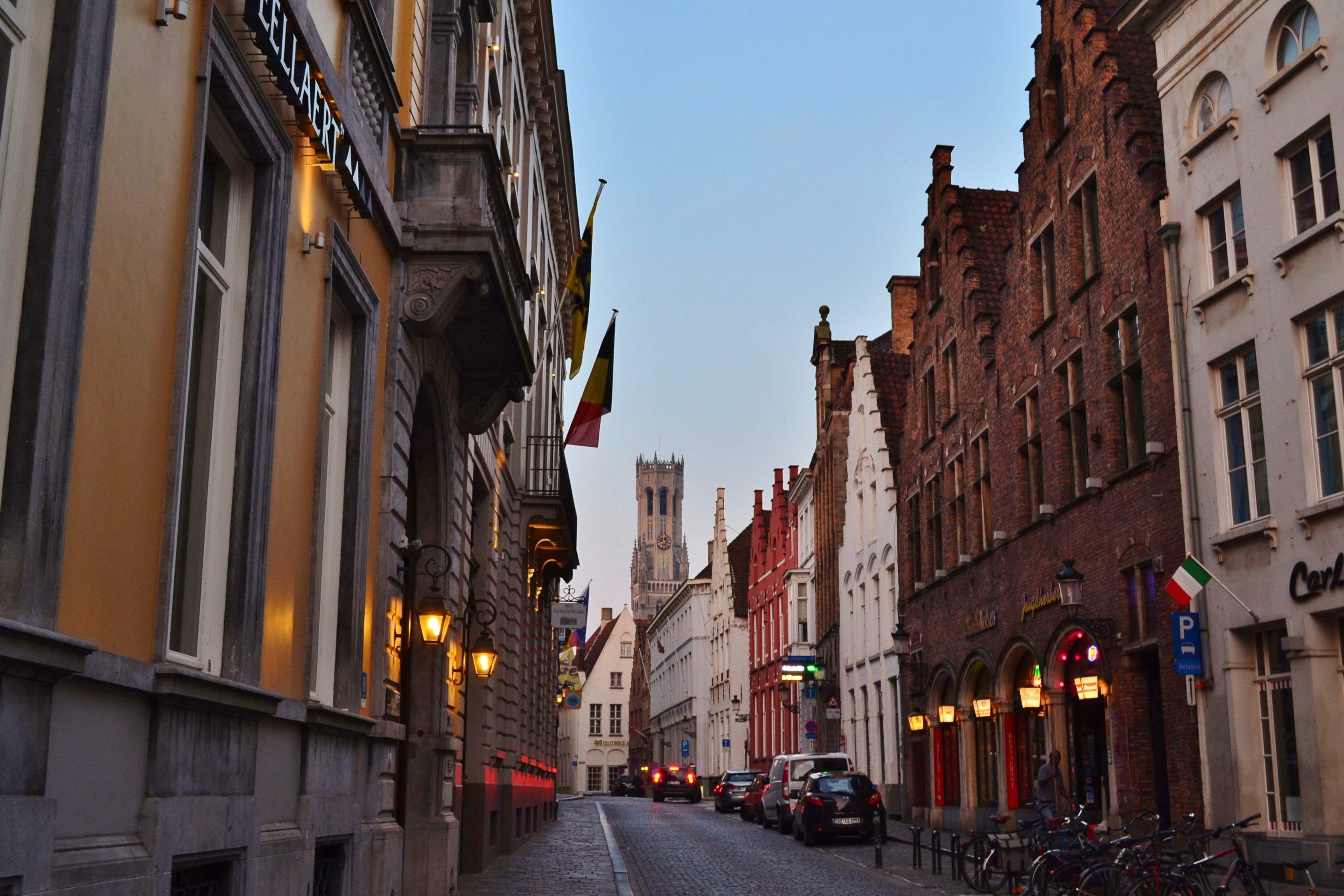
Dusk in Bruges


I woke this Saturday morning to find that Epicurious.com had left a delicious morsel in my news feed: a short article by Sam Worley,
What? Is this possible? You know I have a thing for stretchy Turkish ice cream– if you were paying attention, I sang its praises last fall in a blog post called “How We Eat . . .”. You can imagine Mr. Sam Worley’s article quickened my pulse more than a little. It has arrived on my shores! Turkish Dondurma! I squealed, I celebrated!
But then I wondered. Can I eat Turkish dondurma from the local grocery aisle, or would it be wrong, and certainly disappointing, to pull it from my upright freezer in my air conditioned Floridian home and eat it with a spoon and dish in my breakfast nook? Would it betray every memory I have of sassy dondurma sellers in Istanbul or on the Turkish Mediterranean, paddling out the stretchy treat, only to whip it out of your grasp at the last moment. . . only to finally relent and offer up the treat, which I would greedily gobble before it (or I) melted into the hot walkway of a Turkish summer day.
Would my favorite sweet Turkish treat suffer if it wasn’t fresh, and if everything about its presentation and circumstances was decidedly un-Turkish? Decidedly mundane. Bought at the local grocer.
Yes. I think the answer has to be “yes.”
Still, you know I’ll look for it in the stores. Maybe I’ll purchase some. I hope it will be delicious. It’ll certainly be a treat and a novelty . . . but scooped from a store carton it will be an anemic facsimile.
I’d rather enjoy it by the Sea of Marmara or the Mediterranean– who wouldn’t?
I’ll leave you with the blurb from Epicurious (which includes a fantastic video of an impish Turkish ice cream man at work), as well as my original post on Turkish ice cream.
Happy Monday and bon appetit– or, as they say in Turkey, “Afiyet Olsun!”
http://www.epicurious.com/expert-advice/turkish-ice-cream-comes-to-the-us-elastic-stretchy-article
Behold the pictures, all over the internet, of street vendors stretching Turkish ice cream just like it’s boardwalk taffy. That’s maraş dondurma, a confection made not just with milk and sugar but with mastic, a tree resin, and salep, the roots of wild mountain orchids, which imparts elasticity. The best and frankly only way to describe this is as stretchy, chewy ice cream. Word on the street is that people have been photographed jumping rope with it; others have cut it with knives and chainsaws. On the street, too—or in the markets, rather, where you get this ice cream in Istanbul—its unique stretchiness enables vendors to play all manner of practical jokes with would-be ice cream eaters, as in the video below.
The metal rod you see there is part of the traditional production process: the ice cream is beaten—kneaded, more or less—so that it sticks to itself. What results is a frozen confectionyou can do some tricks with; it’s also quite a bit slower to melt than non-elastic ice cream, a boon in the Turkish summers.
Something like dondurma is now available in the U.S., but in grocery aisles rather than bazaars. Lezzetli Mediterranean Ice Cream, which has been selling in the New York area for a while, announced today that it’s expanding its distribution throughout the northeastern United States, with four flagship flavors: Chios vanilla, made with a Greek tree sap; chocolate–orange blossom; spiced date, and tart cherry. Lezzetli bills its ice creams as inspired by similar desserts of Turkey and the Levant—versions of dondurma also exist in places like Syria and Greece—and they aren’t thickened with orchids, which are endangered, but with other natural gums. (In Turkey, for this same reason, salep has given way to other thickeners, like guar gum.) Not in your local place yet? Request it! Your grocer might be pliable.
****
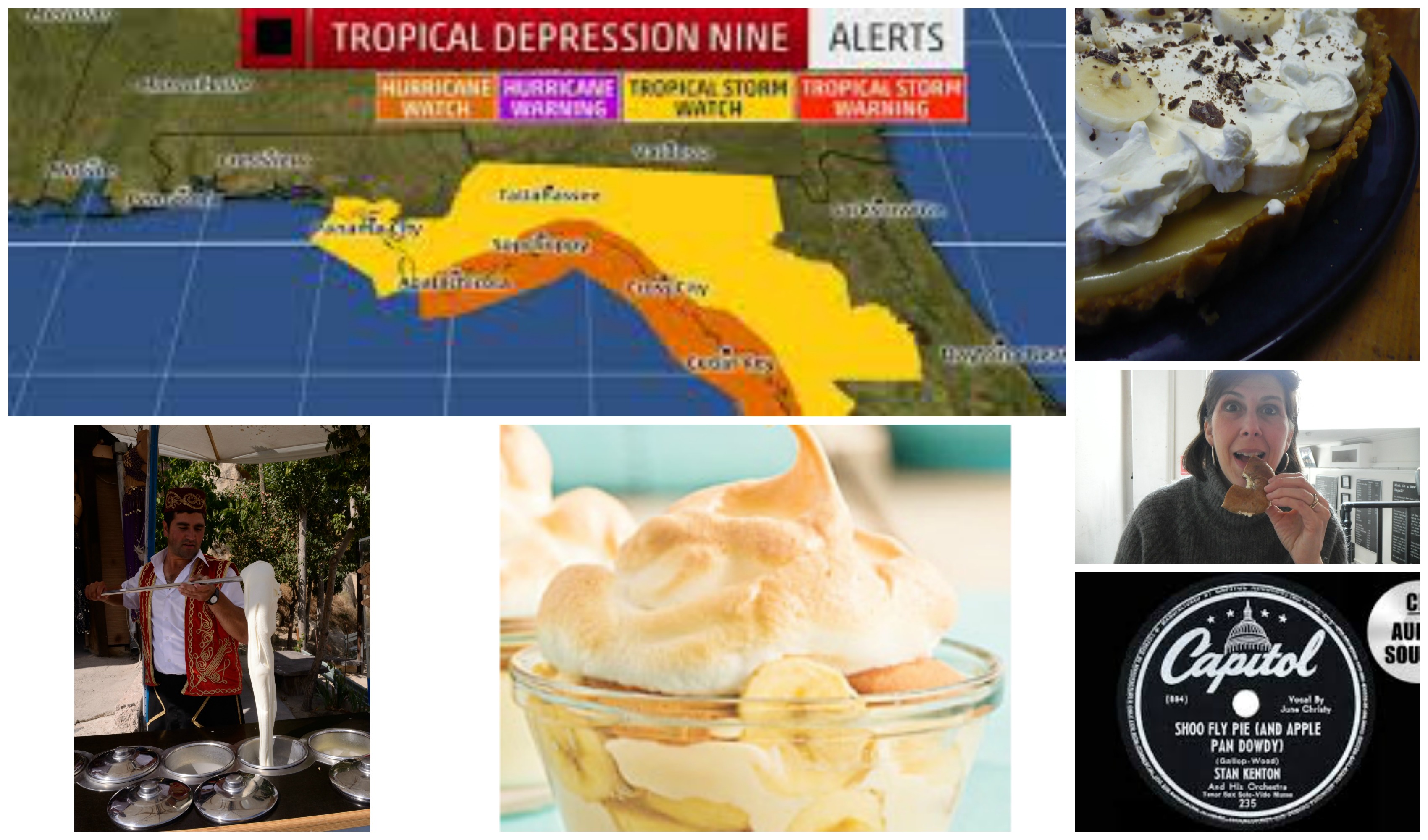
The title is a mouthful: a delicious, caloric mouthful. Inspired by a delicious and caloric, if somewhat stressful, week of cakes and puddings at our house. An actual storm is sitting out in the Gulf, on our doorstep, and making vague threats, while the figurative storm of finding your bearings in a new environment is battering us around quite handily. Under the circumstances, why not fatten our bodies and spirits for the fight, right? Cakes and Ale is a fine battle strategy, I say. Anyhoo, on with the post. . .
When I was young, my mother used to sing a song that would make us giggle and make us hungry at the same time: “Shoofly Pie and Apple Pan Dowdy, make your eyes light up and your tummy say ‘howdy.’” Silly. I’ve never had Apple Pan Dowdy, but I can imagine the cobbler-like creation with no problem. Shoofly Pie is harder to conjure. Obviously sweet and sticky– a fly magnet (yuck!)– but the closest thing I can picture is a chess pie, and I don’t think that’s exactly right. Which brings me to stretchy ice cream. What, you’ll ask, is that? A Floridian taffy-ice cream hybrid? An over-cooked custard that makes a chewy ice cream? No and no. I’m thinking of Turkish Dondurma– an ice cream made with wild orchid extracts and salep ( a milky Turkish drink containing orchids).
Dondurma doesn’t taste of orchids, it comes in many flavors. My favorite was banana.

I only discovered dondurma toward the end of our life in Turkey, which is a shame because it is silky and delicious . . . and stretchy. That doesn’t really affect the taste, but it makes for a great parlor trick. Dondurma is often served in a dramatic way, dished out with a paddle and wrapped around your cone, only to be pulled back at the last moment. The Turks love a laugh and good food, so why not marry the two?
I’ve been thinking about Dondurma lately. August in Florida will bring out all of your ice cream fantasies, believe me. But this week, I’m remembering Banana Dondurma while making a traditional Banana Pudding for my children. A REAL Banana Pudding– no instant pudding and cool whip. Ugh. A silky homemade custard is the only way to go, people.
My mother made this Banana Pudding for us growing up, and I’m pretty sure that her mother made it too. I’m printing the recipe at the end of this post. It’s simple and satisfying, and I like it best when it’s still a tad warm (but I know people who only like it cold, so this is clearly a matter of personal taste).

Like all recipes for BP, this one layers Vanilla Wafers, banana slices, and pudding. Like all the best recipes for BP, this one features a homemade pudding of milk/cream, eggs, and sugar– with a splash of vanilla tossed in after the pudding thickens. Believe me, you’ll be licking the mixing spoon after making this one. (And, as I’m writing this, I’m wondering if I could use this pudding, with banana and wafer bits thrown in to churn up a really delicious–though certainly un-stretchy– ice cream. I’m going to try this soon and get back to you.)
Banana Pudding is a staple of the American South, a time-tested comfort food, welcome around any pot luck or picnic table. Why is it Southern? I have no idea. It goes well with bourbon? (There are worse theories.) If you want a primer on the treat and its history, I’d suggest you read the article posted on the SeriousEats website– an interesting and remarkably in-depth read. If you’re here for the yummy, not the history, feel free to skip the article, fast forward to my recipe, and judge for yourself.
But not before you consider Banoffee Pie. It deserves a mention in a travel and culture blog, because what Banana Pudding is to the American South, Banoffee Pie seems to be to Brits. A perfect comfort food, a sweet banana dessert that pops up everywhere.
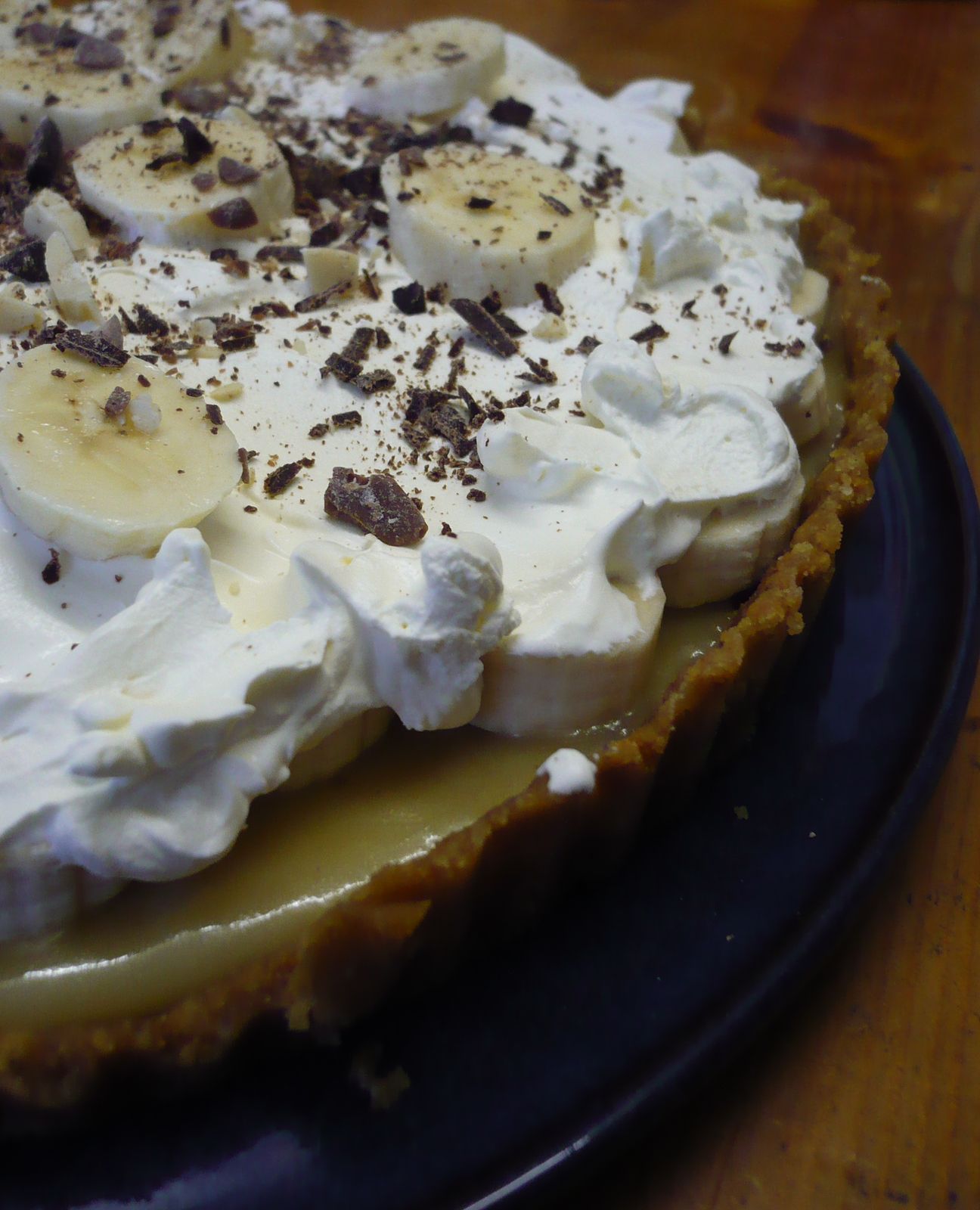
“Banoffee” you say? Yes– bananas, cream, and toffee. BAN. OFFEE.
Although it’s a British staple, it’s not one of those long-standing English recipes that dates back to the middle ages (think mincemeat pie). No– bananas weren’t easy to come by before modern times. Still, you find it in so many homes, on so many menus, and in endless incarnations these days. Nigella Lawson has a great looking Banoffee Cheesecake recipe, as well a Chocolate Banoffee recipe. There are Banoffee sundaes and cupcakes and pastries. If you can think up a twist to banoffee pie, it’s out there.
I have nibbled at Banoffee creations, but haven’t perfected my own version, so I’ll encourage you to find your own recipe. If you already have the perfect recipe, feel free to share it with me!
* * *
 I’ll leave you with my pudding recipe and a final thought on comfort food. On how we eat. I love sugar, and I love rich puddings, and I love sharing these things with family. But it’s not just the yumminess, and it’s not just the hospitality, it is the comfort that gets me this week– the ritual of sharing this favorite family recipe. Hemingway spoke of Paris as a moveable feast–a joy and light and influence, a wealth of experiences–that stays with you wherever you go. Whether or not we have Paris, we all have a storehouse of moveable feasts.
This week, Banana Pudding is my moveable feast. The world is spinning a bit fast for me, the Gulf is churning a bit violently, but I have my pudding (a tad warm yet) and I have my children with their spoons at the ready . . . and I find that I have a feast of friends around this table — I have my grandmother’s cooking, my mother’s singing, my Turkish ice cream man, and my British bakery, and I sit in the company of these fine things and dig in to my bowl, and I know, with a quiet conviction, that the world will be right soon enough.
*Ba’s BANANA PUDDING
Paris
I am just waking up from a long winter’s nap, it would seem. Blog has been dormant, but it will be back. I still have photos to post; I still have thoughts to flesh out.
Watch this space!
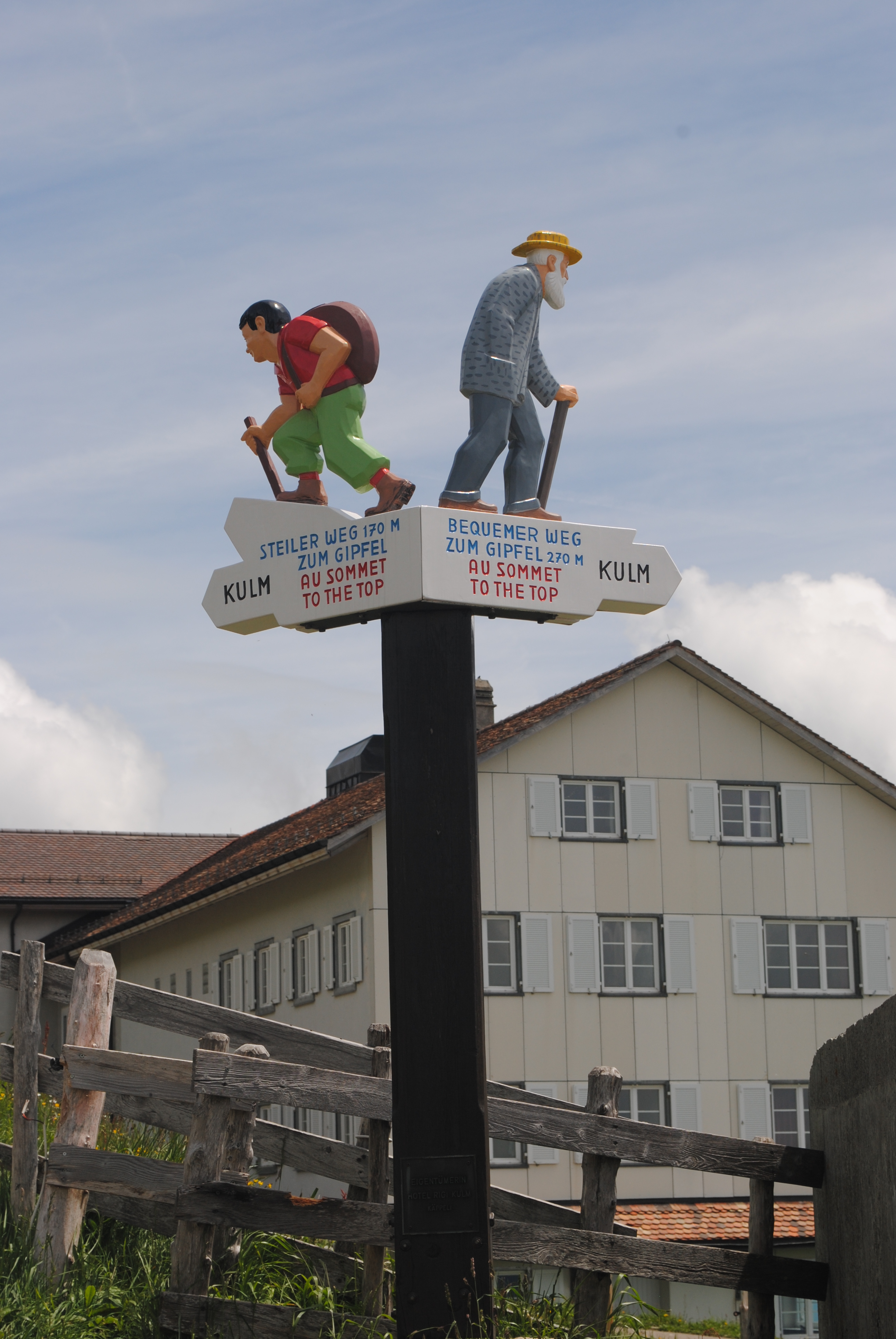
Mt. Rigi, Switzerland

It was a crisp day in the Cappadocia region of Turkey, and my husband and I were out walking through the town of Guzelyurt– a small town set outside of the larger and more tourist-populated areas of Cappadocia. (“Guzelyurt” means beautiful valley.)
We would often visit and stay in Otel Karballa there: a lovely structure that


had once been a Greek monastery, but was now converted to a small hotel with a fantastic chef and the ability to give its guests an authentic taste of life and history in this enchanting region.
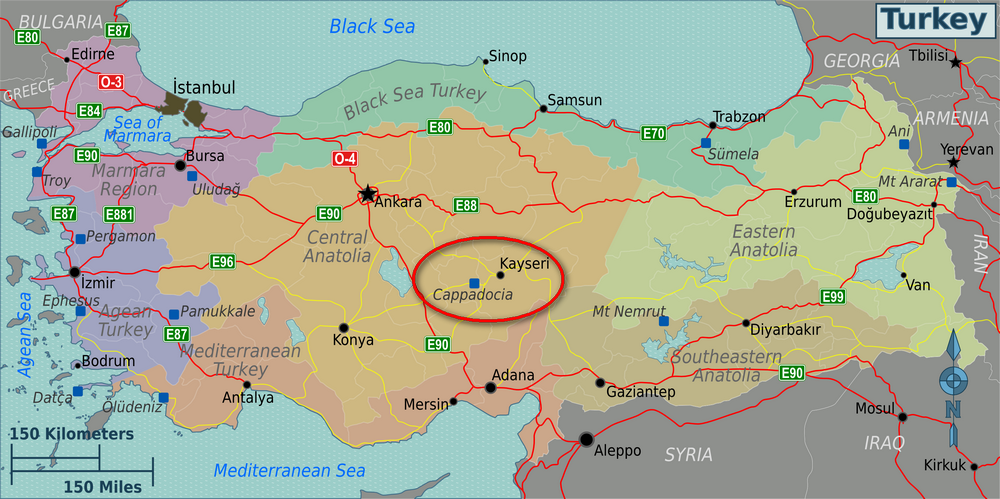
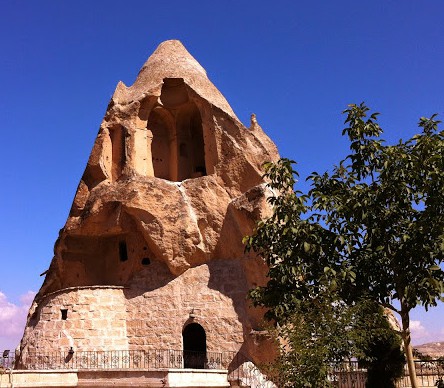 This area of Turkey is fascinating– so well known for its natural beauty and unusual landscape, as well as its long and illustrious history. In fact, the two things go hand in hand. The famous “fairy chimneys” of Cappadocia housed the cave dwellers of the Bronze Age, and later housed early Christian refugees and gave rise to the thousands of cave churches that dot the region.

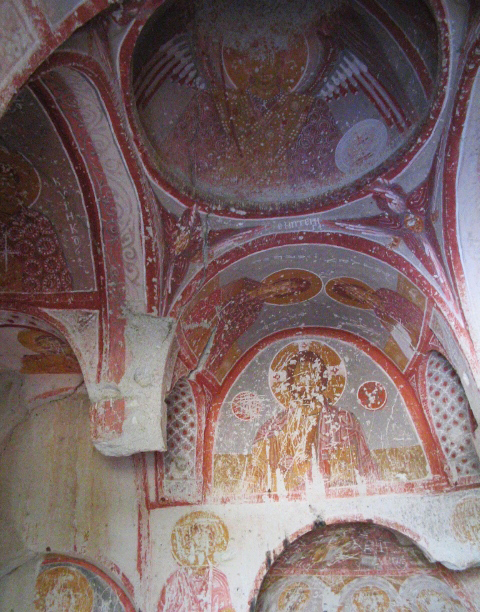 Once inside these churches, you are often met with once-beautiful frescoes that (while still beautiful) are severely weathered by both age and ordeal. Age, because most of the churches here date to between the 6th and 11th centuries; ordeal, as they were intentionally defaced because of religious aniconic sentiments.
If the cave dwellings and the colorful history weren’t enough to make Cappadocia a fantastic destination, it has this going for it: it’s no artifact, it’s still living. The potteries of the region are thriving, the people are hospitable, and many locals still live in the hollowed out cave dwellings (and have wired them for electricity!).
Walking down one ancient road in Guzelyurt, you might look up to see this:
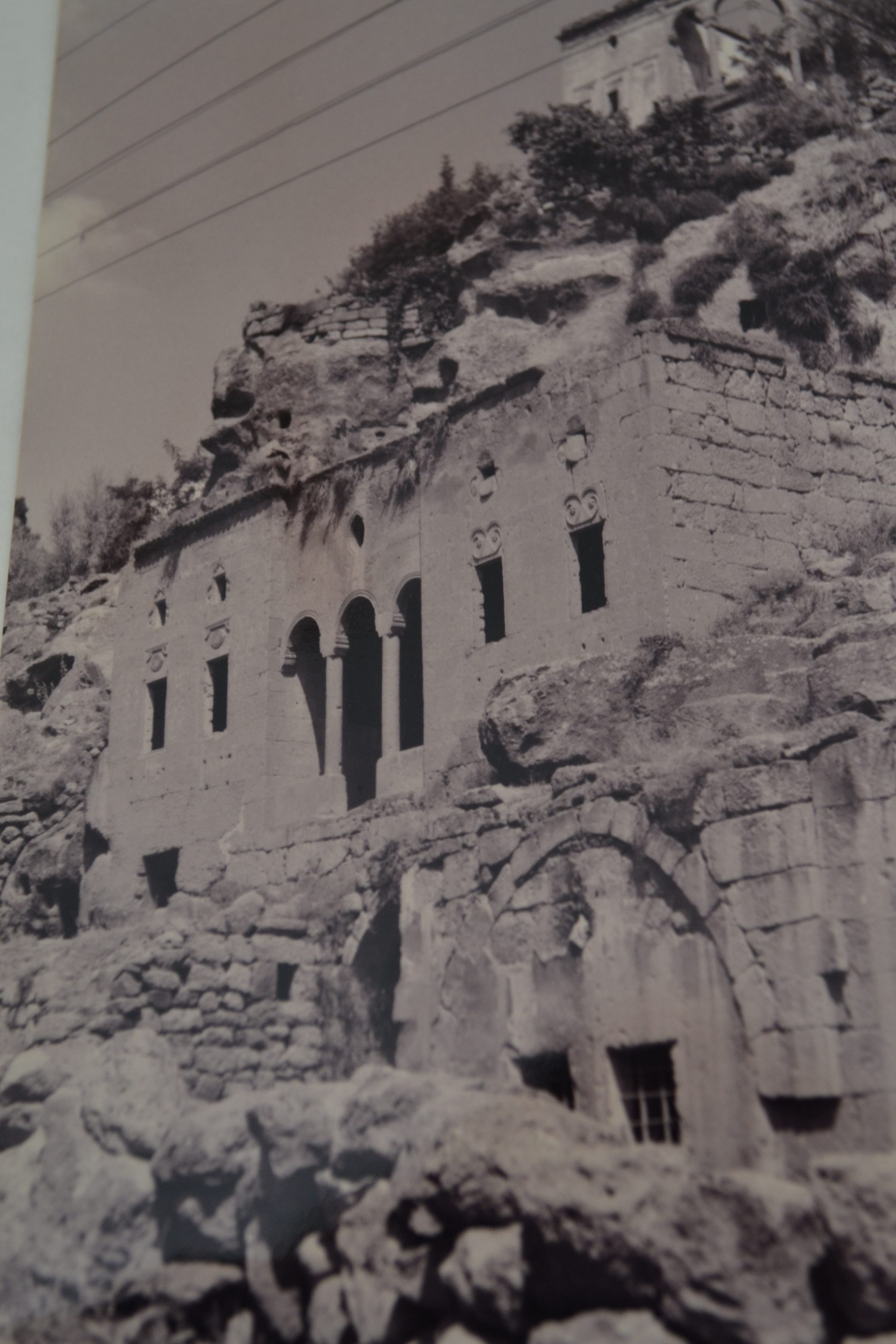
only to believe that you are passing by empty, ancient buildings (but note the electrical wires that run the length of the road). Then the next thing you stumble upon, two doors down, is the family from the lead photo on this post, huddled in the doorway of another ancient structure and adjoining cave and making their daily flatbread over a simple fire and dome of hot metal.
The ancient meets the everyday in the streets and valleys of Cappadocia, the modern meets the miraculous. For my husband and me, who grew up in the tidy convenience of suburban America and were more likely to take dinner from a casserole dish hot out of a Kenmore oven, or even from a drive-through fast food window, this family, hard at work to make their daily bread, kneaded and rolled on a board on the ground and cooked over an open fire on a humble metal dome, this moment was extraordinary. And so very ordinary too.
We stopped and spoke to the family. We shared what little language we knew, and they shared some of their bread , warm and crisp from the fire. I don’t think anything has ever been more delicious than those few bites shared on an ancient road. What an incredible way to eat local.
 Travels and Tomes: One Expat's Amblings and Ramblings