Eating Local: Breaking Bread in Turkey

antik road family
On the “Antik Road” in Cappadocia. (1998) A local family cooking flatbread over an outdoor oven in Guzelyurt, Turkey. They shared the bread with us–it was delicious!

via Photo Challenge: Local

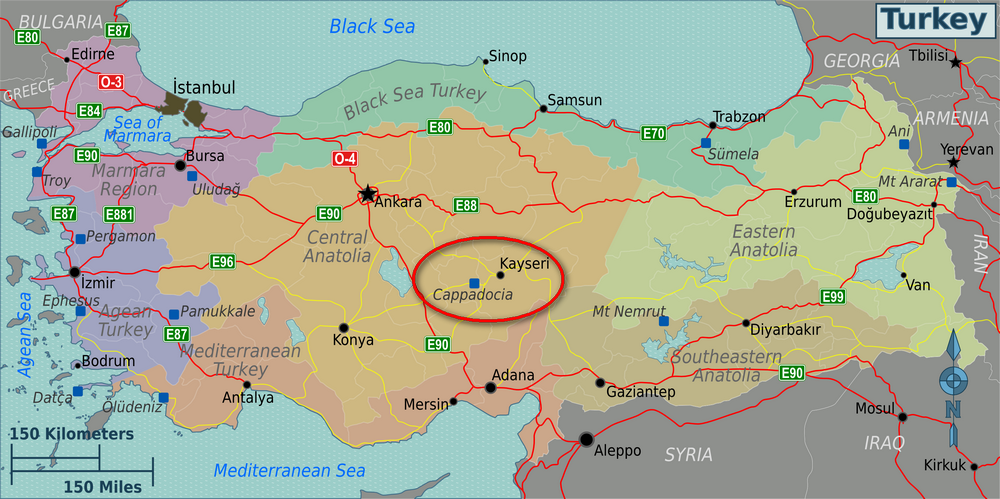
It was a crisp day in the Cappadocia region of Turkey, and my husband and I were out walking through the town of Guzelyurt– a small town set outside of the larger and more tourist-populated areas of Cappadocia.  (“Guzelyurt” means beautiful valley.)

We would often visit and stay in Otel Karballa there: a lovely structure that

had once been a Greek monastery, but was now converted to a small hotel with a fantastic chef and the ability to give its guests an authentic taste of life and history in this enchanting region.
turkey_regions_map3-1

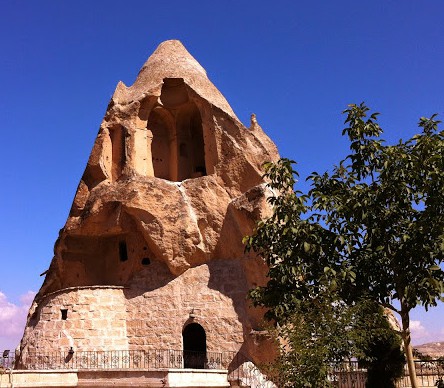
goremeThis area of Turkey is fascinating– so well known for its natural beauty and unusual landscape, as well as its long and illustrious history.   In fact, the two things go hand in hand.  The famous “fairy chimneys” of Cappadocia housed the cave dwellers of the Bronze Age, and later housed early Christian refugees and gave rise to the thousands of cave churches that dot the region.

dsc_0060
A fuzzy photo from one trip to Cappadocia: at the mouth of a cave church, with dwelling areas above it.

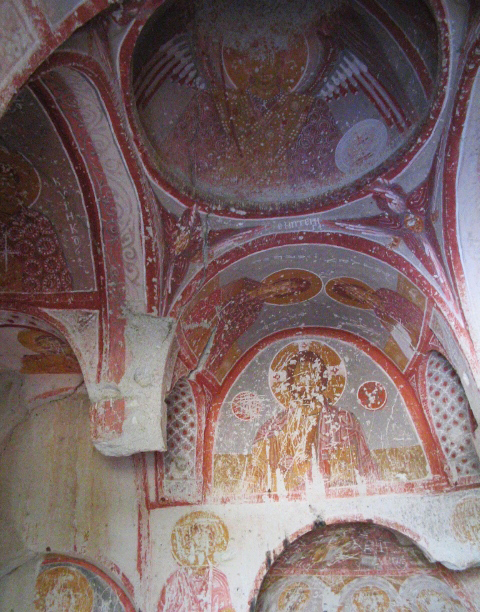
alanya-turkeye-193Once inside these churches, you are often  met with once-beautiful frescoes that (while still beautiful) are severely weathered by both age and ordeal.  Age, because most of the churches here date to between the 6th and 11th centuries; ordeal, as they were intentionally defaced because of religious aniconic sentiments.

If the cave dwellings and the colorful history weren’t enough to make Cappadocia a fantastic destination, it has this going for it:  it’s no artifact, it’s still living.  The potteries of the region are thriving, the people are hospitable, and many locals still live in the hollowed out cave dwellings (and have wired them for electricity!).

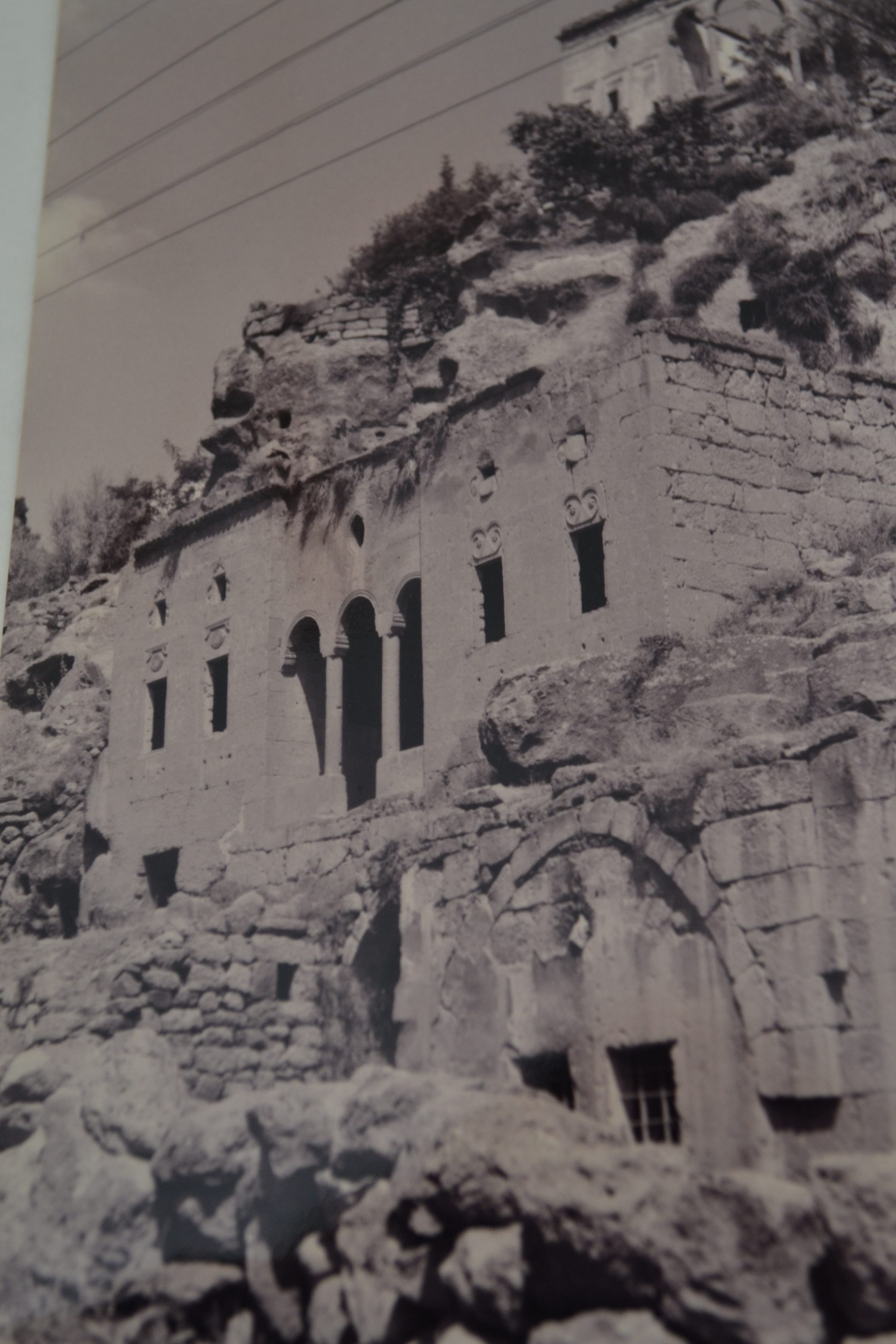
Walking down one ancient road in Guzelyurt, you might look up to see this:
dsc_0059

only to believe that you are passing by empty, ancient buildings (but note the electrical wires that run the length of the road).  Then the next thing you stumble upon, two doors down, is the family from the lead photo on this post, huddled in the doorway of another ancient structure and adjoining cave and making their daily flatbread over a simple fire and dome of hot metal.


The ancient meets the everyday in the streets and valleys of Cappadocia,  the modern meets the miraculous.  For my husband and me, who grew up in the tidy convenience of suburban America and were more likely to take dinner  from a casserole dish hot out of a Kenmore oven, or even from a drive-through  fast food window,  this family, hard at work to make their daily bread, kneaded and rolled on a board on the ground and cooked over an open fire on a humble metal dome, this moment was extraordinary.  And so very ordinary too.

We stopped and spoke to the family.  We shared what little language we knew, and they shared some of their bread , warm and crisp from the fire. I don’t think anything has ever been more delicious than those few bites shared on an ancient road.  What an incredible way to eat local.
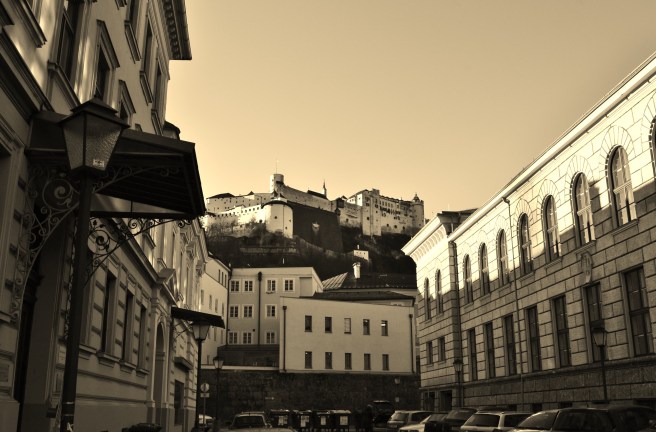
 

Salzburg in Sepia

Tucked below the headlines of terror yesterday was another sad note, from a very uplifting life.  Charmain Carr, the actress who played Liesl in The Sound of Music, has died.  For all of us who love the movie, or love the story and spirit of the real von Trapp family, or love the city of Salzburg– and this must surely include a lot of us– this news is sure to prompt a moment of reflection.

I offer a small tribute here:  photos of Salzburg and the Villa Trapp in a muted sepia.

dsc_0301-copy
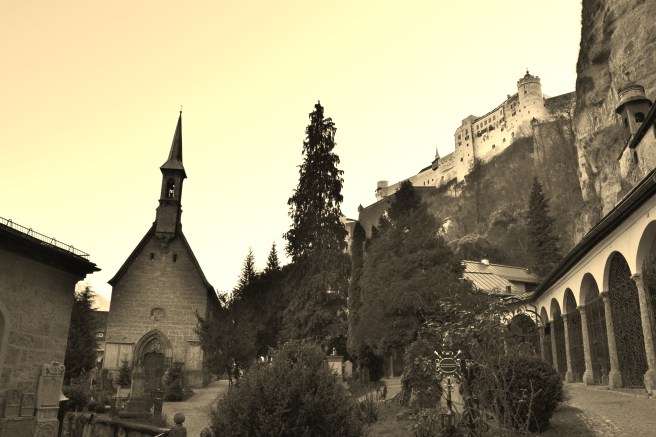
The Hohensalzburg Fortress rises over the city streets.


dsc_0315-copy
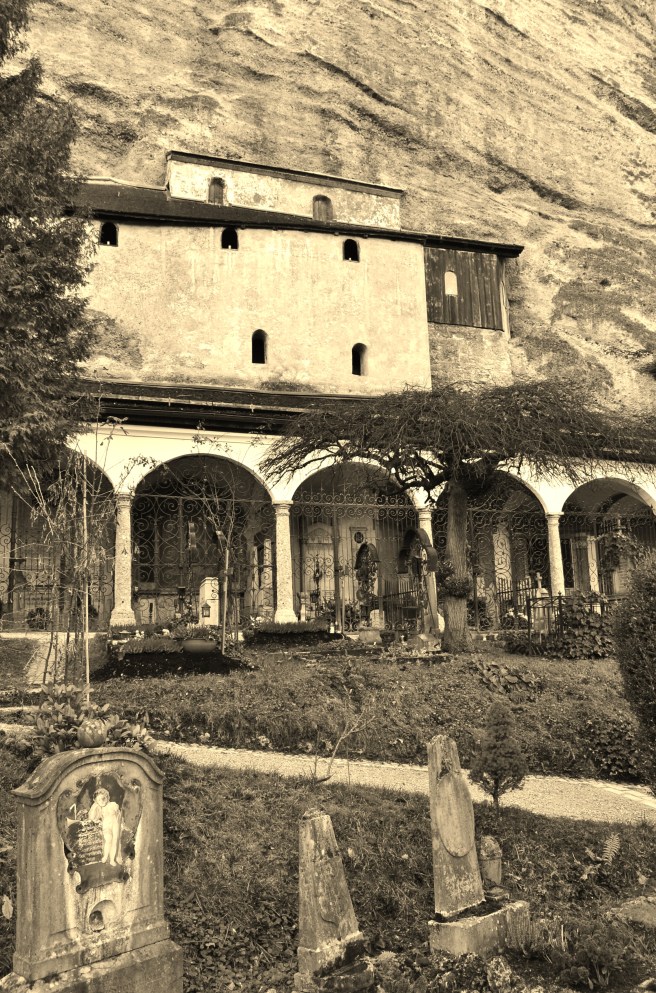
St. Peter’s Cemetery, Salzburg. Familiar from the movie Sound of Music, and a beautiful, poignant place to visit.  The von Trapps didn’t actually have to hide out here, but it’s a lovely and historical spot.  We walked through two days before Christmas, and families were placing small Christmas trees before the larger graves and preparing the trees with candles to be lit for the holiday.  


dsc_0317-copy
Another remarkable view from St. Peter’s, with the Hohensalzburg looming large.


dsc_0221-copy
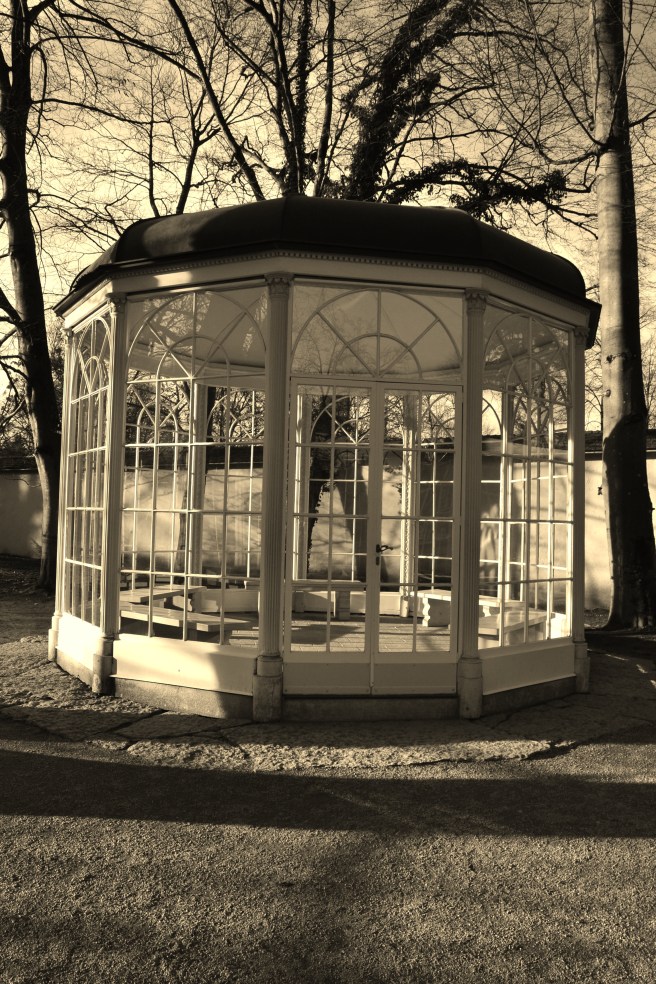
Outside of Salzburg, at Hellbrunn Palace. A quiet spot for anyone who is, or feels like they are, 16 going on 17.  For a time, the gazebo was open for visitors to come, sit, enjoy, and maybe (maybe?) sing a little.  After an elderly woman fell and broke a bone–apparently having slipped and fallen while reenacting the scene where Liesl leaps from one bench to the next, all the while singing– the gazebo was locked for good. (An unfortunate end to her escapades, but I bet it was totally worth it.)    Today, you may pay your respects, but you may no longer sing and dance. 


von-trapp-house-1-copy
The elegant Villa Trapp, home of the von Trapp family in earlier times. Now a boutique hotel, a truly delightful, historical, and hospitable place to stay.


Schonbrunn Palace, Vienna

DSC_0239

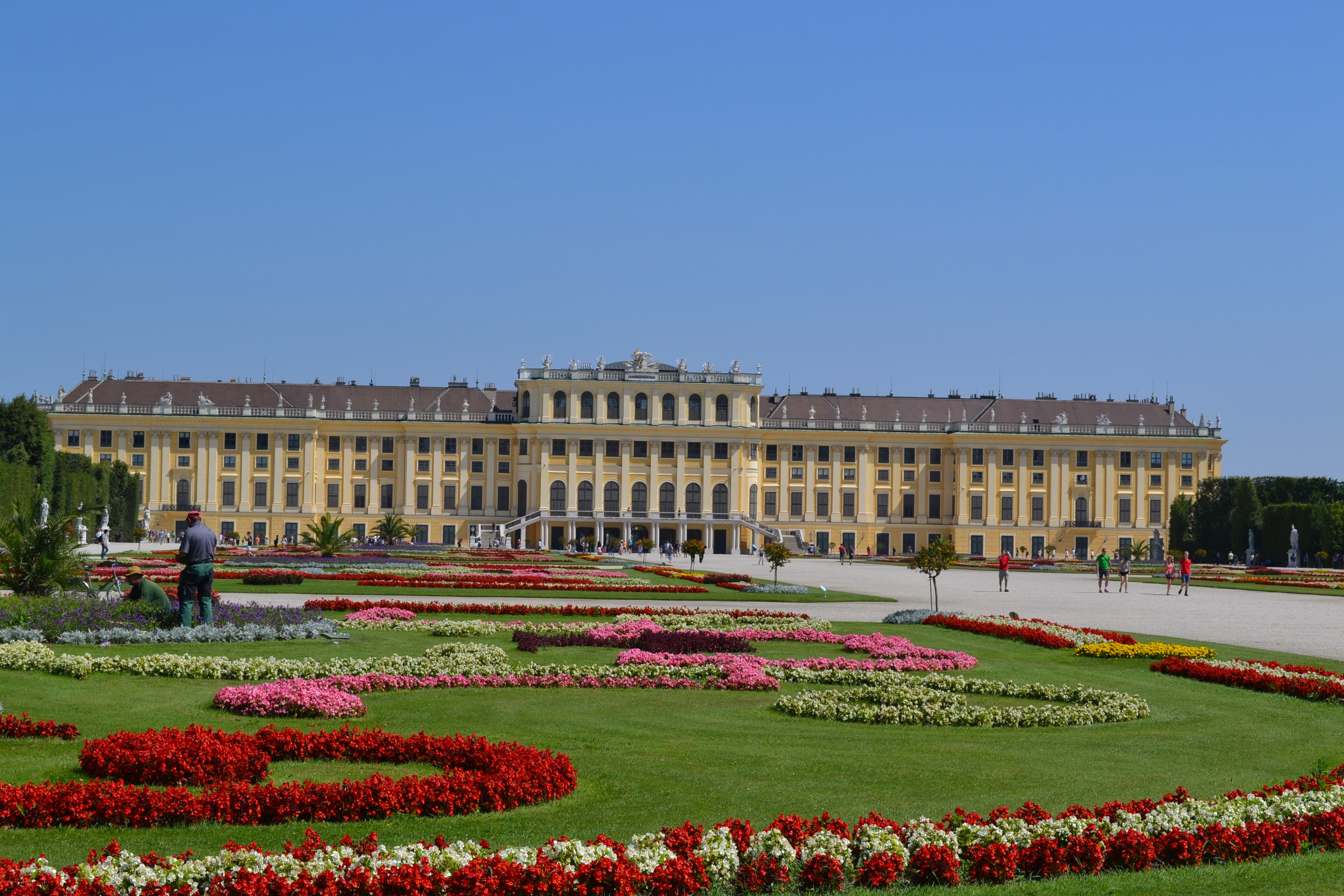
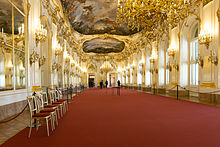
Today’s travel memory is brought to you by summertime heat–days that start out hot, become alarmingly hotter, and end in your body, bones and all, reduced to a puddle on the asphalt.  If this sounds like the beginning of another post on my new home in Florida . . . oddly enough, it isn’t.  Today’s memory is from  Schloss Schonbrunn (Schonbrunn Palace), in Vienna, Austria.    It was built in the 17th and 18th centuries, modified in the 19th century, and partially reconstructed after WWII (the palace took a direct hit in 1945)– so it is, in every sense, “one for the ages.”

DSC_0231

Emperor Leopold I had planned to build a palace that would rival, or surpass, schonbrunnVersailles.  At the end of the day, Schonbrunn did not meet that goal, but its elegant lines and interiors still impress.  The Palace has over 1400 rooms, but only 30-40 are opened for touring.

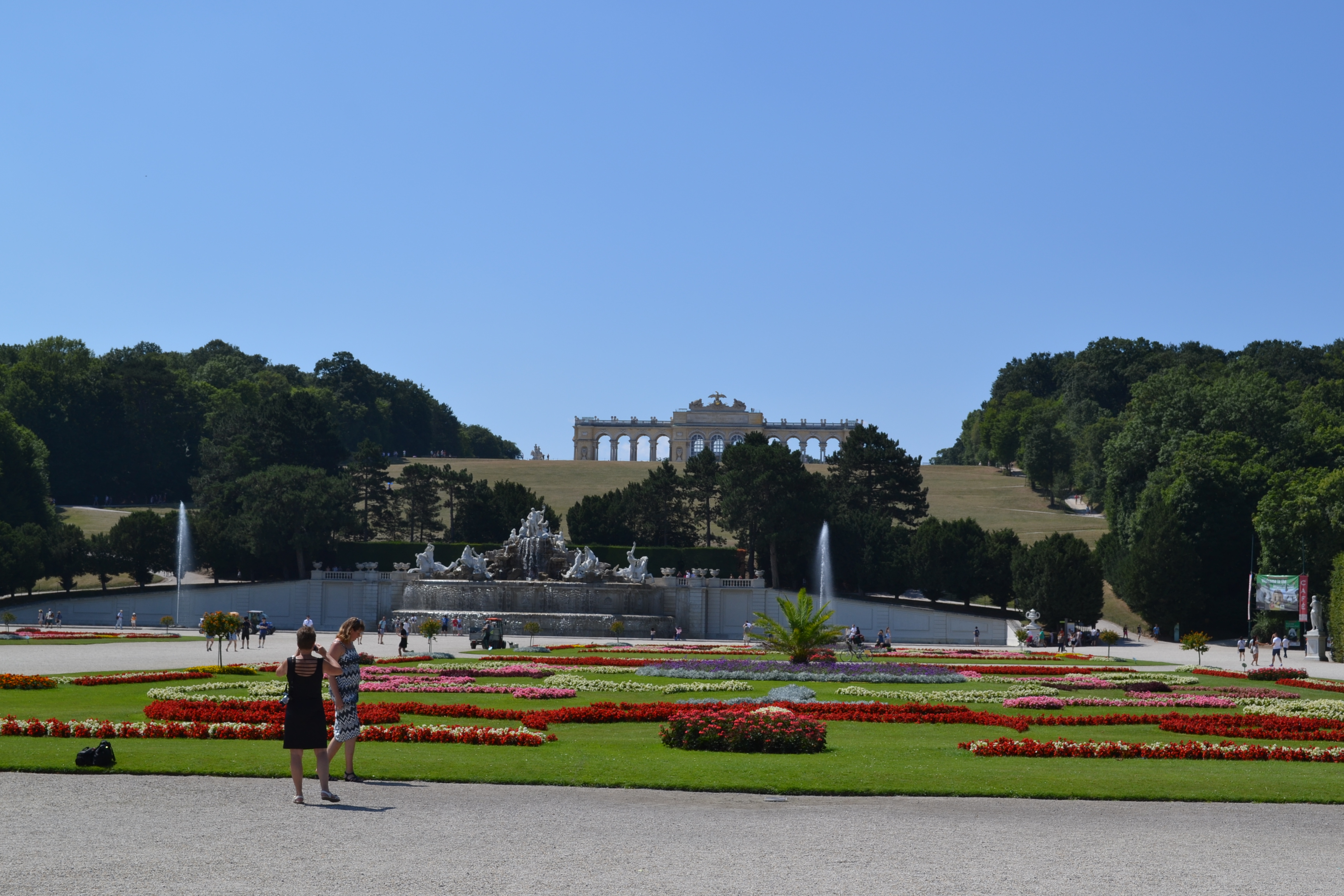
We visited on an outrageously hot day in July of 2015, when the mercury was hovering at around 100 degrees Fahrenheit.  We toured the inside of the palace, which was impressive–but we were wilting in the un-airconditioned and little-ventilated space, along with a throng of fellow tourists, so our photos skew toward views of the garden, where at least we could catch a slight breeze.  (Two days later, we’d find ourselves in Budapest and standing under the nozzles of misting trucks, brought out to offer relief from the extreme heat– relief that’s hard to come by in a region that so rarely deals with this sort of heat, and where air conditioning is the exception to the rule.)

DSC_0244

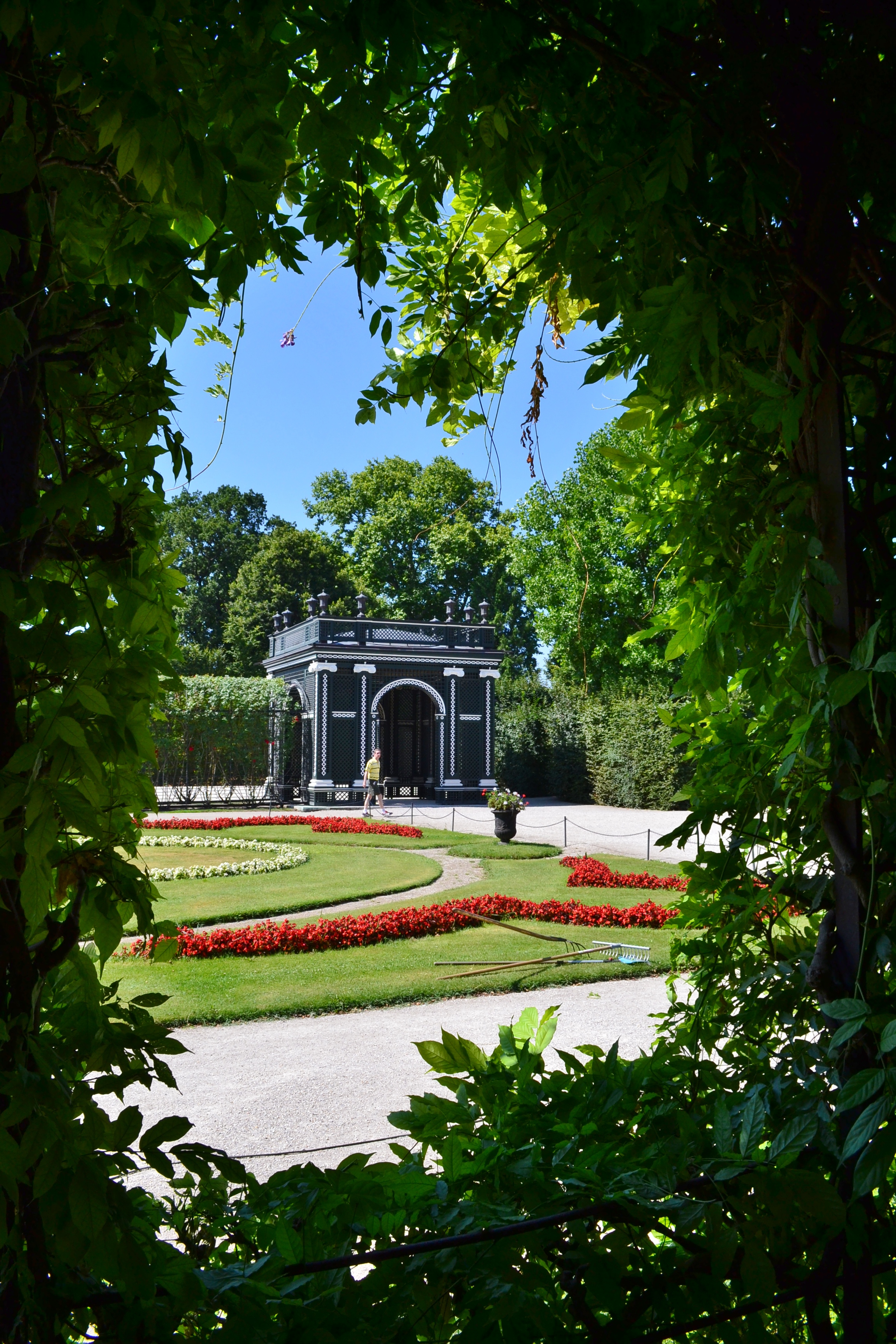
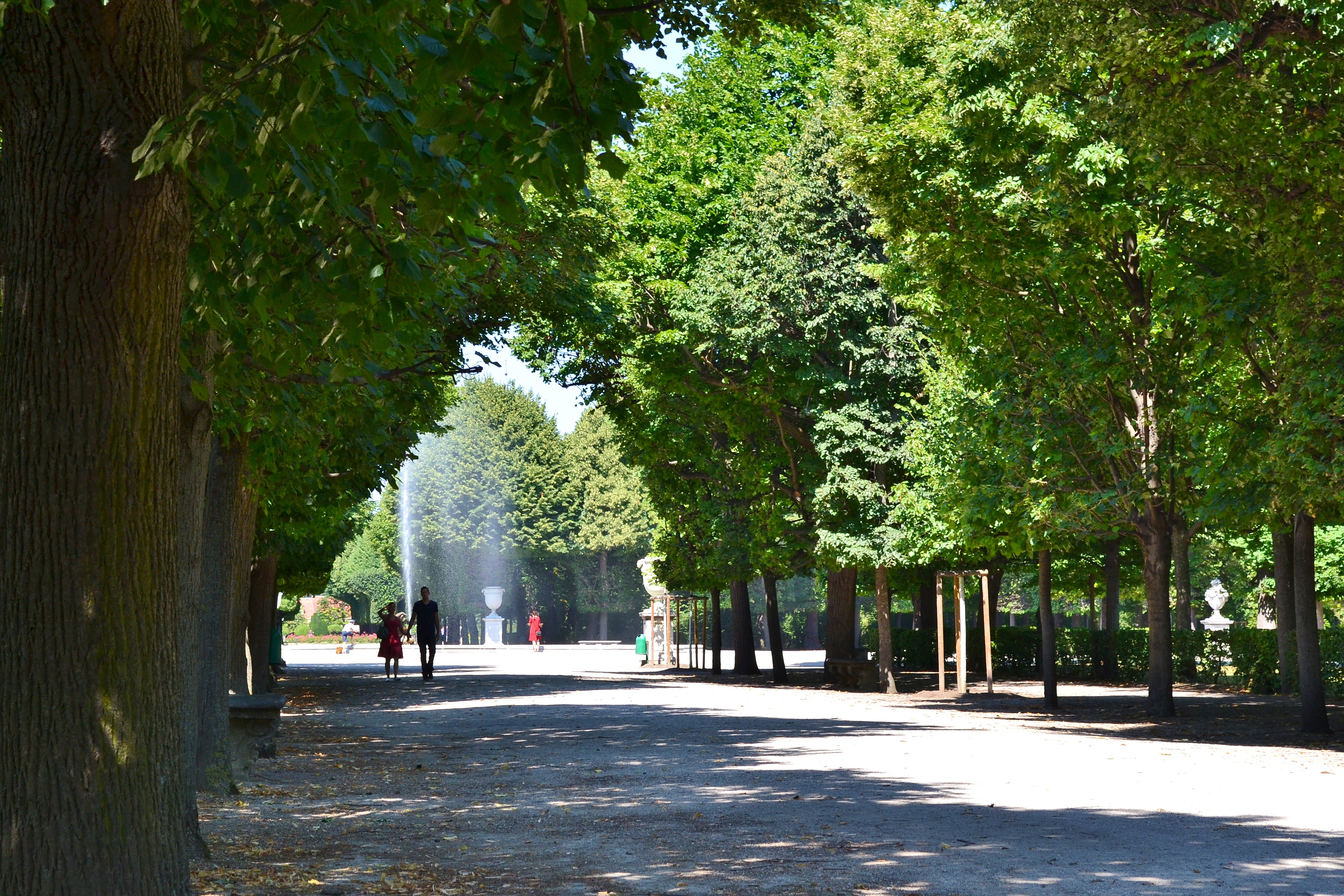
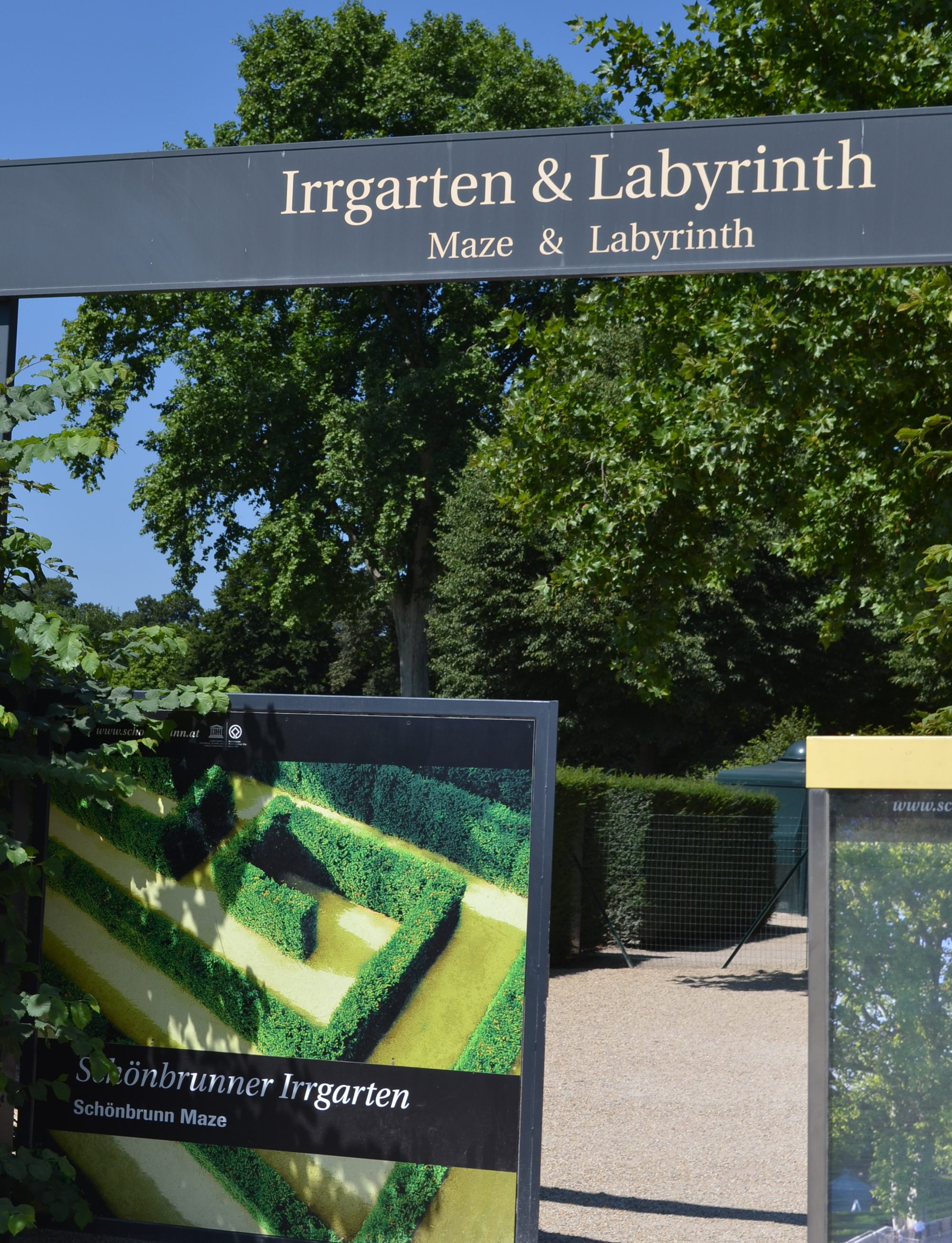
DSC_0234The grounds are massive, and they boast not only beautifully manicured gardens, but plenty of shady spots for sitting, and a maze for your children (or you!) to test your wits in.  (Being somewhat witless, and horrifically directionally challenged, I sent the children in ahead of me and then wandered in shady patches and took photographs.)  DSC_0243

Schonbrunn is a very popular tourist destination, so if you go in the summer, you might consider purchasing tickets online ahead of time to avoid lines.  Schonbrunn also hosts many concert series and has a zoo on its grounds, so there is lots to do.   Plan on spending at least half a day there (better still, a whole day).

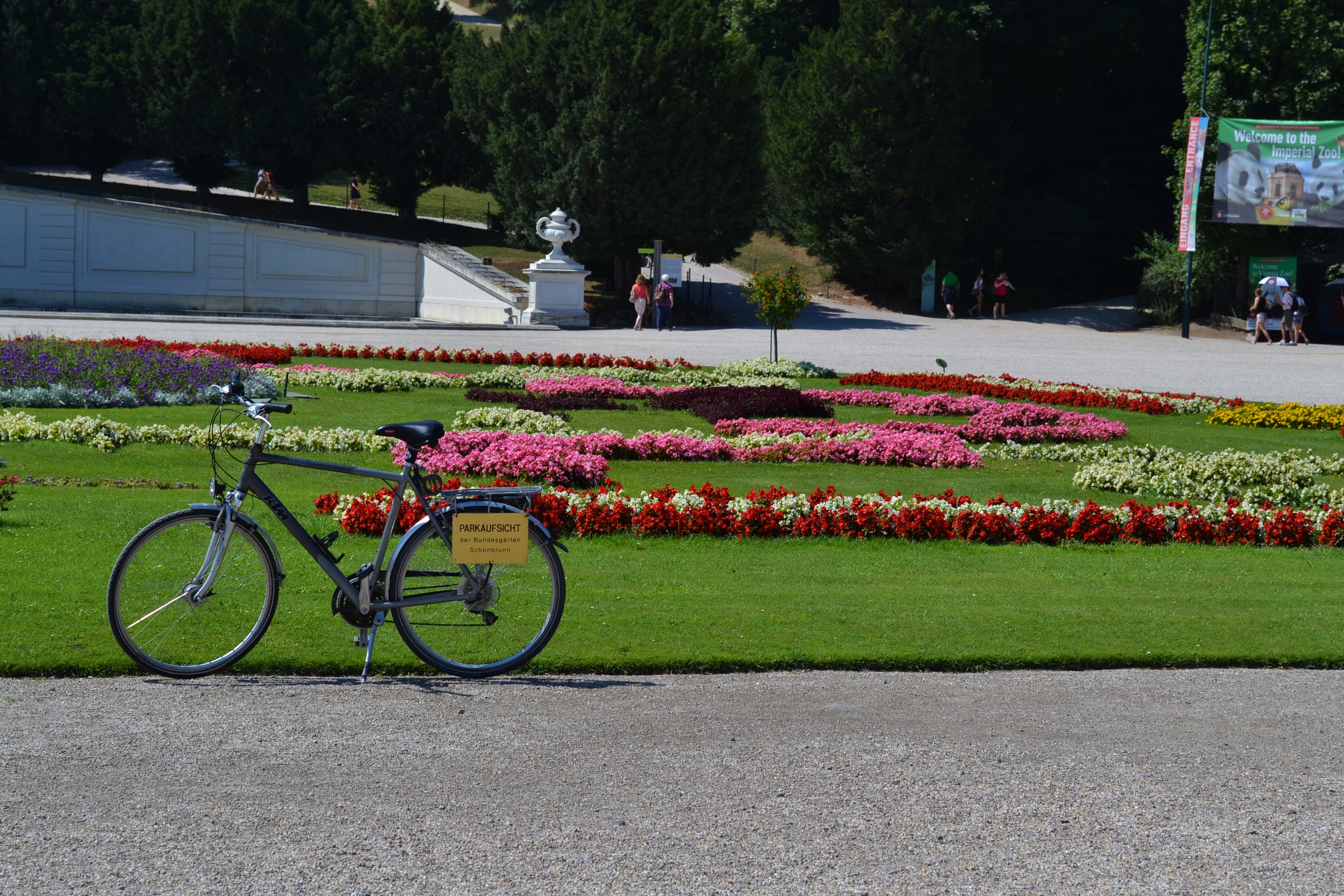
Finally, I’ll leave you with one of my favorite photos from the day: a bicycle in the gardens.  Not sure why I love this photo so– maybe it brings a human scale to a massive palace and grounds, or simply offers a sense of adventure and movement (travel!)  to a formal landscape.
DSC_0242