I’ve been meaning to write about Dachau for some time now, but it’s a very difficult post to write–it’s unpleasant, it’s uncomfortable, and it’s just hard to get the words to say anything right. Something about the very shape and logic of language makes it the wrong vehicle to express anything about the Holocaust– where’s the shape or the logic to such atrocities?
But the post will get written. . . someday.
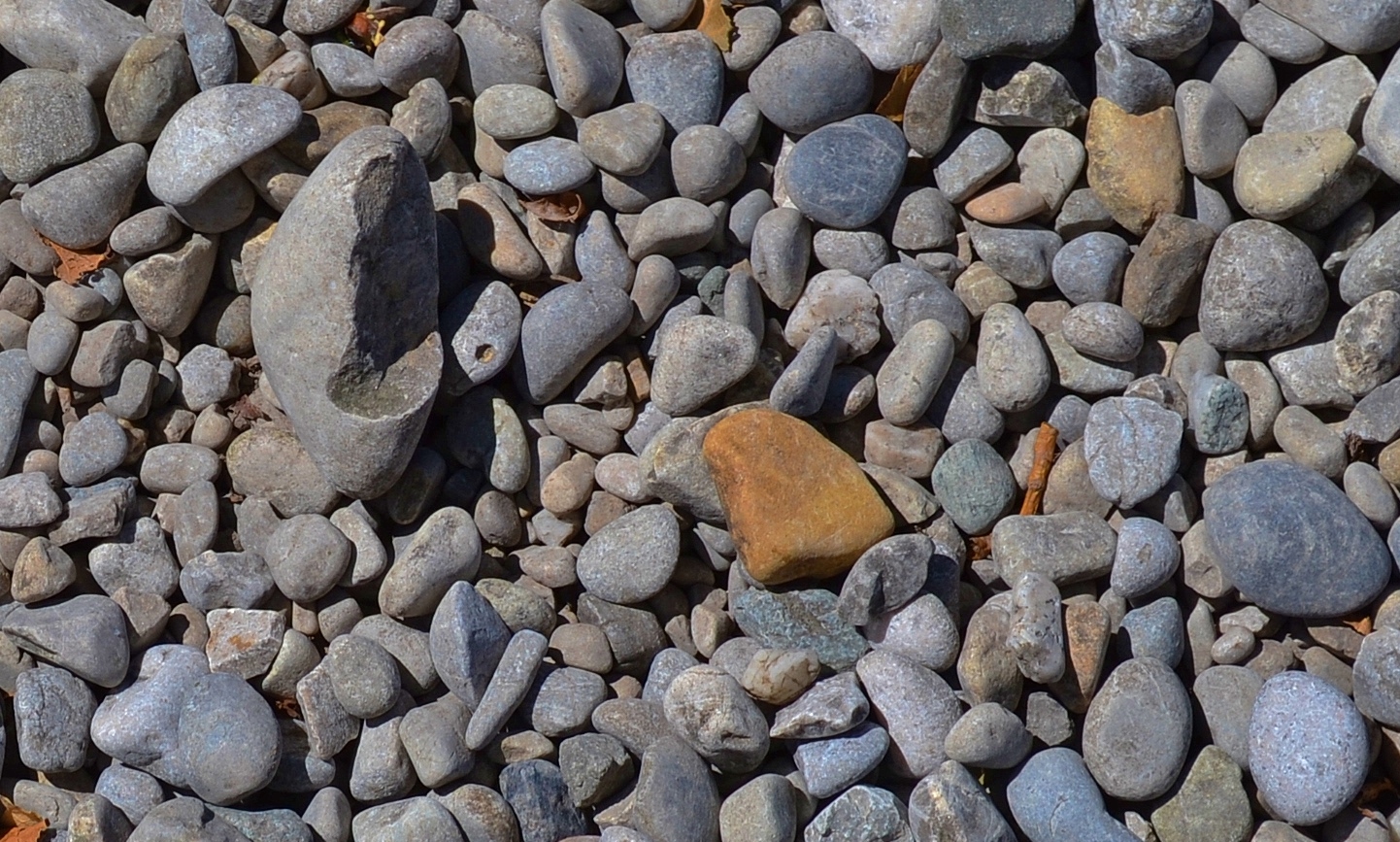
For now, I offer a photo of stones on the path by the barracks. They struck me as very beautiful and appropriate to the place: thousands of small stones, smooth and beautiful, but some so violently broken, to remind us not only of the atrocities of the place, but of the beauty of the souls who passed through. It seemed a fitting and reverent image to remember the victims of Dachau by.
I began writing this post under the title “The Perks and Perils of Shopping Abroad.” However, I soon realized that the insights you are about to read are much broader than my mishaps in the grocery aisles.
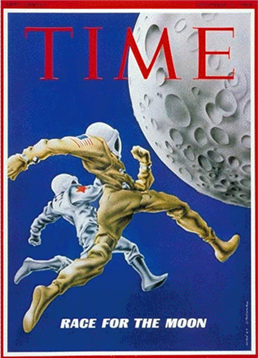
The larger story starts in the years after the Second World War. (Or even after the First World War and the Bolshevik Revolution.) It gains steam in the Cold War and the Race for Space. However, the more immediate story starts in the aisles of my local German grocery store, Edeka. And like the larger story of political machinations, it’s fraught with perks and perils.
For example, it was recently brought to my attention that the lovely, fragrant German laundry detergent I’ve been using for about three months is actually fabric softener. Who knew? Well, in fact, I had suspected for a few weeks. My clothes were so fragrant and soft! But were they clean? Well, they weren’t not clean.
These things happen when you shop abroad.
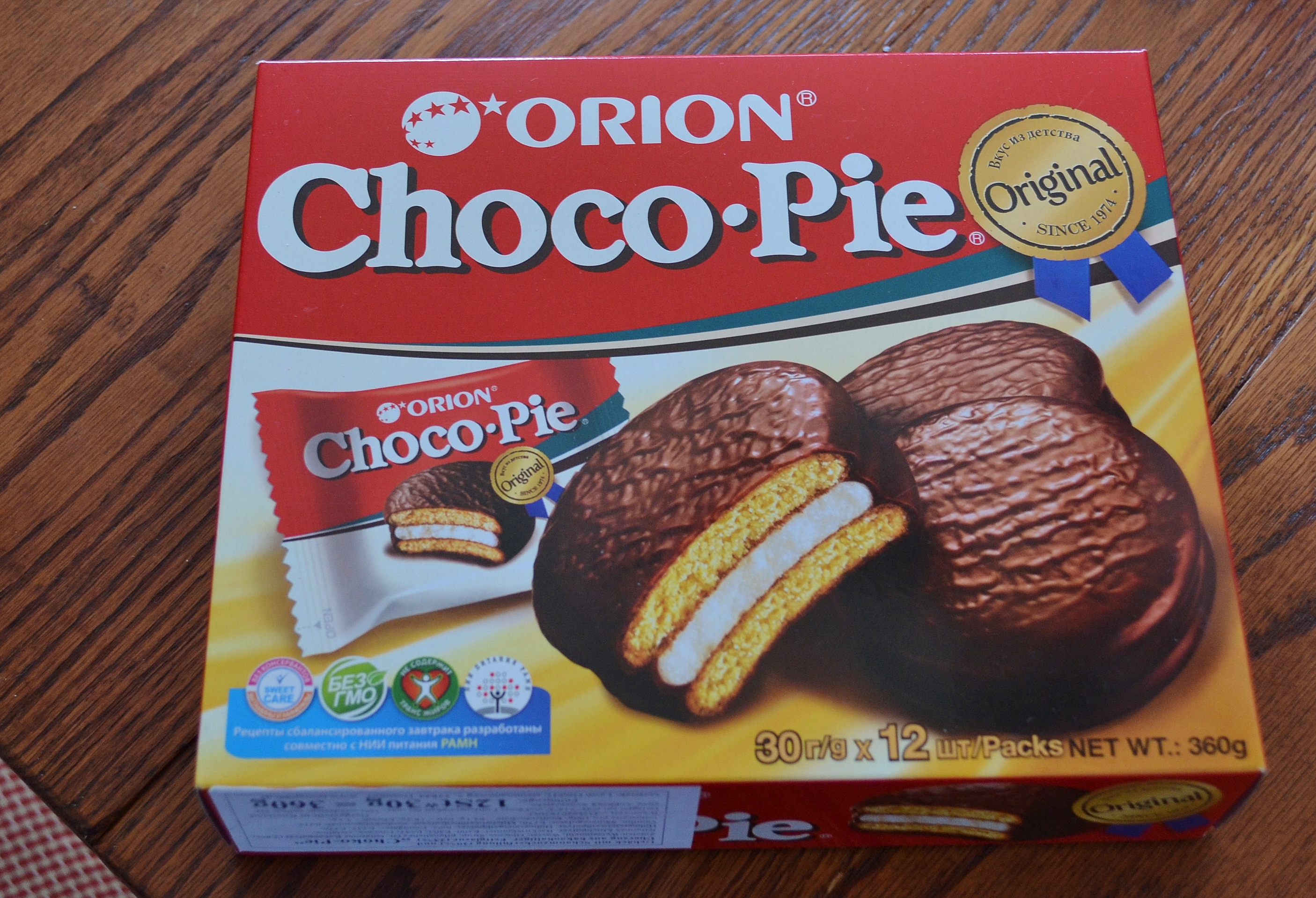
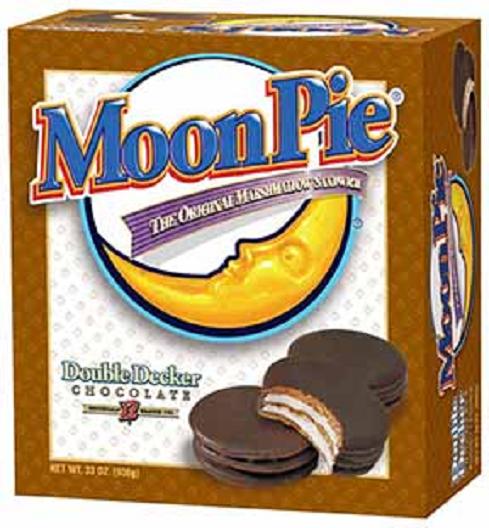
But great things happen too. This morning, I was meandering the aisles of our grocery store, picking up jam, sorting through coffee, and pondering fish, when I stumbled upon the most amazing thing on an Eastern European/Russian shelf. Moon Pies! Well, okay, Choco-Pies–but they were Russian Moon Pies! Eureka! For all of you non-American (or non-Southern) folks out there, here’s a little lesson: Moon Pies are chocolate, graham, and marshmallow pies that are a Southern staple and made in Tennessee. Before the markets were flooded with snack cakes and convenience food, there was the Moon Pie. Apparently, they were produced beginning in the 1920’s and they were certainly big stuff in the sixties and seventies. (My mother loved to pack my lunch with Little Debbie Oatmeal Cream Pies, but my heart, and my taste buds, yearned for Moon Pies.) They were iconic. And delicious.
And here I was, in Germany, staring down a Russian doppelganger! At first I laughed, and then I greedily stuffed a box into my shopping cart! I considered my good fortune as I walked the streets of town, heading home with my grocery bag and its treasure. But as I walked, I started thinking about more than my good fortune. I started thinking about the doppelganger-ness of the little chocolate pie: the shadowy counterpart, the ghostly (and ominous) double. The American Pie/the Russian Pie: forever locked in a shadowy dance.
For sure, I’ve watched too many episodes of “The Americans,” the Cold War spy drama, lately. But my odd brain was playing out this Spy v. Spy (Pie v. Pie) drama and finding it fascinating.
By the time I got home, I was mad to know more. I ripped out the Choco Pie box and scanned the label for clues–amongst the Cyrillic (Russian) script and German sticker stood out something I could decipher. Original since 1974. Ha! It wasn’t the original then–we got there first. Not only did we get to the moon first*, but we got to the moon pie first. I chuckled as I opened the box and saw that the pies were smaller than their American counterpart. Well, what did I expect?
But then I took a bite. Oh my. I took another bite. They were delicious. So fresh, so chocolaty. I felt conflicted in my patriotic soul. There had to be an explanation for this; no way the shadowy double could rival the Southern staple. Think, think! (Take another bite.) Think some more! Oh–of course–the problem is that too many of the American Moon Pies I’ve eaten have been plucked from dusty lower shelves of rundown convenience stores or seedy Stuckey’s truck stops. Who knows how long they had lingered there, gathering dust and grime? That’s it. That must be it.
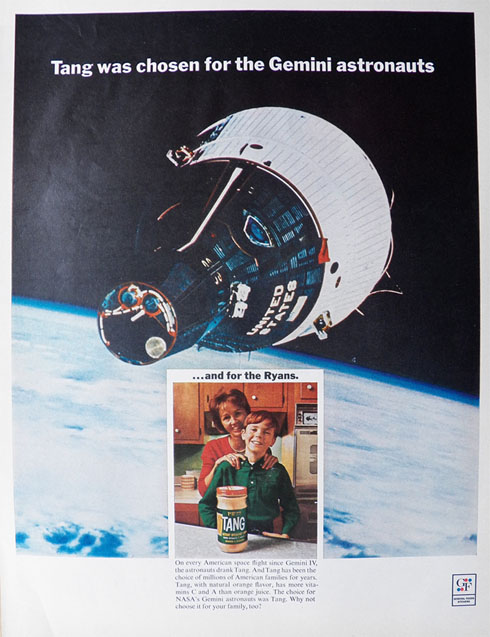
Tang ad, 1966
I was raised in the 70’s with a taste for Moon Pies and Tang. In my mind, that era will always be about playing kick the can, catching fire flies, eating Moon Pies, and drinking Tang like the astronauts. I remember some of the Apollo missions; I coveted the GI Joe astronaut dolls (Barbie never had the astronaut get up, although her house and pink convertible weren’t too shabby); and I marveled when Skylab sustained people and research in space.
I didn’t cheer on the Cold War or Nuclear Proliferation– they scared the hell out of me– but I was a product of a culture and a time. I didn’t know whether I was an observer or participant, but I felt the adrenaline of the Race. The Race for Hearts and Minds, the Race for Space, for Superiority, for Survival. And then I tucked my head down into a Moon Pie or Mad Magazine and took refuge from the noise of it all.
Only to find today that, maybe– just maybe– my youthful Soviet doppelganger was doing the same thing in 1974.
Only she couldn’t call her treat a “Moon Pie”. . . because we got there first.
Just another lesson learned at my German grocery store.
*Sort of. We put a man on the moon first. But before that, the Soviet Sputnik program beat us into outer space and the Soviet Luna program reached the moon with unmanned crafts.
This is a traveler’s tale, believe me. Just suspend your disbelief for a few minutes, and you’ll see how it all comes around.
“What’s in a name? That which we call a rose
By any other name would smell as sweet.” –so says Juliet in Shakespeare’s play.
Of course, the Bard is right when it comes to the star crossed lovers of his play, but other times it seems that there is something in a name. Some hint of the stars, indeed, the trajectories of fate. I offer up my husband’s family for closer inspection. (Sorry guys!)
When we had our first child, I dabbled with dozens of name combinations. I wanted to use family names, especially for my children’s middle names. As it turned out, both of my kiddoes have middle names that come from my family. I tried to be fair minded, but a quick look into my husband’s family tree sent me running scared. The first three names to appear in the foliage of that tree?
Butcher. (NO thank you.)
Butts. (Funny, but not for my children.)
Coffin. (Oh, dear Lord.)
Those names weren’t destined to go down in my family, except anecdotally, as the names which shall NOT go down in my family.
But then. . .
(That’s where so many stories begin, isn’t it? “Everything was just fine. But then…”)
But then I picked up Nathaniel Philbrick’s book In the Heart of the Sea: The Tragedy of the Whaleship Essex. I picked it up because I’d loved his book Mayflower and I looked forward to hearing his voice again; I didn’t have any particular love of sea-faring tales. But what a crazy tale opened up to me when I opened Philbrick’s book. His story of the tragic wreck of the Whaleship Essex was a tale I already knew, in some measure, from Moby Dick, Herman Melville’s long winded but brilliant tale of mania, fate, superstition, life and death, good and evil: the motherload of English Department themes.
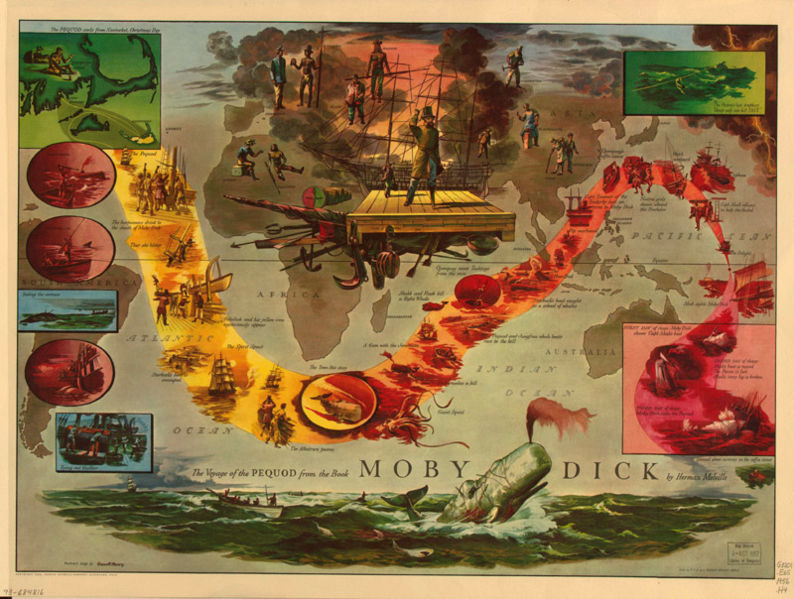
The Voyage of the Pequod,” illustrated by Everett Henry (Wikimedia Commons
Who knew that Melville had founded his story in the circumstances of an actual whaleship–The Essex–that had been sunk by an angry whale? And the wreck of the Essex both fascinates and horrifies not only in the circumstances of the wreck, but even more in the horrifying tale of survival, and attempted survival, of her crew.
The Essex was small, but she was known as a lucky, profitable ship when she left Nantucket in 1819. Her voyage to the west coast of South America would take over two years, and things got rough for this lucky ship even in the first week of the voyage. A squall hit and the ship was damaged. But that was just the beginning. By November of 1820, her luck ran out entirely.
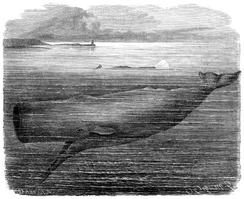
I’d love to recount the entire story for you here, because it is horrifying and fascinating all at once, but Philbrick tells it best, and a blog post isn’t the right vehicle for an epic tale. (Yes, I hear you thanking me.) The half penny version is that the crew members were afloat in three small boats, with little water or food (much of which became salt-soaked and only increased their thirst). They were about 2,000 miles off of the South American coast at the time. The boats were separated in a squall. Starvation and dissociative madness ensued, and death picked them off one by one.
Nearly 100 days after the Whaleship Essex sank, the very few survivors (about 5 men) were rescued.
The Essex had started out with 21 men. She had started out a lucky ship. Her journey took an awful turn. But also an awe-full turn.
That turn went like this:
1-The first mate, Owen Chase, was one of the survivors, and he wrote an account of the tragedy: The Wreck of the Whaleship Essex.
2- That account fell into the hands of Herman Melville while he was at sea on a whaling voyage. In fact, legend has it that Melville met Owen Chase’s son on that voyage. Chase reportedly gave Melville a copy of his father’s story.
3- Melville’s copy of the story indicates his deep connection with the surviving Essex men, as he scribbled in the pages, “Met Captain Pollard [who had captained the Essex] on Nantucket. To most islanders a nobody. To me, one of the most extraordinary men I have ever met.”
And so the story of the Essex has lived on in American literary culture–in spirit, if not in detail-for-detail fact.
But why do I offer it up here? Because the Whaleship Essex was carrying a young boy named Owen Coffin. Yes, Coffin: one of the leaves in the foliage of my husband’s family tree.* And one of the most gruesome, but absolutely necessary, links in bringing you the tale of the Essex and the novel Moby Dick. Without Owen Coffin, Captain Pollard and another boatmate would not have survived.
In the most desperate last days of their desperate ordeal, the men of the Essex survived only by resorting to cannibalism. Disturbing enough that they had to cannibalize their dead shipmates, but in the final days they resorted, just this once, to “drawing straws” to make the ultimate sacrifice. One of their own would be killed to save the others. Owen Coffin drew a bad lot.
Well, what is in a name, indeed?
I don’t regret bypassing the gloomy monicker for my own children, but then. . .
I also thrill to this odd link to American history –both in the Essex and in Melville’s near-Biblical tale of struggle and mania and survival.
I’ve traveled an awful lot of roads in life, in a journey not only over geographic terrain, but over cultural and temporal peaks as well–that’s the nature of our lives’ stories. So if my children’s stories reach back to a heritage that includes Owen Coffin’s tale–Owen Coffin’s horrible, gruesome, but somehow resilient tale (in the survival of Chase and under the pen of Melville)–then I am thrilled.
It’s a very long view of the journey, isn’t it?
Owen Coffin suffered a horrible fate.
But Owen Chase lived to tell.
And he told Herman Melville, whose book bombed in his own time . . .
But became a classic of literature in the 20th century.
And I scoffed at the name Coffin. . . only to find that I admire it more than I could have imagined.
As we travelers always say, “What a long, strange trip it’s been.”
*My husband’s ancestor left Nantucket for the coast of Canada in the years following the American Revolution. It’s not clear whether he was also a whaler, but he may have been a loyalist in the King’s Navy during the war.
Yesterday, in Bitche, France/Hier, a Bitche/ Gestern in Bitche
Click on the photo if you wish to expand it.
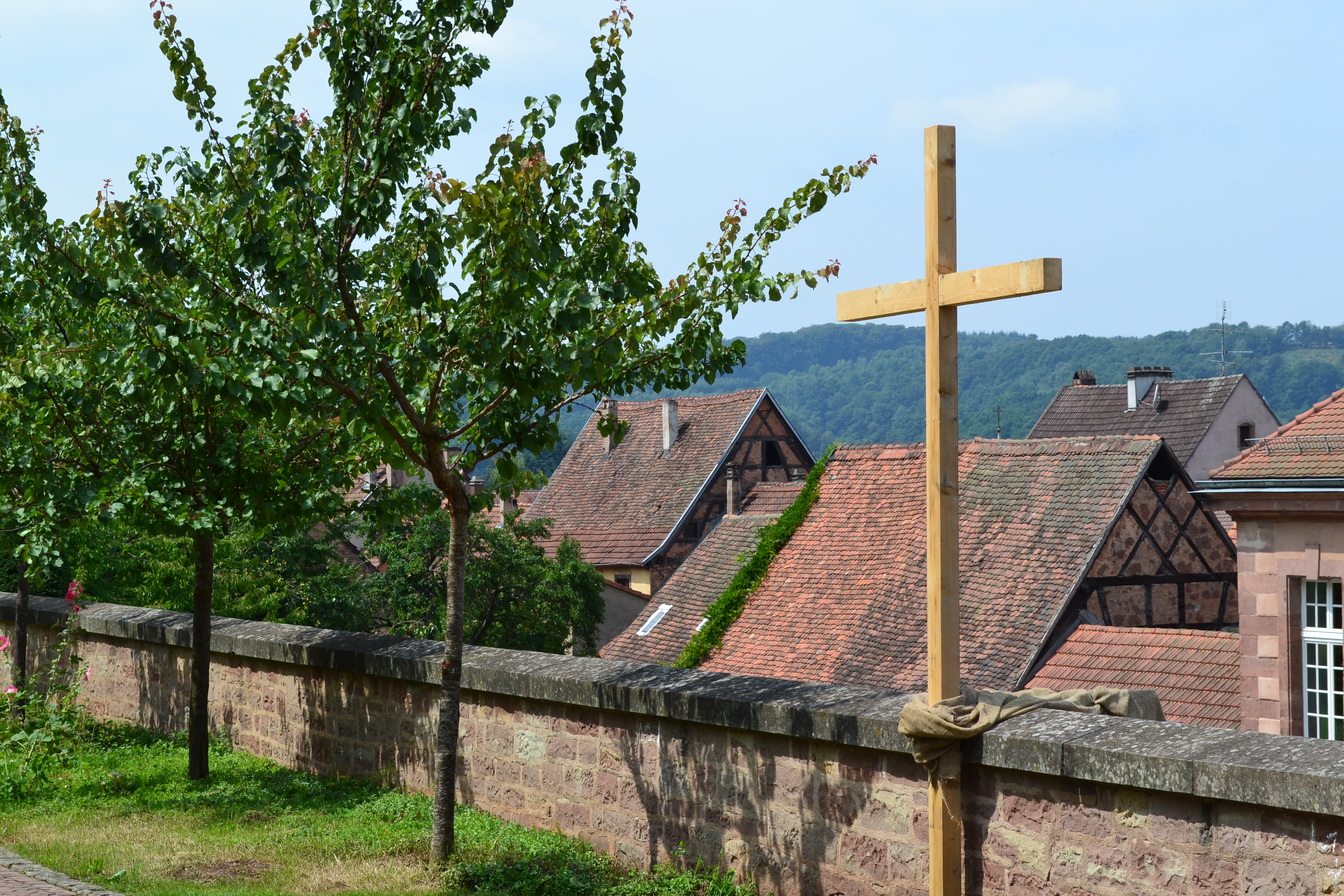
I stopped to look out over the rooftops of Bitche–which were so beautiful, serene, and orderly in a charming, hodge-podge way. (Like all the most beautiful things–with just a hint of asymmetry to keep the eye interested.) It took me a few moments to realize that I was standing by a simple wooden cross, and I wondered how long it had been standing there, keeping its own unwavering watch over the rooftops of the citizens of Bitche. And if those citizens had, like me, been largely oblivious to its presence.
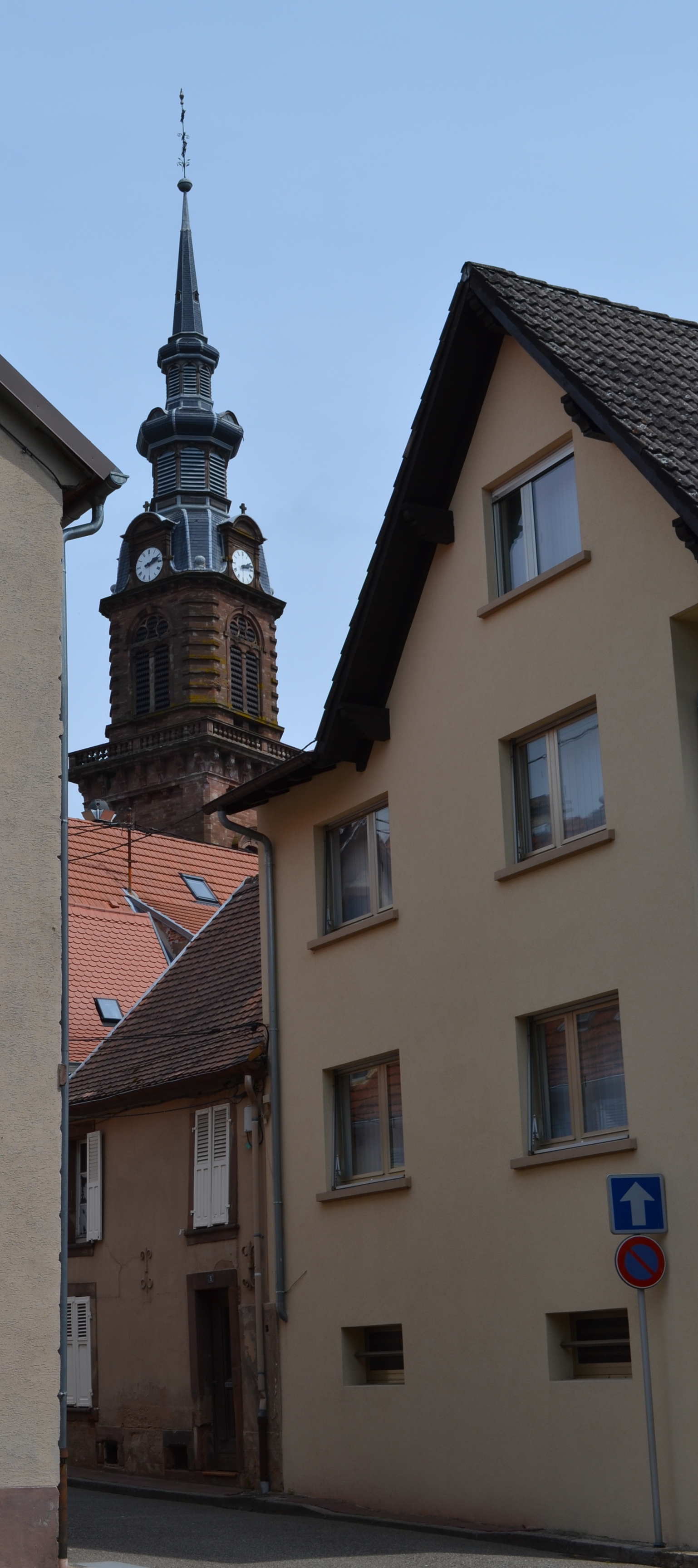
At the center of town, the church steeple kept peeping through the rooftops to note our progress through the streets.
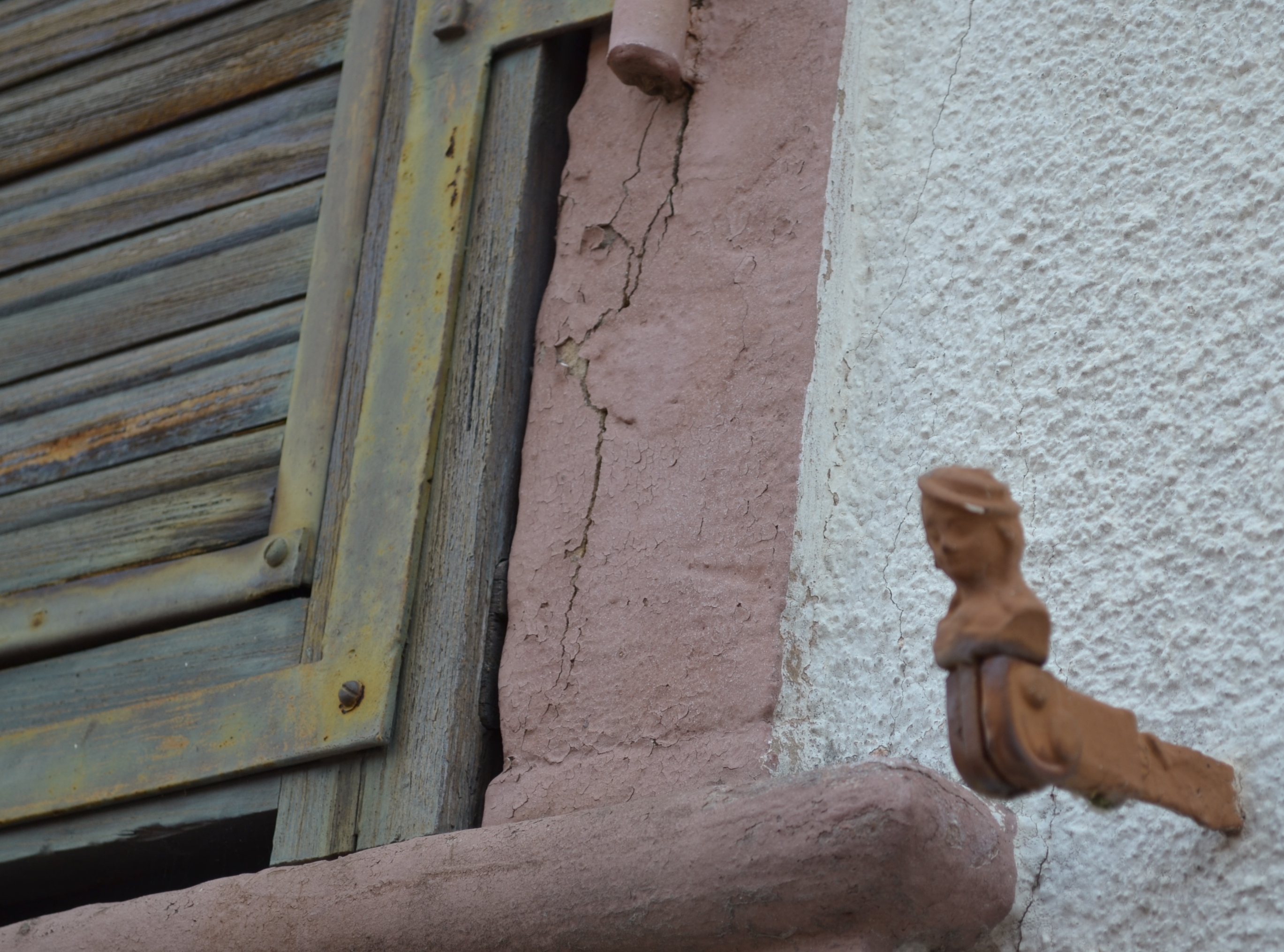
But the watchers in Bitche were not only of a religous ilk: along many rows of old houses, the iron shutter stops (“shutter dogs”) were decorative women’s heads…some still distinct, others weathered or rusted to a ghostly decay. Charming, haunting, and resiliently functional. The story of life, n’est-ce pas?
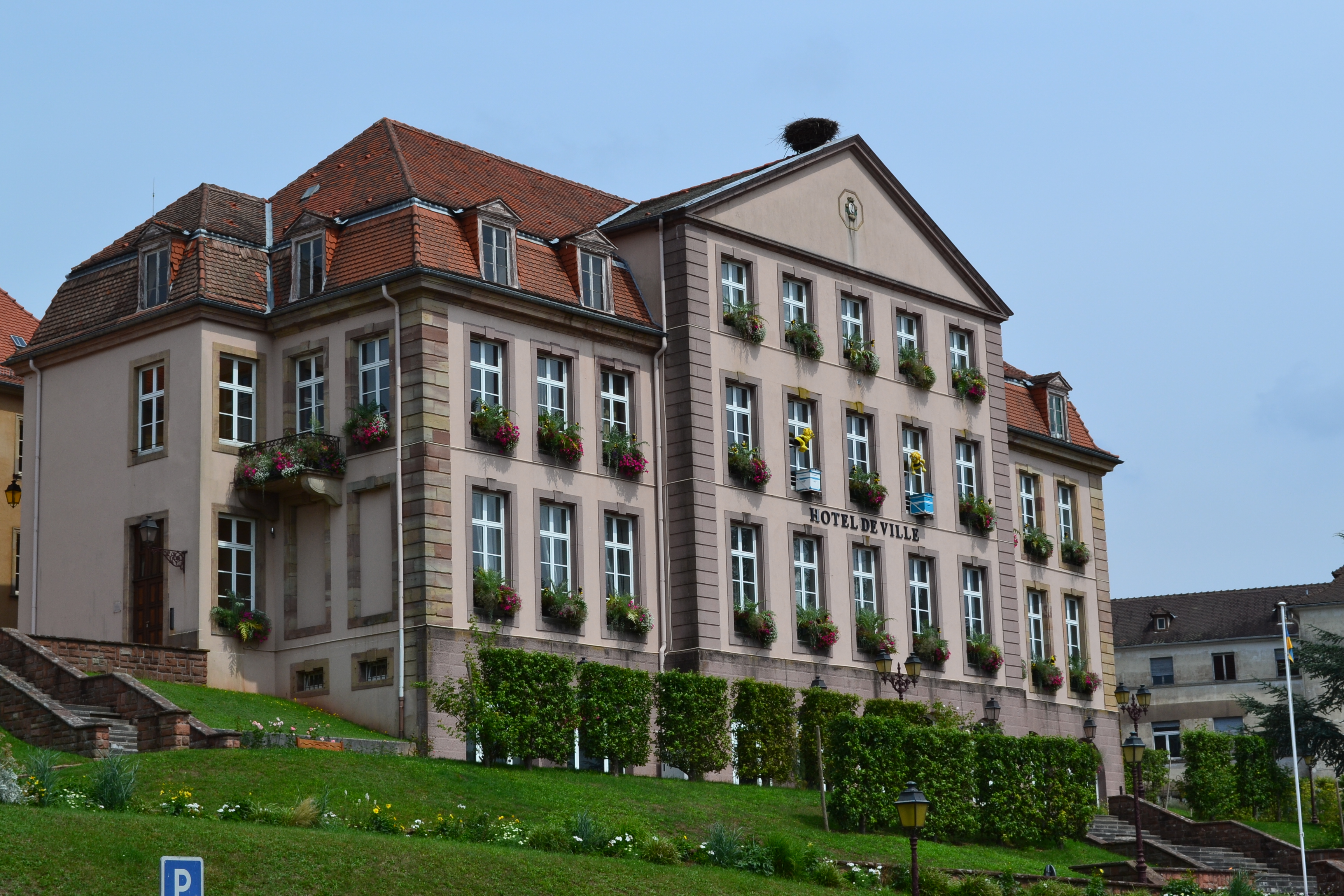
And when all of the watching eyes had seen our small procession of four through the streets of the city, here is where we popped out on the other side: (The small photo doesn’t do it justice; click on the photo to expand it to a larger size.)
Hotel de Ville, Bitche, France
A day of small wanderings, but a fabulous journey. Surely the French have a phrase that captures this. Perhaps, “petite promenade, grand voyage”?
A few notes on Bitche:
*It’s located in Northeastern France, on the German border
*From the 17th century on, Bitche was a stronghold and much of the old citadel still stands
*If you are a modern history buff, Bitche sits very close to sections of the Maginot Line
I’m sure there is some sort of Universal Karmic connection between my children’s behavior and the long history of border disputes between France and Germany. Just hear me out.
We made another jaunt over the border into France this weekend. (I’ll write more about that soon.) We live less than an hour’s drive from the border…but the border wasn’t always the border. In fact, given the history of the French-German border, I think they should just call it the Sorta-Borda, because (if history is any predictor) it will be shifting again any decade now. It’s like the San Andreas Fault in California—once the pressure builds, it will shift. It’s like my kids that way too…but more on that later.
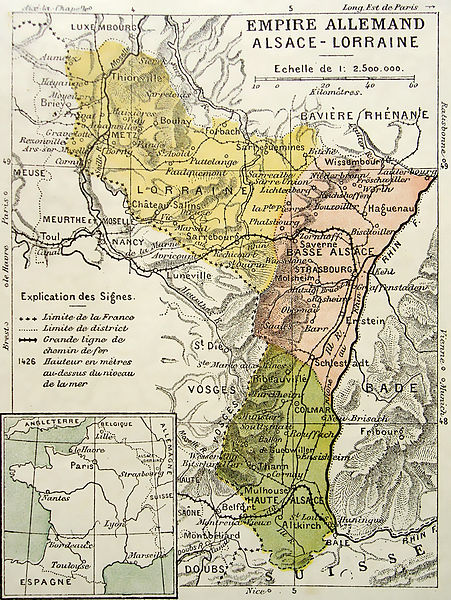
About the “borderlands” of Germany and France: I recall some long-ago history class lecture about the Alsace-Lorraine region of France being passed back and forth between German and French hands over the centuries. The cuisine, town names, and architecture make this blatantly obvious.
But I’ve only just learned that this geographic game of “hot potato” has continued into the 1900’s, and included some areas of the Rhineland-Saarland in Germany. In the 1870’s, the French lost much of the Alsace region—as far in as Metz—to the Germans, and it wasn’t returned again until 1918. On the flip side, my husband tells me that parts of the present-day German Saarland were only “re-Germanated” in the 1950’s.
About Snarky Siblings: This historical perspective makes me feel a little better about the “border disputes” that have been going on in our family since we moved into our Scooby Doo castle-house—we seem to be stuck in the “Hassle in the Castle” episode. The kids are constantly arguing about which room is better, who gets which room, who then lays claim to the room that falls between the two rooms, who gets dibs on the top floor of the house, etc.
Holy Crum! I think we are heir to two legacies here—the teen/preteen gimmees, and the French/German borderland disputes. That equals “land-grab squared,” and it ain’t pretty. Whatever developmental/hormonal forces are at play with my kids are ramped up by some sort of historical/geographic energy field that is beyond our control.
That’s how it seems… and it makes for the better story. Who’s to say that it’s not true? With a little parental intervention, our in-house border disputes seem to be slowly working themselves out. Let’s hope they hold more firm than their European historical precedents.


 Travels and Tomes: One Expat's Amblings and Ramblings