Moon Pies and Moon Landings (Modern History and the German Grocery Store)

DSC_0960

I began writing this post under the title “The Perks and Perils of Shopping Abroad.”  However, I soon realized that the insights you are about to read are much broader than my mishaps in the grocery aisles.

The larger story starts in the years after the Second World War.  (Or even after the First World War and the Bolshevik Revolution.)  It gains steam in the Cold War and the Race for Space.   However, the more immediate story starts in the aisles of my local German grocery store, Edeka.  And like the larger story of political machinations, it’s fraught with perks and perils.

For example, it was recently brought to my attention that the lovely, fragrant German laundry detergent I’ve been using for about three months is actually fabric softener.  Who knew?  Well, in fact, I had suspected for a few weeks.  My clothes were so fragrant and soft!  But were they clean?  Well, they weren’t not clean.

These things happen when you shop abroad.

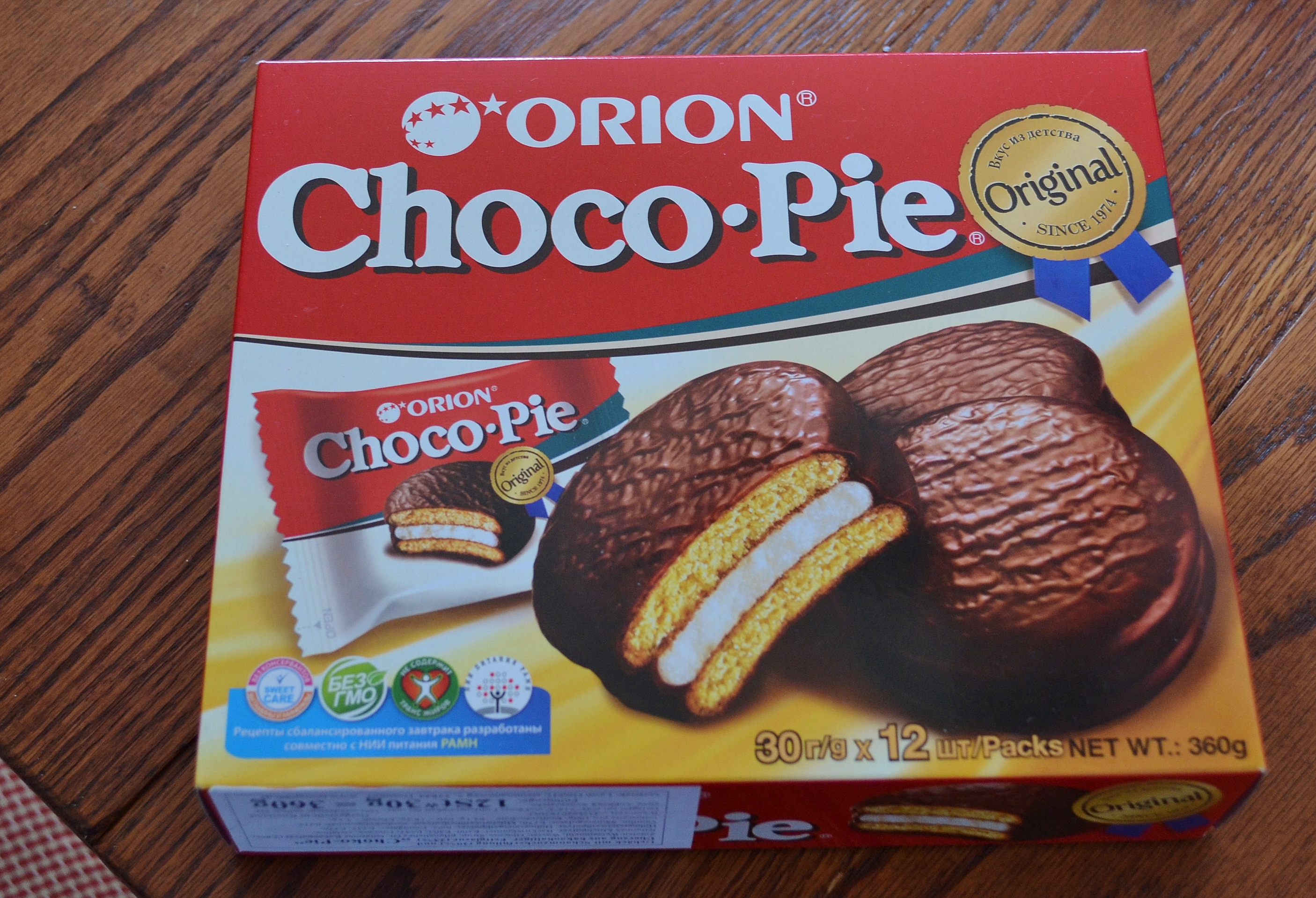
But great things happen too.  This morning, I was meandering the aisles of our grocery store, picking up jam, sorting through coffee, and pondering fish, when I stumbled upon the most amazing thing on an Eastern European/Russian shelf.  Moon Pies!   moon pie real Well, okay, Choco-Pies–but they were Russian Moon Pies!    Eureka!   For all of you non-American (or non-Southern) folks out there, here’s a little lesson:  Moon Pies are chocolate, graham, and marshmallow pies that are a Southern staple and made in Tennessee.  Before the markets were flooded with snack cakes and convenience food, there was the Moon Pie.  Apparently, they were produced beginning in the 1920’s and they were certainly big stuff in the sixties and seventies.  (My mother loved to pack my lunch with Little Debbie Oatmeal Cream Pies, but my heart, and my taste buds, yearned for Moon Pies.)   They were iconic.  And delicious.
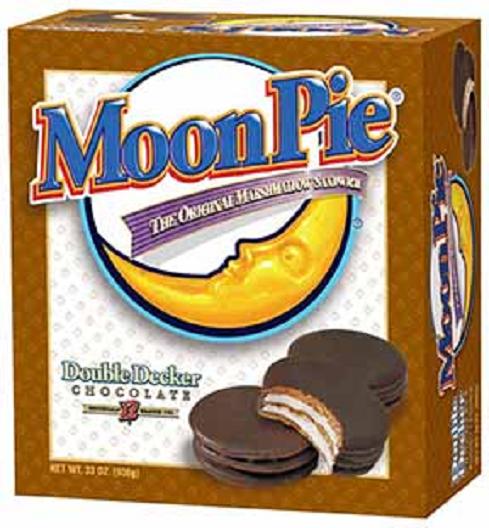
And here I was, in Germany, staring down a Russian doppelganger!  At first I laughed, and then I greedily stuffed a box into my shopping cart!  I considered my good fortune as I walked the streets of town, heading home with my grocery bag and its treasure.  But as I walked, I started thinking about more than my good fortune.  I started thinking about the doppelganger-ness of the little chocolate pie: the shadowy counterpart, the ghostly (and ominous) double.  The American Pie/the Russian Pie:  forever locked in a shadowy dance.

For sure, I’ve watched too many episodes of “The Americans,” the Cold War spy drama, lately.  But my odd brain was playing out this Spy v. Spy (Pie v. Pie) drama  and finding it fascinating.

By the time I got home, I was mad to know more.  I ripped out the Choco Pie box and scanned the label for clues–amongst the Cyrillic  (Russian) script and German sticker stood out something I could decipher.  Original since 1974.  Ha!  It wasn’t the original then–we got there first.  Not only did we get to the moon first*, but we got to the moon pie first.  I chuckled as I opened the box and saw that the pies were smaller than their American counterpart.  Well, what did I expect?

But then I took a bite.  Oh my.  I took another bite.  They were delicious.  So fresh, so chocolaty.  I felt conflicted in my patriotic soul.  There had to be an explanation for this;  no way the shadowy double could rival the Southern staple.  Think, think!  (Take another bite.)  Think some more!   Oh–of course–the problem is that too many of the American Moon Pies I’ve eaten have been plucked from dusty lower shelves of rundown convenience stores or seedy Stuckey’s truck stops.  Who knows how long they had lingered there, gathering dust and grime?  That’s it.  That must be it.
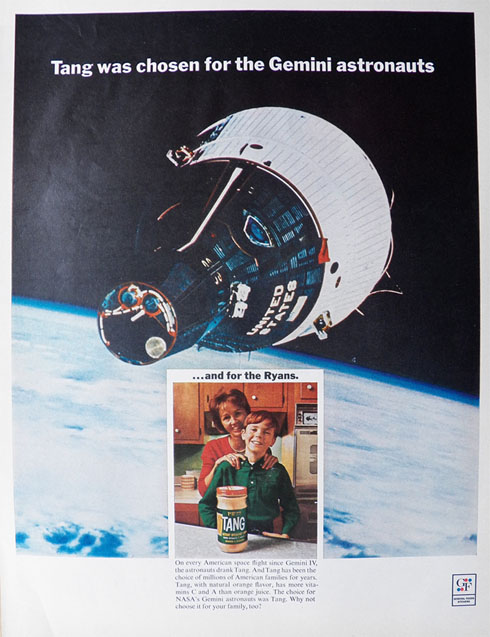
 

Tang ad, 1966
Tang ad, 1966

I was raised in the 70’s with a taste for Moon Pies and Tang.   In my mind, that era will always be  about playing kick the can, catching fire flies, eating Moon Pies, and drinking Tang like the astronauts.  I remember some of the Apollo missions; I coveted the GI Joe astronaut dolls (Barbie never had the astronaut get up, although her house and pink convertible weren’t too shabby); and I marveled when Skylab sustained people and research in space.

I didn’t cheer on the Cold War or Nuclear Proliferation– they scared the hell out of me– but I was  a product of a culture and a time.   I didn’t know whether I was an observer or participant, but I felt the adrenaline of the Race.  The Race for Hearts and Minds, the Race for Space, for Superiority, for Survival.   And then I tucked my head down into a Moon Pie  or  Mad Magazine and took refuge from the noise of it all.

Only to find today that, maybe– just maybe– my youthful Soviet doppelganger was doing the same thing in 1974.

Only she couldn’t call her treat a “Moon Pie”. . . because we got there first.

Just another lesson learned at my German grocery store.


*Sort of.  We put a man on the moon first.  But before that, the  Soviet Sputnik program beat us into outer space and the Soviet Luna program reached the moon with unmanned crafts.
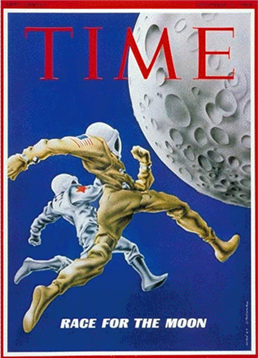

Time Magazine cover, Dec. 6, 1968


Ich Bin Ein Berliner

Alternately entitled: One way we foreigners perfect the art of faux pas  berliner ich bin

It is so very easy, when you are in another country trying to abide by other customs, eat other food, and speak another language, to blunder time and again. Just ask Mark Twain and JFK.   Kennedy made his famous “Ich bin ein Berliner” speech in West Berlin not long after the Soviets put up the wall. It was a moment of solidarity…or possibly a moment of hilarity, depending on whom you ask. “Ich bin ein Berliner”–does that translate as “I am a Berliner” or “I am a jelly donought”? It almost doesn’t matter whether we’re looking at a dreadful gaffe or a faux faux pas–an urban legend–it makes a point.  (If you aren’t familiar with the speech and the controversy, see the links at the end of this post*)

When you are abroad, even in a country where you think you speak the same language as the locals, you don’t speak the same language as the locals. You WILL embarrass yourself again and again. Get used to it. Mark Twain knew this, and you will too after only a few short days in country. The sage Mr. Twain said it best:
“The gentle reader will never, never know what a consummate ass he can become until he goes abroad. I speak now, of course, in the supposition that the gentle reader has not been abroad, and therefore is not already a consummate ass.”        ― Mark Twain, The Innocents Abroad

There are approximately 8,992 ways that you travelers might embarrass yourselves (and those around you) in any given moment, but I’ll cover just a few examples.

“Bloody Hell!” What a quaint British phrase that is. It’s cursing without actually cursing. It’s Ron Weasley’s favorite catch phrase, for Pete’s sake–what’s not charming about that? Well, yeah. Says you. Turns out Ron Weasley had a serious potty mouth. “Bloody Hell” is some bad stuff. Do not say it unless you really mean it. And please do not say it to your elderly neighbor under any circumstance. I speak from experience.

Also, if you are an American traveling in the UK, do not use the word “fanny” to refer to your bottom…it does not. Let’s just leave it at that.

Another word that becomes awkward in England: “pants.” If you spill beer on yourself in the pub, whatever you do, do not loudly proclaim that your pants are dirty. Maybe you get the point already, but let me illustrate the problem. My son was young when we lived in Yorkshire; young and growing like a weed. I bought him some new school uniforms that he outgrew after just a wearing or two. The pants were nearly perfect (which is the first strange thing about this story, as my son can wear the knees out of pants in 30 seconds flat–I should have known at this point that fate was conspiring to trick me in some way).

What do you do with nearly perfect pants? You give them to a friend who can use them. It’s a kind gesture, right?

It is, but, bloody hell, mate, you are likely to get it all wrong if you don’t speak the language.

Here’s my story: I walk onto the school playground at pick up time with a bag of nearly perfect pants in hand. I approach a friend whose son is Will’s age, and I offer her the pants. Her response: an odd stare at me. (Is there something on my face?)

So I explain, “The pants have only been worn a few times, they’re still very nice. It would be a shame for someone not to get good use out of them.” This elicits a slight recoil from my friend. (Did I eat garlic for lunch? No, I don’t think so.)

“They’re not at all worn out. I’m pretty sure they’d fit Lewis. You really ought to take them,” I say, as I begin to hand the bag her direction. A look of horror absolutely engulfs her face. “I’ve washed them,” I say.

And then it occurs to me that “pants” are undies in the UK. “Oh, no, no, no,” my voice rises and my arms wave (swinging the parcel of pants wildly), “I’m so sorry. They are trousers!! TROUSERS!!”

I say it too loudly. . .people are beginning to stare. My friend still looks rattled, but she accepts the bag with a wry smile on her face.

I’ve a feeling that she dropped the bag, unopened, into the bin as soon at she got home. Oh…no, wait…I mean the trashcan.

Sigh. It’s exhausting speaking two languages.

Faux Pas Friday*

Freudian Slip *Brought to you by Dr. Freud and “Thought I Said One Thing, But I Said Something Entirely Different Thursday.”

Every expat blog should offer an occasional thought on the faux pas, because it’s what we strangers in a strange land do best . . . or at least most regularly.

So I’ll open the conversation with my misstep of the week (so far).  Yesterday, I was in my German language class, plodding along and trying to learn a few things.  By the way, I’ve changed classes: no more sitting by Paul Newman’s twin (so sad), but I do really like my new teacher (a very elegant older German man). We were reviewing some useful phrases for eating out–something I fancied I knew a little about.  The teacher asked what the word for appetizer was. I boldly hollered out “Vorspiele!”  What I meant to say was “vorspeise”–  the word for appetizer literally means before (vor) the meal (speise).

But my teacher nearly fell off the side of his desk laughing. . . and I knew, immediately, what my mistake was.  Instead of “speise,” I said “spiele.”

“Spielen” means “play.”

Yep, I’d enthusiastically shouted out “Foreplay!”

All in a day’s work for an expat.

More thoughts on the art of faux pas next week, but for now just remember that, despite what Freud says,  sometimes an appetizer is just an appetizer .

This Old House, This Storied Country, and One Mysterious Apple


apple 2

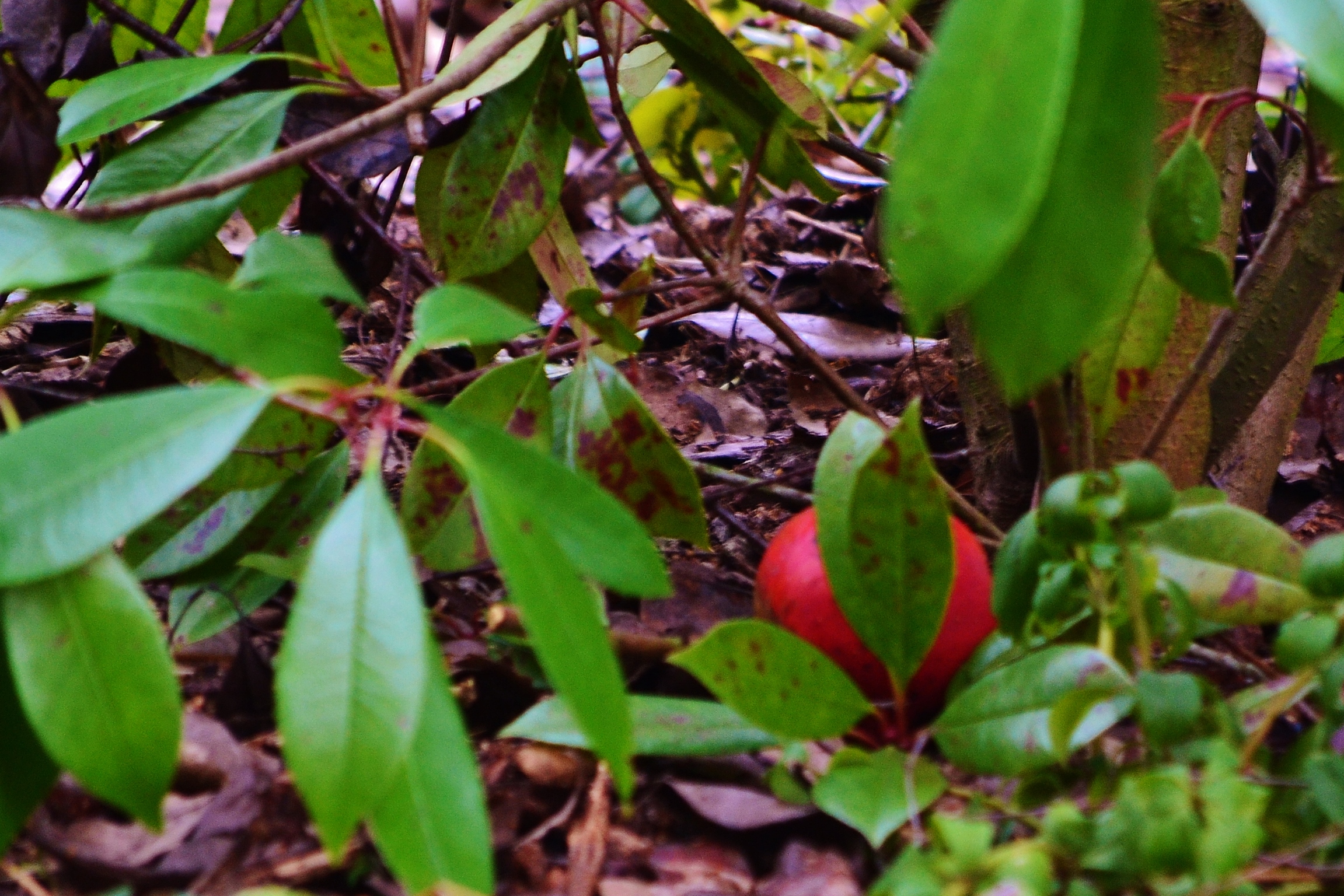
We are, each of us, a product of place, so sometimes our environment creeps into our psyche more than we care to admit–I was reminded of this fact by an unassuming apple in my front flowerbed.   A flowerbed that sits before a very old house, built of red stone, hand-hewn and crooked; a house that is, by turns, lovely and eerie.

I walked out the front door of my house and saw the apple  there–red and vibrant among the few green leaves that still cling to the frozen branches of those front bushes.  A bright spot of color in the largely barren tones of winter, it was a welcome sight.

But how did it get there?  There is no apple tree in the front yard, and the apples from the back yard are small and earth-toned by comparison.  Where did this gem come from?

Where my mind should have wandered in its answer is to my children.  “Who walked out the front door and threw their lunch apple into the bushes?”  That’s the logical question.

But I’ve been reading that German classic, the Brothers Grimm, and traveling to the Black Forest and various sundry towns mapped out in labryinthine streets of half timbered houses.  The sorts of places that both delight and unsettle the pysche as night falls. . .the sorts of places where Santa makes the rounds with his sinister cohort Krampus in tow.

So where did my mind go as my eyes fell on the apple?

The gypsy woman who had knocked on our front door the weekend before.  That had never happened before, and it was a little unsettling.  My husband answered the door, but couldn’t understand anything she was saying.  Was it German?  Was it some other language, something Eastern European?  Who knew?  He kindly, firmly sent her away without whatever she had come for.

And here we were the next day, with a lone apple in our front flower bed–red, shiny, seductive in the barren patch.  Like a riddle she left behind.

It’s still sitting there.  Part of me knows that this is a silly flight of fancy.

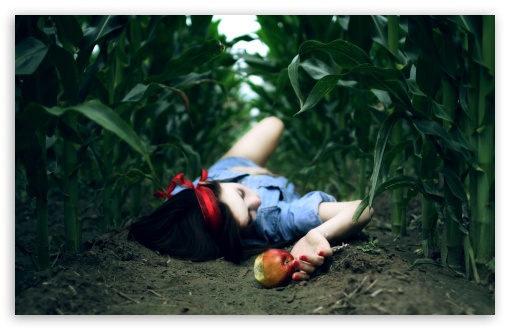
But part of me wants to run out and take a giant bite of it, just to see what magnificent story would begin to untangle in the moment of that fateful taste.

snow_white_and_the_poison_apple-t2


When Worlds Collide: Turkish Kebab in Germany

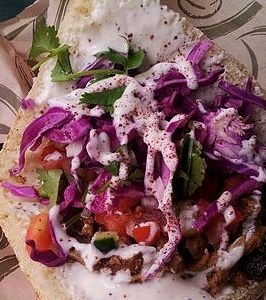
Turkish Doner Kabab with Cabbage

For three years, we lived about as far east as you can go on the Turkish Mediterranean.  Beautiful, soulful place.  We grew to love the people, the culture, the carpets, the history,  and the food.  (Oh, that food. . .)  We were aware that Germany has the largest Turkish population outside of the country of Turkey, so we’ve never been surprised as travellers (and now residents) in Germany to find lots of carpet shops and kebab stands.

So why were we surprised to find that many kebab restaurants here have married Turkish kebabs with German tastes?  And who knew that kebab and tzatziki sauce could be so fabulous with red cabbage!!!   We first had this in Trier, but have repeated the discovery numerous times in towns all over the German map.  And why shouldn’t the idea spread–it is so very, very good!   Especially if the cabbage has been marinated (in what, I don’t know–just pure, unadulterated deliciousness!).

On the SeriousEats website, Steen Bjorn Hanssen offers the following insights into the popularity of Turkish food in Germany:

Döner Kebab, or just döner, is undoubtedly the most popular street food in Germany and has become part of the German culinary culture and vocabulary, much like Indian chicken tikka masala has in the UK. The döner was first introduced to the Berliner neighborhoods of Kreuzberg (known as Little Istanbul) and Neukölln in the early 1970s by Turkish immigrants invited to contribute to west Germany’s Wirtschaftswunder (economic miracle). It quickly spread to other (west) German urban centers and following German reunification became so popular, you’ll find a döner stand in every single German town today, even in Bavaria.

(You can read his full article at http://www.seriouseats.com/2011/02/germany-doner-kebab-street-food-meat.html)

I love the comparison of Turkish food in Germany to Indian food in England–and it rings true to my ears.  Not only was Indian food outrageously popular in England, but the quality of Indian food we ate there was unmatchable.  And, if popular myth is true, Chicken Tikka Masala (England’s most popular Indian dish) is not so much Indian as an Indian hybrid–created by chefs in the UK.  Much like our German Berliner/Turkish Kebab.

Everybody likes to put their own spin on a story–even when that story is a culinary dish.  And I’m all for it!   Let the worlds collide–and our tummies and tongues will be the happier for it.