Lightfooted in Lederhosen

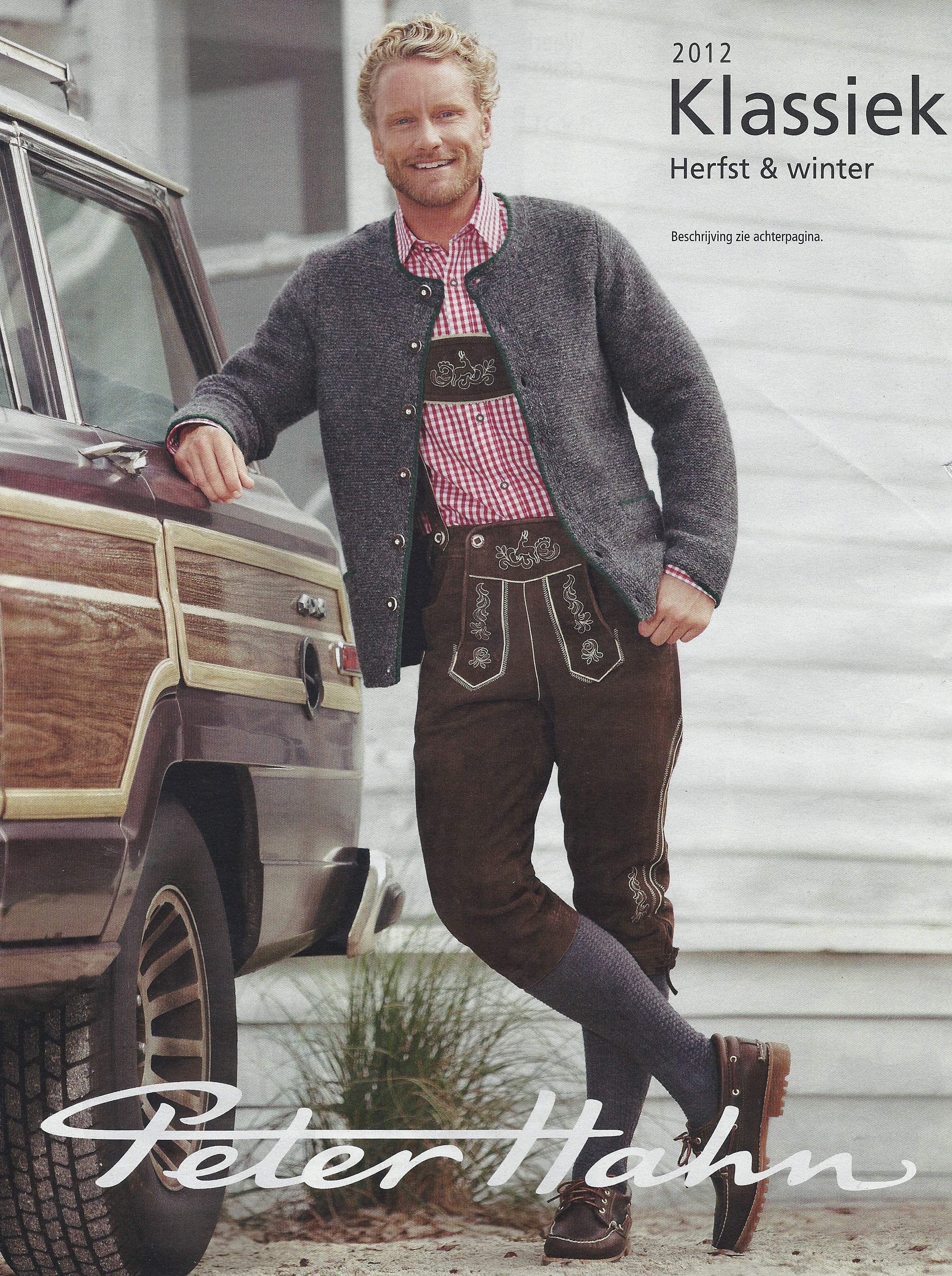
High Fashion Lederhosen from Peter Hahn

Go ahead. . .I know you want to laugh, to sneer, or to feel yourself superior to that poor sod who’s had a lapse of judgment (or an outrageous amount of beer) and decided to put on lederhosen.   The ill-conceived costume of Oktoberfest.

Well, idiot that I am, I LOVE lederhosen!   So far, I’ve resisted the urge to buy any dirndl or lederhosen for myself or my husband…actually, I’ve resisted with the gentle coaching (scolding?) of family and friends.  “What are you thinking?”  “You’d really wear THAT?”  The ever popular, “BAAAAAD idea.”  (But the  inner voice that says, “You know, your cleavage would look awesome!” keeps my heart in the game.)

And, now that Oktoberfest is upon us, it’s open season for leaderhosen in Germany.

So what are  lederhosen and dirndl and when/why/how did they become traditional?  You’ve always wondered, haven’t you?  Just been waiting and hoping that someone would bring you the story.   Well, wait no more–I’m your girl.
Some outlet Lederhosen
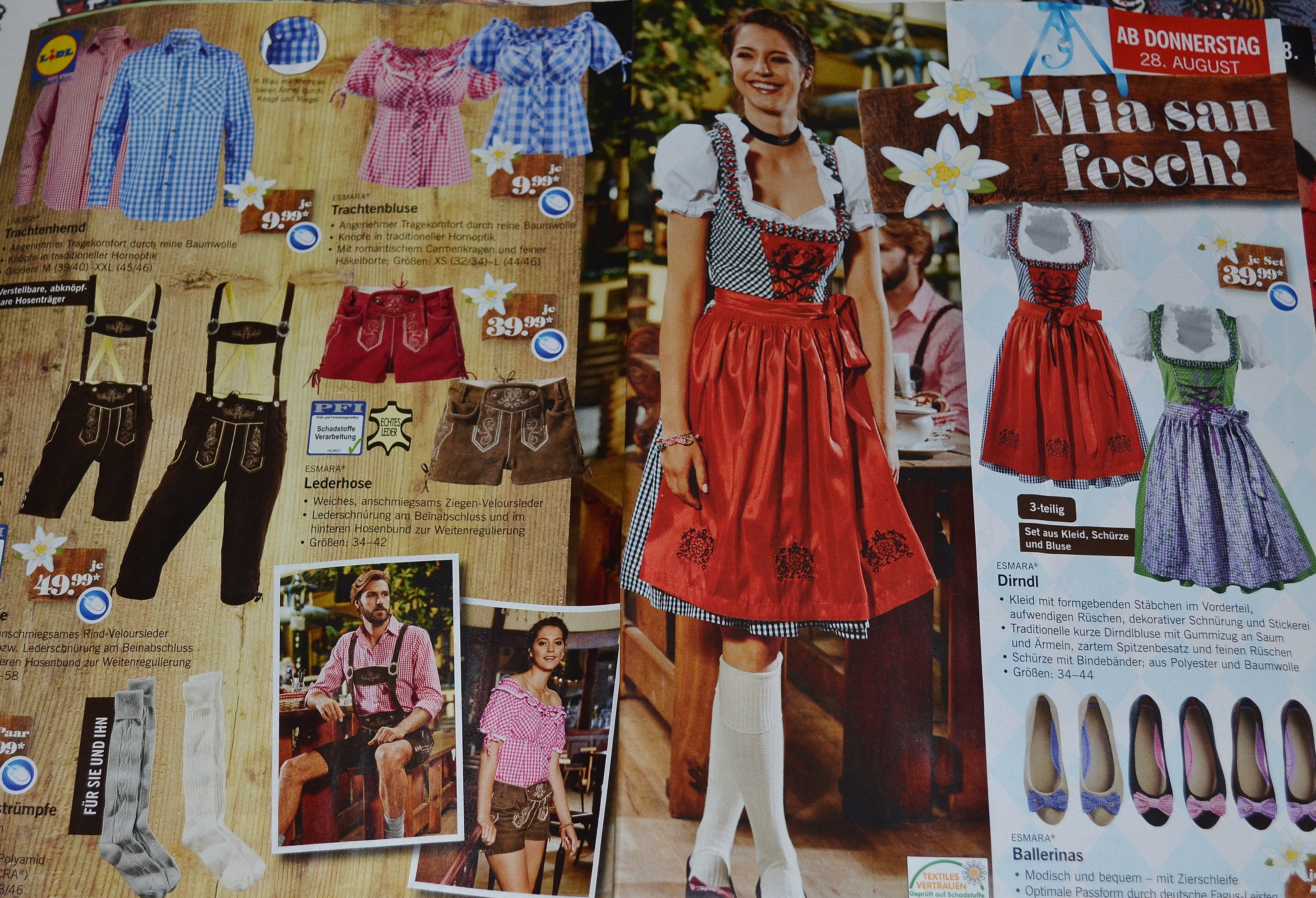
Some outlet Lederhosen from Lidl

Here’s my five cent version of the history of lederhosen:

Lederhosen (for men) and Dirndl (for women) are both called Tracht.  “Tracht” derives from the word “tragen” which means “to wear.”  Very practical origin, right?  Well, that gives you a hint about the clothing’s past.
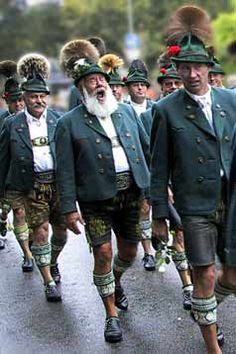
A photo of Bavarian Trachten from Pintrest

Tracht originated in the southern area of Germany and Austria.  This sort of clothing (especially the leather pants)  was associated with the working class/peasant community, and it seems to have grown out of 18th century traditional clothing.  It was, above all else, very sturdy and practical garb–both for working and hunting.   It’s possible that this clothing, most often associated with Bavaria, was also influenced by French fashion.  Whether or not that’s true, it did take a “high brow” turn when it’s popularity rose and it became not just working clothing but fine, festival clothing, sometimes richly decorated and embroidered.  (But, not to worry, it can be had on any budget.  Mass produced Trachten can be found at discount stores, but some specialty stores sell very expensive, and very beautiful, outfits.)

Of course, the female version of Tracht, the Dirndl, isn’t characterized by leather pants.  It comes from the 18th century peasant’s or maid’s dress: it has a blouse, a bodice, a skirt, and an apron.  Winter dirndl would, obviously, have been heavier, and wouldn’t have featured the same (summer weight) tailored bodice and plunging neckline that has made St. Pauli Girl beer so famous in the USA!

I’ve read that some villages produce a regional Tracht that locals like to wear on festival days. It sounds like Tracht is to Germans what Tartan is to the Scots: a sign of cultural and regional (or clan) pride, as well as a festival costume.  And that makes me like it even more!  And no wonder that it may look silly to outsiders–anything that goes deep into your own personal, cultural psyche will ellude the grasp of the universal imagination. Roots that go deep don’t spread wide.

Despite my love of cultural costume, my husband is unlikely to wear a kilt or leather knee-britches anytime soon.  It’s just too hard of a sell.  I’m holding out some hope–based only on the fact that he’s recently taken to drinking good Scotch Whiskey. . . so some sort of cultural roots are beginning to grow.  Maybe a small sartorial concession will come. . . A Tweed jacket in his future?  A Bavarian wool jacket or a German gingham shirt?  ( A spirited Scot or a barmy Bavarian?  I’m not sure he’ll like these options–he’s more of a fanatical francophile.)

Well, regardless of who wins the wardrobe wars at my house,  I love lederhosen!   And, anyway, if it must be left to the Germans to carry that cultural torch themselves. . . I suppose that seems fitting.

Lederhosen from Fendt catalog

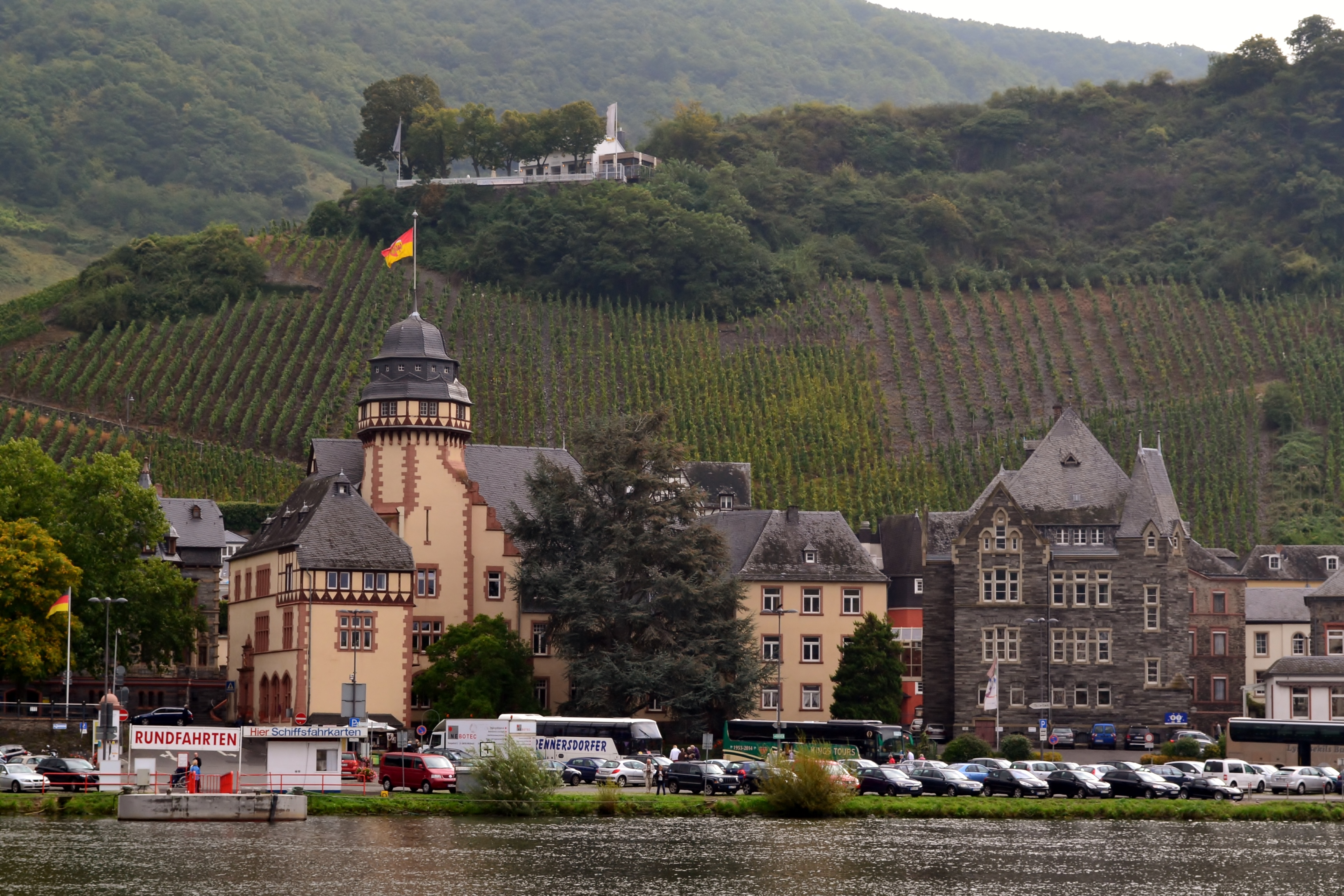
Bernkastel-Kues on the Mosel River– A Perfect Monday


Let’s file this one under “How to Play Hooky–European Style.”

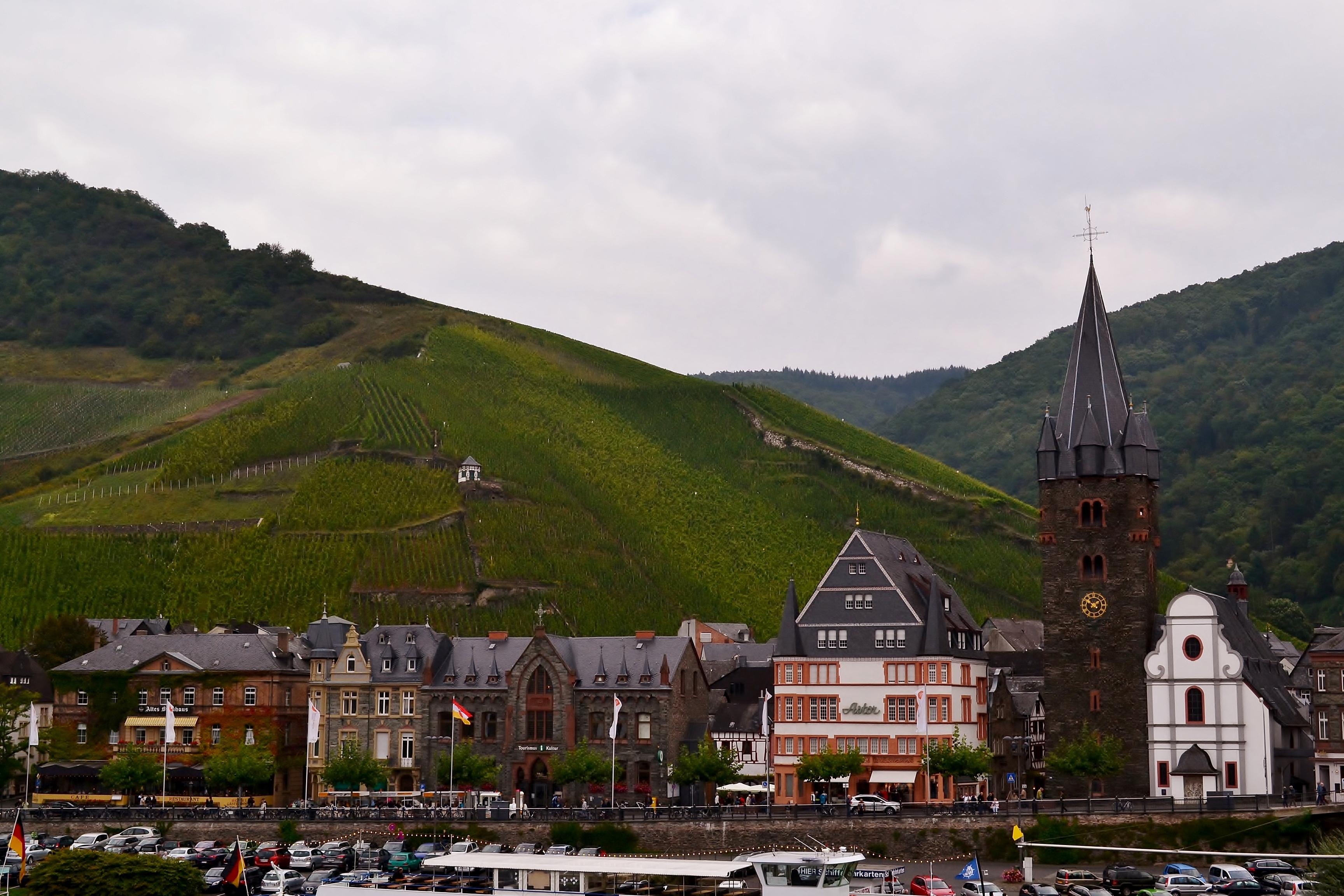
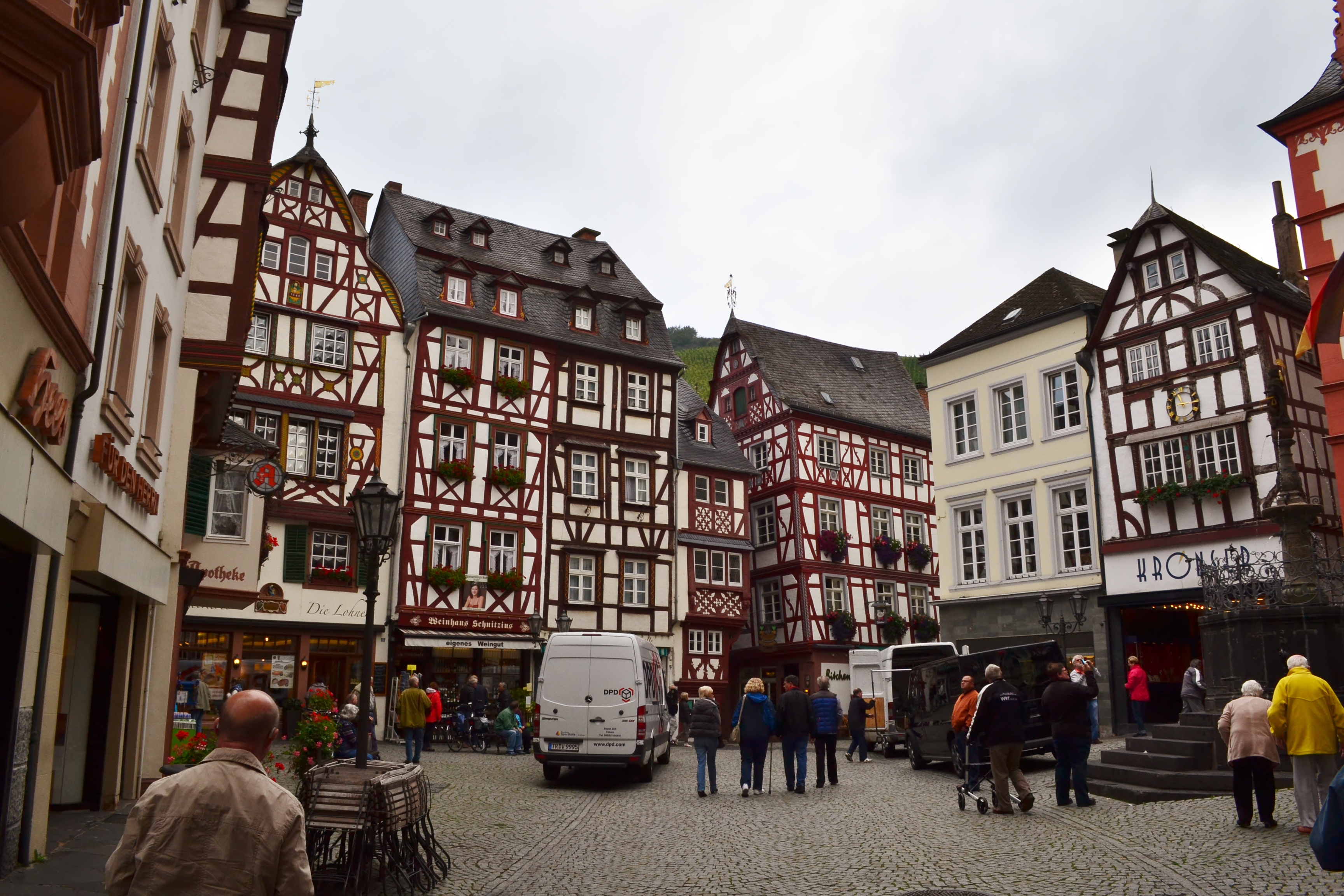
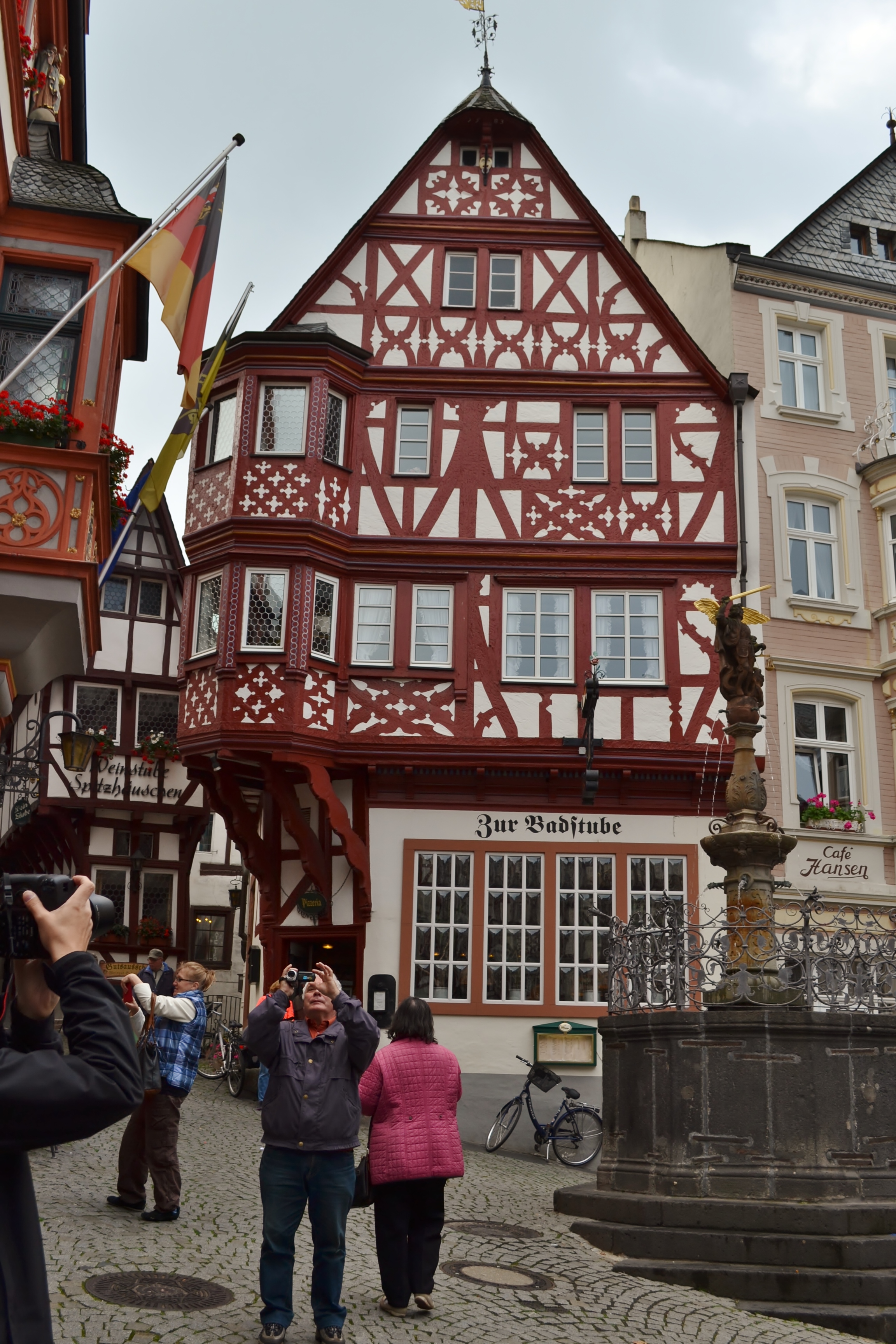
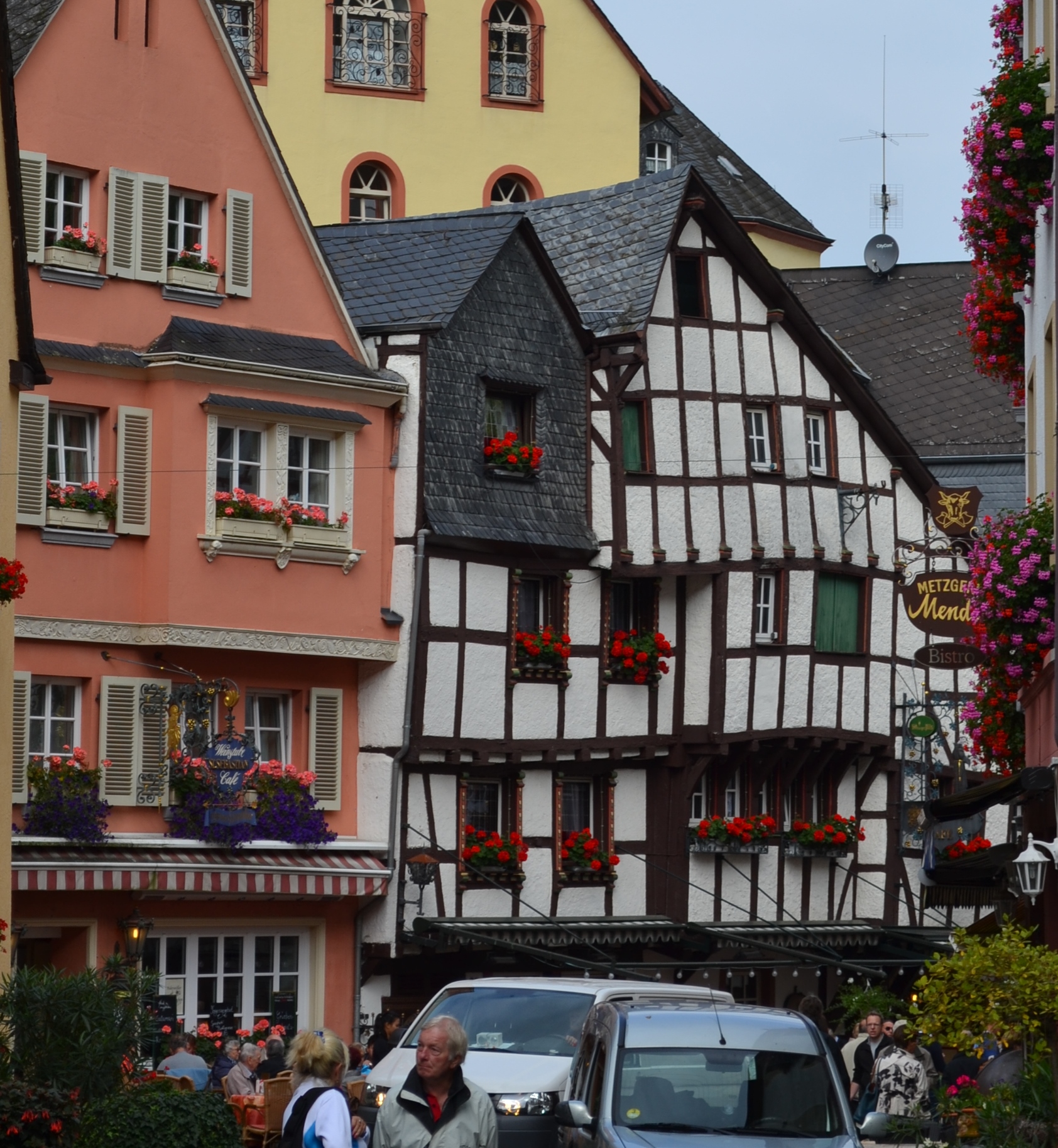
It’s a school day.  It’s a work day.  It’s a Monday.  But with a little inspiration, you pack your kids off to school, your husband takes the day off of work, you scoop up a friend who is visiting from the States, and Day Trip!   The perfect destination needs beautiful scenery and good wine–so off to Bernkastel-Kues on the Mosel River and surrounded by vineyards.

Too bad every Monday can’t be like this.

DSC_0665


DSC_0720


DSC_0676

DSC_0680

DSC_0696

DSC_0690 - Copy

This Old House: Your First Questions and Observations Answered


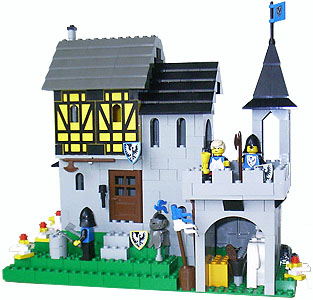
lego castleOur house sparks a little interest, a little concern, and a little inquisitiveness in folks.  So I thought I’d answer a few queries and concerns here.

Question Number One:  A friend came over for dinner with us and brought his eight year old son.  When we answered the front door, the son just stood there, looking up, then to the left and right.  “Is this a castle?” he asked.

Answer:  No, this is not a castle.  But it could play one on TV.

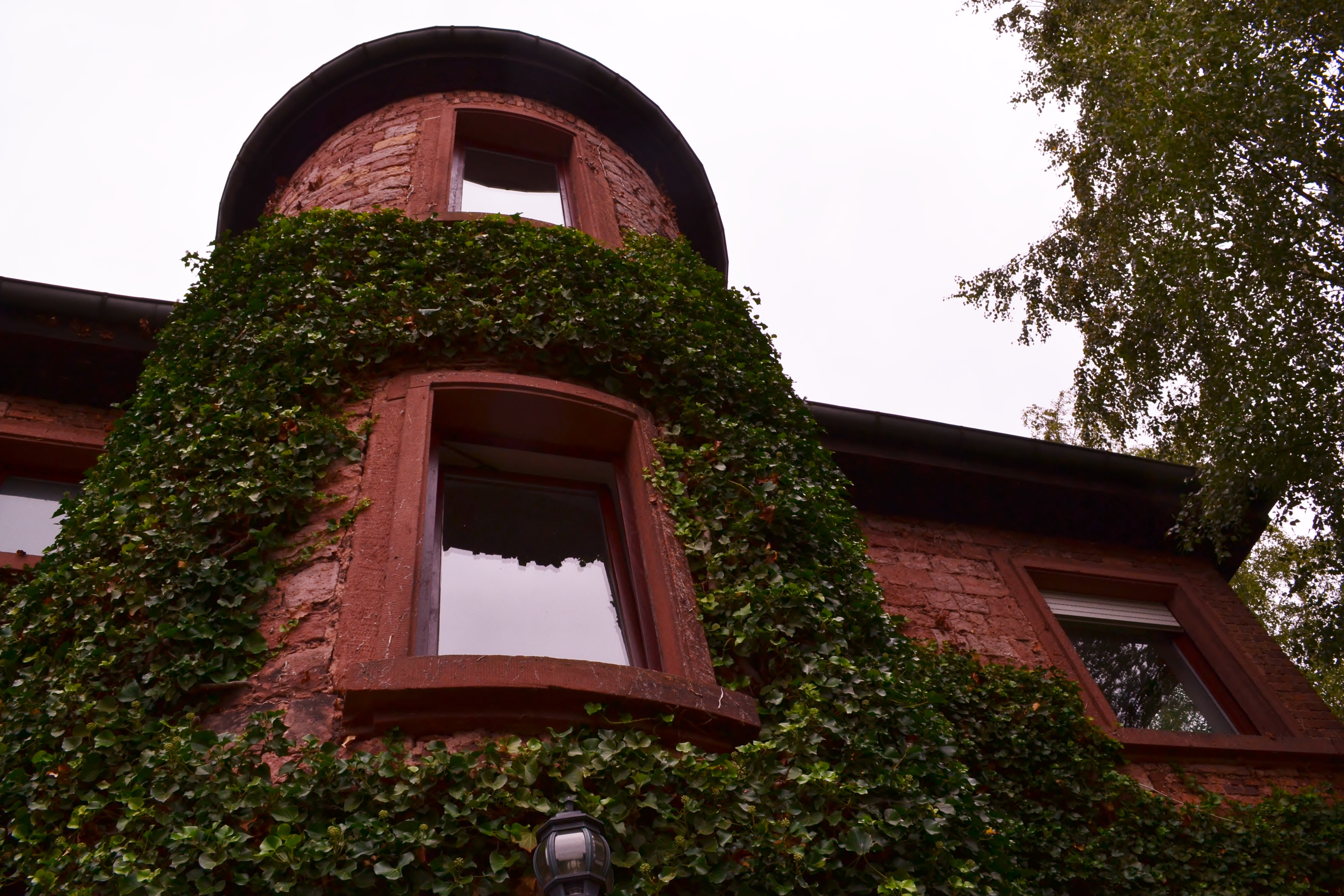
Question  Worrisome Observation Number Two:  I was standing in the kitchen, looking out the front window the other day when my son and daughter came walking home from school.  They stopped in front of the house and had a very animated conversation with a couple of kids from down the street.  Then those kids ran off  quick as lightening.        When my brood came inside, I asked them what that was all about.  “They said our house looks spooky,” was the response I got.

In answer:  Yeah, I guess it is a little spooky.  And you haven’t even seen the utility bills.   Aiieee!

(Drum Roll) The Most Frequently Asked Question:   Is it haunted?

Answer:  Thank goodness, nothing scary so far.  Some very creaky floor boards, and a few weird smells (possibly the house, possible my tweenage son), but nothing ghoulish.   If that ever changes, you’ll hear all about it.

DSC_0656

<a href=”http://www.bloglovin.com/blog/12836093/?claim=y8bqgsgvgrm”>Follow my blog with Bloglovin</a>


Calling All Foodies: I Need a Plum Recipe!!

DSC_0647

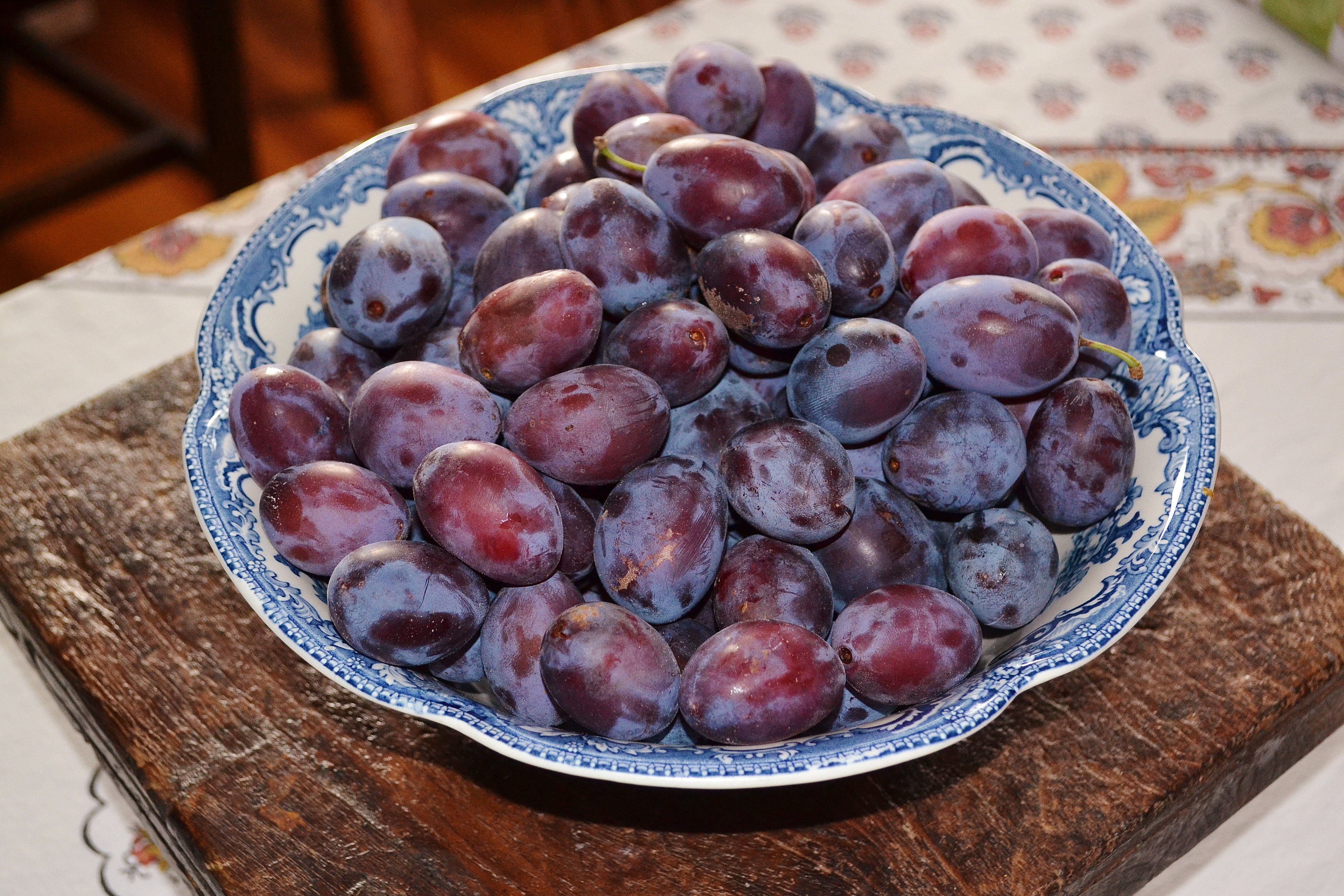
Our German landlord just brought us a bucket of plums from his property.  I would love to make a great plum kuchen, a tart, some jam, etc.    Any favorite recipes out there?  I’d love it if you’d share.

This morning, I’m launching into a spiced plum jam recipe:  a riff on the recipe found here  http://allrecipes.co.uk/recipe/17496/spiced-plum-jam.aspx.  I may fiddle with the spices and add  a dash of rum.  We’ll see.

But I will still have half a bucket of plums left–so bring on your ideas. Any suggestions welcomed, and German recipes especially welcomed.

Thanks!!

The History of Pimms, The Hope of Summer

I pulled the rouladen (German rolling shutters) down tight before bed last night.  Not to darken our rooms, but to keep the chill out.  Then I woke hungry this morning–hungry for heat and sun.  For summer.  The rouladen were holding back the chill of a 44 degree (Fahrenheit) morning.

This is liquid yum!  See the recipe below for a Pimms Cup.
This is liquid yum! See the recipe below for a Pimms Cup.

Summer has been hesitant in the Rhineland these past two weeks–she’s given in way too early to cold and wet autumn.  But I’m hopeful.  I’m hopeful that she’ll be back for what we southerners call Indian Summer–an unseasonably late heat wave.  I’d like to be scorched, for just a few days, to complain about the heat, the sweat that begins at 7 a.m., the stifling humidity.  I’d settle for a day without a jacket and for an evening on the balcony, sleeveless and sipping Pimms.

The perfect summer drink–a Pimms Cup.   Millions of Brits think so, and so does this one time transplant from the South.  It’s not just for wedding parties or Wimbledon or the Royal Ascot.  It’s pure summer deliciousness on a balmy day, OR the perfect taste of balmy-berry-sweetness-and-ginger-bite-sunshine when the day needs some reminding that it is, in fact, summertime.

According to the BBC, James Pimm, a London restaurateur, began selling the elixir in the 1840’s.  Within a few decades the drink had become outrageously popular.  If marketing slogans can reliably note a product’s popularity, consider this slogan from the 1930’s:  We had to let the west wing go, but thank heavens we can still afford our Pimm’s.  

Yes, we all have to have our priorities, and there are days when I might have traded my kingdom for a Pimms. . . especially if that Pimms came with a warm and sunny day attached.

Pimms No. 1  is a gin based drink with an infusion of bitters and herbs.  I’m not a gin girl–it’s always tasted like pine needles to me–but the magic they work on Pimms is undeniable.  Over the years, other recipes have been introduced, featuring whiskey, brandy, rum, rye, and vodka.  At present, only Pimms No. 1 and Pimms No. 6 (vodka based) are being produced.

A traditional take on the Pimms Cup:Pimms-Cup

  • Mix one part Pimm’s with two or three parts ginger ale (preferably a strong ginger ale) over ice.
  • Add mint leaves, strawberry slices, thin cucumber slices, and raspberry or orange slices if you like. (We’ve even dropped a little watermelon in, and it was very tasty.)
  • You can mix this by the glass or by the pitcherful.

I know a few folk who love a good Pimms Royal, which is a mix of Pimms and Champagne.  I haven’t tried it, but if the weather ever turns back to summer here, I’ll try a spot on my balcony and then get back to you with my thoughts.

Until then:  Cheers!  Cheerio! and Auf Weidersehen!