Here’s a lucky moment for Throwback Thursday: the summer of 2008, on the Tower Bridge of London. They say it brings good luck to witness the bridge opening (it doesn’t happen frequently)–and we were standing right on the bridge for the opening on this gorgeous summer day.
The bridge is iconic, but people often confuse it with “London Bridge”: Tower Bridge is the visual you get when you think of London bridges, but the London Bridge (actually, a series of bridges over the centuries) originally stood about a mile west of the Tower Bridge. (More importantly, London Bridge continues to stand and fall, over and over and over again, on every children’s playground, everyday, in the Western world. The origins of that nursery rhyme undoubtedly lay in some historical happening, but that’s a story I haven’t delved into.)
Tower Bridge–the view we all know, courtesy Wiki Commons
The Tower Bridge was opened 1892–at a time when London’s population was growing exponentially and a Thames River crossing bridge that could accomodate more traffic was desperately needed.
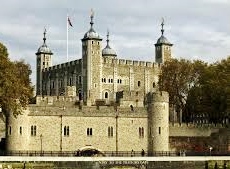
Tower of London
The beauty of the bridge lies in its appearing to be made of stone–making it the visual twin of the Tower of London (just beyond it, on the shore). However, the bridge is actually formed of tons (and tons and tons) of steel. After the steel structure was formed, granite and stone were added to cover the exterior and create the signature look.
So there you go–a little history and a lucky moment. Happy Thursday!
This is a traveler’s tale, believe me. Just suspend your disbelief for a few minutes, and you’ll see how it all comes around.
“What’s in a name? That which we call a rose
By any other name would smell as sweet.” –so says Juliet in Shakespeare’s play.
Of course, the Bard is right when it comes to the star crossed lovers of his play, but other times it seems that there is something in a name. Some hint of the stars, indeed, the trajectories of fate. I offer up my husband’s family for closer inspection. (Sorry guys!)
When we had our first child, I dabbled with dozens of name combinations. I wanted to use family names, especially for my children’s middle names. As it turned out, both of my kiddoes have middle names that come from my family. I tried to be fair minded, but a quick look into my husband’s family tree sent me running scared. The first three names to appear in the foliage of that tree?
Butcher. (NO thank you.)
Butts. (Funny, but not for my children.)
Coffin. (Oh, dear Lord.)
Those names weren’t destined to go down in my family, except anecdotally, as the names which shall NOT go down in my family.
But then. . .
(That’s where so many stories begin, isn’t it? “Everything was just fine. But then…”)
But then I picked up Nathaniel Philbrick’s book In the Heart of the Sea: The Tragedy of the Whaleship Essex. I picked it up because I’d loved his book Mayflower and I looked forward to hearing his voice again; I didn’t have any particular love of sea-faring tales. But what a crazy tale opened up to me when I opened Philbrick’s book. His story of the tragic wreck of the Whaleship Essex was a tale I already knew, in some measure, from Moby Dick, Herman Melville’s long winded but brilliant tale of mania, fate, superstition, life and death, good and evil: the motherload of English Department themes.
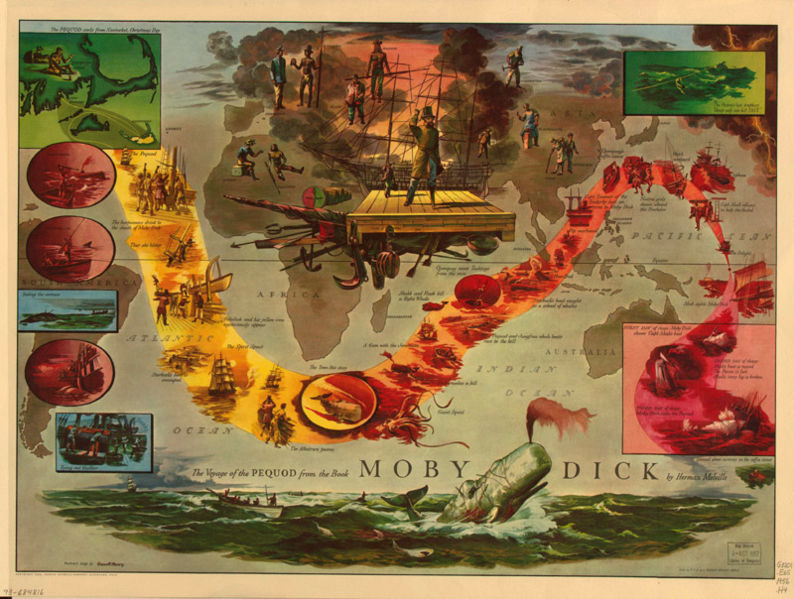
The Voyage of the Pequod,” illustrated by Everett Henry (Wikimedia Commons
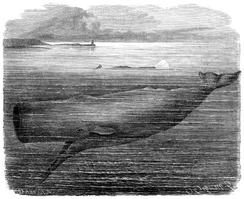
Who knew that Melville had founded his story in the circumstances of an actual whaleship–The Essex–that had been sunk by an angry whale? And the wreck of the Essex both fascinates and horrifies not only in the circumstances of the wreck, but even more in the horrifying tale of survival, and attempted survival, of her crew.
The Essex was small, but she was known as a lucky, profitable ship when she left Nantucket in 1819. Her voyage to the west coast of South America would take over two years, and things got rough for this lucky ship even in the first week of the voyage. A squall hit and the ship was damaged. But that was just the beginning. By November of 1820, her luck ran out entirely.
I’d love to recount the entire story for you here, because it is horrifying and fascinating all at once, but Philbrick tells it best, and a blog post isn’t the right vehicle for an epic tale. (Yes, I hear you thanking me.) The half penny version is that the crew members were afloat in three small boats, with little water or food (much of which became salt-soaked and only increased their thirst). They were about 2,000 miles off of the South American coast at the time. The boats were separated in a squall. Starvation and dissociative madness ensued, and death picked them off one by one.
Nearly 100 days after the Whaleship Essex sank, the very few survivors (about 5 men) were rescued.
The Essex had started out with 21 men. She had started out a lucky ship. Her journey took an awful turn. But also an awe-full turn.
That turn went like this:
1-The first mate, Owen Chase, was one of the survivors, and he wrote an account of the tragedy: The Wreck of the Whaleship Essex.
2- That account fell into the hands of Herman Melville while he was at sea on a whaling voyage. In fact, legend has it that Melville met Owen Chase’s son on that voyage. Chase reportedly gave Melville a copy of his father’s story.
3- Melville’s copy of the story indicates his deep connection with the surviving Essex men, as he scribbled in the pages, “Met Captain Pollard [who had captained the Essex] on Nantucket. To most islanders a nobody. To me, one of the most extraordinary men I have ever met.”
And so the story of the Essex has lived on in American literary culture–in spirit, if not in detail-for-detail fact.
But why do I offer it up here? Because the Whaleship Essex was carrying a young boy named Owen Coffin. Yes, Coffin: one of the leaves in the foliage of my husband’s family tree.* And one of the most gruesome, but absolutely necessary, links in bringing you the tale of the Essex and the novel Moby Dick. Without Owen Coffin, Captain Pollard and another boatmate would not have survived.
In the most desperate last days of their desperate ordeal, the men of the Essex survived only by resorting to cannibalism. Disturbing enough that they had to cannibalize their dead shipmates, but in the final days they resorted, just this once, to “drawing straws” to make the ultimate sacrifice. One of their own would be killed to save the others. Owen Coffin drew a bad lot.
Well, what is in a name, indeed?
I don’t regret bypassing the gloomy monicker for my own children, but then. . .
I also thrill to this odd link to American history –both in the Essex and in Melville’s near-Biblical tale of struggle and mania and survival.
I’ve traveled an awful lot of roads in life, in a journey not only over geographic terrain, but over cultural and temporal peaks as well–that’s the nature of our lives’ stories. So if my children’s stories reach back to a heritage that includes Owen Coffin’s tale–Owen Coffin’s horrible, gruesome, but somehow resilient tale (in the survival of Chase and under the pen of Melville)–then I am thrilled.
It’s a very long view of the journey, isn’t it?
Owen Coffin suffered a horrible fate.
But Owen Chase lived to tell.
And he told Herman Melville, whose book bombed in his own time . . .
But became a classic of literature in the 20th century.
And I scoffed at the name Coffin. . . only to find that I admire it more than I could have imagined.
As we travelers always say, “What a long, strange trip it’s been.”
*My husband’s ancestor left Nantucket for the coast of Canada in the years following the American Revolution. It’s not clear whether he was also a whaler, but he may have been a loyalist in the King’s Navy during the war.
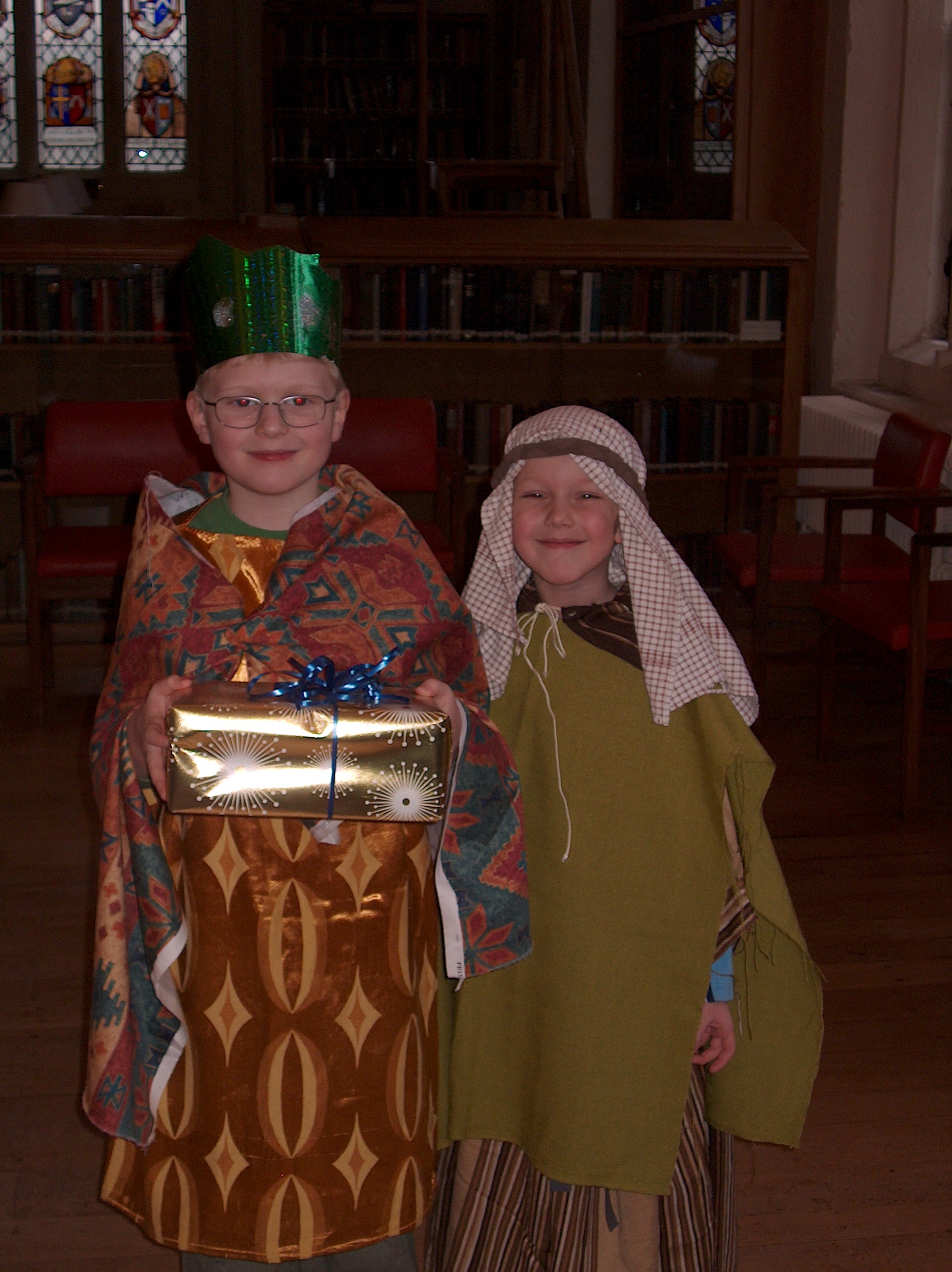
Ein Konig und ein Hirte– a wise king and a shepherd at Ripon Cathedral some years ago (2008?)
The Three Wise Men, The Three Saintly Kings. They came to visit me today. Sort of.
Actually, they stood in the street and looked forlorn, so I went out to speak to them.
I had been told they might be coming. To knock on my door, and to bless my house in observation of Epiphany on January 6th. We Americans take little notice of Epiphany (and the 12 days of Christmas that span from Christmas day until Epiphany), but in Europe it is still heartily observed.
Let me give you a tiny primer on the Heilige Drei Konige (the holy three kings) in Germany before I tell you more about my personal experience. According to the “German Words Explained” website,
On this day, groups of children known as Sternsinger go from door to door and sing a song or recite a poem or prayer. They then write in chalk above the door C+B+M and the number of the year with three crosses, eg. 20*C+M+B+08. These letters stand for the latin phrase Christus mansionem benedicat, meaning “God protect this house”.
The Sternsinger also collect donations for childrens’ charities.
I assume that the C + M + B also stands for the Three Kings (Melchior, Caspar and Balthazar). When we first moved here, I noticed these chalk markings above so many doors–letters and numbers. I’d decided that it must have to do with a municipal code, but finally asked someone about it. How fabulous to learn that it was a blessing and not a municipal code–much nicer! I was looking forward to a visit when Epiphany rolled around.
And so the three anticipated guests showed up today. My husband, daughter, and I were standing in our kitchen, contemplating lunch, when three teenagers appeared outside our window. They stared at us, we stared at them. Then we, my family, stared at each other, wondering what we were supposed to do. We had no idea, so we stared back at them again, wondering what they were supposed to do.
This will sound strange and uncomfortable to you Southerners, but,believe me, it’s acceptable in Germany. Encouraged, even. When we first arrived, we waved at neighbors and smiled broadly. They stared. . .then scowled if our idiotic grinning and waving continued. It was clear that we were committing a faux pas, but old habits die hard. Finally, months into our life here, I asked a German friend about this. “Oh no!” he said, “Do NOT wave. We just don’t do that. It is strange.” He continued, “You may tip your head if you must, but just understand that they are just looking. It’s normal; they are trying to see if they know you.”
I immediately stopped waving at people. My neighbors stopped scowling, for the most part. Now we just stare at each other. It still feels weird, but you get used to that feeling when you aren’t on your home turf. Weird is the new normal.
But back to the Kings loitering outside my window. They were three teenagers, recognizable as the kings only when two of them dropped their cell phones into their pockets and the third shifted her body to reveal a staff topped with a star in her hand. Another had some sort of wooden box.
“Oh!” I said, “I know who they are!! The Heilige Konige! The Wise Men!” I was so excited to have them visit our house!
But they just stood and stared.
Then they moved a few feet, so that they were blocked from view by a hedge. Were they regrouping before bursting into song?
Apparently not.
So I asked my husband to walk out and see if we were supposed to invite them in or something. He retorted, “YOU are the one who speaks German.” Two things worth noting here: 1 -clearly, he was a little wary of these sketchy wise guys, and 2-nothing that comes out of my mouth is recognizable as German, try as I might.
“Okay,” I said, “give me some money for the Kings.”
So, armed with some Euros and sketchy language skills, I rounded the hedge and approached the kings.
Can we pause the story here and just consider that last sentence? It has promise, doesn’t it? Sounds like the beginning of an epic tale or a heartwarming Christmas story. Yes, it has promise.
And then I said, “Die Heilige Drei Konige?” “Ja,” they said. Yes! Great! But the surly youth didn’t burst into song or emit a holy aura, or do anything else but stare.
“Sind Sie…fuss…the neighborhood?” I said. One king put his cell phone back up to his ear, and the other two looked at each other and then said, “Ja?” but with the emphasis on the question mark. “Fur Epiphany…und…charity?” I asked, adding “meine Deutsch ist nicht sehr gut!” with an apologetic look. (“My German is not very good.”)
We fumbled around for a moment. They never burst into song, and wise man #3 kept to himself and his cell phone, but we did manage to establish that wise man #2’s wooden box was for 3rd world charity donations. I handed them my money and wished them a lovely day in passable German.
That was all.
It wasn’t what I’d pictured happening when the Heilige Konige came to visit.
Maybe it was the cold rain and snow mix falling on our shoulders that kept them from a more leisurely visit? Understandable.
Maybe it was the fact that they were three teenage kings instead of truly holy kings, carrying cell phones instead of chalk, and that’s okay too. The Kingdom of Teenage plays by mysterious rules.
Or maybe it was my German-English (Germglish) that drove them quickly from my door. Germglish tends to do that.
So, the visit wasn’t what I expected . . .but I can get over that. I saw the Heilige Drei Konige; they visited my house. That ain’t bad for a rainy afternoon.
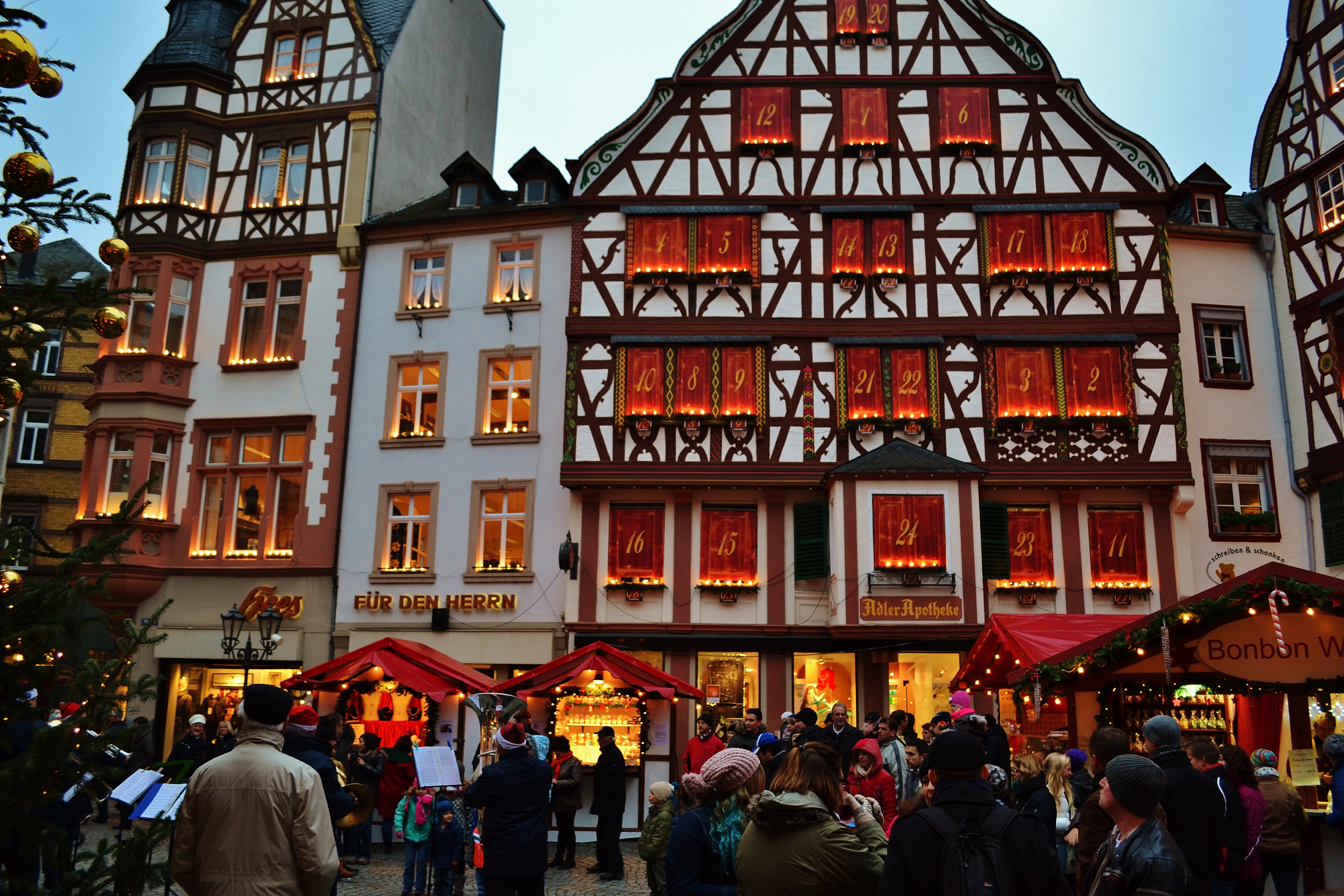
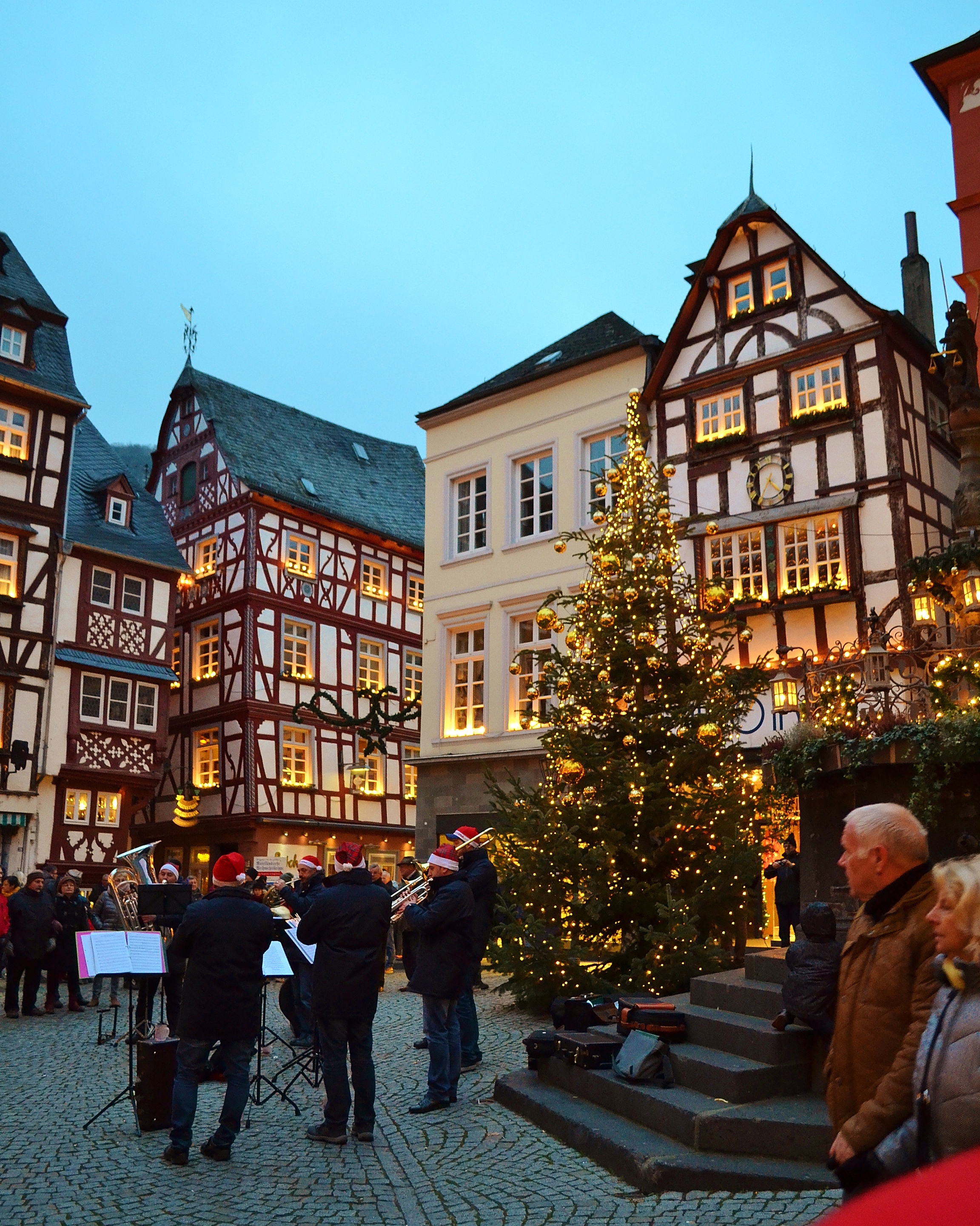
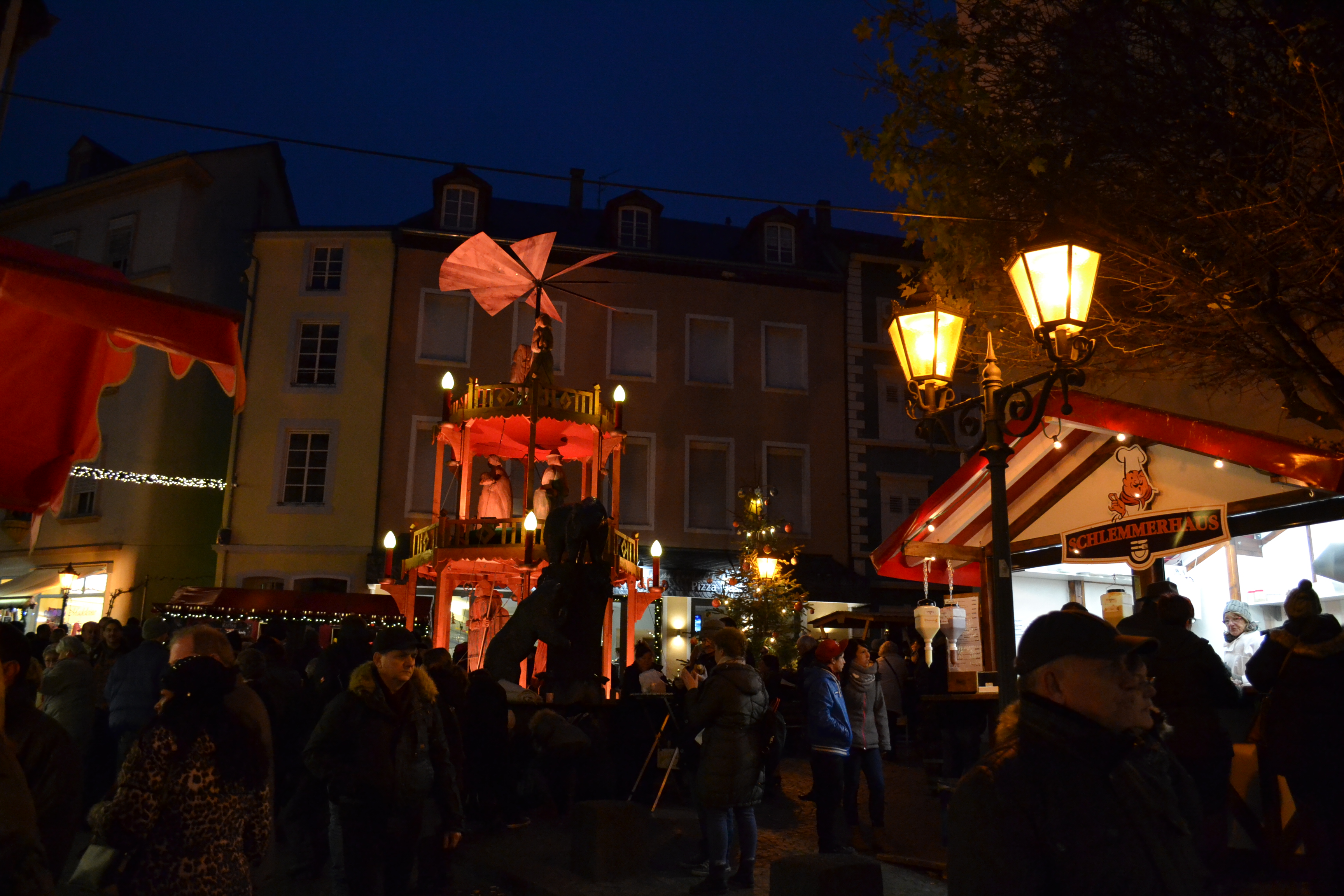
If you’d like to see more of Bernkastel-Kues, both in the holiday season and out, there’s a good video you can check out on Youtube: Bernkastel-Kues in Mosel
I haven’t had time to write this week, but I’m looking forward to setting pen to paper someday and filling you all in on my recent trip to Salzburg. (My new refrain = Salzburg uber alles. Probably politically incorrect in some historical way, but I LOVE this city and its surroundings.)
Anyhoo, to tide me over–and share my enthusiasm with you until I can write–I offer up a photo of the actual von Trapp family home, now a magnificent bed and breakfast, where we stayed while in the city.











 Travels and Tomes: One Expat's Amblings and Ramblings