Ich Bin Ein Berliner

Alternately entitled: One way we foreigners perfect the art of faux pas  berliner ich bin

It is so very easy, when you are in another country trying to abide by other customs, eat other food, and speak another language, to blunder time and again. Just ask Mark Twain and JFK.   Kennedy made his famous “Ich bin ein Berliner” speech in West Berlin not long after the Soviets put up the wall. It was a moment of solidarity…or possibly a moment of hilarity, depending on whom you ask. “Ich bin ein Berliner”–does that translate as “I am a Berliner” or “I am a jelly donought”? It almost doesn’t matter whether we’re looking at a dreadful gaffe or a faux faux pas–an urban legend–it makes a point.  (If you aren’t familiar with the speech and the controversy, see the links at the end of this post*)

When you are abroad, even in a country where you think you speak the same language as the locals, you don’t speak the same language as the locals. You WILL embarrass yourself again and again. Get used to it. Mark Twain knew this, and you will too after only a few short days in country. The sage Mr. Twain said it best:
“The gentle reader will never, never know what a consummate ass he can become until he goes abroad. I speak now, of course, in the supposition that the gentle reader has not been abroad, and therefore is not already a consummate ass.”        ― Mark Twain, The Innocents Abroad

There are approximately 8,992 ways that you travelers might embarrass yourselves (and those around you) in any given moment, but I’ll cover just a few examples.

“Bloody Hell!” What a quaint British phrase that is. It’s cursing without actually cursing. It’s Ron Weasley’s favorite catch phrase, for Pete’s sake–what’s not charming about that? Well, yeah. Says you. Turns out Ron Weasley had a serious potty mouth. “Bloody Hell” is some bad stuff. Do not say it unless you really mean it. And please do not say it to your elderly neighbor under any circumstance. I speak from experience.

Also, if you are an American traveling in the UK, do not use the word “fanny” to refer to your bottom…it does not. Let’s just leave it at that.

Another word that becomes awkward in England: “pants.” If you spill beer on yourself in the pub, whatever you do, do not loudly proclaim that your pants are dirty. Maybe you get the point already, but let me illustrate the problem. My son was young when we lived in Yorkshire; young and growing like a weed. I bought him some new school uniforms that he outgrew after just a wearing or two. The pants were nearly perfect (which is the first strange thing about this story, as my son can wear the knees out of pants in 30 seconds flat–I should have known at this point that fate was conspiring to trick me in some way).

What do you do with nearly perfect pants? You give them to a friend who can use them. It’s a kind gesture, right?

It is, but, bloody hell, mate, you are likely to get it all wrong if you don’t speak the language.

Here’s my story: I walk onto the school playground at pick up time with a bag of nearly perfect pants in hand. I approach a friend whose son is Will’s age, and I offer her the pants. Her response: an odd stare at me. (Is there something on my face?)

So I explain, “The pants have only been worn a few times, they’re still very nice. It would be a shame for someone not to get good use out of them.” This elicits a slight recoil from my friend. (Did I eat garlic for lunch? No, I don’t think so.)

“They’re not at all worn out. I’m pretty sure they’d fit Lewis. You really ought to take them,” I say, as I begin to hand the bag her direction. A look of horror absolutely engulfs her face. “I’ve washed them,” I say.

And then it occurs to me that “pants” are undies in the UK. “Oh, no, no, no,” my voice rises and my arms wave (swinging the parcel of pants wildly), “I’m so sorry. They are trousers!! TROUSERS!!”

I say it too loudly. . .people are beginning to stare. My friend still looks rattled, but she accepts the bag with a wry smile on her face.

I’ve a feeling that she dropped the bag, unopened, into the bin as soon at she got home. Oh…no, wait…I mean the trashcan.

Sigh. It’s exhausting speaking two languages.
Faux Pas Friday*

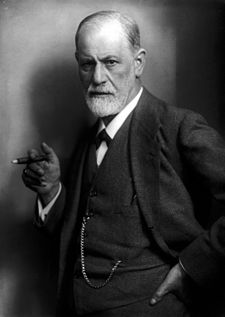
Freudian Slip *Brought to you by Dr. Freud and “Thought I Said One Thing, But I Said Something Entirely Different Thursday.”

Every expat blog should offer an occasional thought on the faux pas, because it’s what we strangers in a strange land do best . . . or at least most regularly.

So I’ll open the conversation with my misstep of the week (so far).  Yesterday, I was in my German language class, plodding along and trying to learn a few things.  By the way, I’ve changed classes: no more sitting by Paul Newman’s twin (so sad), but I do really like my new teacher (a very elegant older German man). We were reviewing some useful phrases for eating out–something I fancied I knew a little about.  The teacher asked what the word for appetizer was. I boldly hollered out “Vorspiele!”  What I meant to say was “vorspeise”–  the word for appetizer literally means before (vor) the meal (speise).

But my teacher nearly fell off the side of his desk laughing. . . and I knew, immediately, what my mistake was.  Instead of “speise,” I said “spiele.”

“Spielen” means “play.”

Yep, I’d enthusiastically shouted out “Foreplay!”

All in a day’s work for an expat.

More thoughts on the art of faux pas next week, but for now just remember that, despite what Freud says,  sometimes an appetizer is just an appetizer .

Die Heilige Drei Konige/The Holy Three Kings (January 6th, Epiphany)

Ein Konig und ein Hirte-- a wise king and a shepherd at Ripon Cathedral some years ago (2008?)
Ein Konig und ein Hirte– a wise king and a shepherd at Ripon Cathedral some years ago (2008?)

The Three Wise Men, The Three Saintly Kings.   They came to visit me today.  Sort of.

Actually, they stood in the street and looked forlorn, so I went out to speak to them.

I had been told they might be coming.  To knock on my door, and to bless my house in observation of Epiphany on January 6th.  We Americans take little notice of Epiphany (and the 12 days of Christmas that span from Christmas day until Epiphany), but in Europe it is still heartily observed.

Let me give you a tiny primer on the Heilige Drei Konige (the holy three kings) in Germany before I tell you more about my personal experience.  According to the “German Words Explained” website,

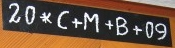
On this day, groups of children known as Sternsinger go from door to door and sing a song or recite a poem or prayer. They then write in chalk above the door C+B+M and the number of the year with three crosses, eg. 20*C+M+B+08. These letters stand for the latin phrase Christus mansionem benedicat, meaning “God protect this house”.

The Sternsinger also collect donations for childrens’ charities.  drei helige konige

I assume that the C + M + B also stands for the Three Kings (Melchior, Caspar and Balthazar).  When we first moved here, I noticed these chalk markings above so many doors–letters and numbers.  I’d decided that it must have to do with a municipal code, but finally asked someone about it.  How fabulous to learn that it was a blessing and not a municipal code–much nicer!  I was looking forward to a visit when Epiphany rolled around.

And so the three anticipated guests showed up today.  My husband, daughter, and I were standing in our kitchen, contemplating lunch, when three teenagers appeared outside our window.  They stared at us, we stared at them.  Then we, my family, stared at each other, wondering what we were supposed to do.  We had no idea, so we stared back at them again, wondering what they were supposed to do.

This will sound strange and uncomfortable to you Southerners, but,believe me, it’s acceptable in Germany.  Encouraged, even.  When we first arrived, we waved at neighbors and smiled broadly.  They stared. . .then scowled if our idiotic grinning and waving continued.  It was clear that we were committing a faux pas, but old habits die hard.  Finally, months into our life here, I asked a German friend about this.  “Oh no!” he said, “Do NOT wave.  We just don’t do that.  It is strange.”  He continued, “You may tip your head if you must, but just understand that they are just looking. It’s normal; they are trying to see if they know you.”

I immediately stopped waving at people.  My neighbors stopped scowling, for the most part.  Now we just stare at each other.  It still feels weird, but you get used to that feeling when you aren’t on your home turf.  Weird is the new normal.

But back to the Kings loitering outside my window.  They were three teenagers, recognizable as the kings only when two of them dropped their cell phones into their pockets and the third shifted her body to reveal a staff topped with a star in her hand.  Another had some sort of wooden box.

“Oh!” I said, “I know who they are!!  The Heilige Konige! The Wise Men!”  I was so excited to have them visit our house!

But they just stood and stared.

Then they moved a few feet, so that they were blocked from view by  a hedge.  Were they regrouping before bursting into song?

Apparently not.

So I asked my husband to walk out and see if we were supposed to invite them in or something.  He retorted, “YOU are the one who speaks German.”  Two things worth noting here:  1 -clearly, he was a little wary of these sketchy wise guys, and 2-nothing that comes out of my mouth is recognizable as German, try as I might.

“Okay,” I said, “give me some money for the Kings.”

So, armed with some Euros and sketchy language skills, I rounded the hedge and approached the kings.

Can we pause the story here and just consider that last sentence?  It has promise, doesn’t it?  Sounds like the beginning of an epic tale or a heartwarming Christmas story.  Yes, it has promise.

And then I said, “Die Heilige Drei Konige?”    “Ja,” they said.   Yes!  Great!  But the surly youth didn’t burst into song or emit a holy aura, or do anything else but stare.

“Sind Sie…fuss…the neighborhood?”  I said.   One king put his cell phone back up to his ear, and the other two looked at each other and then said, “Ja?” but with the emphasis on the question mark.  “Fur Epiphany…und…charity?” I asked, adding “meine Deutsch ist nicht sehr gut!” with an apologetic look.  (“My German is not very good.”)

We fumbled around for a moment.  They never burst into song, and wise man #3 kept to himself and his cell phone, but we did manage to establish that wise man #2’s wooden box was for 3rd world charity donations.  I handed them my money and wished them a lovely day in passable German.

That was all.

It wasn’t what I’d pictured happening when the Heilige Konige came to visit.

Maybe it was the cold rain and snow mix falling on our shoulders that kept them from a more leisurely visit? Understandable.

Maybe it was the fact that they were three teenage kings instead of truly holy kings, carrying cell phones instead of chalk, and that’s okay too.  The Kingdom of Teenage plays by mysterious rules.

Or maybe it was my German-English (Germglish) that drove them quickly from my door.  Germglish tends to do that.

So, the visit wasn’t what I expected . . .but I can get over that.  I saw the Heilige Drei Konige; they visited my house.  That ain’t bad  for a rainy afternoon.


Frankenstein Rocks, Nigella Bites, and I Have Trouble Staying Focused

frankensteinI’ve picked up Mary Shelley’s Frankenstein, after stumbling upon Frankenstein village last week.  I believe in the seemingly random “suggestions” that life whispers in your ear.  So why not play the card that life pitched my way?  We’re having a bout of cold, gloomy Gothic weather anyway—so the stage is set.

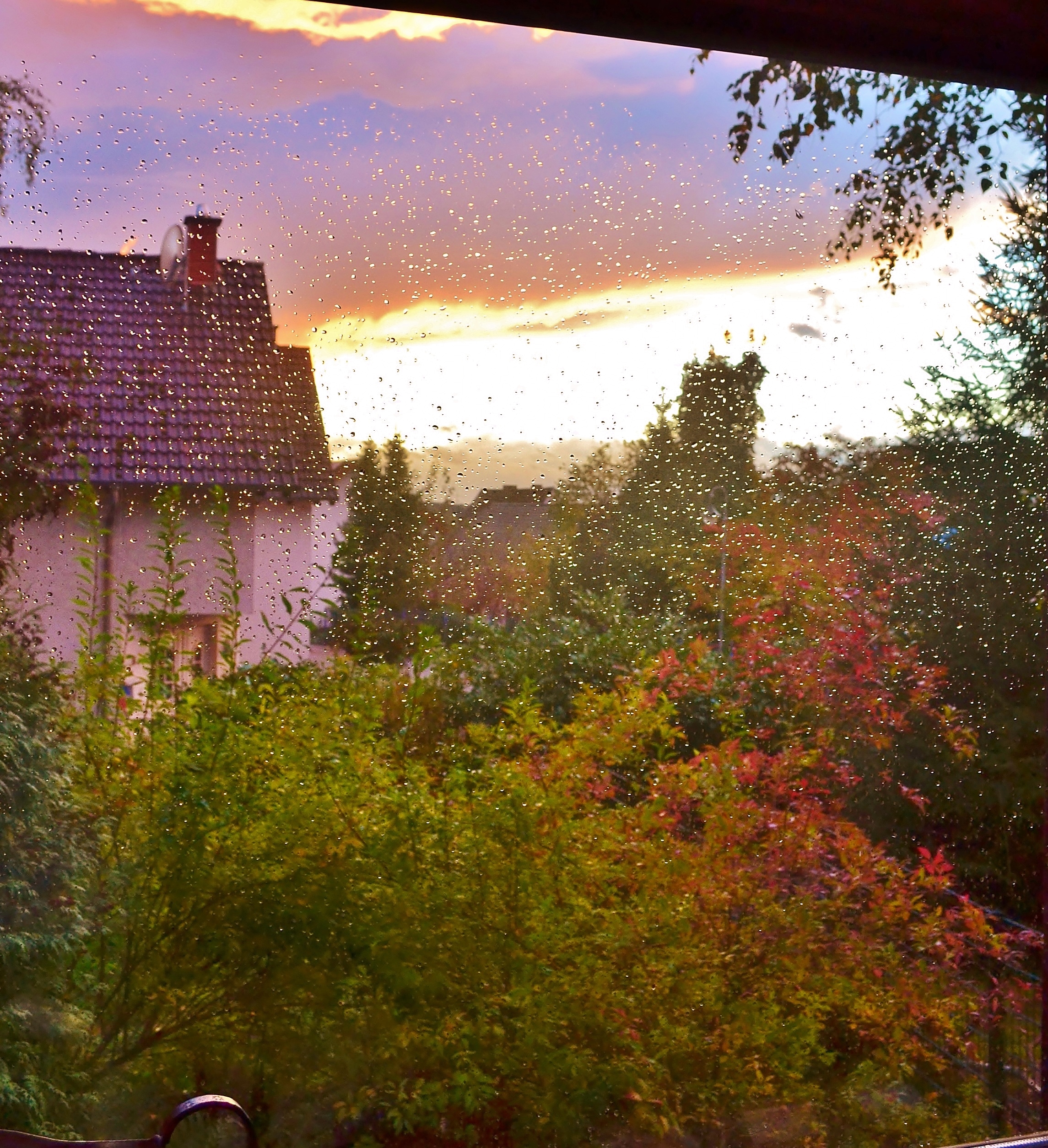
A storm blowing in outside my window.

The book was sitting on my own bookshelf, but where, exactly, I wasn’t sure.  Three months in a new house and only my daily- and weekly-use possessions are in obvious places.  The rarely used objects in my life still take a full-on three day manhunt to find.

And I was going to the library anyway.  (There’s an American library close by—you know my German falls far short of Dr. Seuss at the moment, much less Mary Wollstonecraft Shelley.)

So I went looking for Frankenstein, but found myself, instead, in the cookbook aisle.  This will surprise no one who knows me—I’m easily distractible.   But this was different, I thought—another whispering in my ear.  Some days we are more ripe for some experiences than others, and this was one of those days when something  solid and sensual was needed to catch my attentions.  The seasons are beginning to turn in Germany: the light is swinging away from us, there’s a damp chill creeping into the air, and my body is registering this on many levels.  It’s dark before 7 pm, and I’m growing sleepy far too early.  Birds are migrating, and my own psyche is being tugged at by that hibernation reaction—I want to cozy in already.  And my stomach is whispering its own suggestions: time for soup, time for autumn foods, and nearly time for holiday cakes and ale.

When my stomach speaks, I listen.

It began whispering a week or two ago, and I pulled a Julia Child book off my bookshelf.  I’m totally lacking in the sort of culinary ambition that led to “The Julie and Julia Project,” but I told myself that I’d cook whatever I happened to open the page to.  It would be a delicious adventure.

I closed my eyes and opened the book.

To the chapter entitled “Mayonnaise.”

I closed the book quickly and resolved to serve leftovers for dinner.

But yesterday my stomach was speaking again, and this time with a back up chorus:  all the senses were alive and singing.  “It’s autumn– we want the tastes, the outrageous  spiced aromas, the feeling of being held close and warm.”  There’s no denying the call.   I was on a mission.

And I found my helpmate in Nigella Lawson.  I already have many of her cookbooks on my own bookshelf, but I picked up the library’s copy of  Nigella Bites and tucked it under my arm for the trip home.
Once my kids were home from school and had enveloped themselves in that quiet hour they often take—to nibble on snacks, to relish their private “cone of silence” after a day of overstimulation—I picked up my book and fell into a comfy chair for my own moment  of communion  with Nigella.

The moment didn’t disappoint.

In describing the cream she uses in a Ginger-Jam Bread and Butter Pudding, the author says, “nothing creates so well that tender-bellied swell of softly set custard.”   And toward the end of her chapter entitled “Trashy,” she asserts that “Trashy is a state of mind, a game of mood: the food itself deserves, demands, to be served and eaten—unsmirkingly, unapologetically and with voluptuous and exquisite pleasure.”

THIS is a feast of the senses.  And, if Nigella has built her fame on being a bit of a strumpet, the truth is that she’s dead-on right about the comforts and sensuality of food.  And she’s as good  a reading companion as she is a cook.  (Nigella’s Christmas cookbook was my first foray into her vast library, and, although I have cooked some recipes from it with great success, I love it even more for the witty, intelligent read that it provides.)

Anyhoo, back to the senses.

DSC_1055
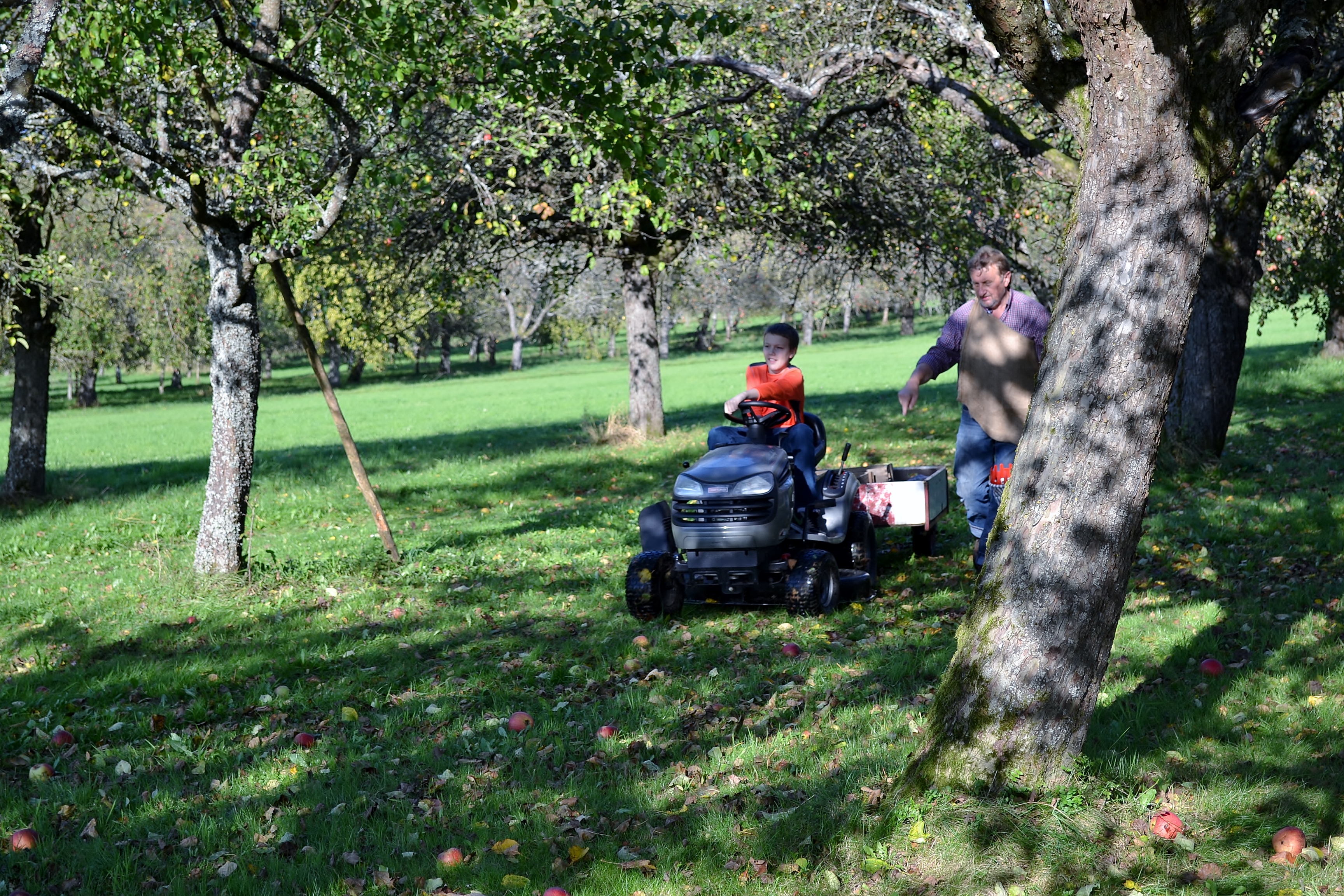
Picking apples in Helmut’s orchard

We were apple picking in our landlord’s orchard last weekend   and brought home wine crates full of apples, so cakes and cobblers have been flying out of our oven.  It’s time now for a shift to something savory.  I’ve scanned Nigella Bites, and, aside from some lovely desserts,  I’ve dog-eared a recipe called  “Granny Lawson’s Lunch Dish.”  An inauspicious name, but the recipe was speaking to me nonetheless.   Yum–spicy beef, savory smells, flaky pastry–oh, oh, wait a minute,  I know!  What I really want is a steak and ale pie–a really, really good one.  And I have just the recipe. . .somewhere in my house.  I haven’t found some of my recipe files yet.  That will take a three day man hunt, of course. (Grrr.)  But  I have  started looking for those recipes.

They haven’t turned up yet, but the good news is that Frankenstein finally jumped off my bookshelf at me.  I think that must be the universe whispering to me (again)  that I’m supposed to be reading Shelley’s book.  So I’ll just relax, read the complicated Gothic tale now and worry about savory pies later.

Unless, of course, I get distracted again.

I really do need to go out and rake the back yard. . .

The Bread is Mightier Than the Sword

DSC_0811
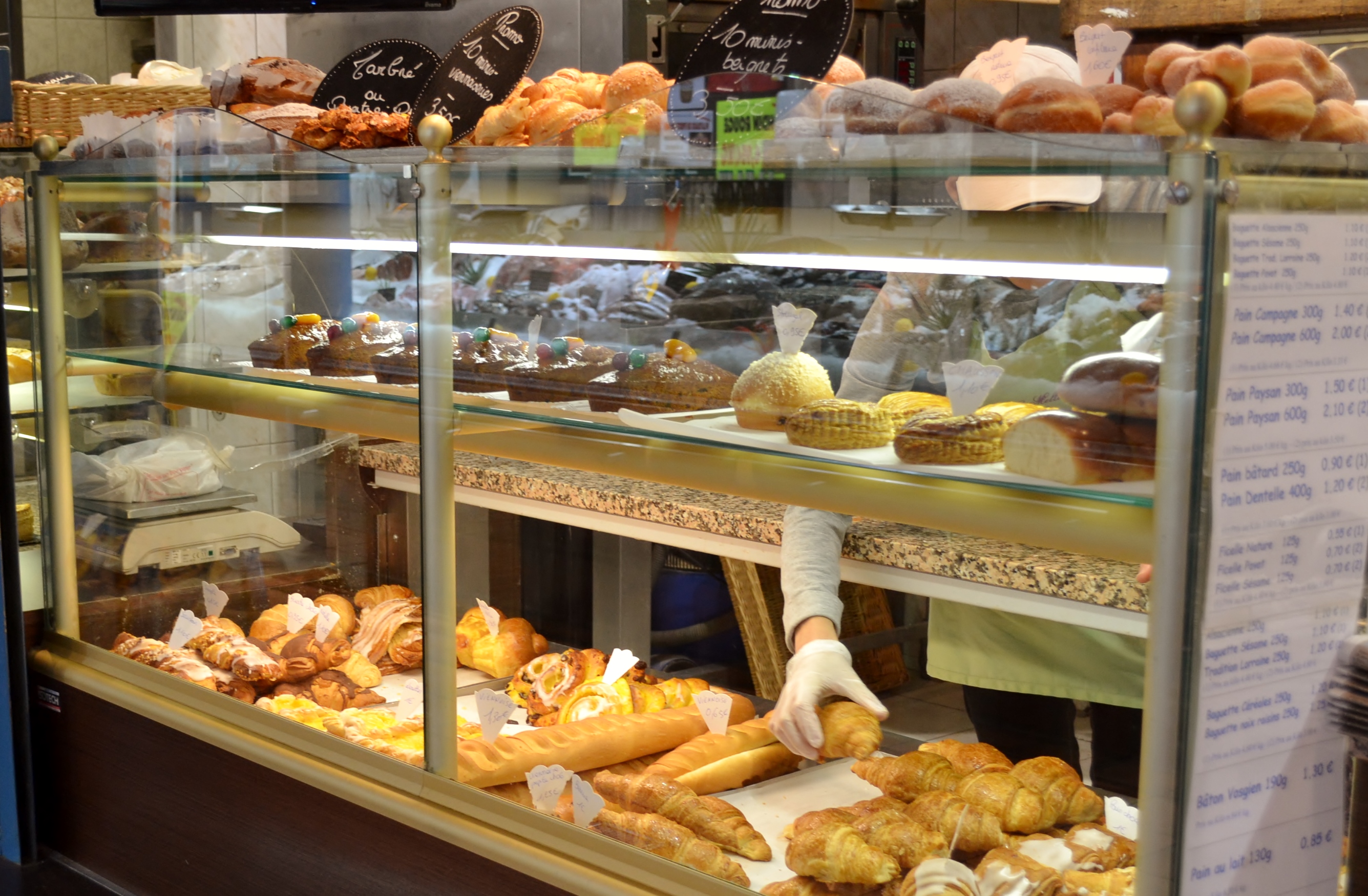
Metz, France–bakery in the covered market

As the French say,  le pain is mightier than the sword.

Okay, so they don’t say that, but somebody should, because:

DSC_0771 - CopyNumber one —  YUM

Number two—   You catch more flies with honeybuns

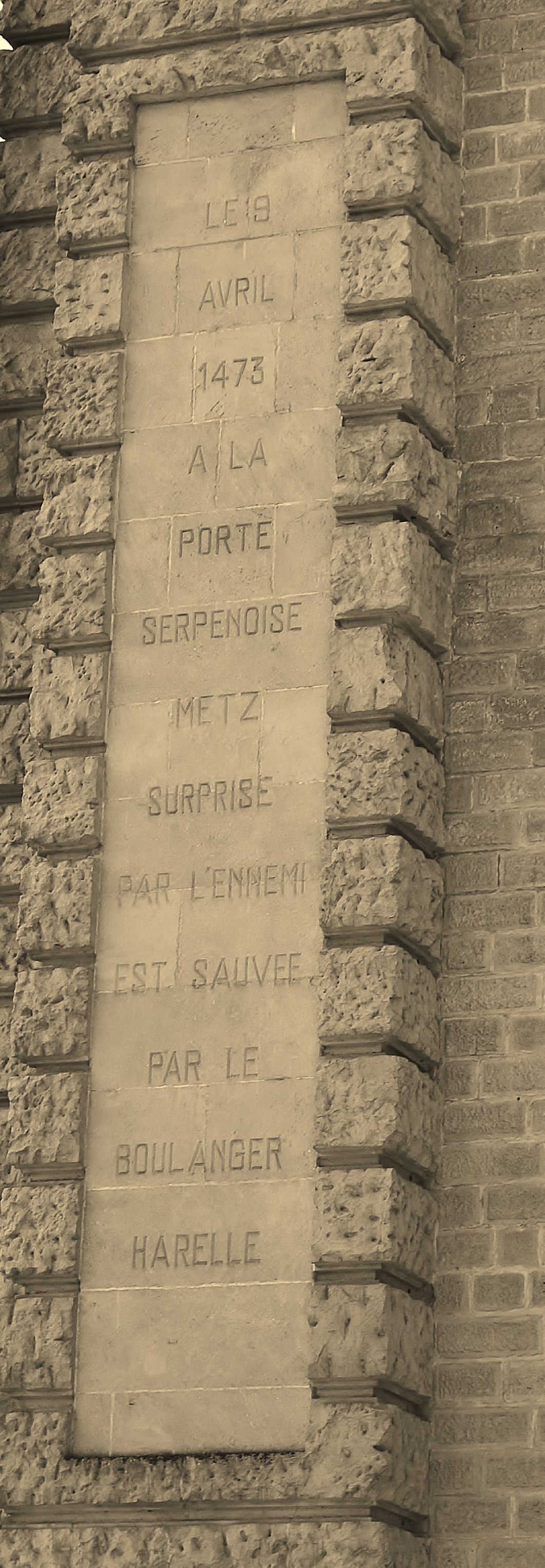
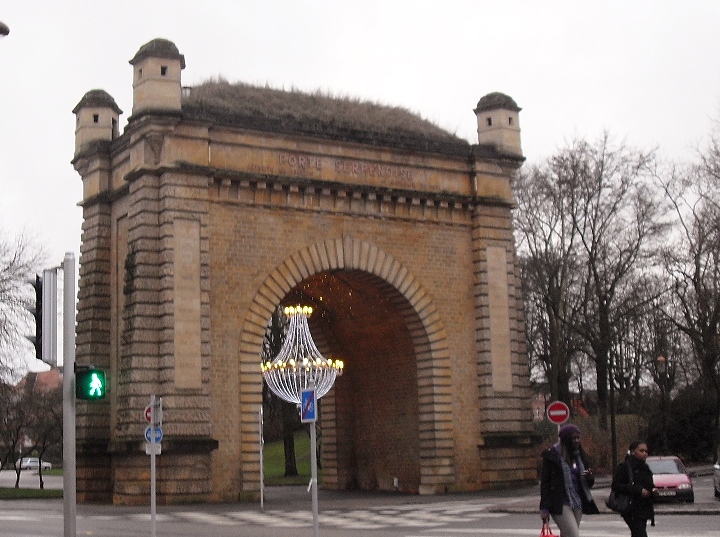
and Number three—   There is historical proof that it’s true.  In Metz, France, there is a gate in the Imperial Quarter that proves the point.  Down the side of the gate (the Porte Serpenoise), there is  a column commemorating an heroic event on April 9, 1473– “Surprised by the enemy, Saved by the baker Harelle.”

Now that’s history you can sink your teeth into!

Porte Serpenoise, from Wikipedia


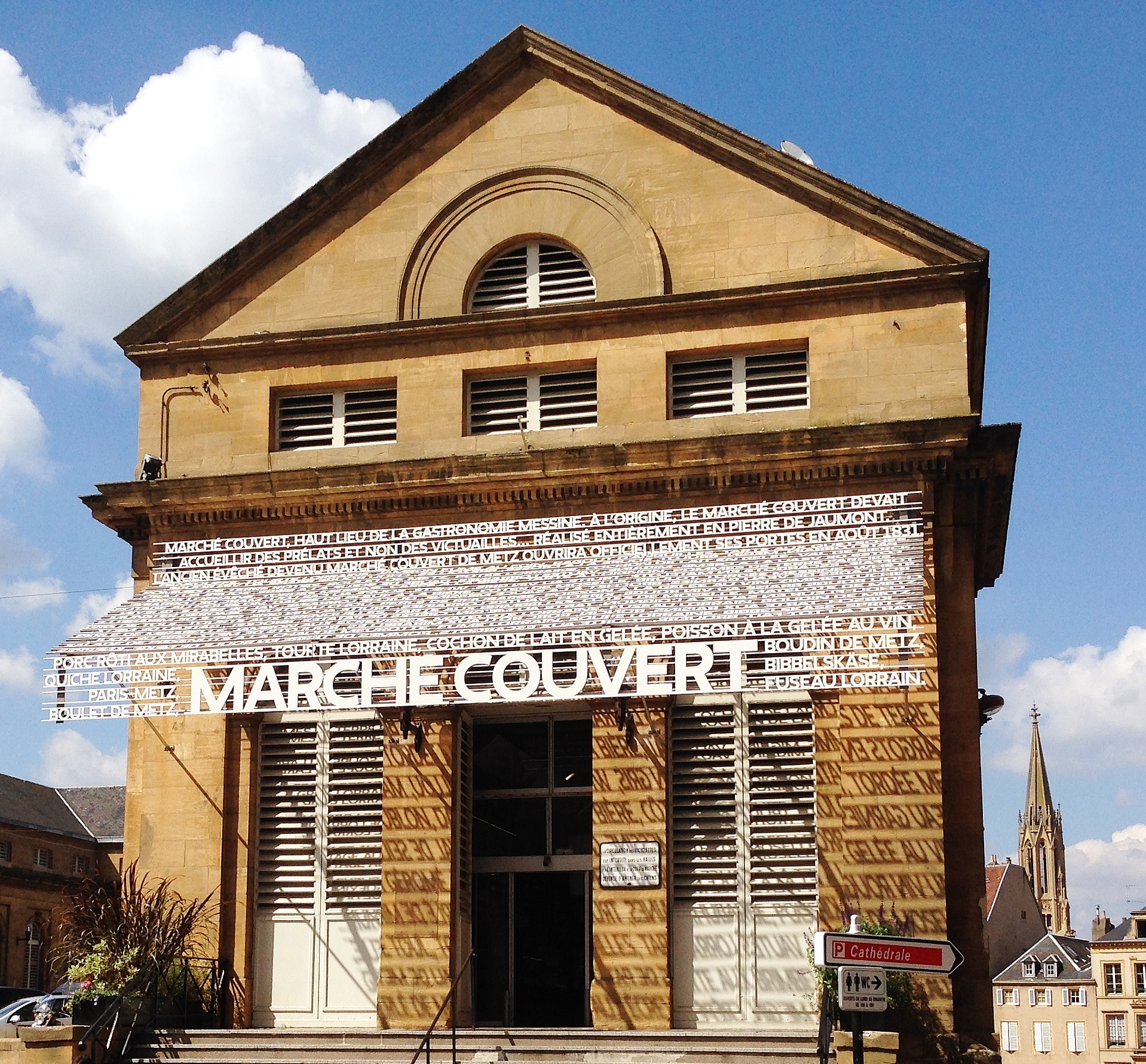
The fabulous Marche Couvert in Metz.

The fabulous Marche Couvert in Metz.

If you visit Metz, swing by the Porte Serpenoise.   Then visit the incredible cathedral, and stop in at the Marche Couvert (the covered market)– it’s a great place to eat lunch; pick up fresh meats, cheeses, or produce; or nibble at the bakeries and pay tribute to the heroic baker Harelle.