I open my mouth in a European market, and out comes a confusion of speech, a jumble of gibberish–here a French word, there a German, then a mischeivous Turkish phrase. I’ve lost all control over my tongue.
I’m trying to reign in this problem, but it is hard. We stepped over the border into France again Saturday, and this is where the big troubles always begin. In Germany, I speak lots of English and the splattering of German that I can manage so far. (Still studying up!) Sometimes French or Turkish words sneak into my speech, but they are the odd escapee from under the fence. I have some control over my language.
Then I step over the border, and all hell breaks loose. My brain seems incapable of releasing only the French words from their cell block. No, that would be too orderly. The gates fall and all the imprisoned words escape at once–a melee of language, a fracas of phrasing. A mess. Really. Or is it?
Mess-peranto. A new international language for people who make a mess of languages. Let’s start a movement! This could be like Esperanto for people who are enterprising enough to know smatterings of a few languages, but too lazy to actually order and develop their linguistic skills.
Bad idea?
I’m pretty sure the French cashier I practiced on thought so.
Recently, another blogger I follow took note of the Germans’ penchant for pork. Took issue with it, really. And, while I think taking aim at another cultures’ tastebuds is a thorny undertaking at best, I do feel a little sympathy for other people who are swine-averse in Germany. There’s no easy way to steer clear of the pig when in the Palatinate.
And I should know. I am not a sausage eater. I don’t mind the aroma, the spice, the bite of garlic or pepper–those are all fabulous…seductive, even.
Not sure I like the idea of sausage, but sausage is not really one of those things anyone should think too closely about, so that’s not the problem.
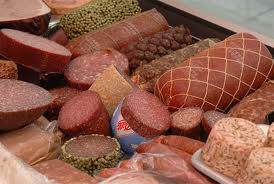
I’m just allergic to pork. So I avoid it. No biggie. Up to this point in my life, there have always been lots of options. In the South, I go to BBQ joints and order shredded chicken or beef. I take a pass on bologna, and I feel no great loss. However, in the land of beer and brats, you find yourself adrift on a sea of sausage… absolutely schwimming in schwine.
The boys in my family think this is fabulous, and I won’t contradict them. But it does make for some awkward moments for me. I feel funny always asking what’s in a dish that I don’t recognize–it feels a little high maintenance. And, since my German is very rudimentary, I often don’t understand the answers I get back. So there’s a lot of just steering clear–taking the widest path around anything that might possibly contain pork.
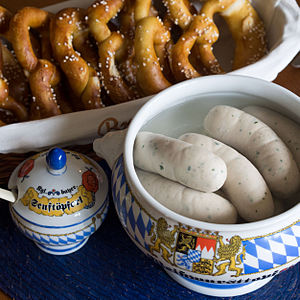
en.wikipedia.org, weisswurst
Which knocks out a lot of things in Germany. (I thought my Ritter chocolate bar smelled slightly bacony the other day…but I ate it anyway, and I’m still standing.)
So here’s the plan: Germany may be a swine-fest 24/7, but it’s also a chocolate and pastry and spatzle fest, so I will not suffer (although my waistline might). My household will savor all that Germany has to offer by the age old “Jack Spratt technique.” What I won’t eat (pork), my husband will relish; what he will only nibble around the edges (pastries), I will greedily gobble. You’ll recognize us if you sit nearby at a restaurant: we’ll be the people who’ve licked our platter clean.
Guten appetit!
A little sampler of facts about German Wurst:
*A wurst is a German or Austrian sausage–it is not necessarily made of pork, although pork is the most frequent ingredient.
*Wurst is sold both raw and cooked; it can be sold as a sausage or as cold cuts.
*If you happen to be near New Braunfels, Texas, you can go to the Wurstfest in November. It bills itself as “the best 10 days in sausage history”–the best of the wurst. Or the wurst at its best. And then, later, you can confuse people by saying, “I was once in Texas and had the best wurst.” ?! The Pocanos also advertise a Wurst fest, complete with Polka Bands, Bavarian dancing, Lederhosen, and hotdog races. The wurst at its worst best wurst …whatever. Chicago also has a three day Wurst fest. (This begs for a windy city joke, but I’m trying to be mature.)
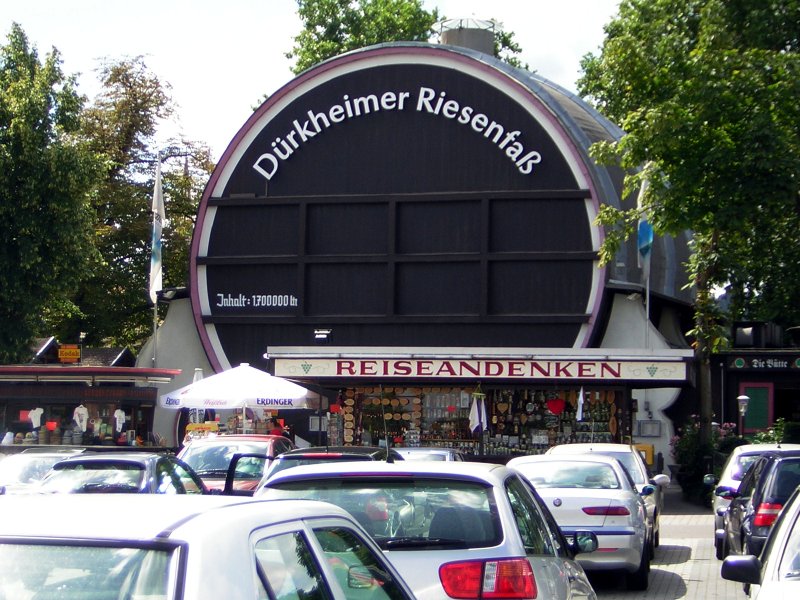
*Bad Durkheimer, Germany (in the Pfalz, which is part of the Rhineland-Palatinate and close to where I live) has a Wurstmarkt wine and wurst festival in September. Part of the national Oktoberfest fervor, but with wine. (And, I’m told, the wine is served in half-liter sized glasses, like beer. Ouch.) The Durkheimer Wurstfest is famous for being the biggest winefest in Germany. It bills itself as a nearly 600 year old festival. (The flyer should read “the best 570 years in sausage history”–that would show Texas!)
Bad Durkheimer
*Apparently, there are over 1,500 types of wurst available in Germany. It can be found on a German table at any time of day or night. It is the subject of festival and poetry. (Well, if Robert Burns can write a poem about Haggis, then sausage is certainly fair game!)
* Holzhausen, Germany boasts the Deutsches Bratwurstmuseum–yes, a wurst museum– which houses documents that can date the beginning of wurst from the year 1404. So there you go; plan your pilgrimage now.
**If this is the wurst post ever, I apologize. Consider the subject.
Yesterday, in Bitche, France/Hier, a Bitche/ Gestern in Bitche
Click on the photo if you wish to expand it.
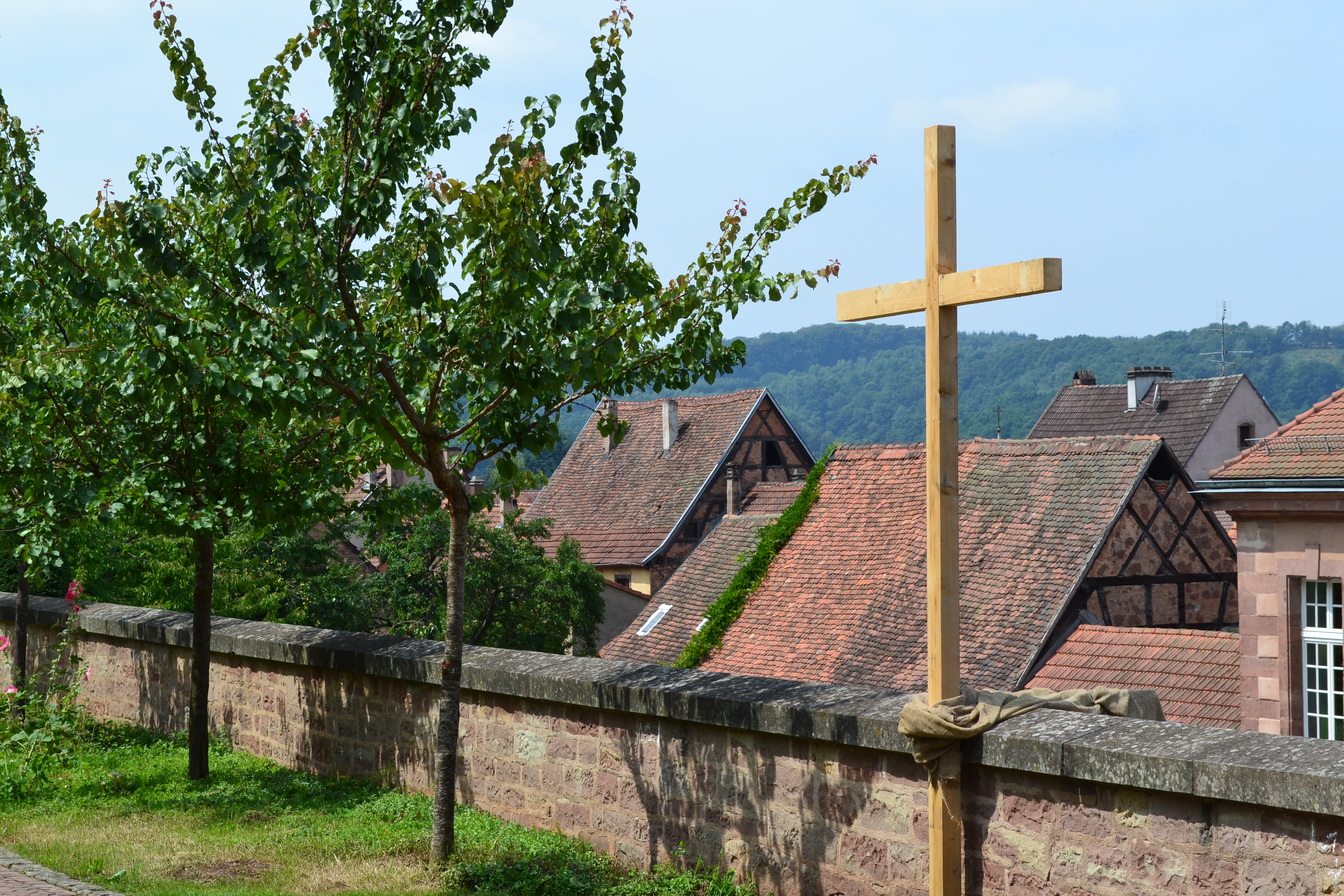
I stopped to look out over the rooftops of Bitche–which were so beautiful, serene, and orderly in a charming, hodge-podge way. (Like all the most beautiful things–with just a hint of asymmetry to keep the eye interested.) It took me a few moments to realize that I was standing by a simple wooden cross, and I wondered how long it had been standing there, keeping its own unwavering watch over the rooftops of the citizens of Bitche. And if those citizens had, like me, been largely oblivious to its presence.
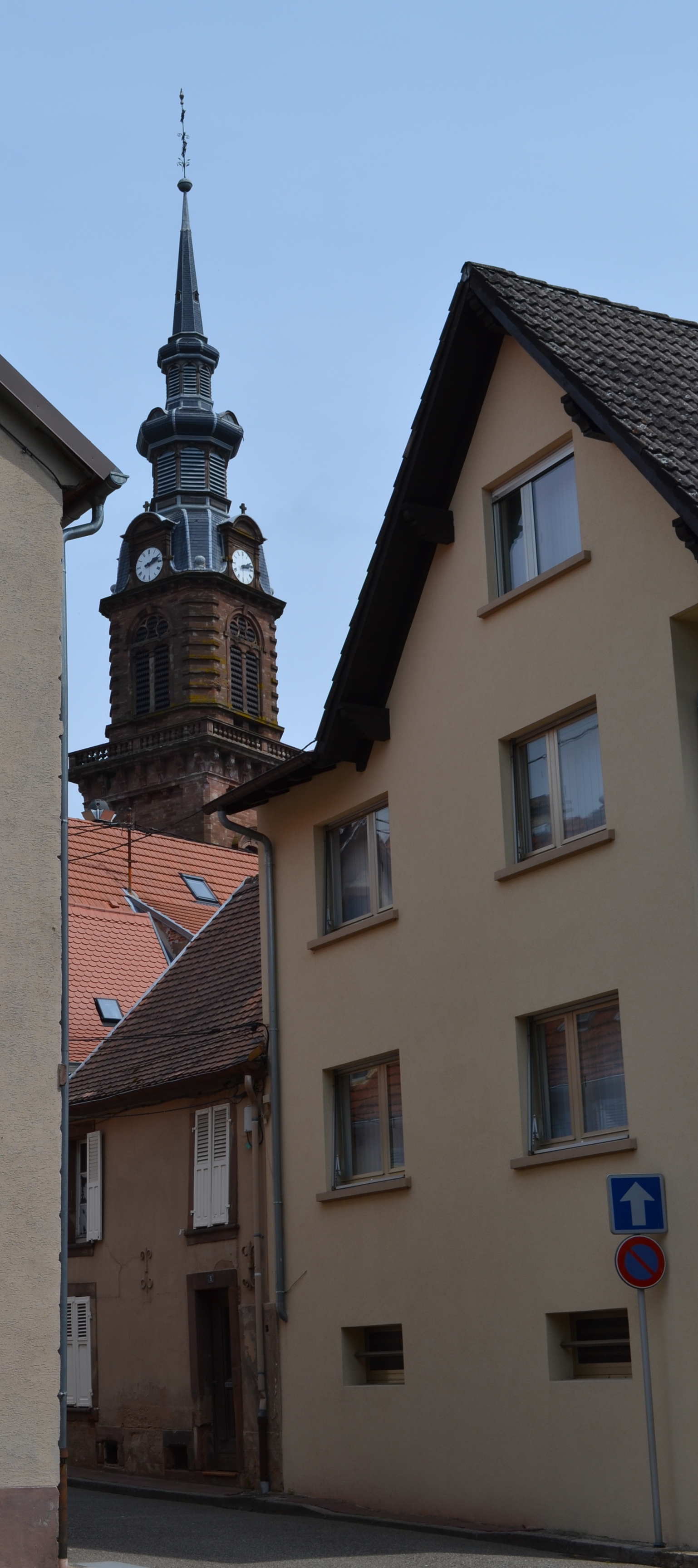
At the center of town, the church steeple kept peeping through the rooftops to note our progress through the streets.
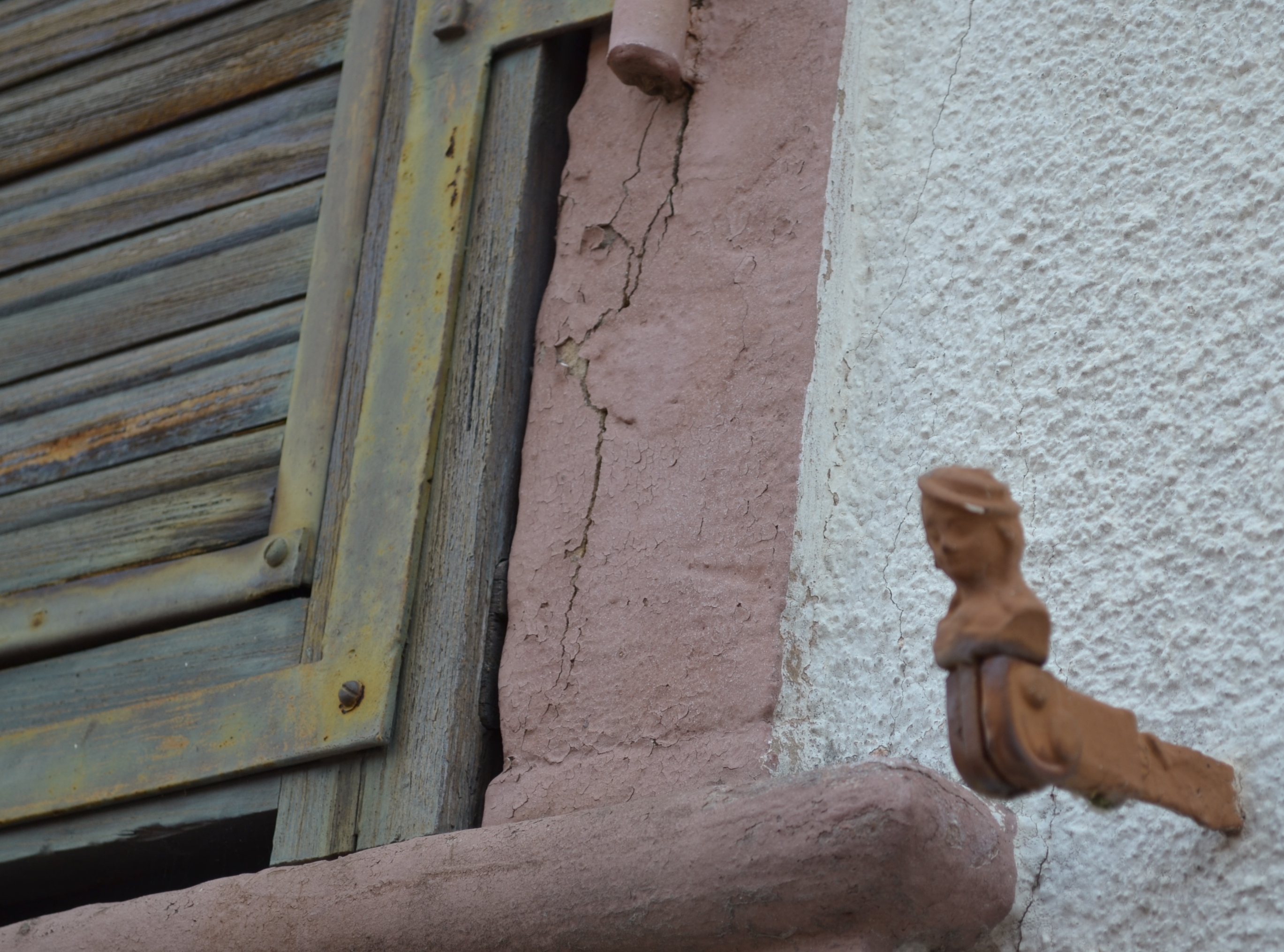
But the watchers in Bitche were not only of a religous ilk: along many rows of old houses, the iron shutter stops (“shutter dogs”) were decorative women’s heads…some still distinct, others weathered or rusted to a ghostly decay. Charming, haunting, and resiliently functional. The story of life, n’est-ce pas?
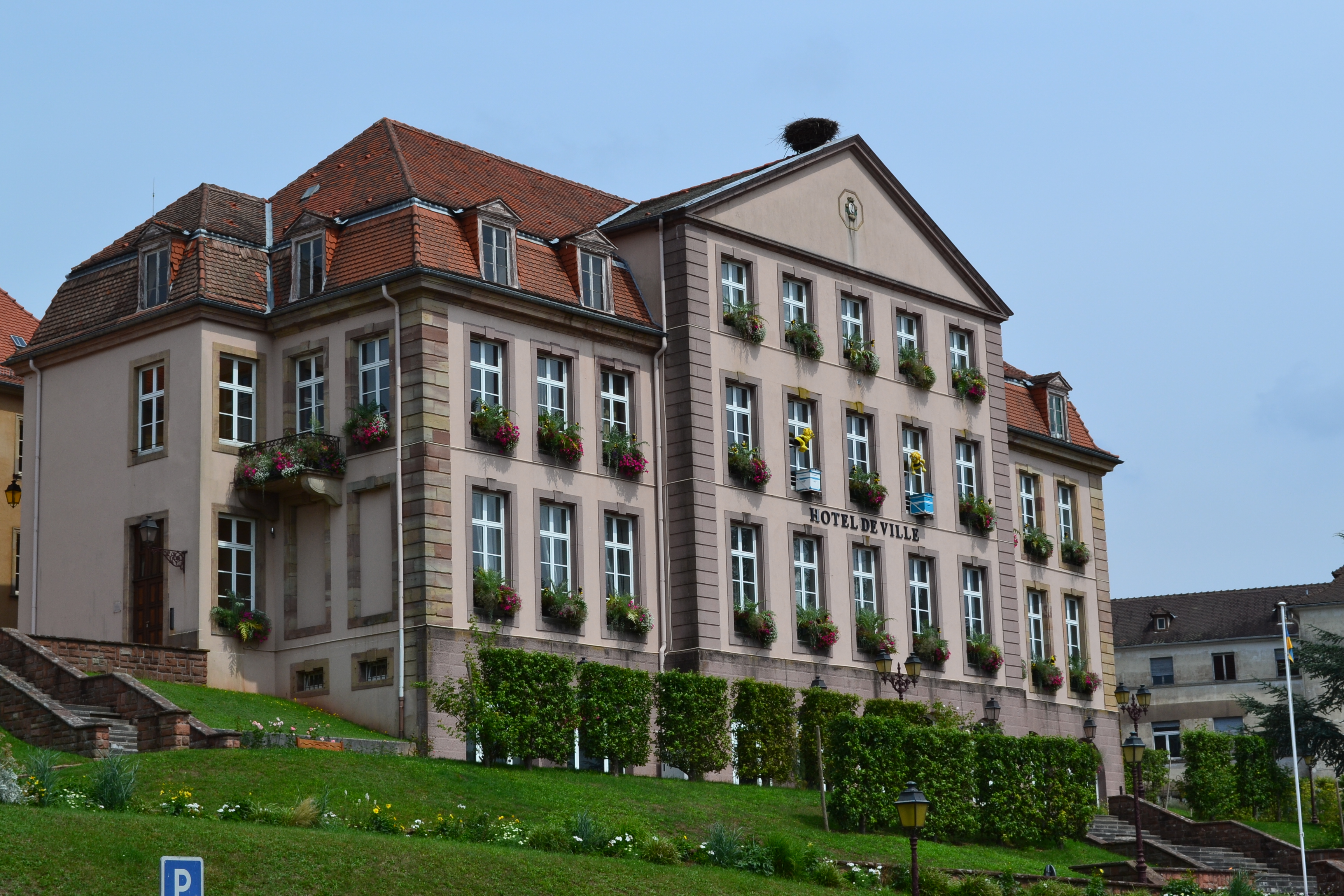
And when all of the watching eyes had seen our small procession of four through the streets of the city, here is where we popped out on the other side: (The small photo doesn’t do it justice; click on the photo to expand it to a larger size.)
Hotel de Ville, Bitche, France
A day of small wanderings, but a fabulous journey. Surely the French have a phrase that captures this. Perhaps, “petite promenade, grand voyage”?
A few notes on Bitche:
*It’s located in Northeastern France, on the German border
*From the 17th century on, Bitche was a stronghold and much of the old citadel still stands
*If you are a modern history buff, Bitche sits very close to sections of the Maginot Line
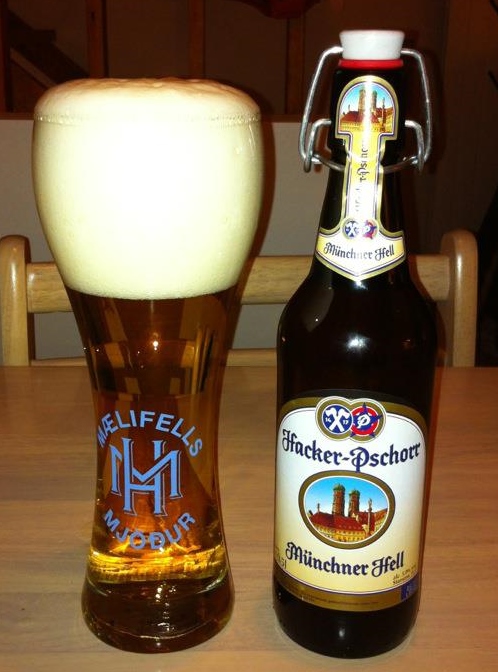
We went to the Getranke Markt Saturday and bought some beers we’d never seen before. We were amused by a few “Hell” labels, so we snapped some bottles up. (Sometimes amusement is as good a motivation as any.)
Popped open a cold “Hacker-Pschorr Munchner Hell” last night. YUM! It was fabulous!
Helles beers are a Pilsner-like class, so if you like the lightness of a Pilsner, you should give Hell a try!
Guten Appetit, Bottoms Up, and see you at confession in a few days!


 Travels and Tomes: One Expat's Amblings and Ramblings