I haven’t had time to write this week, but I’m looking forward to setting pen to paper someday and filling you all in on my recent trip to Salzburg. (My new refrain = Salzburg uber alles. Probably politically incorrect in some historical way, but I LOVE this city and its surroundings.)
Anyhoo, to tide me over–and share my enthusiasm with you until I can write–I offer up a photo of the actual von Trapp family home, now a magnificent bed and breakfast, where we stayed while in the city.
We lived in North Yorkshire for 4 years, and, despite what people like to say about British food, some of it is VERY good. Granted, top of that list is the Indian food you get there. But if you haven’t tried a really good sticky toffee pudding or a gourmet steak and ale pie, you’re missing out. And even “tired old” mincemeat pies and Sunday roast can be a revelation with the right ingredients and in the right person’s artful hands!
Marks & Spencer Mince Pies
I’m about to bring you a recipe that is divine–but first, a rudimentary primer on food in England.
The Markets: Here I speak for my old home town of Ripon, N. Yorkshire, especially. I love the vibrant market squares and market days in British cities, towns, and villages. I love walking home with baskets of fresh produce, hearing the fishmonger call out his wares, seeing what the pottery merchant has found to carry in on any given week (and hoping he’s stocking my favorite Blue Willow), and scanning the candy stall for my children’s favorite bits and bobs.
Nigella: If you’ve never been a fan, open up one of her cookbooks and go for a leisurely read. I’d start with Nigella Christmas–because it’s almost the season, it’s a good read, and it’s where I started. If you’re not smitten with her prose, then whip up her Guinness Gingerbread. If you’re still not besotted. . .I just can’t help you.
Tea: If someone invites you over for tea, don’t imagine (as most Americans do) that you’ll be drinking Twinings at a table with Paddington Bear. The invitation is likely for dinner, not a tea party. “Cream Tea” often indicates tea and scones or sweet pastries in the afternoon, but “Tea” is dinner.
Pudding: When we first moved to England (in 2005), we were amused at how often we were offered “pudding” in restaurants. I mean, we like pudding, but couldn’t figure out what the national obsession with it was all about. Turns out, “pudding” means dessert. We quickly learned to say “Yes, please,” to any offer of pudding!
Meat Pies: Today, I’m focused on a fabulous, piping hot Steak and Ale pie (recipe below). But Brits also love cold meat pies. A cold steak pie from a deli counter is doable for a quick lunch, but not great. And pork pies? Don’t get me started. Okay, I don’t do pork, so this may be a little unfair, but cold, gelatinous meat in a cold, blah pastry case– I don’t get it. Except in a Dickensian way–I mean, I suppose it has a certain bit of atmosphere: a cold, tired chimney sweep might ‘ha a ‘litl bit o’ da pie fur lunch. (Yes, I overindulged in Mary Poppins as a kid.) But, truth is, I have plenty of friends, and one husband, who seem to like a bit o’ the cold pie, so to each his own.
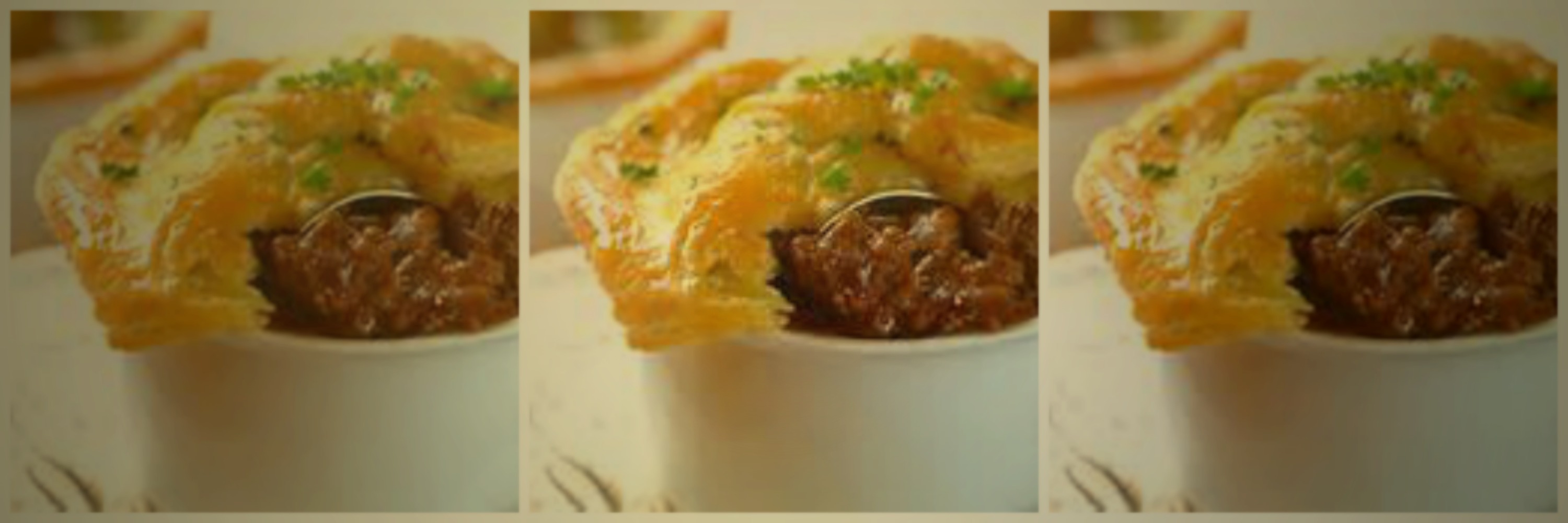
Let’s launch into the reason you are here: the world’s greatest Steak and Ale Pie recipe. It comes from Williams-Sonoma. (I know it should come from a British source, but this really is the best I’ve found. . .even if it is from California.) And one more disclaimer–please listen, because this is important–this will take you most of the day. Only start this on a rainy weekend day when you want to hang out at home for hours. And, yes, you will begin cursing halfway through this and saying, “Never again!” But then the pie will smell soooo delicious as it cooks that you’ll start to drool as it comes out of the oven. You’ll dig into the flaky pastry and lift a fork to your mouth.
Angels will sing, devils will dance, and you’ll be in love.
Oh, you’ll make it again. And again. (Hint: if you cook a very large recipe, you can freeze half of the filling and turn it into a pie at a later date with minimum effort.)
This hearty beef stew is slowly simmered on the stovetop, then topped with Stilton pastry and finished in a hot oven.
*My note: I usually skip the Stilton pastry and use a puff pastry. The Stilton is good, but very rich, and this is already a rich pie.
Ingredients:
7 Tbs. olive oil
1 lb. white button mushrooms, quartered
2 cups frozen pearl onions, thawed
Salt and freshly ground pepper, to taste
3 1/2 lb. beef chuck roast, cut into 1-inch cubes
1 cup all-purpose flour
3 garlic cloves, minced
2 Tbs. tomato paste
2 1/2 cups Irish stout
1 cup beef broth
1 lb. carrots, cut into chunks
1 lb. red potatoes, cut into chunks
1 Tbs. finely chopped fresh thyme
One 16-inch round Stilton pastry (see recipe link below)
1 egg, beaten with 1 tsp. water
Directions:
In a 5 1/2-quart Dutch oven over medium-high heat, warm 1 Tbs. of the olive oil. Add the mushrooms, onions, salt and pepper and cook, stirring occasionally, about 12 minutes. Transfer to a bowl.
Season the beef with salt and pepper. Dredge the beef in the flour, shaking off the excess. In the Dutch oven over medium-high heat, warm 2 Tbs. of the olive oil. Add one-third of the beef and brown on all sides, about 7 minutes total. Transfer to a separate bowl.
Add 1/2 cup water to the pot, stirring to scrape up the browned bits. Pour the liquid into a separate bowl. Repeat the process 2 more times, using 2 Tbs. oil to brown each batch of beef and deglazing the pot with 1/2 cup water after each batch.
Return the pot to medium-high heat. Add the garlic and tomato paste and cook, stirring constantly, for 30 seconds. Add the beef, stout, broth and reserved liquid, stirring to scrape up the browned bits. Add the mushrooms, onions, carrots, potatoes and thyme and bring to a boil. Reduce the heat to medium-low, cover and simmer, stirring occasionally, until the beef and vegetables are tender, about 3 hours.
We’re creeping into mid-November, and signs of the coming season abound: Christmas trees and Christkindlmarkt stands are beginning to pop up like daffodils in the early spring. And like daffodils, they do this slowly, organically. First, an empty market hut or two appear, then another and another. A scattered tree here or there, lying on the ground one day. Upright in a stand a few days later. Eventually joined by others. Until, about the last weekend of November, the Weihnachts markets will be in full bloom in their own fields–the market squares of towns across Germany, Austria, much of Europe.
Merchants may push the season early, but at this point even Mother Nature has joined the hubbub by pitching in frost and snow (in the early mornings, in the high hills).
Here are a few photos from the past few days around Salzburg, Austria, where signs of the season are unmistakable.
As we drove into the Alps, we began to see snow-covered hills:
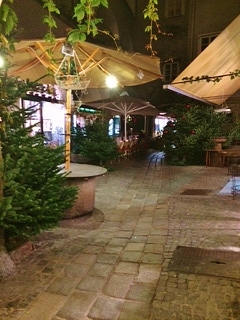
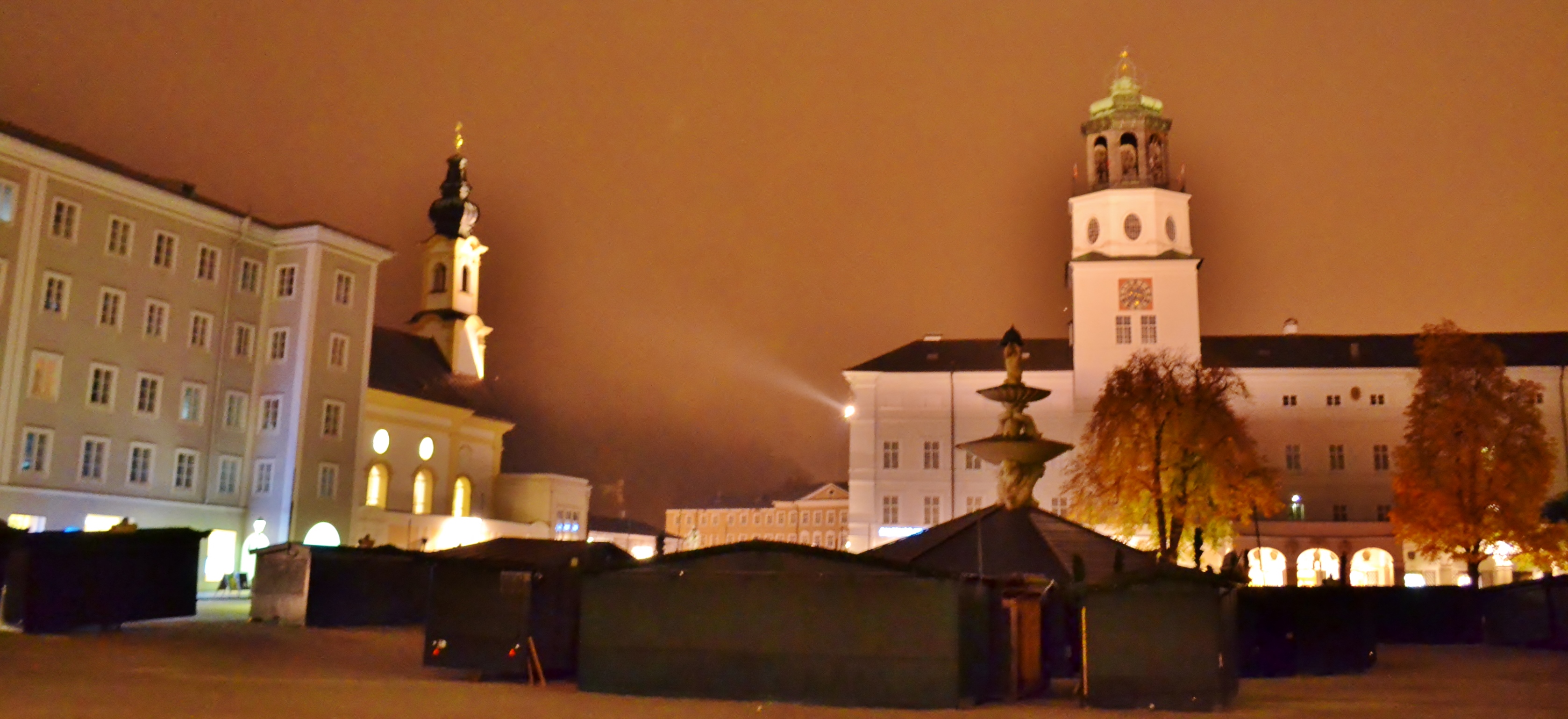
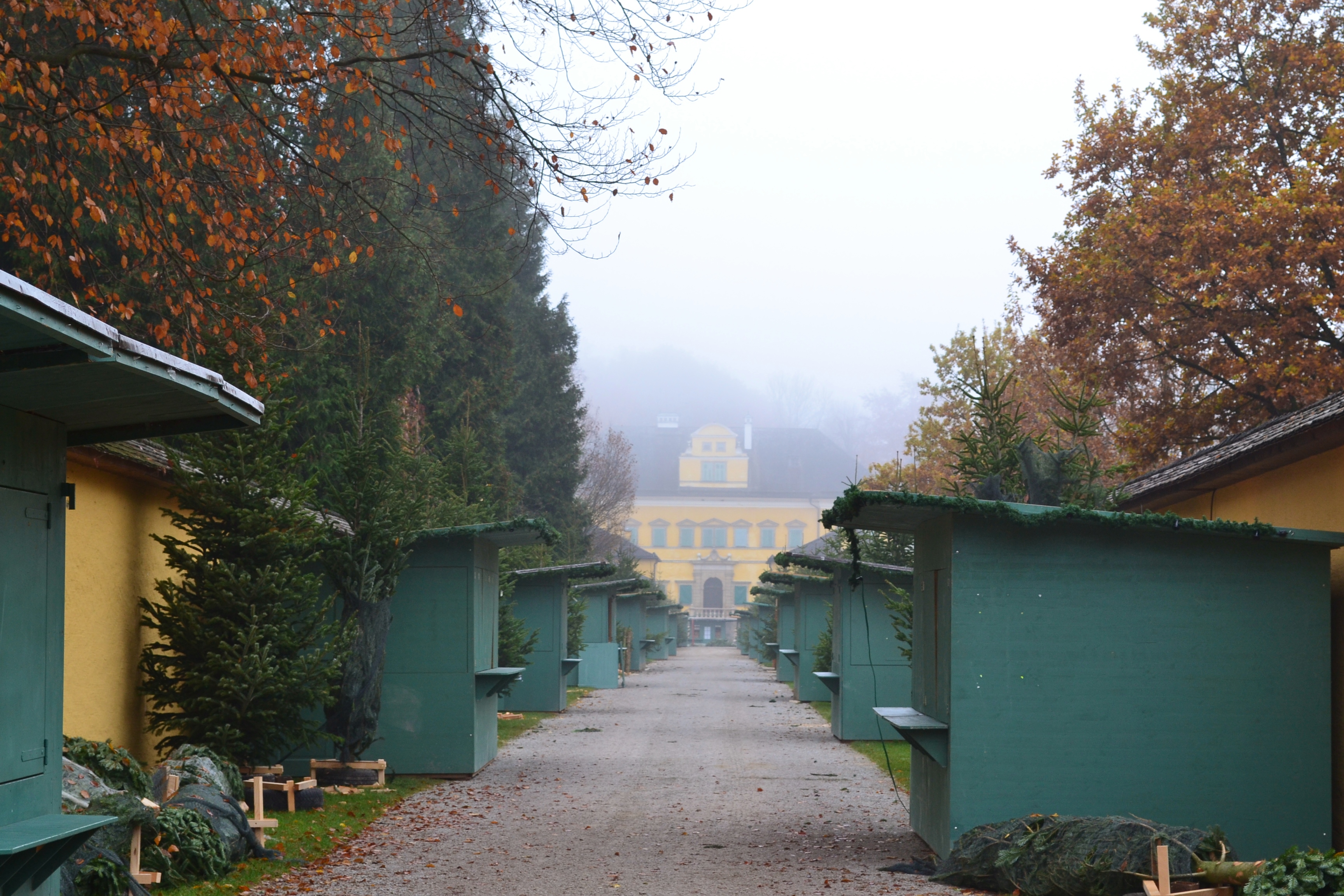
In the streets and alleys of Salzburg, some trees are up and preparations are being made for the market squares. The empty booths will soon be filled with vendors peddling chocolates, waffles, gingerbreads, mulled wine (Gluhwein), traditional wooden Christmas baubles, cheeses, sausages, . . . the list is endless.
Preparations in Salzburg, on a foggy night. The green huts will soon be stocked with gingerbread and mulled wine.
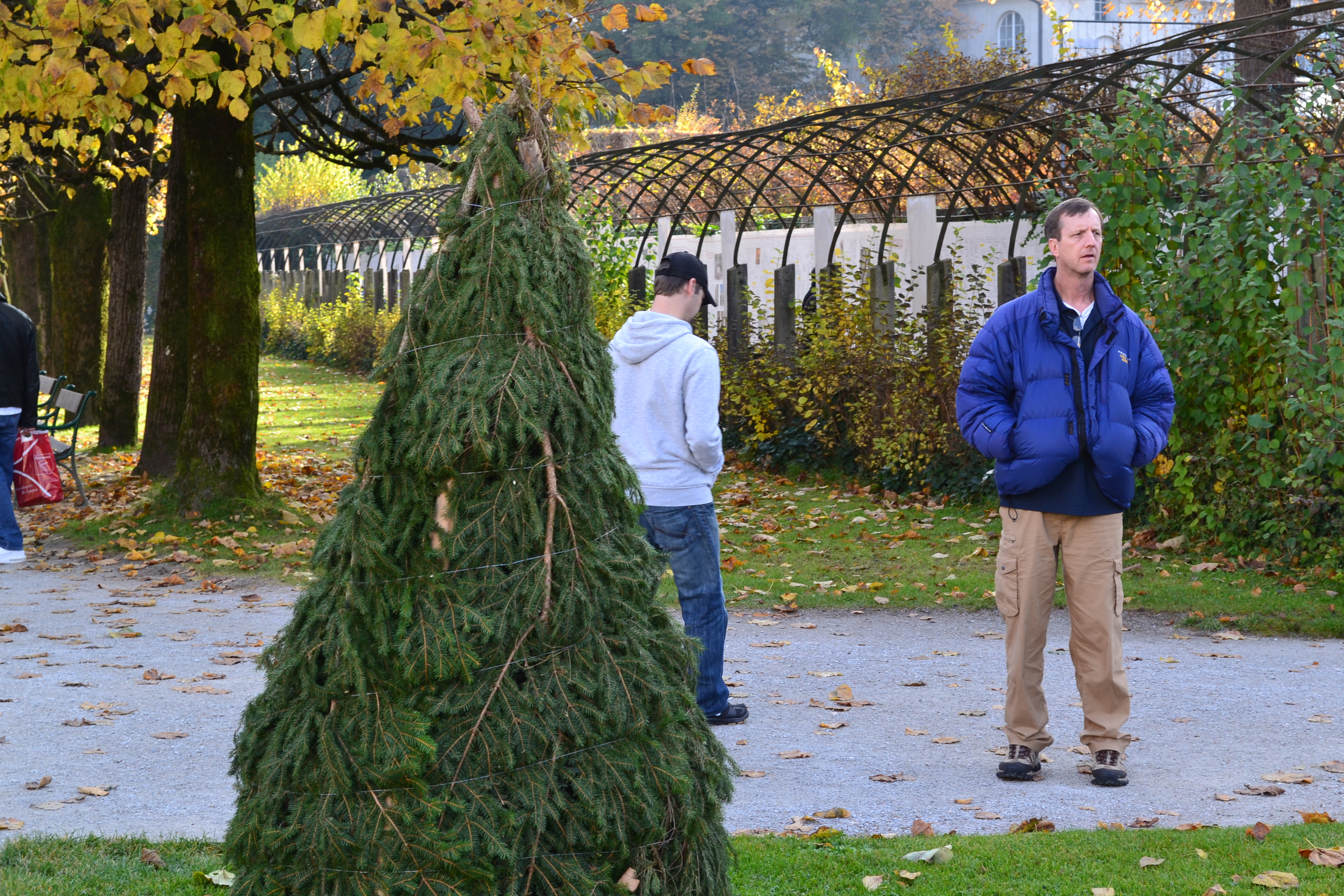
And Christmas trees are going up in Mirabell Gardens:
And at the edge of the city, Hellbrunn Palace (once home to the Hapsburg royalty) promises to burst into full Christmas bloom very soon. I’m told that the palace (at center of the photo) has 24 or 25 windows on the façade that faces this market-row, and the windows will all have shutters pulled and wreathed in the days ahead, so that it may become an advent calendar, with one window to be opened each day of advent.
Hellbrunn Palace
Watch this space in the weeks ahead: I’ll post photos when the season is in full bloom.


 I haven’t had time to write this week, but I’m looking forward to setting pen to paper someday and filling you all in on my recent trip to Salzburg. (My new refrain = Salzburg uber alles. Probably politically incorrect in some historical way, but I LOVE this city and its surroundings.)






 Travels and Tomes: One Expat's Amblings and Ramblings