March Madness, An American Tradition . . .


DSC_0686 - Copy

. . . watched from my German living room.

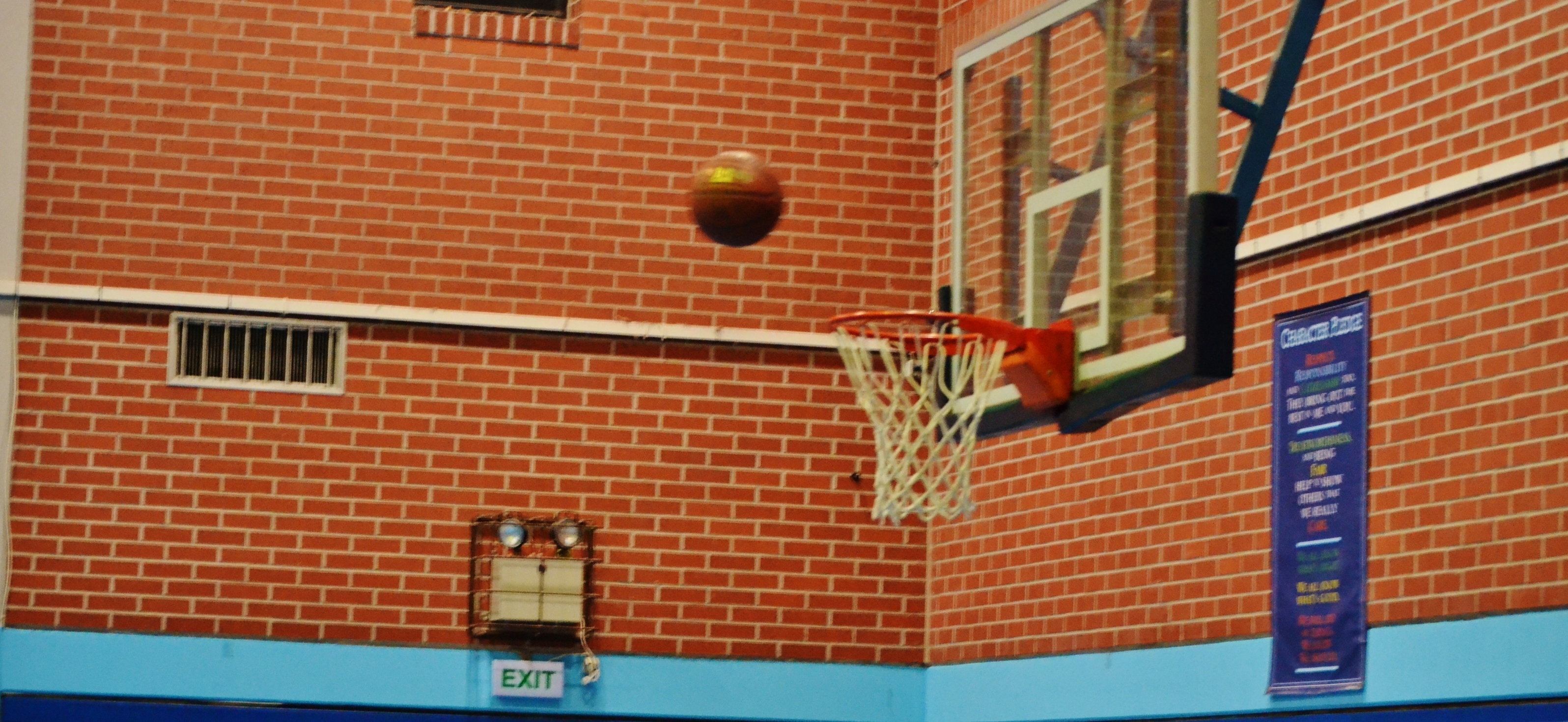
To my American readers,  March Madness needs no introduction.  To my European readers, a little explanation is in order.  “March Madness” is the moniker given to the American men’s college basketball tournament–the national playoff tournament–which takes place in March each year. (Actually March and April,  but “April Madness” sounds like rubbish.) Emotions run high, brackets are racked/stacked/bet on, parties are held, faces are painted, and sporting arenas are filled to capacity and shaken to their foundation.  It’s a good time.   marchmad

Every year, it’s a good time.

But this year, it feels especially good.  As the whole world knows, it’s an election year in the US of A, and so far it’s been a grueling process that still promises months of gruelishness.  (Is this a word?)

So enter March Madness– all of the rowdy, emotional, high stakes tournament, but with quick resolution and less character assassination.  Oh how our spirits have needed this.  Game on!!

So here I sit, in the Rheinland-Pfalz of Germany, drinking my beer and eating my pretzels and watching this American tradition.  It’s a moveable feast, as so many things are for us unsettled, unseated, or expated folks.  And that adds a layer of the absurd to the already frenzied tournament.  Will I be watching from a face-plant position on my couch at 2 a.m., hollering for my teams between snores?  Will I be sitting in a Spanish Tappas restaurant in a German village and fidgeting uncontrollably, wishing I was in a loud American sports bar with a thousand TV’s blaring out the ballgame? (An atmosphere I usually avoid, but would fly to like a moth to the flame during March Madness.)  These are moments when your Americaness screams out –when the thin veneer of European posh that you’ve tried so hard to develop peels back at lightning speed, and you stand proud for the face-painting, flag waving American sports nut that you are. But ask me about the American elections, and I’ll once again glaze over and pretend, in my pidgin-German, that I have no idea what you are asking me. 

I didn’t attend huge universities, but I often have a horse in the race.  A North Carolina native and daughter of a rabid UNC fan, I always root for the UNC Tarheels.  How do I feel about another North Carolina favorite–Duke University?  Ugh.  As UNC’s nemesis, I have a tough time with that one.  But in these championship games, I’ll root for Duke unless I have strong feelings for the team they are playing.

Which brings me to Yale.  Last night, Yale upset Baylor 79-75, in a game that was pure hustle from start to finish.  And what a finish!  The last 10 seconds were insane–Baylor only trailing by one point for a while, when Yale pulled ahead by 4 in about the last 3 seconds!  But who can track the last few seconds of a game like that?  Lungs screaming, head buzzing, it’s one of those epic moments when the world moves so fast and so slow all at once, you see every millisecond’s play, but later recall only a swirl and flow of arms, legs, net–adrenaline!  Or is that just me?  I saw every second but would be hard pressed to extract the moment by moment play from the emotion that clouds it all.  And that, you know, is the sign of a great game.

But back to the facts. Yale won.  Yale won.  Yale won.  And now Yale will meet Duke in the playoffs.   Yale is out-ranked and out-sized by Duke.  And the whole match has been much maligned and joked about as soon as it was announced.  Twitter is lighting up with jokes, like this:

Should Duke-Yale end in a tie, following will decide winner
1. BMW sprint to nearest J Crew
2. Windsor knot race
3. Sudden death chess match
preppyIn a tournament that hinges on astonishing athletic prowess and grit, these two teams offer a lot of fodder for jokes–too academic, too preppy, too privileged.  These schools have decidely ungritty images.  To have them play each other–just too funny to let it go, right?

But look where they are!  So, pelt me with rotten tomatoes– or funky bowties and textbooks– and let the preppy jokes fly, but I’m screaming loud and long on this game.  Duke looks like the winner based on rank and size, but I’m a Yale Bulldog fan and looking for an upset on this one.  If Yale takes it, you’ll hear me shout from across the ocean.

If Yale doesn’t . . . then my fickle heart will move on  to UNC and I’ll profess my love just as loudly. (If all my teams fail me, I’ll reminisce about  Davidson’s Steph Curry in 2009’s  tournament.) It’s not really a fickle heart, it’s just March Madness.

If only we could wear our political loves so lightly.

*For my European readers out there who may need a full primer on March Madness, you can check out this video-March Madness Explained. 
 

Here Comes Peter Cottontail: Easter Traditions in Germany

Dieser ist die Ostermarkt Sankt Wendel/This is the Easter Market in St. Wendel

PicMonkey Collage

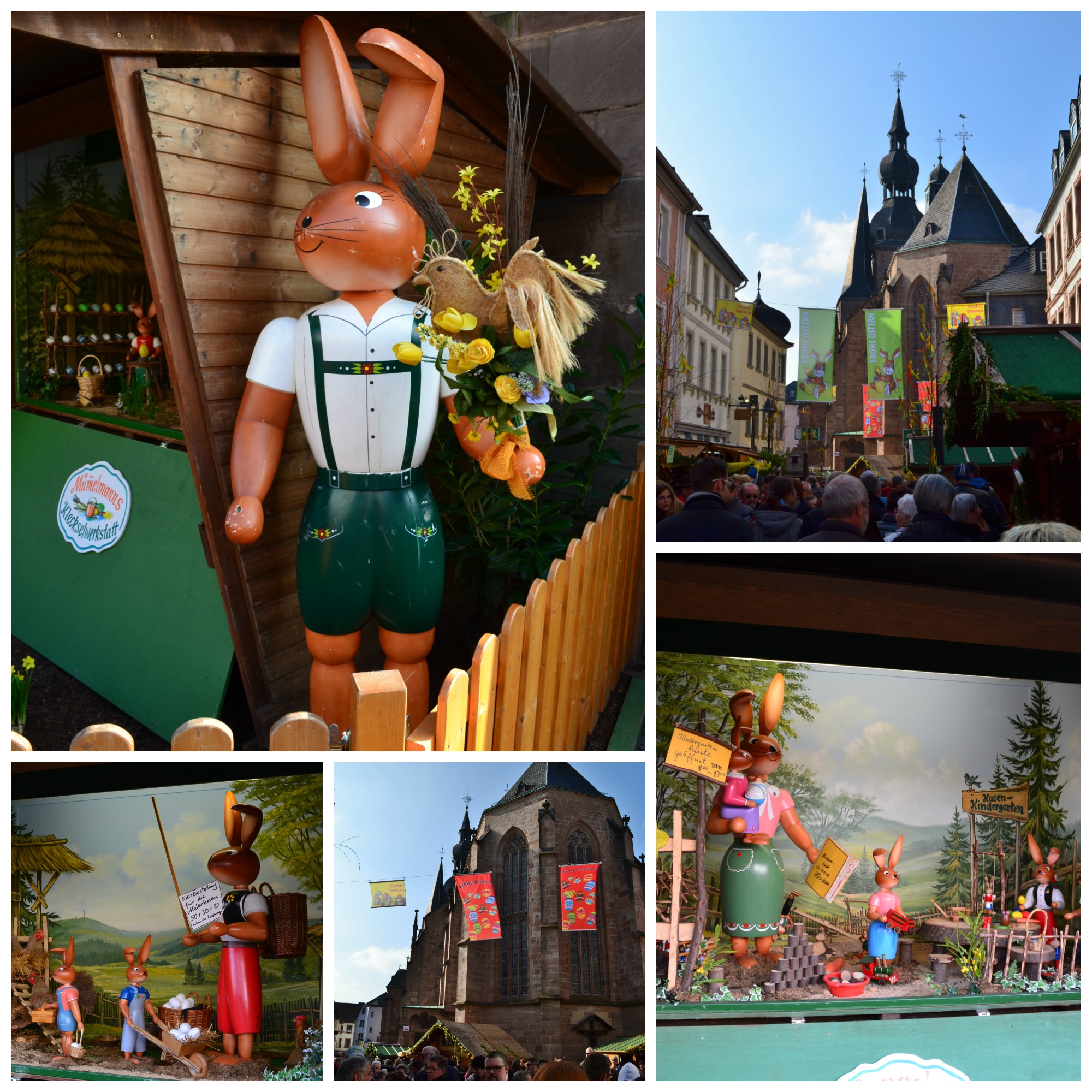
Easter markets are popping up all over Germany, and we visited the market at Sankt Wendel this weekend.  It was busy with market stalls full of painted Easter eggs, wooden Easter crafts, flowers, and jewelry.  There were craft stations for children and food and drink for everyone.  It was a nice day out, especially with the sun shining brighter than it has in many weeks.  Our favorite sights at the market were the Easter Bunny displays and the fantastic Dom (Church) in Sankt Wendel.

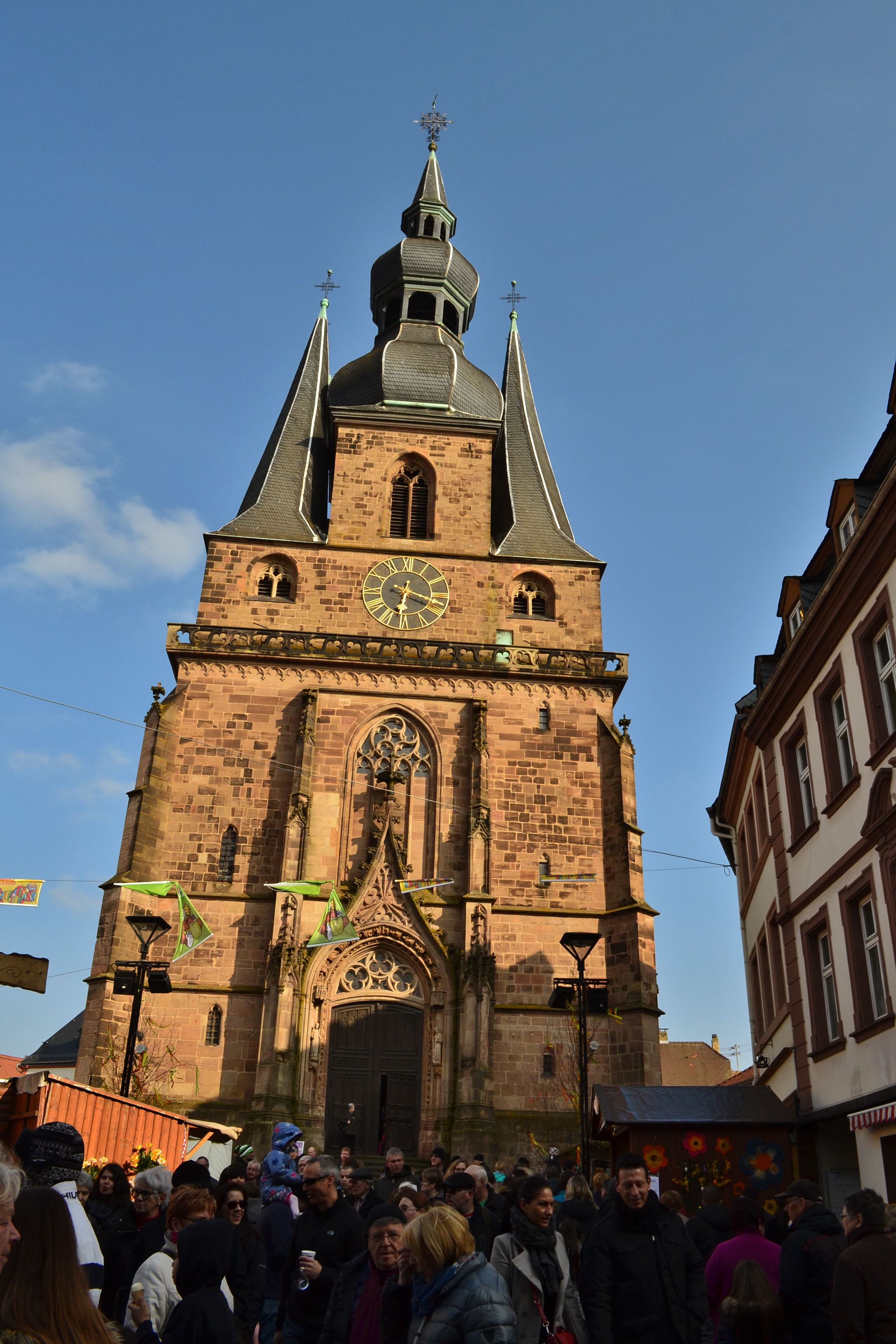
DSC_0867The church was the center point of the market festivities, with stalls huddled around her walls.  The photo at left doesn’t do the exterior of the church justice–in the busy, small streets around the church it was hard to get a photo that shows the fantastic double-onion dome (with a third tier “cap” and cross set above the domes) in proper perspective.  This church is stunning.

The interior of the church is equally beautiful. Here are a few photos for you:

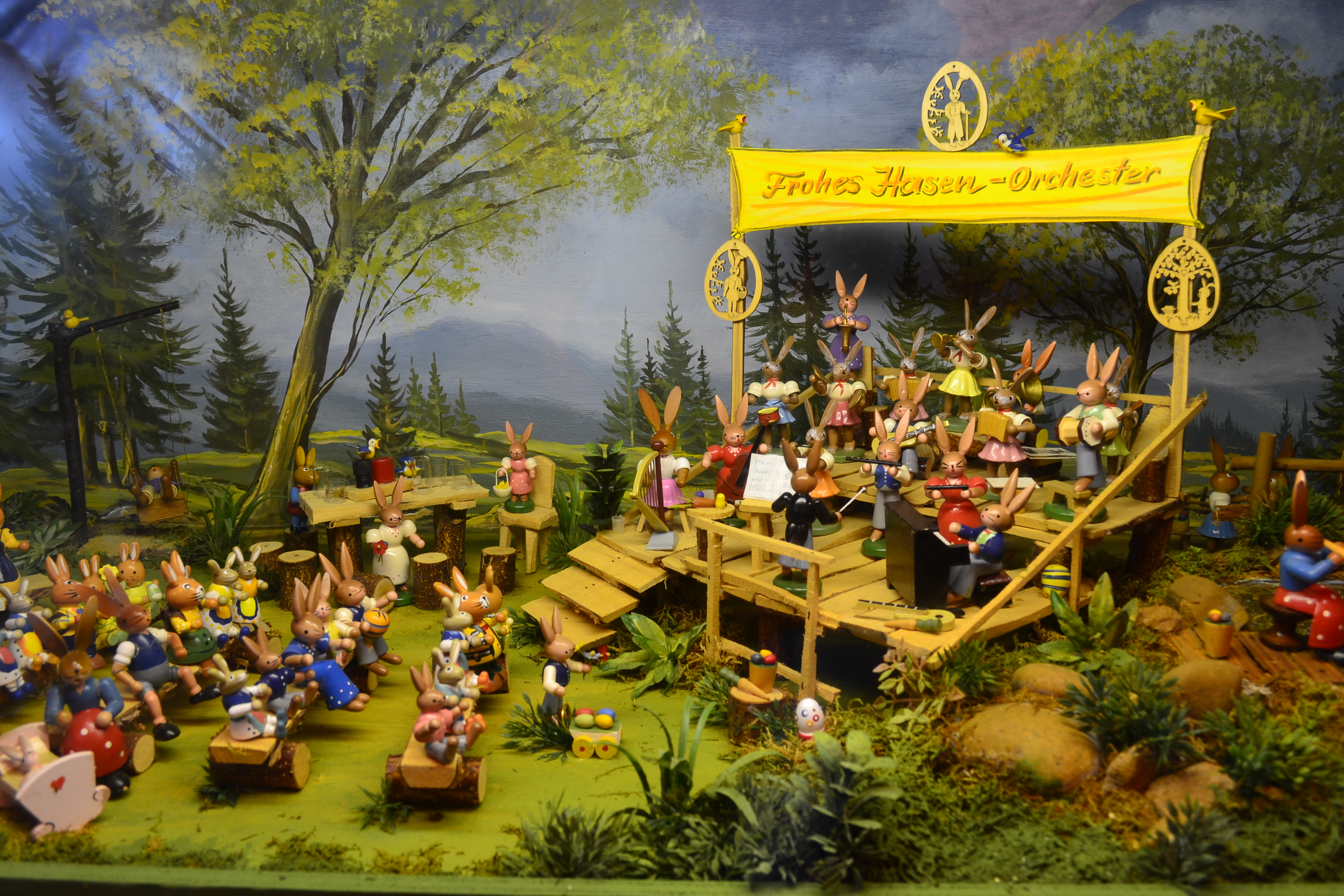
The Easter Bunny displays at Sankt Wendel DSC_0887 were lots of fun too–a little whimsy and a lot of artistry.  But, like so many German traditions, these displays got me thinking.  Where did this story of the Easter Bunny get started?  It seems obvious that America inherited its Easter Bunny traditions from Germany, as the Easter Bunny is not ubiquitous in Europe.  In France, for instance, the Easter Bells (Les Cloches), having flown off to Rome in the days before Easter morning, fly back home and bring eggs and chocolates to children.

The Easter Bunny seems to have started out as a German/Lutheran tradition.  Mention of the tradition dates back to texts from the 1600’s, and it does seem that the bunny did more than spoil children with treats.  There was an element of judgement–who had been good and who had been bad?  (There is, in German traditions, always an element of judgement.  If you don’t believe me, check out my past blogpost on St. Nikolaus and his sinister sidekick — Saints and Devils, Fire and Snow.)

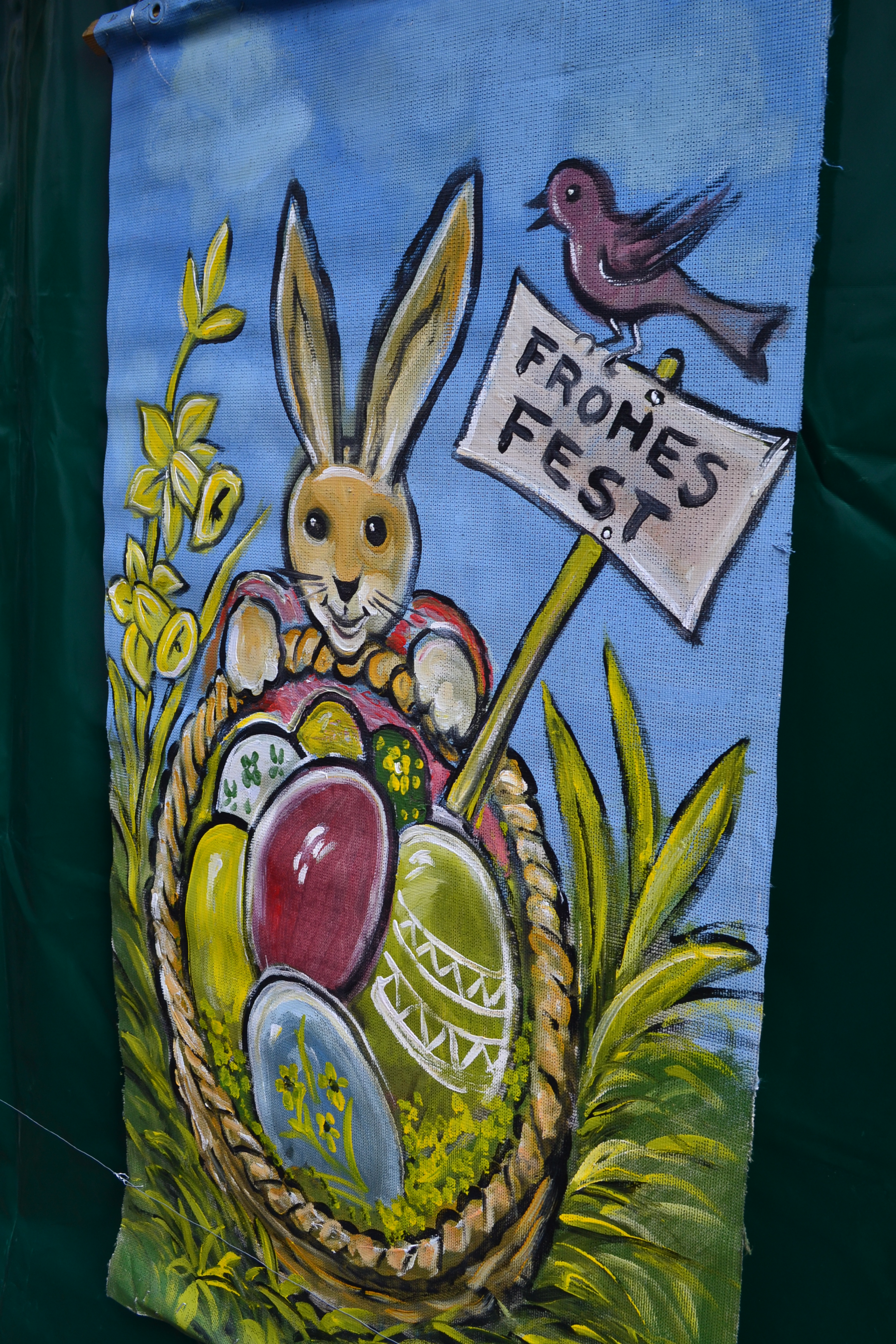
DSC_0889But what made the Lutherans think up this magical bunny?  Well, they borrowed from earlier traditions too.  In German, this Easter Bunny is know as the “Osterhase”  (the Easter Hare), and it’s widely accepted that many roots of our present Easter traditions come from pre-Christian traditions.  The goddess Eostre (and her symbolic rabbits) were a focal point for spring fertility rituals.  Fertility, bunnies, eggs–you can certainly see the echoes in present day traditions.

You see the same pattern in Christmas traditions–the Christian holiday did pick up some flavoring from the Roman Saturnalia holiday that came before it.  We’re all magpies in some respect–we incorporate bright scraps we find and fancy here and there, and we add those scraps to our nests.  No holidays, religious or otherwise, spring fully formed from a doctrine or ideology–they incorporate the surrounding culture.  This may seem odd when the surrounding culture is pagan and the newer holiday is Christian, but hearts and minds change slowly, piece by piece, person by person.  Any slow turn of a culture will incorporate what its ancestors held dear, no matter how odd a pairing those ideas and traditions are.  Flying bells?  Easter bunnies?  A little odd if you think about it logically.  But, really, if all of our stories hinged solely on logic, we’d be all out of beauty and mystery. We’d be done for.

Long live the Osterhase!!  Frohe Ostern!  Happy Easter to you!

Christmas in Salzburg and Villa Trapp, Part Two

DSC_0281 - Copy

Our holiday visit to Salzburg was fantastic, but it began with a few grumbles.  No snow?  We wanted flurries and the full picturesque Christmas package, but no snow was in the forecast.  In fact, it was nearly balmy by Alpine standards in December.  (It turns out, however, that “Alpine balmy” is plenty cold as the sun drops low, so we quickly stopped complaining and huddled over our steamy mugs of mulled wine!)

I’ll give you the quick tour of our Salzburg shenanigans here, complete with photos.

We live near the French-German border, and Salzburg is nestled just into the Austrian side of the German-Austrian border.  This makes for a long drive, but we were up for it.  We left early, so we’d have a full half day as we rolled into Austria.

DSC_0266
Hellbrunn Palace

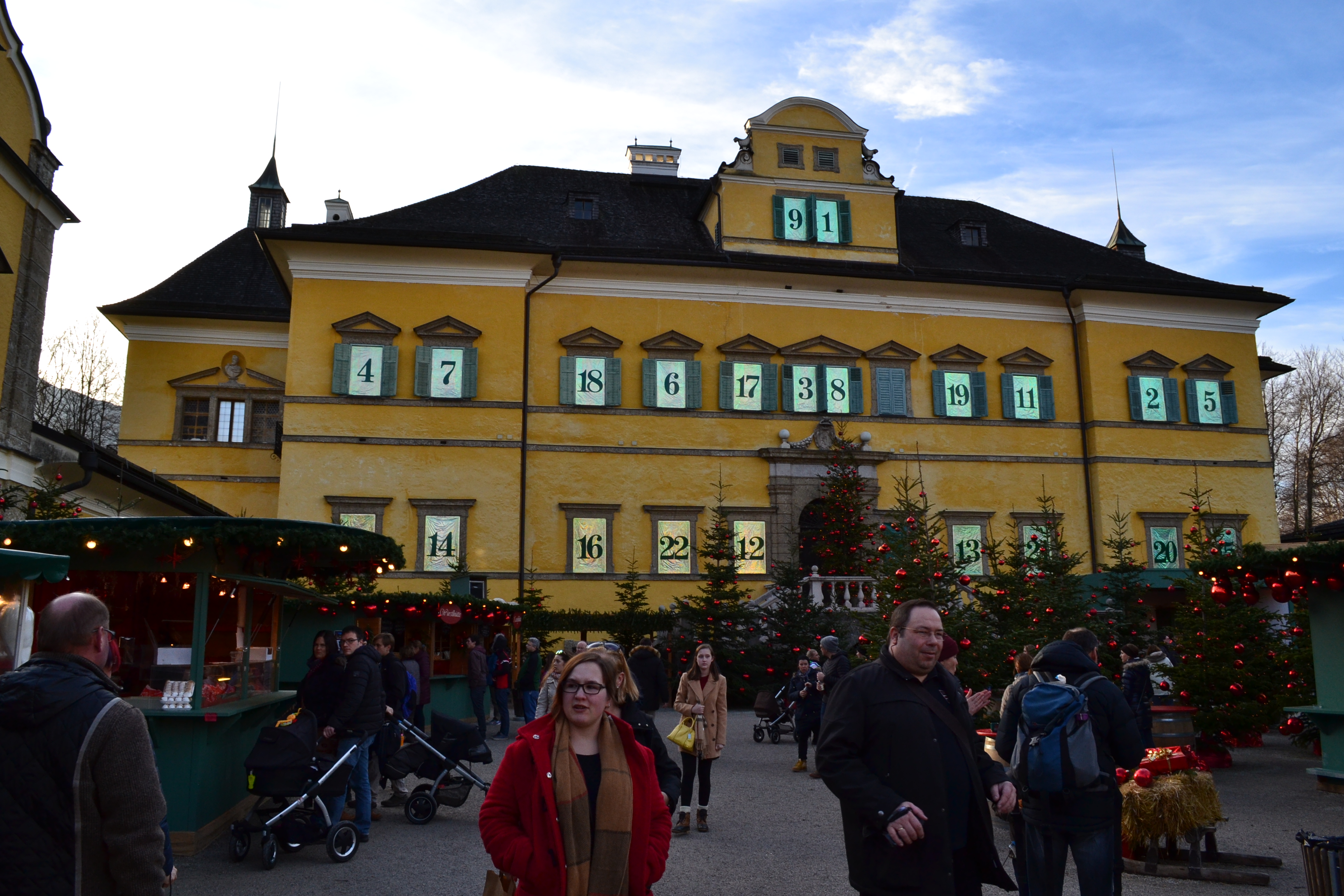
As we rolled in, we made our first stop at Hellbrunn Palace–right on the edge of Salzburg.  In 2014, we’d visited Helbrunn in late November, just as Christmas Market stalls were being built for the upcoming holidays.  It about killed us to see all of the preparations but miss the festivities themselves, so our first order of business was to remedy that injustice.  And Hellbrunn did not disappoint!

DSC_0250
Hellbrunn Palace Christmas Market

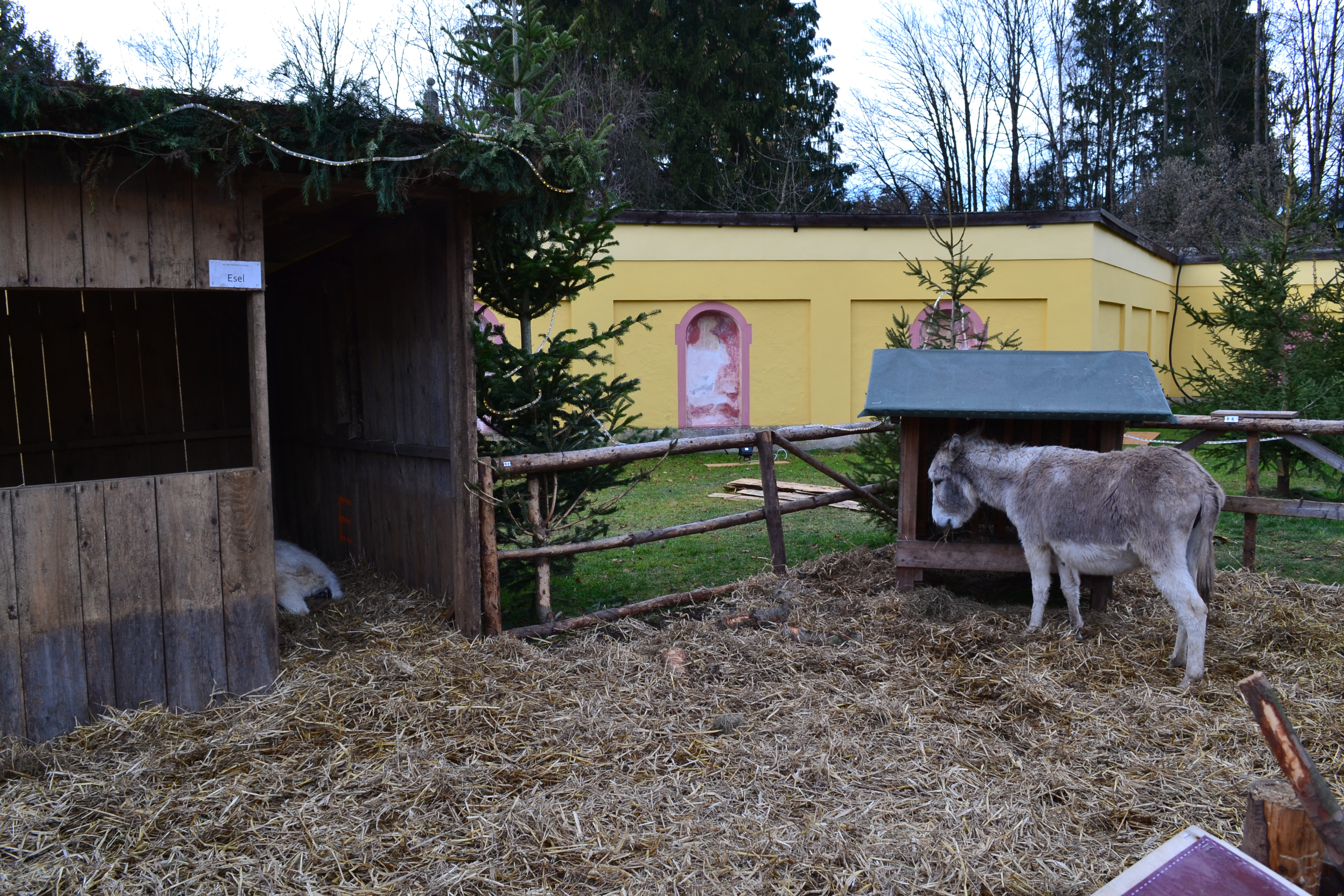
Hellbrunn offered a charming market and a petting zoo/nativity area for children, all set in the fantastic gardens of the Palace.  I’ll post a couple of photos here, but say little more about this, as I’ve already written a post about Hellbrunn’s market (here).

After eating and drinking our way through Hellbrunn, we headed to Villa Trapp to check in and have a quick rest–we needed a little energy before heading out for an evening in Salzburg.

DSC_0437 - Copy
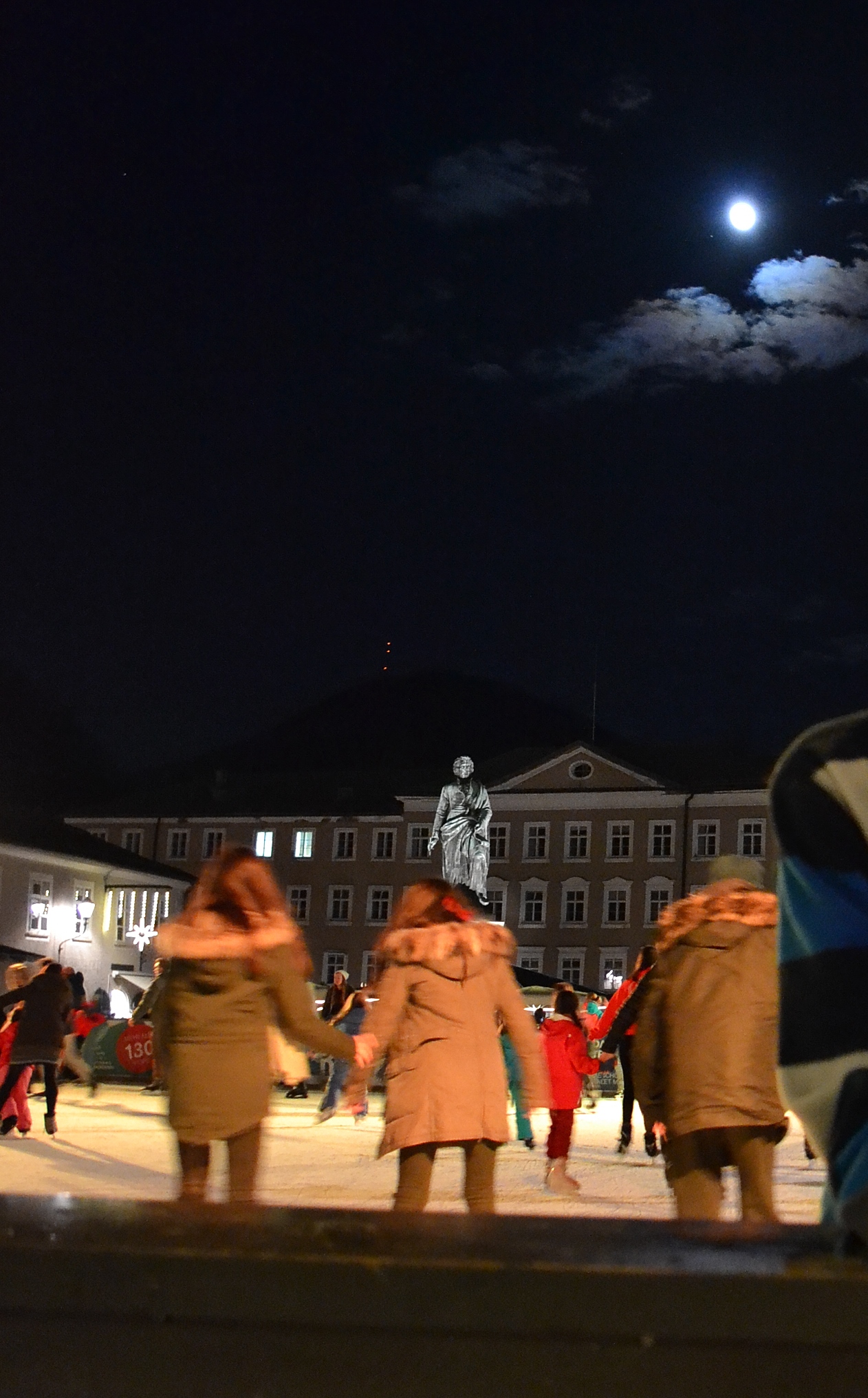
The moon and Mozart watch over ice skaters.

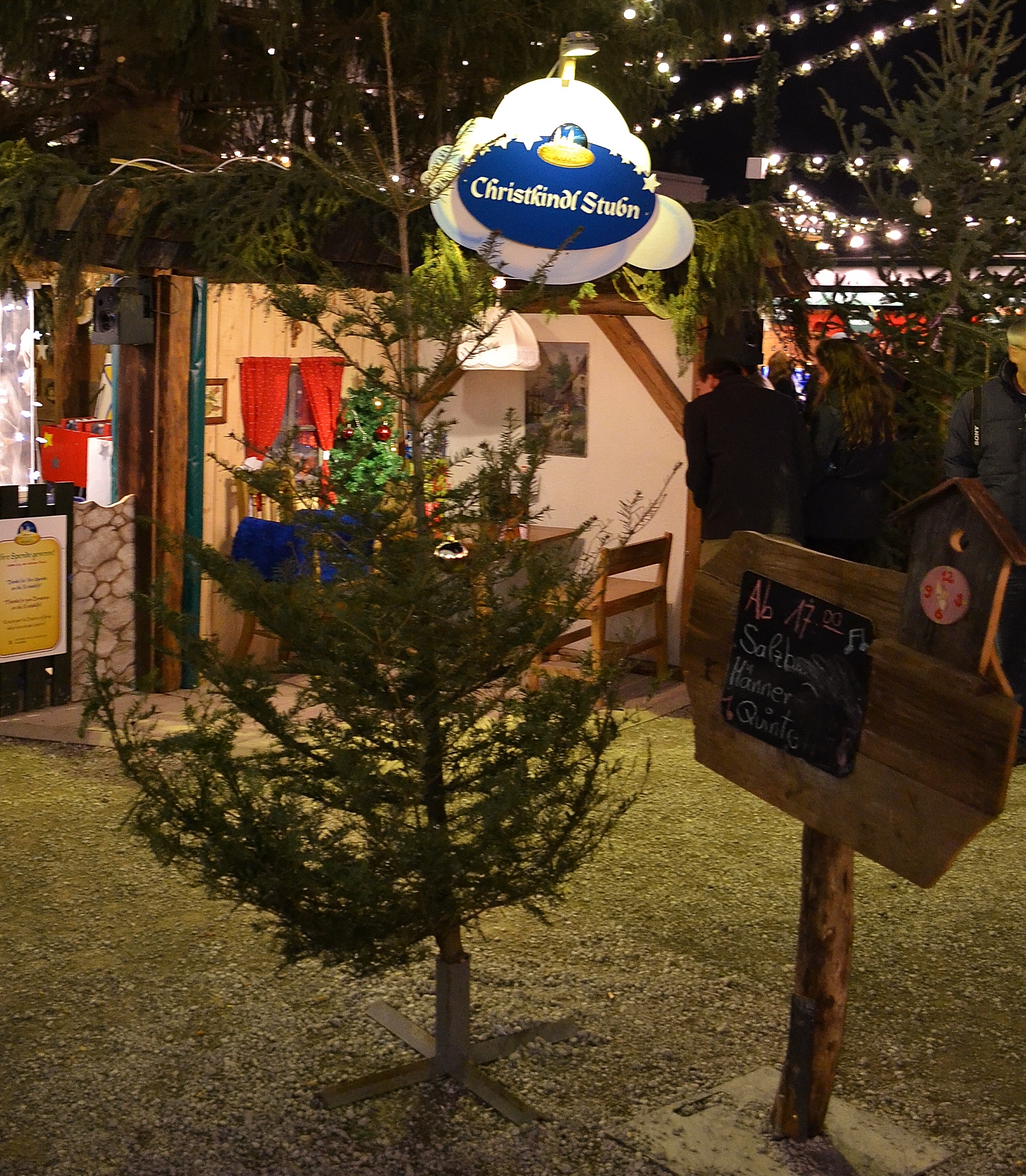
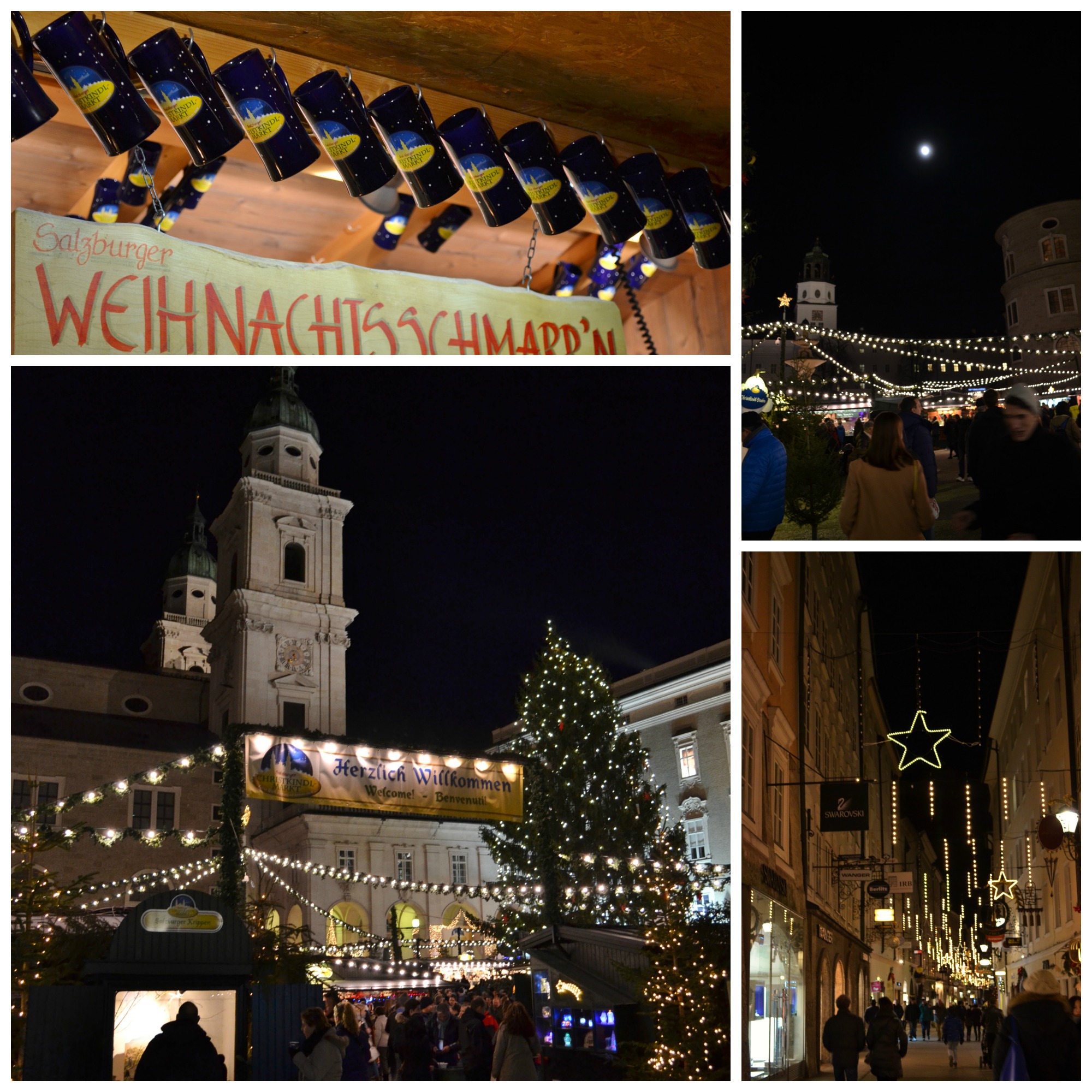
The main attraction for us, especially that first evening in Salzburg, was the Christkindlmart (the Christ-child Market, or sometimes called the Weihnachtsmarkt–Christmas Market).  There were a number of spots in the city where you could cruise through markets–Mirabell Gardens (which we did the next day), around the Dom (cathedral), and Mozartplatz (where there was ice skating).

Market stalls, gluhwein mugs, and star-lit streets

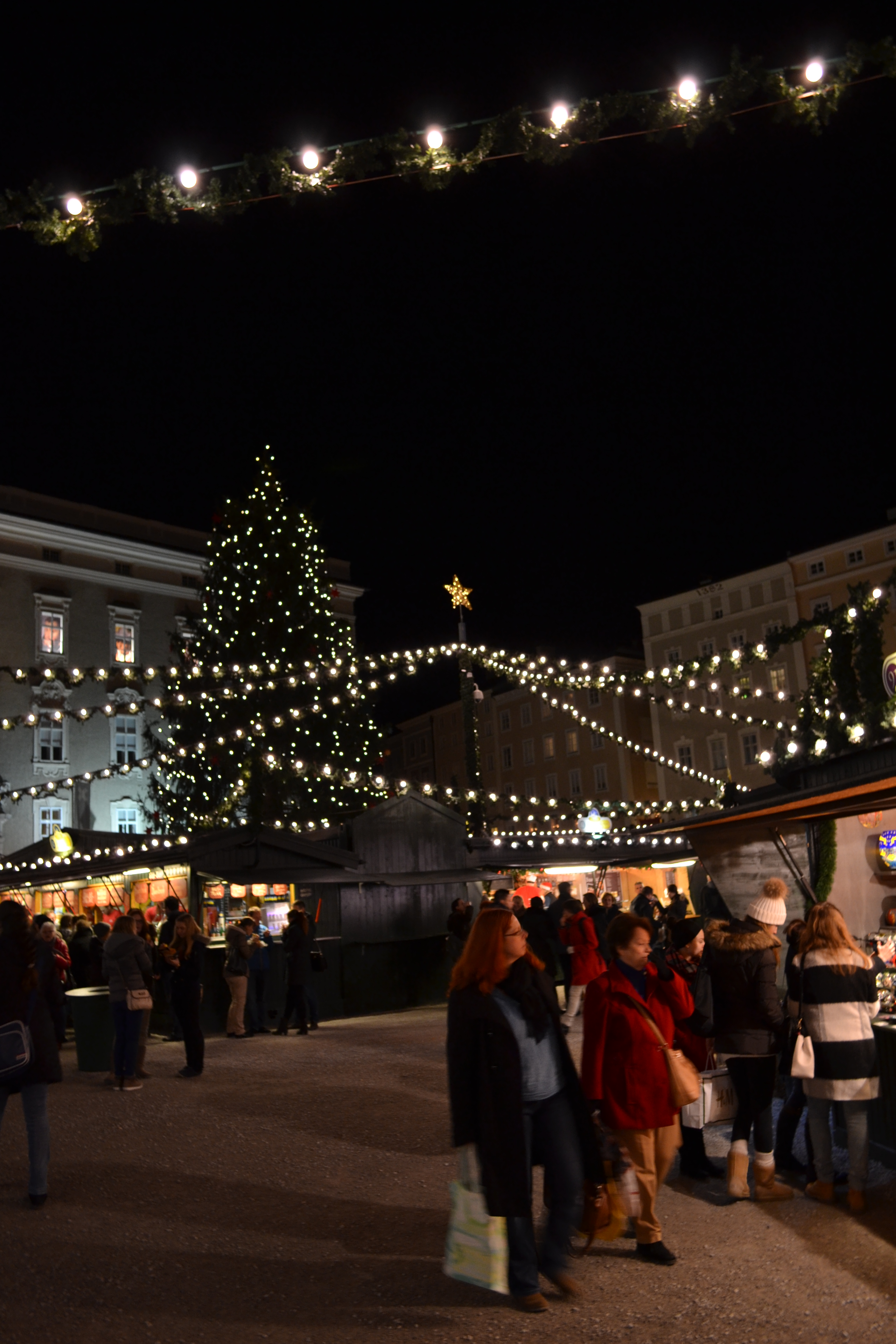
DSC_0283The markets were charming in the moonlight, with Christmas lights twinkling overhead and warmth, light, and wonderful smells tumbling out of each stall.  We enjoyed Gluhwein (warm mulled wine), sausages, Weihnachts Schmarr’n  in many varieties  (with nuts, apple, gingerbread, etc, this is like big bread or pancake chunks cut up and fried with sugar), sugar and apple pretzels, and white Russians in steamy mugs.

At some point, we wandered into the Sternbrau Brewery and Beergarden for a cozy dinner.  Everyone went to bed happy.

DSC_0306
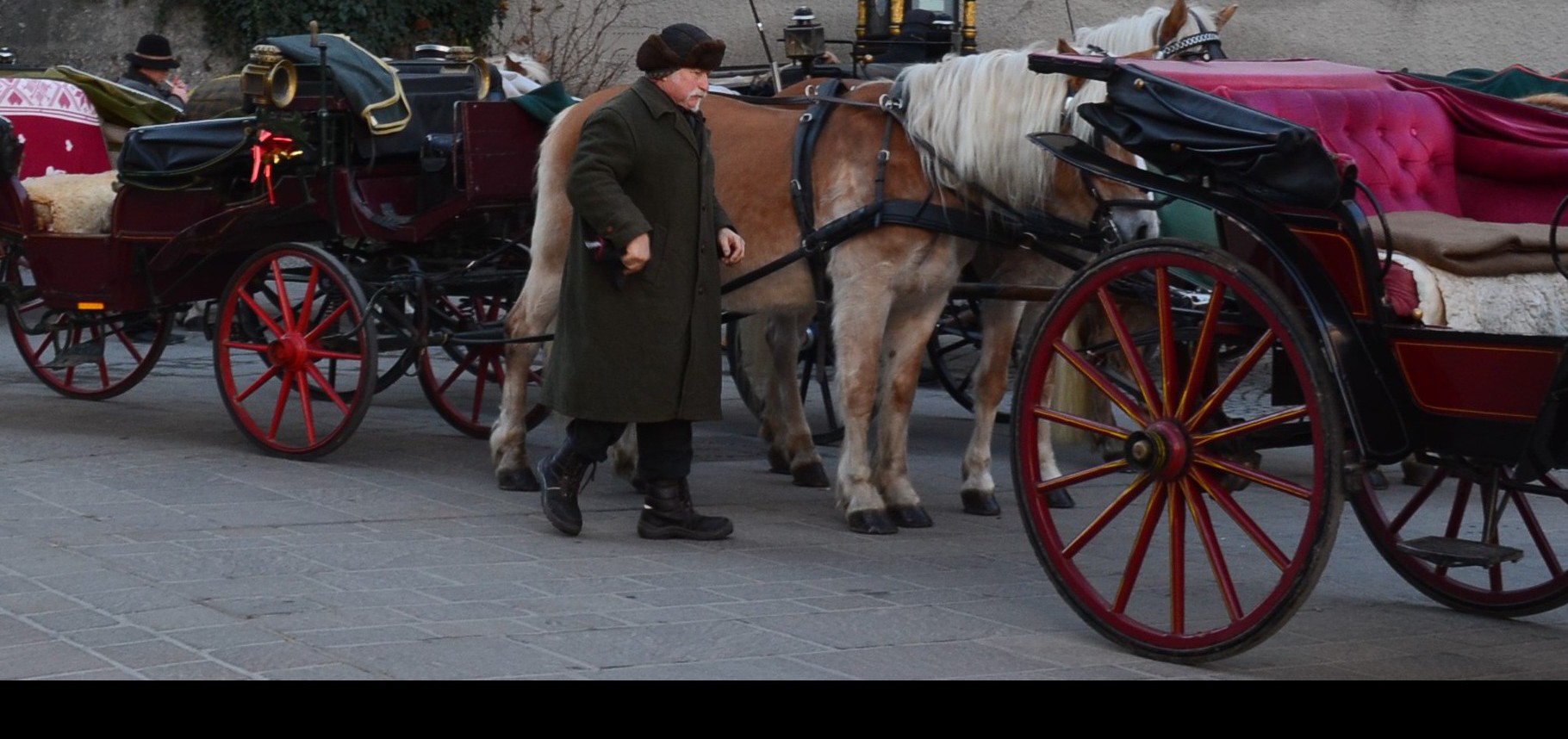
Horses and carriages, empty of riders in the early morning.

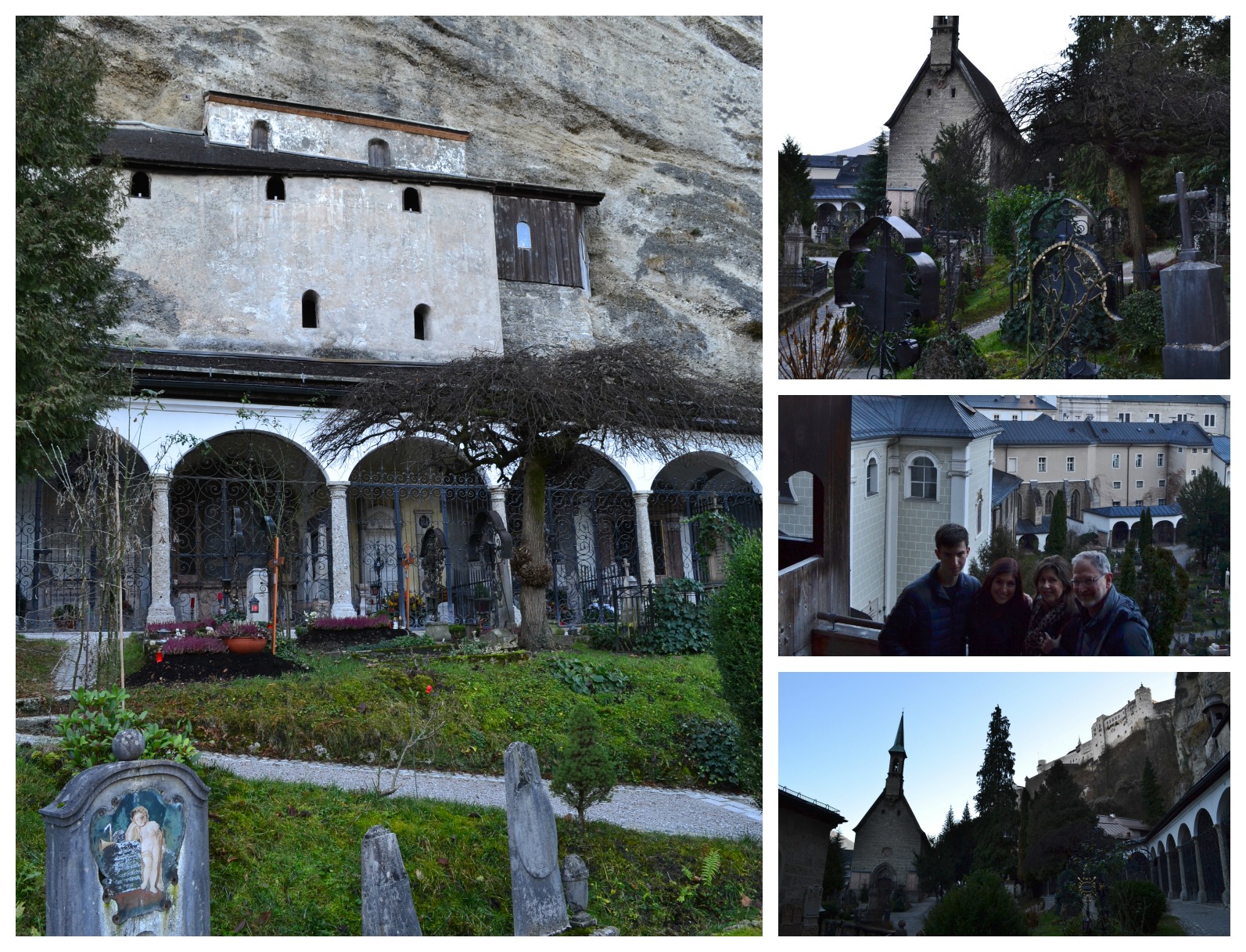
The next morning, we picked up breakfast on  the run and headed for town, with our sights set on the Hohensalzburg Fortress, sat high atop the hill over the city.  But to get to the top, you have to start from the bottom.  At the foot of the hill, we wandered through a town just starting to come to life for the day.  My nephew stuck his head around a corner, only to find that he’d stumbled on the entrance to St. Peter’s Cemetery– a familiar sight to anyone who has watched The Sound of Music. (Although I think  that scene must have been largely reproduced on a soundstage, it is clear that this is the location represented in the film.)   The cemetery is beautiful–set in the churchyard, with its back up against the stone hills of Salzburg. And those stone hills hold their own surprises. There is a doorway in the hills, to the back of the cemetery, which leads into the catacombs.

St. Peters Cemetery
St. Peters Cemetery

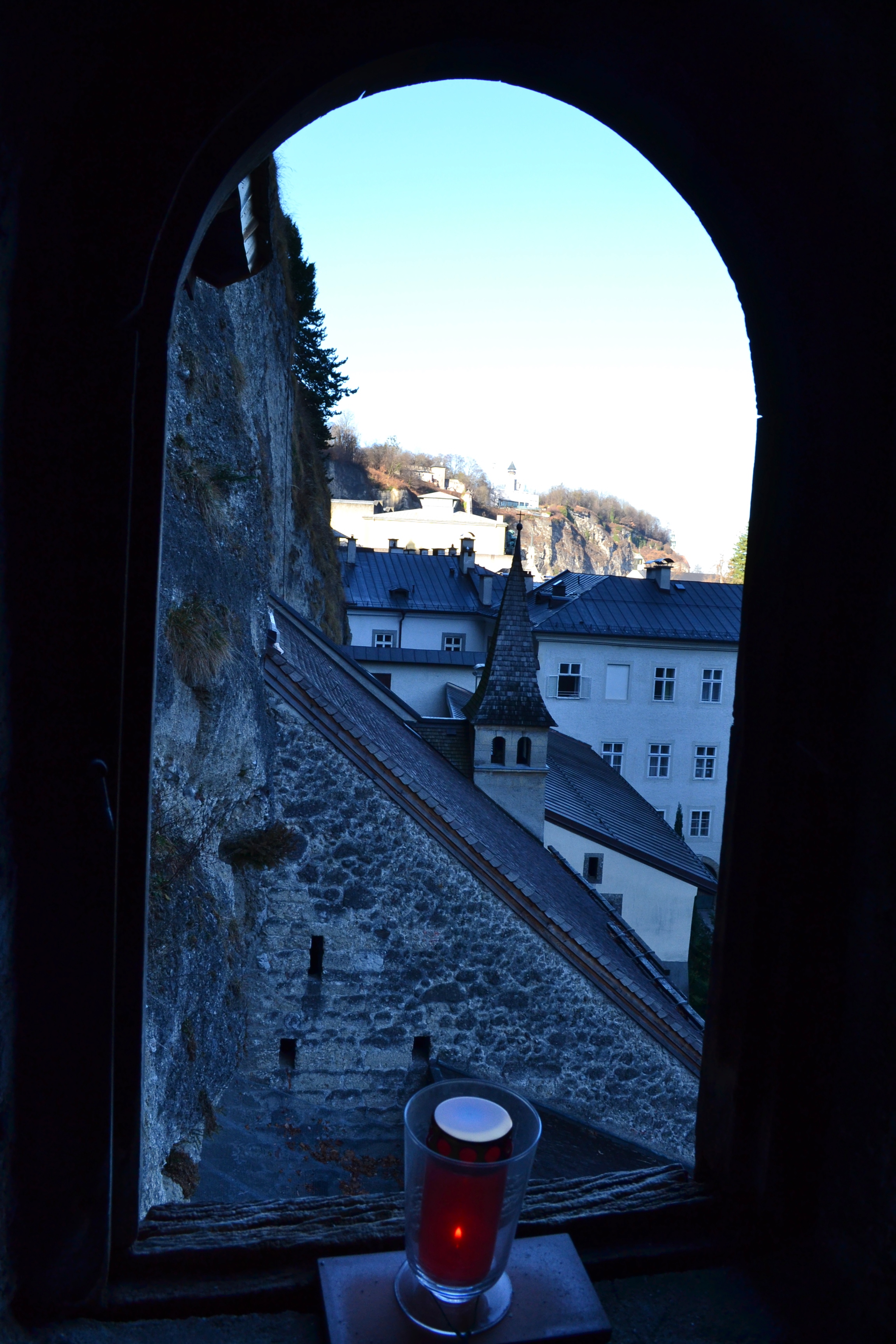
DSC_0326The catacombs are hand-hewn, carved into the rock of those hills.  For a small fee, you can tour the catacombs–a short but lovely tour, it’s worth the fee.  There are small chapel spaces cut into the rock, as well as windows and overlook perches, where you have a nice view of the church and cemetery.   After we had finished up with the catacombs, we started the climb toward the Hohensalzburg Fortress.

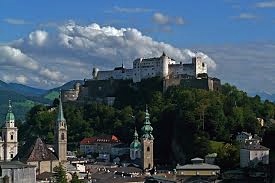
hohensalzburg

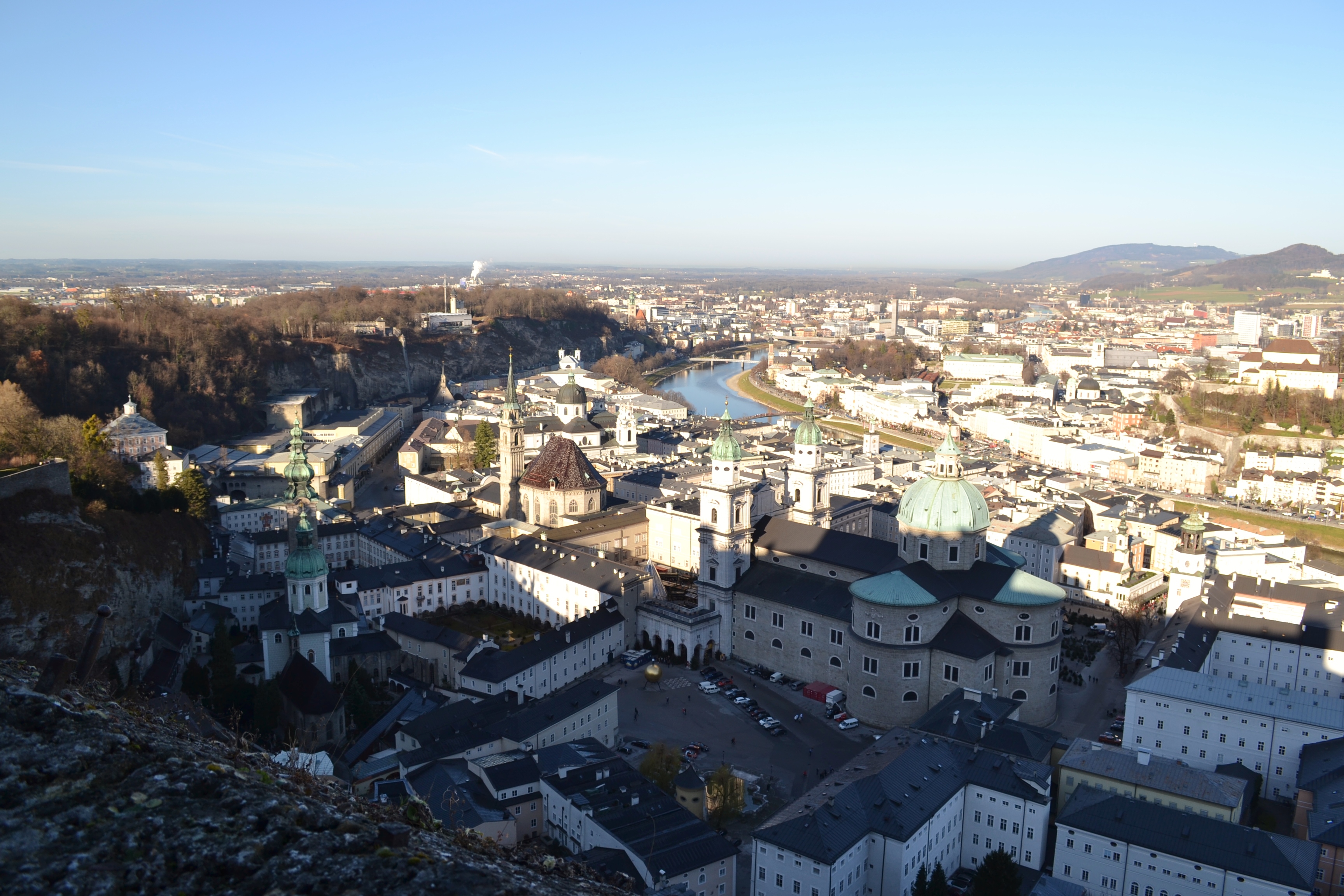
Let me say, for the record, that the fortress is fantastic and the views are not to be missed.  Within the fortress, you can wander the walls and interior courtyard, visit the fortress museum, and enjoy the Marionette

View from Hohensalzburg

Museum there.  It’s a great place to spend an afternoon.

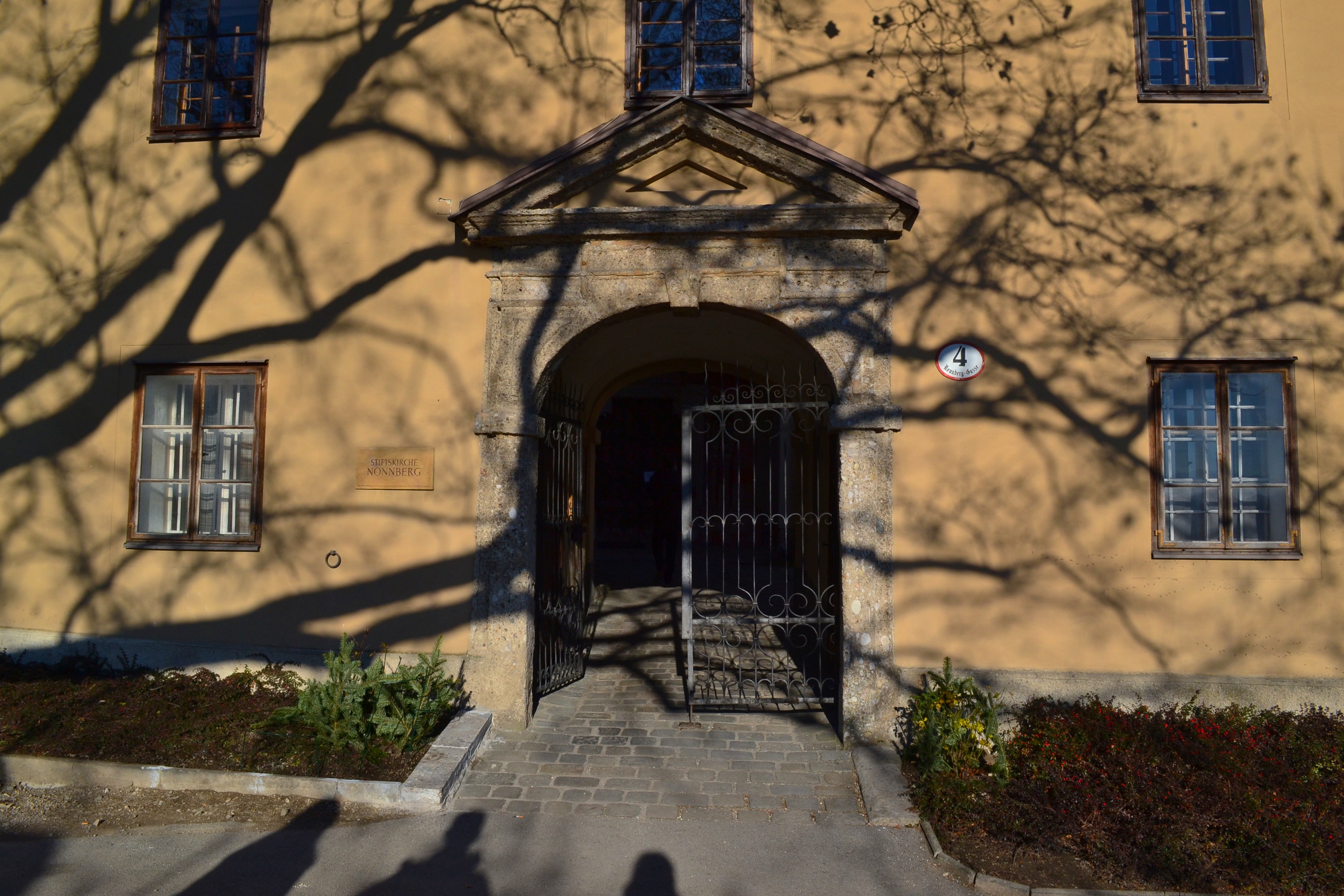
Still, for me, the greater treat of the afternoon was Nonnberg Abbey, which is tucked around the bend of the hill just below the fortress.  We knew the Abbey was there, but had been told that it’s  not open to enter, so the best we could hope for was to peek into the gates.  (Those famous gates from The Sound of Music— Nonnberg is the Abbey where Maria was a novice.)

Gates at Nonnberg Abbey.

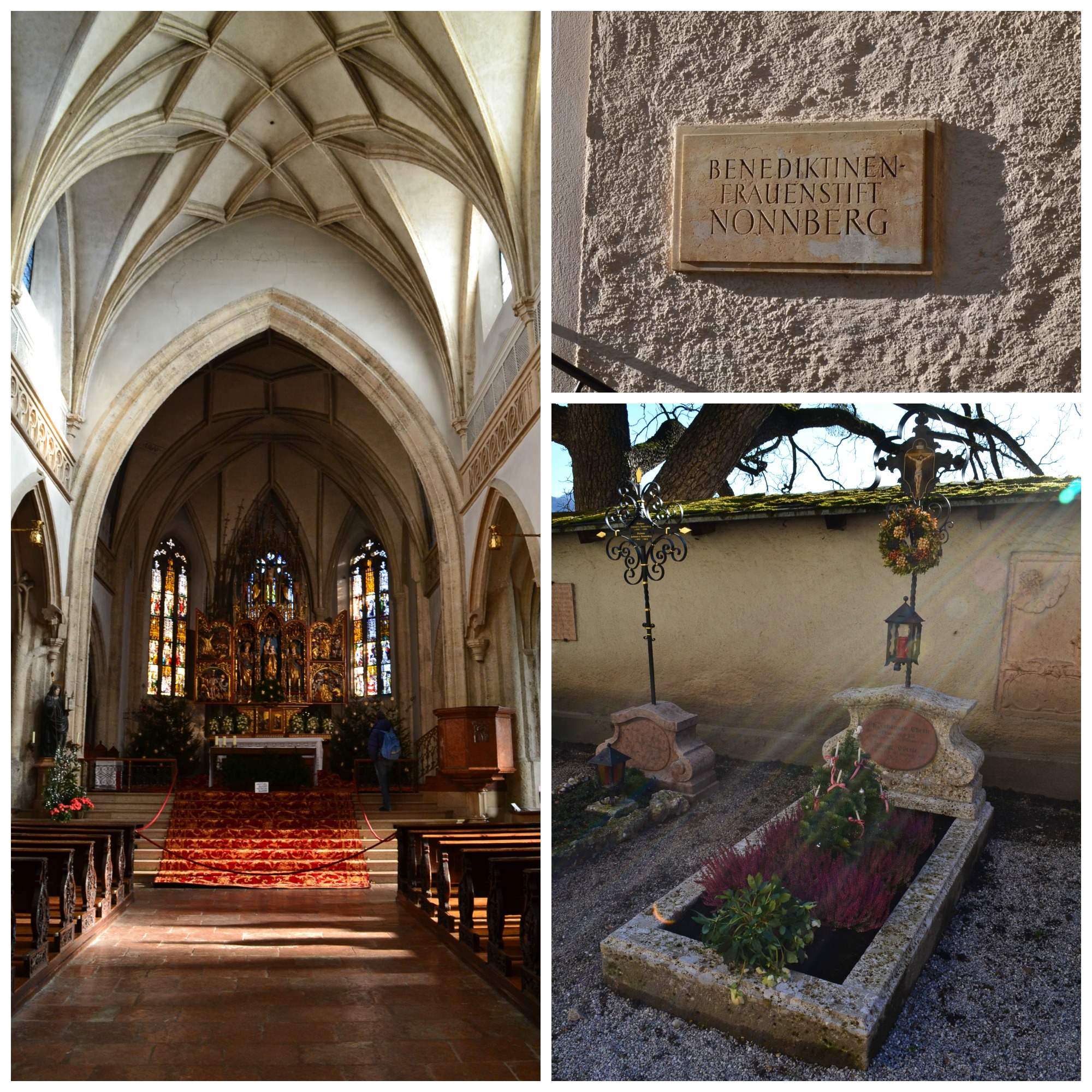
Imagine our delight when we found the gates to Nonnberg open, and we were able to wander in.  The chapel (which is the actual location where the von Trapps were married) is stunning and still small enough to feel intimate.  The courtyard and garden  cemetery tucked just inside the walls of the Abbey were serene.  It was a great place to linger for a moment above the bustle of the town.


Nonnberg Abbey--sign, beautiful chapel, and graveyard. I love the light rays spilling over the Abbey wall and onto this grave--I think someone is trying to send us a Merry Christmas message.
Nonnberg Abbey–sign, beautiful chapel, and graveyard. I love the light rays spilling over the Abbey wall and onto this grave–I think someone is trying to send us a Merry Christmas message.

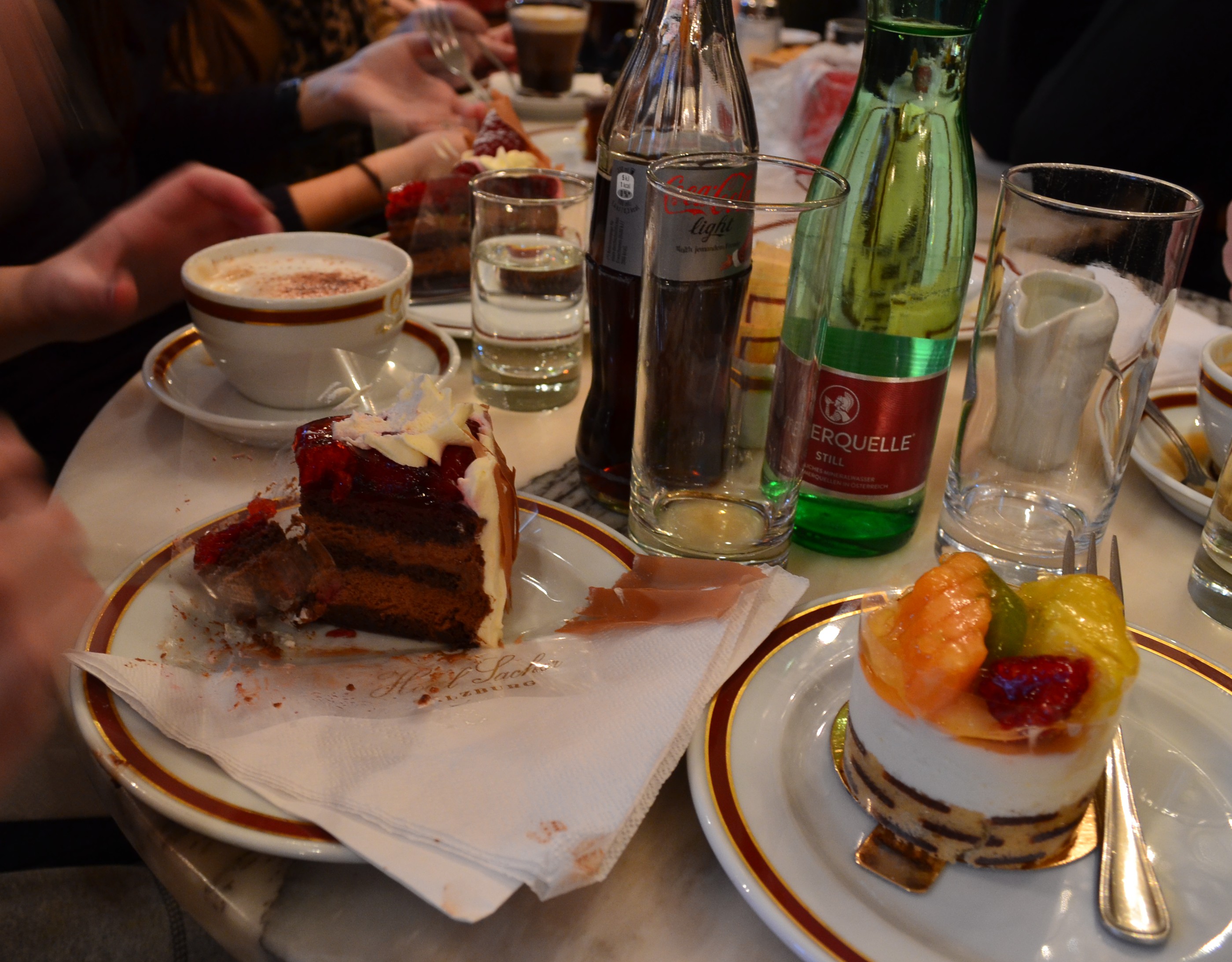
DSC_0419After visiting Nonnberg and the Hohensalzburg, we headed back down into town and eventually found ourselves at the Sacher Cafe– world famous for its Sacher Torte.   We ordered a myriad of desserts and nibbled off of each plate.  The cakes were brilliant and the coffee was outstanding.  We had no luck getting a table in the restaurant for lunch (reservations needed, at least during Christmas week), but I’m so glad that we made our way back for dessert.  In a city of fantastic food, this cafe ranks among the best of the best.

Honestly, I don’t remember what happened after our afternoon nibbles.  I expect we toddled back to Villa Trapp for a moment’s rest before hitting an evening of Christmas markets again.

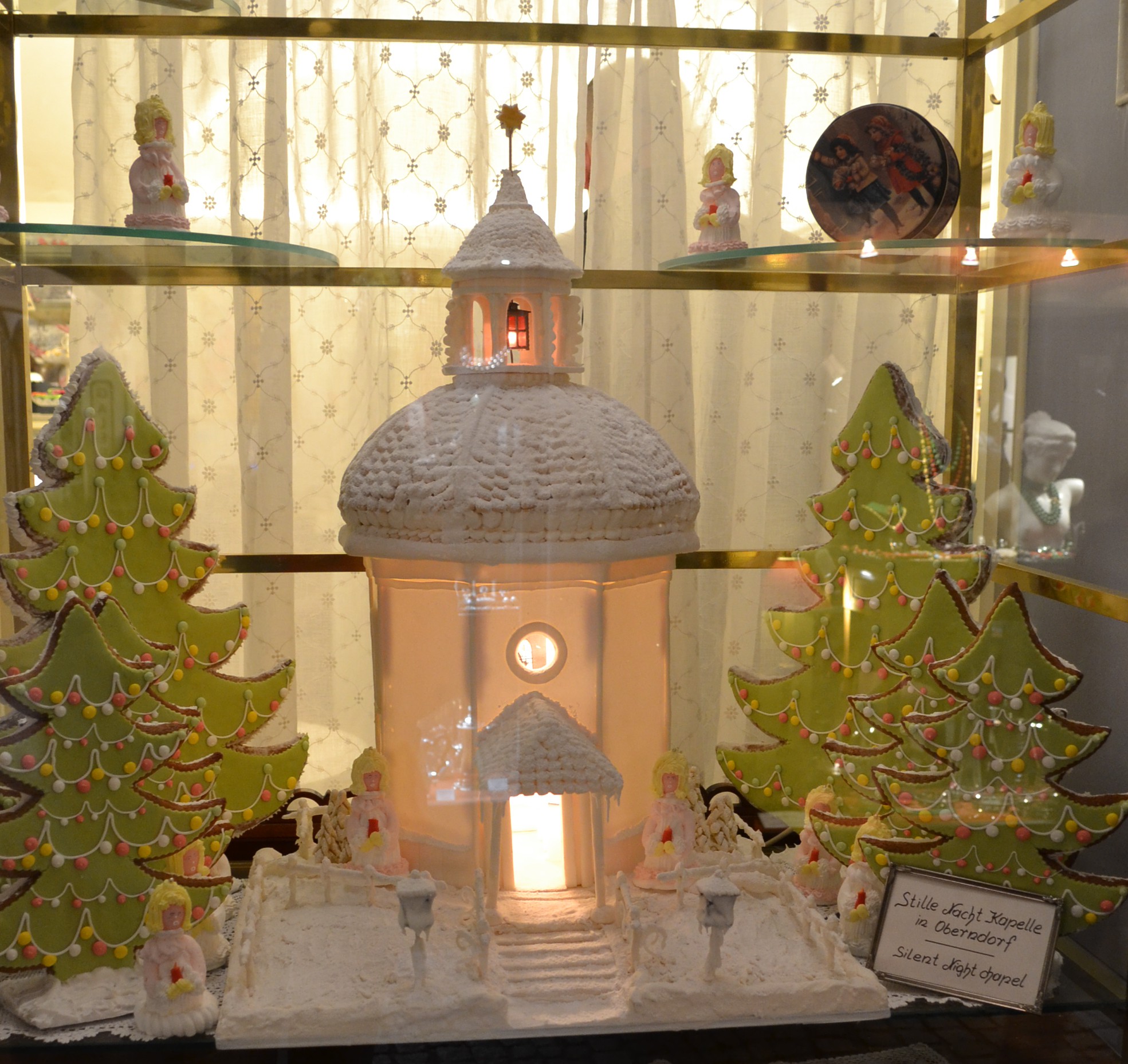
The chapel where Stille Nacht /Silent Night was written--commemorated in sugar.
The chapel where Stille Nacht /Silent Night was written–commemorated in sugar.

Another night to wander the markets under the stars.  We spent a lot of time doing that, in various locations, during the Christmas season.  But it never got old.  Salzburg’s market offered so many tasty delights, and so much “eye candy”-old-world-decoration that it was impossible not to be enrapt by it all.  My favorite shop window on our last night in Salzburg was a confectionery shop that boasted a sugary replica of the Oberndorf Chapel, just outside of Salzburg.  This is the chapel where the Christmas hymn “Silent Night” was written.

After an evening of wandering, ogling Christmas baubles, eating, and drinking, it was once again off to Villa Trapp for a long winter’s nap.

We woke slowly Christmas Eve morning, some of us taking breakfast in the von Trapp’s dining room, and then set out (our bags packed for home) to visit Mondsee before the long ride back to the Rhineland-Pfalz in Germany.  Mondsee’s cathedral is probably best known as the wedding chapel in The Sound of Music, and it’s a stunner. It was a treat to see it decked out for Christmas.  And, as always, it was a treat to stop by Cafe Braun before leaving town and eat breakfast and some of the best apple strudel to be found on the planet.  (I ordered the strudel with both ice cream and cream–I don’t know if they make these out of an egg custard recipe or with some liqueur I can’t quite pin down, but they are incredible.)

We left for home with tired feet, full bellies, and a storehouse of  wonderful Christmas memories.  Next year I may be celebrating Christmas far from Salzburg, but I feel certain that Salzburg will be there in spirit– I’ll perfect my strudel and custard recipes, I’ll drink my mulled wine in a Salzburg gluhwein mug, and I’ll carry a certain old world spirit.  Like Hemingway’s Paris, Salzburg in this season will be my moveable feast.


Christmas in Salzburg and the Villa Trapp, Part One

villa trapp christmas

You’ve probably put away your holiday decorations, and it’s far too early to start planning for next year’s season.  But before spring rolls around, I wanted to write about Salzburg and the Christmas festivities we enjoyed there during the holidays.

In late November of 2014, we visited Salzburg and Villa Trapp just before the holiday markets opened–I made a vow to return for the 2015 holidays so I could experience the season in full swing in this corner of Austria.  I’d been to Salzburg once before (about 17 years ago), in warmer weather, but had only stopped for the day, and I’d been chomping at the bit to get back ever since.  Salzburg absolutely captured my heart.

Well, as long as I’m beginning this post with  flashbacks to past trips, let’s lay all the groundwork for this recent trip.  Or, as they say in Salzburg, “let’s start at the very beginning. . . a very good place to start.”

Salzburg  is tucked just inside  Austria, on the German-Austrian border, only about an hour and a half from Munich.  It’s a fabulous city for wandering and nibbling, for venturing out to Salt Mines (more interesting than it sounds) or WWII sites, and  for listening to Mozart or channeling Julie Andrews.

If you’re not very familiar with Salzburg, here’s the 30-second run-down:  home to Mozart and Maria von Trapp; fabulous apple strudel, pretzel vendors, and confectionary; incredible mountains, lakes, and countryside; ice caves and salt mines; Hitler’s Eagles Nest and Nazi camps; fortresses, monasteries, castles, gardens, and marionette theaters.

DSC_0011
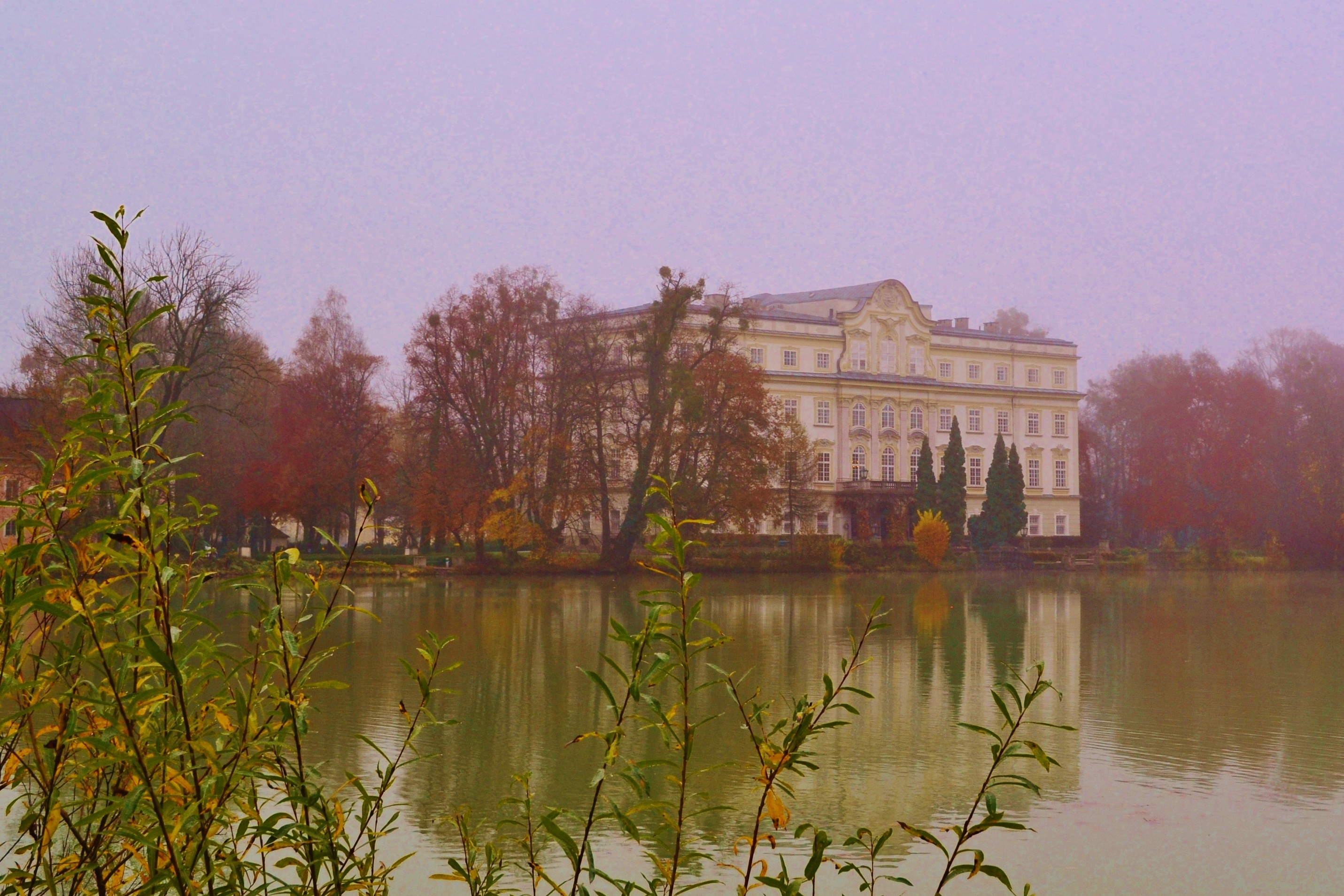
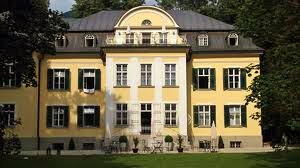
Leopoldskrone Palace

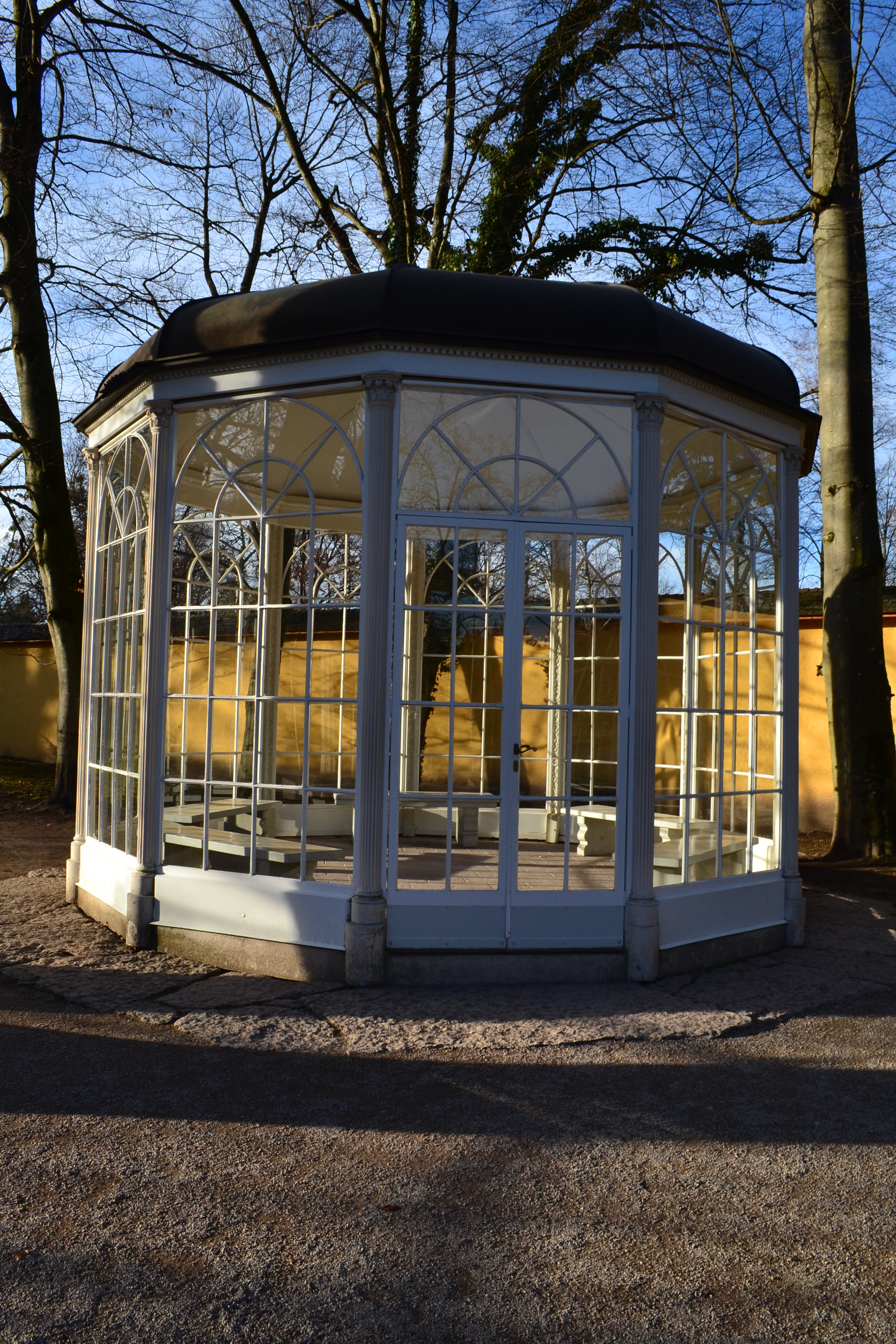
DSC_0221Of course, the American thing to do in this city is to take The Sound of Music tour–which we did back in 2014.  It was fun, if a little cheesy (a busload of American tourists with a soundtrack of Julie Andrews speeding through the Austrian countryside–you can imagine).  Among the tour stops were  Leopoldskrone Palace (used to film the back veranda of the von Trapp house in the movie), Hellbrunn Palace (near the home used as the facade of the von Trapp house, and the final resting spot of the “16 going on 17 gazebo”), Mirabell Gardens in downtown Salzburg,  Lake Fuschl (a beautiful town out in the Alpine Lake Region), and Mondsee (another lake town and the filming location for the wedding scene).

salt slides
Salt mine slides

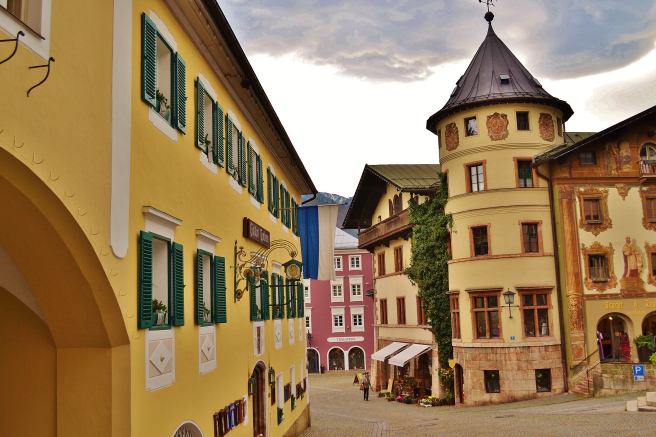
On our 2014 trip, we also toured the Salt Mines and visited Berchtesgaden (on the German side of the border).  Both are worth a visit.  In the salt mines, you not only learn about the industry that made this area so rich, but you get to ride the steep and long wooden slides that the miners used to descend into the mines, and you ride in a boat on an underground lake, which is a really eerie and fun experience.   As for Berchtesgaden, besides being a picturesque town, it has a very storied history with the 3rd Reich. My first visit there,

Colorful Berchtesgaden

about 17 years ago,  included an interesting historical tour of the area. Our 2014 visit was just a quick pass through.  Neither time was I able to visit the Eagle’s Nest–Hitler’s mountain top retreat high above the city (and well known as the place where one of the plots to murder him was foiled).  The Eagle’s Nest is only open during warm weather, as the road up the mountain is treacherous.  I’ve always had mixed feelings about visiting that space, so I didn’t mourn the lost opportunity for long.

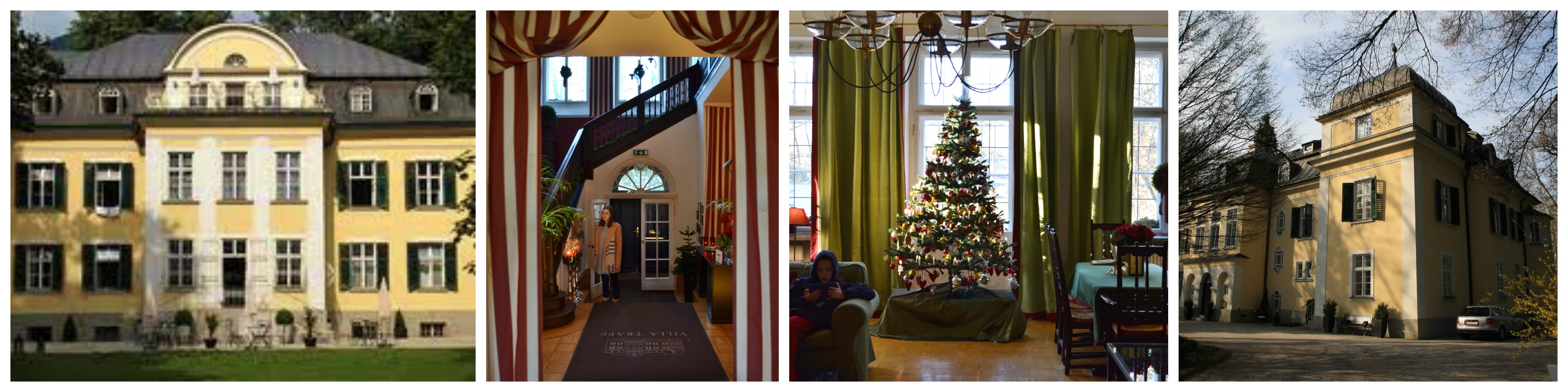
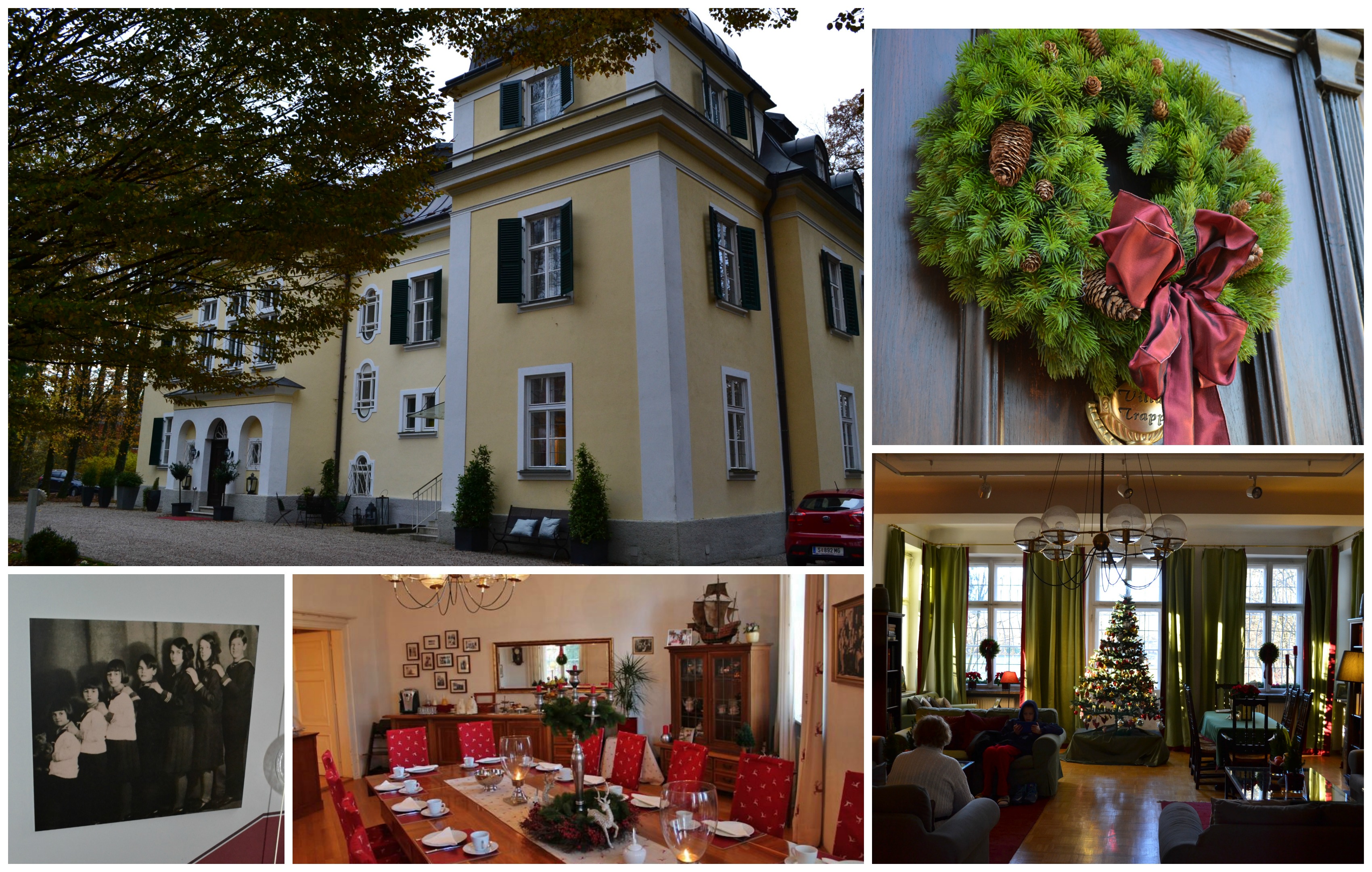
Villa TrappOn to the epicenter of both our 2014 and 2015 trips to Salzburg: Villa Trapp.  The von Trapp’s actual home was opened a few years ago as a small boutique hotel.  The owners, Christopher and Marianne, had a struggle on their hands seven or eight years ago, when they proposed opening Villa Trapp as a hotel. The locals were furious, anticipating a hotel creating a disruption to the quiet neighborhood where the Villa Trapp sits and adding to the already manic Sound of Music industry in the city.  But somehow the squabble was resolved, and the Villa Trapp was opened without disruption to DSC_0294the neighborhood.  The Villa will never be a large scale hotel–it is, as it was, a very grand family home.  In fact, it is a very quiet place, sat on a large, walled property in the neighborhood of Aigen (on the edge of Salzburg) and housing only a few guests even when fully booked.  (I believe the Villa was, historically, a 14 bedroom house.  How many guests it can now accomodate in its bedrooms and spacious suites, I don’t know, but the staff told us in December 2015 that the hotel was fully booked and we heard almost no one else, despite having some company when we took breakfast in the dining room.) 
The photos in the top banner of this post are from Villa Trapp.

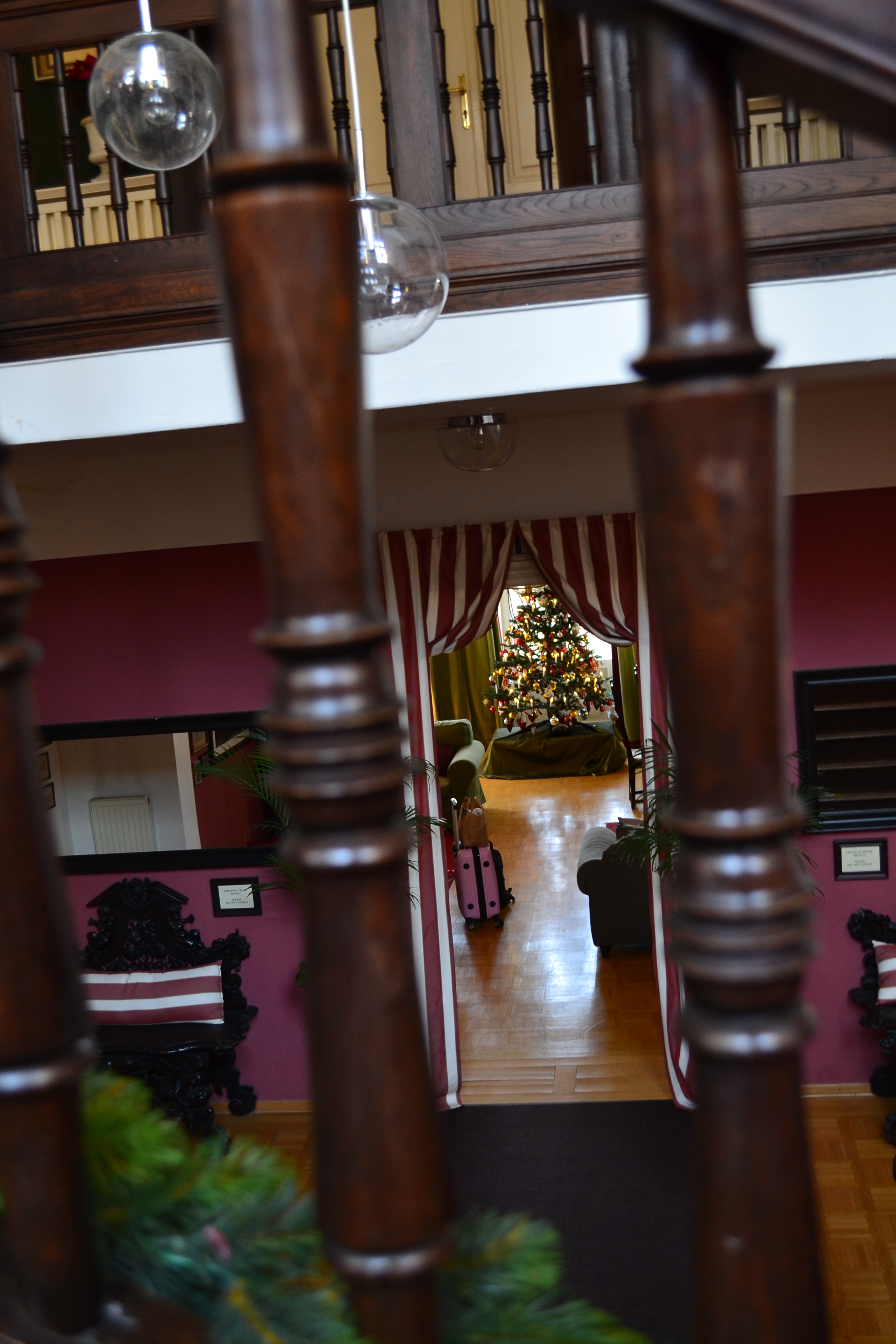
The sort of view the von Trapp children had when they tried to peek down the stairs at their gifts on Christmas.

We stayed there the 22-24th of December, and were sad to leave when we learned that they were holding a Christmas Mass in English on Christmas Day there.  The Villa was purchased by the Trapp family around 1923 (it’s a mid 19th century villa).  They lived there until 1938,  when they fled the country and left the house in the hands of a missionary group. (The von Trapps didn’t actually have to walk over the mountains, they took a train–but they did get out just one day before the borders were closed by the Nazis, so the escape still counts as dramatic in my book!)  Hitler quickly occupied Austria, and the SS took over the home for Heinrich Himmler’s office and residence space.  After the war, the villa went back to the hands of the religious order.  The order remained in the villa until around 1992–which is why it was unavailable as a filming location when The Sound of Music was being shot.

The villa is a very gracious place to rest on your travels, and it is so very steeped in its history–the owners are glad to speak with you about the home, and they even offer a tour of the house at noon each day, and  have a DVD available that takes you through the family and house history and features one of the von Trapp children (Maria–known as Louisa  in the movie–who passed away at 99 years old in 2014).

Villa Trapp at Christmas

This Christmas, we were joined on our trip by my sister and her family.  We each had a spacious suite of rooms, and felt pampered as we rested up from our drive and our days out in Salzburg.  Salzburg’s Christkindlmarkt (Chirstmas Market) was in full swing, and we enjoyed cruising that, as well as walking through the Hohensalzburg Fortress,  the Salzurger Dom (the cathedral), St. Peter’s Cemetery and Catacombs, Nonnberg Abbey,  and Hellbrunn Palace–but I’ll post more on that in a few days in part two.

Until then,  so long, farewell, auf wiedersehen, adieu!   (couldn’t resist)

*And for a little fun, watch Julie Andrews and Diane Sawyer meet the hoteliers at Villa Trapp here.

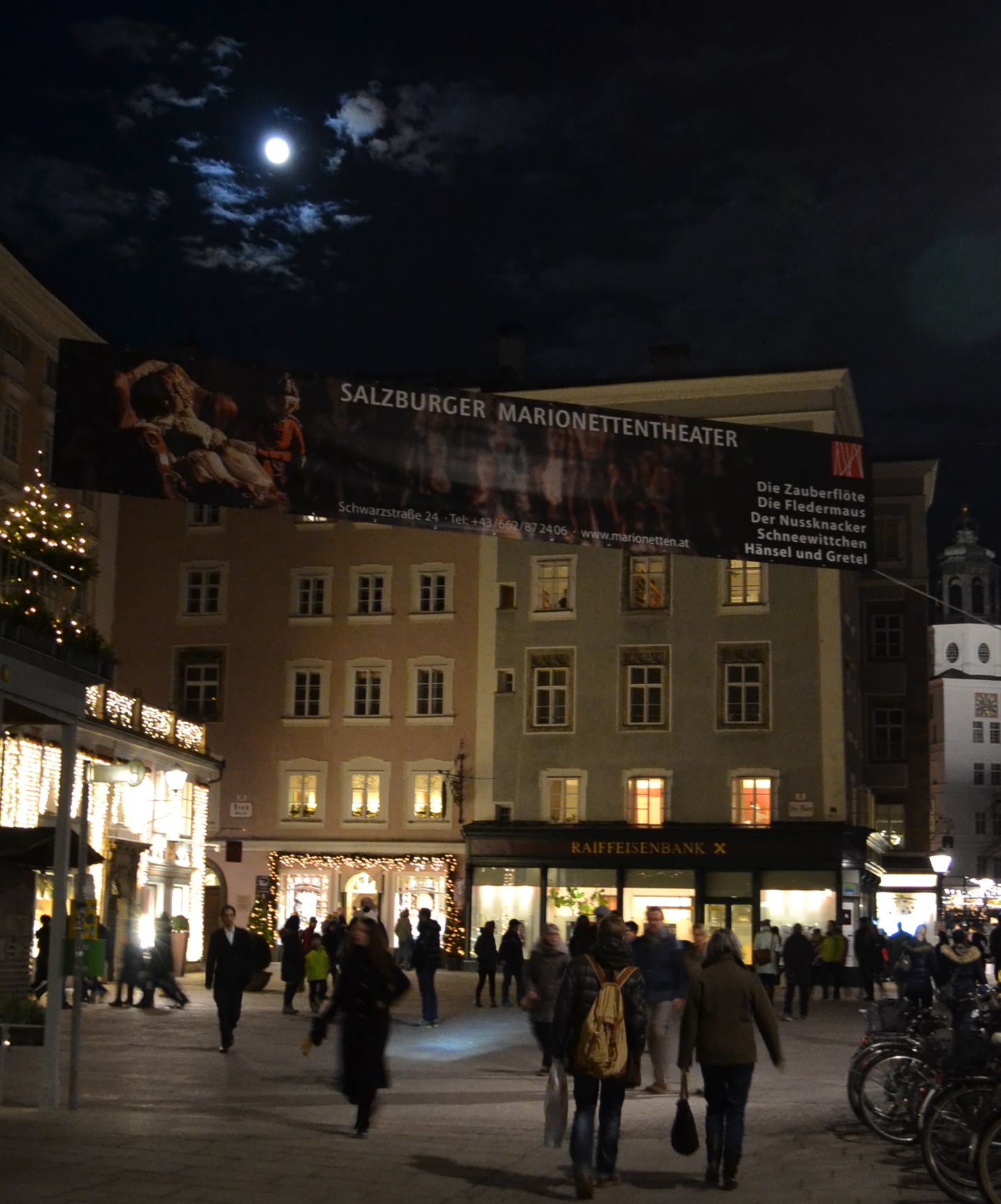
Salzburg at Night
Salzburg at Night


Sleigh Bells Ring . . . Are You Still Listening?

DSC_0323

I’m having trouble giving up Christmas.  I am a bit tired of the chocolate and the mulled wine, true enough.  Some decorations have been put away–a scattered few that were beginning to irritate me.  But the tree is still up, as is the advent wreath on our table, despite its dessicated state (it will soon go up in flames as I light the candles, or possibly dissapear in a poof of dust at the slightest touch).  It’s time to put these things away . . . in a few more days.

There is a reason for this lingering, beyond the turtle’s pace at which I do any housekeeping chores.  You see, Christmas here was a relatively balmy affair.  We had prayed fervently for snow, offered the Supreme Being our very best behavior in trade for some glorious downy flakes.  But it was an offer He knew we couldn’t make good on to any high standard, and the snow never came.  Nor the cold.

So I held out for snow before I was willing to give up the season.

This is probably my final Christmas in Germany, so I have no qualms bending the calendar to suit my needs.  I need a picturesque German Christmas.

This weekend, it’s here.  Not in copious billows or drifting banks, but we do have swirls of flakes and dusted lawns.  And Christmas tree lights to read by.  It is enough.

DSC_0647 - Copy
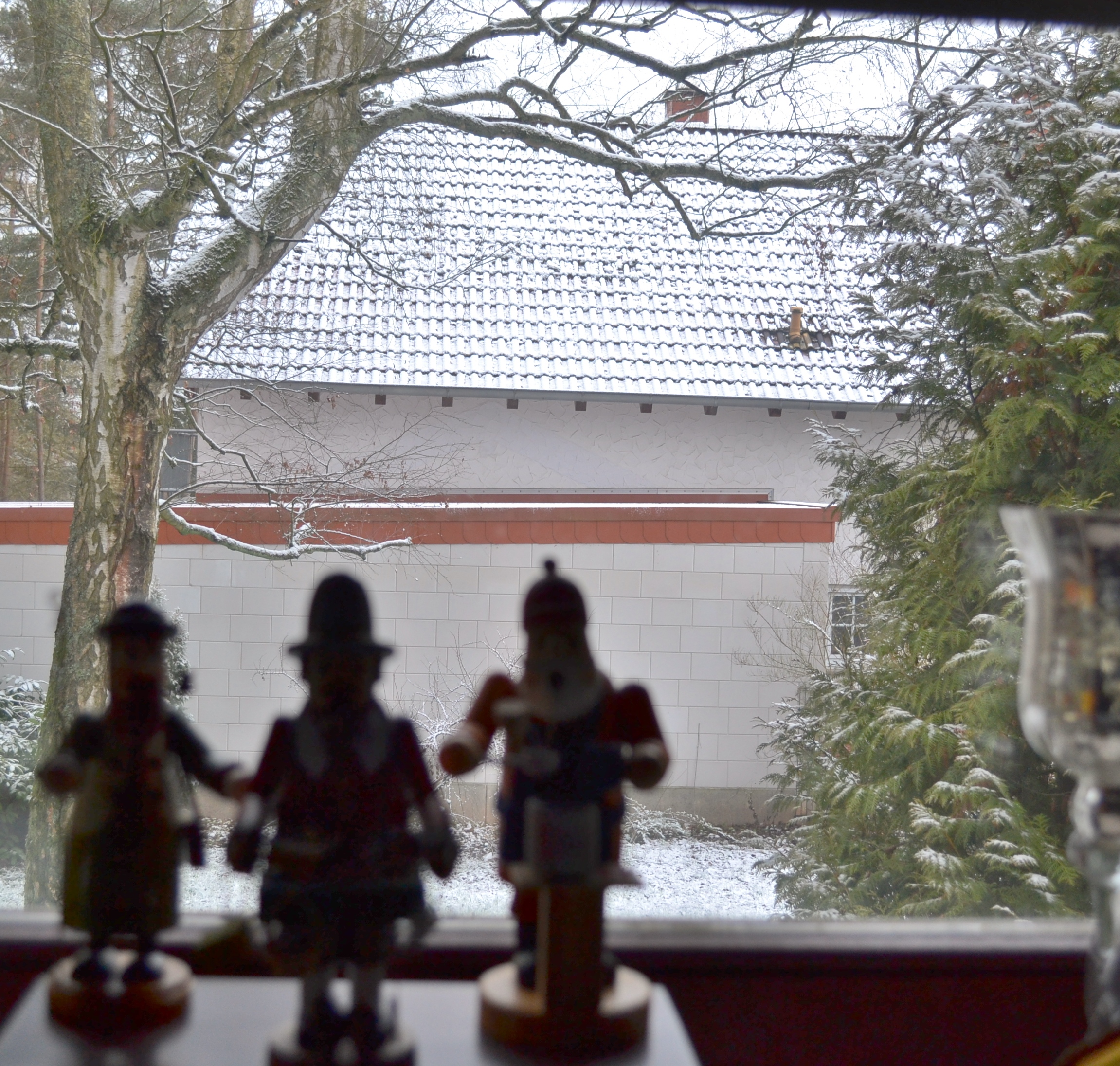
A dusting of snow out the window.

Or almost enough.

If you hear a low rumbling, a curmudgeonly grumbling, tonight–a barely perceptible shaking of the ground underfoot– I suspect it’s my family, annoyed with me as I present a steaming hot Guiness Gingerbread* and pop in a dvd of “Elf.”  By tomorrow, they will all be willing participants in a big Christmas clean up.


*Guiness Gingerbread, aka fantastic stuff:  recipe from Nigella Lawson at http://www.foodnetwork.com/recipes/nigella-lawson/guinness-gingerbread-recipe.html