Fuzzy Photo Monday

The best adjective to describe any given Monday morning is fuzzy.   So, in honor of all those fuzzy Monday mornings, I’m posting fuzzy, dusty photos from a few travels in Turkey roughly 15 years ago.  They may be grainy and faded, but the beauty of the place and the people  still shines through.

Istanbul is a good place to start.  While in Istanbul, we stayed in a small hotel on the Hippodrome–the center of ancient Constantinople, where civic and sporting events were held.   The Hippodrome is a long, oval area today, flanked by obelisks at each end, and just beyond each end of the Hippodrome stands one of Istanbul’s most recognizable landmarks: the Hagia Sophia and the Blue Mosque.

The Hagia Sophia is, arguably, the jewel of Istanbul.
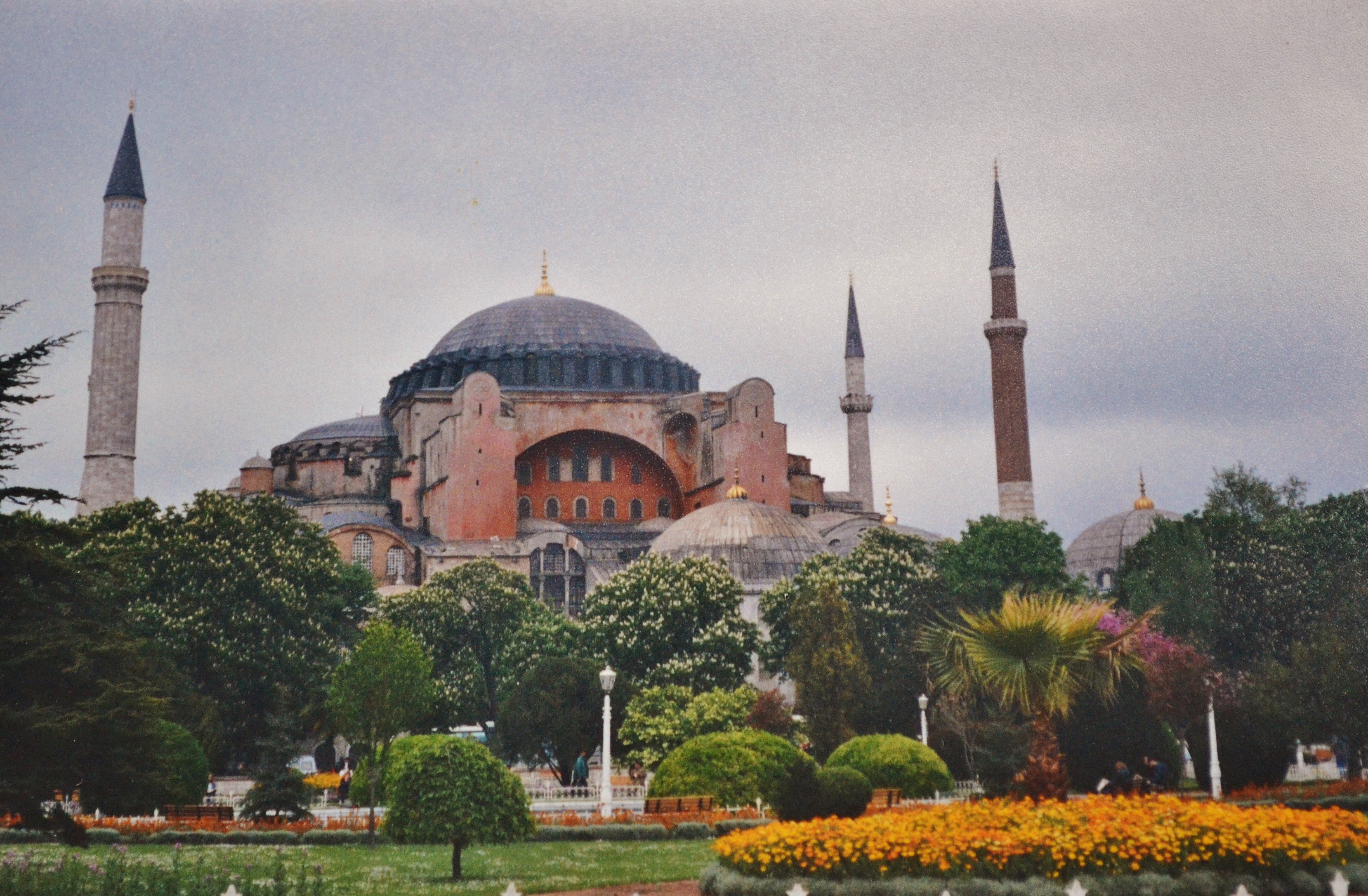
The Hagia Sophia, in Istanbul

The Hagia Sophia began her life in the 500’s as an Eastern Orthodox cathedral, and over the years has served as a church, a mosque, and a museum.  Despite the ravages of time and bickering ideologies, this beautiful monument to Holy Wisdom (Hagia Sophia, or, as the Turks say, Ayasofia) still impresses and humbles its visitors today.
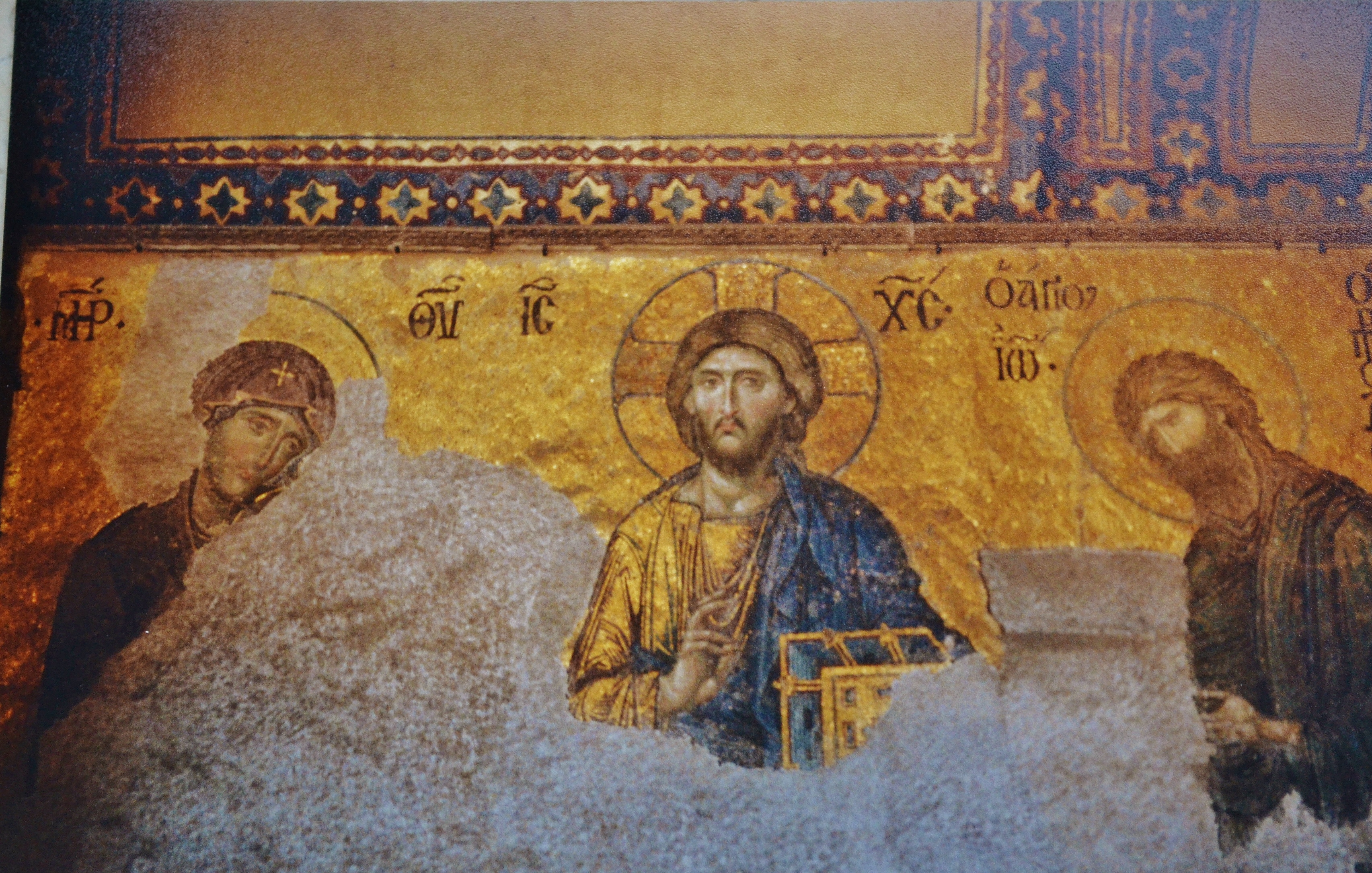
 

walls of the Hagia Sophia


Hagia Sophia inside
Hagia Sophia inside

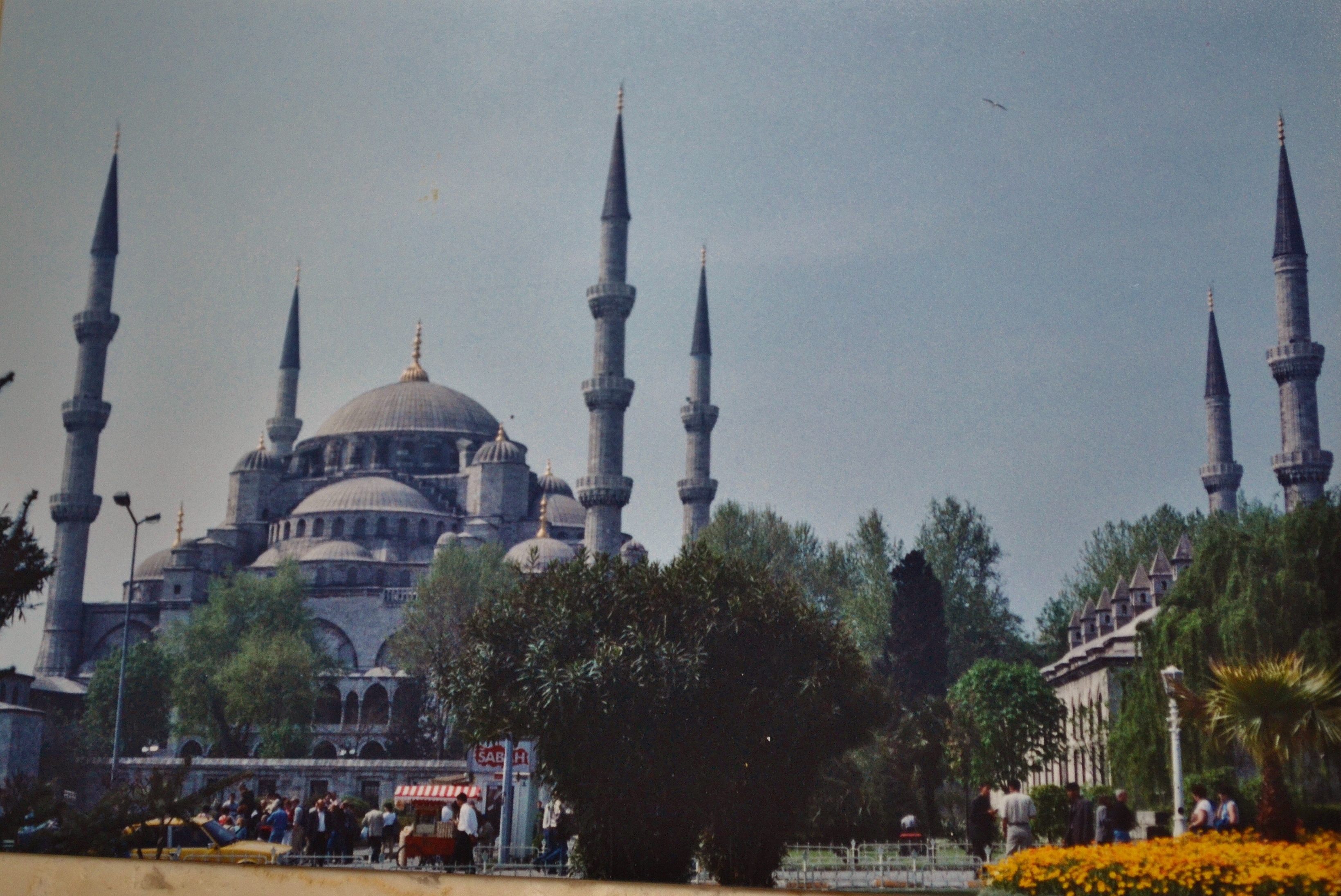
The Blue Mosque was built in the 1600’s, so it’s no new comer either.   The interior is impressive and serene–covered in Turkish Iznik tiles and caligraphed verses from the Quran.
DSC_0650
The Blue Mosque


The exterior courtyard of the Blue Mosque is serene and was once used as a school, but I don’t think that’s the case any longer.

Nearby, you can take a tour of the underground cistern-which is impressive too.  It was built in the 500’s, but lay abandoned and forgotten for hundreds of years.  The columns and carving, as well as the dramatic lighting, make it a beautiful and eerie place to see.
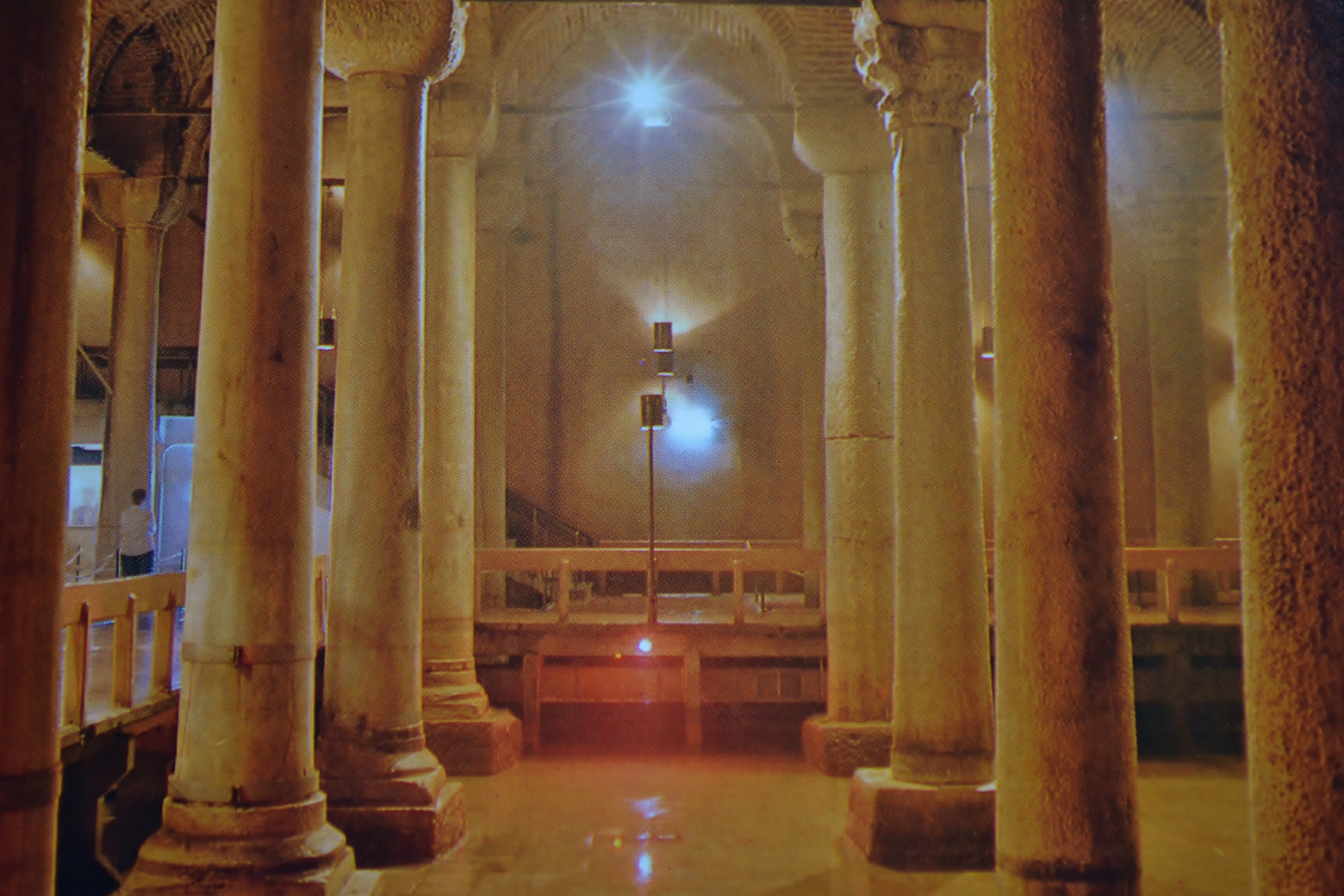
Underground cistern in Istanbul.
Underground cistern in Istanbul–built in the 6th century, still a marvel.

You’d spend a full day or more travelling from Istanbul to Cappadocia in central Turkey, but it would be worth the effort.
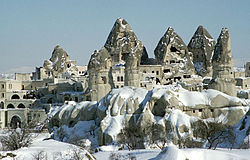
Goreme in winter, from Wikipedia.org

Cappadocia is a somewhat mountainous area, best know for its “fairy chimneys” and early cave churches.   Urgup and Goreme are probably the easiest places for tourists to get around, and they are a good homebase for viewing the fairy chimneys (rock formations that are distinct) of the area.
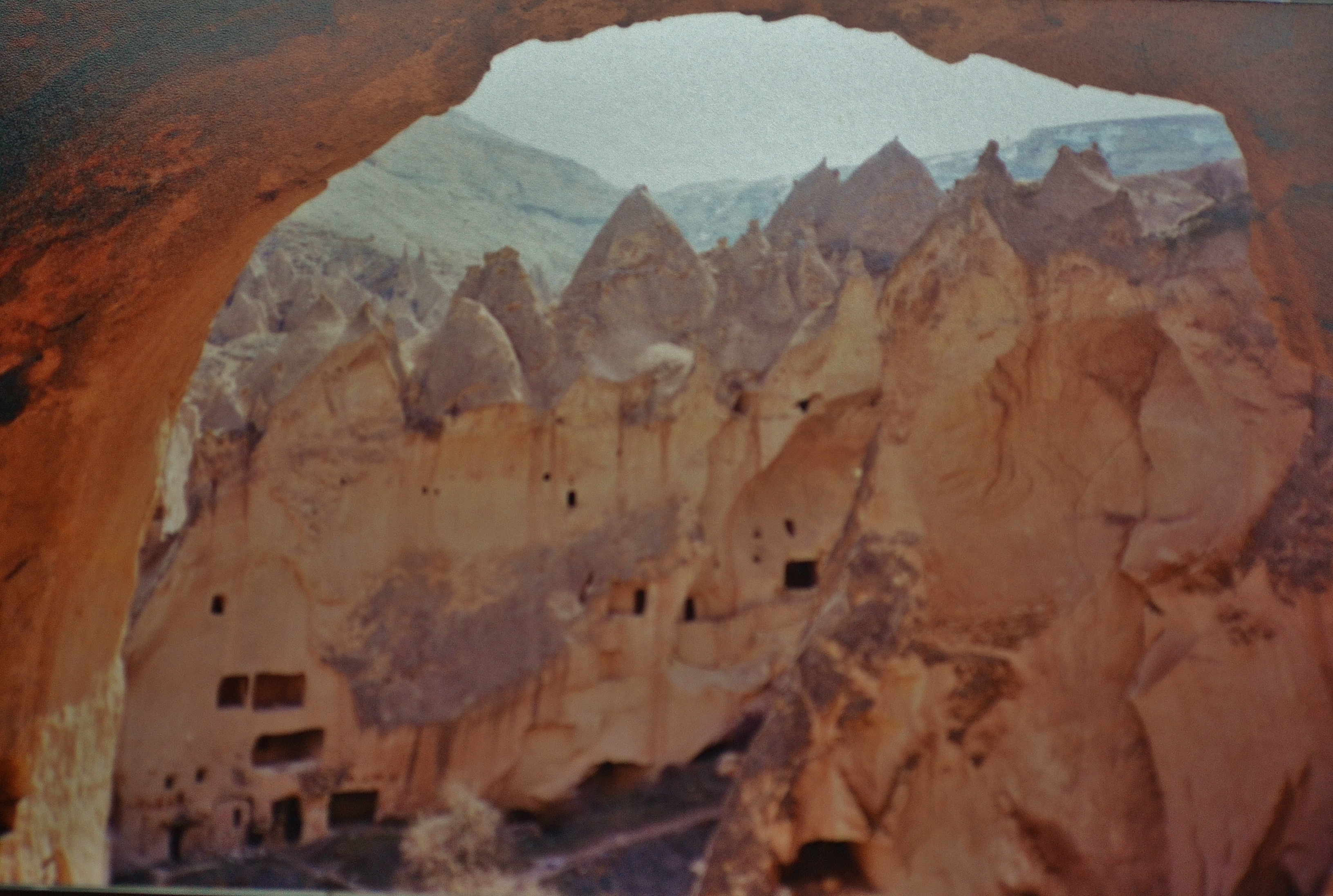
"Fairy chimneys" of Cappodocia and the Ilhara Valley.
“Fairy chimneys” of Cappodocia and the Ilhara Valley. You can see the dwellings carved into them.


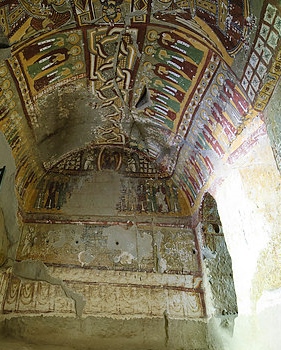
Ilhara Valley Cave Church 2 The Ilhara Valley in Cappadocia is also famous for its very early cave churches.  They are in varying stages of preservation, but are fascinating to see.


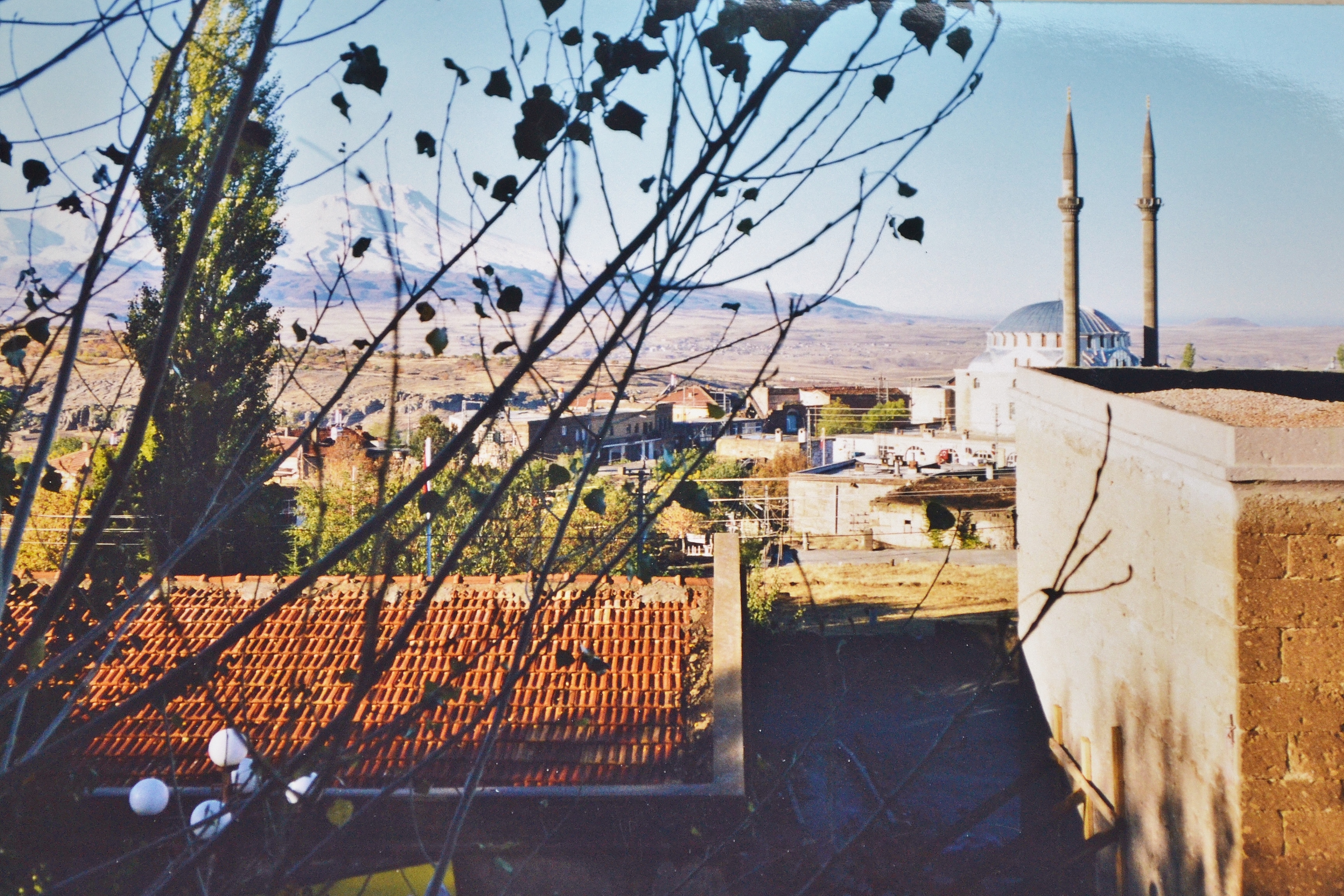
Guzelyurt was our favorite town in Cappadocia, and was off the beaten path.
DSC_0653
View off the back porch at Otel Karbala, Guzelyurt.

We would stay at a hotel there, Otel Karbala, which was beautiful and converted from an old Greek monestary.  The town was light on tourists, and heavy on beauty and history.
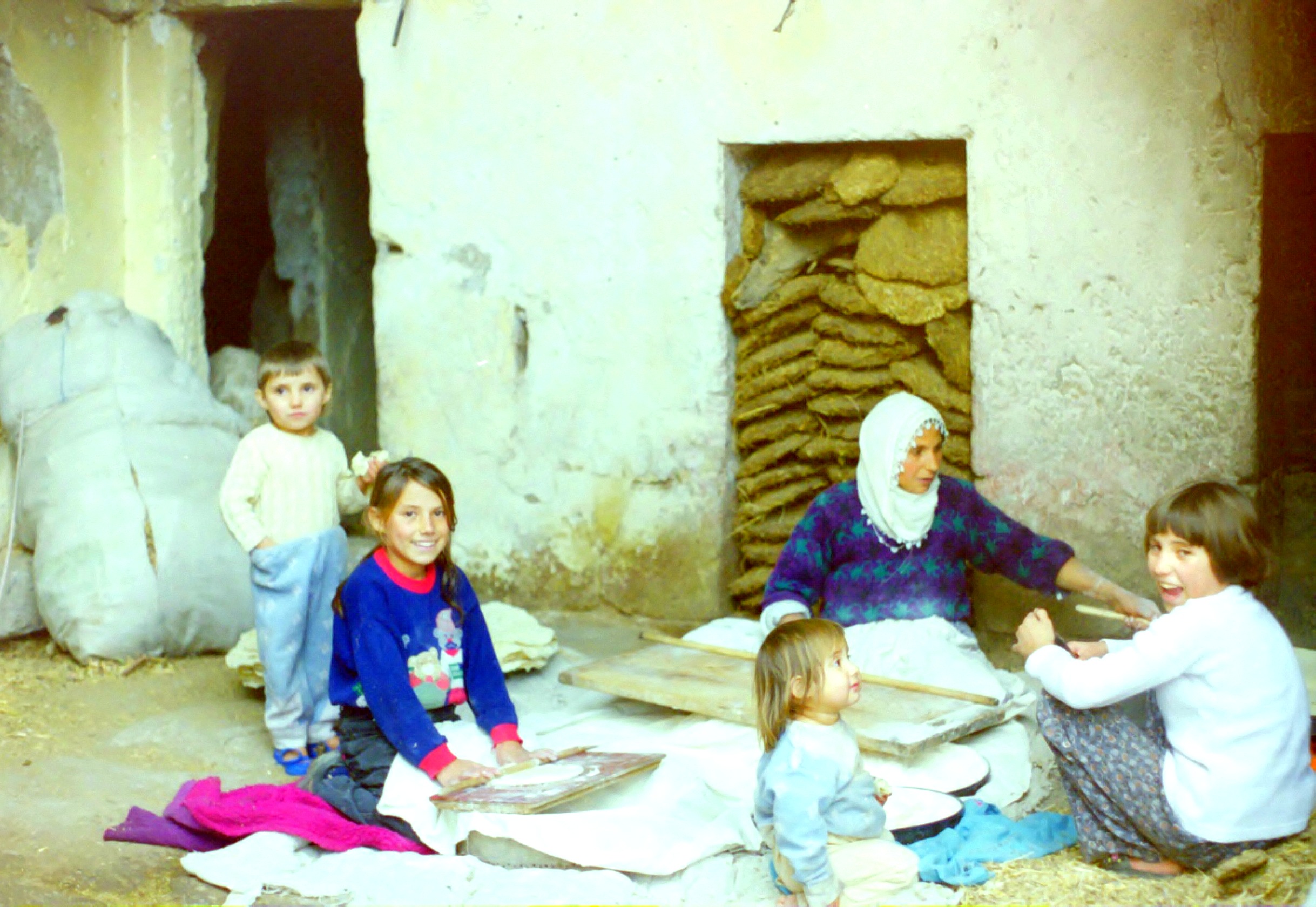
On the "Antik Road" in Cappadocia.
On the “Antik Road” in Cappadocia.

This photo especially tugs at my heart. This family was baking bread over a fire outside of a cave on the Antik Road (old road) down a hill in the town of Guzelyurt.  They were so friendly and we stopped and ate a bite of their bread–a delicious flatbread (pide) that they were eating plain and warm from the fire.  Pide is popular in Turkey, and often cooked over an open fire on a hot, convex piece of metal, but it can also be made in a large oven (think of America’s large brick oven pizza establishments).
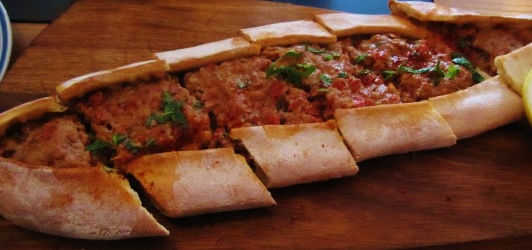
Pide with meat
Pide with meat

Our “hometown” in Turkey had a large bakery that served, really,as a community oven and produced hundreds or thousands of pide each day.  Pide is often embelished with meats or cheese and spices.  Plain pide is also good for scooping up mezes (appetizers).


But, back to Cappadocia.  It’s probably my favorite place in Turkey, and, besides the sightseeing and natural beauty of the area, it also offered many opportunities to shop for carpets in an environment that was less rushed than Istanbul.  Here, carpet dealers feed you, play with your children and dogs, and eagerly teach you about the various types of carpets and regional styles they have on offer.
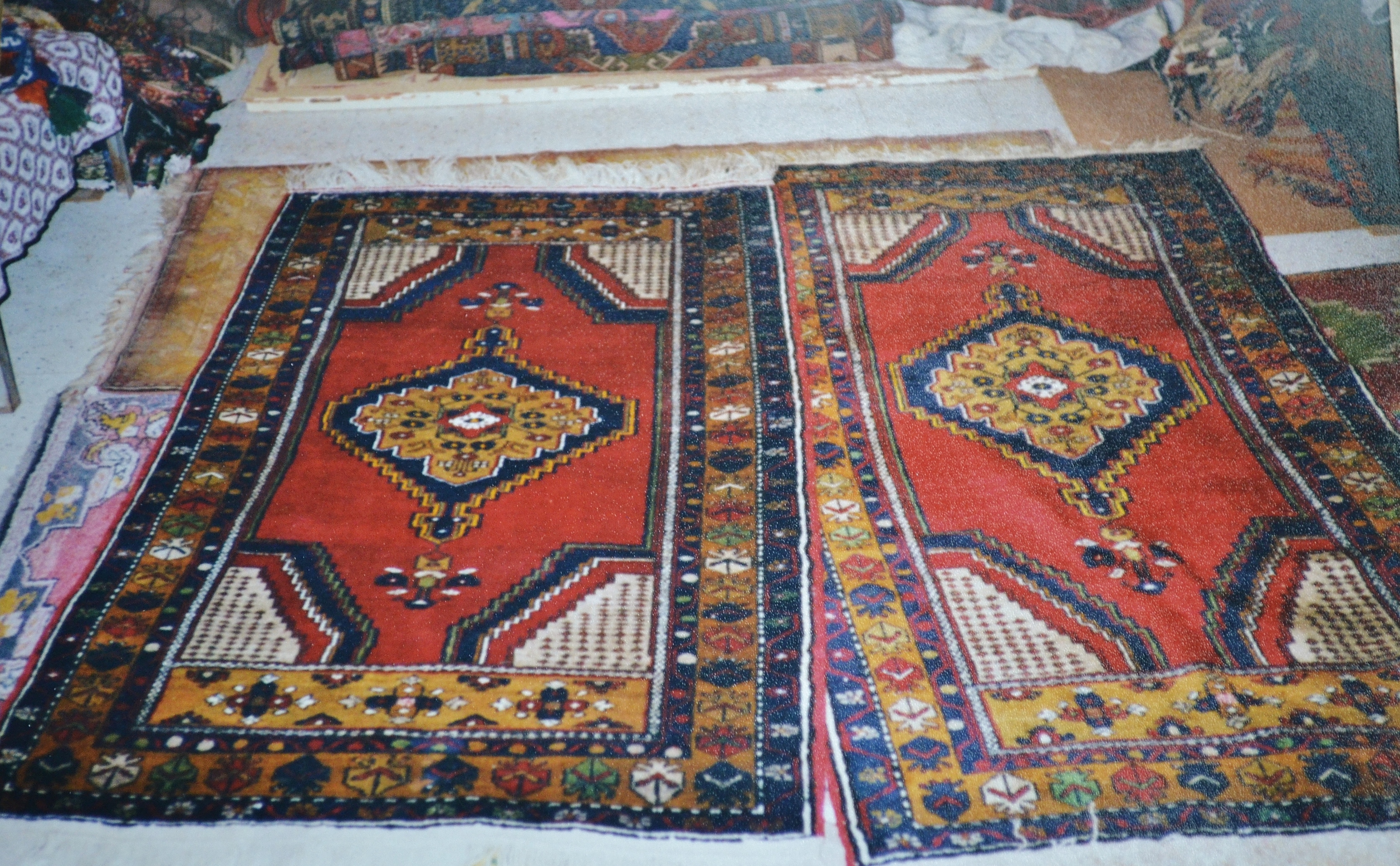
Carpet shopping in Cappadocia.

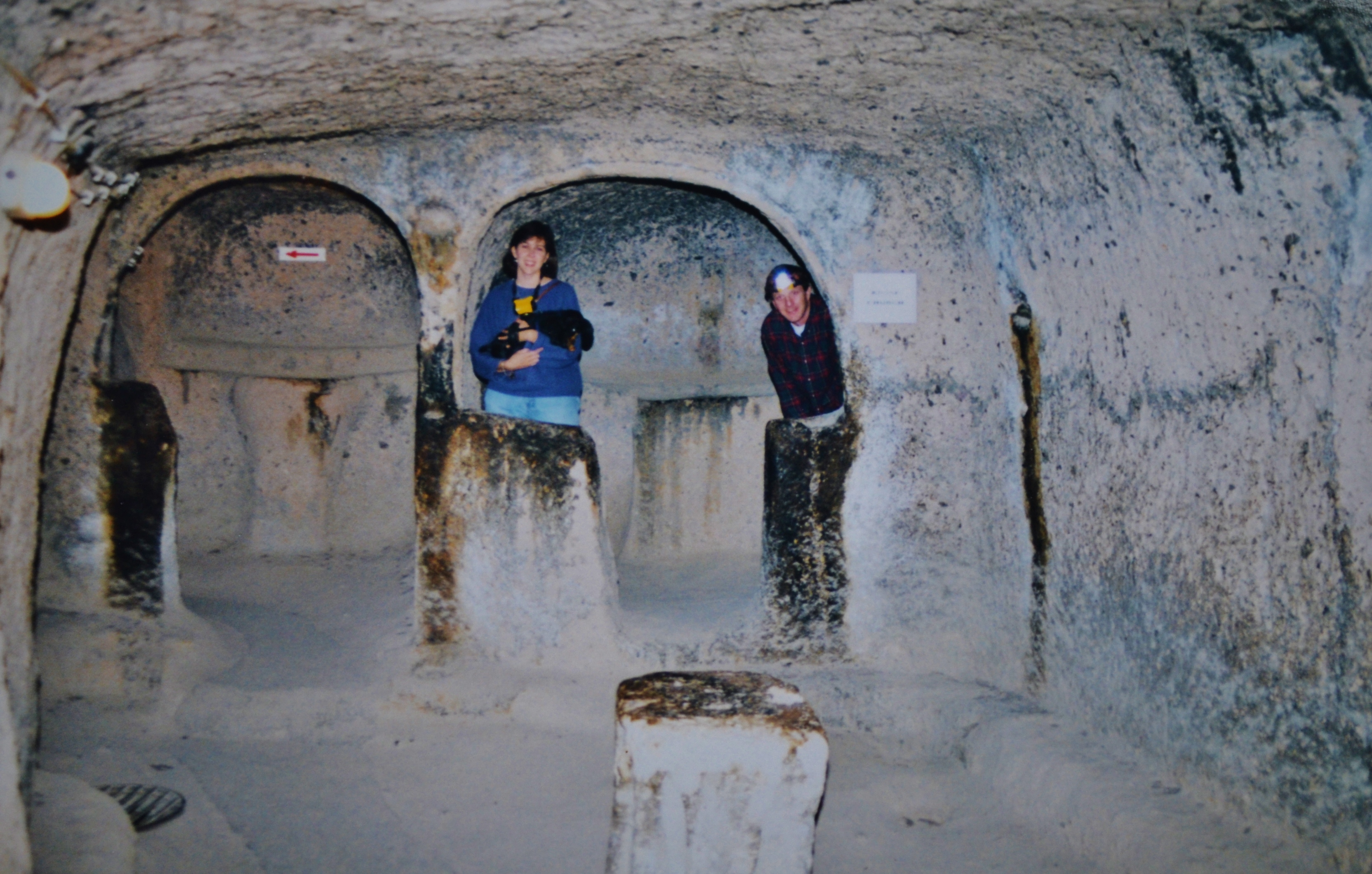
And, if you have enough time in Cappadocia, one last recommendation: visit an underground city.  There are dozens of these sites, and we’ve been to Derinkuyu and Kaymakli.  These cities are ancient rabbit warrens underground,  complete with ventilation shafts and stones that can be rolled to block entrance into any given tunnel–they are advanced and well planned, but may date back to   the Bronze Age,  and were certainly used during the Byzantine period as hiding places during times of religious persecution.
DSC_0654
A puppy in my arms, and a flashlight on my husband’s forehead, while we wander the underground labyrinth.


As feats of ancient engineering, these underground cities are astonishing.  As history lessons, they are sobering.  As an afternoon out. . . they are a pretty good frolick . . . but not recommended for people who are claustrophobic.

I’ve covered a lot of ground at a crazy quick clip here–but it’s a fuzzy Monday, so that’ll have to do until I’ve downed considerably more coffee.

Gule, gule!  (“Bye, bye” in Turkish)
 

Candlemas and Groundhog Day–a belated primer

You and I tend to know February 2nd as Groundhog Day, candlemas riponbut it’s been a festival day for a long time, and its roots go back deep into the calendar of the Christian church, and far deeper still.  The day marks the midpoint between  the winter solstice and the spring equinox, so it’s considered the beginning of spring, or at least (if you live where it is still remarkably cold, like I do) the tipping point where winter and dark begin making way for warmth and light.

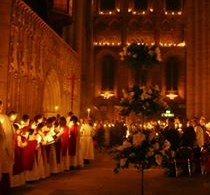
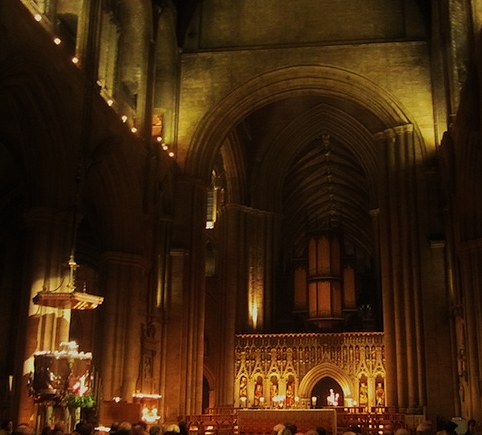
Candlemas is rarely observed in the church these days, but our old hometown of Ripon, England still honors the day.  The cathedral hosts a Candlemas service in the evening, and the cathedral is lit by thousands of candles.  To clarify–it is lit by thousands of candles only.  It is brillliant.  The first time I walked into one of these services, my children in their winter pajamas (they were young, and it was late and cold out), we all gasped and immediately whispered “Harry Potter!”   This is the best way I know to describe the look of the cathedral to a Candlemas novice or a wizard fan–think of Hogwarts’ great hall and its floating candles.  In Ripon Cathedral, the thousands of candles are set around the edges of the ground, in the clerestory ledges, and in every shelf and cubby along those ancient stone walls.  They appear to float and rise.  It’s heady stuff, and it’s one of the most beautiful sights I’ve ever seen.

candlemas 2The Ripon Cathedral website posted the following blurb about Candlemas last year:

Candlemas is one of the most ancient feasts of the Church, and occurs 40 days after Christmas, on the 2nd February. It is also known as the Presentation of Jesus at the Temple, in reference to the episode in Luke’s gospel (2:22-40).
This ancient festival has been celebrated at Ripon for centuries. A visitor to the Cathedral in 1790 declared that the whole building was “one continued blaze of light all afternoon”.
This year, the Cathedral will once again shine with the light of thousands of candles, symbolising Jesus as the light of the world.

It’s good to know that, dark and cold as it still is (whether we are speaking of the weather and season, or of world events), we can look to a tipping point and the hope of spring.   (Even if Punxsutawney Phil is right and the next few weeks will be chill, spring must come some day.)  It is also good to know that, in a world of cultural globalization, where McDonalds is edging its way into every corner, you can still stumble on those few enclaves where something ancient, unusual, and beautiful will make you catch your breath. . . even if you find yourself whispering “Harry Potter” in the aftermath.


TBT: A Lucky Moment at the Tower Bridge, London

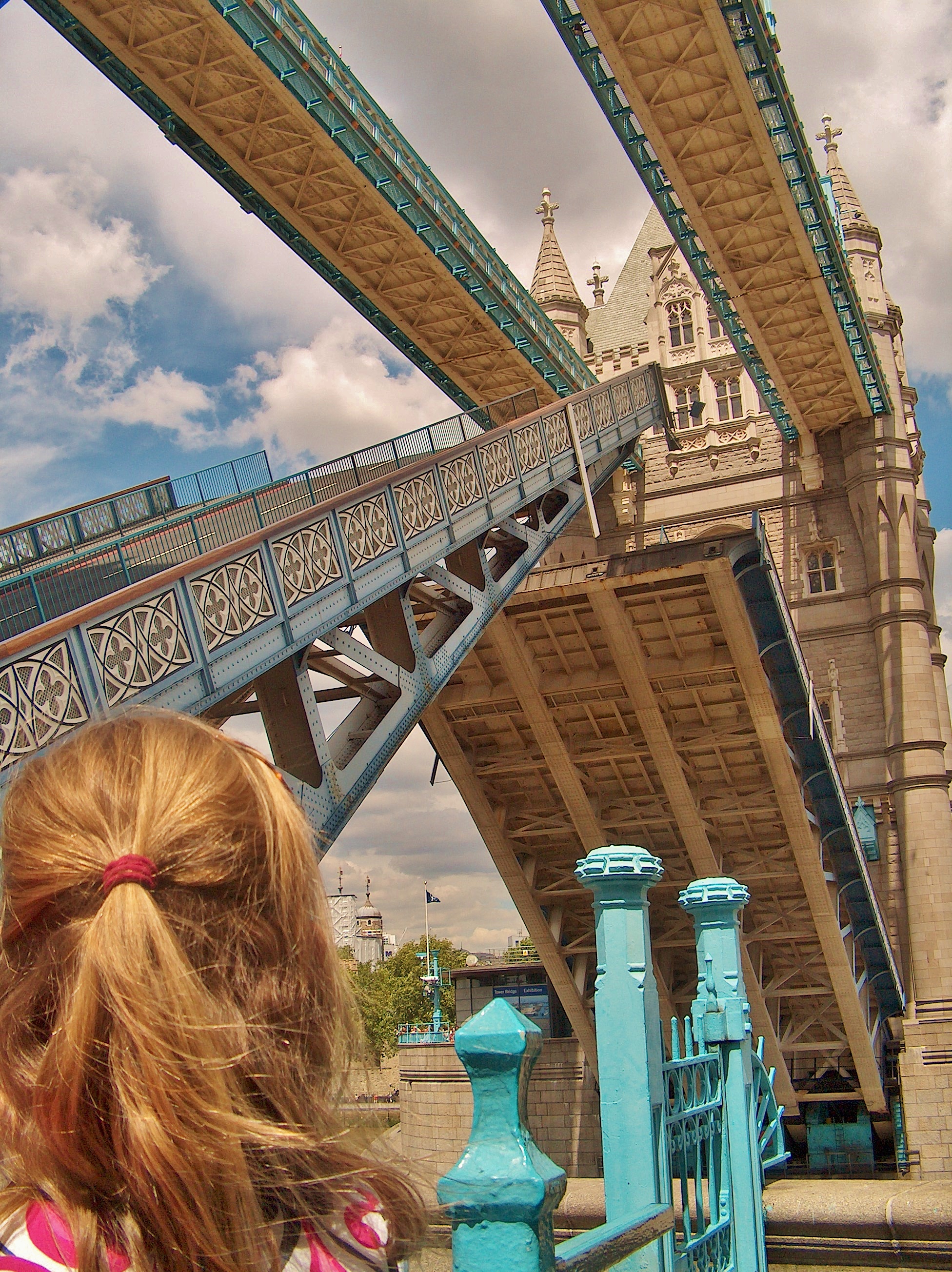
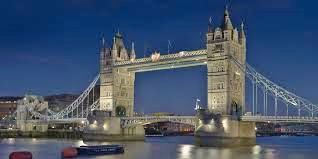
Raising the Bridge: London

Here’s a lucky moment for Throwback Thursday:  the summer of 2008, on the Tower Bridge of London.   They say it brings good luck to witness the bridge opening (it doesn’t happen frequently)–and we were standing right on the bridge for the opening on this gorgeous summer day.

The bridge is iconic, but people often confuse it with “London Bridge”:  Tower Bridge is the visual you get when you think of London bridges, but the London Bridge (actually, a series of bridges over the centuries) originally stood about a mile west of the Tower Bridge. (More importantly, London Bridge continues to stand and fall, over and over and over again, on every children’s playground, everyday, in the Western world.  The origins of that nursery rhyme undoubtedly lay in some historical happening, but that’s a story I haven’t delved into.)

tower bridge wiki commons
Tower Bridge–the view we all know, courtesy Wiki Commons


The Tower Bridge  was opened 1892–at a time when London’s population was growing exponentially and a Thames River crossing bridge that could accomodate more traffic was desperately needed.

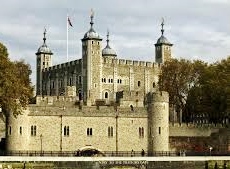
Tower of London
Tower of London

The beauty of the bridge lies in its appearing  to be made of stone–making it the visual twin of the Tower of London (just beyond it, on the shore).  However, the bridge is actually formed of tons (and tons and tons) of steel. After the steel structure was formed,  granite and stone were added to cover the exterior and create the signature look.

So there you go–a little history and a lucky moment.  Happy Thursday!


What’s in a Name? (A Whale of a Tale)

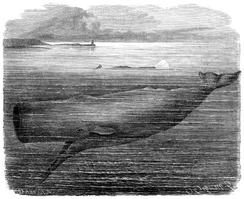
244px-Pottwal_brehm_m

This is a traveler’s tale, believe me.  Just suspend your disbelief for a few minutes, and you’ll see how it all comes around.

“What’s in a name? That which we call a rose
By any other name would smell as sweet.”  –so says Juliet in Shakespeare’s play.

Of course, the Bard is right when it comes to the star crossed lovers of his play, but other times it seems that there is something in a name.  Some hint of the stars, indeed, the trajectories of fate.  I offer up my husband’s family for closer inspection.  (Sorry guys!)

When we had our first child, I dabbled with dozens of name combinations.  I wanted to use family names, especially for my children’s middle names.  As it turned out, both of my kiddoes have middle names that come from my family.   I tried to be fair minded, but a quick look into my husband’s family tree sent me running scared.  The first three names to appear in the foliage of that tree?

Butcher.  (NO thank you.)

Butts.  (Funny, but not for my children.)

Coffin.  (Oh, dear Lord.)

Those names weren’t destined to go down in my family, except anecdotally, as the names which shall NOT go down in my family.

But then. .  .

(That’s where so many stories begin, isn’t it?  “Everything was just fine.   But then…”)

But then I picked up Nathaniel Philbrick’s book  In the Heart of the Sea: The Tragedy of the Whaleship Essex.  I picked it up because I’d loved his book Mayflower and I looked forward to hearing his voice again; I didn’t have any particular love of sea-faring tales.  But what a crazy tale opened up to me when I opened Philbrick’s book.  His story of the tragic wreck of the Whaleship Essex was a tale I already knew, in some measure, from  Moby Dick, Herman Melville’s long winded but brilliant tale of mania, fate, superstition, life and death, good and evil: the motherload of English Department themes.

????????????????????????????????????????????????????????????????????????????
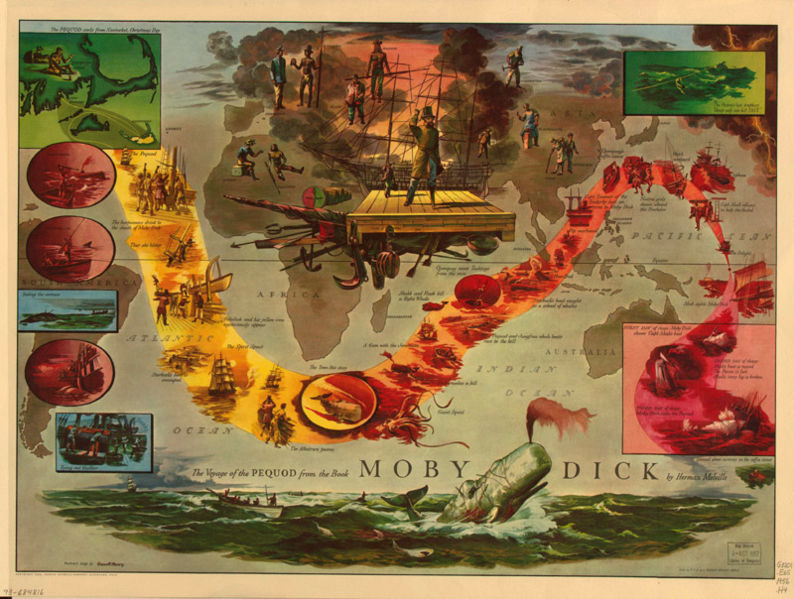
The Voyage of the Pequod,” illustrated by Everett Henry (Wikimedia Commons

Who knew that Melville had founded his story in the circumstances of an actual whaleship–The Essex–that had been sunk by an angry whale?  And the wreck of the Essex both fascinates and horrifies not only in the circumstances of the wreck, but even more in the horrifying tale of survival, and attempted survival, of her crew.

The Essex was small, but she was known as a lucky, profitable ship when she left Nantucket in 1819.   Her voyage to the west coast of South America would take over two years, and things got rough for this lucky ship even in the first week of the voyage.  A squall hit and the ship was damaged.  But that was just the beginning.  By November of 1820, her luck ran out entirely.

I’d love to recount the entire story for you here, because it is horrifying and fascinating all at once, but Philbrick tells it best, and a blog post isn’t the right vehicle for an epic tale.  (Yes, I hear you thanking me.)  The half penny version is that the crew members were afloat in three small boats, with little water or food (much of which became salt-soaked and only increased their thirst).  They were about 2,000 miles off of the South American coast at the time.    The boats were separated in a squall.  Starvation and dissociative madness ensued, and death picked them off one by one.

Nearly 100 days after the Whaleship Essex sank, the very few survivors (about 5 men) were rescued.

The Essex had started out with 21 men.  She had started out a lucky ship.  Her journey took an awful turn.  But also an awe-full turn.

That turn went like this:

1-The first mate, Owen Chase, was one of the survivors, and he wrote an account of the tragedy: The Wreck of the Whaleship Essex.

2- That account fell into the hands of Herman Melville while he was at sea on a whaling voyage.  In fact, legend has it that Melville met Owen Chase’s son on that voyage.  Chase reportedly gave Melville a copy of his father’s story.

3- Melville’s copy of the story indicates his deep connection with the surviving Essex men, as he scribbled in the pages, “Met Captain Pollard [who had captained the Essex] on Nantucket. To most islanders a nobody. To me, one of the most extraordinary men I have ever met.”

And so the story of the Essex has lived on in American literary culture–in spirit, if not in detail-for-detail fact.

But why do I offer it up here?  Because the Whaleship Essex was carrying a young boy named Owen Coffin.  Yes, Coffin:  one of the leaves in the foliage of my husband’s family tree.*  And one of the most gruesome, but absolutely necessary, links in bringing you the tale of the Essex and the novel Moby Dick. Without Owen Coffin, Captain Pollard and another boatmate would not have survived.

In the most desperate last days of their desperate ordeal, the men of the Essex survived only by resorting to cannibalism.  Disturbing enough that they had to cannibalize their dead shipmates, but in the final days they resorted, just this once,  to “drawing straws” to make the ultimate sacrifice.  One of their own would be killed to save the others.  Owen Coffin drew a bad lot.

Well, what is in a name, indeed?

I don’t regret bypassing the gloomy monicker for my own children, but then. . .

I also thrill to this odd link to American history –both in the Essex and in Melville’s near-Biblical tale of struggle and mania and survival.

I’ve traveled an awful lot of roads in life, in a journey not only over geographic terrain, but over cultural and temporal peaks as well–that’s the nature of our lives’ stories.  So if my children’s stories reach back to a heritage that includes Owen Coffin’s tale–Owen Coffin’s horrible, gruesome, but somehow resilient tale (in the survival of Chase and under the pen of Melville)–then I am thrilled.

It’s a very long view of the journey, isn’t it?

Owen Coffin suffered a horrible fate.

But Owen Chase lived to tell.

And he told Herman Melville, whose book bombed in his own  time .  . .

But became a classic of literature in the 20th century.

And I scoffed at the name Coffin. . . only to find that I admire it more than I could have imagined.

As we travelers always say,  “What a long, strange trip it’s been.”

*My husband’s ancestor left Nantucket for the coast of Canada in the years following the American Revolution.  It’s not clear whether he was also a whaler, but he may have been a loyalist in the King’s Navy during the war.