Ripon

Ripon–you’ve heard the name on Downton Abbey.  It’s a beautiful, small market city in North Yorkshire, England, and it was my home for four fabulous years.
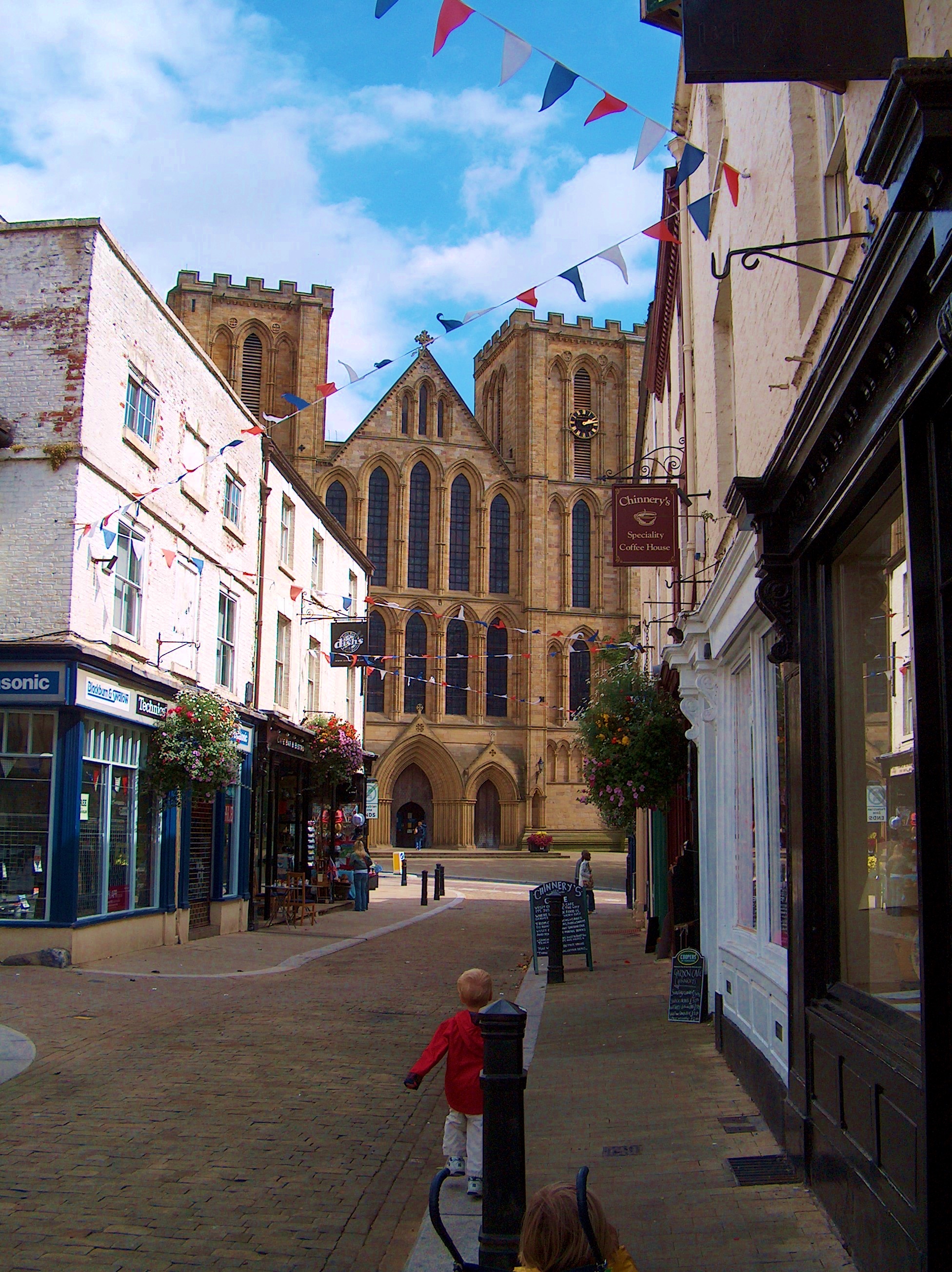
HPIM0434a
Walking down Kirkgate toward the cathedral.

I’ve found myself backing up old photos this week, and feeling nostalgic about life in Ripon.  It was ideal.  My children were young and came to believe that they were actually Brits, accent and all.  They attended British school, we spent our days in beautiful environs and living with a decidedly British/European sensability.  We walked to school, to swim lessons, to church, to the grocery store; through rain, through snow, through days of unending summer sun or unending winter dark.    We walked a few blocks out our front door in one direction, and we were in the market square; another direction, and we were in sheep pastures; yet another direction, and we walked the river banks.  We enjoyed Michaelmas and Bonfire Night in the autumn, Candelmas in February, and Shakespeare performances outdoors all summer.
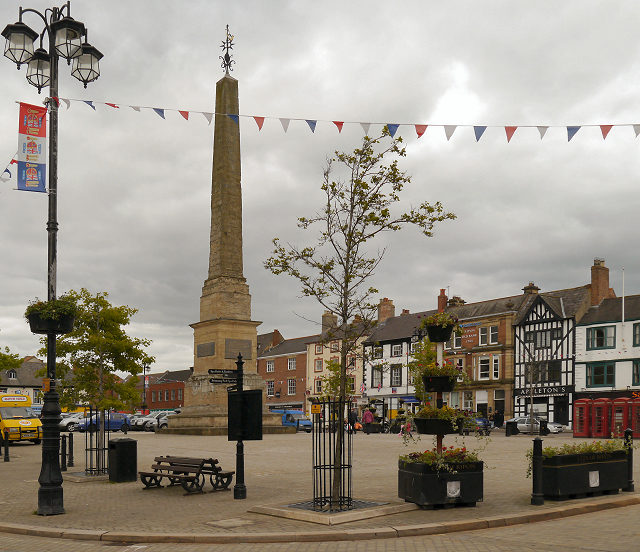
Ripon Market Square, Copyright David Dixon and licensed for reuse under Creative Commons Licence.
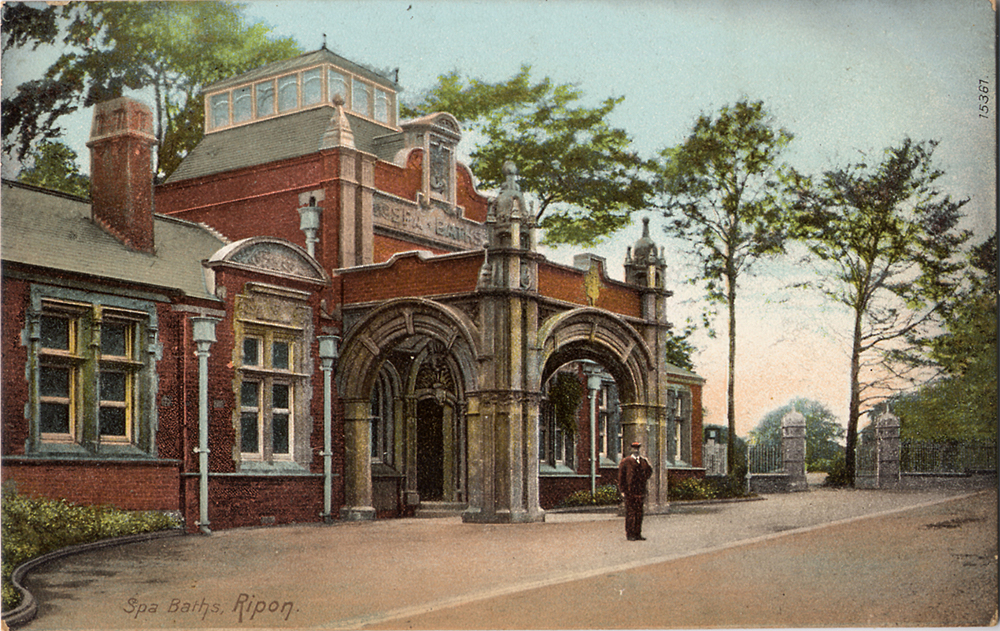
Ripon Spa, where my children swam, and still largely unchanged a few years ago.
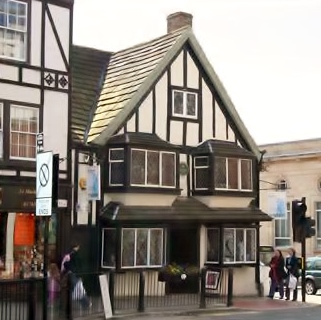
Wakeman's House
Wakeman’s House

As a home base, Ripon was lovely.  I think she’s equally engaging for the passer-through too. The market square is the center of town–literally and figuratively–and  Daniel Defoe called it  “the finest and most beautiful square that is to be seen of its kind in England.”  If you go on market day, the space is bustling.  You might enjoy coffee and scones at one corner of the square, in the old Wakeman’s House (which, I hope, still houses a tearoom. . .and possibly a ghost).  The cafe there is fabulous, and the house is a landmark dating back to the 14th century, and once belonging to the last “wakeman” of Ripon.   The wakeman set the town watch at night, meaning that he was the watchman, entrusted to keep the town safe from villians and marauders.

Ripon still observes  the Wakeman’s Ceremony (dating back to 866).  Each night at 9 pm, the town Wakeman strides to the center of the market square (by the obelisk) and blows his horn to let the people know that the night watchman
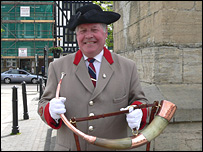
George Pickles, the Wakeman, photo courtesy of the BBC

is on duty to keep them safe. Of course, the town’s safety is in the hands of its police these days, but George Pickles, who performed Wakeman duties and set the watch while we lived there (and may still) did a fabulous job keeping the tradition alive and speaking with townspeople and tourists about the history of Ripon.

There is certainly history in abundance on show at the cathedral.  The crypt dates back  to the 7th century, and the cathedral to the 1100’s;  the misericord carvings are said to have inspired Louis Carroll and Alice in Wonderland; and it’s one of the few places on earth that still celebrates Candlemas on February 2nd (thousands of candles, and candles only, light the cathedral to celebrate the purification of Mary, and also the halfway point between the winter solstice and the spring equinox–you know this day as Groundhog’s Day!).

Ripon Cathedral
Ripon Cathedral


If you ever find yourself in N. Yorkshire, near Harrogate, give Ripon a look.  The walks are beautiful, the Workhouse Museum and Police Museums are interesting, and the people are fabulous.  For pubs, I recommend The One Eyed Rat and The Water Rat.  For dining, The Royal Oak, Lockwoods, and Balti House (right there on Kirkgate by the cathedral).   I also recommend that you take me with you.  Ahhh, I miss Ripon some days.  .  .
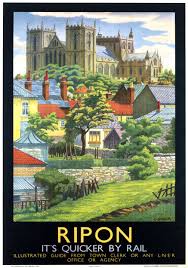
 

ripon poster

What’s in a Name? (A Whale of a Tale)

244px-Pottwal_brehm_m

This is a traveler’s tale, believe me.  Just suspend your disbelief for a few minutes, and you’ll see how it all comes around.

“What’s in a name? That which we call a rose
By any other name would smell as sweet.”  –so says Juliet in Shakespeare’s play.

Of course, the Bard is right when it comes to the star crossed lovers of his play, but other times it seems that there is something in a name.  Some hint of the stars, indeed, the trajectories of fate.  I offer up my husband’s family for closer inspection.  (Sorry guys!)

When we had our first child, I dabbled with dozens of name combinations.  I wanted to use family names, especially for my children’s middle names.  As it turned out, both of my kiddoes have middle names that come from my family.   I tried to be fair minded, but a quick look into my husband’s family tree sent me running scared.  The first three names to appear in the foliage of that tree?

Butcher.  (NO thank you.)

Butts.  (Funny, but not for my children.)

Coffin.  (Oh, dear Lord.)

Those names weren’t destined to go down in my family, except anecdotally, as the names which shall NOT go down in my family.

But then. .  .

(That’s where so many stories begin, isn’t it?  “Everything was just fine.   But then…”)

But then I picked up Nathaniel Philbrick’s book  In the Heart of the Sea: The Tragedy of the Whaleship Essex.  I picked it up because I’d loved his book Mayflower and I looked forward to hearing his voice again; I didn’t have any particular love of sea-faring tales.  But what a crazy tale opened up to me when I opened Philbrick’s book.  His story of the tragic wreck of the Whaleship Essex was a tale I already knew, in some measure, from  Moby Dick, Herman Melville’s long winded but brilliant tale of mania, fate, superstition, life and death, good and evil: the motherload of English Department themes.

????????????????????????????????????????????????????????????????????????????
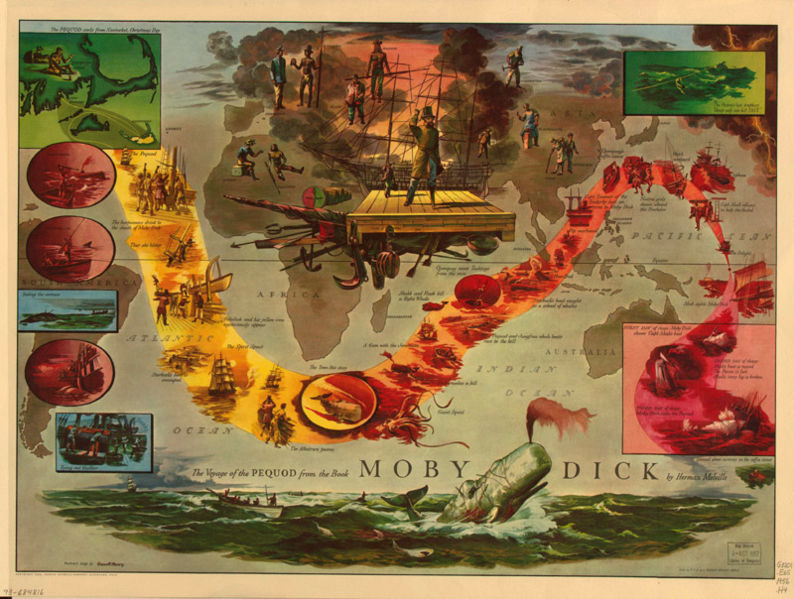
The Voyage of the Pequod,” illustrated by Everett Henry (Wikimedia Commons

Who knew that Melville had founded his story in the circumstances of an actual whaleship–The Essex–that had been sunk by an angry whale?  And the wreck of the Essex both fascinates and horrifies not only in the circumstances of the wreck, but even more in the horrifying tale of survival, and attempted survival, of her crew.

The Essex was small, but she was known as a lucky, profitable ship when she left Nantucket in 1819.   Her voyage to the west coast of South America would take over two years, and things got rough for this lucky ship even in the first week of the voyage.  A squall hit and the ship was damaged.  But that was just the beginning.  By November of 1820, her luck ran out entirely.

I’d love to recount the entire story for you here, because it is horrifying and fascinating all at once, but Philbrick tells it best, and a blog post isn’t the right vehicle for an epic tale.  (Yes, I hear you thanking me.)  The half penny version is that the crew members were afloat in three small boats, with little water or food (much of which became salt-soaked and only increased their thirst).  They were about 2,000 miles off of the South American coast at the time.    The boats were separated in a squall.  Starvation and dissociative madness ensued, and death picked them off one by one.

Nearly 100 days after the Whaleship Essex sank, the very few survivors (about 5 men) were rescued.

The Essex had started out with 21 men.  She had started out a lucky ship.  Her journey took an awful turn.  But also an awe-full turn.

That turn went like this:

1-The first mate, Owen Chase, was one of the survivors, and he wrote an account of the tragedy: The Wreck of the Whaleship Essex.

2- That account fell into the hands of Herman Melville while he was at sea on a whaling voyage.  In fact, legend has it that Melville met Owen Chase’s son on that voyage.  Chase reportedly gave Melville a copy of his father’s story.

3- Melville’s copy of the story indicates his deep connection with the surviving Essex men, as he scribbled in the pages, “Met Captain Pollard [who had captained the Essex] on Nantucket. To most islanders a nobody. To me, one of the most extraordinary men I have ever met.”

And so the story of the Essex has lived on in American literary culture–in spirit, if not in detail-for-detail fact.

But why do I offer it up here?  Because the Whaleship Essex was carrying a young boy named Owen Coffin.  Yes, Coffin:  one of the leaves in the foliage of my husband’s family tree.*  And one of the most gruesome, but absolutely necessary, links in bringing you the tale of the Essex and the novel Moby Dick. Without Owen Coffin, Captain Pollard and another boatmate would not have survived.

In the most desperate last days of their desperate ordeal, the men of the Essex survived only by resorting to cannibalism.  Disturbing enough that they had to cannibalize their dead shipmates, but in the final days they resorted, just this once,  to “drawing straws” to make the ultimate sacrifice.  One of their own would be killed to save the others.  Owen Coffin drew a bad lot.

Well, what is in a name, indeed?

I don’t regret bypassing the gloomy monicker for my own children, but then. . .

I also thrill to this odd link to American history –both in the Essex and in Melville’s near-Biblical tale of struggle and mania and survival.

I’ve traveled an awful lot of roads in life, in a journey not only over geographic terrain, but over cultural and temporal peaks as well–that’s the nature of our lives’ stories.  So if my children’s stories reach back to a heritage that includes Owen Coffin’s tale–Owen Coffin’s horrible, gruesome, but somehow resilient tale (in the survival of Chase and under the pen of Melville)–then I am thrilled.

It’s a very long view of the journey, isn’t it?

Owen Coffin suffered a horrible fate.

But Owen Chase lived to tell.

And he told Herman Melville, whose book bombed in his own  time .  . .

But became a classic of literature in the 20th century.

And I scoffed at the name Coffin. . . only to find that I admire it more than I could have imagined.

As we travelers always say,  “What a long, strange trip it’s been.”

*My husband’s ancestor left Nantucket for the coast of Canada in the years following the American Revolution.  It’s not clear whether he was also a whaler, but he may have been a loyalist in the King’s Navy during the war.

Die Heilige Drei Konige/The Holy Three Kings (January 6th, Epiphany)

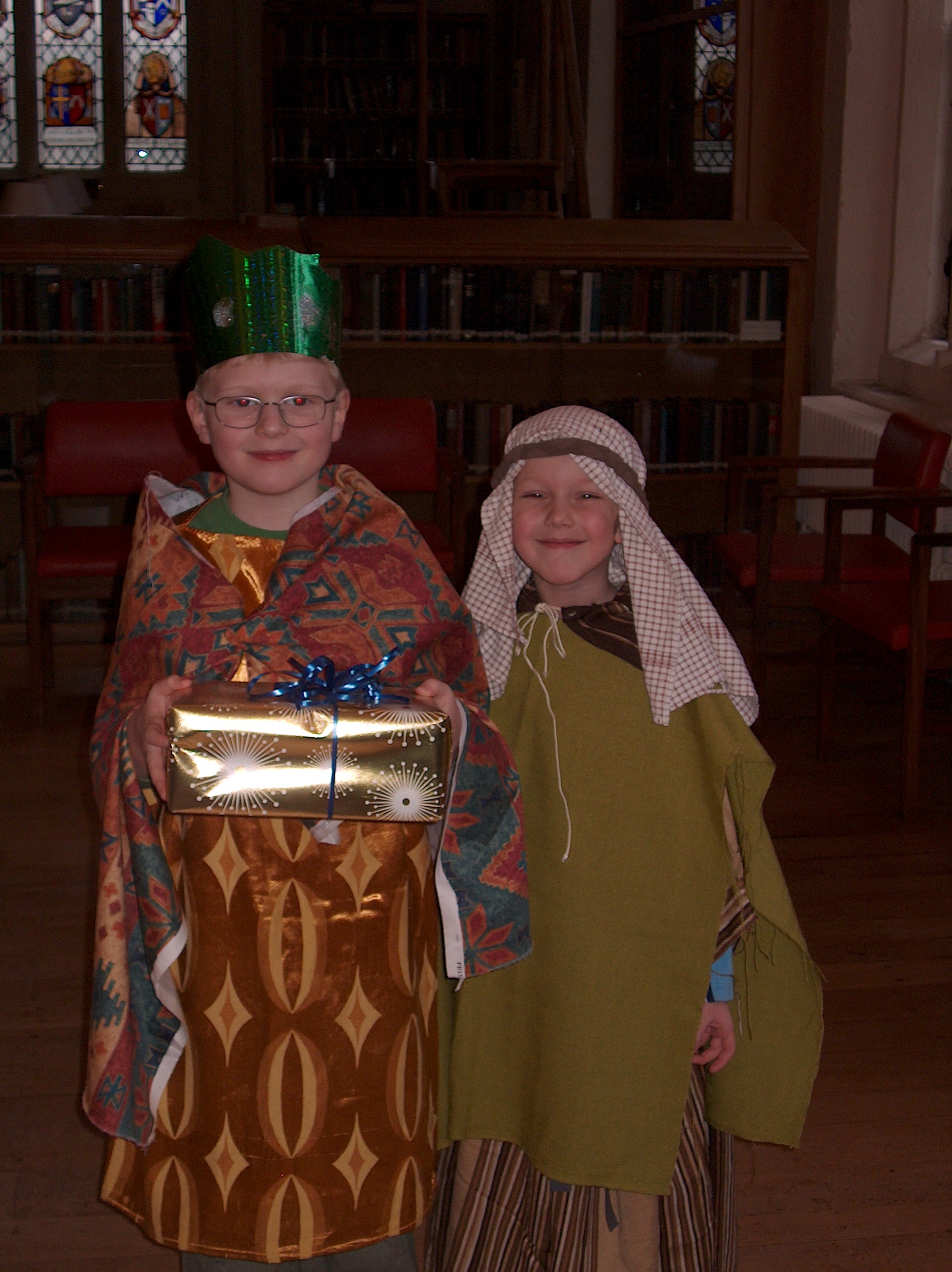
Ein Konig und ein Hirte-- a wise king and a shepherd at Ripon Cathedral some years ago (2008?)
Ein Konig und ein Hirte– a wise king and a shepherd at Ripon Cathedral some years ago (2008?)

The Three Wise Men, The Three Saintly Kings.   They came to visit me today.  Sort of.

Actually, they stood in the street and looked forlorn, so I went out to speak to them.

I had been told they might be coming.  To knock on my door, and to bless my house in observation of Epiphany on January 6th.  We Americans take little notice of Epiphany (and the 12 days of Christmas that span from Christmas day until Epiphany), but in Europe it is still heartily observed.

Let me give you a tiny primer on the Heilige Drei Konige (the holy three kings) in Germany before I tell you more about my personal experience.  According to the “German Words Explained” website,

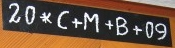
On this day, groups of children known as Sternsinger go from door to door and sing a song or recite a poem or prayer. They then write in chalk above the door C+B+M and the number of the year with three crosses, eg. 20*C+M+B+08. These letters stand for the latin phrase Christus mansionem benedicat, meaning “God protect this house”.

The Sternsinger also collect donations for childrens’ charities.  drei helige konige

I assume that the C + M + B also stands for the Three Kings (Melchior, Caspar and Balthazar).  When we first moved here, I noticed these chalk markings above so many doors–letters and numbers.  I’d decided that it must have to do with a municipal code, but finally asked someone about it.  How fabulous to learn that it was a blessing and not a municipal code–much nicer!  I was looking forward to a visit when Epiphany rolled around.

And so the three anticipated guests showed up today.  My husband, daughter, and I were standing in our kitchen, contemplating lunch, when three teenagers appeared outside our window.  They stared at us, we stared at them.  Then we, my family, stared at each other, wondering what we were supposed to do.  We had no idea, so we stared back at them again, wondering what they were supposed to do.

This will sound strange and uncomfortable to you Southerners, but,believe me, it’s acceptable in Germany.  Encouraged, even.  When we first arrived, we waved at neighbors and smiled broadly.  They stared. . .then scowled if our idiotic grinning and waving continued.  It was clear that we were committing a faux pas, but old habits die hard.  Finally, months into our life here, I asked a German friend about this.  “Oh no!” he said, “Do NOT wave.  We just don’t do that.  It is strange.”  He continued, “You may tip your head if you must, but just understand that they are just looking. It’s normal; they are trying to see if they know you.”

I immediately stopped waving at people.  My neighbors stopped scowling, for the most part.  Now we just stare at each other.  It still feels weird, but you get used to that feeling when you aren’t on your home turf.  Weird is the new normal.

But back to the Kings loitering outside my window.  They were three teenagers, recognizable as the kings only when two of them dropped their cell phones into their pockets and the third shifted her body to reveal a staff topped with a star in her hand.  Another had some sort of wooden box.

“Oh!” I said, “I know who they are!!  The Heilige Konige! The Wise Men!”  I was so excited to have them visit our house!

But they just stood and stared.

Then they moved a few feet, so that they were blocked from view by  a hedge.  Were they regrouping before bursting into song?

Apparently not.

So I asked my husband to walk out and see if we were supposed to invite them in or something.  He retorted, “YOU are the one who speaks German.”  Two things worth noting here:  1 -clearly, he was a little wary of these sketchy wise guys, and 2-nothing that comes out of my mouth is recognizable as German, try as I might.

“Okay,” I said, “give me some money for the Kings.”

So, armed with some Euros and sketchy language skills, I rounded the hedge and approached the kings.

Can we pause the story here and just consider that last sentence?  It has promise, doesn’t it?  Sounds like the beginning of an epic tale or a heartwarming Christmas story.  Yes, it has promise.

And then I said, “Die Heilige Drei Konige?”    “Ja,” they said.   Yes!  Great!  But the surly youth didn’t burst into song or emit a holy aura, or do anything else but stare.

“Sind Sie…fuss…the neighborhood?”  I said.   One king put his cell phone back up to his ear, and the other two looked at each other and then said, “Ja?” but with the emphasis on the question mark.  “Fur Epiphany…und…charity?” I asked, adding “meine Deutsch ist nicht sehr gut!” with an apologetic look.  (“My German is not very good.”)

We fumbled around for a moment.  They never burst into song, and wise man #3 kept to himself and his cell phone, but we did manage to establish that wise man #2’s wooden box was for 3rd world charity donations.  I handed them my money and wished them a lovely day in passable German.

That was all.

It wasn’t what I’d pictured happening when the Heilige Konige came to visit.

Maybe it was the cold rain and snow mix falling on our shoulders that kept them from a more leisurely visit? Understandable.

Maybe it was the fact that they were three teenage kings instead of truly holy kings, carrying cell phones instead of chalk, and that’s okay too.  The Kingdom of Teenage plays by mysterious rules.

Or maybe it was my German-English (Germglish) that drove them quickly from my door.  Germglish tends to do that.

So, the visit wasn’t what I expected . . .but I can get over that.  I saw the Heilige Drei Konige; they visited my house.  That ain’t bad  for a rainy afternoon.


Saints and Devils, Fire and Snow

st nick kramp cookie cut jazzup

You need only scratch the surface of modern Europe to see the pulsing of its medieval veins.  This can be a little unnerving, but it’s also deeply gratifying in a way that’s hard to pin down.

Take Christmas traditions as an example.  In America, we embrace a jovial, generous Santa Claus (who, for all of his good character points, does seem to team up with Coca Cola, Hollywood, and the rest of the commercial establishment a little too often for comfort).  He surrounds himself with other agreeable characters– Rudolph and Frosty–and they have a jolly time.  Sure, adversity must be overcome, but their stories never really cross to the dark side.

Would you like a little saccharin with that sweet?

krampus st nick victorian postcard
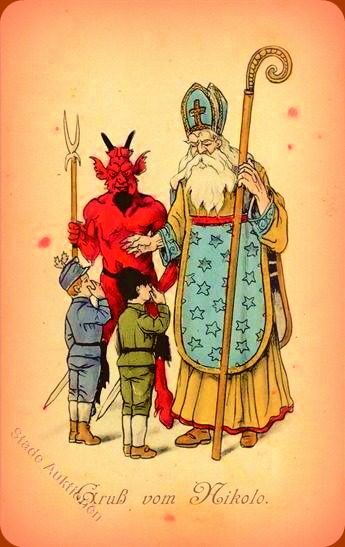
Looks like St. Nick brought his scary friend. (Krampus and St. Nick on a vintage postcard)

Not so in Germany and Austria.  Oh, they’ll serve you sweets at each turn this time of year, but you’re never quite sure what they are fattening you up for.  You might cheer your good fortune at stumbling upon a kind old lady in a gingerbread house!  You might anticipate a visit from St. Nicholas on December 6th (Nikolaustag) with unbridled joy!   But wait.  What if the good fortune is not what it appears?

Because sometimes it’s not.

Sometimes, you walk into a Salzburg sweet store in late November to see this: 2_Milka_Nikolo_16Bg_dd.inddSt. Nicholas in all of his chocolatey goodness.

But the next thing your eyes fall upon is this:

2_Milka_Krampus_16Bg_dd.indd

Holy camole!  What’s that all about?   Well, simply put, you are in the Old World now, the land of the Brothers Grimm, where every light casts a shadow.

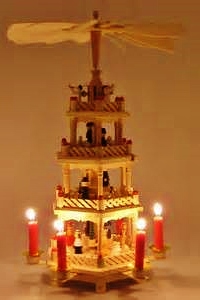
candle pyramidYes, there’s always a dark underbelly in Germany.  For each saint, there’s a devil; for each sweet, there’s a reckoning; for each life, there’s a death.  Each candle-strewn Christmas pyramid holds back the dark of a frozen winter, and each yin has its yang.

Many unlucky children have found themselves, not on Santa’s lap, but staring down a devil named Krampus. (You just met his likeness in foil-covered chocolate, above.)   A demon who, at best, humiliated children with twigs instead of candy at Christmas. At worse, beat them heartily with those switches.  And at worst, dragged them down to Hell.  (Well, they had been naughty, you know.)

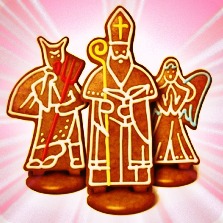
This is stern stuff.  A little shocking to those of us raised on Miracle on 34th Street or T’was the Night Before Christmas.  Well, my friends . . .welcome to Middle Europe, where St. Nick is often accompanied by a sinister sidekick: Krampus, Knecht Ruprecht, or Schwarz Peter.   Krampus is horned and devilish, Knecht Ruprecht and Schwarz Peter are more recognizably human, but sooty, uninviting, and coal and switch-laden.     (Whether this surly sidekick is malevolent or simply mischievous is entirely dependent upon whose hands he is in. . . or possibly on how naughty the child has been.)

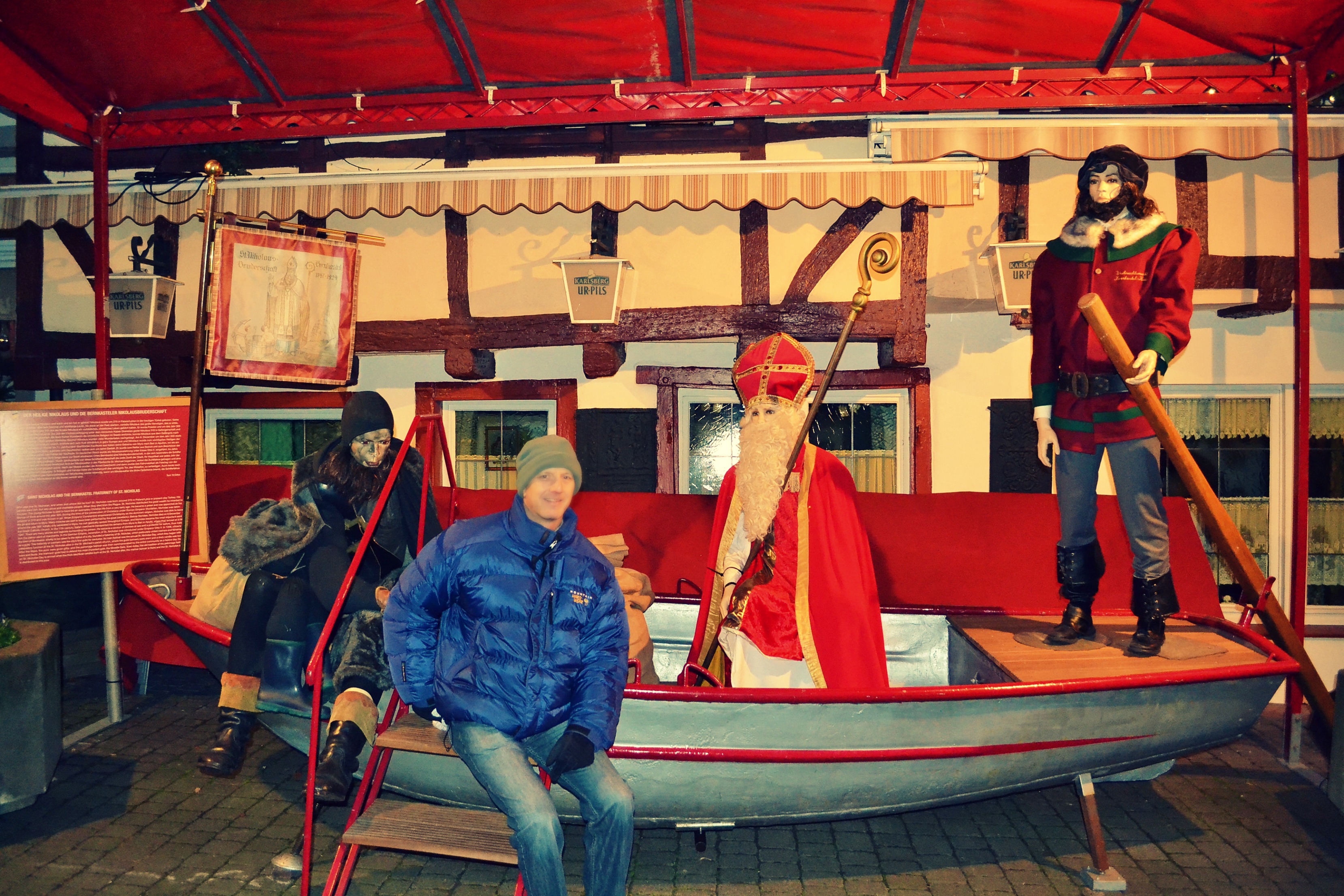
Our first run in with Krampus was in that sweets store in Salzburg, but last weekend we ran into him again–this time at the Christkindlmarkt at Bernkastel-Kues.  His boat was parked among the market stalls.

St. Niklaus and Knecht Ruprecht--sit between them.  Were you naughty or nice this year?
St. Niklaus and Knecht Ruprecht–sit between them. Were you naughty or nice this year?

I’m not sure what the boat motif is all about.  We were on the Mosel River…but my sister has (rightly) suggested that this looks more like something from the River Styx, where the ferryman will guide you to the afterlife…right after St. Nick and Knecht Ruprecht decide your fate!!  Oh, and Merry Christmas!

December 2008 at The Black Sheep Brewery, N. Yorkshire, England

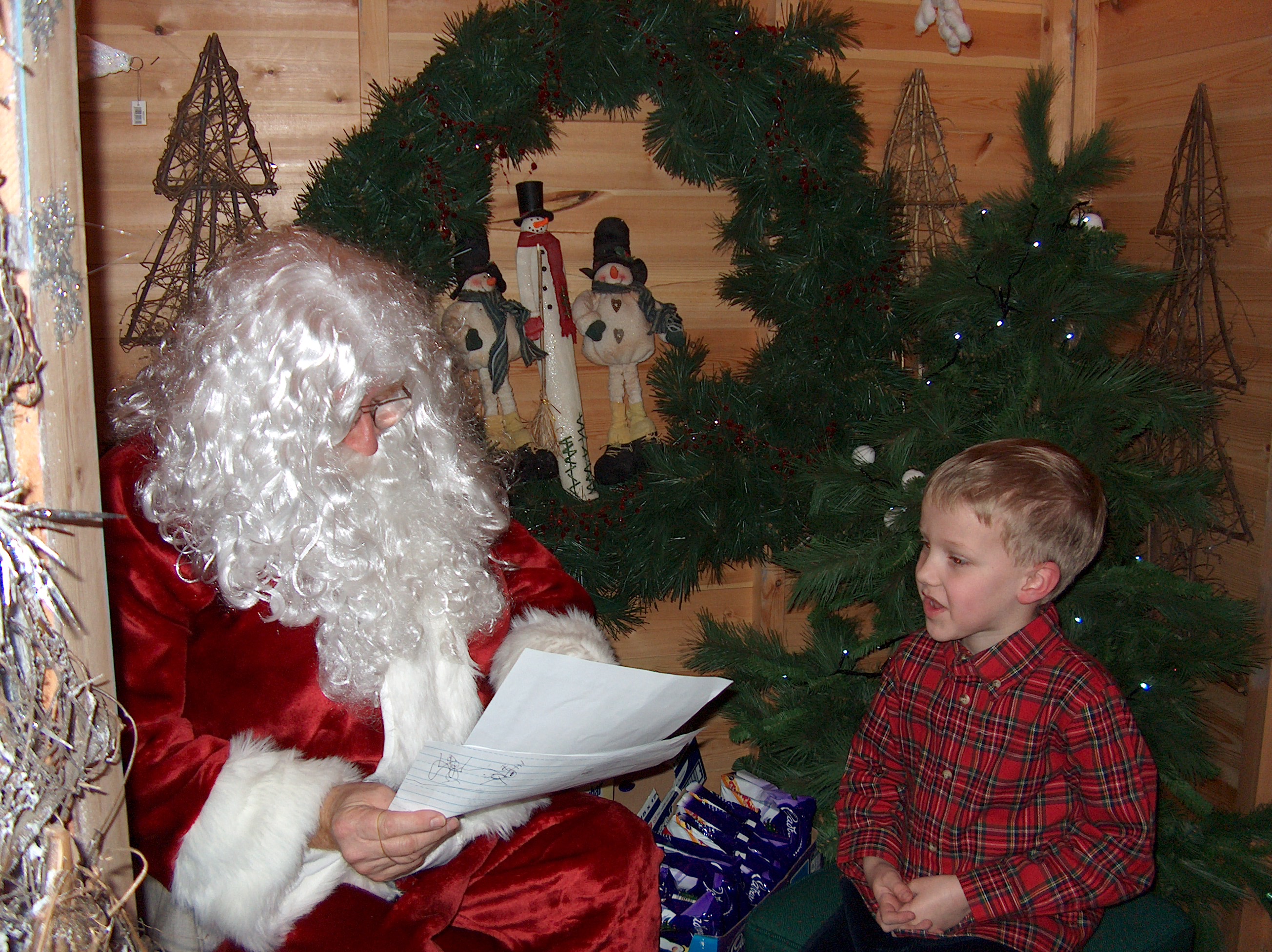
We laughed about this, but for those of us   who remember Santa as all love and no menace, this is jarring.   Our “Christmas judgment” was always at the hands of this guy:

He was rumpled and happy, and he smelled of candy canes.  If we got tongue tied, it was only because we were overcome by his largess.   It was never because we feared for our very souls.

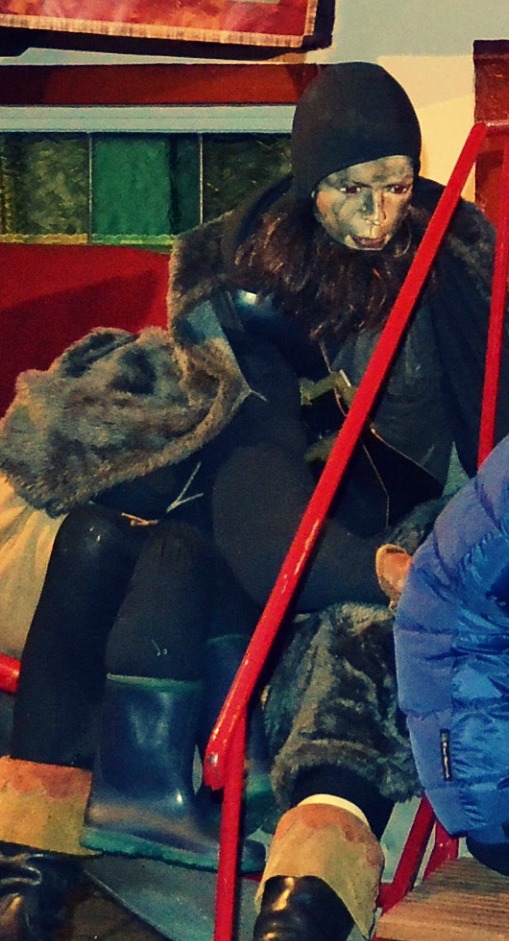
Honestly, if I had found myself, at age six, sitting between St. Nicholas in his starchy Pope’s hat and some vaguely human entity who looked like this

Is that a sack of coal?

swarthy vagrant. . . well. . .

Well?

Hmmmm. . . I don’t know how that would have worked out.  I certainly wouldn’t have produced a long list of “things I’d like for Christmas, because I want them, or I need them, or I saw them in the Sears Wish Book, or the Saturday morning commercial looked awesome, or Sarah’s best friend Suzy has one and I want one too!”

And so, it occurs to me that all German and Austrian children must be really, really, very, very good at Christmas time.  And very undemanding.

And very scared.

Good thing they get to stave off the dark and deadly cold of the season by going home and lighting candles on those   popular German Christmas pyramids and candle arches, and by hanging glowing Moravian stars all over the house.  You certainly need all the light you can get when Krampus is skulking around outside in the dark streets.

It’s the German way–an austere world view, gilded around the edges with gingerbread and chocolates.   The devil will always lurk in the shadow of the saint; the dark and cold will always stand sentry at the edge of the firelight. . .but if you are well behaved and diligent, you may just hold the dark at bay for a while.

So, I’ll leave you with a holiday toast: eat, drink, and be merry. . .for tomorrow, you may meet Krampus.

*Check out the video A Krampus Carol by Anthony Bourdain on Youtube, if you want a slightly disturbing holiday laugh.  And, yes, the girl does appear to get carried “to Hell in a handbasket.”  Nothing says Merry Christmas like that!

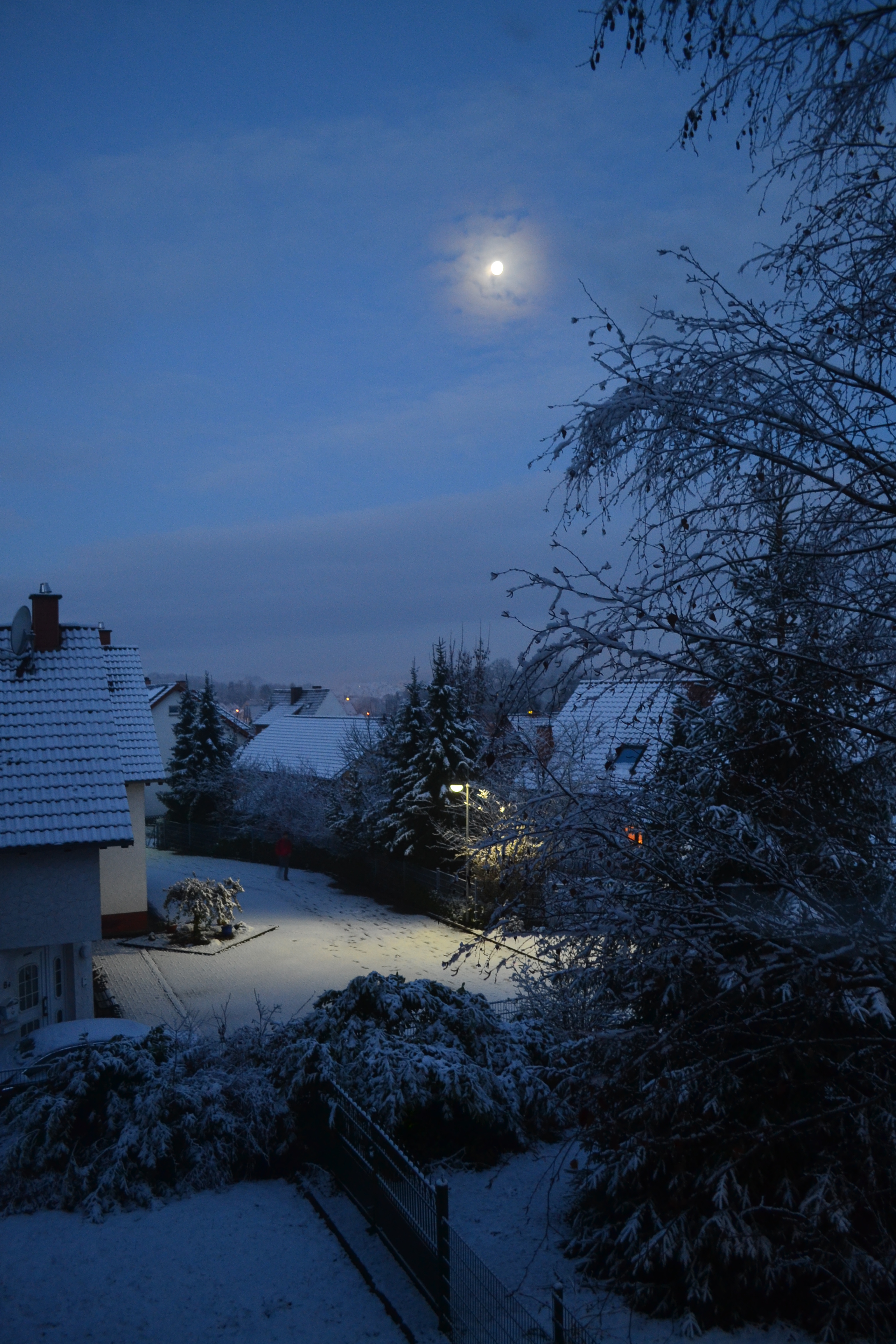
Lucky me--the dark and cold outside my window this morning was more picturesque than menacing.
Lucky me–the dark and cold outside my window this morning was more picturesque than menacing.

 *One, final, note: this dynamic duo of St. Nick and Krampus seems to own the holiday of Nikolaustag (Nikolaus Day and Eve, December 5th and 6th).  After that, Weihnachtsman, Kris Kringle, Santa, the Christ child (Christkind), or some other regional “santa” takes center stage for Christmas.  I can’t say that I understand these myriad traditions yet…but maybe I can shed more light on this by next Christmas.

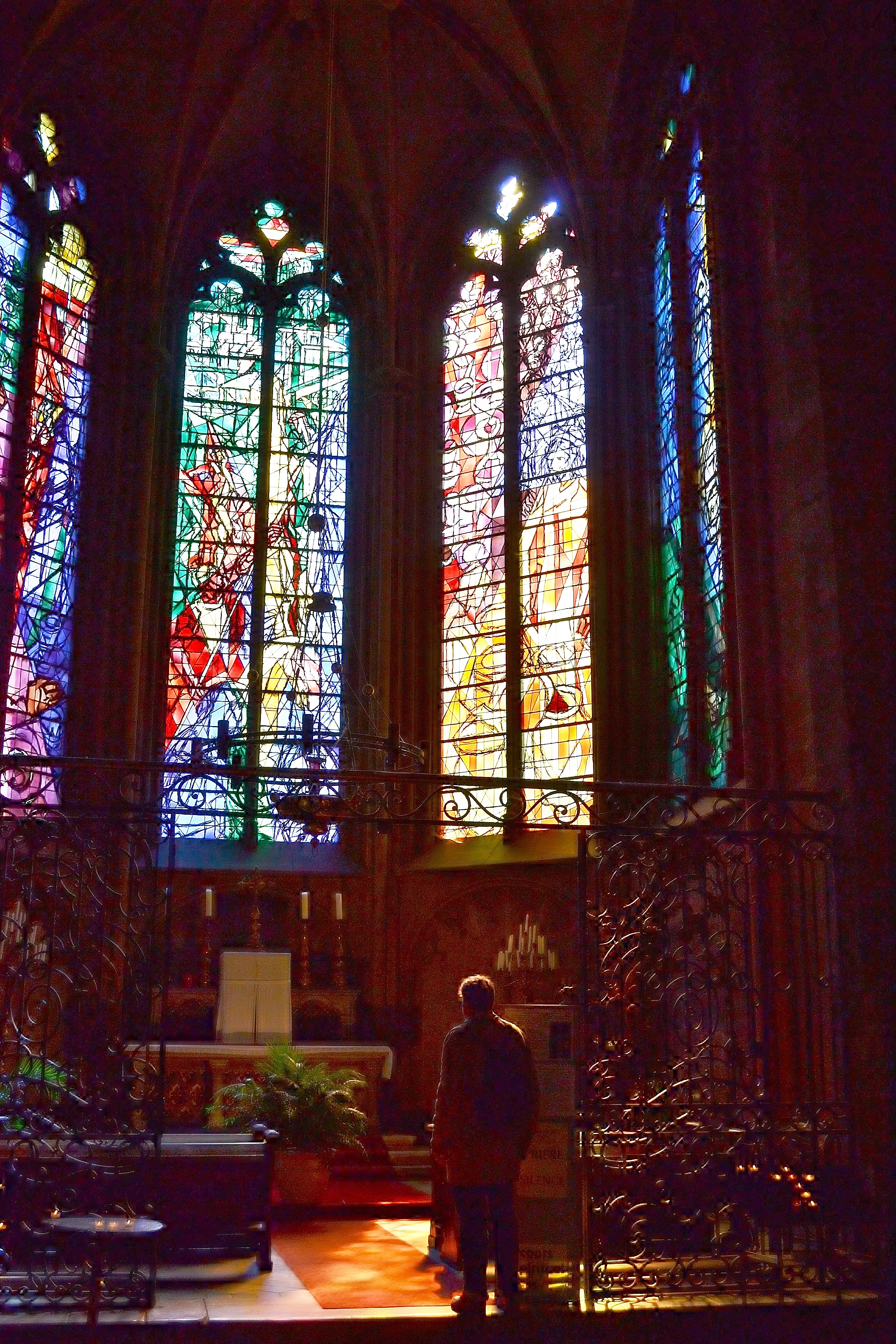
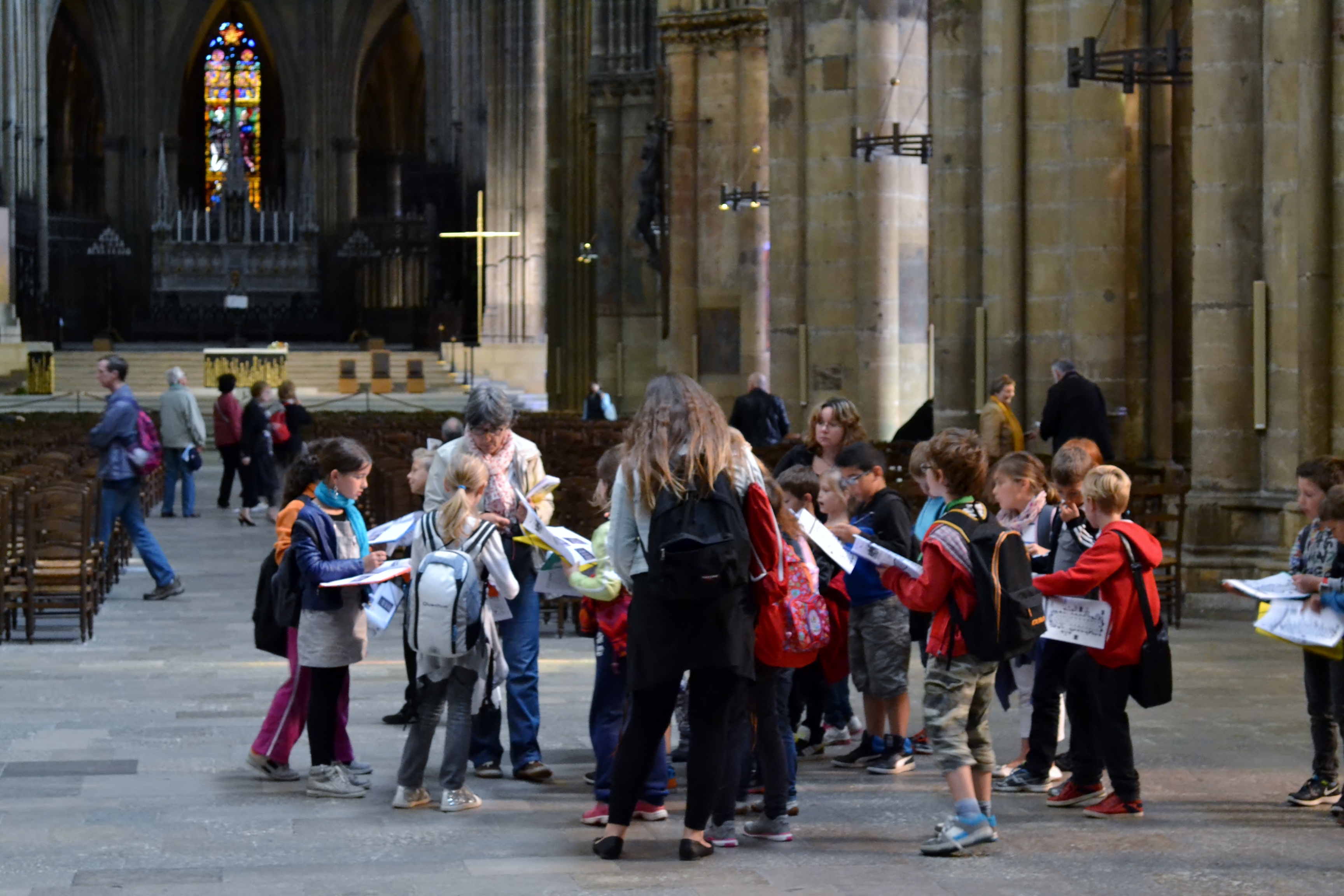
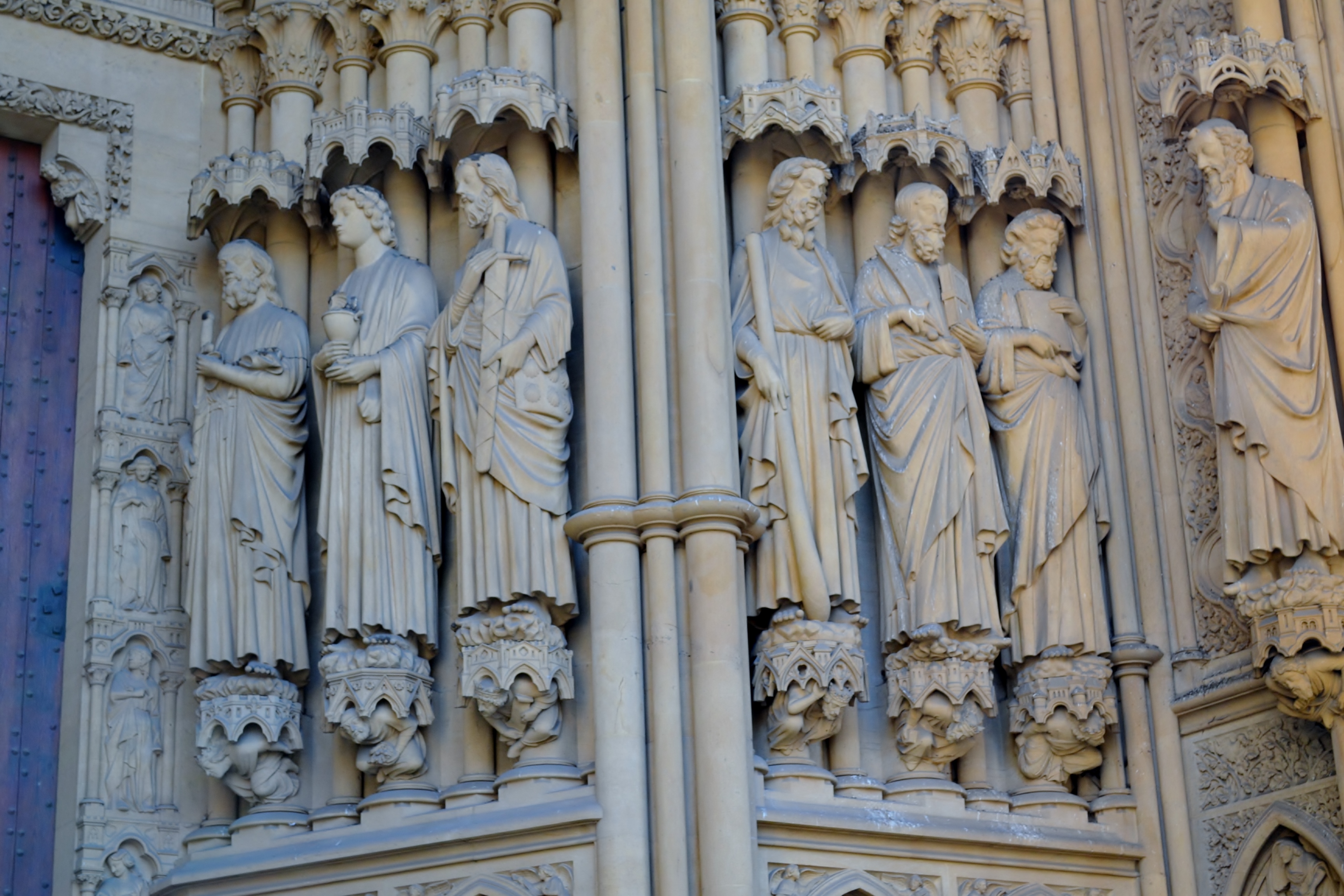
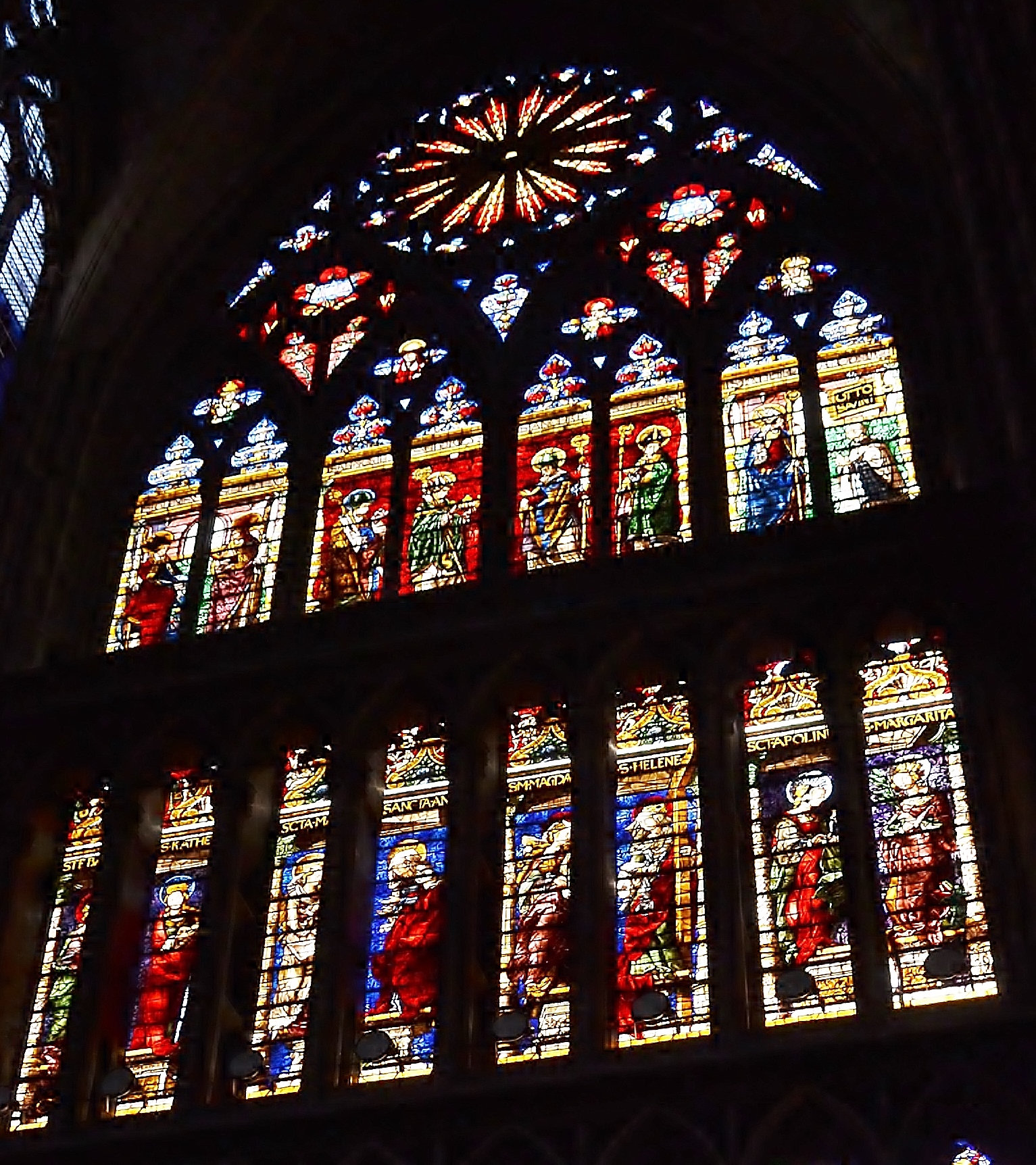
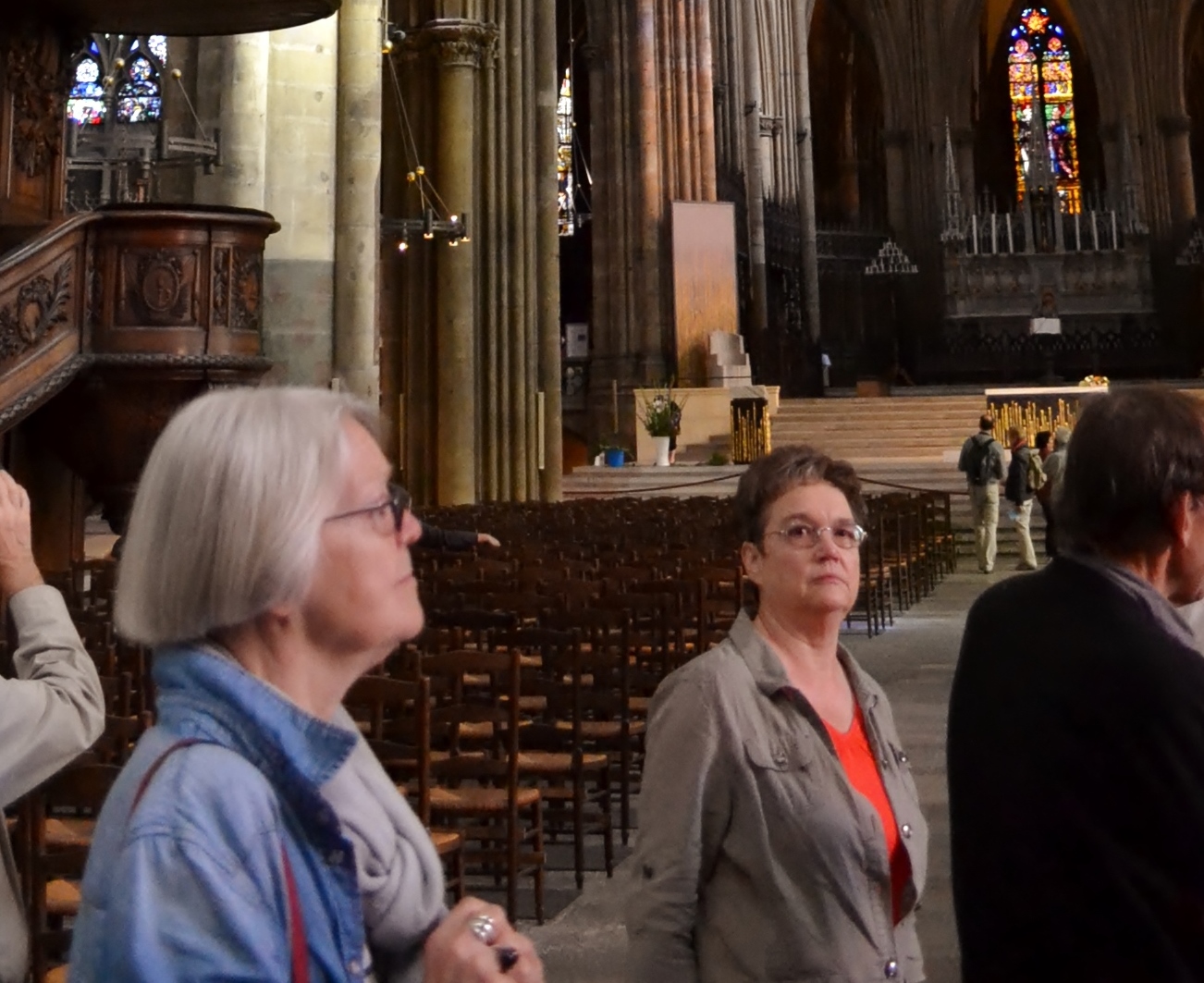
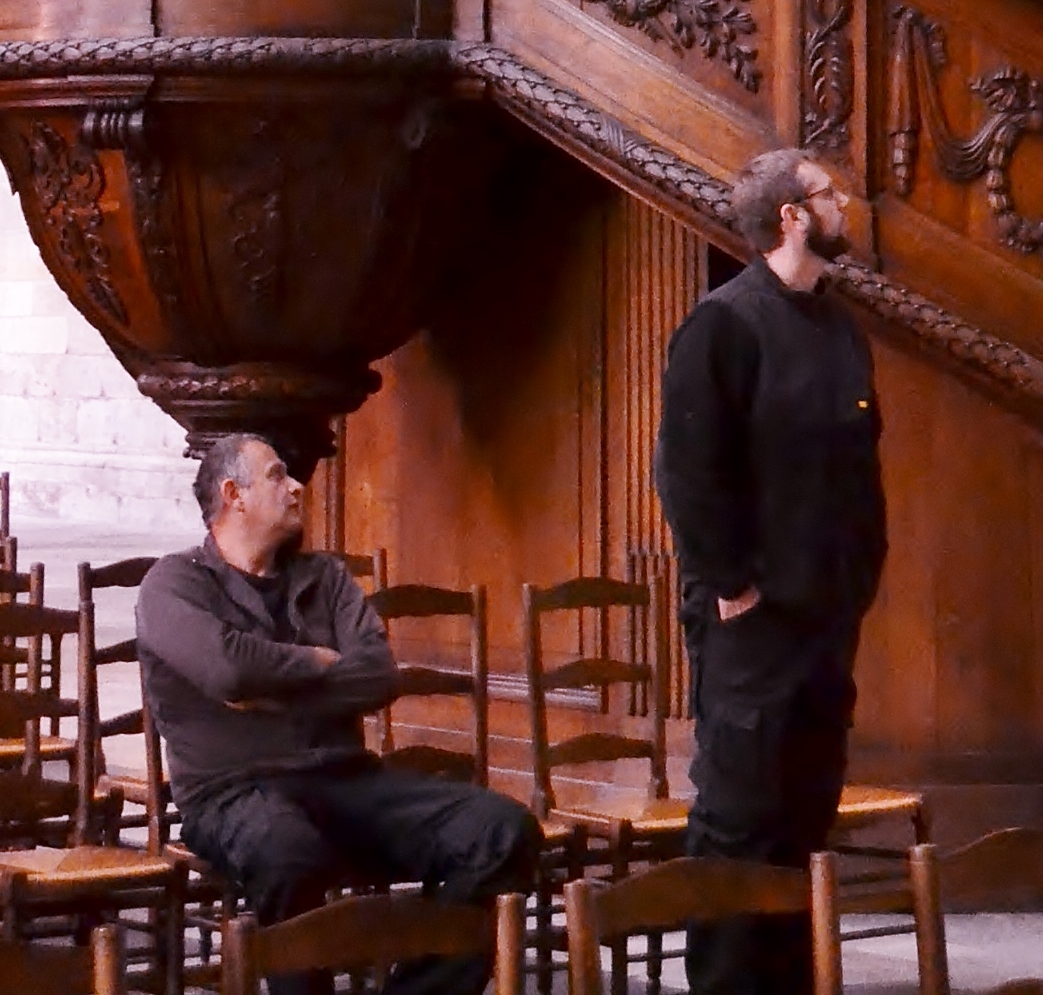
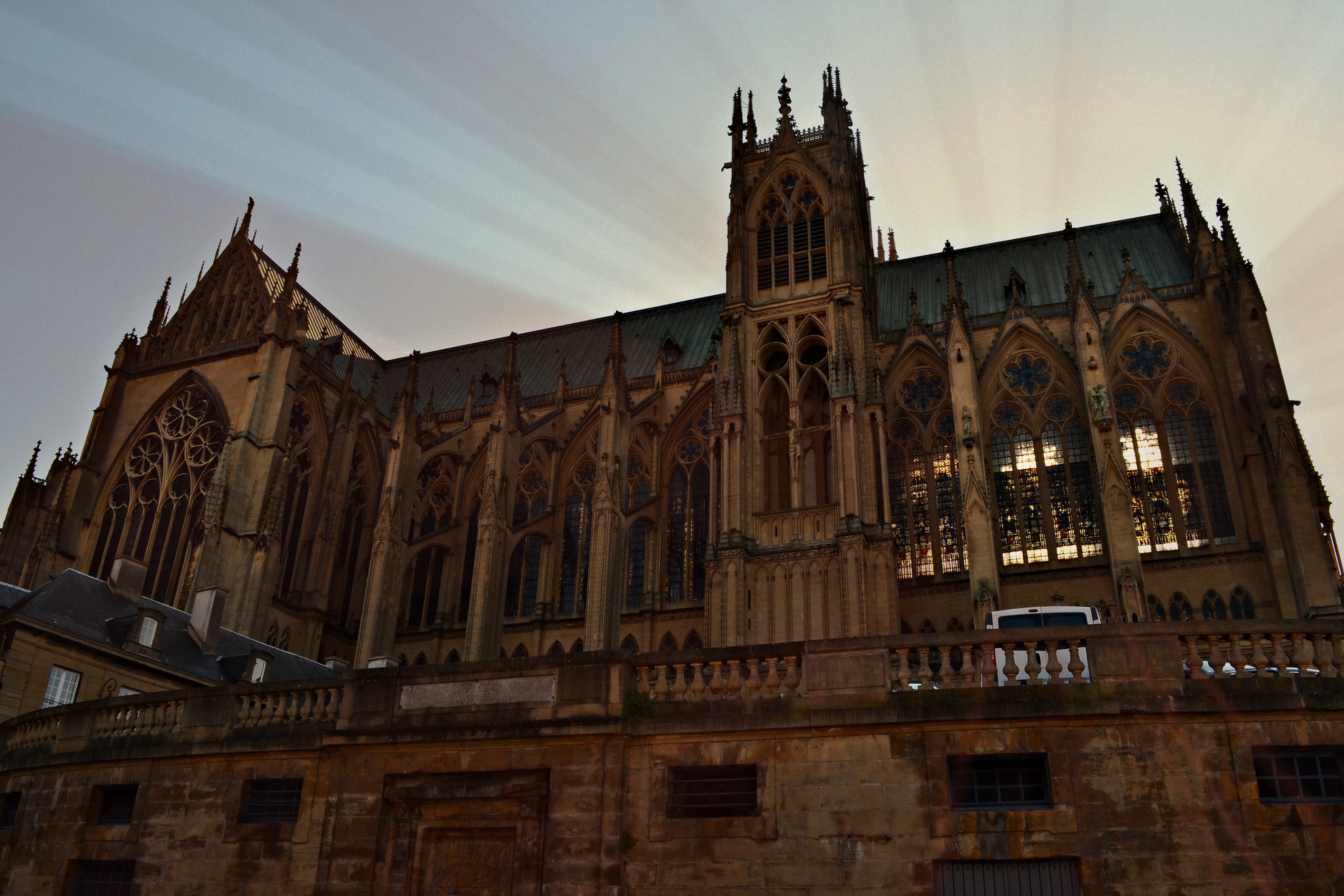
Saints in the Sanctuary (Cathedral in Metz, France)

The cathedral in Metz is stunning.  Stunning.  And so are all of the saints and sinners gathered there.

“Every saint has a past, and every sinner has a future.”   I think Oscar Wilde said that, and I was reminded of it on a recent stroll through this cathedral.  From the saints in stone and glass, to the flesh and blood “man on fire” in the chapel, the capering kids in the sanctuary, the ponderous men, the caught-off-guard woman, and the industrious cleaning crew–it was a storied space.

Not to cast my nets on the wrong side of the boat, but I have to say that the stony saints left me a bit cold.  They were beautiful, but judgmental.  The saints in stained glass were warmer–the glow, the glint, the dancing of light in and through them–they were more dynamic, less rigid.

And the poor, scattered people, scurrying about the cathedral, or sitting in thought, or minding their own business and working diligently, or standing at the threshold of a fiery chapel–they were the stories in play, the ones the space exists for.  So I turned my camera on them.

Even the cathedral itself seemed to hint at its own impish personality as we left, the sun glinting through its windows for just a second–the unmistakable wink of a storyteller pleased with himself.

See for yourself:


DSC_0858
Man on fire


DSC_0819

DSC_0806 DSC_0834 - Copy


DSC_0844 - Copy

DSC_0822 DSC_0832 - Copy


cathedral wink