Twilight at the Tower Bridge

London

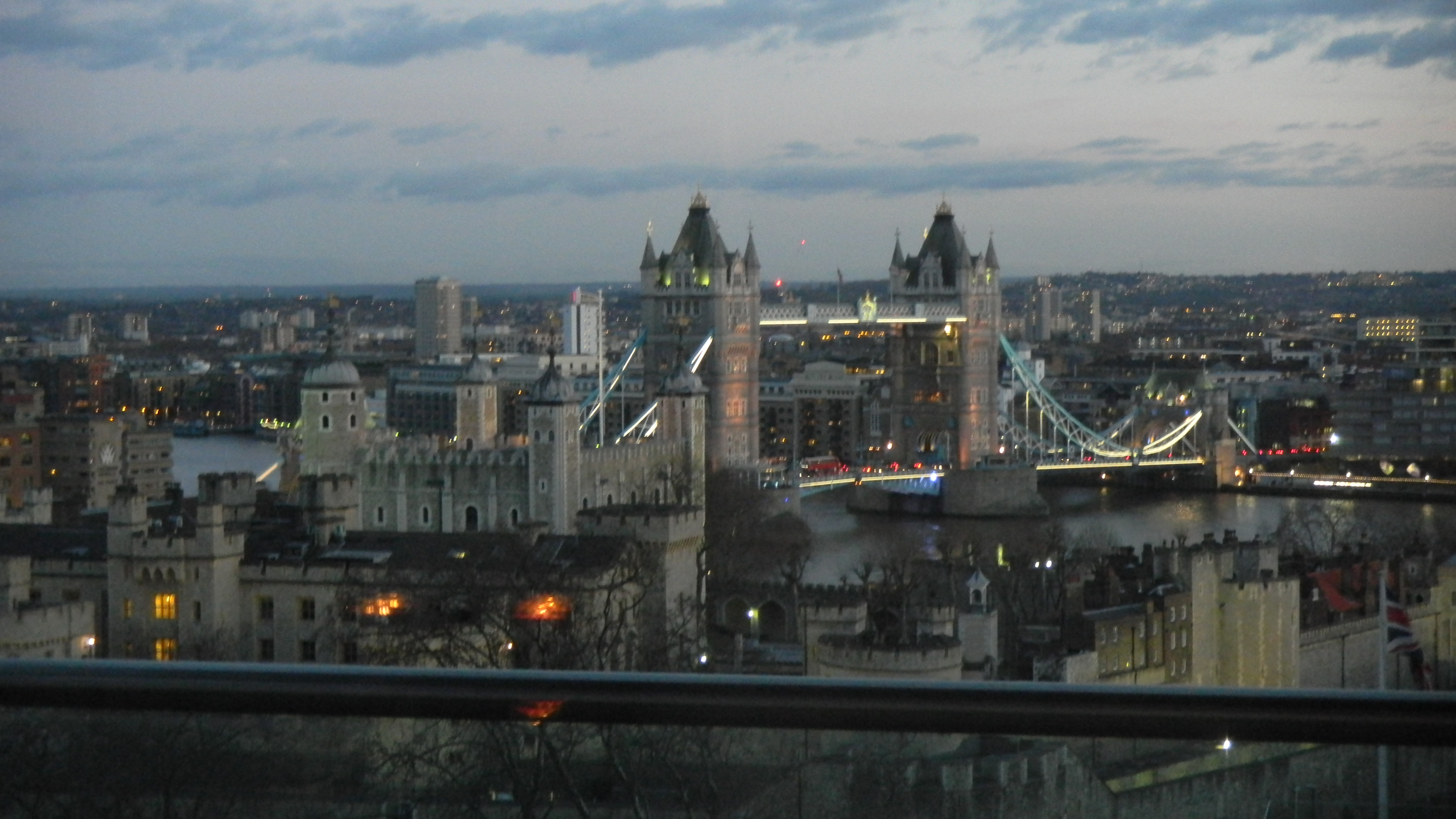
Tower Bridge, just beyond the Tower of London, as the sun goes down. February 2016

About this time last year, Katie and I flew off to London for the weekend to take in some theater, a London Fashion Weekend show, some good food, some history, and a shot of urban living.

Our first night in town, we’d seen the play “The End of Longing” on the West End.  The play was pretty good, the stage sets were remarkable (both for their look and for their “rapid changeability”), and our meeting with Matthew Perry after the show went well– no matter what my daughter might tell you to the contrary.  (Unless Matthew Perry is actually reading this, in which case, let me take a moment to apologize and say that I’ll try to be much cooler if I ever meet you again, please don’t feel the need to take out a restraining order against me.  And, for the record, that person who called out your name before you approached me, thinking it was me, was actually someone standing behind me– and this is why I was totally unprepared for your approach and may have lost it a little.  Seriously.  I don’t usually blither . . . or shake–it was REALLY cold out too, and I was wearing a sleeveless coat in the middle of winter in London– not practical, but it was really cute, don’t you think?  Anyway, Matthew, we got off on the wrong foot, you and me.  I’m lots cooler than that.  Sometimes. Anyway, embarrassing as it was, I really did mean it– you are great.)

Moving on. . .

Our second night in London required a strong drink to make me forget how I’d embarrassed myself on our first night in London.  Katie wanted to go to a rooftop restaurant or bar and soak up a little urban chic.  Good plan.  But the chicest of the chic would have required reservations much in advance, so we looked for “in and out” bars that would fit the bill.  One popped up with potential, and in an area of the city that we know well and has some great views.  The rooftop bar at the Hilton Doubletree by the Tower of London.

It fit the bill well.  The bar itself was chic enough, if not ultra swanky.  The drinks and desserts we ordered while oogling the view were spot on– I went for a Moscow Mule, my favorite go-to, and something cheesecake derived (fuzzy memory, but I remember that the presentation was great).

We sat inside (it being February), but there is a very large and lovely outdoor terrace too, if you find yourself in London during warmer months.

The view as the sun dropped low and disappeared altogether was stunning.    I did feel urban, and I did feel chic, as I sipped my Moscow Mule and looked out over the hustle and bustle of London.  So much energy and atmosphere rolling out in the streets below and all along the Thames.

First, it’s the urban energy and the architectural artistry that quickens your pulse.  But then . . . well, maybe it’s my wistful nature, or maybe it was the Moscow Mule, but I think maybe it’s a universal truth that you look out over a scene like this and you find yourself not just overlooking geography, but gazing at history rolled out before you like a red carpet just begging you to walk it.

The Tower of London alone could suck you into its stories, never to re-emerge in the present.  (Because so many people who entered the Tower of London never did re-emerge.  So many.)  There alone you have 1000 years of history: a history that includes  Anne Boleyn, Katherine Howard, Guy Fawkes, and Sir Walter Raleigh.  A history that includes the prisoner who escaped by dressing as a washer woman and walking out of the gates undeterred– a tale later immortalized by Mr. Toad in the Wind in the Willows.  And a history that, despite it’s strong-arm nature, notes its own possibly precarious existence in the legend of the ravens.  The flock of ravens that lives at the Tower, considered a menace by some, enjoys nearly sacred status by others.  Legend has it that if the ravens ever leave the Tower, the Tower and the Monarchy will fall.  This legend is taken seriously, if not somberly: the ravens have their own Yeoman Raven Keeper.  (Brexit may be problematic, Parliament may be bickering, but rest assured that the Monarchy doesn’t plan to fall any time soon, and the Raven Keeper will see to that.)

If your gaze slides just west of the Tower and down the Thames, you’ll be strolling into Southwark.  Into the history of Shakespeare’s Globe Theater, past The George Inn, the oldest (or only) galleried Georgian pub remaining in London, and a favorite drinking spot of the ever-thirsty  Charles Dickens.  Here, if you are terribly bookish, or prone to the seductive ambiguity of twilight, or more than one Moscow Mule into the night (which I wasn’t), you might get so caught up in the teaming past-life of the London streets you are over-looking (that you might have, in a less wistful mood, entirely overlooked), in their teaming vapors of past-present-literary lives that, each and every one, ask to be explored and understood– well, you might just never re-emerge.

But we did. We drank in the view and wondered at the lights and lives we peered out over, if not into.  Then we left our towering view above the Tower. We emerged energized, awe-spired, and feeling rather chic and smart.  We emerged ready to tackle more of what our fabulous friend London could throw at us.

If only it had given me one more chance at making a good impression on Matthew Perry.

C’est la vie.  Or, as my London friends might say:  th9sb27hg3



Epicurean Update

I woke this Saturday morning to find that Epicurious.com had left a delicious morsel in my news feed:  a short article by Sam Worley,

Stretchy Turkish Ice Cream Now Available in U.S. Grocery Stores

What?  Is this possible?  You know I have a thing for stretchy Turkish ice cream– if you were paying attention, I sang its praises last fall in a blog post called “How We Eat . . .”.  You can imagine Mr. Sam Worley’s article quickened my pulse more than a little. It has arrived on my shores!  Turkish Dondurma!  I squealed, I celebrated!

But then I wondered.   Can I eat Turkish dondurma from the local grocery aisle, or would it be wrong, and certainly disappointing, to pull it from my upright freezer in my air conditioned Floridian home and eat it with a spoon and dish in my breakfast nook?  Would it betray every memory I have of sassy dondurma sellers in Istanbul or on the Turkish Mediterranean, paddling out the stretchy treat, only to whip it out of your grasp at the last moment. . . only to finally relent and offer up the treat,  which I would greedily gobble before it (or I) melted into the hot walkway of a Turkish summer day.

Would my favorite sweet Turkish treat suffer if it wasn’t fresh, and if everything about its presentation and circumstances was decidedly un-Turkish?  Decidedly mundane.  Bought at the local grocer.

Yes.  I think the answer has to be “yes.”

Still, you know I’ll look for it in the stores.  Maybe I’ll purchase some.  I hope it will be delicious.   It’ll certainly be a treat and a novelty . . . but scooped from a store carton  it will be an anemic facsimile.

I’d rather enjoy it by the Sea of Marmara or the Mediterranean– who wouldn’t?

I’ll leave you with the blurb from Epicurious (which includes a fantastic video of an impish Turkish ice cream man at work), as well as my original post on Turkish ice cream.

Happy Monday and bon appetit– or, as they say in Turkey, “Afiyet Olsun!”

http://www.epicurious.com/expert-advice/turkish-ice-cream-comes-to-the-us-elastic-stretchy-article

Stretchy Turkish Ice Cream Now Available in U.S. Grocery Stores

Behold the pictures, all over the internet, of street vendors stretching Turkish ice cream just like it’s boardwalk taffy. That’s maraş dondurma, a confection made not just with milk and sugar but with mastic, a tree resin, and salep, the roots of wild mountain orchids, which imparts elasticity. The best and frankly only way to describe this is as stretchy, chewy ice cream. Word on the street is that people have been photographed jumping rope with it; others have cut it with knives and chainsaws. On the street, too—or in the markets, rather, where you get this ice cream in Istanbul—its unique stretchiness enables vendors to play all manner of practical jokes with would-be ice cream eaters, as in the video below.

The metal rod you see there is part of the traditional production process: the ice cream is beaten—kneaded, more or less—so that it sticks to itself. What results is a frozen confectionyou can do some tricks with; it’s also quite a bit slower to melt than non-elastic ice cream, a boon in the Turkish summers.

Something like dondurma is now available in the U.S., but in grocery aisles rather than bazaars. Lezzetli Mediterranean Ice Cream, which has been selling in the New York area for a while, announced today that it’s expanding its distribution throughout the northeastern United States, with four flagship flavors: Chios vanilla, made with a Greek tree sap; chocolate–orange blossom; spiced date, and tart cherry. Lezzetli bills its ice creams as inspired by similar desserts of Turkey and the Levant—versions of dondurma also exist in places like Syria and Greece—and they aren’t thickened with orchids, which are endangered, but with other natural gums. (In Turkey, for this same reason, salep has given way to other thickeners, like guar gum.) Not in your local place yet? Request it! Your grocer might be pliable.

****

How We Eat: Banana Pudding, Banoffee Pie, Songs, and Stretchy Ice Cream

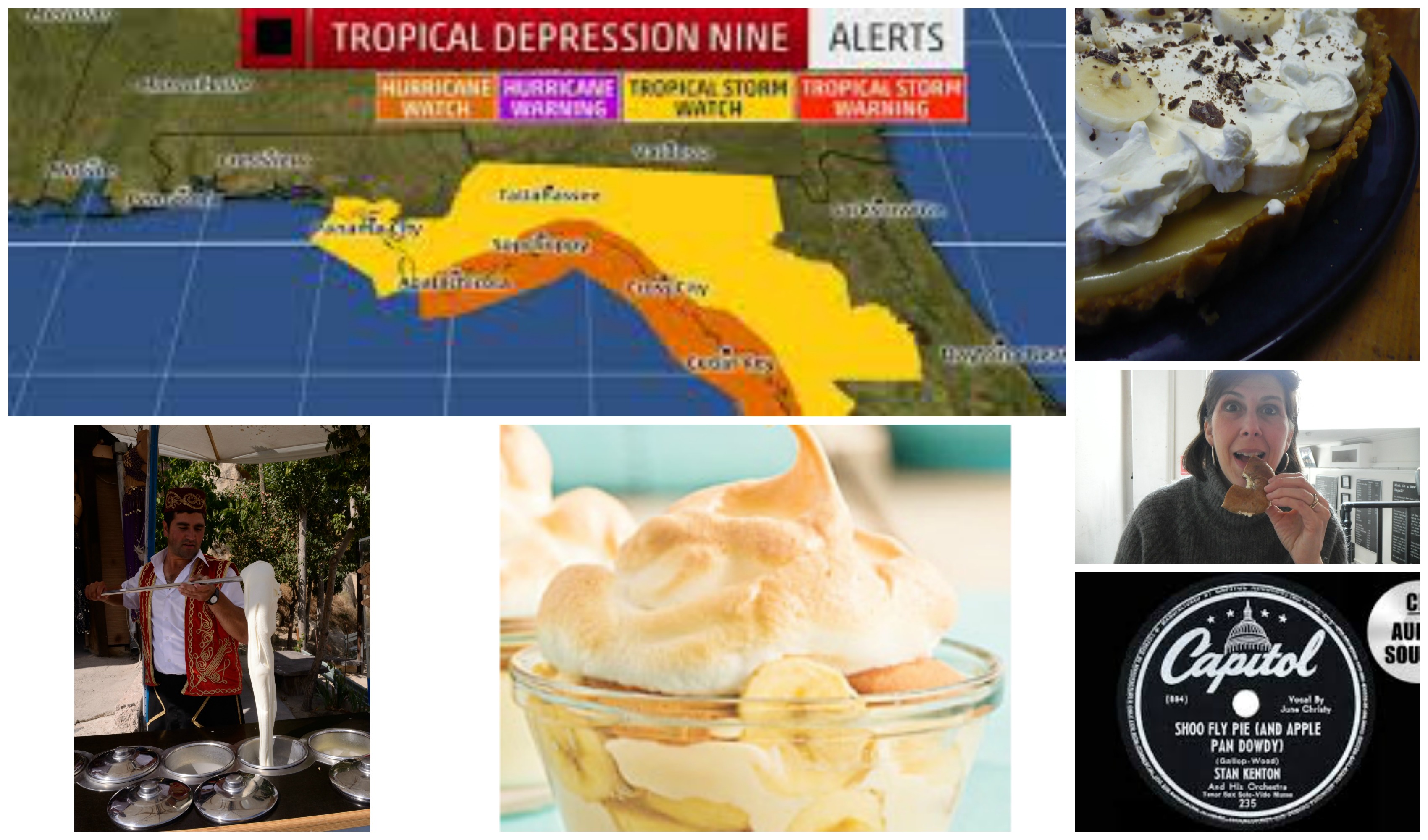
PicMonkey banana pud shoofly

The title is a mouthful:  a delicious, caloric mouthful.  Inspired by a delicious and caloric, if somewhat stressful, week of cakes and puddings at our house.  An actual storm is sitting out in the Gulf, on our doorstep, and making vague threats, while the figurative storm of finding your bearings in a new environment is battering us around quite handily.  Under the circumstances, why not fatten our bodies and spirits for the fight, right?  Cakes and Ale is a fine battle strategy, I say.  Anyhoo, on with the post. . .

When I was young, my mother used to sing a song that would make us giggle and make us hungry at the same time: “Shoofly Pie and Apple Pan Dowdy, make your eyes light up and your tummy say ‘howdy.’”  Silly.  I’ve never had Apple Pan Dowdy, but I can imagine the cobbler-like creation with no problem.  Shoofly Pie is harder to conjure.  Obviously sweet and sticky– a fly magnet (yuck!)– but the closest thing I can picture is a chess pie, and I don’t think that’s exactly right.  Which brings me to stretchy ice cream.  What, you’ll ask, is that?  A Floridian taffy-ice cream hybrid?  An over-cooked custard that makes a chewy ice cream?  No and no.  I’m thinking of Turkish Dondurma– an ice cream made with wild orchid extracts and salep ( a milky Turkish drink containing orchids).

Dondurma doesn’t taste of orchids, it comes in many flavors.  My favorite was banana.

Image from website: http://www.lakshmisharath.com/
Image from wikicommons and website: http://www.lakshmisharath.com/

   I only discovered dondurma toward the end of our life in Turkey, which is a shame because it is silky and delicious . . . and stretchy.  That doesn’t really affect the taste, but it makes for a great parlor trick.  Dondurma is often served in a dramatic way, dished out with a paddle and wrapped around your cone, only to be pulled back at the last moment.  The Turks love a laugh and good food, so why not marry the two?

I’ve been thinking about Dondurma lately.  August in Florida will bring out all of your ice cream fantasies, believe me.  But this week, I’m remembering Banana Dondurma while making a traditional Banana Pudding for my children.  A REAL Banana Pudding– no instant pudding and cool whip.  Ugh.  A silky homemade custard is the only way to go, people.

My mother made this Banana Pudding for us growing up, and I’m pretty sure that her mother made it too.  I’m printing the recipe at the end of this post.  It’s simple and satisfying, and I like it best when it’s still a tad warm (but I know people who only like it cold, so this is clearly a matter of personal taste).

Photo from myrecipes.com--sadly we ate into our pudding too quickly to get a good photo!
Photo from myrecipes.com–sadly we ate into our pudding too quickly to get a good photo!

Like all recipes for BP, this one layers Vanilla Wafers, banana slices, and pudding.  Like all the best recipes for BP, this one features a homemade pudding of milk/cream, eggs, and sugar– with a splash of vanilla tossed in after the pudding thickens.  Believe me, you’ll be licking the mixing spoon after making this one.  (And, as I’m writing this, I’m wondering if I could use this pudding, with banana and wafer bits thrown in to churn up a really delicious–though certainly un-stretchy– ice cream.  I’m going to try this soon and get back to you.)

Banana Pudding is a staple of the American South, a time-tested comfort food, welcome around any pot luck or picnic table.  Why is it Southern?  I have no idea.  It goes well with bourbon?  (There are worse theories.)   If you want a primer on the treat and its history, I’d suggest you read the article posted on the SeriousEats website– an interesting and remarkably in-depth read.  If you’re here for the yummy, not the history, feel free to skip the article, fast forward to my recipe, and judge for yourself.

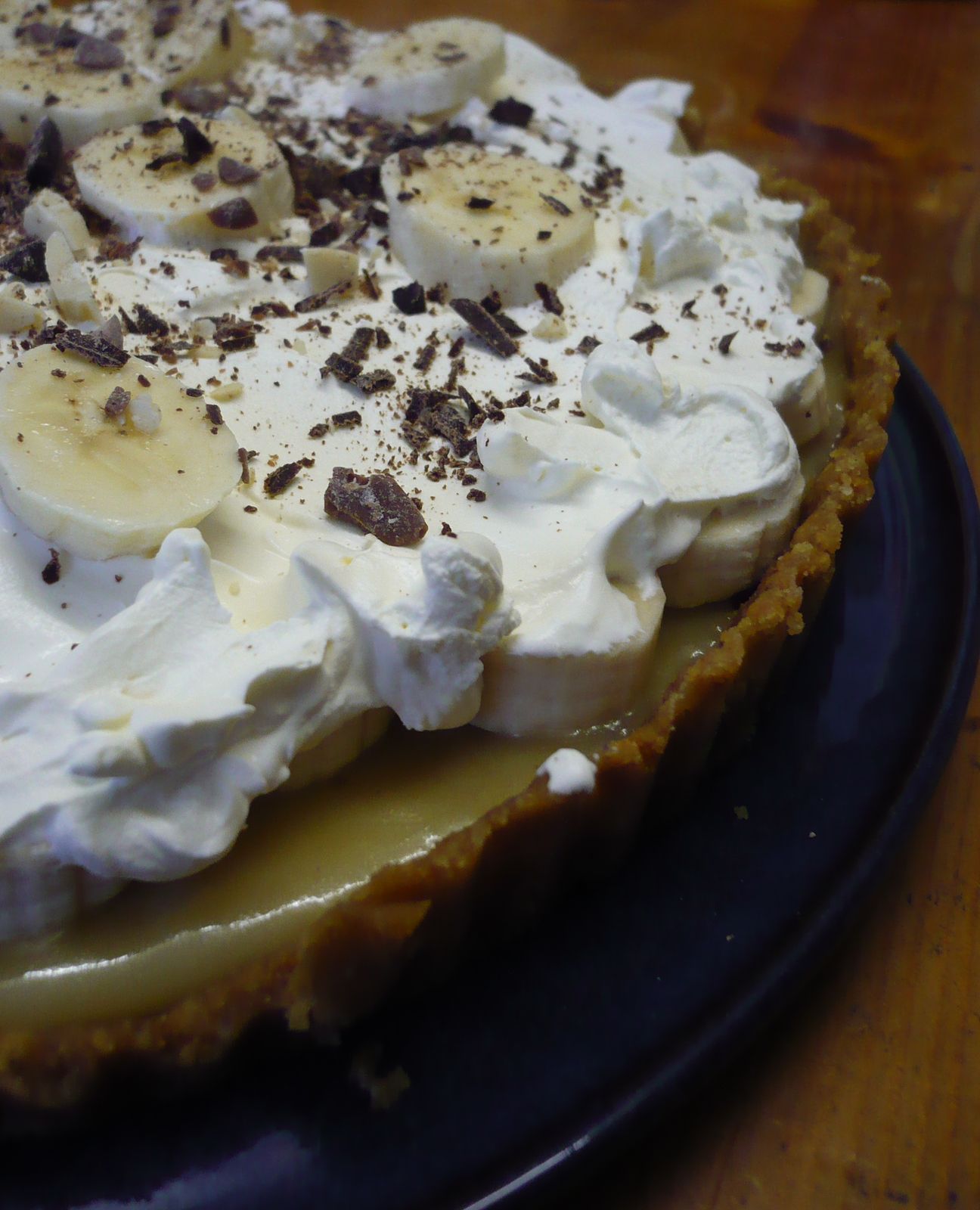
But not before you consider Banoffee Pie.  It deserves a mention in a travel and culture blog, because what Banana Pudding is to the American South, Banoffee Pie seems to be to Brits.  A perfect comfort food, a sweet banana dessert that pops up everywhere.

photo from commons.wikimedia.org

“Banoffee” you say?  Yes– bananas, cream, and toffee.  BAN. OFFEE.

Although it’s a British staple, it’s not one of those long-standing English recipes that dates back to the middle ages (think mincemeat pie).  No– bananas weren’t easy to come by before modern times.  Still, you find it in so many homes, on so many menus, and in endless incarnations these days. Nigella Lawson has a great looking Banoffee Cheesecake recipe, as well a Chocolate Banoffee recipe.  There are Banoffee sundaes and cupcakes and pastries.  If you can think up a twist to banoffee pie, it’s out there.

I have nibbled at Banoffee creations, but haven’t perfected my own version, so I’ll encourage you to find your own recipe.  If you already have the perfect recipe, feel free to share it with me!

* * *

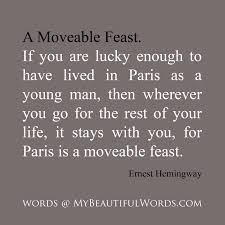
moveable feastI’ll leave you with my pudding recipe and a final thought on comfort food.  On how we eat.  I love sugar, and I love rich puddings, and I love sharing these things with family.  But it’s not just the yumminess, and it’s not just the hospitality, it is the comfort that gets me this week– the ritual of sharing this favorite family recipe. Hemingway spoke of Paris as a moveable feast–a joy and light and influence, a wealth of experiences–that stays with you wherever you go.   Whether or not we have Paris, we all have a storehouse of moveable feasts.

This week, Banana Pudding is my moveable feast.  The world is spinning a bit fast for me, the Gulf is churning a bit violently, but I have my pudding (a tad warm yet) and I have my children with their spoons at the ready . . . and I find that I have a feast of friends around this table — I have my grandmother’s cooking, my mother’s singing, my Turkish ice cream man, and my British bakery, and I sit in the company of these fine things and dig in to my bowl, and I know, with a quiet conviction, that the world will be right soon enough.

*Ba’s BANANA PUDDING

  • For the custard: 1/2 cup sugar, 3 Tablespoons flour, dash of salt, 1 whole egg, 3 egg yolks (save the whites), 2 cups of milk.
  • Cook this in a medium saucepan over a low heat until it thickens.  Then take it off the stove and stir in 1/2 teaspoon of vanilla extract
  • Layer vanilla wafers and banana slices; pour some custard over the top; then repeat these layers.
  • For meringue topping: beat the 3 egg whites, gradually adding up to 1/4 cup of sugar (and 1/4 teaspoon cream of tartar, if you wish).  Bake this until browned (at 400 degrees, or using the broiler).
  • Enjoy!


Send ‘Em to Whitby! (Happy Halloween)

whitby-post-1
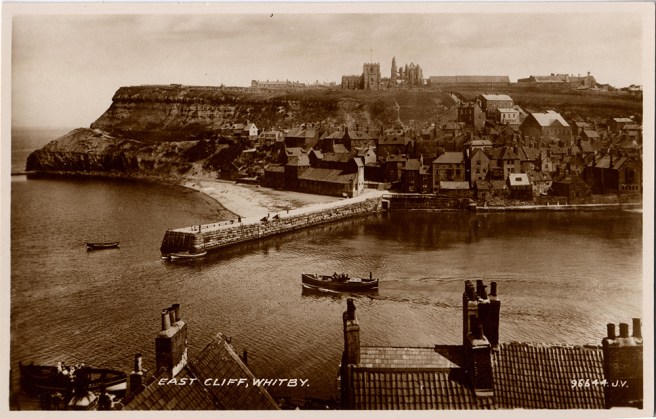
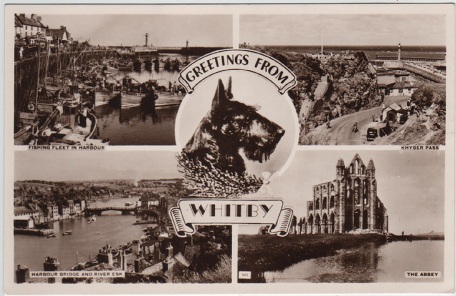
Whitby, England. Beautiful . . . and a little spooky. (old postcard)

If you’re yearning for an atmospheric English town with cobbled and winding streets, hugging the seaside in crannies and cliffs, and teaming with a sense of menace as the sun goes down, then you’re due a trip to Whitby.

Can you find Scarborough? (red dot)
Can you find Scarborough?

Whitby lies in the northern corner of North Yorkshire, a close neighbor to Scarborough, and is a popular seaside retreat.  But it’s not all sea spray and fish and chips here.  It’s not all Victorian boardwalks, either.  No,  Whitby’s greatest claim to fame may be as part of the setting of Bram Stoker’s Dracula. (And you thought you were safe this Halloween if you just steered clear of Transylvania.  Wrong!)

In the gothic tale, Dracula is aboard the ship The Demeter and is shipwrecked on the Yorkshire shore.   He then storms Whitby in the form of a dark dog, runs up the hill to St. Mary’s Church and the Abbey and graveyard above the city,  and soon terrorizes his victims as the vampire that he is.

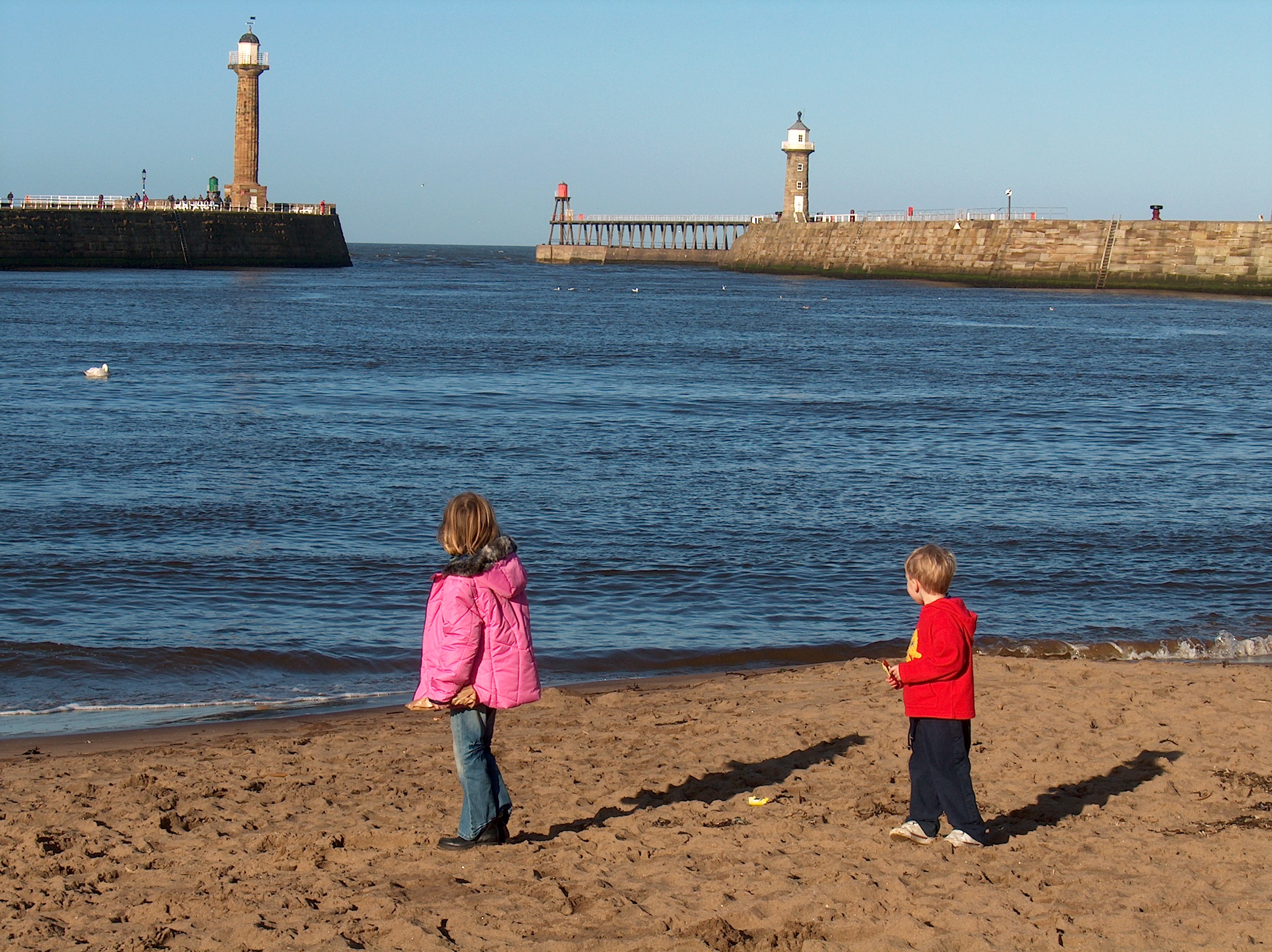
Looking out to the mouth of the harbor, thinking of Dracula's shipwreck.
Looking out to the mouth of the harbor, thinking of Dracula’s shipwreck.

In fact, Bram Stoker did visit Whitby, and it seems to be where much of his story took root in local history and scenery.  The Demeter  shipwreck was based on a true incident — the shipwreck of The Demetrius, a ship full of coffins being transported for burial . . . a grim cargo that proceeded to wash ashore on the town’s beaches for days after the accident.

The city of Whitby is lovely and would certainly survive as a traveler’s destination without the legend of Dracula, but she has been forever tied to the story now.  And the city is all too happy to play up its link to the blood-thirsty Count.  There are plenty of Dracula tours, books, and plaques to remind visitors of the city’s link to the gruesome story.  It’s all in fun.

Unless, of course, you are excessively squeamish . . . or  roughly four years old.

My children were taking this all in, and William, very young at the time, was growing a little skittish about Whitby.  He constantly looked over his shoulder, he stayed close by our sides (unusual for the  turbo-charged kid who usually ran yards ahead of us), and by the end of the day he was loudly and frequently proclaiming his dislike of Whitby.

My son never mentioned Dracula in his complaints; still, he was very clear about his feelings: he would never go back to Whitby.  Never.  Ever.  It wasn’t his kind of town at all.

So we never did go back to Whitby.   But we came close.

A few months after our visit to the sinister town, we had an unwanted visitor in our house.  A small, furry, unwanted visitor.  A mouse was stalking my son’s bedroom and, it seemed, spending time under his bed while William was asleep.  While this didn’t make me any too happy, it really upset Will.  We wanted to catch this rodent and catch him fast.  However, I have a soft spot for animals and was hoping that a catch and release plan would be possible.

My son and I walked to the local hardware store one morning to discuss humane mousetraps and my desire to re-house this mouse.  The owner looked at me like I was a truly daft American.  He produced a humane trap from his backroom, but shook his head at my plan.  “It won’t work,” he said.  “You won’t get rid of that mouse,” he continued, “unless you take it many  miles away, it will just come back to its home.”  (Its home, of course, being my  home.)

I imagine this man was overstating just how far a little mouse’s legs could carry him, but before I could question the store owner  my tiny son shouted out, “Let’s take him to Whitby!  We’ll take him to Whitby!”  (I should note that Whitby was an hour and a half from our home.)

The store owner looked at my son, then returned his gaze to me– registering that we Americans were even more daft than he had originally suspected.  I was in no mood to fight his assessment:  I took the trap, told my son that was a great idea, and quickly left the shop.*

For years after, whenever someone at our house was badly behaved, they were told that they’d better straighten up  or we’d take them to Whitby.   A terrible fate indeed– a place only fit for the  worst and most wicked.

whitby-bones-theguardian
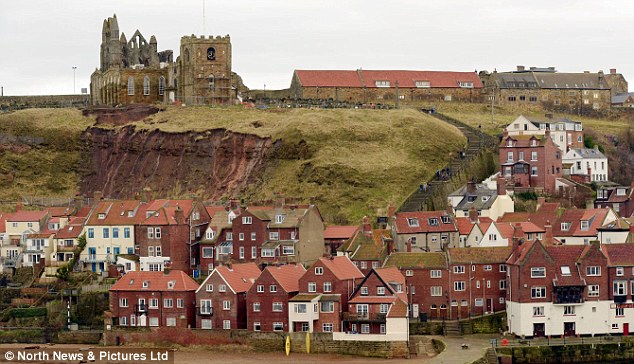
Photo of erosion, from the Daily Mail

Although not really–it’s a very nice town.  Except that. . . well, it almost does seem that something is a little off about Whitby.  The cliffs over Whitby began crumbing just three years ago:  a potential disaster for the church.  If they can’t stop the erosion, St. Mary’s could soon tumble into the sea.  Locals are watching the situation with concern, and more than a little dread and disgust:  the homeowners below the eroding cliff report that skulls and bones  are falling from the sky into their backyards.  The crumbling cliff is the church’s graveyard!  This is like the wreck of The Demetrius all over again.  It doesn’t bode well, my friends. . . it doesn’t bode well.

So a word to the wise:  if you are naughty enough to get sent to Whitby any time soon, make sure to pack your garlic necklace.    Happy Halloween!

*   *   *  *

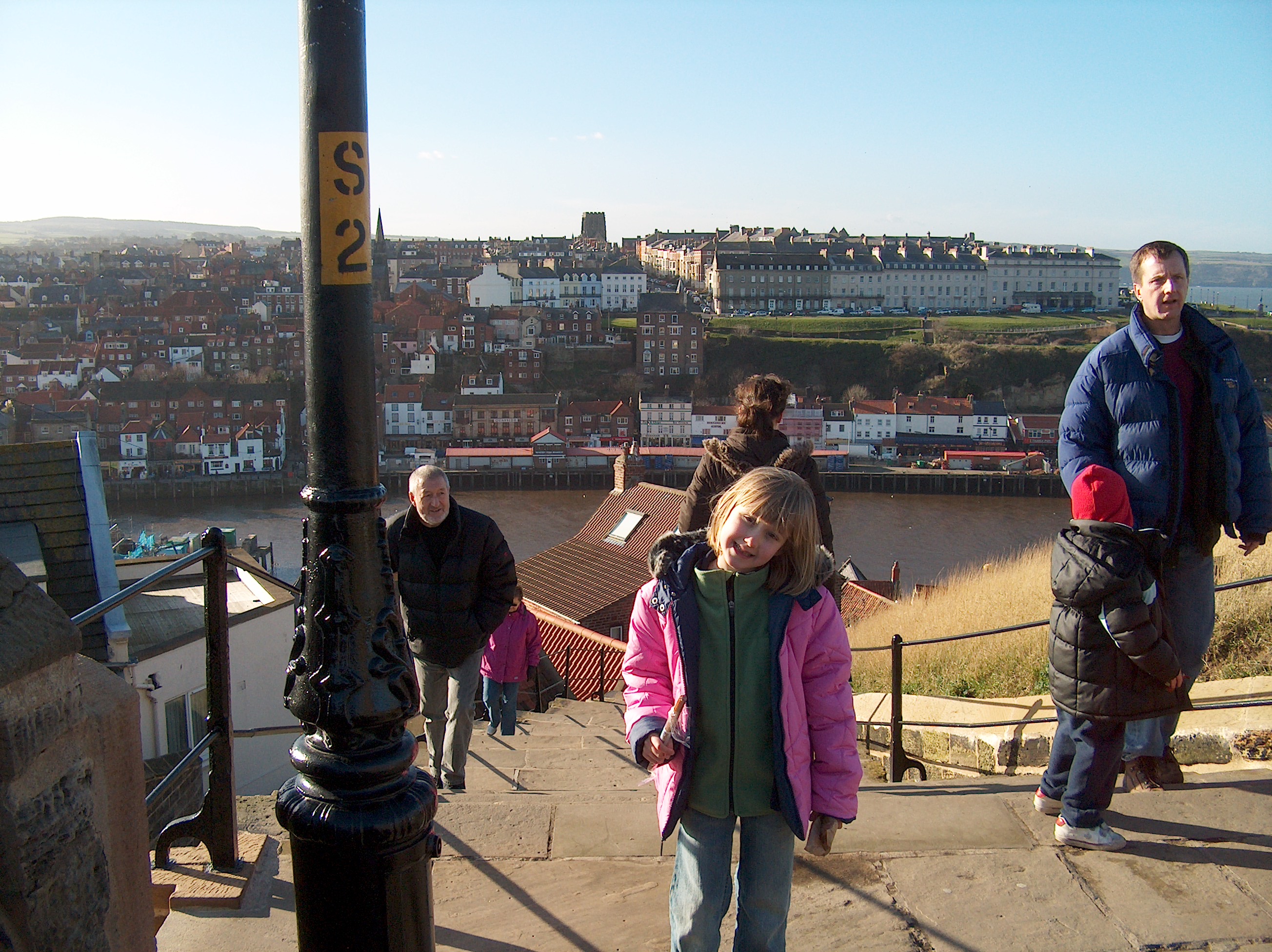
A few more photos from Whitby:

2007-001-copy


2007-003
Near the top of the 199 steps up to Whitby Abbey.


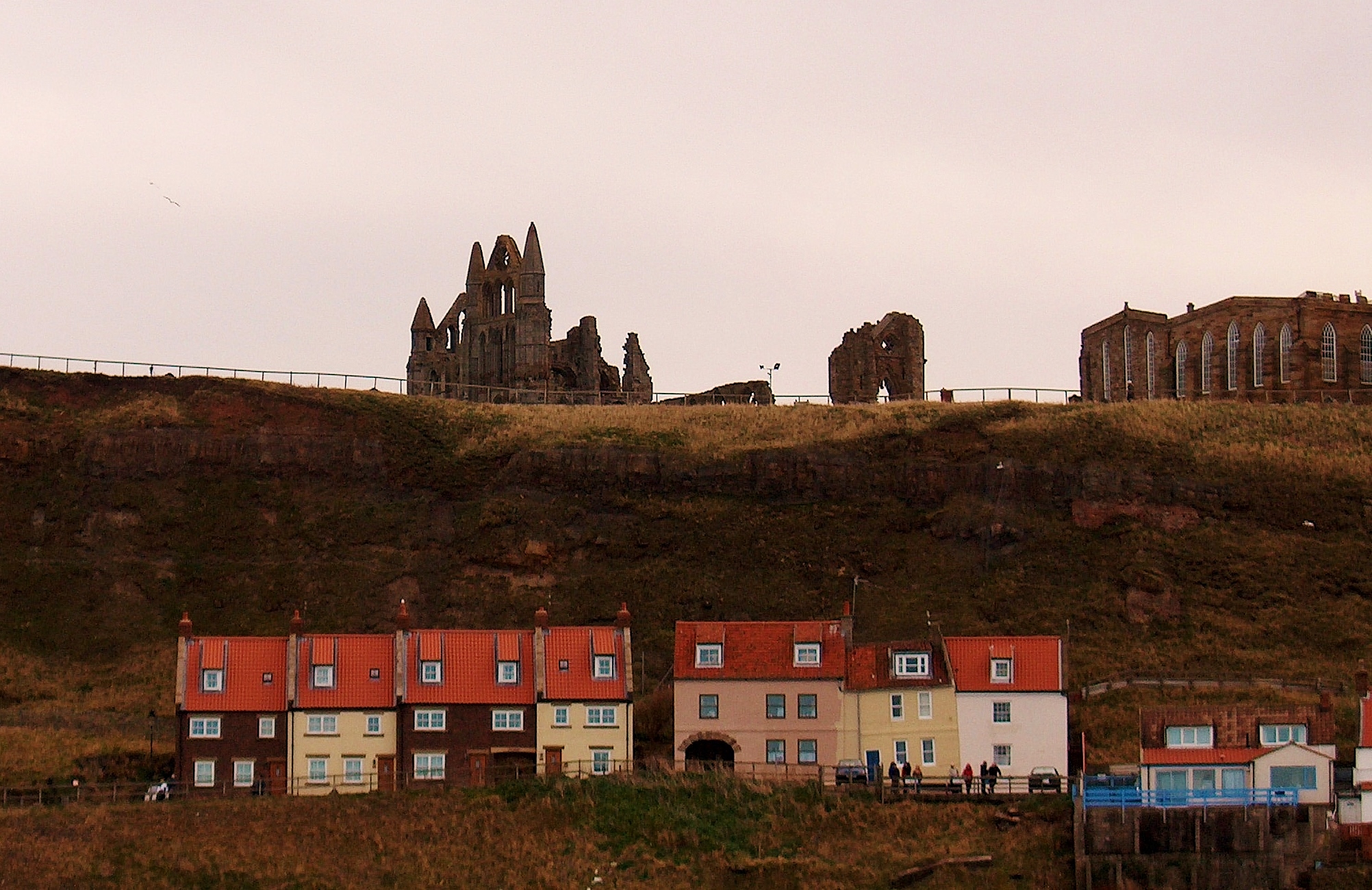
Above the harbor at Whitby, high up on the cliffs, sits Whitby Abbey– or the ruins of it, anyway.  It was to the abbey and graveyard that Dracula ran, up 199 stairs that are still there today.

If you make it up the stairs (not such a bad climb), you have a great view of the city and the harbor below.


whitby%20multiview


If I were designing this postcard, it would have a little grey mouse at its center!


*Our little mouse never did make it to Whitby.  He met a different, but sad, end that  I’d rather not discuss.

Eating Local: Breaking Bread in Turkey

antik road family
On the “Antik Road” in Cappadocia. (1998) A local family cooking flatbread over an outdoor oven in Guzelyurt, Turkey. They shared the bread with us–it was delicious!

via Photo Challenge: Local

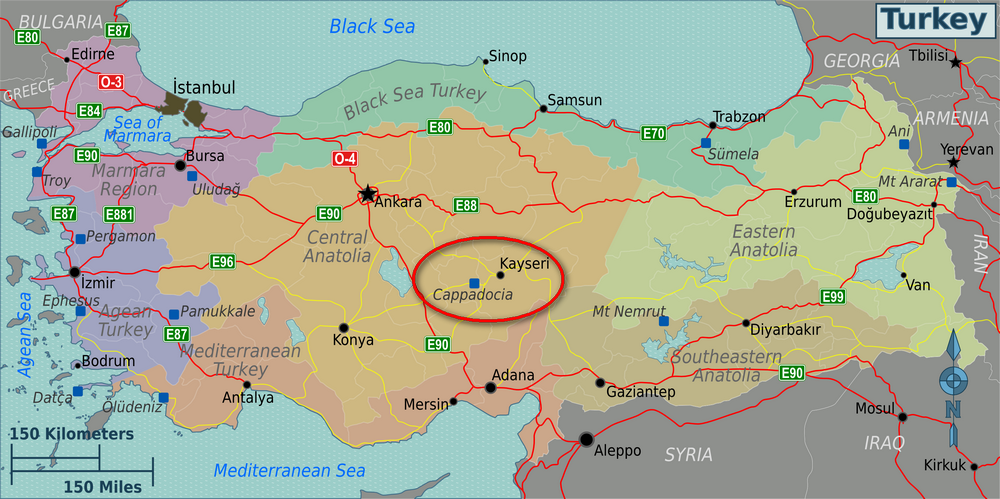
It was a crisp day in the Cappadocia region of Turkey, and my husband and I were out walking through the town of Guzelyurt– a small town set outside of the larger and more tourist-populated areas of Cappadocia.  (“Guzelyurt” means beautiful valley.)

We would often visit and stay in Otel Karballa there: a lovely structure that

had once been a Greek monastery, but was now converted to a small hotel with a fantastic chef and the ability to give its guests an authentic taste of life and history in this enchanting region.

turkey_regions_map3-1

goremeThis area of Turkey is fascinating– so well known for its natural beauty and unusual landscape, as well as its long and illustrious history.   In fact, the two things go hand in hand.  The famous “fairy chimneys” of Cappadocia housed the cave dwellers of the Bronze Age, and later housed early Christian refugees and gave rise to the thousands of cave churches that dot the region.

dsc_0060
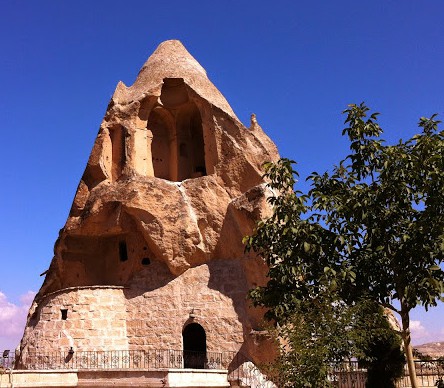
A fuzzy photo from one trip to Cappadocia: at the mouth of a cave church, with dwelling areas above it.

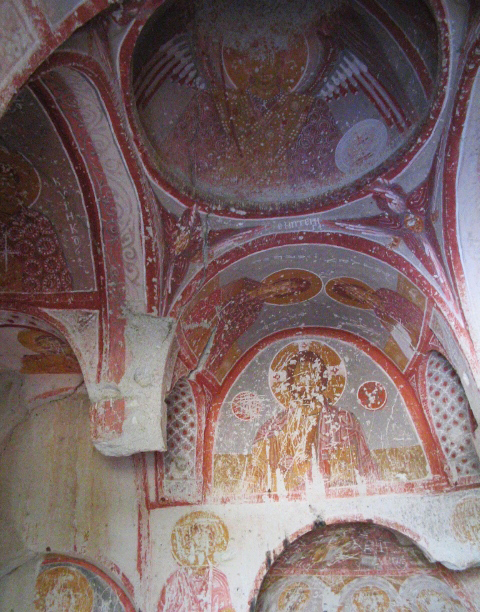
alanya-turkeye-193Once inside these churches, you are often  met with once-beautiful frescoes that (while still beautiful) are severely weathered by both age and ordeal.  Age, because most of the churches here date to between the 6th and 11th centuries; ordeal, as they were intentionally defaced because of religious aniconic sentiments.

If the cave dwellings and the colorful history weren’t enough to make Cappadocia a fantastic destination, it has this going for it:  it’s no artifact, it’s still living.  The potteries of the region are thriving, the people are hospitable, and many locals still live in the hollowed out cave dwellings (and have wired them for electricity!).

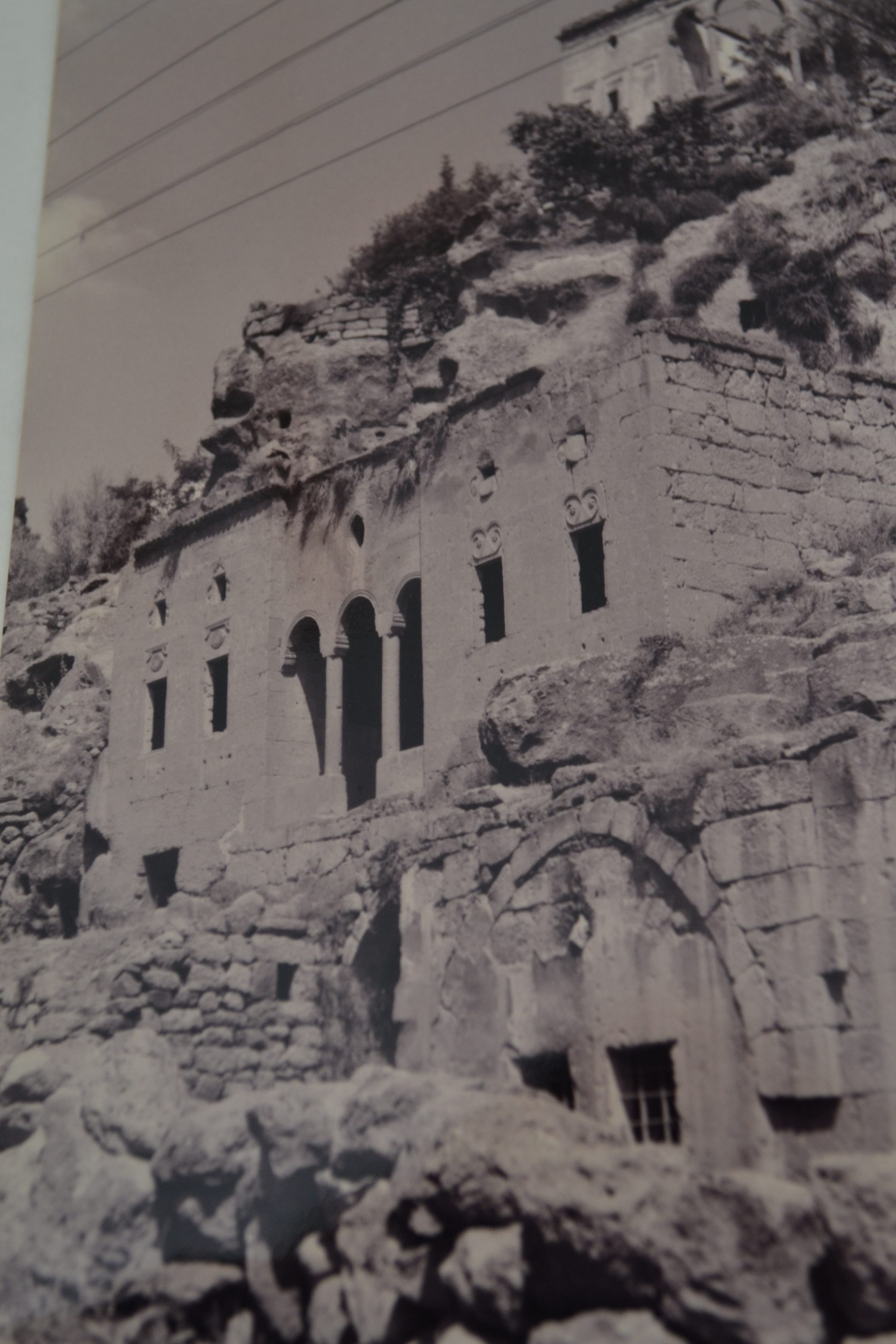
Walking down one ancient road in Guzelyurt, you might look up to see this:

dsc_0059

only to believe that you are passing by empty, ancient buildings (but note the electrical wires that run the length of the road).  Then the next thing you stumble upon, two doors down, is the family from the lead photo on this post, huddled in the doorway of another ancient structure and adjoining cave and making their daily flatbread over a simple fire and dome of hot metal.


The ancient meets the everyday in the streets and valleys of Cappadocia,  the modern meets the miraculous.  For my husband and me, who grew up in the tidy convenience of suburban America and were more likely to take dinner  from a casserole dish hot out of a Kenmore oven, or even from a drive-through  fast food window,  this family, hard at work to make their daily bread, kneaded and rolled on a board on the ground and cooked over an open fire on a humble metal dome, this moment was extraordinary.  And so very ordinary too.

We stopped and spoke to the family.  We shared what little language we knew, and they shared some of their bread , warm and crisp from the fire. I don’t think anything has ever been more delicious than those few bites shared on an ancient road.  What an incredible way to eat local.