Last Friday, I had the good fortune to hear the 94 year old Selma van der Perre speak about her experiences as a Jewish woman during the Holocaust and a survivor of Ravensbruck Concentration Camp. I braced myself for difficult stories and a somber afternoon, but what appeared on stage was an absolute spitfire of a woman who radiated hope, energy, and life abundant. I fell in love with Selma the minute she walked on stage–with a cane and on the arm of a younger person, wearing a neat suit, chic French scarf, and white beret.
She was chic, sharp, and a delight in every way. Some of the stories she had to tell made your blood run cold and your stomach clench into a knot, but everything about her being shone bright and radiated hope.
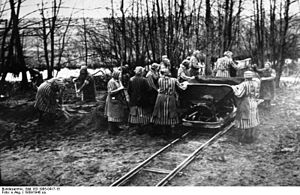
She was a young woman growing up in the Netherlands when the Nazis came to power. Her family was pulled apart, her father died in Auschwitz, and she became a courier with the Dutch resistance, taking a false identity and dodging the authorities while helping the cause. Eventually, she was caught and sent to prison, then transferred to Ravensbruck.
Selma could, and eagerly would, tell you stories all day about those years–each story more fascinating than the last, and many of them heart-wrenching. They are her stories to tell, and I couldn’t do them justice, so I won’t try to re-present them here. You may use this link to hear her tell some of her stories in her own words (from a BBC program on Ravensbruck–“Surviving Ravensbruck”). I promise you that it is well worth your time.
What I will tell you is how she answered a question about what gave her the strength to go on and to not give up, although she was quite ill and weak much of the time. She answered this very simply, taking little personal credit. Yes, what she did in the resistance was dangerous, but it was a difficult time and she wanted to do her part and help people. And besides that, she didn’t want to give the Nazis the satisfaction of crumbling– she wanted to “stick it to them.”
Ravensbruck prisoners, from Wikipedia
Even as a factory worker in Ravensbruck work camp, she and her colleagues would sabotage the gas masks they manufactured for the Third Reich, not screwing them together properly. Anything they could do to undermine their captors, they did. And they showed each other kindness–she was adamant that kindness from other inmates (and even a prison guard early on–a guard who was later incarcerated and killed for her part in helping inmates) kept her going during tenuous times.
There are very few survivors of the concentration camps still around, and, like Selma, they have reached a ripe age. It is so important that we hear their stories whenever and wherever we get the chance. I very nearly missed hearing her talk. I had a busy day Friday and her talk wasn’t at a convenient time for me . . . and, as you can imagine, I felt a little discomfort about going. It was a beautiful, sunny Friday afternoon, and the Holocaust is a heavy, horrific topic which anyone might, understandably, want to avoid. But that would have been a mistake.
When I left the theater and stepped back into the bright afternoon, I was uplifted. The horror of the history had been laid out unquestionably in her talk–I flinched time and again as she told stories– but, I tell you this, the lesson was transformed in the person of Selma van der Perre. “This cannot happen again,” she said, “we must be very aware of such things going on still in our world.” Her message was clear and serious, but in her capable hands it was uplifting and resilient. Our lights should all shine so bright.
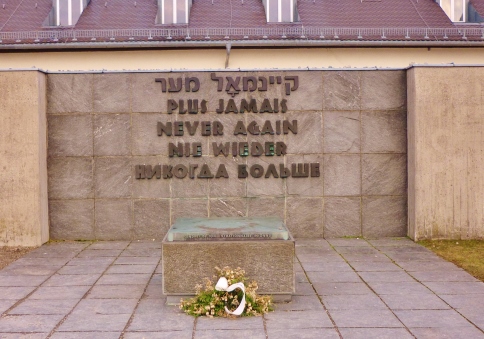
The evening of May 4th through the evening of May 5th mark Holocaust Remembrance Day, Yom HaShoah. In honor and memory of the millions of souls lost in the Holocaust, this simple photo of a wall at Dachau. Never again.
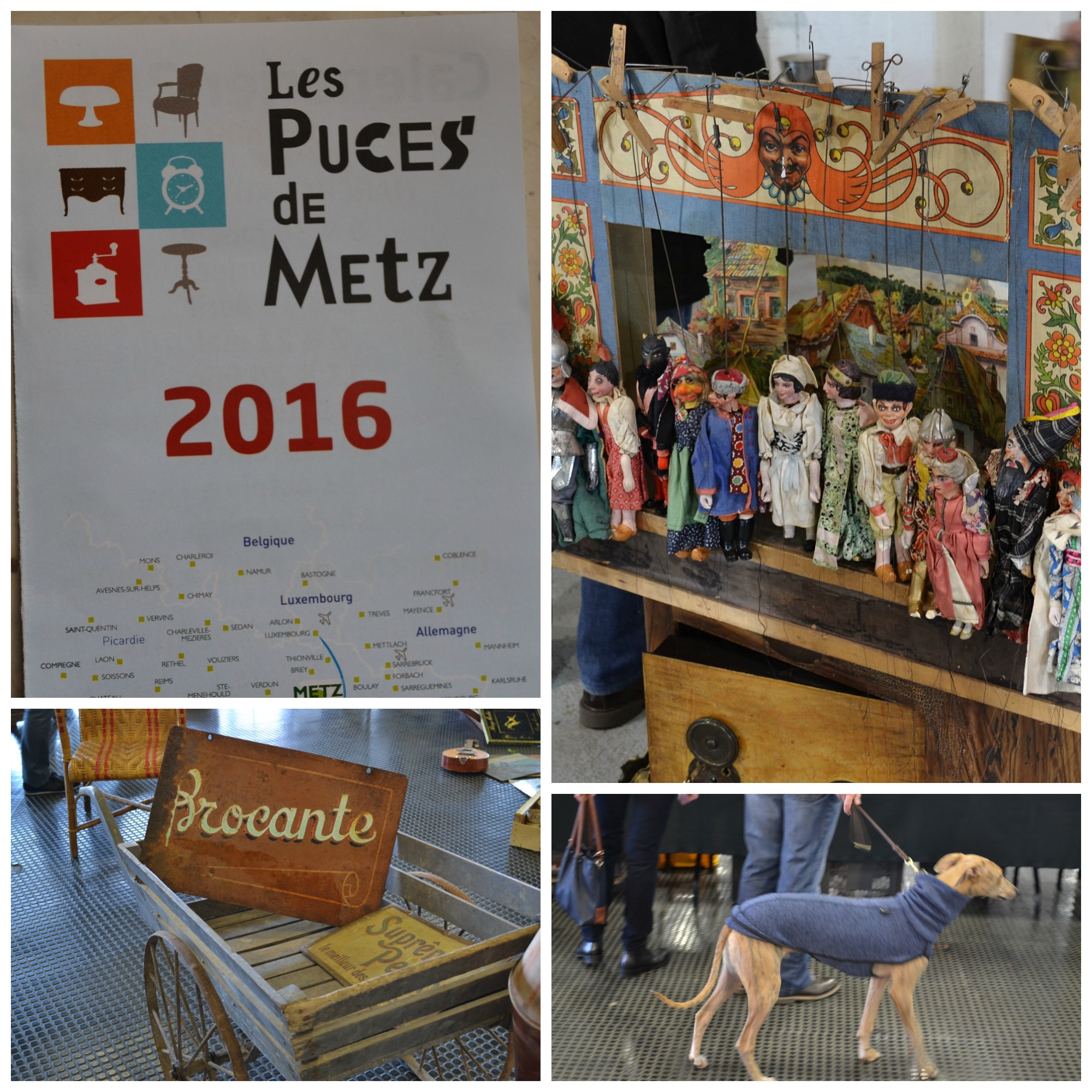
We ventured over the border into Metz, France recently, to visit an antique/flea market there. The market is opened once or twice a month, and we’ve been three or four times–in fact, it featured in one of my earliest posts from Europe. I think it’s time to mention it again because it’s a fun day out and I have the schedule of markets for the coming year that I can share with you. Very useful information if you live nearby!
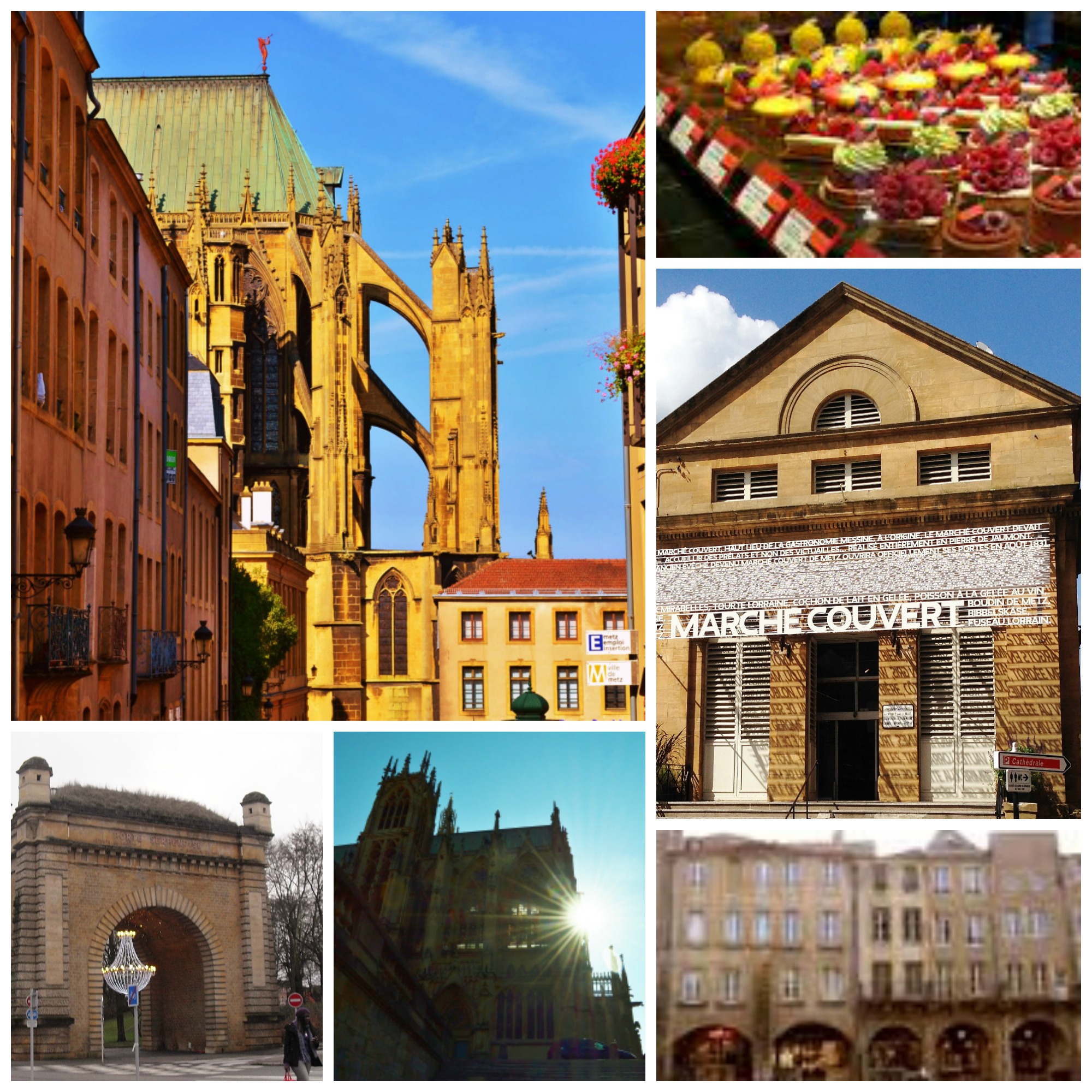
The city of Metz, sat on the Moselle River in Alsace-Lorraine, is an incredible day out with or without flea markets. It has Celtic and Roman roots, and its history has remained storied and lively up through modern times. Like all of this region, it has been a matter of French-German border disputes in the modern era (German during the late 1800’s, French after WWI, German again in 1940, and French after WWII).
This city has something to appeal to everyone: the history buffs, the coffee and pastry connoisseurs, the architecturally voyeuristic, the _____ (fill in the blank yourself). Photographic proof below:
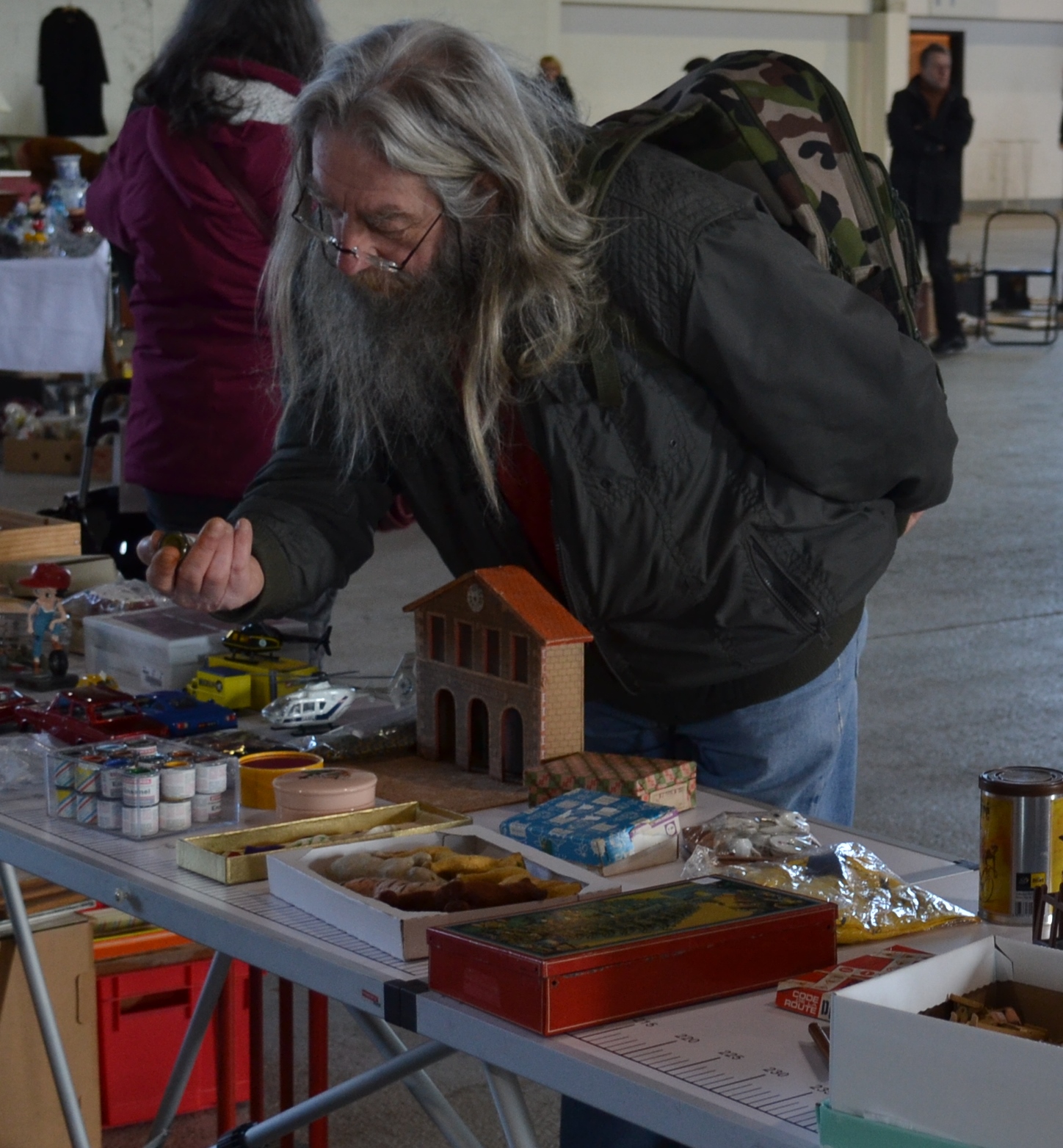
But back to the flea market that comes to the indoor Expo center frequently. It’s one of the biggest markets around, bigger than most of the markets that pop up in Paris, even. (Although smaller than the famous Marche aux Puces at St. Ouen in Paris.) This particular day, there were lots of food merchants (not always the case), in addition to the dozens (and dozens and dozens) of vendors peddling antique furniture and silver, vintage jewelry, vintage radios, tableware, dollhouses, signs, cutlery, wine paraphernalia, gardenware, etc. There were even merchants with chic French perfumes.
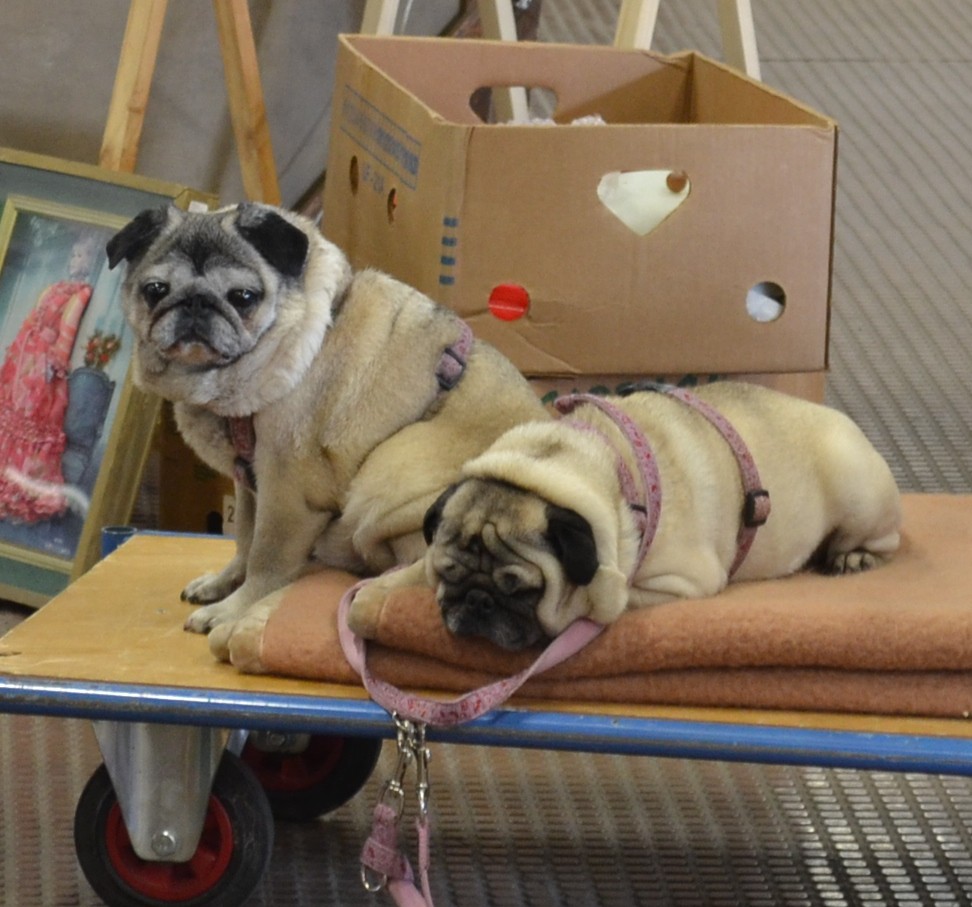
Oh, yes– and dogs. So many sweet dogs. (Not for sale!)
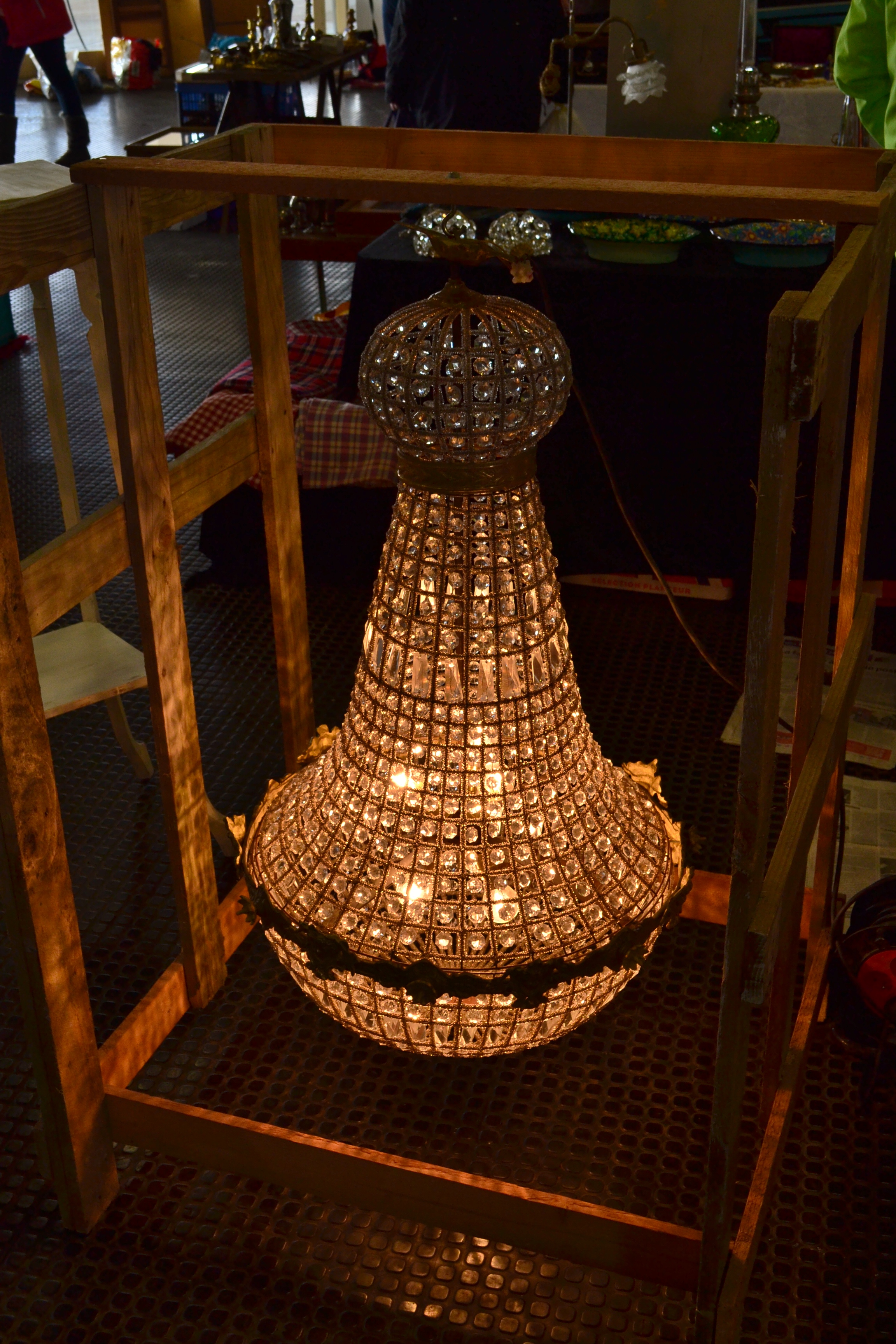
Beautiful old French chandelier.
There were certainly things that were beautiful
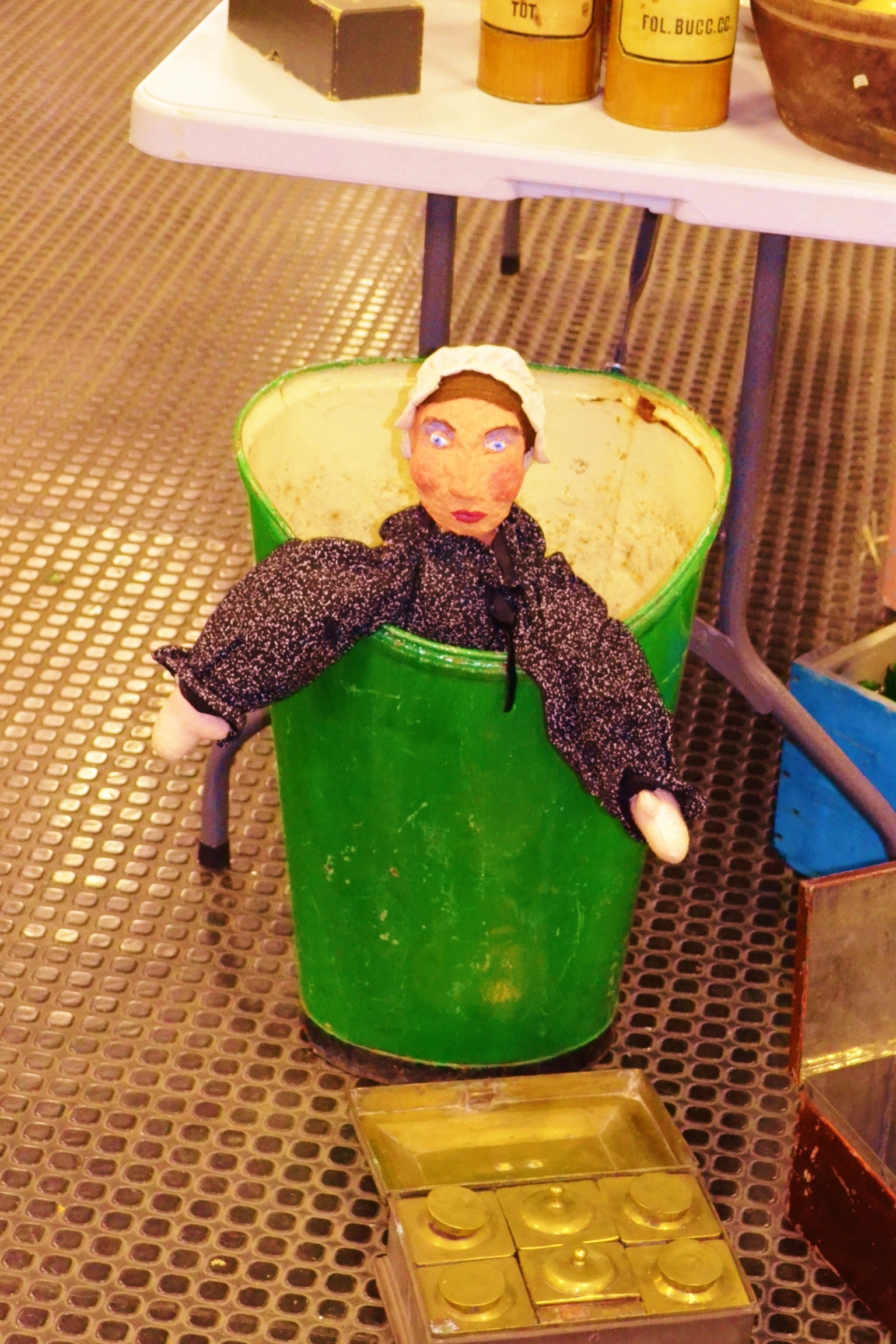
This doll would give my kids nightmares.
. . . but also things that were creepy.
A little of everything under a warm and dry roof– it made for a great morning of shopping.
If you are wondering whether I bought anything, then you don’t know me well. Of course I bought something! But shopping at a place like this isn’t so much consumerism as it is a cultural lesson– a way to travel across times, social classes, and ideologies . . . and to cross the barriers of good taste more than a little, probably.
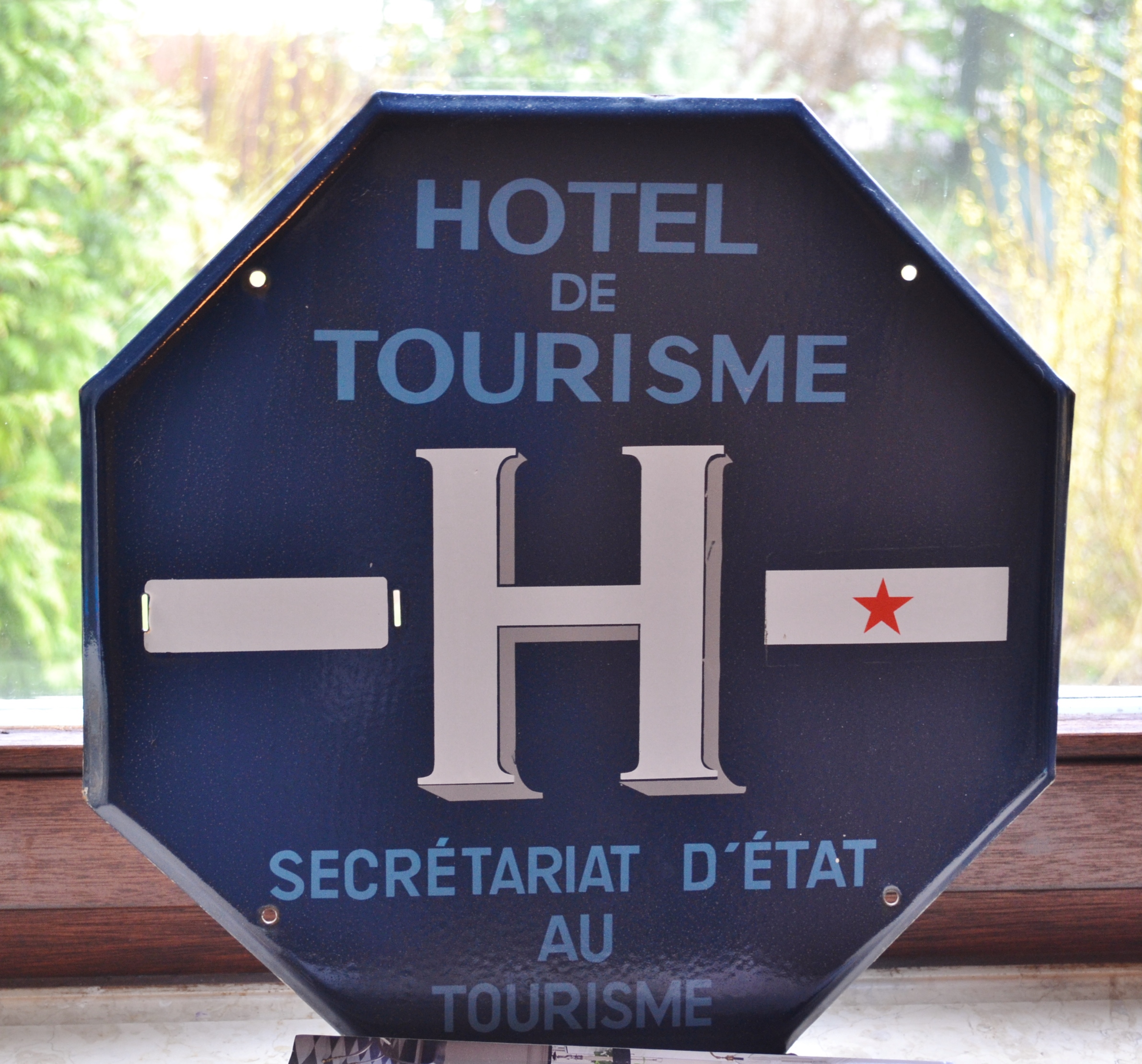
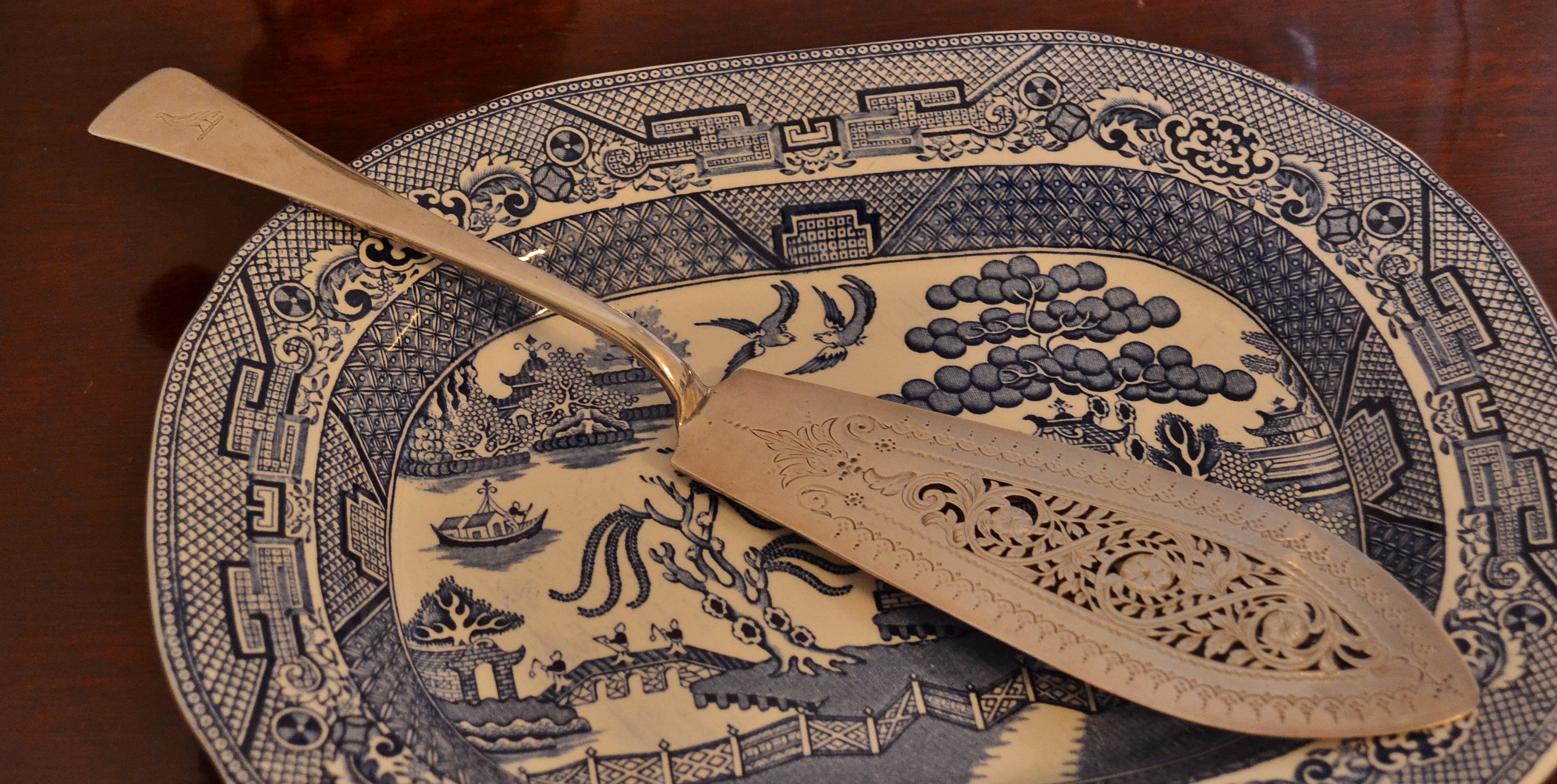
So we bought some wine paraphernalia, some French cheese, an old French hotelier sign, and a piece of old (1800’s) British silver. What do you do with a hotelier sign? I’m not entirely sure, but I knew we wouldn’t have too many more chances to buy one, so I couldn’t let it elude my grasp. I think it could be cute in a guest bedroom? (And appropriate that it is from a one star guesthouse, as I’m not known for my housekeeping skills.)
The sign wasn’t an all out bargain, but it was a little cheaper than the silver we bought. I have a weakness for old silver–
A silver fish slice/server
despite the fact that it has to be polished and doesn’t get used a lot. I used to see pieces everywhere when we lived in the UK and quickly learned to read the silver hallmarks, which indicate the city where and year in which a piece was made. They also indicate if a tax was paid to the king/queen, and that stamp makes each piece a quick read (if it’s a dowdy male head, you’re looking at a Georgian piece–early 1700’s to early 1800’s– if it’s a woman’s head, it’s Victorian –mid to late 1800’s). That ability to place a piece of silver makes it really interesting to me. Of course, sometimes you can date a piece by it’s style, sometimes by its wear. Old pieces can be pretty beat up looking, but often they are in fantastic shape–well cared for, they were obviously a prized possession for many years. And how lucky are you that you can pick up a 200 year old piece for a fistful of dollars, and use it to serve a fancy holiday meal–knowing full well that that punch ladle (or serving spoon, or fish slice, etc.) has seen its way around more holiday parties than you ever will. If it could talk, what stories and family secrets would it spill? This is the kind of thing that goes through my head.
And if I sound a little spacey, like someone who lives life in a Beauty and the Beast fairy tale where inanimate objects come to life, so be it. In my world, they do. And if you spend any time wandering these weekend markets in Europe, you may find yourself in the same mindset. Here’s how it goes:
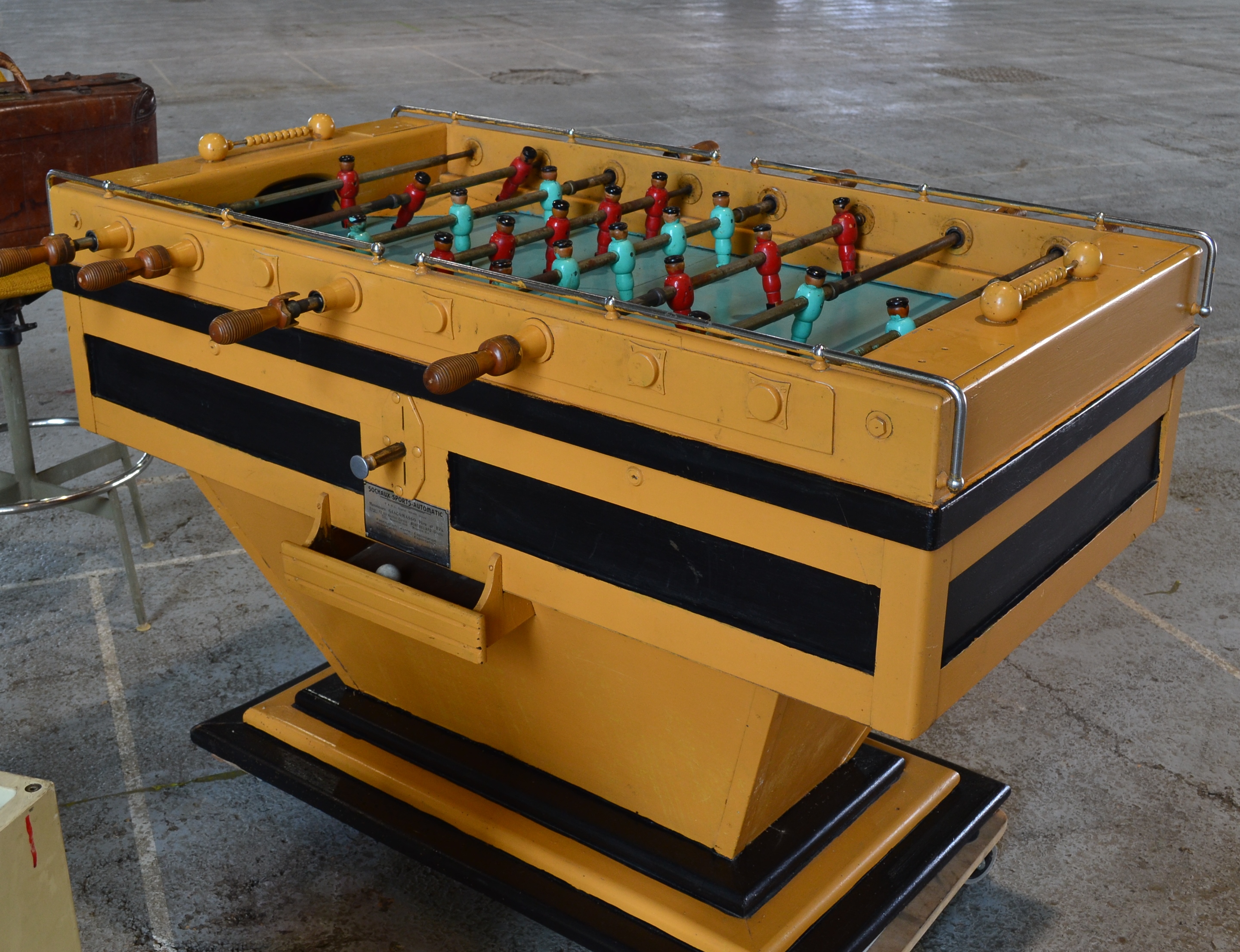
You wander into the flea market, still drowsy with sleep on a Saturday morning, and your eye falls on this vintage French foosball table. Foosball tables immediately take you back to college days and your shiftless friends at the Pi Kappa Alpha house. But here you are in France at a “vintage do”– the Twighlight Zone music starts to play in your head, time and space fall a little out of sync, and there’s no going back from there.
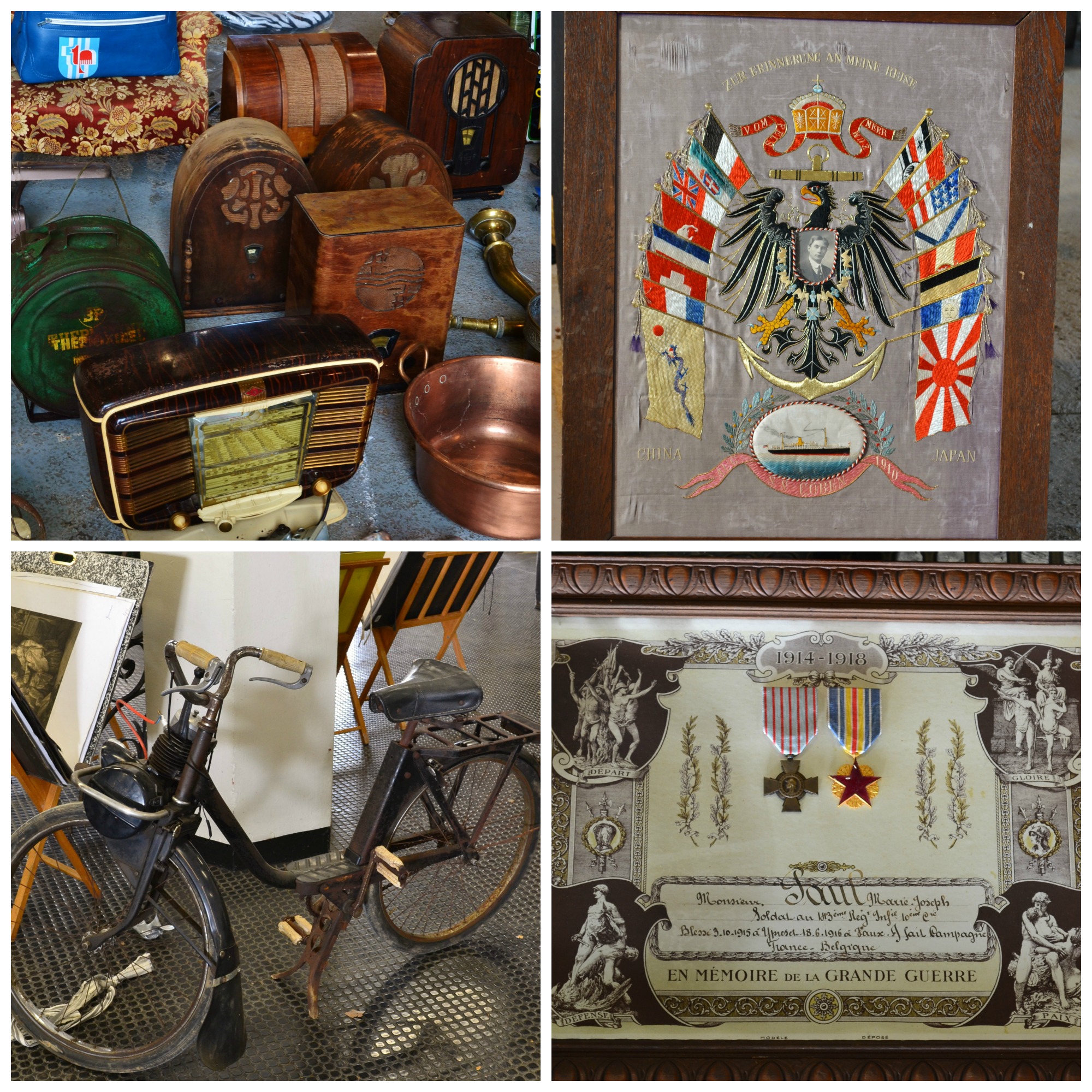
Next thing you know, the hands of time begin spinning backwards: You walk through a maze of old radios from the 30’s, 40’s, and 50’s, emerge in an aisle of World War II and Third Reich memorabilia, and nearly stumble over Rolf’s bike from The Sound of Music. (Ugh, I hate Rolf!) Hoping to get away from the evil grip of Nazi history, you make a beeline for a vendor whose display looks airy and inviting, and find yourself smack dab in the middle of World War I!
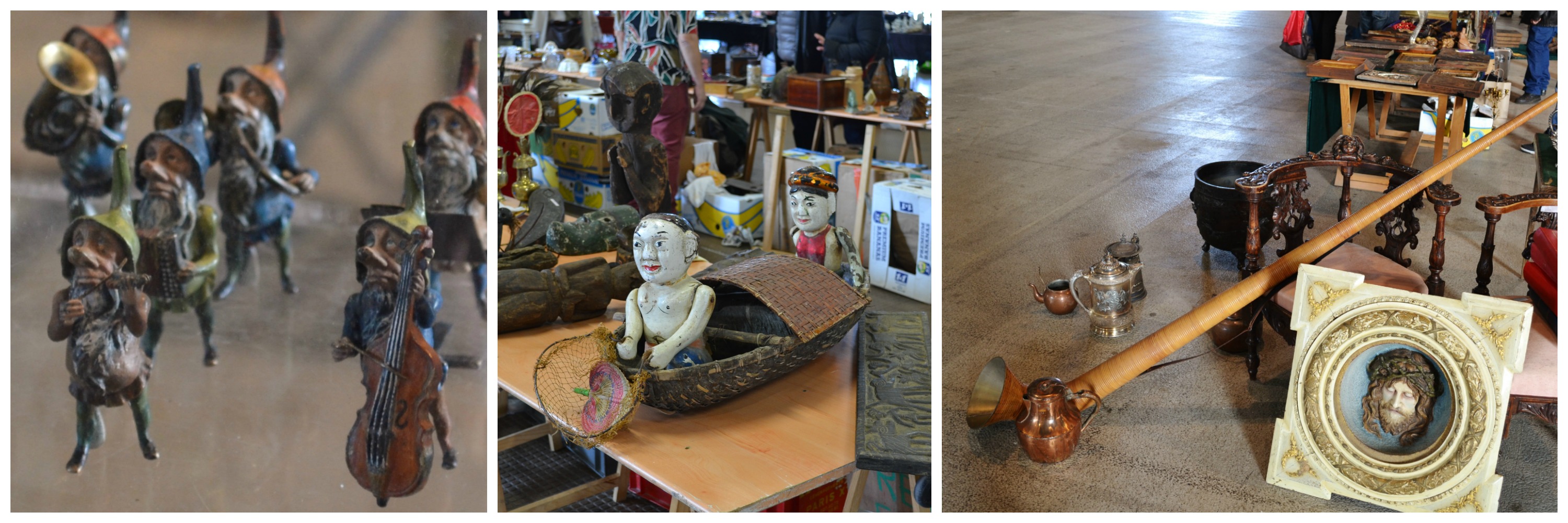
From there, things take an utterly surreal turn and you stumble into some magic land of German dwarf bands, Asian totem fishermen with eyes that follow you, and Alpine yodeling horns paired with Jesus in plaster relief.
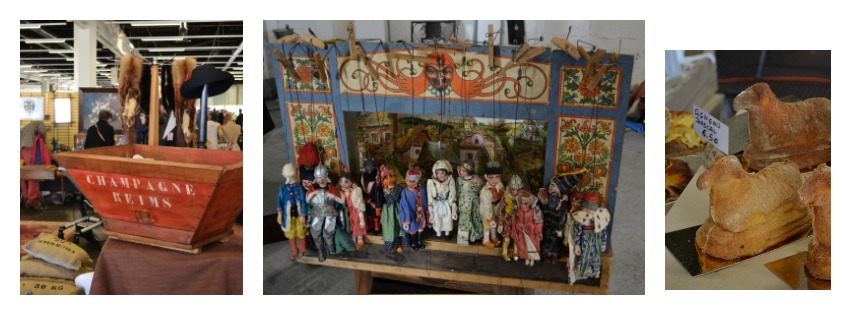
At this point, relief is exactly what you need, and you are all too happy to see more cheerful items: wine crates, Easter breads, and the world’s most beautiful marionette theater. When your Saturday morning shopping
Our wizard friend shops the stalls of Diagon Alley. . . ur, Metz market.
experience looks like this, you can’t tell me that it’s more about the shopping than the cultural experience. And you can’t tell me that life isn’t a little bit “Beauty and the Beast and singing teacups” after all. But if you want to tell that to somebody . . . well, you can take it up with Albus Dumbledor on your way out of the market. I’m sure he’ll set you straight, and possibly point you to the best wand vendor he knows.
Maybe that’s a key to how you should approach the Metz antique market– it’s the closest thing to shopping Harry Potter’s Diagon Alley that you will ever find in this life. You’d be nuts to miss it.
If you have a chance to visit the antique market at the Metz Expo–go, go, go. It takes time; it takes a little cash; it takes patience to comb through junk to find treasure; and it takes imagination. But the effort yields an absolutely magical morning.
If you check out the Metz Expo, do bring cash. (There may be an ATM on the premises, but I’m not sure.) In my experience, these merchants aren’t big on haggling, at least not compared to the Brits and the Turks. If you come later in the day, you probably stand a better chance of working a deal . . . but you’ll also miss out on some of the best merchandise that gets snapped up quickly– it’s a calculated risk.
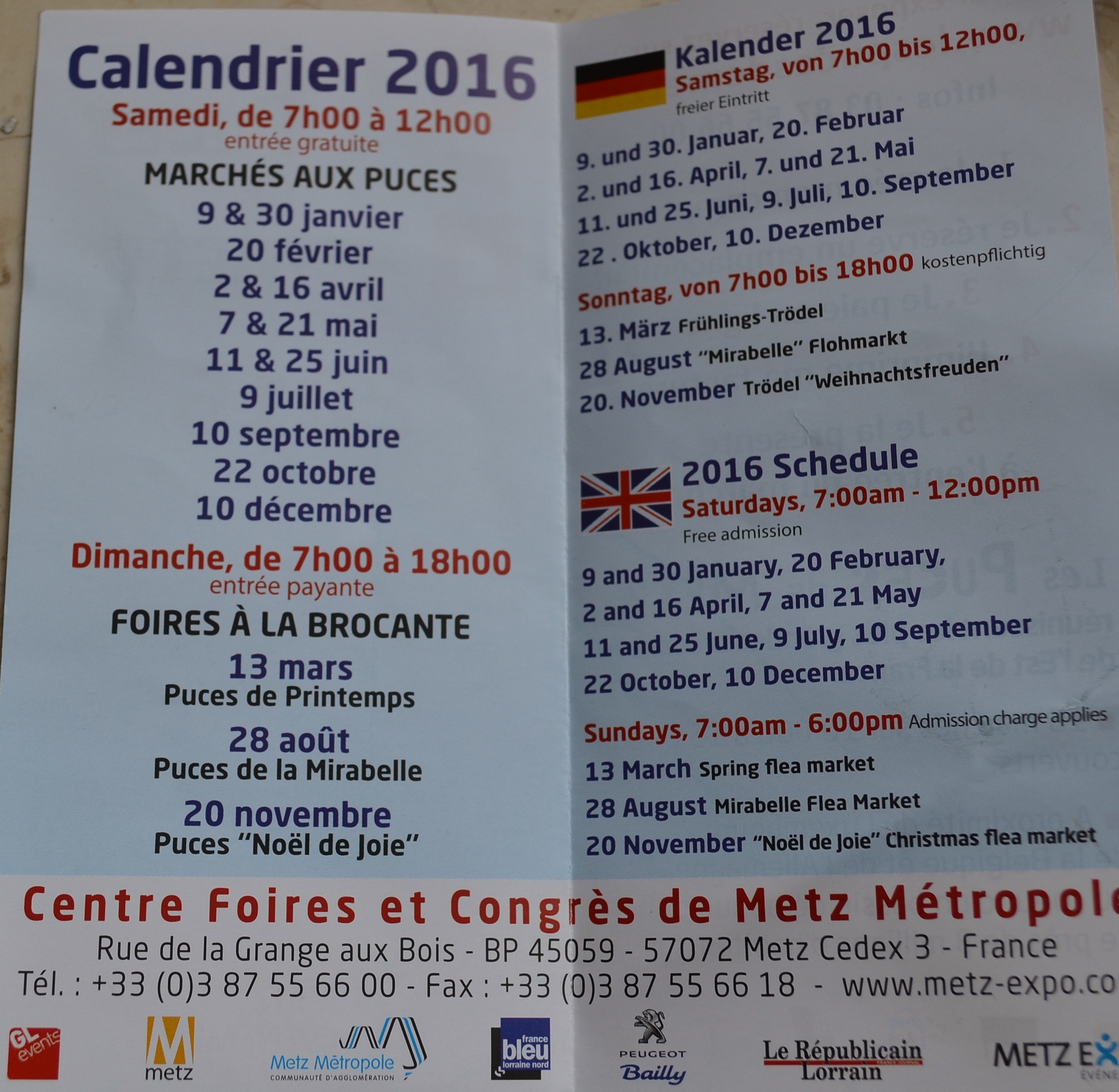
Here’s the schedule, and the address is Rue de la Grange-aux-Bois. (The market is easily accessed from the highway, but also only 10-15 minutes from the center of town–so you can make a whole day out of it and enjoy Metz, if you like.) Bon Chance!
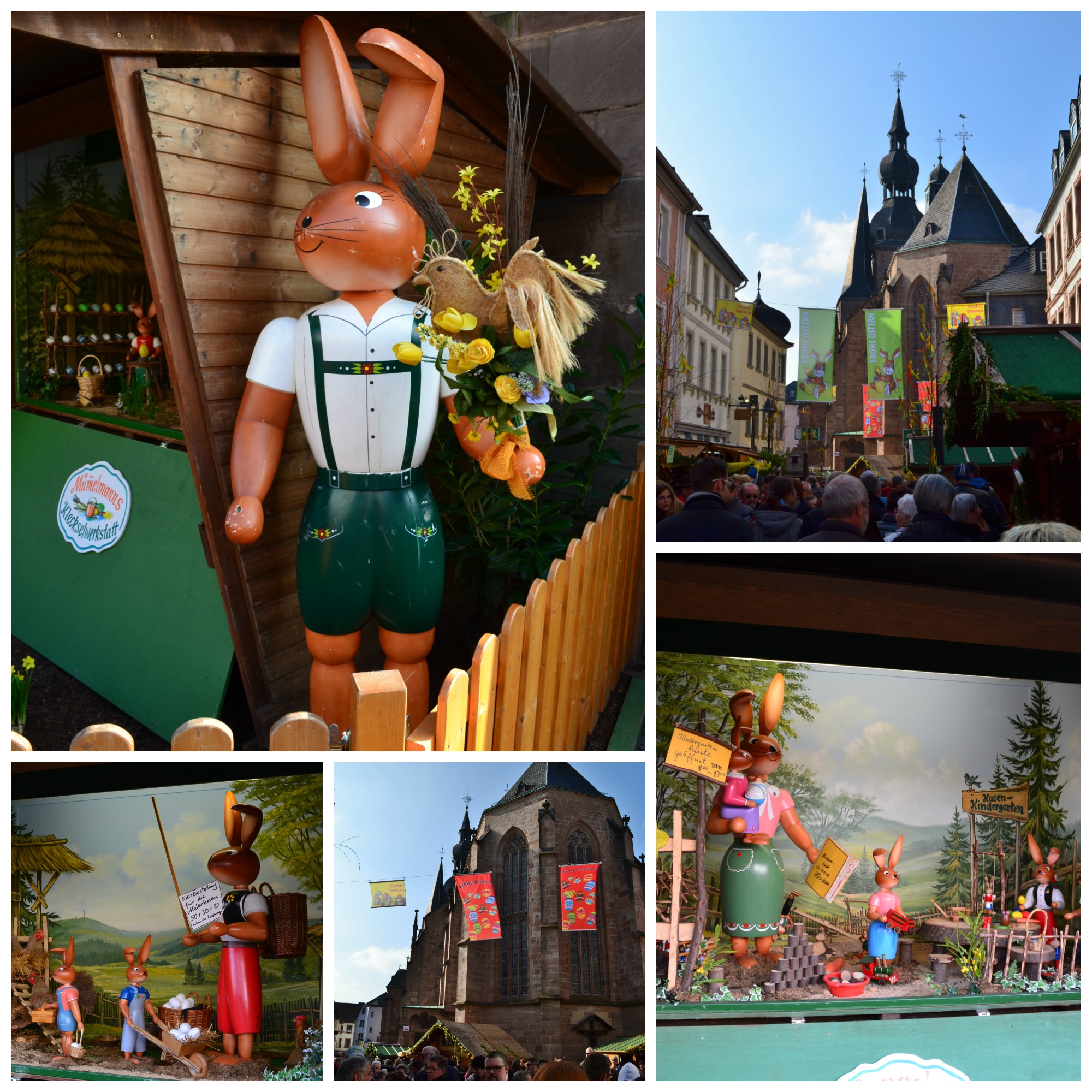
Dieser ist die Ostermarkt Sankt Wendel/This is the Easter Market in St. Wendel
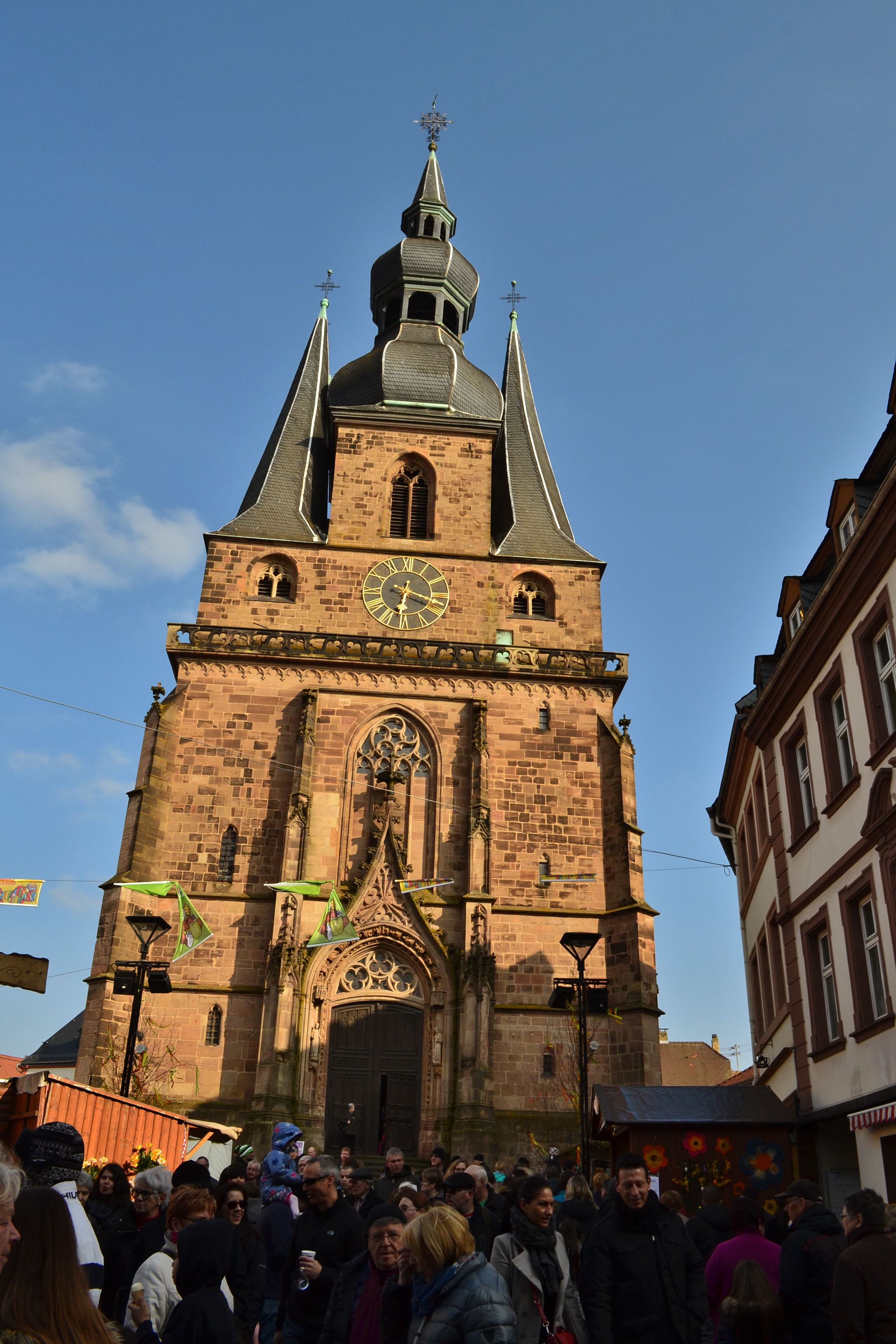
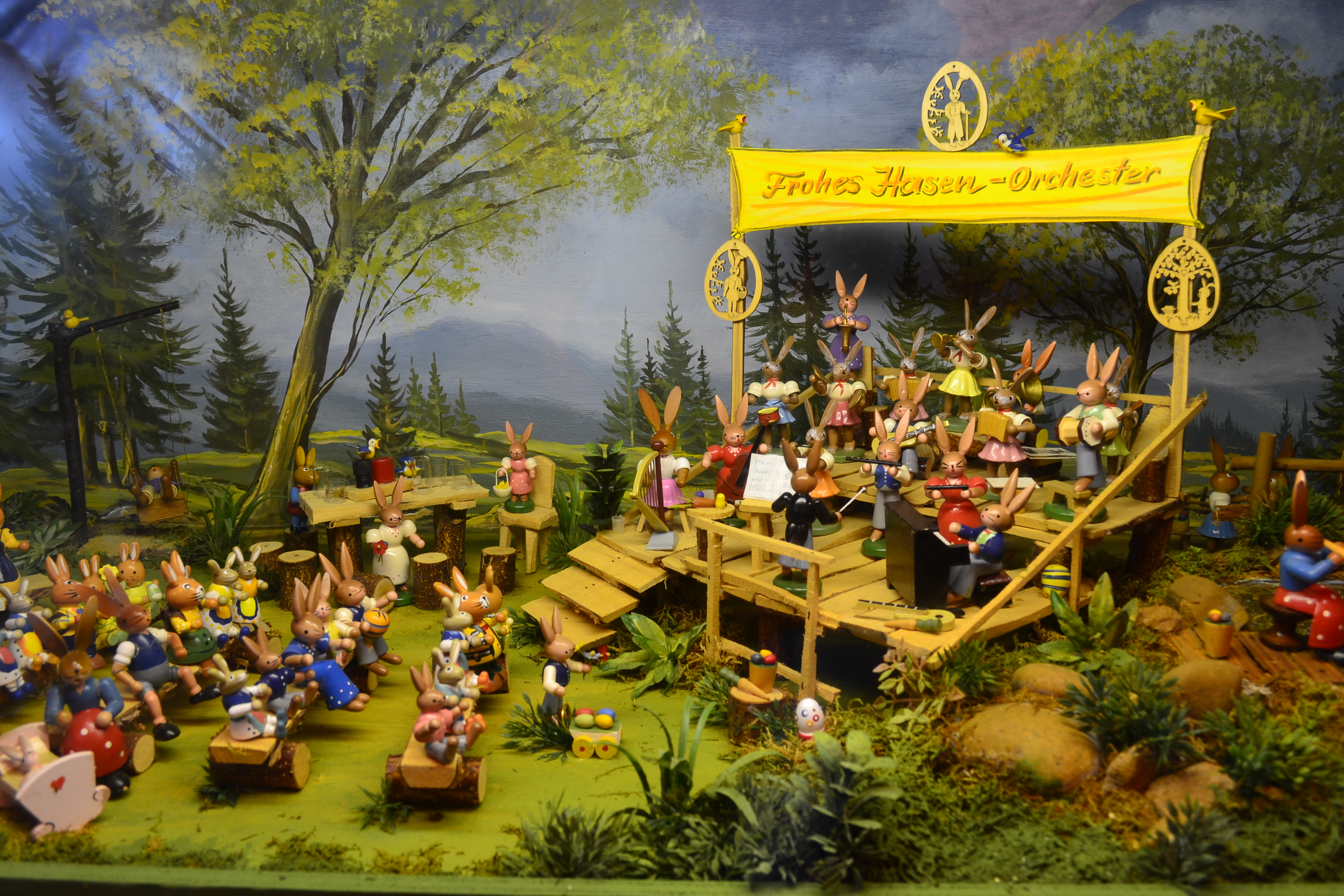
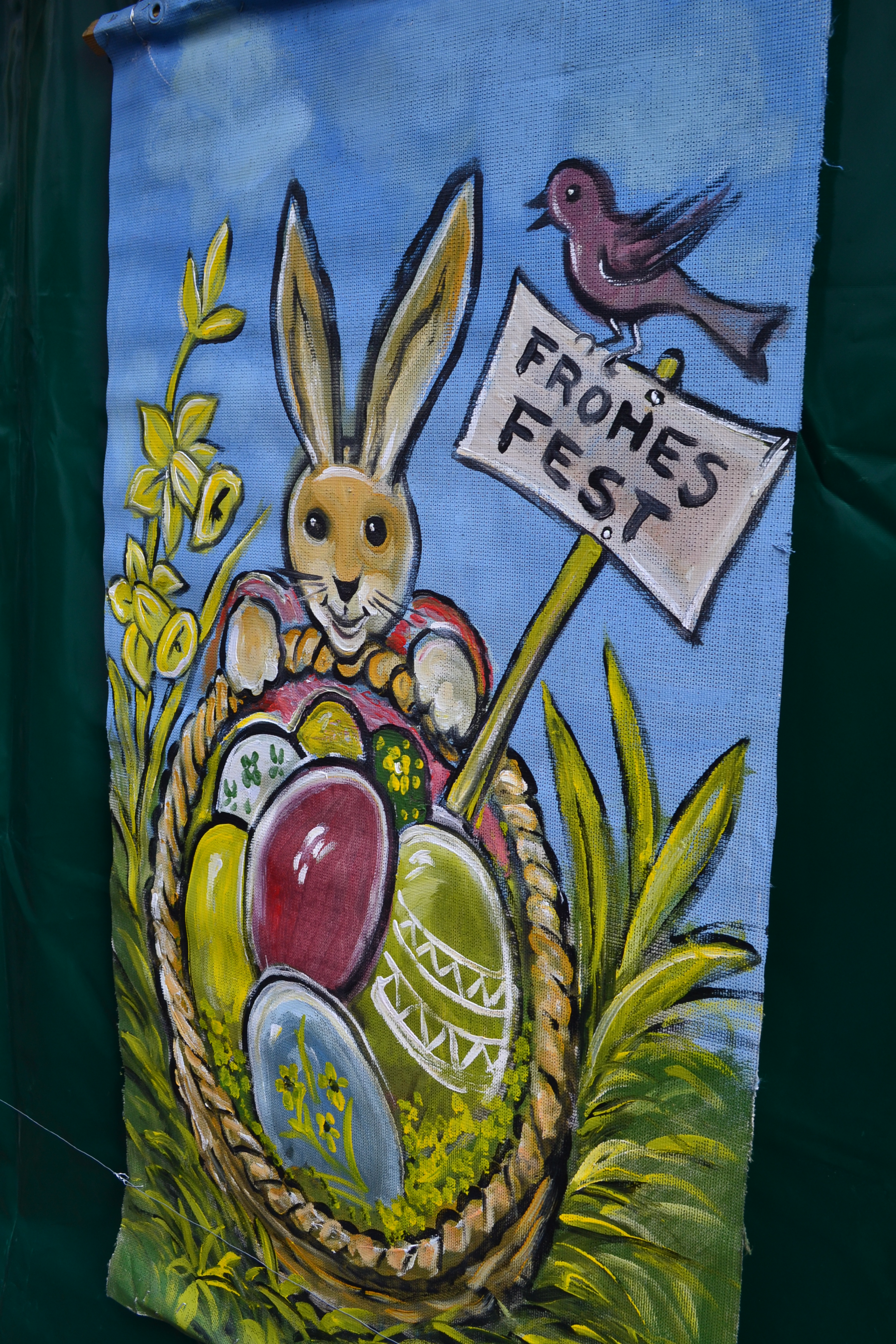
Easter markets are popping up all over Germany, and we visited the market at Sankt Wendel this weekend. It was busy with market stalls full of painted Easter eggs, wooden Easter crafts, flowers, and jewelry. There were craft stations for children and food and drink for everyone. It was a nice day out, especially with the sun shining brighter than it has in many weeks. Our favorite sights at the market were the Easter Bunny displays and the fantastic Dom (Church) in Sankt Wendel.
The church was the center point of the market festivities, with stalls huddled around her walls. The photo at left doesn’t do the exterior of the church justice–in the busy, small streets around the church it was hard to get a photo that shows the fantastic double-onion dome (with a third tier “cap” and cross set above the domes) in proper perspective. This church is stunning.
The interior of the church is equally beautiful. Here are a few photos for you:
The Easter Bunny displays at Sankt Wendel were lots of fun too–a little whimsy and a lot of artistry. But, like so many German traditions, these displays got me thinking. Where did this story of the Easter Bunny get started? It seems obvious that America inherited its Easter Bunny traditions from Germany, as the Easter Bunny is not ubiquitous in Europe. In France, for instance, the Easter Bells (Les Cloches), having flown off to Rome in the days before Easter morning, fly back home and bring eggs and chocolates to children.
The Easter Bunny seems to have started out as a German/Lutheran tradition. Mention of the tradition dates back to texts from the 1600’s, and it does seem that the bunny did more than spoil children with treats. There was an element of judgement–who had been good and who had been bad? (There is, in German traditions, always an element of judgement. If you don’t believe me, check out my past blogpost on St. Nikolaus and his sinister sidekick — Saints and Devils, Fire and Snow.)
But what made the Lutherans think up this magical bunny? Well, they borrowed from earlier traditions too. In German, this Easter Bunny is know as the “Osterhase” (the Easter Hare), and it’s widely accepted that many roots of our present Easter traditions come from pre-Christian traditions. The goddess Eostre (and her symbolic rabbits) were a focal point for spring fertility rituals. Fertility, bunnies, eggs–you can certainly see the echoes in present day traditions.
You see the same pattern in Christmas traditions–the Christian holiday did pick up some flavoring from the Roman Saturnalia holiday that came before it. We’re all magpies in some respect–we incorporate bright scraps we find and fancy here and there, and we add those scraps to our nests. No holidays, religious or otherwise, spring fully formed from a doctrine or ideology–they incorporate the surrounding culture. This may seem odd when the surrounding culture is pagan and the newer holiday is Christian, but hearts and minds change slowly, piece by piece, person by person. Any slow turn of a culture will incorporate what its ancestors held dear, no matter how odd a pairing those ideas and traditions are. Flying bells? Easter bunnies? A little odd if you think about it logically. But, really, if all of our stories hinged solely on logic, we’d be all out of beauty and mystery. We’d be done for.
Long live the Osterhase!! Frohe Ostern! Happy Easter to you!
I have no idea where this story starts– only Emily could tell you that, and she has been silent for years now. I can’t fill in all the details, but I can tell you when her shadow crossed over our doorstep.
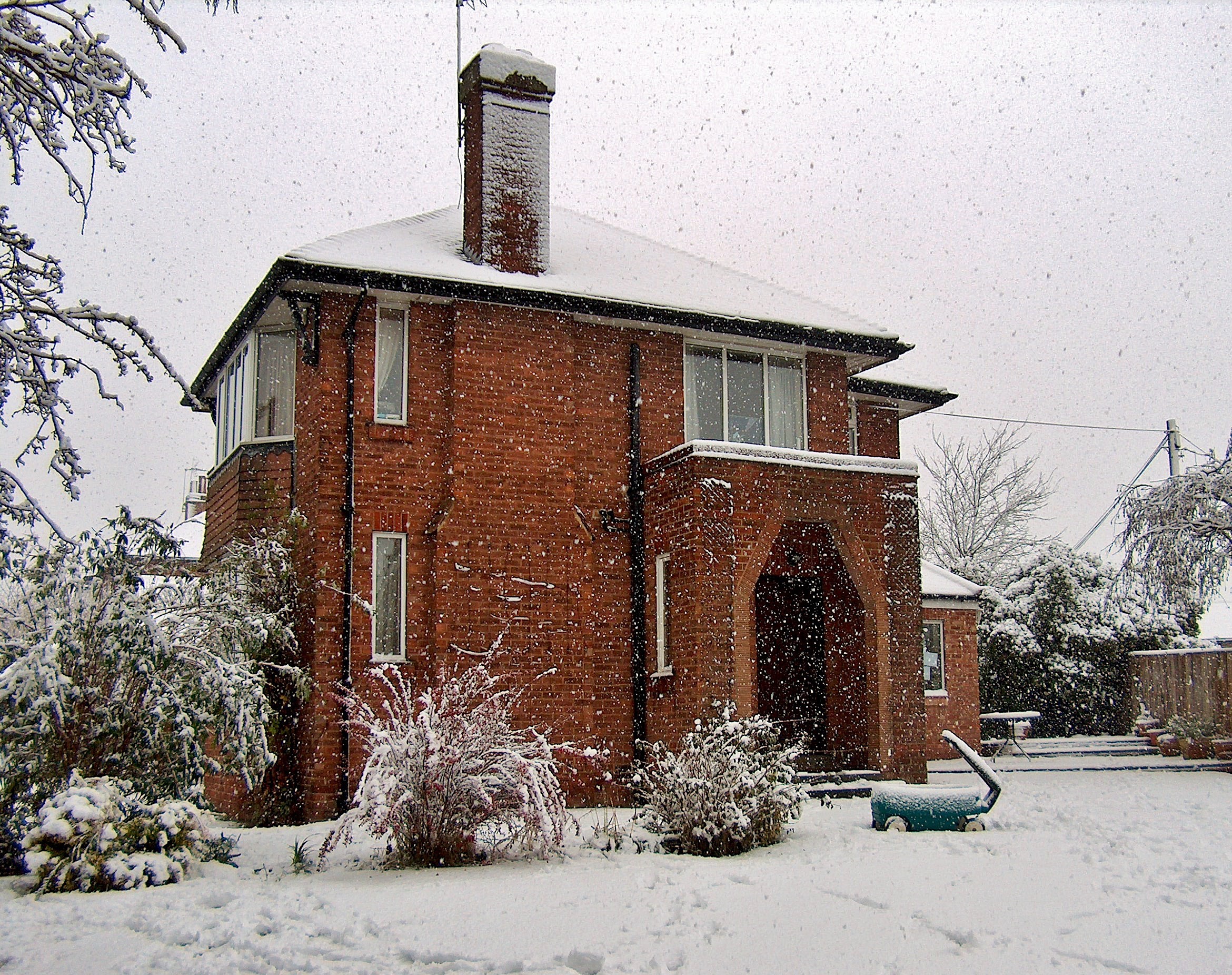
It was a fine and cozy doorstep in Ripon, North Yorkshire, England, and it was our home for four fantastic years. We dove headlong into the spirit of British life and tried to pretend that we were Brits ourselves.
We fooled no one, but we had a good time. The kids attended British schools, my husband and I drove on the left side of the road (more often than not), and I learned how to make a mean steak and ale pie and sticky toffee pudding.
When we returned to the States in the summer of 2009, there was a posh lilt to my children’s speech, a cupboard full of treacle and hedgerow jam in my kitchen, and a ghost in our walnut chest of drawers.
These things happen when you live close to the Yorkshire Moors.
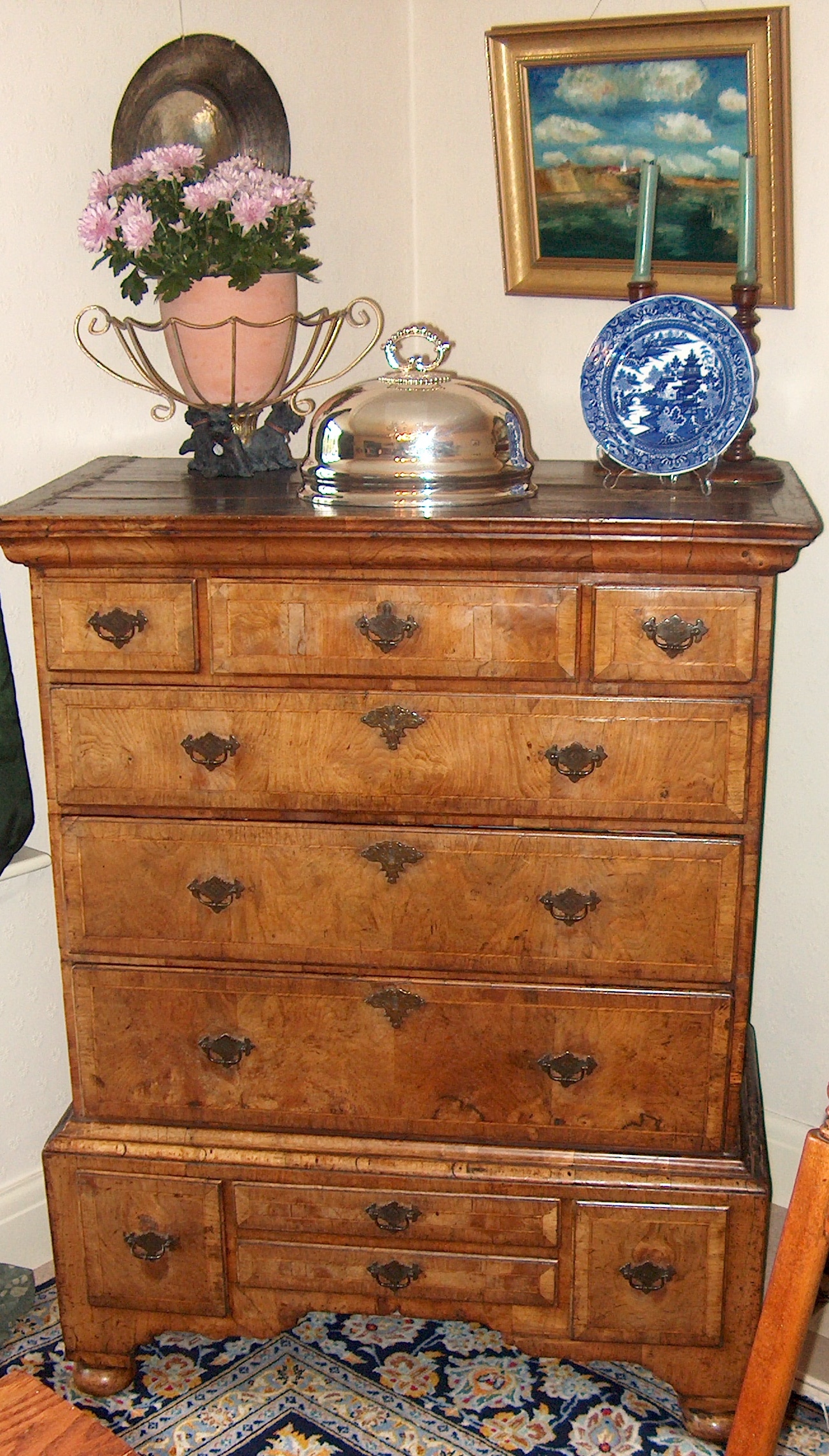
The old Queen Anne walnut chest — did we buy more than we bargained for?
The chest that housed our shadowy friend came from an auction house twenty minutes north of our home. She is a beautiful old walnut piece–Queen Anne era, so roughly 300 years old– originally a chest on stand with longer, probably delicate, legs. But three centuries of life had, literally, brought her to her knees. Now she stands on stumps– ball feet that are likely over a hundred years old at this point.
I think the chest is beautiful. . . the hard knocks of a long life have made her quirky, but she still sings to me.
So I was overjoyed when we brought her home from the auction house and carried her into our dining room. We dusted her off, gently cleaned the insides of the drawers, and whooped and hollered when we found a secret compartment.
It was cobwebby, and James shuddered as he stuck his hand in there. We both hoped there would be old coins or letters, some relics of the lives lived in times beyond our reach. But there were only cobwebs.
Or so we thought.
While we moved furniture to settle the new piece into its spot in the dining room, my daughter (who was about 7 years old) was upstairs digging into her dress up box. She came down the stairs in a colonial era dress, saying that we must call her Emily. It was cute, and she kept up the charade, never breaking character, until it was finally time to march upstairs and take a bath.
Meanwhile, after dusting our chest and admiring her beauty in a tidy corner of the dining room, we continued on with our life. Dinner had to be made; children had to be bathed; bedtime stories were read, and, eventually, we all tucked in for the night. Unsuspecting.
In the wee hours, someone woke me up. My young children were standing at the edge of the bed. Without even fully opening my eyes–as this was an all too common pattern with my son, and it was a ritual I could very nearly perform while still asleep– I got up and cupped my arms around my two children to lead them back to bed. My left arm scooped my son, but my right arm came up empty. I opened my eyes and turned to find Kate, but she wasn’t there.
“William, where’s your sister?” I asked. “She isn’t here,” he said. I shrugged it off, just happy to have only one child to put back to bed.
But I woke up the next morning and sat bolt upright: two children, I thought, I saw two children. I saw two children–a boy and a girl. There were two, and then there was one. I asked my son again that morning where his sister had gone, but he told me that she was never there.
I don’t spook easily. I’m not particularly superstitious. And, oddly, I was fairly pragmatic about this. I told my husband about the incident and put it out of my mind.
For a few days.
Until I woke up in the middle of the night to find my husband standing up and running his hands all around the bed, looking for something. “What are you doing?” was my question, naturally. “One of the kids is in the bed,” he said. “No,” I said, “there’s no one in the bed but me.” But he wasn’t convinced. Something was in the bed; someone had come into the room.
Someone.
There was really only one explanation. Only one new member of the family in the past week. And apparently she was more ambulatory than those ball feet let on. Could a piece of furniture harbor a ghost? We decided to call this maybe-ghost Emily. I suppose she had tried to announce herself the minute she came into the house.
We spent the next few days sipping a strange cocktail of emotions–a shot of intrigue, a splash of fear, a dash of dread, and a big old chaser of humor. Honestly, who buys a ghost with their furniture? And a ghost that tries to climb in bed with you at that? There is a whole lot of creepy to that–but, as much as I squeezed my eyes tight the next few nights and swore to open them for nothing until the morning came, my motherly instincts kept asking why? I mean, assuming there was a ghost and we weren’t just nuts whose imaginations had run away with them (not a sure bet, I know), why would a child keep just showing up in our room? Loneliness, I suppose.
I wanted to know the story–this ghost was going to kill me with curiosity, if nothing else. So my husband and I drove back to the auction house and asked the owner, Rodney, if he could shed any light on the piece of furniture we’d bought. He disappeared in the back office and quickly reappeared with the only paperwork he had on that piece of furniture–paperwork indicating that the chest had been removed from The Old School House in Thoresway, Lincolnshire.
This told us absolutely nothing about the circumstances of the chest, but it also did nothing to quell our interest. A School House? A building with a long history of children, children, and more children? Our heads were spinning.
But what can you do? We didn’t have an answer at hand, we didn’t even have a problem on our hands, we just had a curiosity. A couple of incidents in a couple of weeks’ time. And plenty of friends to add in their two cents: antiques have bad feng shui, and did we know that young children used to sleep in dresser drawers (pulled out) before there were cribs? My favorite reaction came from the wife of the local cathedral’s canon: Oh how wonderful! I’ve always wanted to see a ghost!
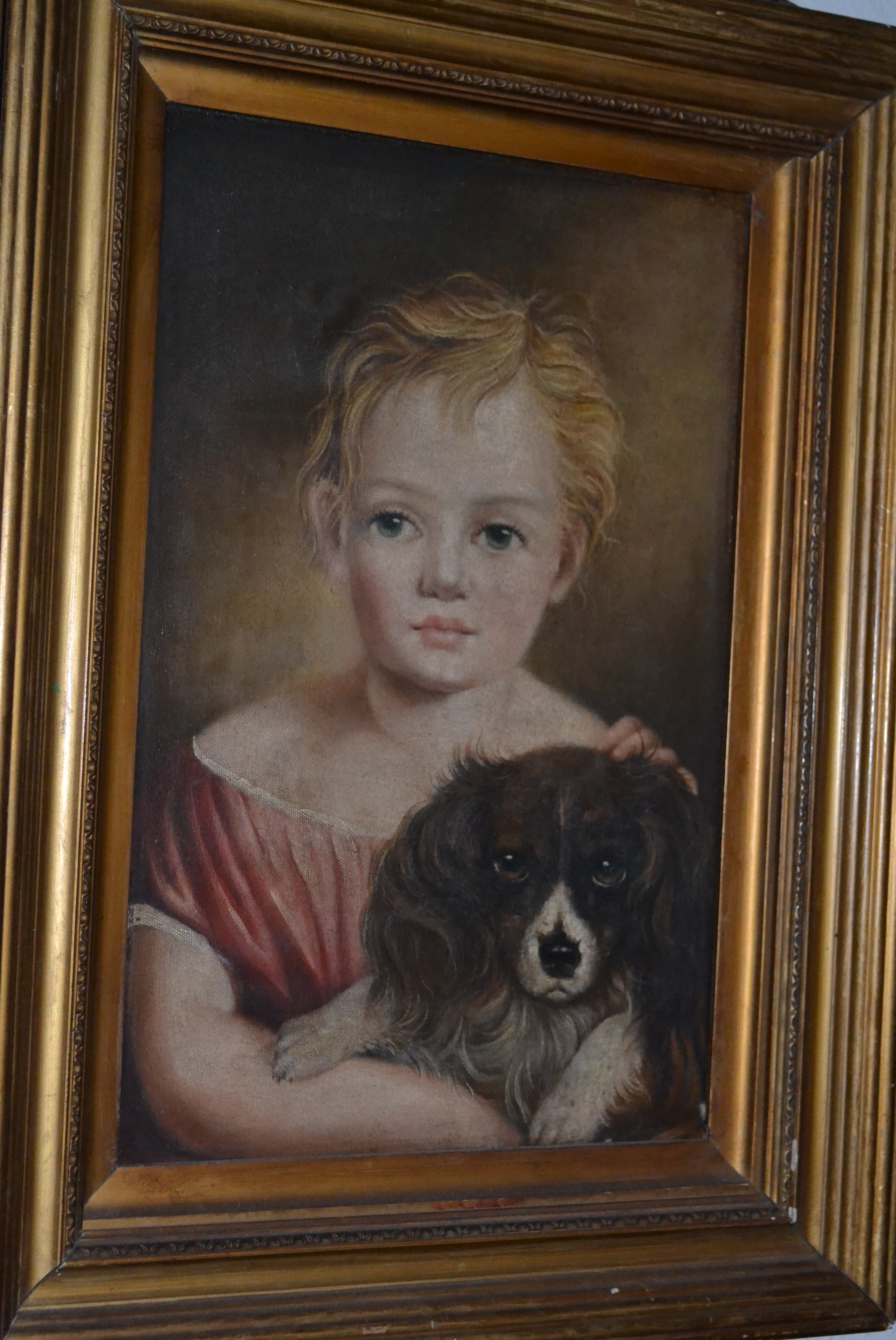
Within the next week or two, I purchased an old painting from an antique market: a portrait of a child with her dog. We named her Emily and hung her on the wall by the chest. If you can’t beat them, join them, right?
**
I’m not sure how to tell you the next part of the story. To be honest, I usually tell it to friends around a table where the wine is flowing freely. Somehow that puts people in a better mindset to hear it . . . and also makes them more understanding of this next twist.
I’m a softy, and I’m sometimes a kook, and when something lies heavy on my heart and I drink wine–you know. Emily didn’t show up much in the next year, but this is no surprise because she and I had a heart to heart late one night, and I think this put her at rest.
James and I had been out to a friend’s party–homebodies that we are–and we’d had a very good time. I had an especially good time, and came home feeling very generous and earnest and just a bit wobbly. When we got home, I pulled a chair up to the chest and proceeded to tell Emily, at great length, that we just wanted her to be happy, and that we were terribly sorry if we acted terrified of her, but we’d be honored to have her in our home.
Because that’s how everyone talks to their ghost-furniture, right?
Well, you know, I meant it. And it worked. Peaceful nights from then on.
**
And then we moved Emily over the ocean on a slow boat and resettled her in Georgia. We laughed a slightly nervous laugh and joked that she’d be really angry about that–brace for chaos. But no chaos came.
We moved into a new house, re-floored, painted, and set Emily up in the formal living room. The house looked good; the chest looked good; the feng shui felt right.
And then my husband threw a curve ball. He saw a wierd, shadowy something in the corner of the front hall–right by the living room. He didn’t know . . .he was just saying . . .it was strange and his first thought was Emily.
But I didn’t believe a word of it. James likes to play pranks, and as much as he insisted, I laughed and said right, like I would believe that. End of conversation.
Until a few weeks later, when I was scrolling through messages and pictures on my new flip phone (it was 2009). My daughter, then a 4th grader, had been having fun with the camera phone–catching her grandmother in her pj’s, photographing her brother with a cabbage on his head, taking a photo she entitled Haunted Hallway. . . . This stopped me cold. She had photographed the same spot in the house James had described and she gave it that caption.
I very nonchalantly asked her about the photo. She said, “Oh, it just looked wierd, so I took it.” No more reason, no more thought. It was haunted seeming, so she took the picture. The photo didn’t look that strange to me, but then how photogenic are ghosts?
And what a strange, strange coincidence.
**
You can be a skeptic, and I won’t blame you. But me, I’m a big fan of Emily. At least for now.
When we moved to Germany, we left her in a storage facility until we return next year. That could make for one mad ghost. Check back with me in a year, and see how she took it. Or, better yet, come over and drink wine with me next year–we’ll have a heart to heart with Emily and smooth things over.
“I have endeavoured in this Ghostly little book, to raise the Ghost of an Idea, which shall not put my readers out of humour with themselves, with each other, with the season, or with me.”



 She was a young woman growing up in the Netherlands when the Nazis came to power. Her family was pulled apart, her father died in Auschwitz, and she became a courier with the Dutch resistance, taking a false identity and dodging the authorities while helping the cause. Eventually, she was caught and sent to prison, then transferred to Ravensbruck.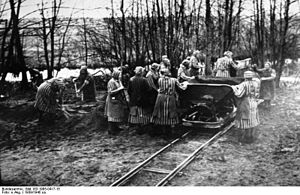


 Travels and Tomes: One Expat's Amblings and Ramblings