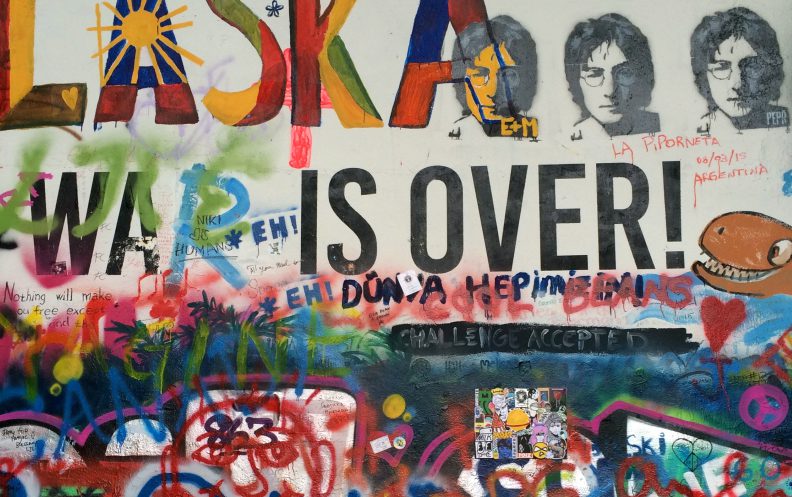
All I Want for Christmas is a Ghost*

(*Originally posted December 17, 2015)

It’s been a long time since I’ve written a This Old House post, but here goes.
 

ghosty snow house moon
A foggy winter night at “the castle.”

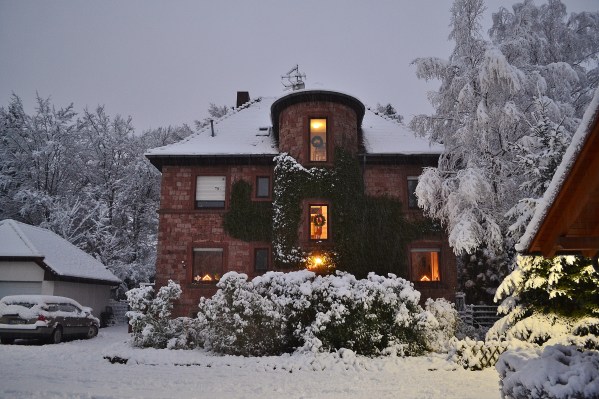
We loved the atmosphere of this house from the first moment we saw it.  We have continued to love those moments when you turn the corner toward our house and– “Ta Da!”– you see the oh-so-European red stone castle (albeit diminutive) that we call home.

We moved into the house a year and a half ago, fully aware that an old house would have its share of issues: hot spots, cold spots; inefficient utilities; old bathrooms; pipes that occasionally clog; and light fixtures that give up the ghost.

But we also considered that the ghosts of this house might not be the giving up kind.
dsc_0113

“Marley was dead, to begin with … This must be distinctly understood, or nothing wonderful can come of the story I am going to relate.” ―  Dickens, A Christmas Carol
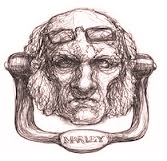
Creative Commons licensing

When we first moved into this old home, I harbored a secret fear and longing–an uncomfortable pairing– that the place might be haunted.  It was the right sort of house for that:  imposing, old, creaky, and definitely situated in a country with its share of ghosts.

I was terrified that we’d be plagued by eerie happenings.

 But then nothing happened.  

Eventually, I became simply curious about whether eerie things might happen.

Still, nothing happened.  

After a while, I was just put out that nothing, not one darn thing, spooky had happened.  What a rip off!  I have to live with old (I mean OLD) bathrooms, and I don’t even get a good ghost story out of it!?  Not a fair trade off if you ask me.
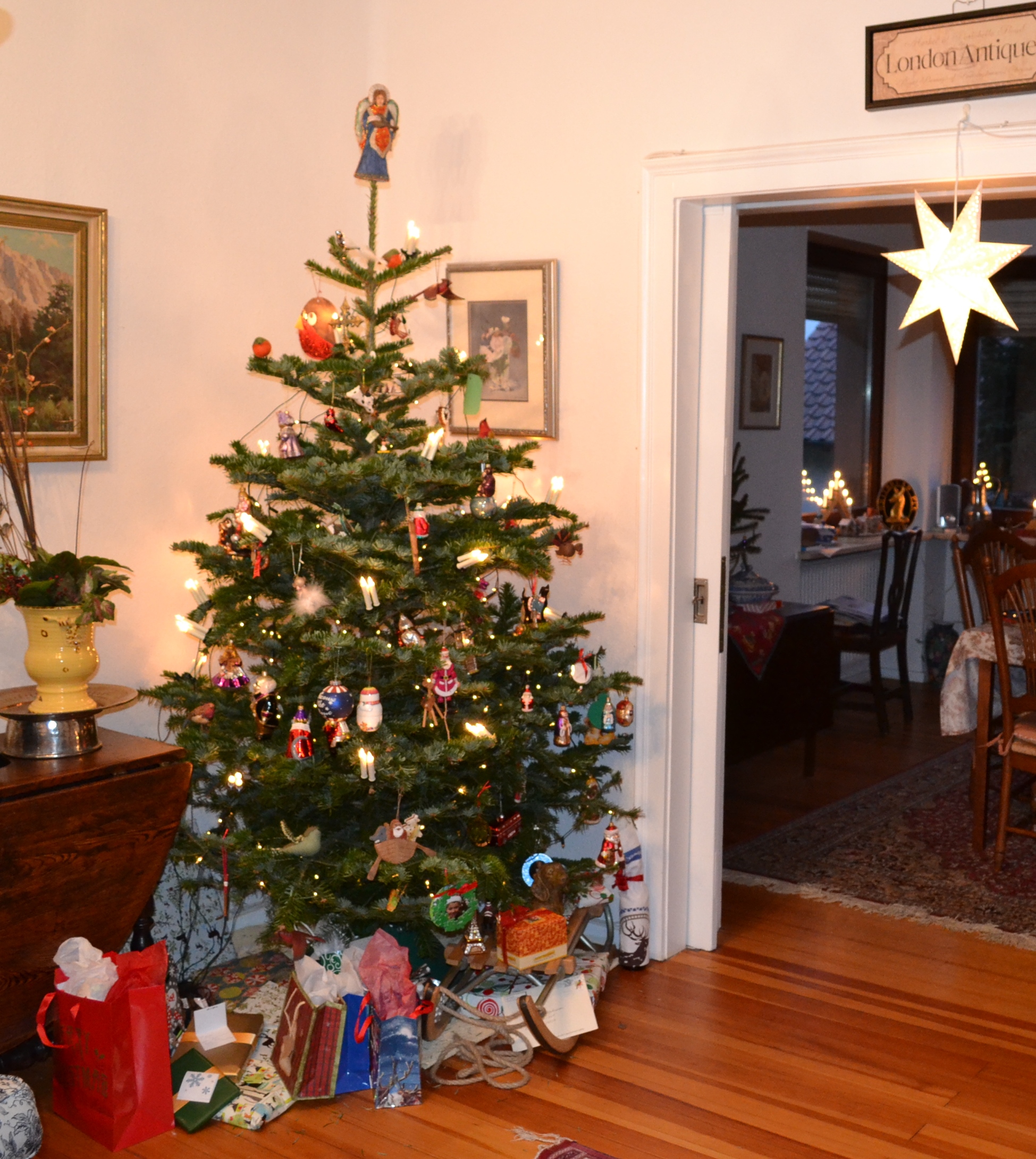
DSC_0300 - CopyBut ghosts are people too; they have their own agendas.  I remember putting up Christmas decorations last year and wondering what sort of celebrations this house had seen over the century-plus of its life.  It’s no manor, but it’s grand enough that the original owners must have lived a fine life.  What was Christmas like for them?  Did the Christmas Eve table gleam with silver?  Was it loaded with salmon, goose, and sausage?  Did the children go to sleep fat with gingerbread and the parents groggy with spiced wine?

And what of the years after World War I, when French troops occupied the area?   Was the occupation oppressive or a barely perceptible weight on the shoulders of the locals . . . who must have been haunted already by their own grief, so many young soldiers lost in the war.

And this interplay of politics and personal life certainly wasn’t diminished in the years that crept toward World War II.  What about those Christmas dinners?  Were there rousing nationalistic talks around the table, was there support for the Third Reich, or was there dread at the creeping dark?  Were Jewish friends hidden in the cavernous basement to keep them safe?  Were Nazi armaments held there? This is the era whose ghosts send icy chills through me.  I want to know the house’s history, but I don’t want to know the house’s history.
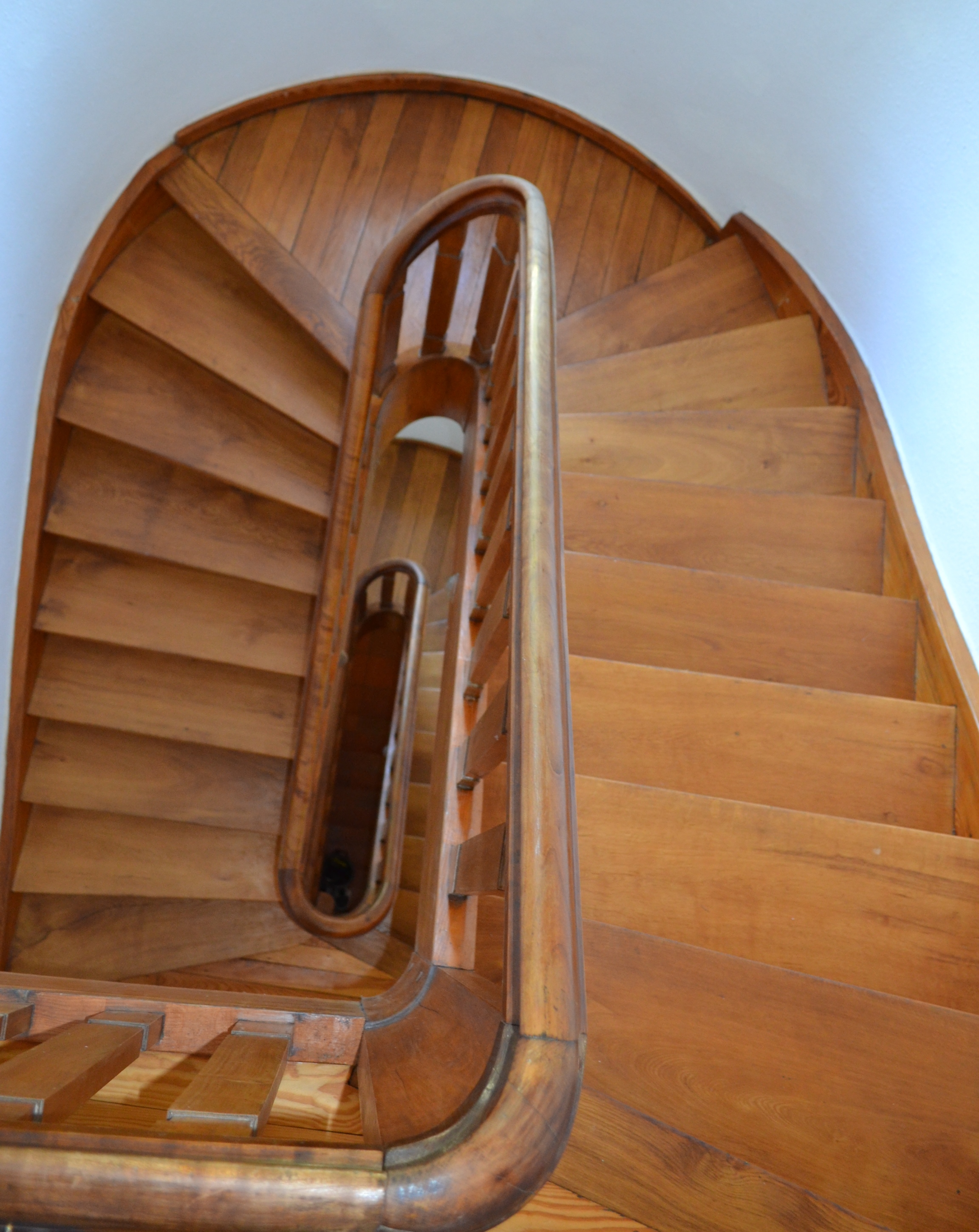
Staircase between floors/apartments

And then after World War II, when the house was divided into apartments on each level–still lovely, but divided,  like Germany itself, by the rise and fall of its fortunes, ambitions, and fate.

Reverence or dread–the families who have lived here might inspire either.  I would revel in the one, but stoop under the weight of the other.

It’s better not to know, I tell myself.

Still, I want a ghost for Christmas.  I can’t shake that feeling.  It’s part of the old house package.


“The past isn’t dead.  It isn’t even past.”  -William Faulkner

I had a ghost once, a few years ago.

I know, I know–just hear me out.  This is a story that is usually told under different circumstances.  The general rule: you must be at least a glass of wine or two into the evening.  For that matter, I must be at least a glass of wine or two into the evening (the story becomes infinitely more plausible at that point).  And one more thing–the children aren’t around.  If they heard the story, they’d never sleep again.

I’m taking a risk in telling this story: first, I can’t be sure that you’ve had any wine (strike one); second, it’s 8 a.m., and I’m nursing a semi-cold cup of coffee, which is a much starker place to be than wrapped in the warmth of a wine glass (strike two); and third, my children may read this (although unlikely, as they find this “mommy blog” vaguely ridiculous) (strike three on two counts).

So here’s the deal–I’ll tell you my ghost story in a few days.  That gives you a chance to grab a glass of wine, if you are so inclined.  It gives me a chance to write this post in a foggy evening state, instead of this stark-morning-coffee-mind that has its current grip on me.

Meet me here then, if you dare, and I will tell you my story.
chistms carol page


Today’s Yesterdays, Around the World: November 19th

I am waking slowly to an overcast Saturday in Florida, a day that holds the promise of slow motion, relaxation.  A day that belies the power of this date.

November the 19th has seen its share of action over the years and across the continents.  Columbus discovered Puerto Rico.  The Mayflower reached Cape Cod.  The Battle of Stalingrad reached a turning point.  Indira Ghandi and Calvin Klein were born.  Franz Schubert and Mike Nichols died.  Apollo 12 astronauts walked on the moon (the ultimate extreme-travel destination).

abraham-lincoln-1863-head-shotAnd my favorite moment from the time and space capsule of November 19th: U.S. President Abraham Lincoln delivered the Gettysburg Address in 1863 as the Civil War raged on.  He stood at the cusp of the one-time battlefield, he dedicated a national cemetery for soldiers, and he reflected on the task of rededicating ourselves to the democratic ideal of equality and resolving that this new nation “by the people, of the people, and for the people shall not perish from the earth.”

Lincoln mused that “the world will little note nor long remember what we say here,” but he was mistaken.  His speech feels like part of the bedrock of our culture– inspiring on our good days, re-centering on our bad days, and acting as a touchstone when the stresses of maintaining our union and healing its fissures weigh heavy.

Who knows what November 19, 2016 will bring to your life and your corner of the world . . . but you could do worse than to start your day with the words of Abraham Lincoln:

The Gettysburg Address

Four score and seven years ago our fathers brought forth on this continent a new nation, conceived in liberty, and dedicated to the proposition that all men are created equal.

Now we are engaged in a great civil war, testing whether that nation, or any nation so conceived and so dedicated, can long endure. We are met on a great battlefield of that war. We have come to dedicate a portion of that field, as a final resting place for those who here gave their lives that that nation might live. It is altogether fitting and proper that we should do this.

But, in a larger sense, we can not dedicate, we can not consecrate, we can not hallow this ground. The brave men, living and dead, who struggled here, have consecrated it, far above our poor power to add or detract. The world will little note, nor long remember what we say here, but it can never forget what they did here. It is for us the living, rather, to be dedicated here to the unfinished work which they who fought here have thus far so nobly advanced. It is rather for us to be here dedicated to the great task remaining before us—that from these honored dead we take increased devotion to that cause for which they gave the last full measure of devotion—that we here highly resolve that these dead shall not have died in vain—that this nation, under God, shall have a new birth of freedom—and that government of the people, by the people, for the people, shall not perish from the earth.

Eating Local: Breaking Bread in Turkey

antik road family
On the “Antik Road” in Cappadocia. (1998) A local family cooking flatbread over an outdoor oven in Guzelyurt, Turkey. They shared the bread with us–it was delicious!

via Photo Challenge: Local

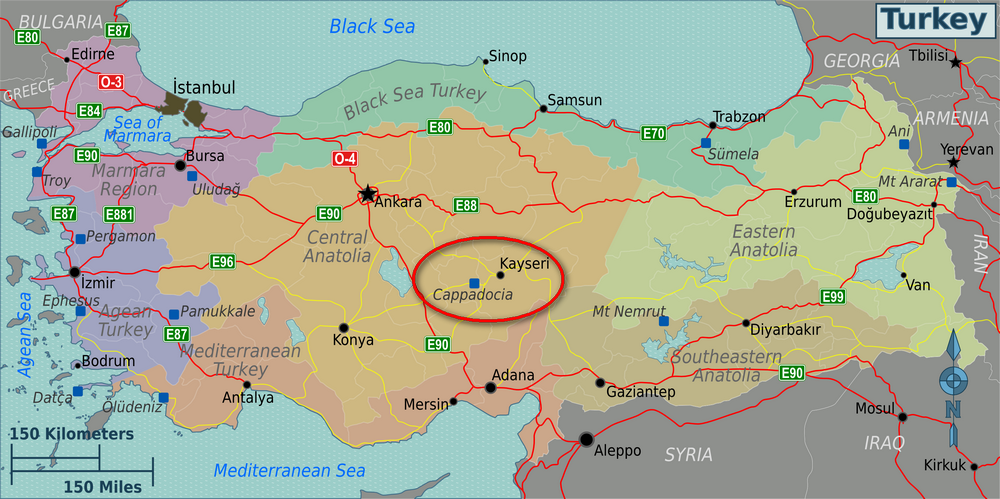
It was a crisp day in the Cappadocia region of Turkey, and my husband and I were out walking through the town of Guzelyurt– a small town set outside of the larger and more tourist-populated areas of Cappadocia.  (“Guzelyurt” means beautiful valley.)

We would often visit and stay in Otel Karballa there: a lovely structure that

had once been a Greek monastery, but was now converted to a small hotel with a fantastic chef and the ability to give its guests an authentic taste of life and history in this enchanting region.

turkey_regions_map3-1

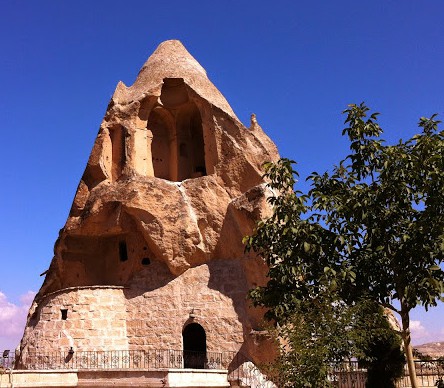
goremeThis area of Turkey is fascinating– so well known for its natural beauty and unusual landscape, as well as its long and illustrious history.   In fact, the two things go hand in hand.  The famous “fairy chimneys” of Cappadocia housed the cave dwellers of the Bronze Age, and later housed early Christian refugees and gave rise to the thousands of cave churches that dot the region.

dsc_0060
A fuzzy photo from one trip to Cappadocia: at the mouth of a cave church, with dwelling areas above it.

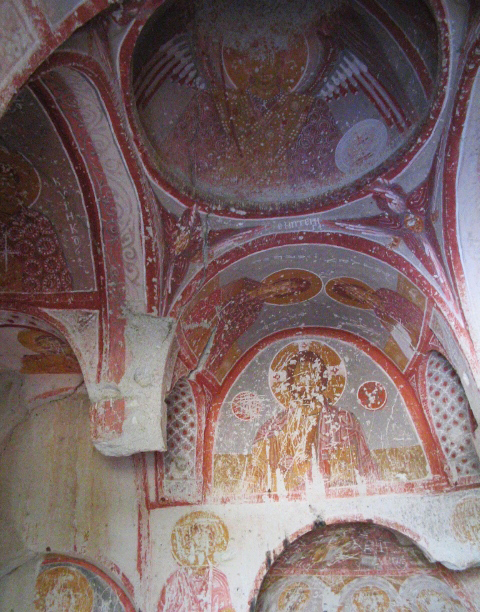
alanya-turkeye-193Once inside these churches, you are often  met with once-beautiful frescoes that (while still beautiful) are severely weathered by both age and ordeal.  Age, because most of the churches here date to between the 6th and 11th centuries; ordeal, as they were intentionally defaced because of religious aniconic sentiments.

If the cave dwellings and the colorful history weren’t enough to make Cappadocia a fantastic destination, it has this going for it:  it’s no artifact, it’s still living.  The potteries of the region are thriving, the people are hospitable, and many locals still live in the hollowed out cave dwellings (and have wired them for electricity!).

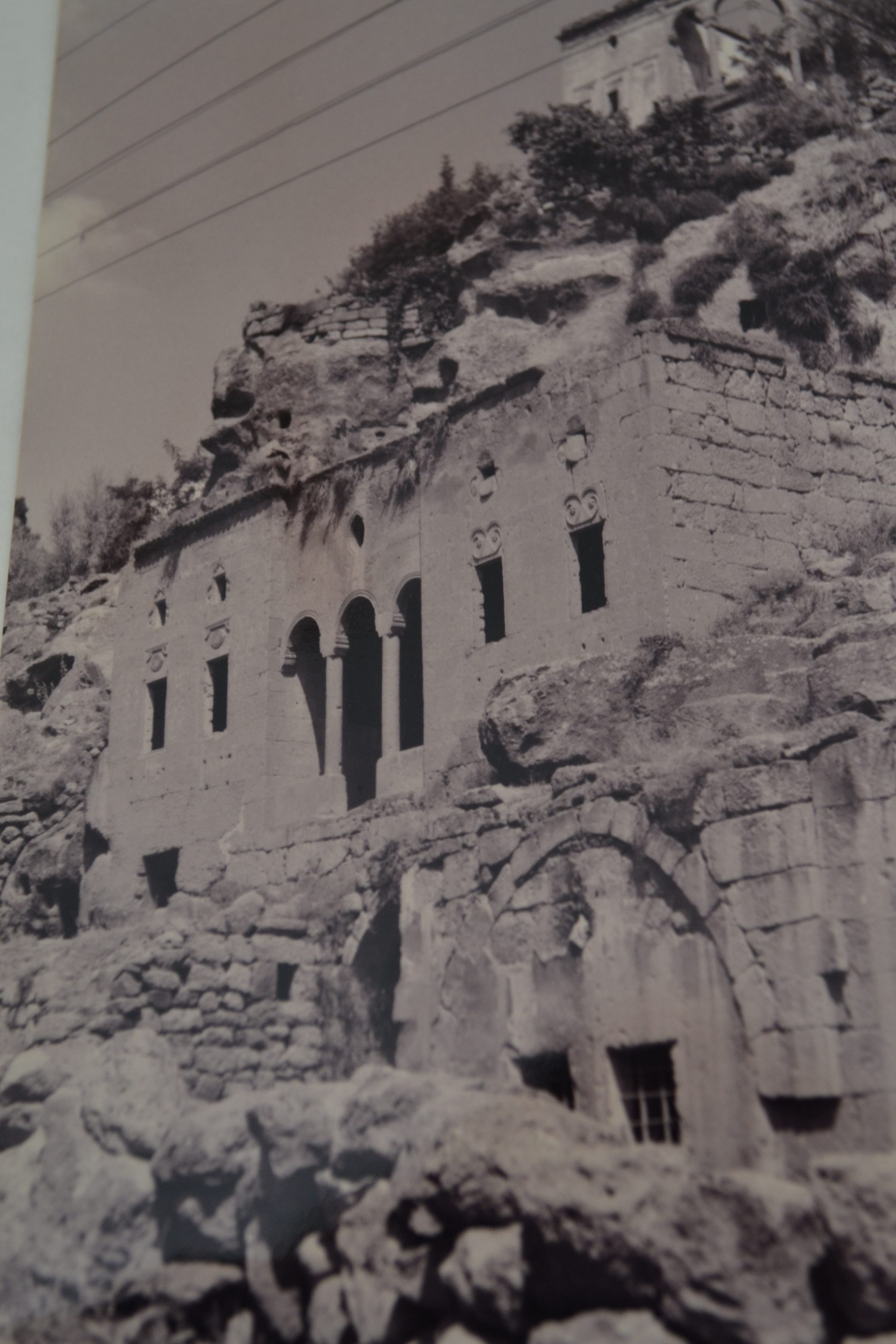
Walking down one ancient road in Guzelyurt, you might look up to see this:

dsc_0059

only to believe that you are passing by empty, ancient buildings (but note the electrical wires that run the length of the road).  Then the next thing you stumble upon, two doors down, is the family from the lead photo on this post, huddled in the doorway of another ancient structure and adjoining cave and making their daily flatbread over a simple fire and dome of hot metal.


The ancient meets the everyday in the streets and valleys of Cappadocia,  the modern meets the miraculous.  For my husband and me, who grew up in the tidy convenience of suburban America and were more likely to take dinner  from a casserole dish hot out of a Kenmore oven, or even from a drive-through  fast food window,  this family, hard at work to make their daily bread, kneaded and rolled on a board on the ground and cooked over an open fire on a humble metal dome, this moment was extraordinary.  And so very ordinary too.

We stopped and spoke to the family.  We shared what little language we knew, and they shared some of their bread , warm and crisp from the fire. I don’t think anything has ever been more delicious than those few bites shared on an ancient road.  What an incredible way to eat local.


Remembering Days at Alnwick Castle

via Photo Challenge: Nostalgia

hpim0472

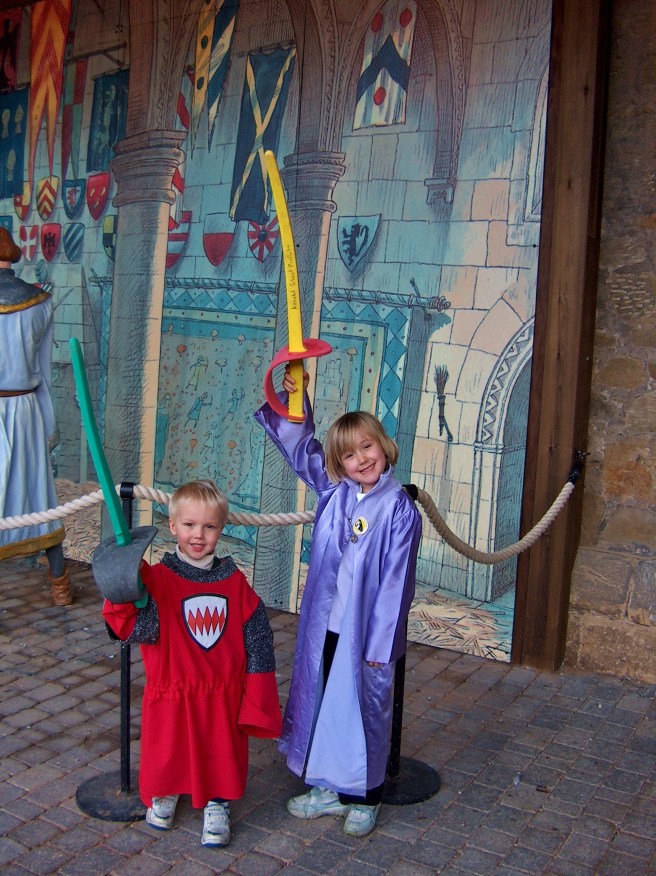
Move over Lancelot and Guinevere, Harry and Hermione– we’re storming the castle! (Alnwick Castle, 2006)

Traveling through the UK with my two knee-high knights was always a good time.  It’s easy to see a photo these days (when both of my kids have grown to my height) and feel a twinge of nostalgia.  But since moving back to the States recently, I’m a little overwhelmed by waves of nostalgia.  It’s a problem.  Nostalgia is a great place to visit, but it’s no place to live.  I’m aware of that.  And I know that, as I move forward with this blog (I still have plenty of stories and photos to share, and hopefully new travels in the works too), I don’t want this fug of nostalgia to take over entirely.

But, when logging into my blog account last week, I noticed many– so very many– other blog posts popping up about Nostalgia-this and Nostalgia-that.  I laughed a little, thinking the internet was riding some wistful wave–a viral mood gripping its readers as the autumn chill and  our nesting instincts kicked in.  As it turns out, that wasn’t it at all.  Wordpress had posted a weekly photo challenge entitled “Nostalgia.”   People were jumping on board the theme.

Although I’m a few days late for the weekly challenge, I think this gives me free reign to go nostalgic this week.  I’m sure it won’t be the last time my posts take this tone, but I hope (for both our sakes) that a little indulgence of my nostalgic mood will help it to pass.

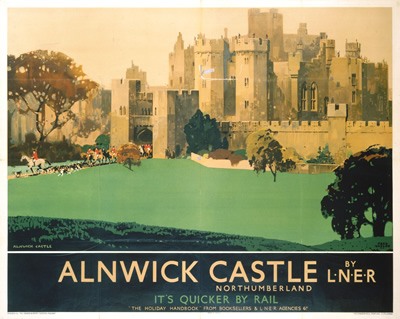
Old Railway Poster: Alnwick Castle, aka Hogwarts. (Alnwick was used in many scenes from the Harry Potter films.)

On offer today: some photos, and a few notes, from Alnwick Castle, Northumberland, England.  (“Alnwick” is pronounced “An-nick”)

Alnwick Castle
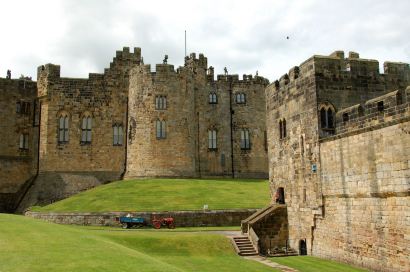
Alnwick Castle – copyright J. Stringer, licensed for reuse under Creative Commons


Alnwick, on the river Aln, is set by the coast in Northumberland.  It is a couple of hours north of our old homebase of Ripon, N.Yorkshire, and a couple of hours south of Edinburgh.  That made it a great stopping off point when we would drive the beautiful coastal road up to Edinburgh . . . but it was also a great destination in its own right.

Alnwick Castle is, was, and quite possibly always will be, home to the Duke of Northumberland.  The family still lives in the castle, and, although tourism is big business for the castle, it is still very much a family home.  There are family photos in the living areas, family stories told by tour guides, and, if you are lucky, plenty of family sightings.

On one visit there, we had to scurry quickly through one of the stone entrance gates to make way for the Duchess of Northumberland to drive through.  (Jane Percy gave us an appreciative nod as she motored her convertible Audi through the gate– she was gracious and graceful, and yes, I envied her life in the castle and the convertible just a bit.)

2007-047
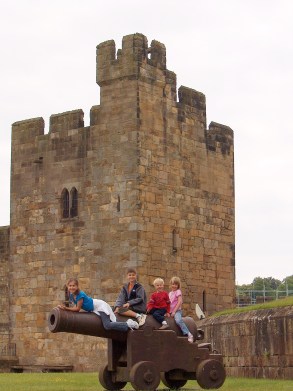
A family affair: we make the castle ours, if only for an afternoon.

Alnwick Castle is about 1,000 years old–yes, you heard that right.  Some nip, tuck, and augmentation over the years, but she’s a medieval beauty with a fantastic backstory (both illustrious and checkered) of exploits in British history.  Much of her prominence owes to the fact that she sits near the present day Scottish border.  The border lands have long been disputed territory, so Alnwick was strategically important. Her most famous son was Harry “Hotspur” Percy.  He became a knight, Sir Harry Hotspur (I kid you not), who earned some fame for his military prowess, and later for rebelling against Henry IV.


alnwick-as-hogwarts
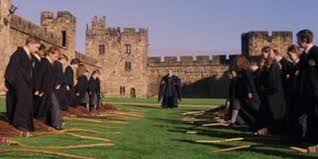
Alnwick as Hogwarts–quidditch lesson

But Alnwick’s past often takes a backseat for tourists who know her better as the backdrop for many scenes in the Harry Potter films and the Downtown Abbey Christmas Special.   Nevermind that– the Percy family is glad to entertain Potter fans and sneaky enough to slip a little British history into their experience, even if they only showed up to frolic on the Quidditch Lawn.

The Alnwick Treehouse

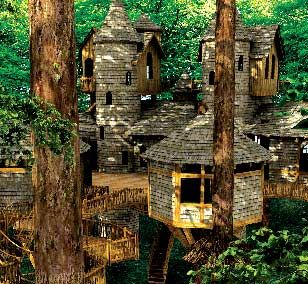
The grounds of Alnwick are beautiful and extensive.  The gardens are certainly worth a tour and they will surprise you.  There is a poison garden (clearly needed for horticulture and potions classes at a Hogwarts proxy) and the massive Treehouse restaurant that will blow your mind if you are, or ever were, a child.  When I was little, I used to dream of being part of the Swiss Family Robinson, just for the tree house– but this tree house puts that one to shame!  Also, the food is supposed to be fantastic. . . we never ate there, owing to very young children who were only interested in running full throttle through the structure.  (Only an adult would climb into  a huge treehouse and immediately set themselves in a seat, right?)

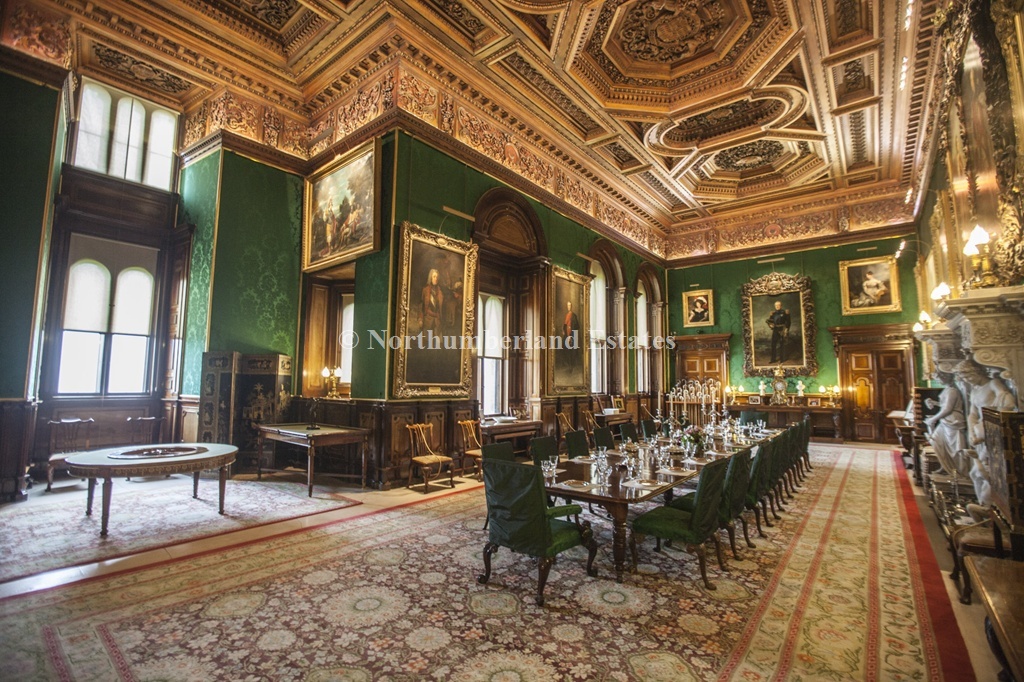
The Percy family dining room, impossible not to covet. Image from Alnwick Castle website.

As you can imagine, the interior rooms of Alnwick are extraordinary. My favorite rooms were the dining room and the library.  The library is grand, but also filled with family touches that remind you that this space isn’t a museum, it is very much a family home.  My only complaint with this room is that Jane Percy, in a misguided fit of whimsy (that steered right past whimsy and landed in the territory of macabre), has on display a taxidermied dog.  Yes, a stuffed dog.  (Not her own, we were assured.)  This is a step too far. . . even for a colorful dutchess who lives in a 1,000 year old castle.  Not cool, Jane Percy, not cool.

Moving on.

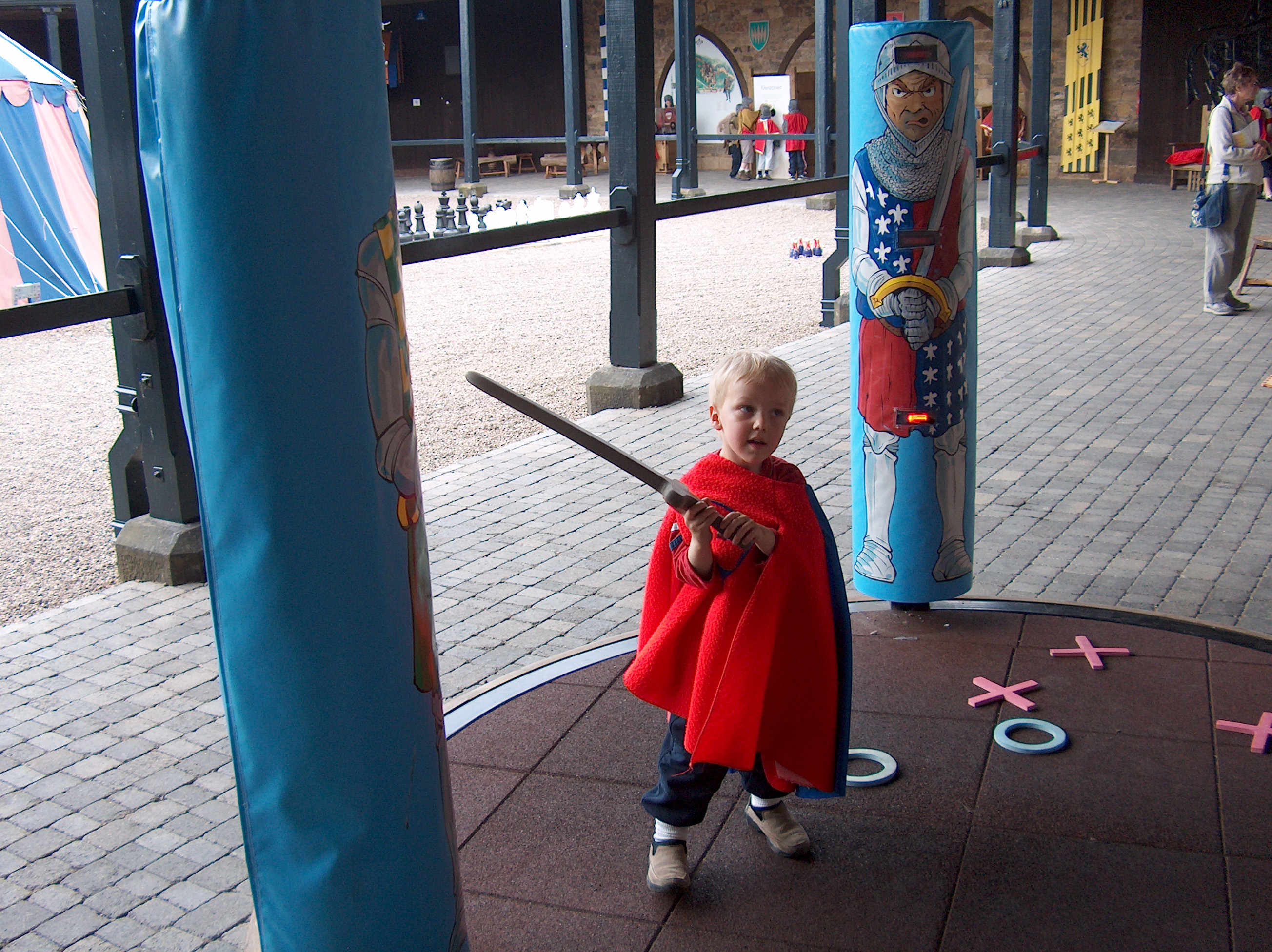
Training the next generation of Hotspurs.

Alnwick boasts a “Knights’ School” tucked into one of its courtyards, where children can have some hands-on time sharpening their medieval knight’s skills.  (The lead off photo on this post is my kids at the Knights’ School.)  By our second visit to Alnwick (nine or ten years ago), there were also Harry Potter exhibits (tastefully) in place around the castle.  I expect there might be even more Potter Paraphernalia in place these days.  It’s all in good fun, and the Percy’s seem to develop these exhibits and activities in ways that feel right and respectful to the space.

On that second visit, we stayed overnight in a small hotel in Alnwick (I can’t recall the name).  It was simple, but comfortable, and the English breakfast was fantastic.  It was a “Full English Breakfast” with toast, beans, eggs, tomato, sausage and bacon, and black pudding.  I couldn’t face the black pudding (a highly seasoned blood sausage, sliced and fried) –a little too medieval for me.  Honestly, I dodged a few items on the menu, having a pork allergy– but I always wonder how anyone can consume a “Full English” and still be ambulatory at 8 o’clock in the  morning.  That much food for breakfast would send me moaning back to bed. But I digress.

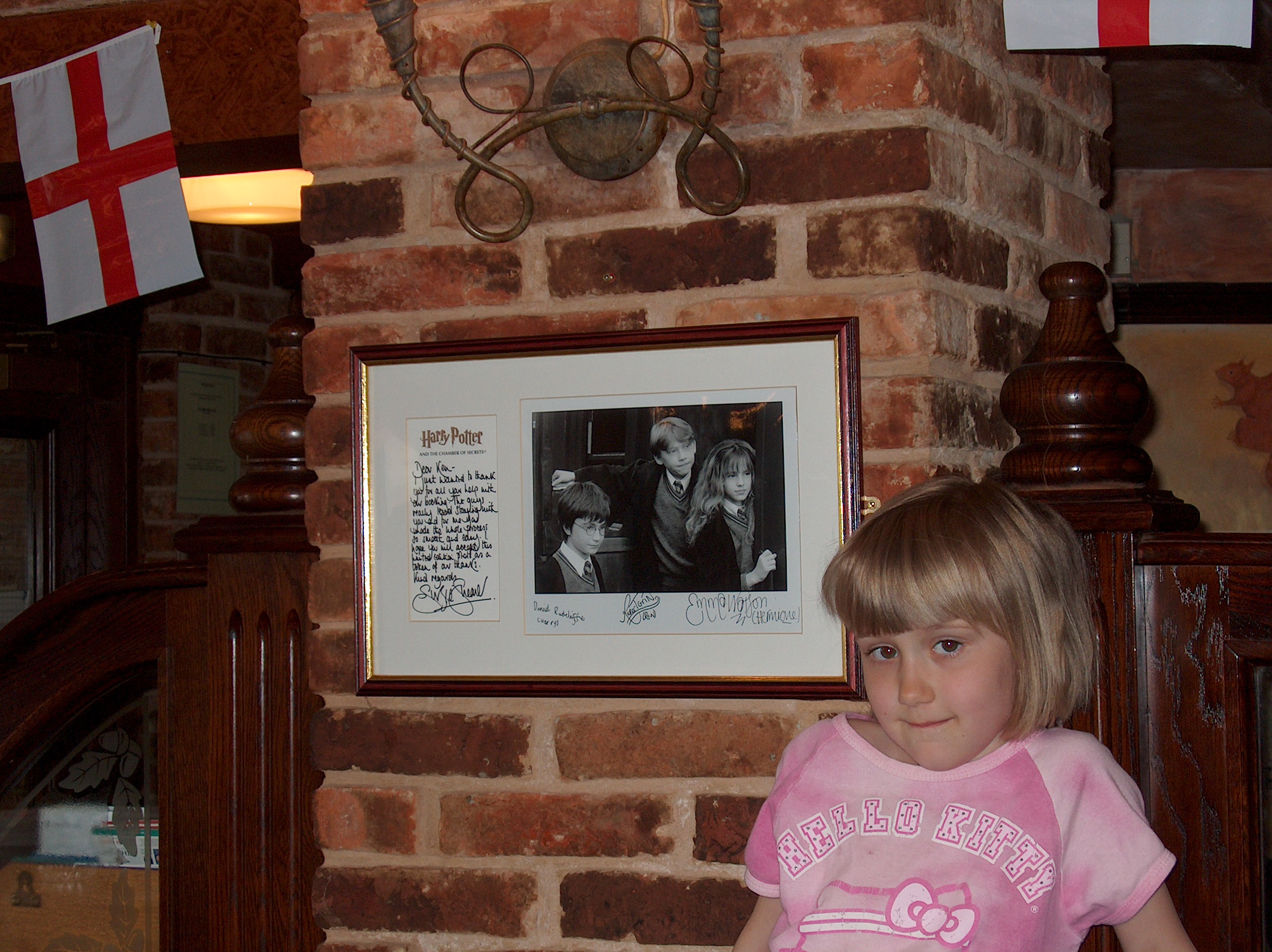
Hanging out where the Harry Potter cast and crew stayed.

The thing more impressive than the breakfast itself was the fact that we found ourselves eating under a signed photo and note from the cast of Harry Potter #1– a photo of, and signed by, the all important trifecta of young wizards, Harry, Ron, and Hermione.  I think parts of the cast and crew had stayed in the hotel during filming.  I would guess that half of the hotels in Alnwick would have been filled with cast and crew, it was such a big production in a small town.   Anyway, it brought a smile to our faces to sit under the gaze of our favorite wizards. (We may have gone to Knights’ School to learn to be Hotspurs, but our hearts have always yearned to be wizards!)

Although the castle dominates the town, there is plenty to do on a stroll through the town of Alnwick too.  Great restaurants and pubs, some lovely, small antique shops, and a bookstore that I still vividly remember 10 years later–very impressive.  Barter Books is housed in a former  Victorian Rail Station and is massive, with books new and used, fireplaces and cozy chairs, and a tea room right there in the store.  You might disappear into this place on a rainy day and not come back out until closing time.  (Unless, like us, you have two young “Hotspurs” running in circles and dragging you on to the next adventure.)

And so, Alnwick has a little something for everyone . . . or a little of everything for everyone.  It has history and Hollywood, medieval and muggle, sprawling grounds and mile-long dining rooms, tree houses and train stations . . .it has charm.   Who wouldn’t get nostalgic about days spent there?

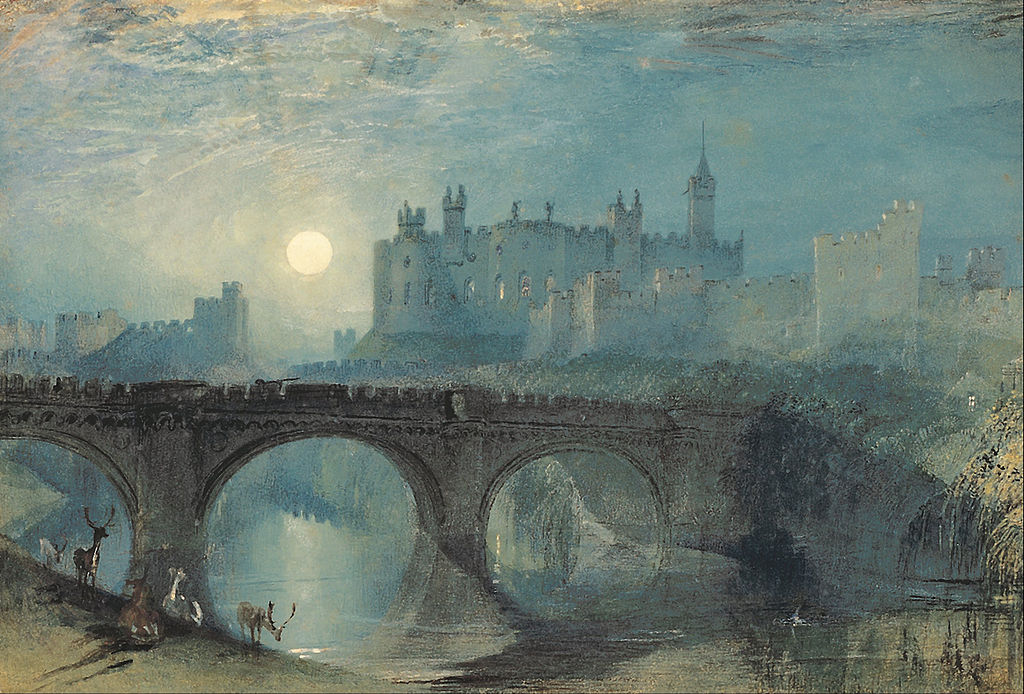
Alnwick Castle painting, by J.M.W. Turner

alnwick-castle-1

Prague: The Lennon Wall

“I read the news today, oh boy . . .”  (A Day In the Life, Lennon and McCartney)

The news this week is heartbreaking, incomprehensible, and ugly.  Why is the human race so quick to choose fear and anger over love and tolerance?

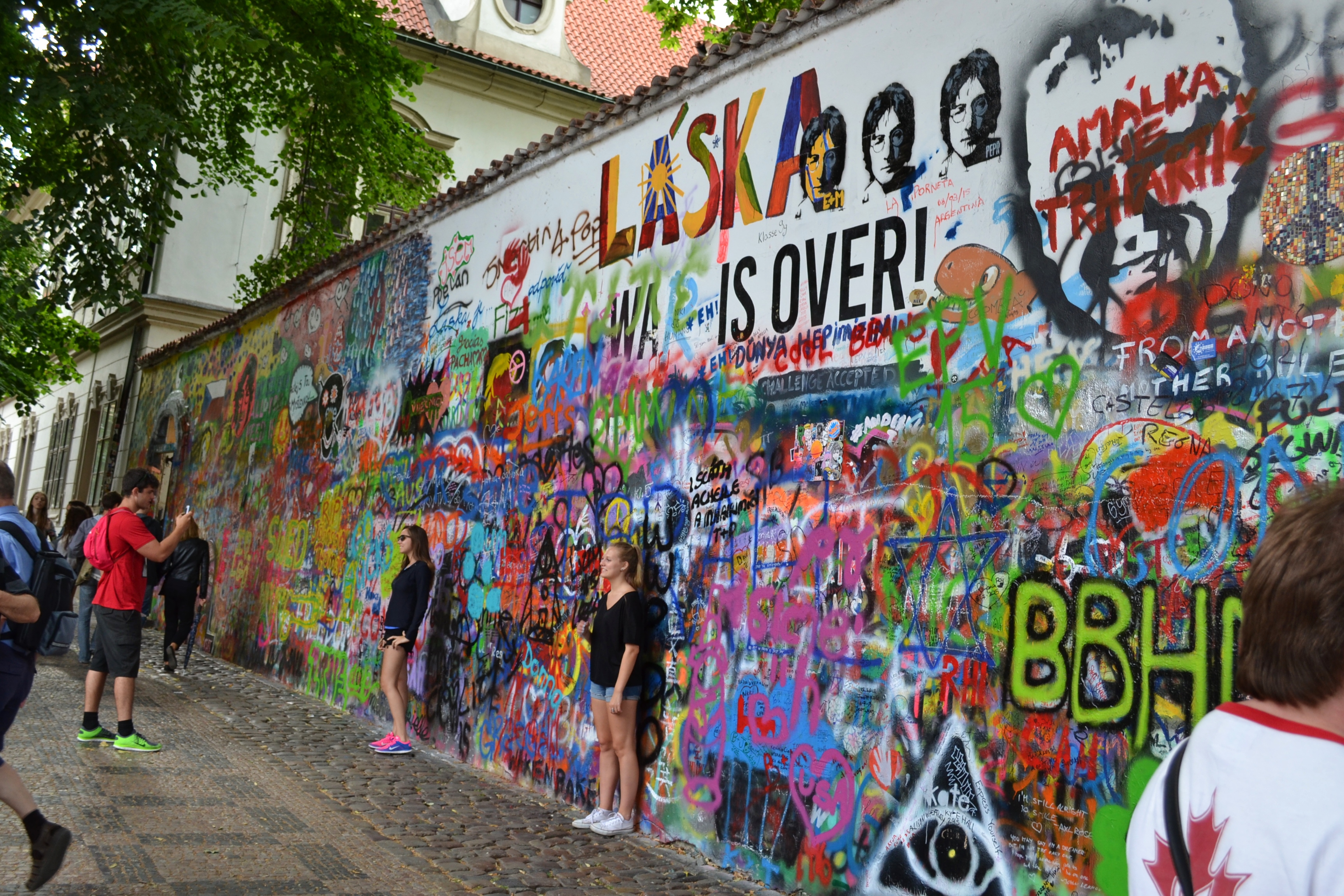
Amid all of the rainbow pride flags being flown in solidarity and pasted across Facebook homepages, I wanted to offer up this traveler’s “peace flag”–a photo of the Lennon Wall (sometimes called the Peace Wall) in Prague.

DSC_0008

The wall began after John Lennon’s death in 1980.  His picture appeared on the wall, with anti-communist slogans  (remember, this was during the communist regime).  The wall was painted over, but the paintings of Lennon, along with graffiti about Lennon and Beatles lyrics,  kept reappearing.  It was an act of defiance against the corrupt and oppressive government.

During the 80’s, student protesters who called their movement “Lennonism”  (ironic and clever!) often clashed with police in the area.  Whenever the wall was repainted, the graffiti just came back.

The communist regime is long gone, but the wall still stands and continues to draw crowds and artists. It has been painted over many times, by whitewash and by years of artists leaving their messages, and it’s even been reconstructed as it crumbled.  Unlike the Berlin Wall,  which crumbled with the demise of communism, this wall stood for peace and watched communism fall in the (non-violent) 1989 “Velvet Revolution” in the former Czechoslovakia.

This week it stands and speaks to all of us with its rainbow of colors and its haunting refrains of “Give Peace a Chance.”

*The Lennon Wall is nearby the Charles Bridge and the French Embassy.

lennonwall