Flea Market Finds: Metz, France

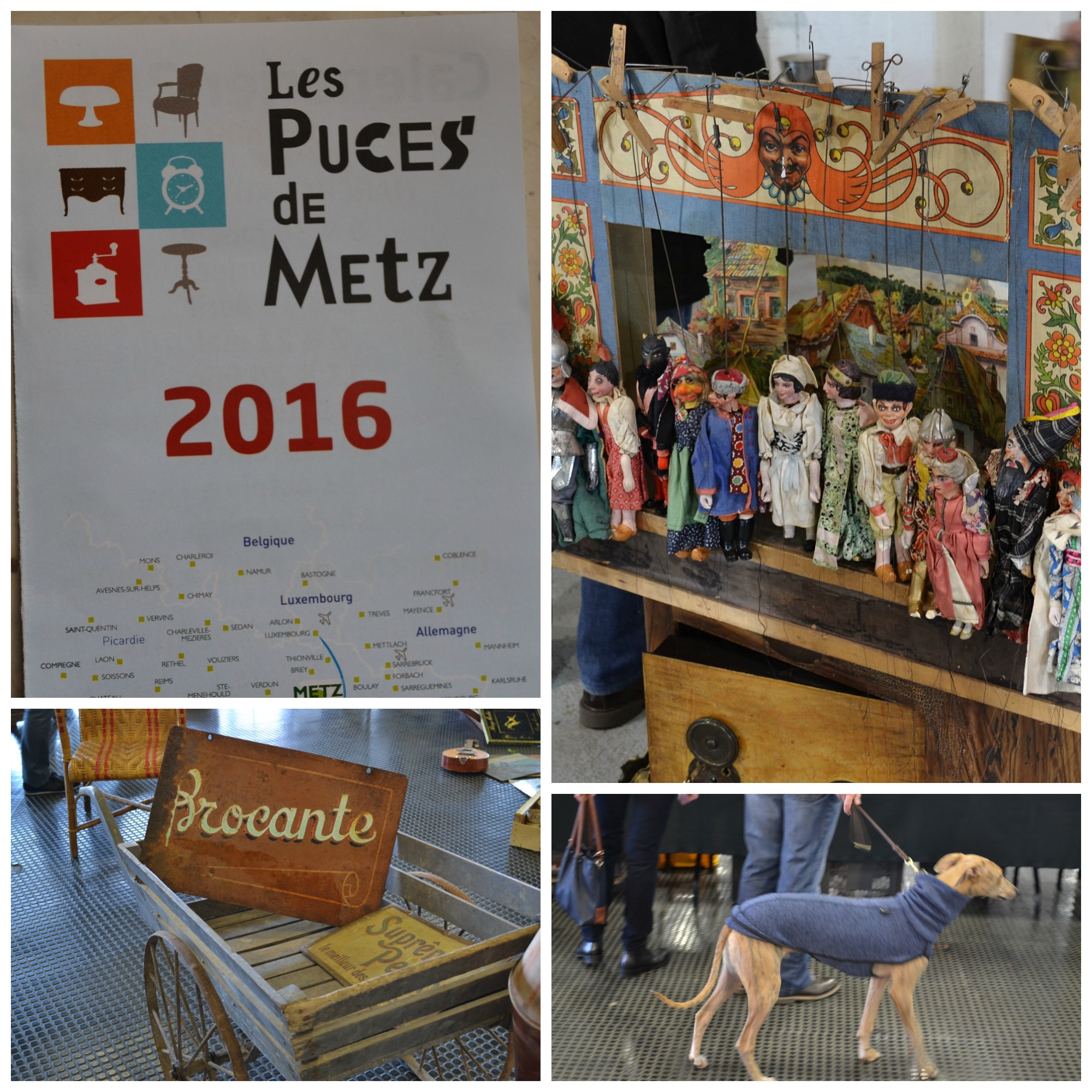
PicMonkey Collage

We ventured over the border into Metz, France recently, to visit an antique/flea market there.   The market is opened once or twice a month, and we’ve been three or four times–in fact, it featured in one of my earliest posts from Europe.  I think it’s time to mention it again because it’s a fun day out and I have the schedule of markets for the coming year that I can share with you.  Very useful information if you live nearby!

The city of Metz, sat on the Moselle River in Alsace-Lorraine, is an incredible day out with or without flea markets.  It has Celtic and Roman roots, and its history has remained storied and lively up through modern times.  Like all of this region, it has been a matter of French-German border disputes in the modern era (German during the late 1800’s, French after WWI, German again in 1940, and French after WWII).

This city has something to appeal to  everyone:   the history buffs, the coffee and pastry connoisseurs, the architecturally voyeuristic, the _____ (fill in the blank yourself).  Photographic proof below:
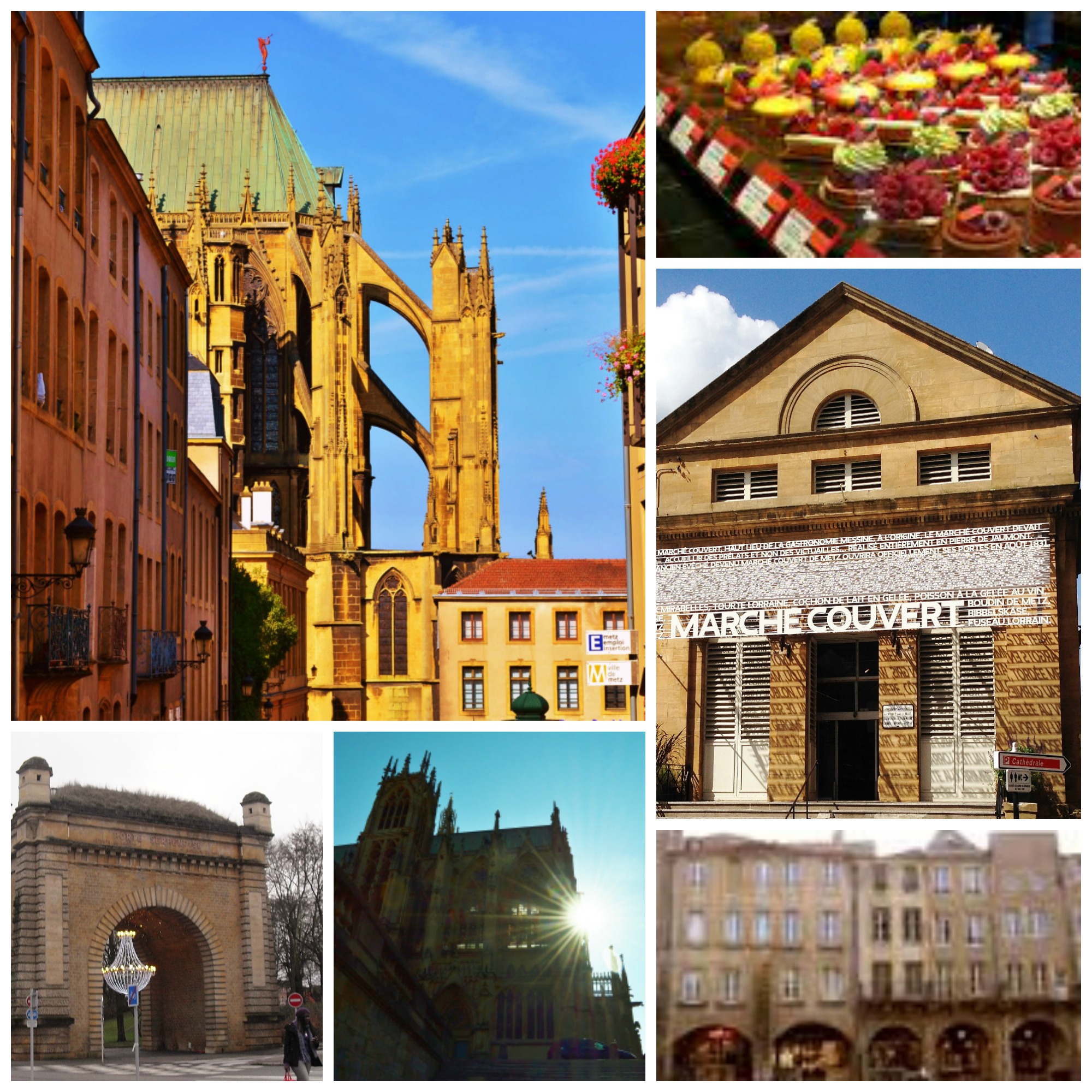
PicMonkey metz 2 Collage

But back to the flea market that comes to the indoor Expo center frequently.  It’s one of the biggest markets around, bigger than most of the markets that pop up in Paris, even.  (Although  smaller than the famous Marche aux Puces at St. Ouen in Paris.)  This particular day, there were lots of DSC_0915food merchants (not always the case), in addition    to the dozens (and dozens and dozens) of vendors peddling antique furniture and silver,  vintage jewelry, vintage radios, tableware, dollhouses, signs, cutlery, wine paraphernalia, gardenware, etc.  There were even merchants with chic French perfumes.
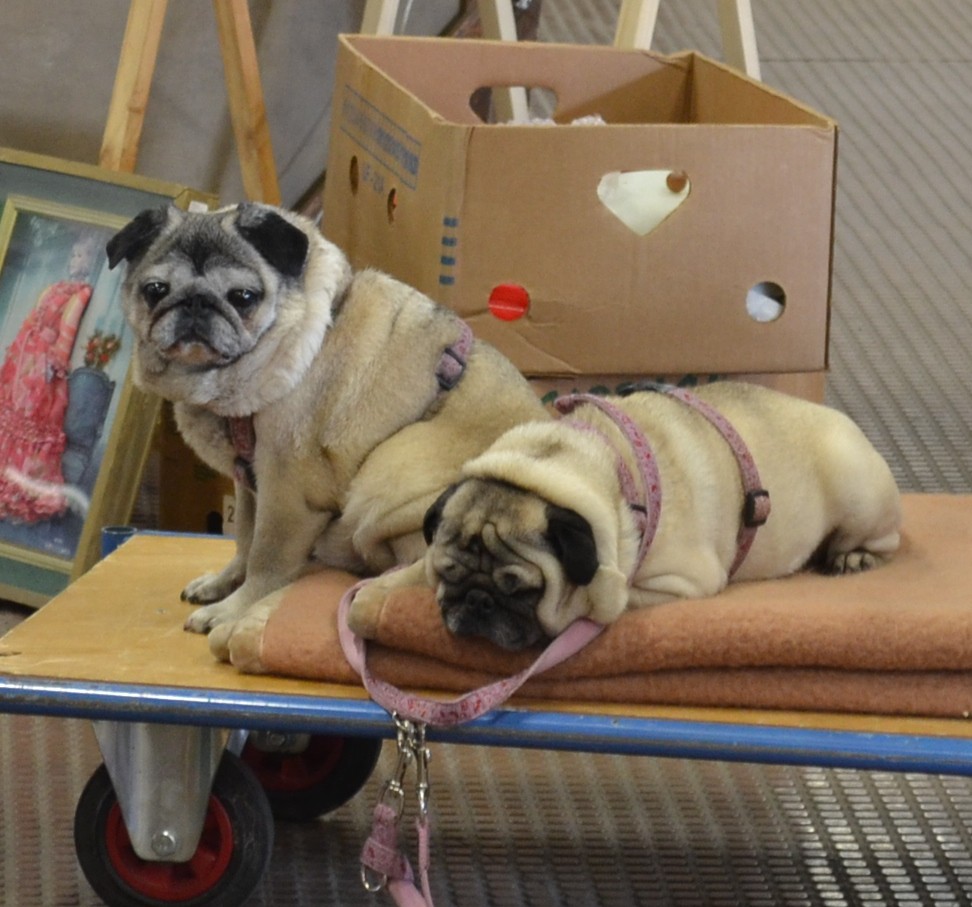
 

Oh, yes– and dogs.  So many sweet dogs. (Not for sale!)
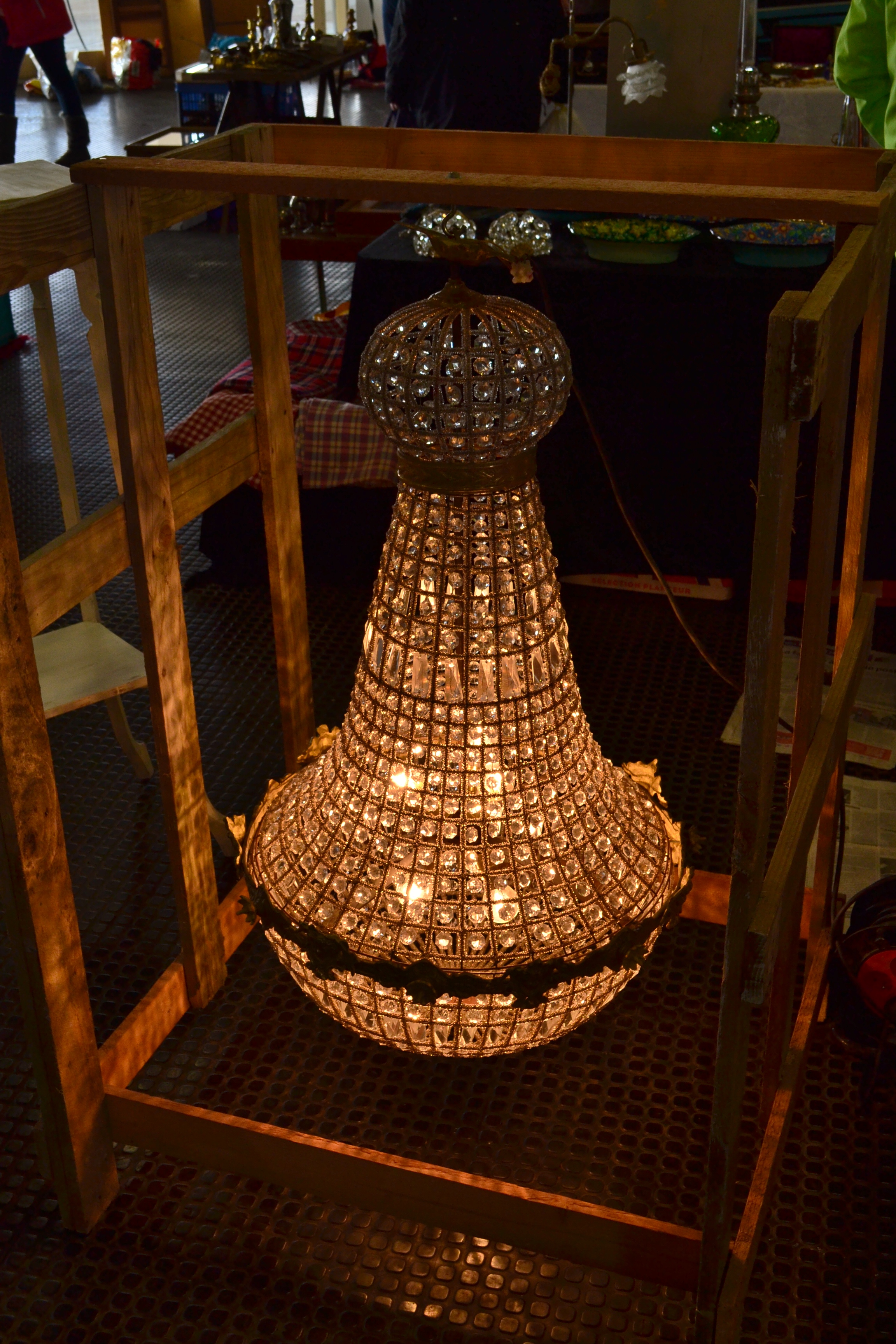
Beautiful old French chandelier.

There were certainly things that were beautiful
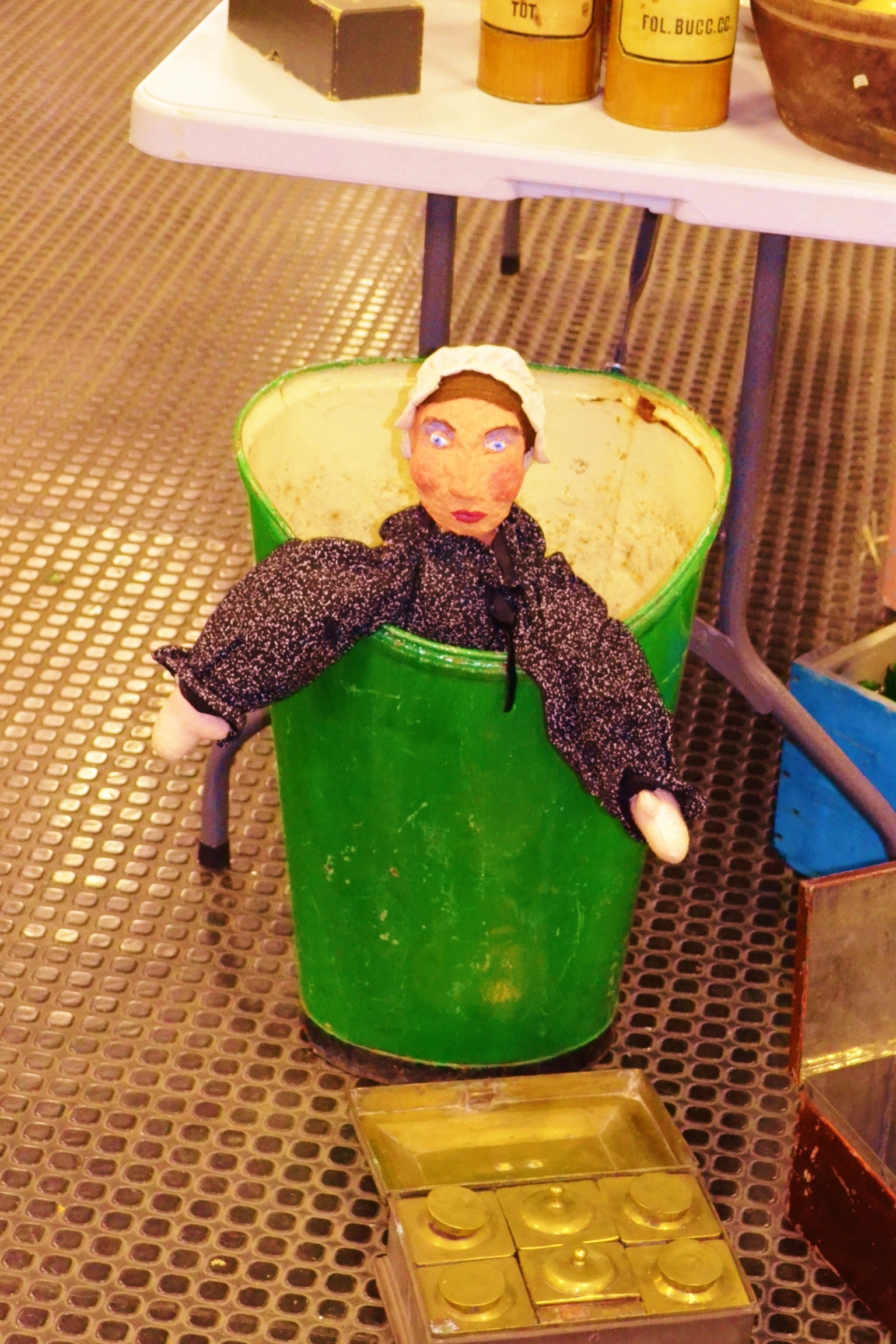
 

This doll would give my kids nightmares.

. . . but also things that were creepy.


A little of everything under a warm and dry roof– it made for a great morning of shopping.

If you are wondering whether I bought anything, then you don’t know me well.  Of course I bought something!  But shopping at a place like this isn’t so much consumerism as it is a cultural lesson– a way to travel across times, social classes, and ideologies . . . and to cross the barriers of good taste more than a little, probably.
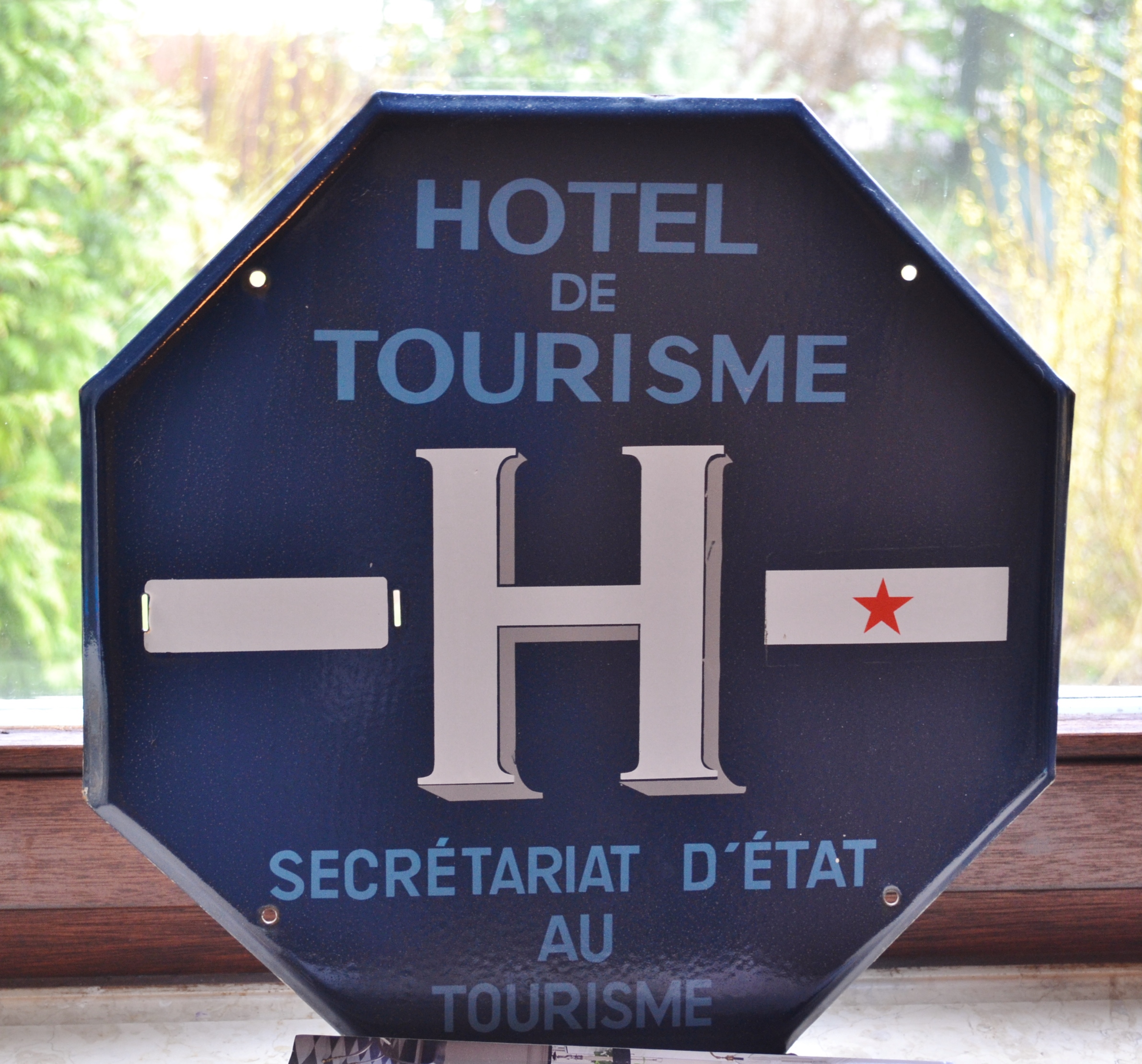
DSC_0928So we bought some wine paraphernalia, some French cheese, an old French hotelier sign, and a piece of old (1800’s) British silver.   What do you do with a hotelier sign?  I’m not entirely sure, but I knew we wouldn’t have too many more chances to buy one, so I couldn’t let it elude my grasp.  I think it could be cute in a guest bedroom?  (And appropriate that it is from a one star guesthouse, as I’m not known for my housekeeping skills.)

The sign wasn’t an all out bargain, but it was a little cheaper than the silver we bought. I have a weakness for old silver–
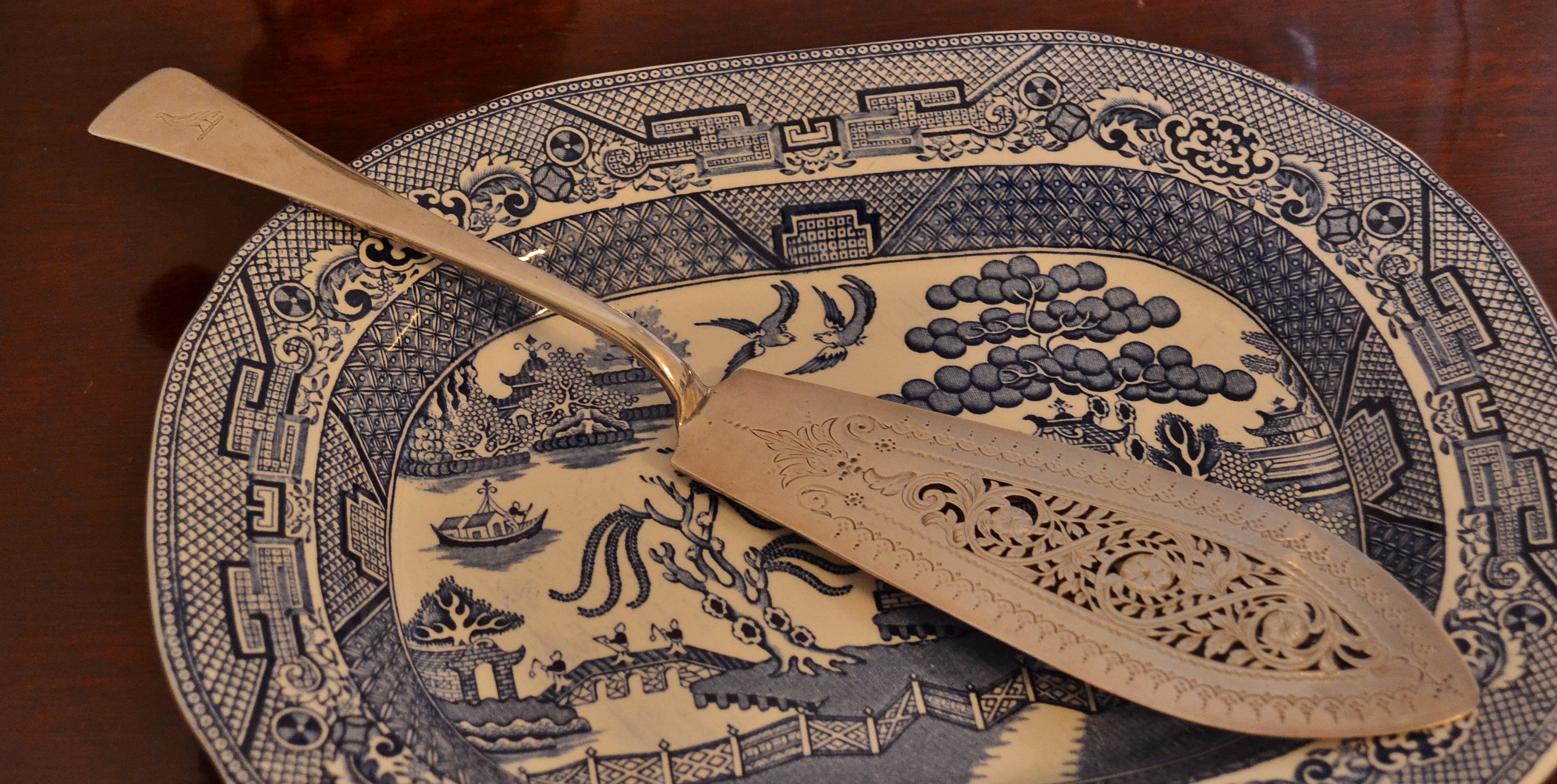
A silver fish slice/server

despite the fact that it has to be polished and doesn’t get used a lot.  I used to see pieces everywhere when we lived in the UK and quickly learned to read the silver hallmarks, which indicate the city where and year in which a piece was made.  They also indicate if a tax was paid to the king/queen, and that stamp makes each piece a quick read (if it’s a dowdy male head, you’re looking at a Georgian piece–early 1700’s to early 1800’s– if it’s a woman’s head, it’s Victorian –mid to late 1800’s).  That ability to place a piece of silver makes it really interesting to me.  Of course, sometimes you can date a piece by it’s style, sometimes by its wear.  Old pieces can be pretty beat up looking, but often they are in fantastic shape–well cared for, they were obviously a prized possession for many years.  And how lucky are you that you can pick up a 200 year old piece for a fistful of dollars, and use it to serve a fancy holiday meal–knowing full well that that punch ladle (or serving spoon, or fish slice, etc.) has seen its way around more holiday parties than you ever will.  If it could talk, what stories and family secrets would it spill?  This is the kind of thing that goes through my head.

And if I sound a little spacey, like someone who lives life in a Beauty and the Beast fairy tale where inanimate objects come to life, so be it.  In my world, they do.  And if you spend any time wandering these weekend markets in Europe, you may find yourself in the same mindset.  Here’s how it goes:

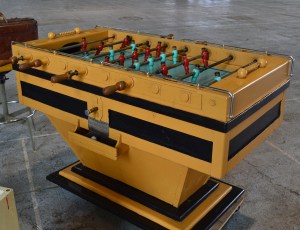
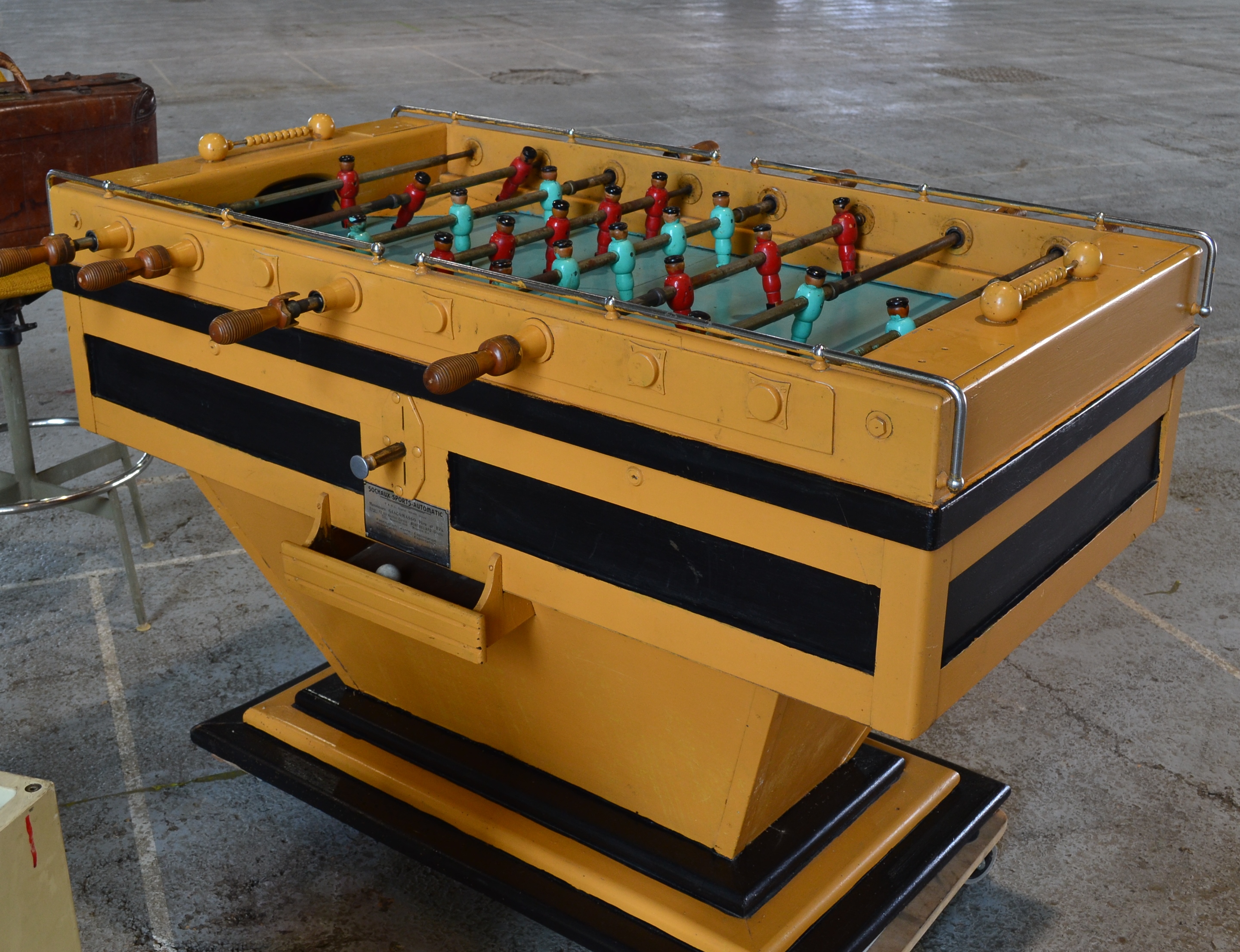
  1. You wander into the flea market, DSC_0903still drowsy with sleep on a Saturday morning, and your eye falls on this vintage French foosball table.  Foosball tables immediately take you back to college days and your shiftless friends at the Pi Kappa Alpha house.  But here you are in France at a “vintage do”– the Twighlight Zone music starts to play in your head, time and space fall a little out of sync, and there’s no going back from there.
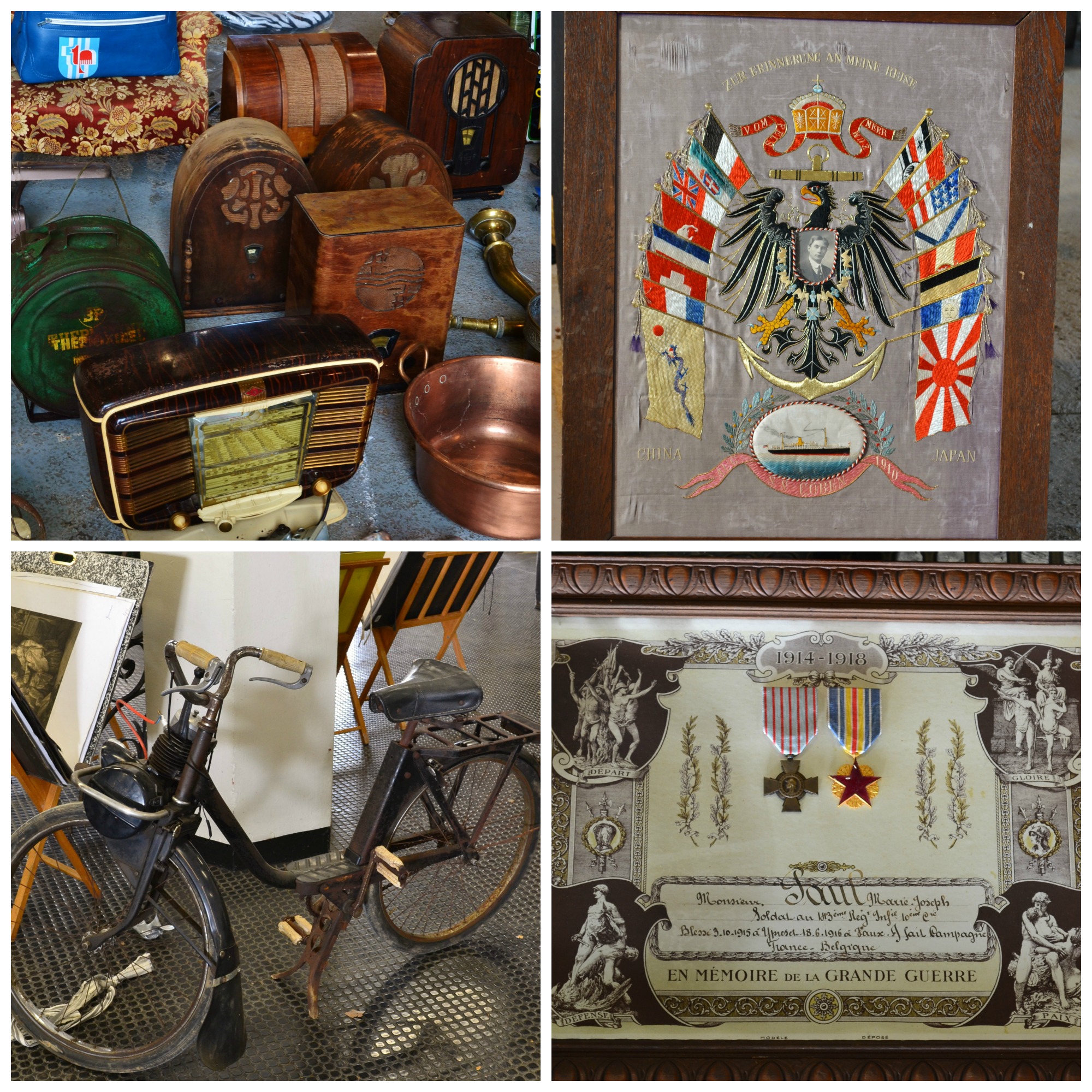
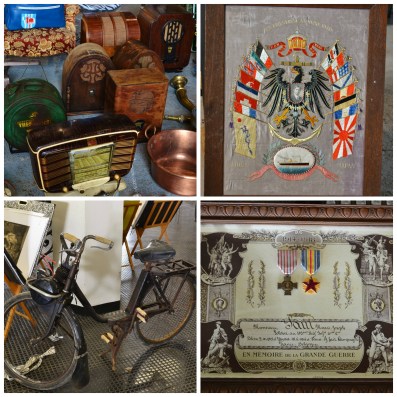
  2. Next thing you know, the hands of time PicMonkey Collage 1  begin spinning backwards:  You walk through a maze of old radios from the 30’s, 40’s, and 50’s, emerge in an aisle of World War II and Third Reich memorabilia, and nearly stumble over Rolf’s bike from The Sound of Music. (Ugh, I hate Rolf!) Hoping to get away from the evil grip of Nazi history, you make a beeline for a vendor whose display looks airy and inviting, and find yourself smack dab in the middle of World War I!
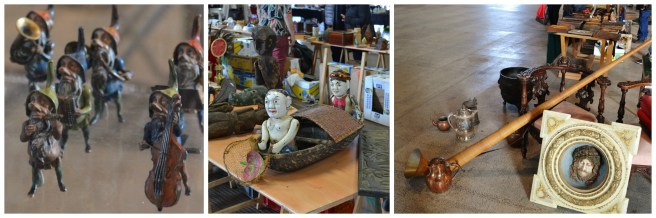
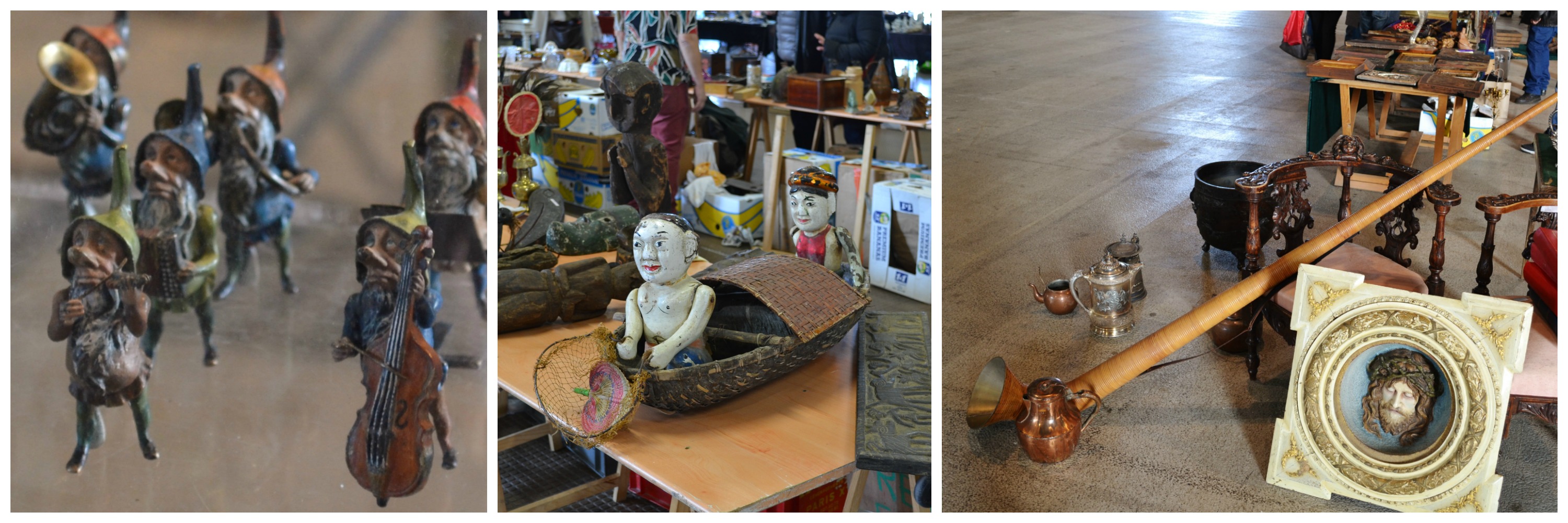
  3. From there, things take an utterly surreal turn and you stumble into some magic land of German dwarf bands, Asian totem fishermen with eyes that follow you,  and Alpine yodeling horns paired with Jesus in plaster relief.PicMonkey Collage 3
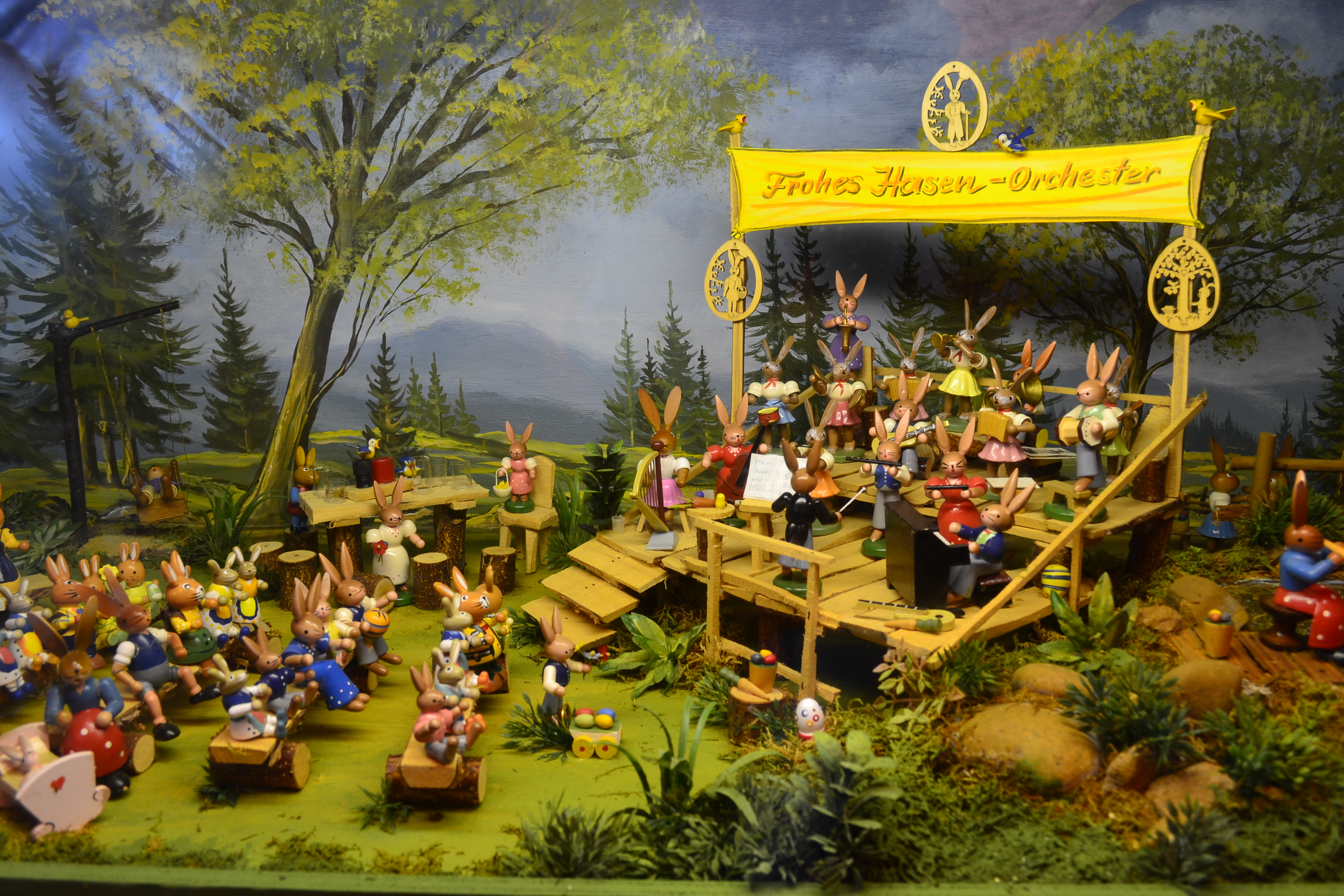
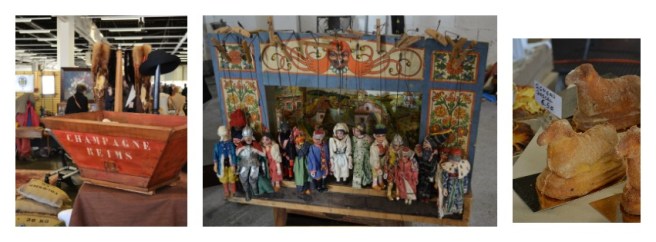
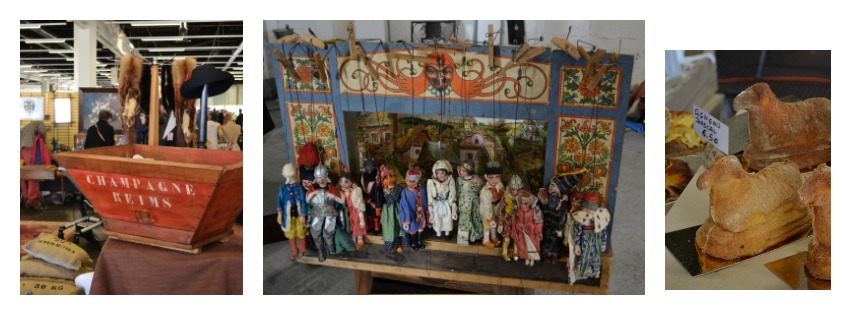
  4. At this point, relief is exactly what you need, and you are all too happy to see more cheerful items: wine crates, Easter breads, and the world’s most beautiful marionette theater.   PicMonkey Collage 2  When your Saturday morning shopping
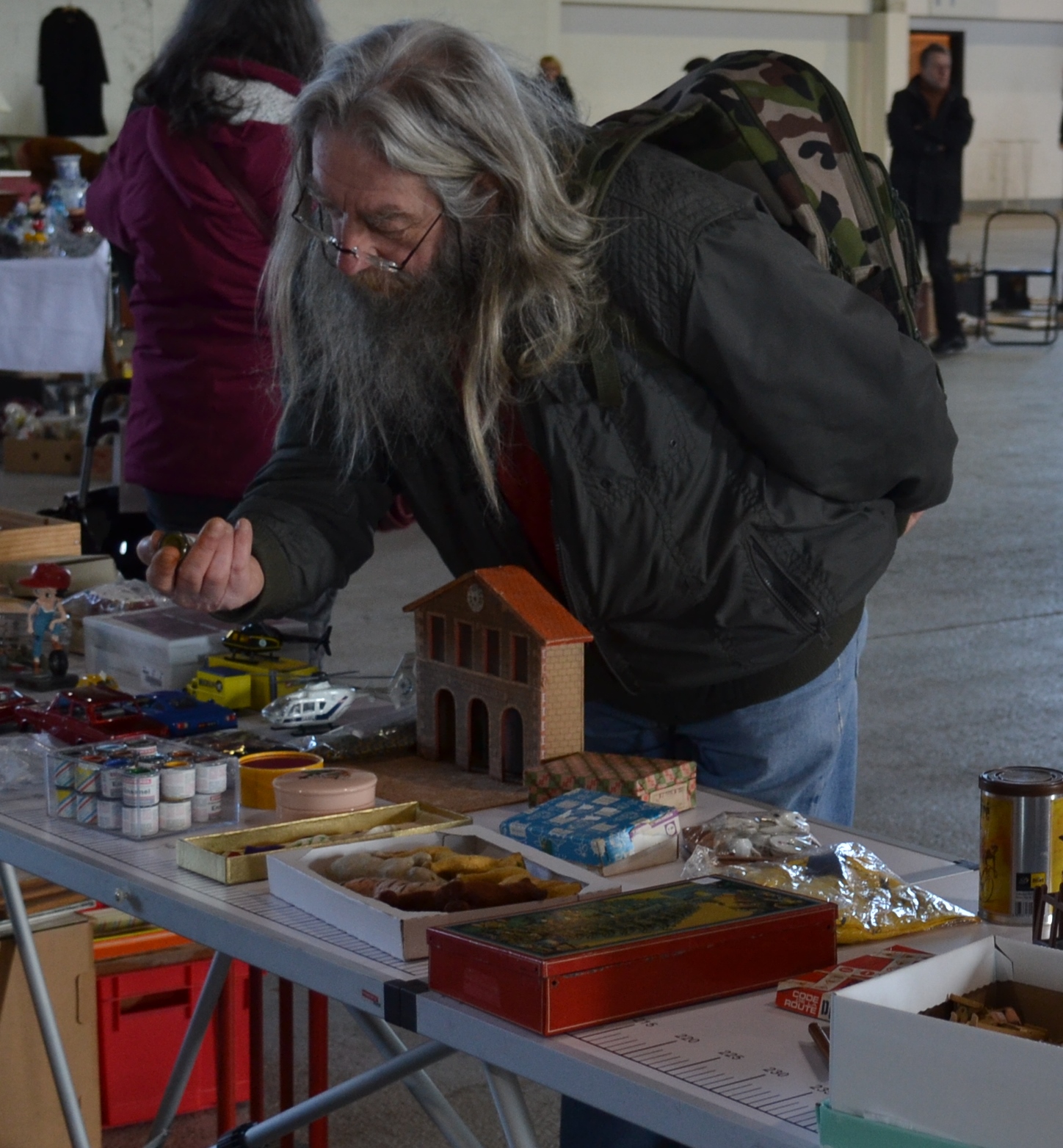
Our wizard friend shops the stalls of Diagon Alley. . . ur, Metz market.

experience looks like this, you can’t tell me that it’s more about the shopping than the cultural experience.  And you can’t tell me that life isn’t a little bit “Beauty and the Beast and singing teacups” after all.  But if you want to tell that to somebody . . . well, you can take it up with Albus Dumbledor on your way out of the market.  I’m sure he’ll set you straight, and possibly point you to the best wand vendor he knows.

Maybe that’s a key to how you should approach the Metz antique market– it’s the closest thing to shopping Harry Potter’s Diagon Alley that you will ever find in this life.  You’d be nuts to miss it.

If you have a chance to visit the antique market at the Metz Expo–go, go, go.  It takes time; it takes a little cash; it takes patience to comb through junk to find treasure; and it takes imagination.  But the effort yields an absolutely magical morning.

If you check out the Metz Expo, do bring cash.  (There may be an ATM on the premises, but I’m not sure.)  In my experience, these merchants aren’t big on haggling, at least not compared to the Brits and the Turks.  If you come later in the day, you probably stand a better chance of working a deal . . . but you’ll also miss out on some of the best merchandise that gets snapped up quickly– it’s a calculated risk.

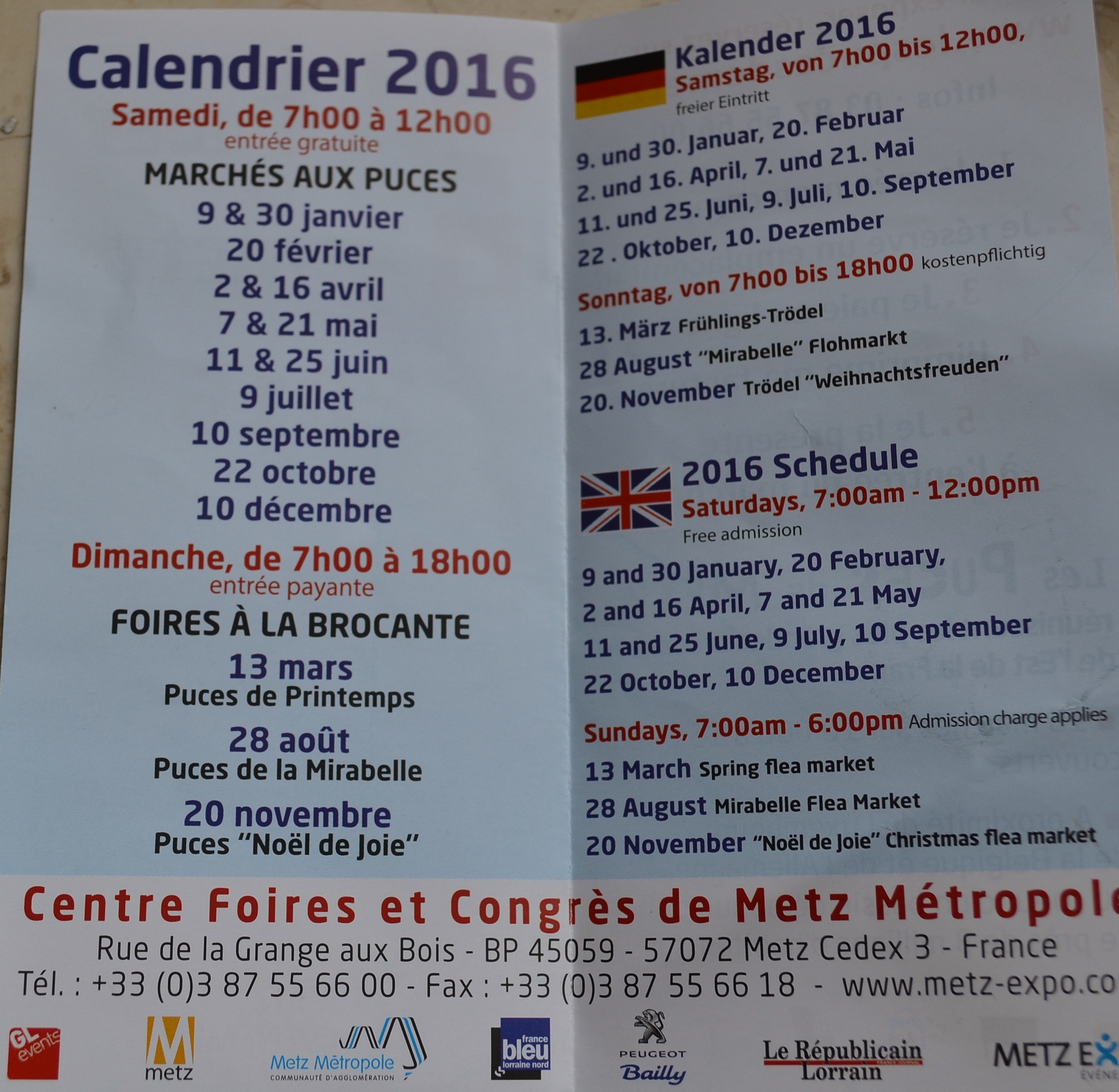
Here’s the schedule, and the address is Rue de la Grange-aux-Bois.  (The market is easily accessed from the highway, but also only 10-15 minutes from the center of town–so you can make a whole day out of it and enjoy Metz, if you like.)    Bon Chance!
DSC_0925

Here Comes Peter Cottontail: Easter Traditions in Germany

Dieser ist die Ostermarkt Sankt Wendel/This is the Easter Market in St. Wendel

PicMonkey Collage

Easter markets are popping up all over Germany, and we visited the market at Sankt Wendel this weekend.  It was busy with market stalls full of painted Easter eggs, wooden Easter crafts, flowers, and jewelry.  There were craft stations for children and food and drink for everyone.  It was a nice day out, especially with the sun shining brighter than it has in many weeks.  Our favorite sights at the market were the Easter Bunny displays and the fantastic Dom (Church) in Sankt Wendel.

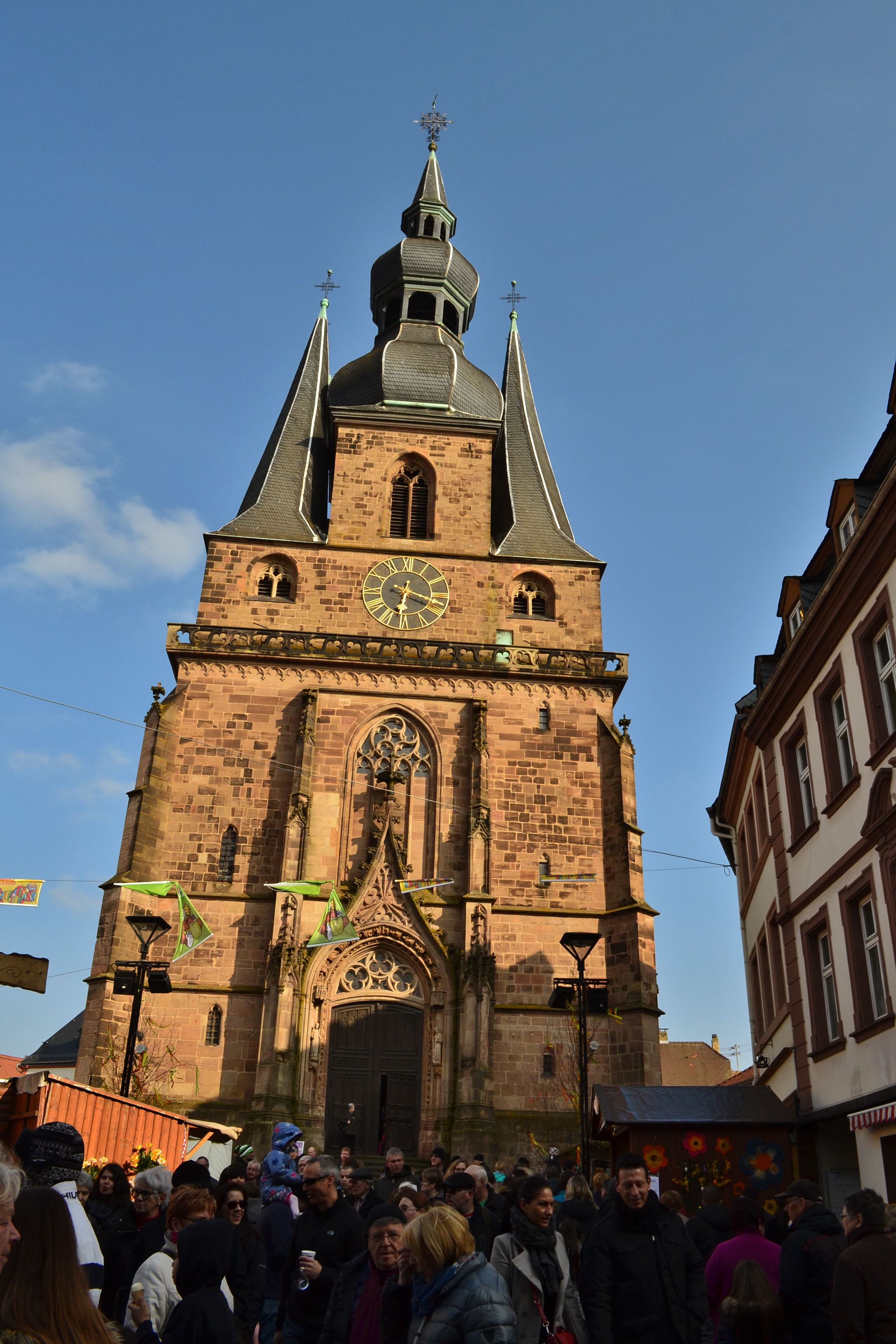
DSC_0867The church was the center point of the market festivities, with stalls huddled around her walls.  The photo at left doesn’t do the exterior of the church justice–in the busy, small streets around the church it was hard to get a photo that shows the fantastic double-onion dome (with a third tier “cap” and cross set above the domes) in proper perspective.  This church is stunning.

The interior of the church is equally beautiful. Here are a few photos for you:

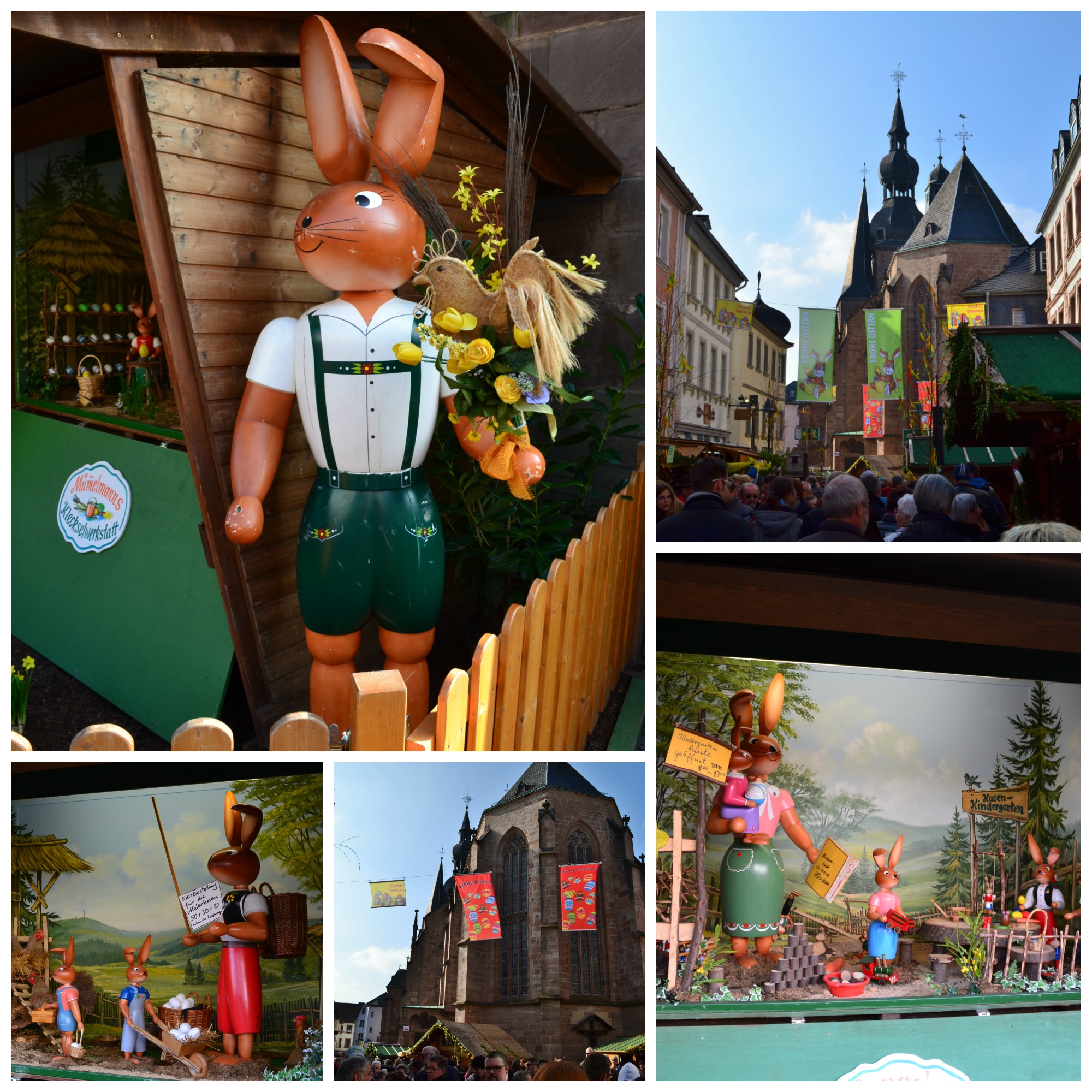
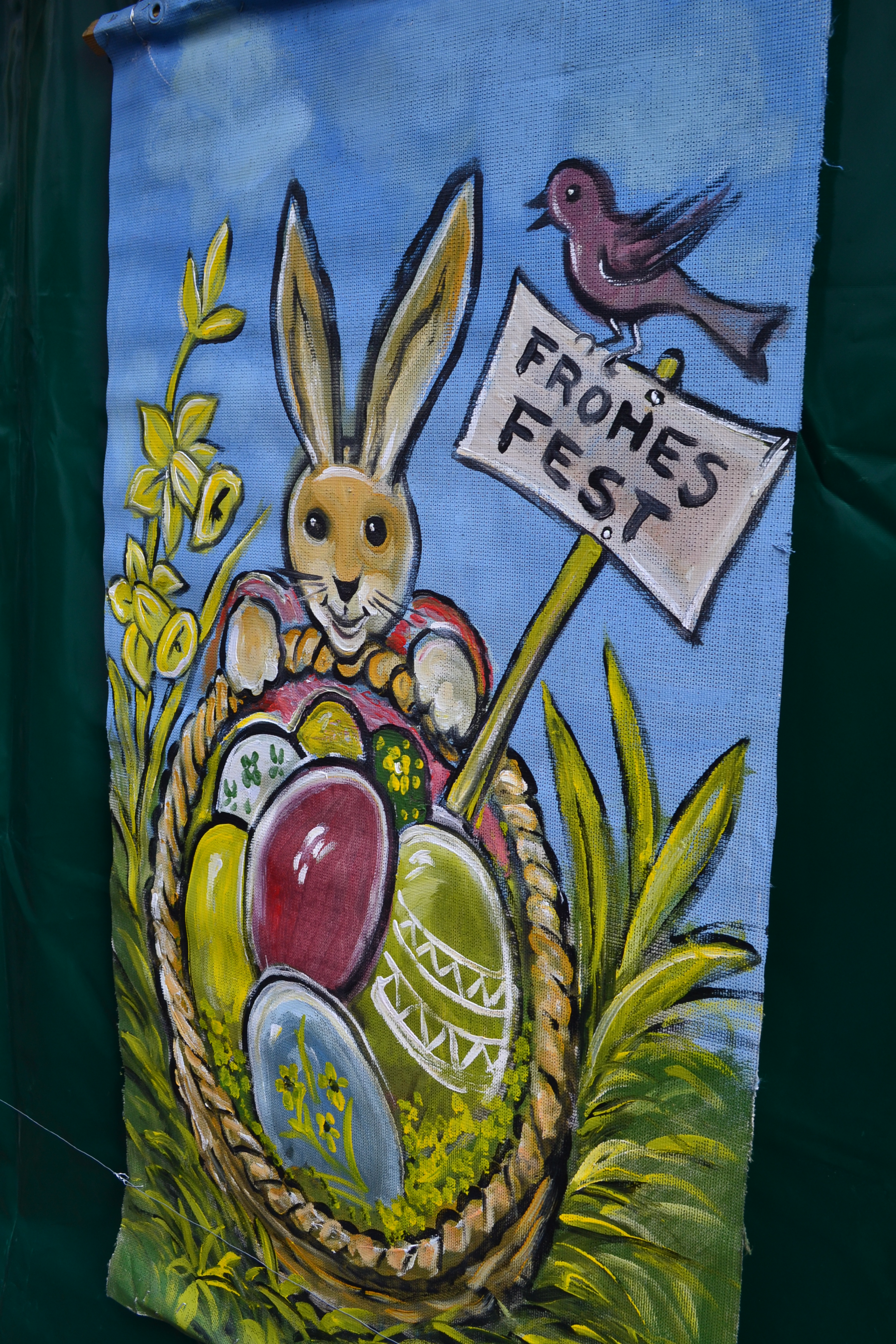
The Easter Bunny displays at Sankt Wendel DSC_0887 were lots of fun too–a little whimsy and a lot of artistry.  But, like so many German traditions, these displays got me thinking.  Where did this story of the Easter Bunny get started?  It seems obvious that America inherited its Easter Bunny traditions from Germany, as the Easter Bunny is not ubiquitous in Europe.  In France, for instance, the Easter Bells (Les Cloches), having flown off to Rome in the days before Easter morning, fly back home and bring eggs and chocolates to children.

The Easter Bunny seems to have started out as a German/Lutheran tradition.  Mention of the tradition dates back to texts from the 1600’s, and it does seem that the bunny did more than spoil children with treats.  There was an element of judgement–who had been good and who had been bad?  (There is, in German traditions, always an element of judgement.  If you don’t believe me, check out my past blogpost on St. Nikolaus and his sinister sidekick — Saints and Devils, Fire and Snow.)

DSC_0889But what made the Lutherans think up this magical bunny?  Well, they borrowed from earlier traditions too.  In German, this Easter Bunny is know as the “Osterhase”  (the Easter Hare), and it’s widely accepted that many roots of our present Easter traditions come from pre-Christian traditions.  The goddess Eostre (and her symbolic rabbits) were a focal point for spring fertility rituals.  Fertility, bunnies, eggs–you can certainly see the echoes in present day traditions.

You see the same pattern in Christmas traditions–the Christian holiday did pick up some flavoring from the Roman Saturnalia holiday that came before it.  We’re all magpies in some respect–we incorporate bright scraps we find and fancy here and there, and we add those scraps to our nests.  No holidays, religious or otherwise, spring fully formed from a doctrine or ideology–they incorporate the surrounding culture.  This may seem odd when the surrounding culture is pagan and the newer holiday is Christian, but hearts and minds change slowly, piece by piece, person by person.  Any slow turn of a culture will incorporate what its ancestors held dear, no matter how odd a pairing those ideas and traditions are.  Flying bells?  Easter bunnies?  A little odd if you think about it logically.  But, really, if all of our stories hinged solely on logic, we’d be all out of beauty and mystery. We’d be done for.

Long live the Osterhase!!  Frohe Ostern!  Happy Easter to you!

The Rheinland in March: In Like a Lion

DSC_0826
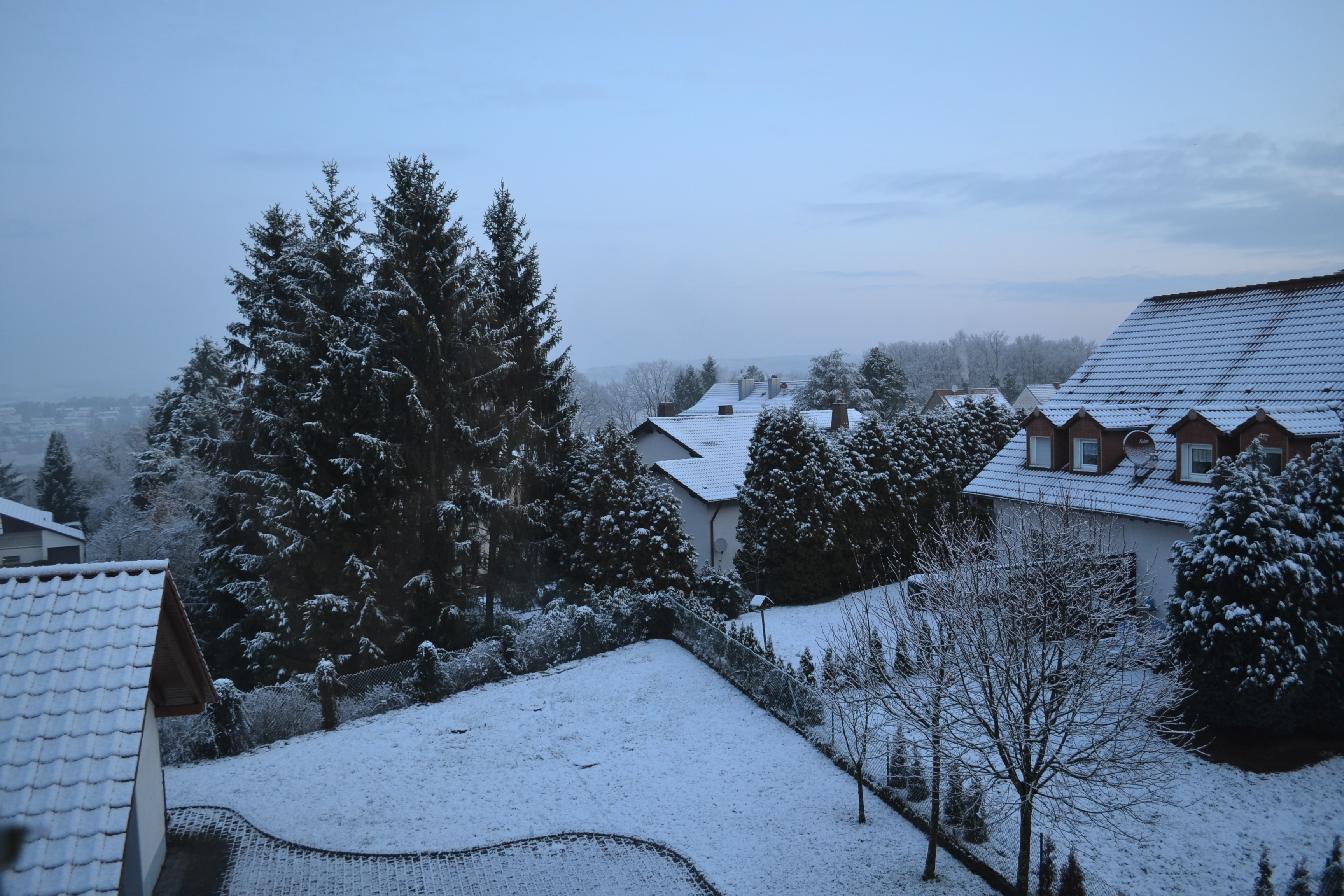
Tuesday morning: the snowy view over the hills around my house.

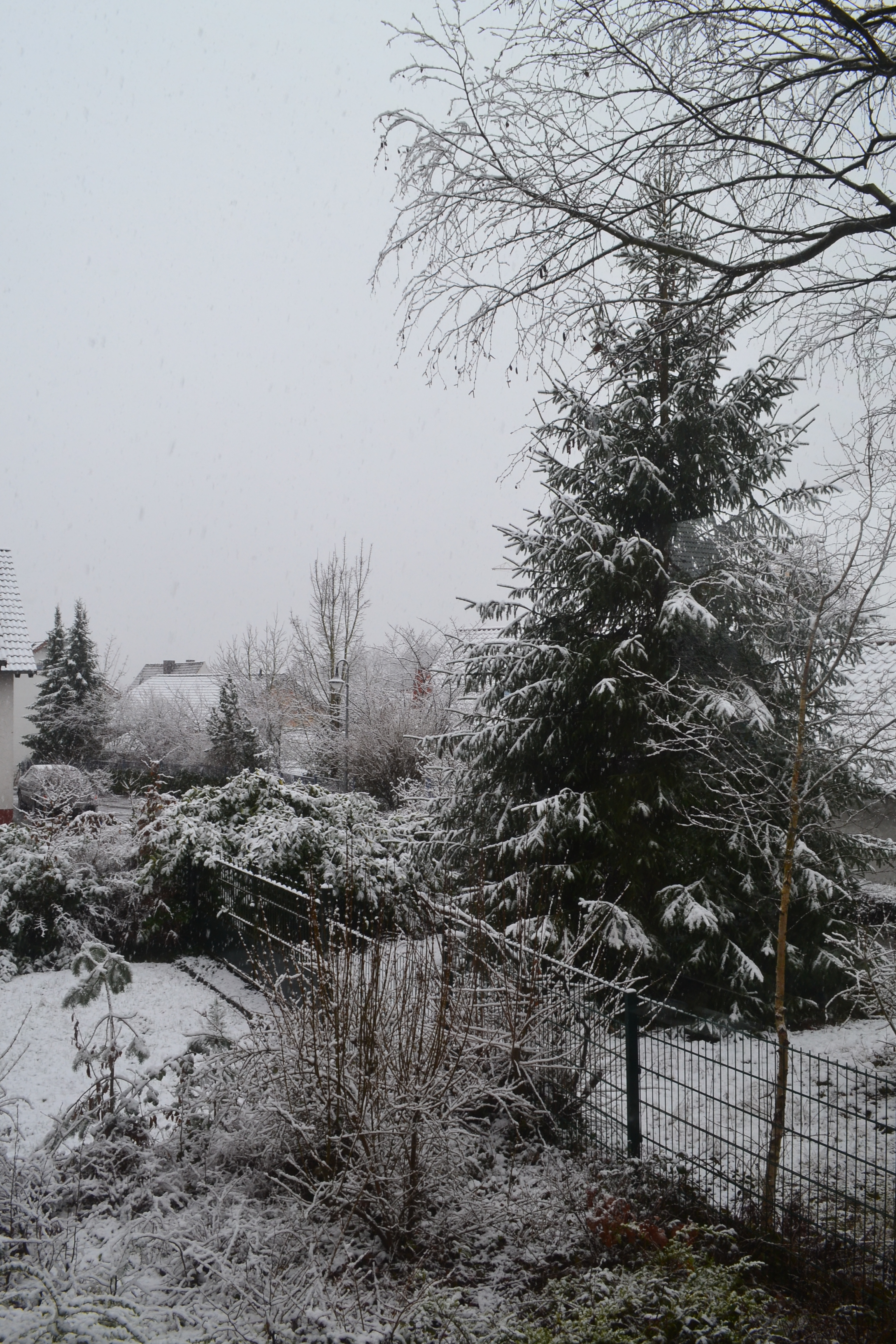
March has certainly come in like a lion to my corner of Germany.  This past week saw snow showers almost every day.  Each morning we’d wake up to a dusting, or much more (especially in the hills around us), and my kids would cross their fingers as I checked to see if their school would start late.  No such DSC_0798luck for them.

The snow here is beautiful, and the way it sits on the feathery branches of the spruce and fir trees gives this area a fairy tale appearance.  This is the view we dreamed of at Christmas, when the weather was just shy of balmy.  But winter did finally come to us.

After a significant snow on Tuesday, we had a sunny day Wednesday, and, as I walked my dog that afternoon, I was reminded of a quote from Charles Dickens:  “It was one of those March days when the sun shines hot and the wind blows cold: when it is summer in the light, and winter in the shade.” 

So that’s where we stand now.  The last patches of snow have melted in my yard, although I can still see some snowy fields on the surrounding hills.  Next week the forecast promises 50 degrees in the afternoons.

I think the lion has roared his fill and is turning to leave.  I’ll be glad to see March go out like a lamb.


Christmas in Salzburg and the Villa Trapp, Part One

villa trapp christmas

You’ve probably put away your holiday decorations, and it’s far too early to start planning for next year’s season.  But before spring rolls around, I wanted to write about Salzburg and the Christmas festivities we enjoyed there during the holidays.

In late November of 2014, we visited Salzburg and Villa Trapp just before the holiday markets opened–I made a vow to return for the 2015 holidays so I could experience the season in full swing in this corner of Austria.  I’d been to Salzburg once before (about 17 years ago), in warmer weather, but had only stopped for the day, and I’d been chomping at the bit to get back ever since.  Salzburg absolutely captured my heart.

Well, as long as I’m beginning this post with  flashbacks to past trips, let’s lay all the groundwork for this recent trip.  Or, as they say in Salzburg, “let’s start at the very beginning. . . a very good place to start.”

Salzburg  is tucked just inside  Austria, on the German-Austrian border, only about an hour and a half from Munich.  It’s a fabulous city for wandering and nibbling, for venturing out to Salt Mines (more interesting than it sounds) or WWII sites, and  for listening to Mozart or channeling Julie Andrews.

If you’re not very familiar with Salzburg, here’s the 30-second run-down:  home to Mozart and Maria von Trapp; fabulous apple strudel, pretzel vendors, and confectionary; incredible mountains, lakes, and countryside; ice caves and salt mines; Hitler’s Eagles Nest and Nazi camps; fortresses, monasteries, castles, gardens, and marionette theaters.

DSC_0011
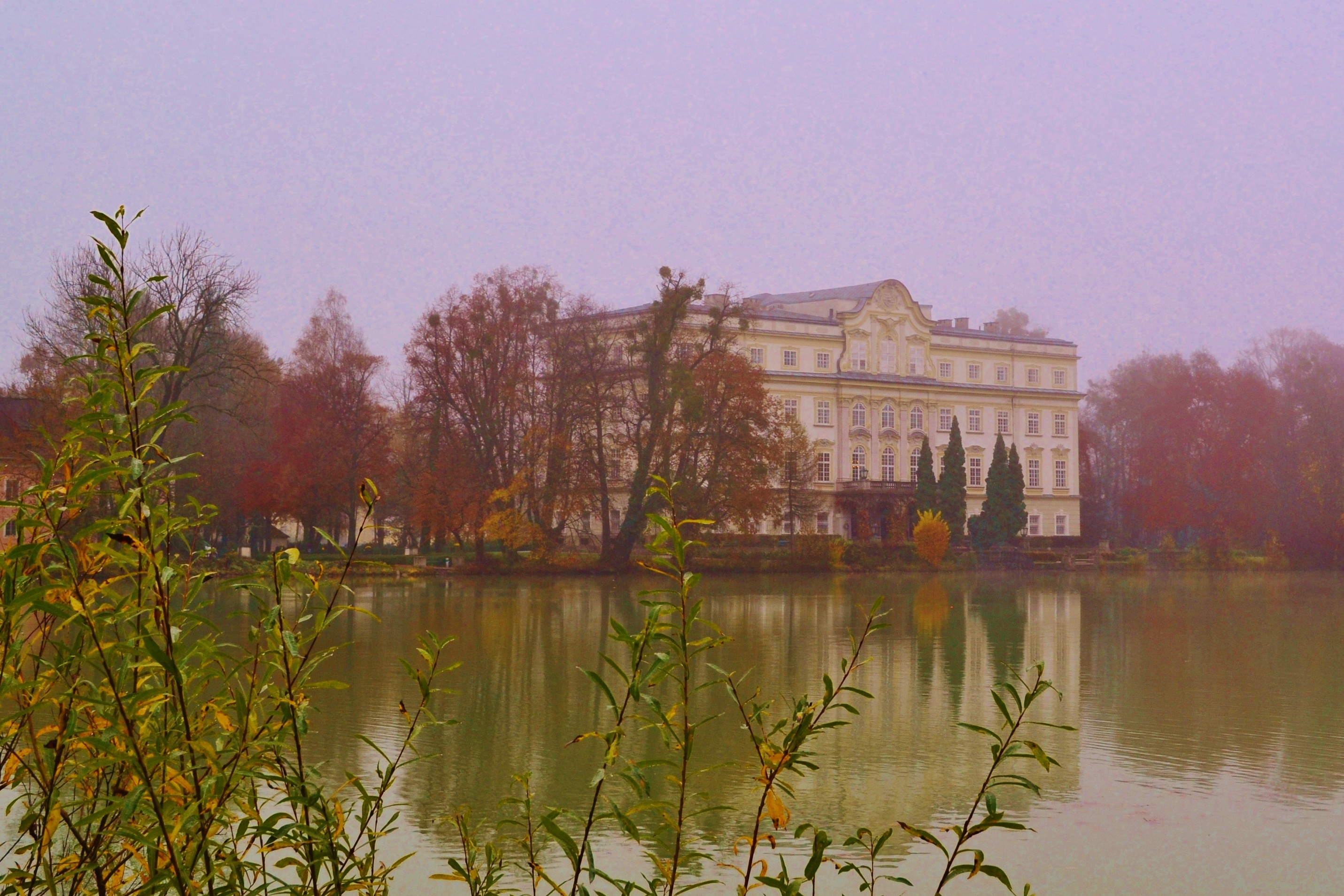
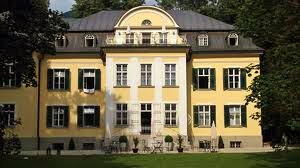
Leopoldskrone Palace

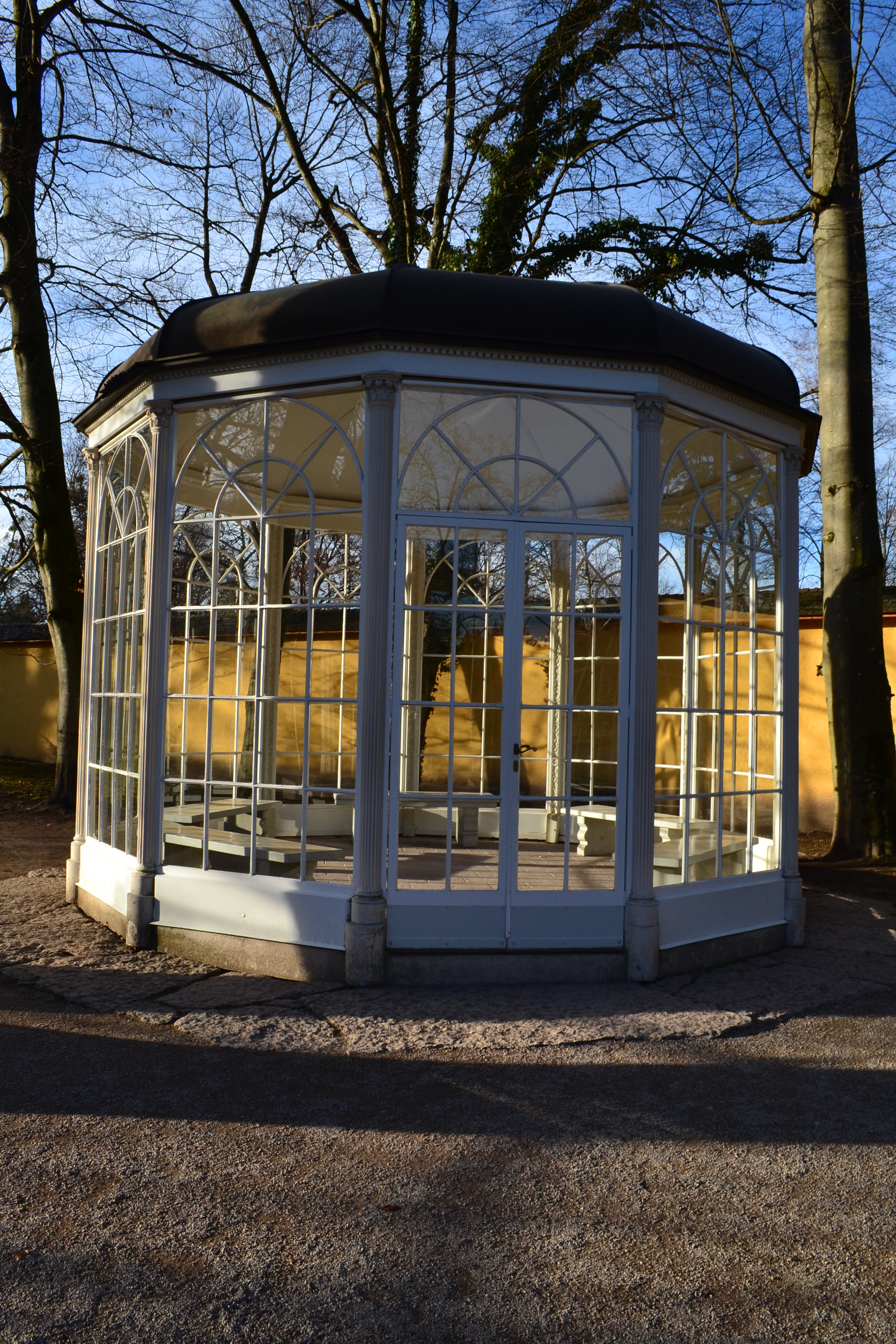
DSC_0221Of course, the American thing to do in this city is to take The Sound of Music tour–which we did back in 2014.  It was fun, if a little cheesy (a busload of American tourists with a soundtrack of Julie Andrews speeding through the Austrian countryside–you can imagine).  Among the tour stops were  Leopoldskrone Palace (used to film the back veranda of the von Trapp house in the movie), Hellbrunn Palace (near the home used as the facade of the von Trapp house, and the final resting spot of the “16 going on 17 gazebo”), Mirabell Gardens in downtown Salzburg,  Lake Fuschl (a beautiful town out in the Alpine Lake Region), and Mondsee (another lake town and the filming location for the wedding scene).

salt slides
Salt mine slides

On our 2014 trip, we also toured the Salt Mines and visited Berchtesgaden (on the German side of the border).  Both are worth a visit.  In the salt mines, you not only learn about the industry that made this area so rich, but you get to ride the steep and long wooden slides that the miners used to descend into the mines, and you ride in a boat on an underground lake, which is a really eerie and fun experience.   As for Berchtesgaden, besides being a picturesque town, it has a very storied history with the 3rd Reich. My first visit there,

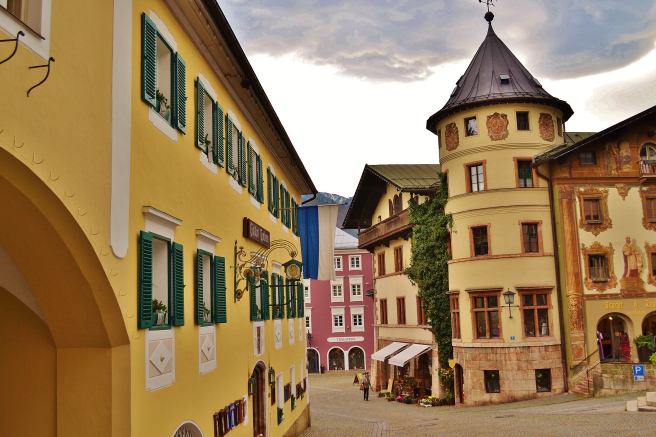
Colorful Berchtesgaden

about 17 years ago,  included an interesting historical tour of the area. Our 2014 visit was just a quick pass through.  Neither time was I able to visit the Eagle’s Nest–Hitler’s mountain top retreat high above the city (and well known as the place where one of the plots to murder him was foiled).  The Eagle’s Nest is only open during warm weather, as the road up the mountain is treacherous.  I’ve always had mixed feelings about visiting that space, so I didn’t mourn the lost opportunity for long.

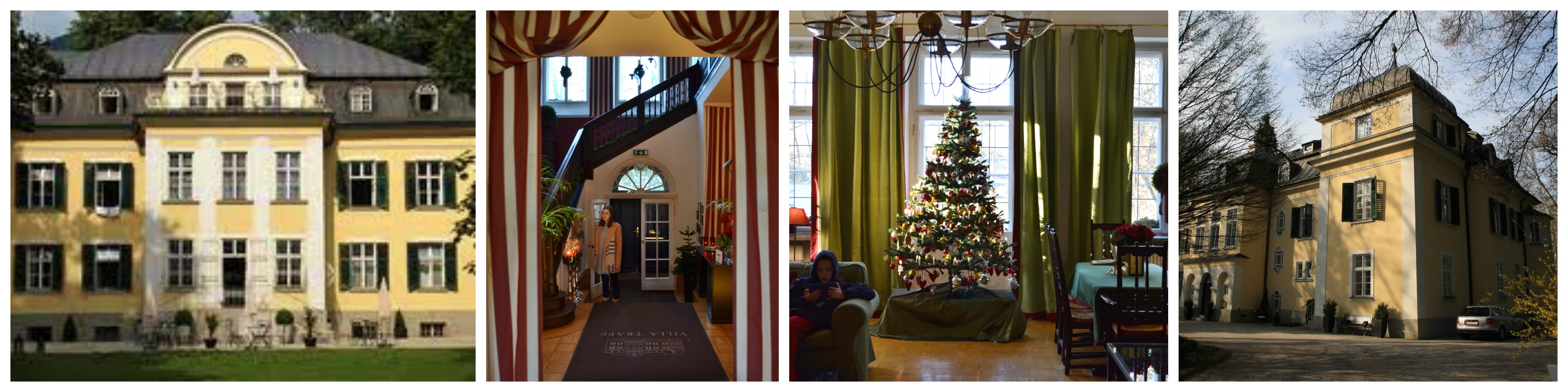
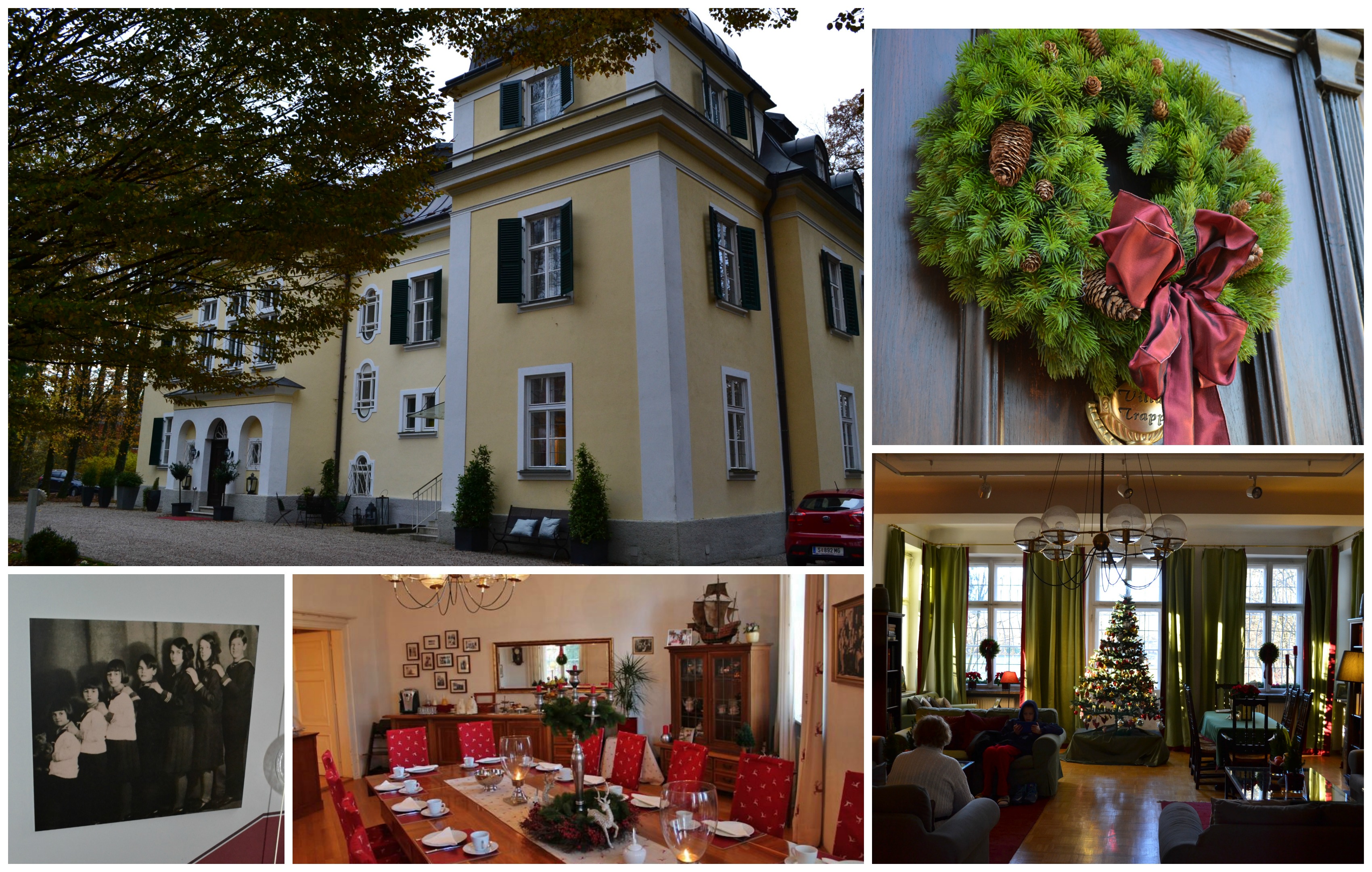
Villa TrappOn to the epicenter of both our 2014 and 2015 trips to Salzburg: Villa Trapp.  The von Trapp’s actual home was opened a few years ago as a small boutique hotel.  The owners, Christopher and Marianne, had a struggle on their hands seven or eight years ago, when they proposed opening Villa Trapp as a hotel. The locals were furious, anticipating a hotel creating a disruption to the quiet neighborhood where the Villa Trapp sits and adding to the already manic Sound of Music industry in the city.  But somehow the squabble was resolved, and the Villa Trapp was opened without disruption to DSC_0294the neighborhood.  The Villa will never be a large scale hotel–it is, as it was, a very grand family home.  In fact, it is a very quiet place, sat on a large, walled property in the neighborhood of Aigen (on the edge of Salzburg) and housing only a few guests even when fully booked.  (I believe the Villa was, historically, a 14 bedroom house.  How many guests it can now accomodate in its bedrooms and spacious suites, I don’t know, but the staff told us in December 2015 that the hotel was fully booked and we heard almost no one else, despite having some company when we took breakfast in the dining room.) 
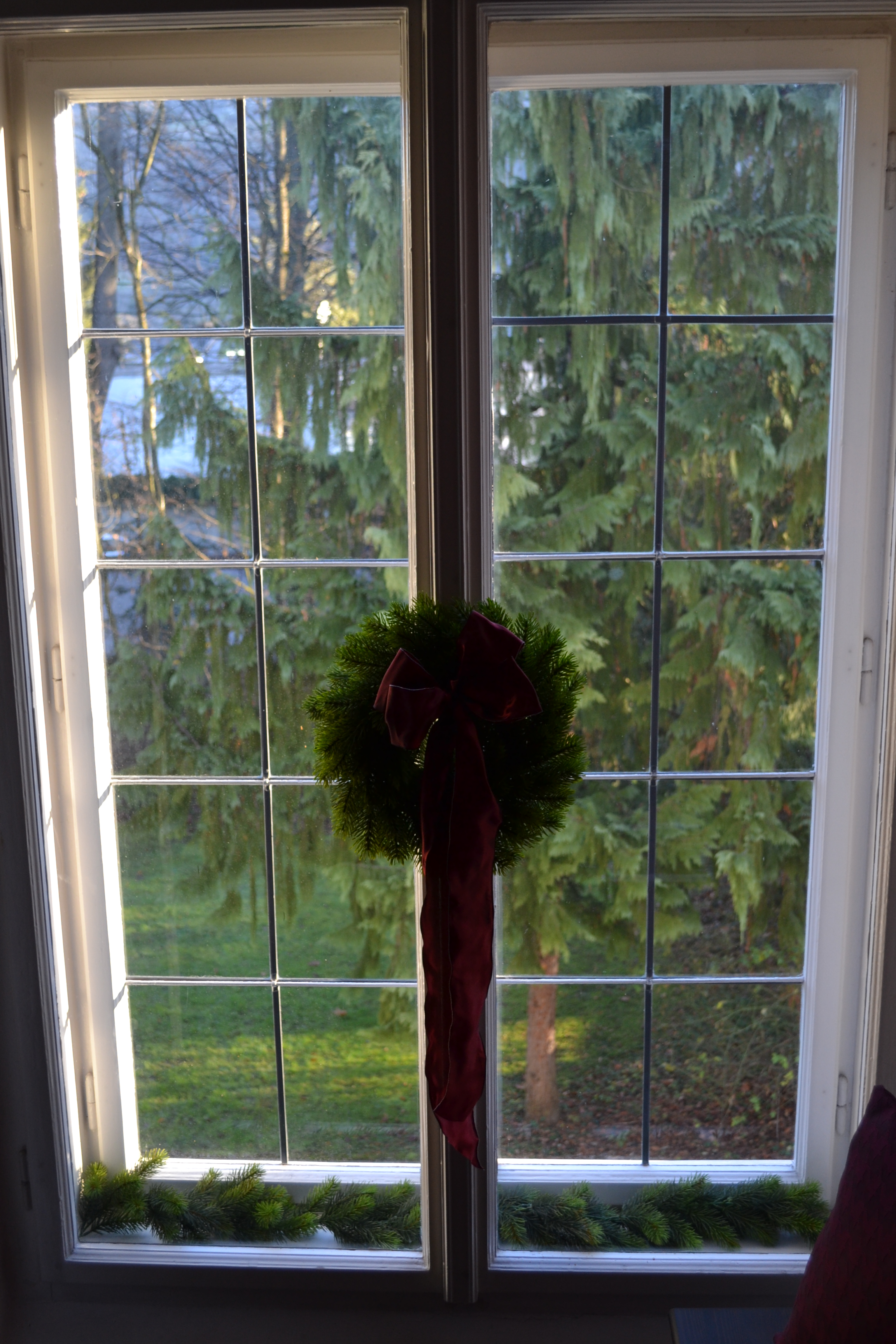
The photos in the top banner of this post are from Villa Trapp.

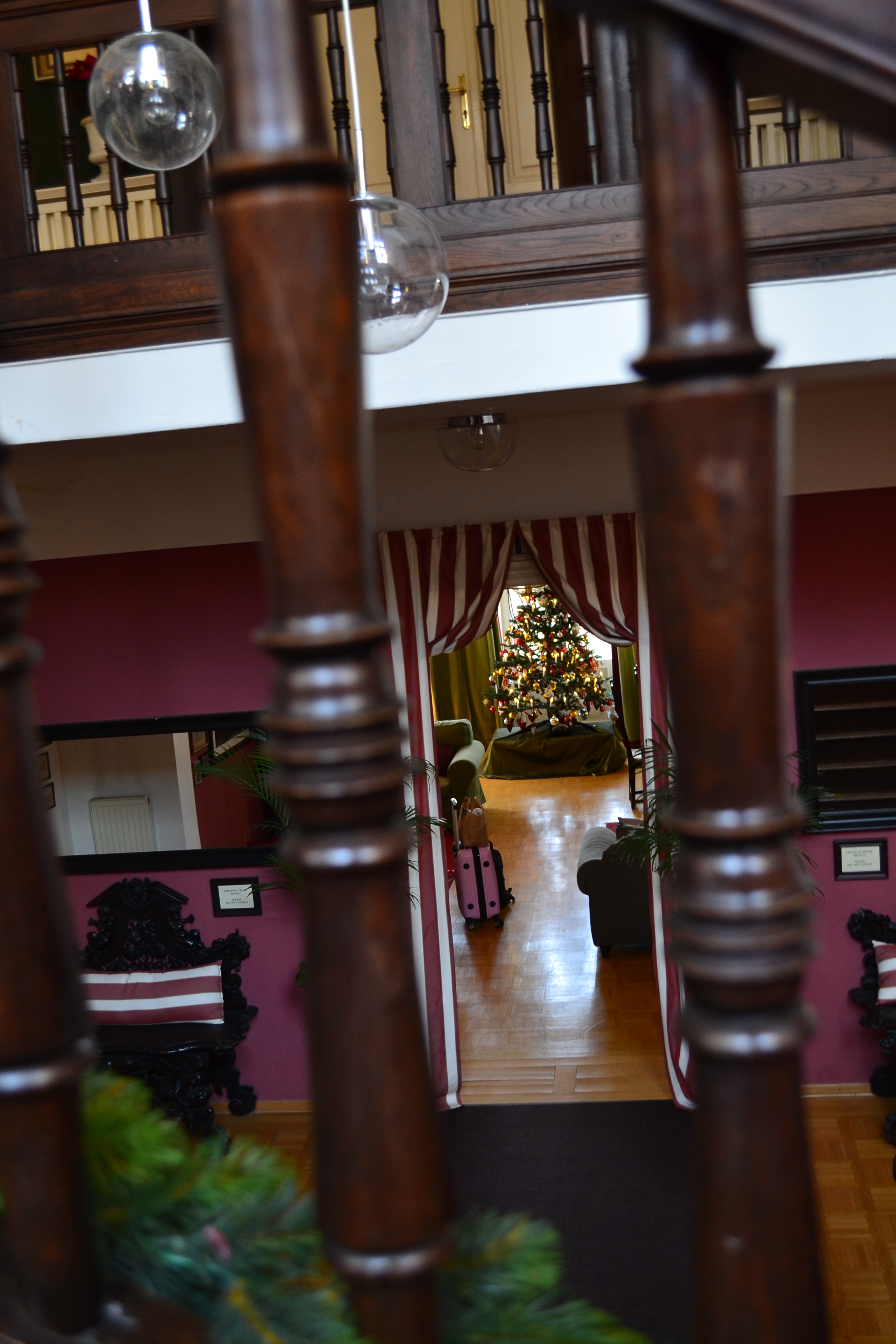
The sort of view the von Trapp children had when they tried to peek down the stairs at their gifts on Christmas.

We stayed there the 22-24th of December, and were sad to leave when we learned that they were holding a Christmas Mass in English on Christmas Day there.  The Villa was purchased by the Trapp family around 1923 (it’s a mid 19th century villa).  They lived there until 1938,  when they fled the country and left the house in the hands of a missionary group. (The von Trapps didn’t actually have to walk over the mountains, they took a train–but they did get out just one day before the borders were closed by the Nazis, so the escape still counts as dramatic in my book!)  Hitler quickly occupied Austria, and the SS took over the home for Heinrich Himmler’s office and residence space.  After the war, the villa went back to the hands of the religious order.  The order remained in the villa until around 1992–which is why it was unavailable as a filming location when The Sound of Music was being shot.

The villa is a very gracious place to rest on your travels, and it is so very steeped in its history–the owners are glad to speak with you about the home, and they even offer a tour of the house at noon each day, and  have a DVD available that takes you through the family and house history and features one of the von Trapp children (Maria–known as Louisa  in the movie–who passed away at 99 years old in 2014).

Villa Trapp at Christmas

This Christmas, we were joined on our trip by my sister and her family.  We each had a spacious suite of rooms, and felt pampered as we rested up from our drive and our days out in Salzburg.  Salzburg’s Christkindlmarkt (Chirstmas Market) was in full swing, and we enjoyed cruising that, as well as walking through the Hohensalzburg Fortress,  the Salzurger Dom (the cathedral), St. Peter’s Cemetery and Catacombs, Nonnberg Abbey,  and Hellbrunn Palace–but I’ll post more on that in a few days in part two.

Until then,  so long, farewell, auf wiedersehen, adieu!   (couldn’t resist)

*And for a little fun, watch Julie Andrews and Diane Sawyer meet the hoteliers at Villa Trapp here.

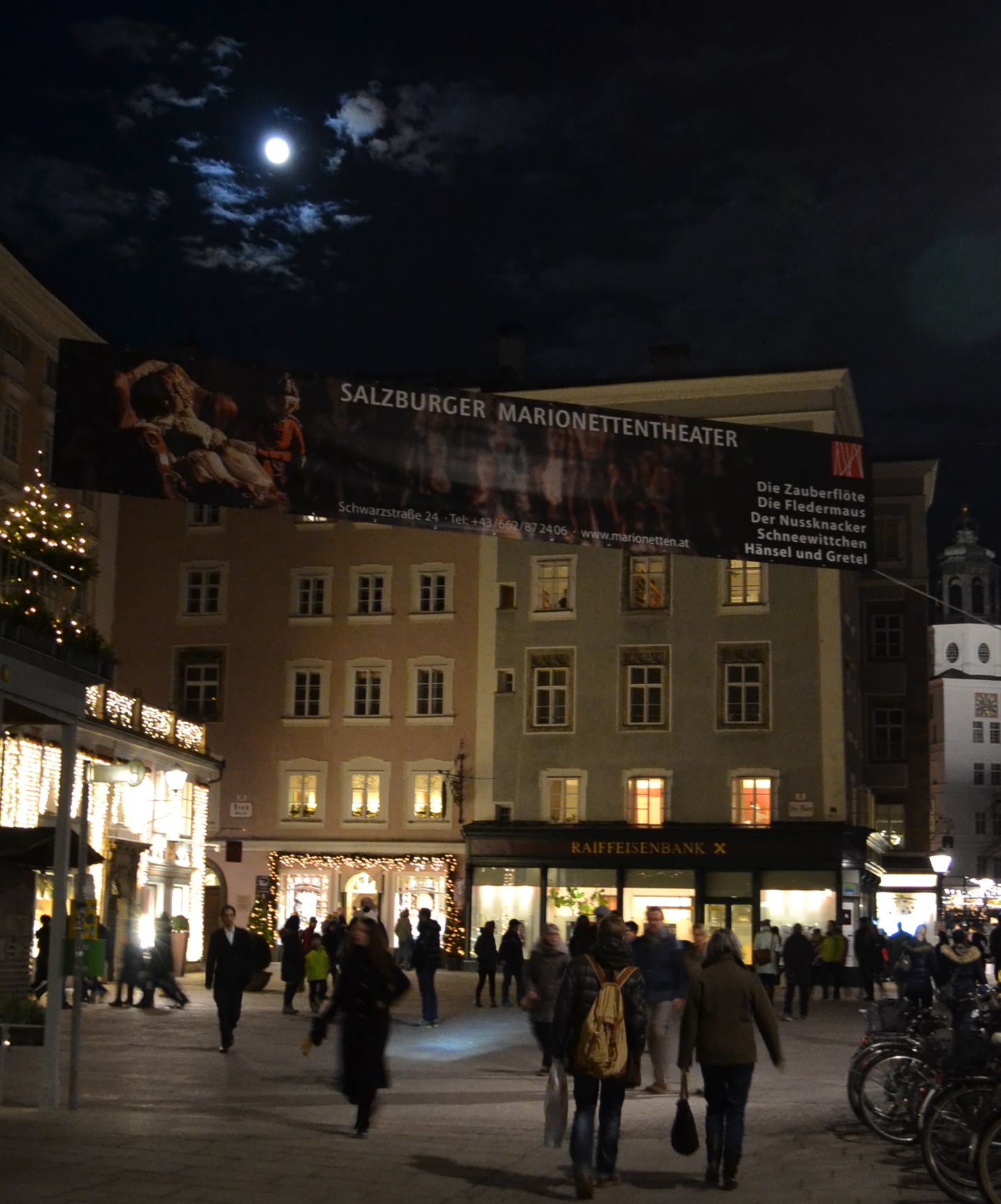
Salzburg at Night
Salzburg at Night


Sleigh Bells Ring . . . Are You Still Listening?

DSC_0323

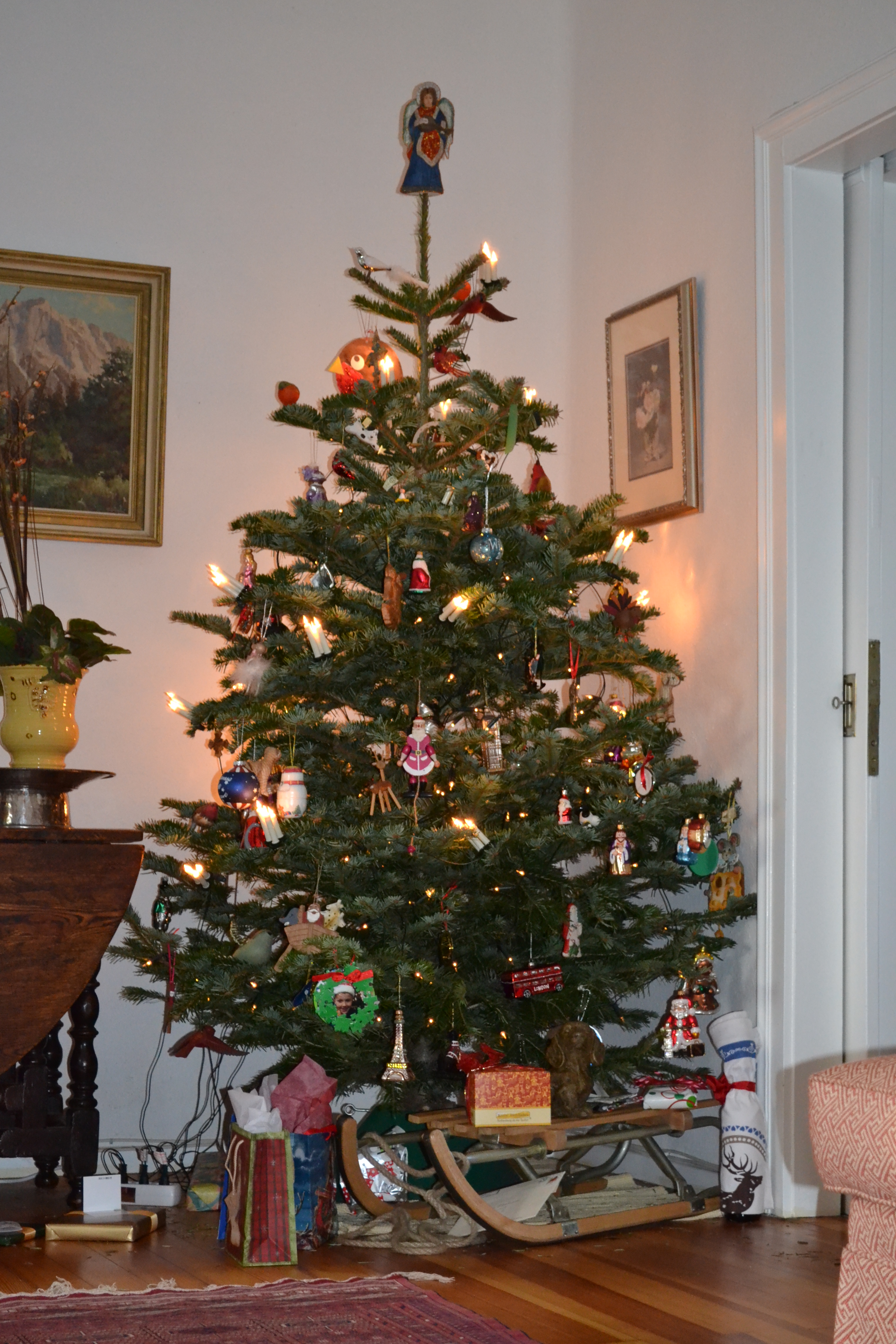
I’m having trouble giving up Christmas.  I am a bit tired of the chocolate and the mulled wine, true enough.  Some decorations have been put away–a scattered few that were beginning to irritate me.  But the tree is still up, as is the advent wreath on our table, despite its dessicated state (it will soon go up in flames as I light the candles, or possibly dissapear in a poof of dust at the slightest touch).  It’s time to put these things away . . . in a few more days.

There is a reason for this lingering, beyond the turtle’s pace at which I do any housekeeping chores.  You see, Christmas here was a relatively balmy affair.  We had prayed fervently for snow, offered the Supreme Being our very best behavior in trade for some glorious downy flakes.  But it was an offer He knew we couldn’t make good on to any high standard, and the snow never came.  Nor the cold.

So I held out for snow before I was willing to give up the season.

This is probably my final Christmas in Germany, so I have no qualms bending the calendar to suit my needs.  I need a picturesque German Christmas.

This weekend, it’s here.  Not in copious billows or drifting banks, but we do have swirls of flakes and dusted lawns.  And Christmas tree lights to read by.  It is enough.

DSC_0647 - Copy
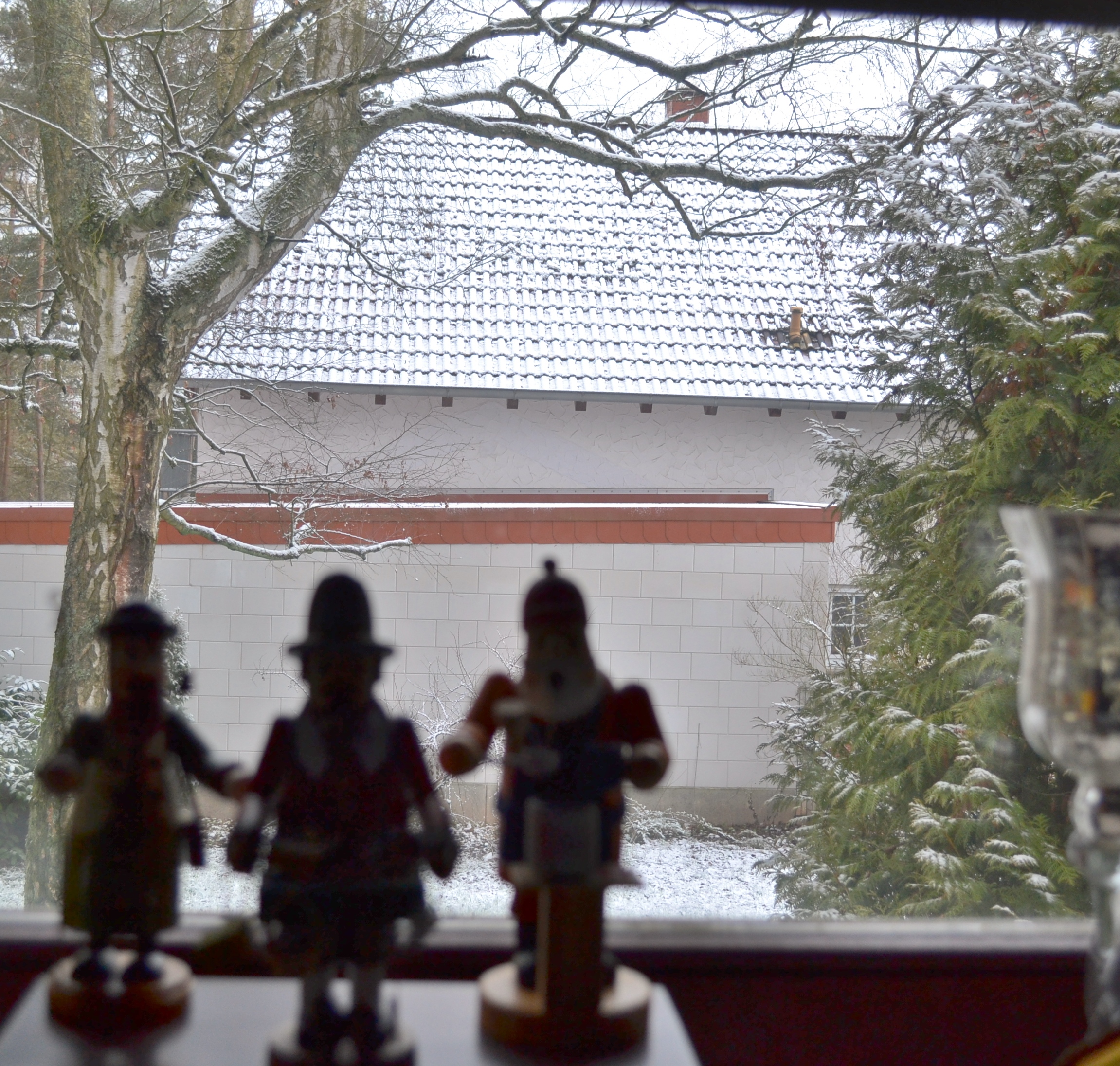
A dusting of snow out the window.

Or almost enough.

If you hear a low rumbling, a curmudgeonly grumbling, tonight–a barely perceptible shaking of the ground underfoot– I suspect it’s my family, annoyed with me as I present a steaming hot Guiness Gingerbread* and pop in a dvd of “Elf.”  By tomorrow, they will all be willing participants in a big Christmas clean up.


*Guiness Gingerbread, aka fantastic stuff:  recipe from Nigella Lawson at http://www.foodnetwork.com/recipes/nigella-lawson/guinness-gingerbread-recipe.html