I wrote, but never published, the following post a few weeks ago. My final German class has now wrapped, and my time in Germany is slipping through my fingers at an alarming rate. I’m still a thousand miles off the shores of fluency, but I am still bouyed by a sort of wonder at the language. Das ist mein Schicksal; this is my lot.
Call me Yoda.
I am not wise; I am not green; I am not cute and pointy-eared; I am not short.
But language I do speak, in foreign and fitful patterns I do. German is like that– its subjects and verbs bounce around depending on meaning, subordination, etc. It sounds cute when Yoda does it. And I actually find it enchanting when German does it– infuriating, but enchanting. But this doesn’t help my plight in language class.
We are rapidly moving into our final weeks here in Germany, and I’m still attending German class . . . but not flourishing. I will make my excuses up front. Let’s start with my teacher. (She is very nice, but just ill matched to my learning style)
I’m back with my original teacher who is all about book work and learning all declensions, conjugations, variations, grammaticalizations . . . which is not a real thing, but you get the picture. I’m stuck back in class with the engineers and their precision-cut cogs of language (if you have no idea what I’m talking about, you are more sane than me look back at my past blog post–here). This class doesn’t really suit the way I learn, but I’m hanging in there, most days. (I have been known to play hooky a little.)
Still, the truth is that I am languishing horribly.
I like the word “languish,” it’s kind of visual for me. I see a boat stuck on a windless part of the sea, which of course is just a few days away from disaster and decay . . .but let’s say the wind eventually picks up, and disaster is averted (happier story). So, anyway, “languish” means “to lose or lack vitality, to grow weak or feeble.” And this is me in German class right now, but it occurs to me that the word “languish” sounds like the word “language” if spoken by a drunk person. This somehow makes me feel better. Like the word was specifically invented for my situation–as if it’s a natural thing to languish in a language when one is somehow lacking in mental power, for whatever reason. A reason like stress brought on by an impending move.
Or like sitting in a book-learning class with my head down in a page, when I can only absorb words by speaking and hearing and bandying them about like a game. It’s a messy, garbled way to learn, but I’m a messy, garbled person.
I like language– I bloomin’ love language, honestly– but not because of its precision bits. I love it for the most idiotic, but sonorous, reasons– like the fact that “languish” sounds like a drunkard saying “language.” That makes me happy.
And language makes me happy.
But today I sat in German class, having missed a few classes (for various reasons: some good, some bad, some worse). I was lost. And the verbs and nouns were jumping all over the place in sentences–like fleas on a dog’s back–for reasons I couldn’t quite understand. But I liked it. It made me laugh.
So there I was, some of my classmates scratching their heads and trying earnestly to grapple with the language, others following dutifully and expertly along, and me–the village idiot–just thinking how cool these slippery constructions were, although I understood them not one bit.
And then, at the end of class, came the best moment, the icing on the cake. My teacher brandished her eraser and said, “I vill vipe die blackboard.”
My ears were in heaven! While everyone else noted the homework and closed their books, I struggled to stifle my giggles. The word-fleas jumped, the teacher “viped avay” at the board, and I just laughed.
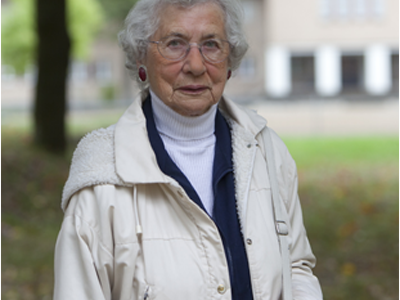
Last Friday, I had the good fortune to hear the 94 year old Selma van der Perre speak about her experiences as a Jewish woman during the Holocaust and a survivor of Ravensbruck Concentration Camp. I braced myself for difficult stories and a somber afternoon, but what appeared on stage was an absolute spitfire of a woman who radiated hope, energy, and life abundant. I fell in love with Selma the minute she walked on stage–with a cane and on the arm of a younger person, wearing a neat suit, chic French scarf, and white beret.
She was chic, sharp, and a delight in every way. Some of the stories she had to tell made your blood run cold and your stomach clench into a knot, but everything about her being shone bright and radiated hope.
She was a young woman growing up in the Netherlands when the Nazis came to power. Her family was pulled apart, her father died in Auschwitz, and she became a courier with the Dutch resistance, taking a false identity and dodging the authorities while helping the cause. Eventually, she was caught and sent to prison, then transferred to Ravensbruck.
Selma could, and eagerly would, tell you stories all day about those years–each story more fascinating than the last, and many of them heart-wrenching. They are her stories to tell, and I couldn’t do them justice, so I won’t try to re-present them here. You may use this link to hear her tell some of her stories in her own words (from a BBC program on Ravensbruck–“Surviving Ravensbruck”). I promise you that it is well worth your time.
What I will tell you is how she answered a question about what gave her the strength to go on and to not give up, although she was quite ill and weak much of the time. She answered this very simply, taking little personal credit. Yes, what she did in the resistance was dangerous, but it was a difficult time and she wanted to do her part and help people. And besides that, she didn’t want to give the Nazis the satisfaction of crumbling– she wanted to “stick it to them.”
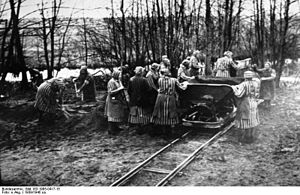
Ravensbruck prisoners, from Wikipedia
Even as a factory worker in Ravensbruck work camp, she and her colleagues would sabotage the gas masks they manufactured for the Third Reich, not screwing them together properly. Anything they could do to undermine their captors, they did. And they showed each other kindness–she was adamant that kindness from other inmates (and even a prison guard early on–a guard who was later incarcerated and killed for her part in helping inmates) kept her going during tenuous times.
There are very few survivors of the concentration camps still around, and, like Selma, they have reached a ripe age. It is so important that we hear their stories whenever and wherever we get the chance. I very nearly missed hearing her talk. I had a busy day Friday and her talk wasn’t at a convenient time for me . . . and, as you can imagine, I felt a little discomfort about going. It was a beautiful, sunny Friday afternoon, and the Holocaust is a heavy, horrific topic which anyone might, understandably, want to avoid. But that would have been a mistake.
When I left the theater and stepped back into the bright afternoon, I was uplifted. The horror of the history had been laid out unquestionably in her talk–I flinched time and again as she told stories– but, I tell you this, the lesson was transformed in the person of Selma van der Perre. “This cannot happen again,” she said, “we must be very aware of such things going on still in our world.” Her message was clear and serious, but in her capable hands it was uplifting and resilient. Our lights should all shine so bright.
The evening of May 4th through the evening of May 5th mark Holocaust Remembrance Day, Yom HaShoah. In honor and memory of the millions of souls lost in the Holocaust, this simple photo of a wall at Dachau. Never again.
I feel like I’ve become an expert in the art of faux pas while living in Germany. Once I stopped grinning and waving at strangers in my austere German neighborhood, and being thought the village idiot (I was only being friendly!), I moved on to linguistic lunacy and, apparently, asked for foreplay (“Vorspiele”) instead of appetizers (“Vorspeise”) in local restaurants. Who knew?
There is a certain amount of idiocy that you can’t avoid when you live in a foreign country–whether because you don’t speak the language well or because you don’t understand the customs. I can live with that. I forgive myself these missteps, and the locals are usually forgiving of them too.
But sometimes you just do something stupid. We all do it. (Some of us more than others.) It’s especially awkward when you do something stupid and you are a foreigner. You see the eyes roll, you can almost hear the thoughts filling the heads around you, “Oh, those Americans!”
We’re heading back to Yorkshire for a visit in the days ahead, and we are considering a stop by Hemswell Antique Center, in Hemswell Cliff. We’ve picked up some interesting things there in the past and thought we’d take a look again, if we have time. If they’ll let us through the door. My last visit there, I was the person who sent eyes rolling, or at least squinting and watching me like a hawk.
But it wasn’t really my fault.
My husband and I had a big day planned. My mother- and father-in-law were in town and had offered to watch our children for the day while James and I drove a few hours away to the Newark Antiques Fair–it bills itself as the biggest in Europe, and it is a whopper! But we wanted to get there early and we had a stiff drive ahead of us, so we had to leave before dawn.
Our house in Ripon wasn’t a big affair, so we had to tiptoe around not to wake anyone. That day, we decided we wouldn’t make coffee or eat breakfast, we just planned to dress and get out the door quickly and quietly. But for some reason–I’m guessing a child that sneaked into our bed during the night–we even had to dress in the dark and tiptoe around our own bedroom. Which we did, and out we went.
Off to Newark and treasure hunting! We had a great day–it started off grey and maybe a little drizzly, but we wrapped up and it didn’t bother us much. Many vendors were in tents and we made out well– enough small treasures to feel satisfied, not so many as to break the bank. I will say my husband bought some questionable art, but he always buys some questionable art. At this point in our marriage, it would worry me more if he suddenly stopped that habit.
The day grew warmer and sunnier; our coats came off; our arms filled with loot; and we finally felt ready to return home from our adventure.
But, if we made good time on the road, we could just eek out a visit to Hemswell on the way home. Off we went!
The Hemswell Antique Center covers a lot of ground–many buildings and antiques of all kinds. It also houses a cute, but simple, cafe with a Royal Air Force World War II theme. (I think Hemswell may actually be an old, decommissioned RAF base, but don’t hold me to that.)
We knew we could only make a quick run through, so we took off at double speed. We zipped through this building, we zipped through that building. Then, in the final building, tired out from the day, I found myself slowed to a stop in front of a case of vintage jewelry. A few cases, in fact. As I stared sleepily into one of the cases, a fly caught my eye. He was stuck inside the case and trying to fly out of the glass. Repeatedly, he flew at the glass, only to strike it hard, and tumble back to the shelf under the hot lights. I am no friend of flies, but this little guy was struggling and I felt bad for him.
I turned around to see a salesperson close by. (In hindsight, I think he may have been hovering around me–a very suspicious woman.) I called out to him and explained the plight of this poor fly stuck in the glass case. I wondered if there might be any way he could free the poor animal, who was getting fairly panicky behind the glass.
The salesperson gave me a very perplexed, but gentle, look and said that, yes, he’d make his way over presently and attend to the situation. I slowly moved around the room and browsed some more. Two or three minutes later, I heard a voice call out from across the room: “You’ll be happy to know that the fly has made his bid for freedom!” I looked up, and the salesman shot me an amused look. I smiled and said, “Thank you so much.” He nodded and added, “That should send some good karma your way.”
It was a humorous exchange. As I left the building, the salesman and his colleague gave me a cheerful, if oddly watchful, send off. Clearly, as far as they were concerned, I was an awkward American, or maybe the nutty Zen lady. So be it–I can live with that.
I walked out into the bright sun of a crisp autumn afternoon, pleased with our day of high brow foraging. I dropped my tired body into the front seat of the car and began fastening the seat belt around me …. only to be stopped cold by what I saw. What I couldn’t have seen as I dressed myself in the dark that morning; what I never saw, as I apparently looked in no mirrors as the day progressed; and what my husband, in his own wide-eyed but sleep deprived frenzy of antiquing, had apparently never noticed. I was wearing my shirt inside-out.
I wasn’t the nutty Zen lady after all.
Oh no, it was much worse.
I was the utterly lunatic bag lady who befriended flies. Oh, those Americans!
My husband and I just celebrated our 24th wedding anniversary. By anyone’s standards, 24 years is a good chunk of change. It’s been two decades of perpetual motion, so it’s no wonder that I find myself reflecting on it this week in a blog named “Travels and Tomes.”
For all of the enthusiasm I have for the next few decades together, and all of the certainty that they will involve “settling down” soon, I look back over our past adventures and our many homes and travels and I think what a long, strange, and utterly remarkable trip it’s been.
Here’s the two cent version of that trip.
CONNECTICUT: This predates the 24–it’s where we met in school. Spring and autumn in New England were glorious; winter was long but happily punctuated by sledding on cafeteria trays. We hung out in coffee houses, bought cheap theater tickets at the Rep, frequented the Brew and View pub in the next town, and made the occasional trip via commuter train into NYC (where we splurged for a Broadway show once or twice, but usually used our pocket change to visit the Met Museum or Museum of Modern Art, or stroll Rockefeller Plaza at Christmas). We drove out to Cape Cod. It was a great start, tinged with a little wanderlust.
Our next stop was CHICAGO. These were our salad and frozen pizza days. We lived in three different apartments over 3 years and each one smacked of “Barefoot in the Park” in its own way. (Great play, and great movie with Redford and Fonda, if you haven’t seen it.) The first was at a fine address in the Gold Coast, but it was, literally, a closet. Literally. It was a temporary do.
The second was a coach house over a garage in the DePaul area. Charming. Until winter came, and we realized that there was no insulation. . . anywhere. Not in the walls, not in the roofing, and not under the floor. Cranking the heat did nothing but fill the apartment with gas fumes and heat the air in the middle of the room (as in, three feet up from the floor, three feet down from the ceiling, and three feet in from the walls). So when the owners raised rent, we went packing for warmer (and cheaper) digs.
Which we found in our third apartment, just north of Wrigley Field (home to the Chicago Cubs). We had a scant view of the top of Wrigley Field in the distance from our South-facing window, and an up close and personal view of a transient hotel across the street in our front windows…where we also had one bullet hole. During our stay, no more bullets flew, but our neighbors at the hotel regularly pulled their fire alarms at 3 a.m. (followed by a brigade of firetrucks), and on the rare occasion took firefighting into their own hands and threw flaming matresses out their windows. It was like having a front row seat at the theater each night.
In the winter this last apartment kept us warm, although ice crystals would obscure our view out the windows. In the summer, we would broil and spend our evenings walking through the grocery store and opening the doors on the freezer aisle, postponing the inevitable return home. Weekends found us wandering the boroughs of the city, eating in cafes and people watching–cheap entertainment, but always a good time. Each weekend, we’d walk a different neighborhood: German, Lebanese, Czech/Slovak, etc. We had no idea this would be good practice for the life of travels that was to come.
DC: A fast turn around — we lived there one year. Loved the city, hated the traffic. Great food, lots of culture, but far too much talk of politics. Some weekends, we’d storm the city for ethnic markets and museums, other weekends, we’d escape to places like Chesapeake, the Shenandoah river, or the Chincoteague shore–sand dunes, ocean tides, and wild horses. . . paradise.
TEXAS: Our Texas roundup:
Steak–never liked it until I lived here. A revelation.
Tex-Mex– again, no one does it like Texas.
Tumbleweed and Mesquite– lots and lots of tumbleweed and mesquite.
Our time in Texas wasn’t marked by a wanderlust or cultural broadening–it was more of “going deep” into a down home experience of that region. It was different, but it was delightful. And we left town with a secret recipe for salsa from our restaurateur friends Ted and Lena– a priceless gift.
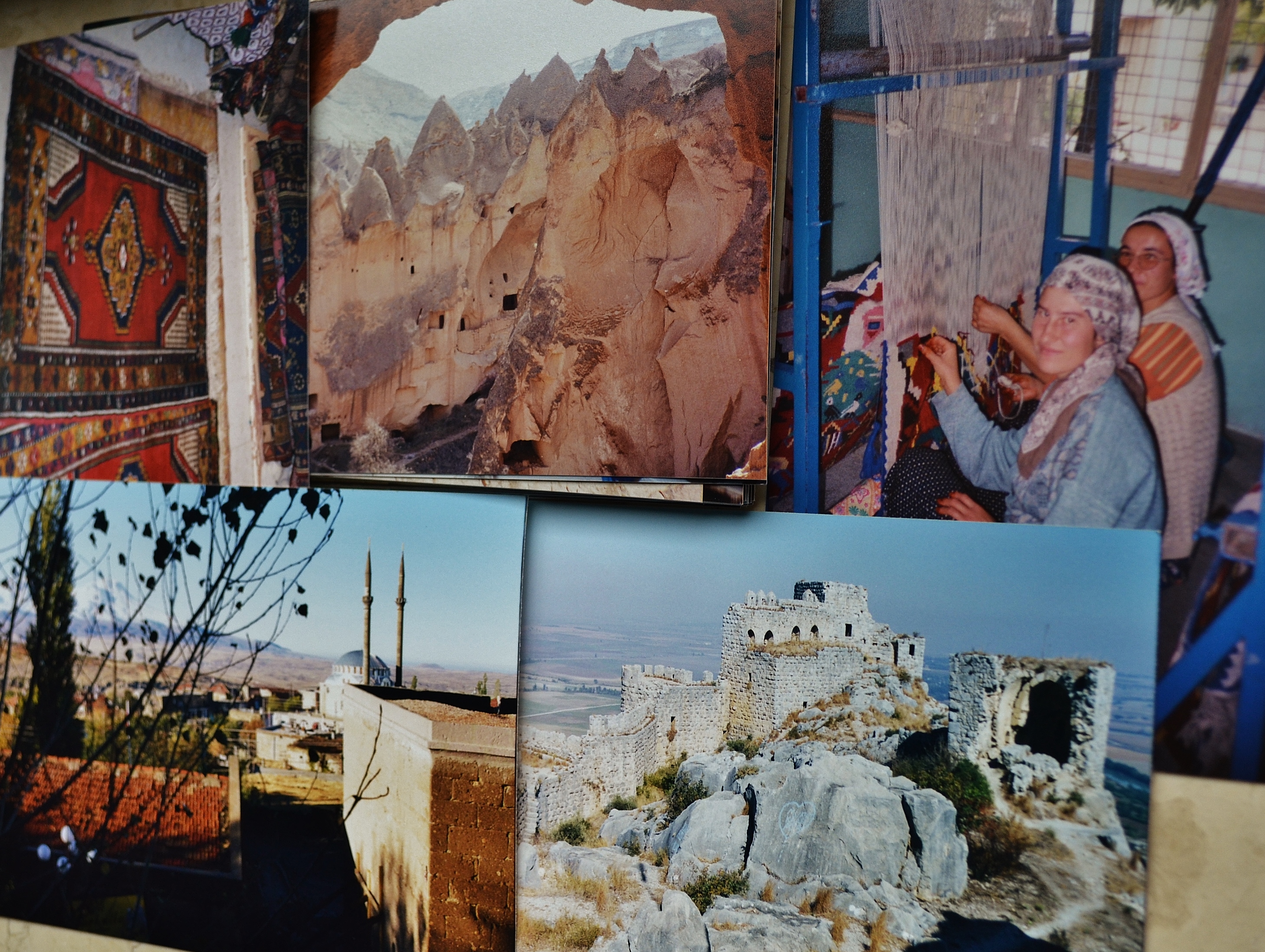
TURKEY: Culture shock after moving from west Texas to the mediterranean coast of Turkey, but absolute love after that. If you’ve ever wanted to time travel, rural Turkey is the closest you’ll come. Hop on a mountain bike and take off through the fields of sheep and shepherds, or explore ruins of ancient cities on the coastline with only goats for company, and you’ll know what I mean. And the people of Turkey are the most hospitable people I have ever met.
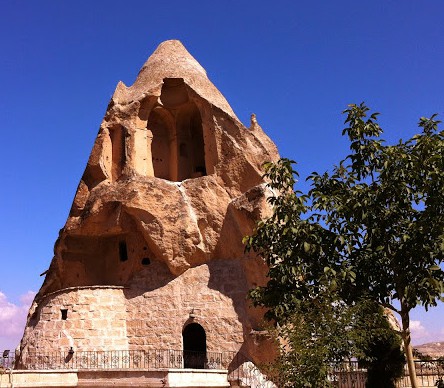
In lots of ways, Turkey is where life “got real” for us. We hit incredible highs; we hit incredible lows. This is one way living abroad differs from simple travel–you’re not just there to see the sights, you are getting on with the business of living a life. In Turkey, we saw amazing sights: the fairy chimneys of Cappadocia and homes hollowed out of these natural structures; old frescoed cave churches, in disrepair, but still dotting the landscape in remarkable numbers. We also endured some tough times: a miscarriage and a strong earthquake that crippled much of the surrounding town and tumbled houses in the older section of the city (which was very old indeed), leaving people homeless. But life cycles back to joy, always: our daughter was born in our final six months there, and our family began its travels together. Have dog, have kid, will travel–that’s been our motto ever since.
Turkey: the memories are less fuzzy than the photos.
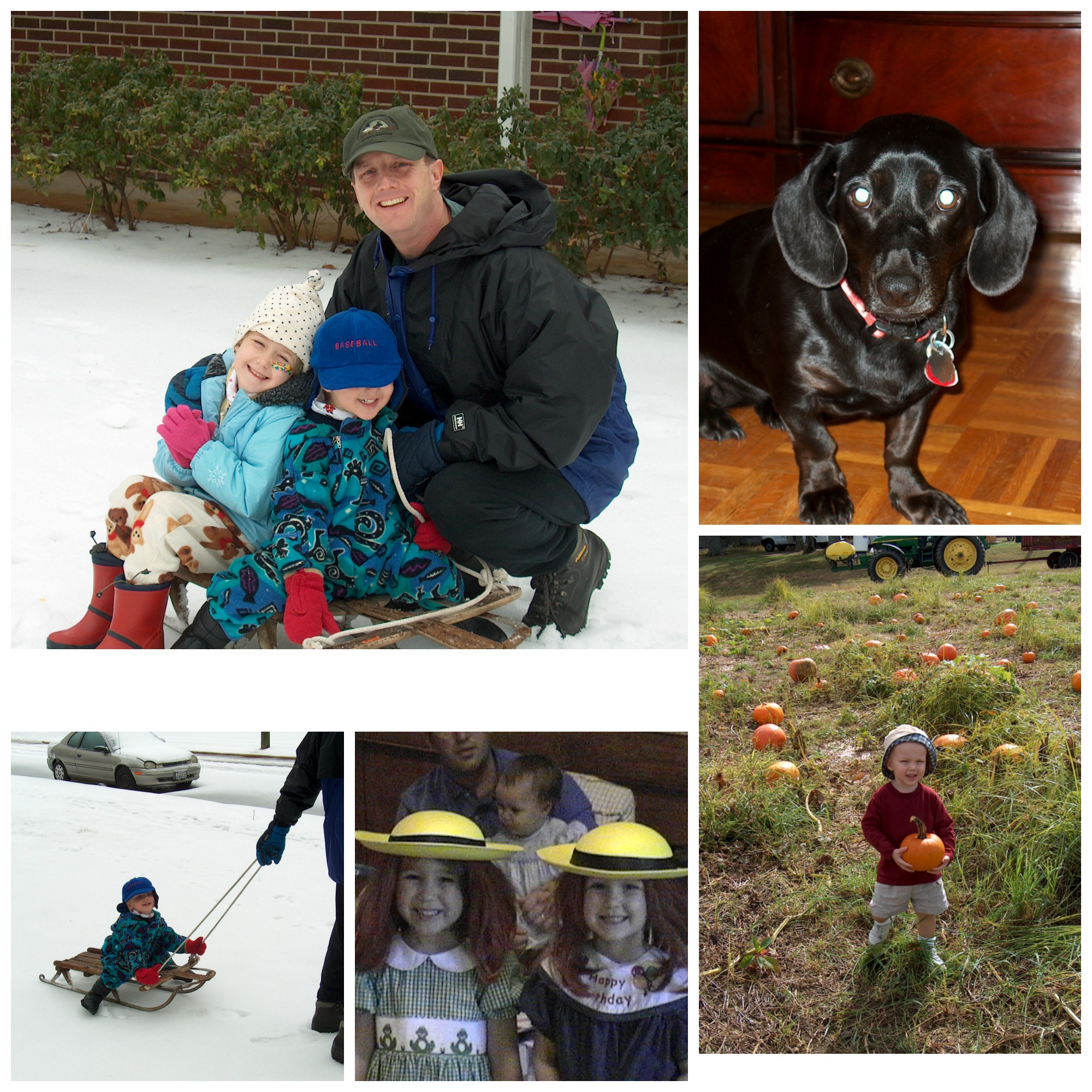
NORTH CAROLINA: Our return to my home state for 5 years didn’t involve a lot of travel, except to see grandparents in a nearby town. No, these were the days of total immersion in young parenthood. Puppies and children–we were dripping with them. Our daughter was six months old when we returned to NC, and our son was born a couple of years later. Both of our children were born at lightening speed. (I did make it to the hospital for my second, but didn’t make it into the hospital gown before he was born. I remember nurses RUNNING me down the hall on a gurney, shouting “don’t push, don’t push!”–but there comes a point when you really have no choice. . . just trust me on this one, men.) And so my husband insisted there would be no third child unless I was willing to move into the hospital at 8 months pregnant. He had no intention of delivering a baby on our kitchen floor. He had a point. No more babies. But we did adopt our sweet puppy Bebe in NC, and she was my furry baby for 15 years.
But, as I said, few travels of the suitcase variety. Loads of adventures in pumpkin patches and parks, on sleds and tricycles, etc. That’s how it goes with toddlers.
ENGLAND:
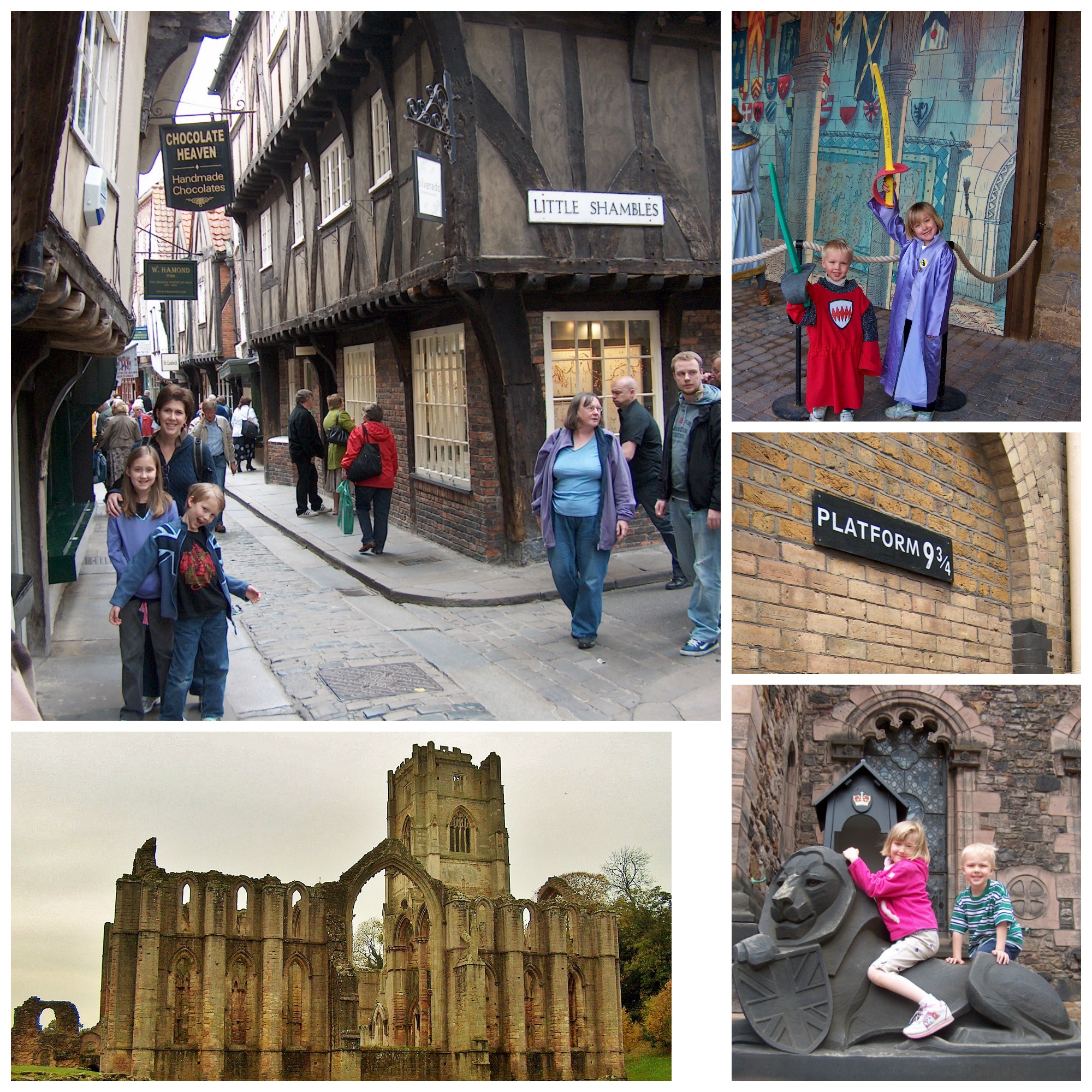
Oh, England. I love this place. For me, it combines new and exciting travels with the comfort of a culture that you understand intimately. It’s also the setting for so many childhood memories for my kids: dress up at the knights
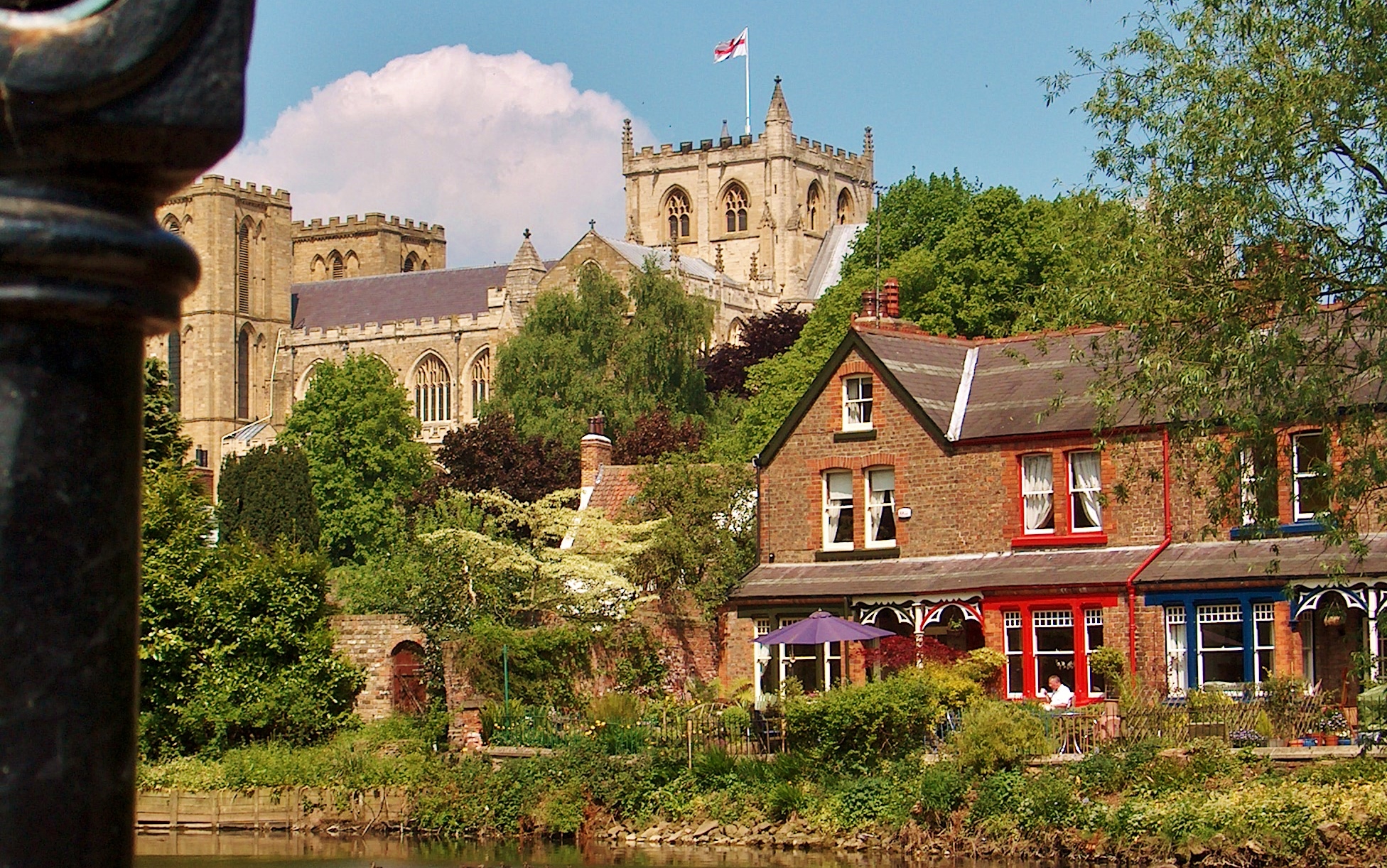
Ripon Cathedral, view from the river.
school at Alnwick Castle (also home to many scenes from Harry Potter and Downton Abbey), being pulled onstage during theater productions of The Tempest and Robin Hood Tales, winning a contest for decorating the Queen’s Knickers (on Queen Elizabeth’s birthday), visiting with Santa at the local brewery . . . the list is too long. Every day that we walked into the market square of Ripon (pretty much every day!) was a treat for us. It was home, but it never seemed mundane.
As a home base, Yorkshire, England was a great jumping off point for Scotland, Ireland, France, Germany, Italy. We traveled by plane, we traveled by train, we traveled by car. We traveled. I had no blog then, so instead of posting travel notes and quips, I did send postcards from the road. That seems a little quaint and slow now, but there’s something solid and permanent about the postcard, isn’t there? It doesn’t say much, but it’s a tangible artifact of your travels . . .and it has the magical ability to fall out of a scrapbook decades from now and catch you by surprise with a flood of memories of a place and a time, of a holiday greatly enjoyed. I wonder if blogsites will age as well?
We’re traveling back to England very soon, and to some of our old stomping grounds in Yorkshire. It will be an absolute delight to walk the streets of Ripon, eat the scones of Ripon (!), and wander the dales of the surrounding countryside . . .but I think that it will be a little bittersweet too. We all have a soft spot for our old life there.
From this chilly scene in England
To a sunny backyard in Georgia
From England, we found ourselves venturing on to GEORGIA and ALABAMA. These states are next door neighbors, each with its own personality–please don’t take offense that I am lumping them together, but the truth is that this post is getting long-winded, so I’m picking up the pace. Do you know what struck me most dramatically about the South in our first weeks back? Tree frogs and cicadas! The sounds from the trees, especially at dusk each night, is fantastic. For me, it’s the sound of summertime and my childhood in North Carolina. About the time when you’d be out playing kick the can with the kids in the neighborhood, or with cousins at your grandmother’s house, the trees would come alive. You get used to the sound, you take it for granted, but once you’ve gone without for years, you really hear it again and it’s like a symphony. Give me a screened porch, a cold drink, a hot day, and tree frogs at dusk, and I am a happy girl.
And now we are wrapping up our sojourn in GERMANY. Time has flown way too quickly. There is no sense in listing out our recent travels here–you’ve seen many of them posted in this blogspace, and it will take me the next year or more to continue catching you up on the places, people, language struggles, and food (and how!), but I’ll do my best.
If these posts won’t have that magical ability to slip, pop, or leap out from a scrapbook at me in my dotage, reminding me of continents I traveled and tales I told, they do have another astonishing talent–sharing my thoughts and travels far and wide with friends I rarely see, and even some new friends I’ve never met. It’s like telling tales around a campfire that is surrounded with so many people–some out on the dark edges, beyond the glow, beyond my ability to know who is even out there.
This is the place where any self-respecting postcard would say “Wish You Were Here!” but it feels to me like you are.
Thanks for reading, and, if it’s not too much to ask, how about raising a glass for my husband and me– to another 24 years of adventures, big and small.


 Master, I am not. Amused, I am.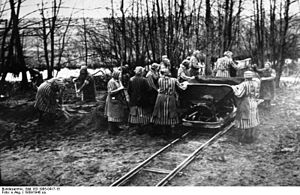

 I feel like I’ve become an expert in the art of faux pas while living in Germany. Once I stopped grinning and waving at strangers in my austere German neighborhood, and being thought the village idiot (I was only being friendly!), I moved on to linguistic lunacy and, apparently, asked for foreplay (“Vorspiele”) instead of appetizers (“Vorspeise”) in local restaurants. Who knew?





 Travels and Tomes: One Expat's Amblings and Ramblings