As the French say, le pain is mightier than the sword.
Okay, so they don’t say that, but somebody should, because:
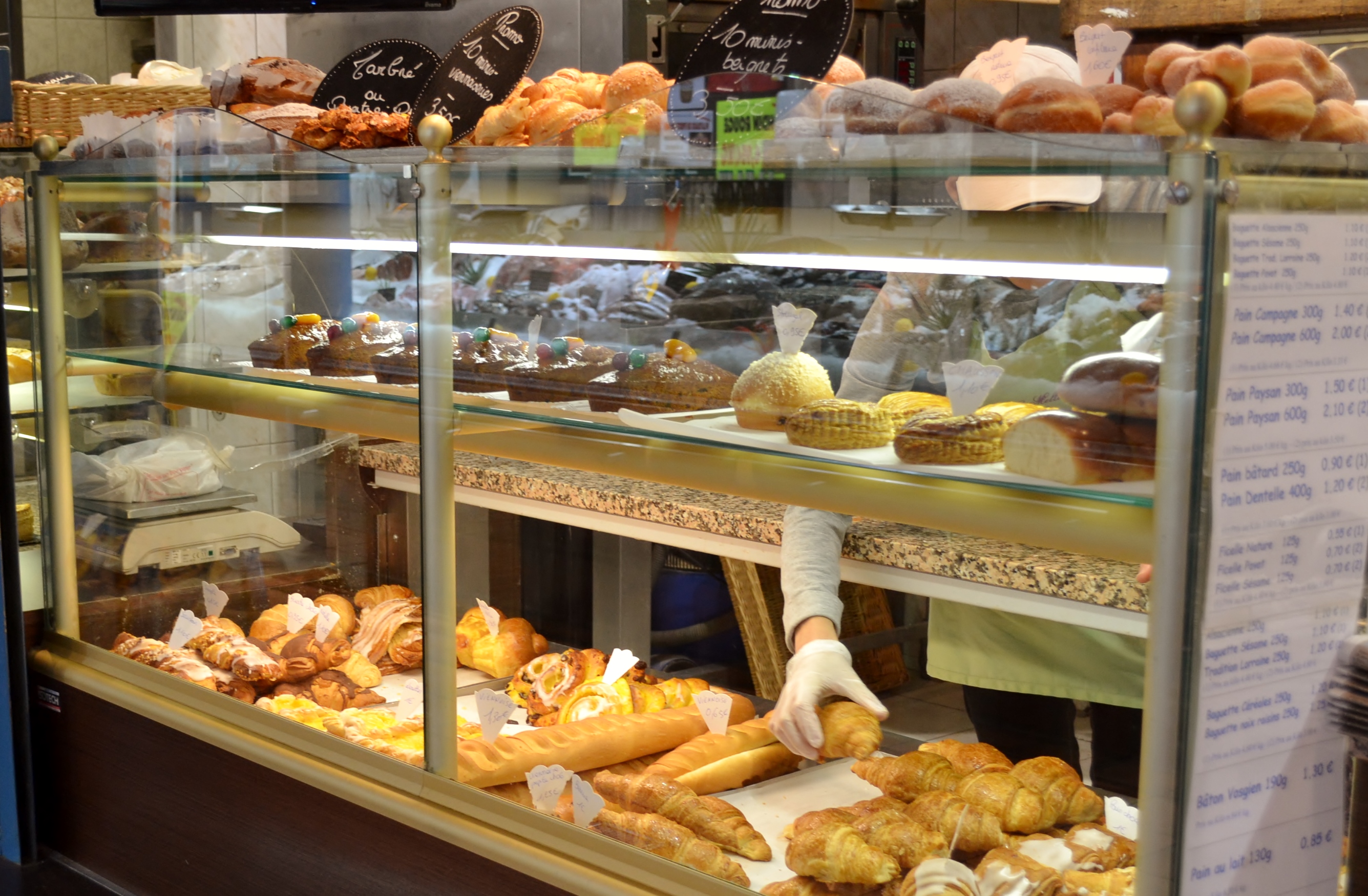
Number one — YUM
Number two— You catch more flies with honeybuns
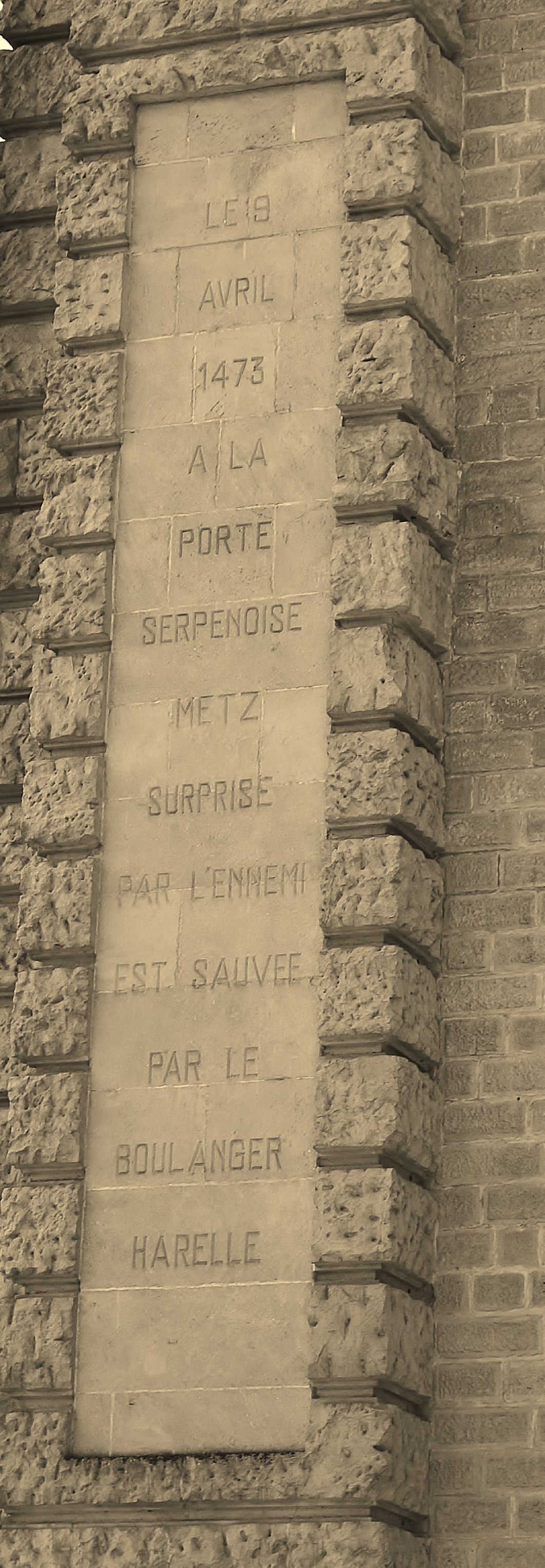
and Number three— There is historical proof that it’s true. In Metz, France, there is a gate in the Imperial Quarter that proves the point. Down the side of the gate (the Porte Serpenoise), there is a column commemorating an heroic event on April 9, 1473– “Surprised by the enemy, Saved by the baker Harelle.”
Now that’s history you can sink your teeth into!
Porte Serpenoise, from Wikipedia
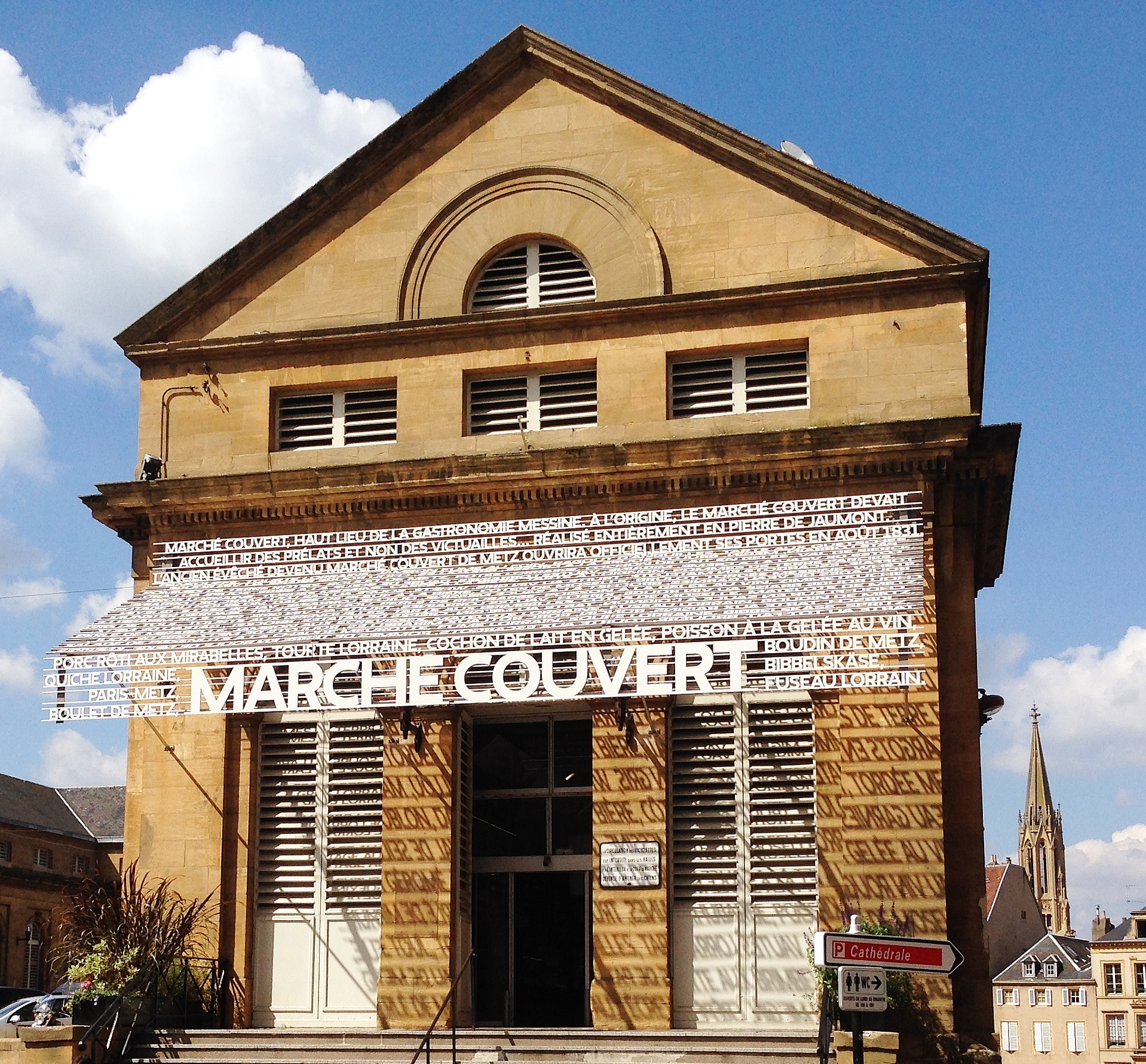
The fabulous Marche Couvert in Metz.
If you visit Metz, swing by the Porte Serpenoise. Then visit the incredible cathedral, and stop in at the Marche Couvert (the covered market)– it’s a great place to eat lunch; pick up fresh meats, cheeses, or produce; or nibble at the bakeries and pay tribute to the heroic baker Harelle.
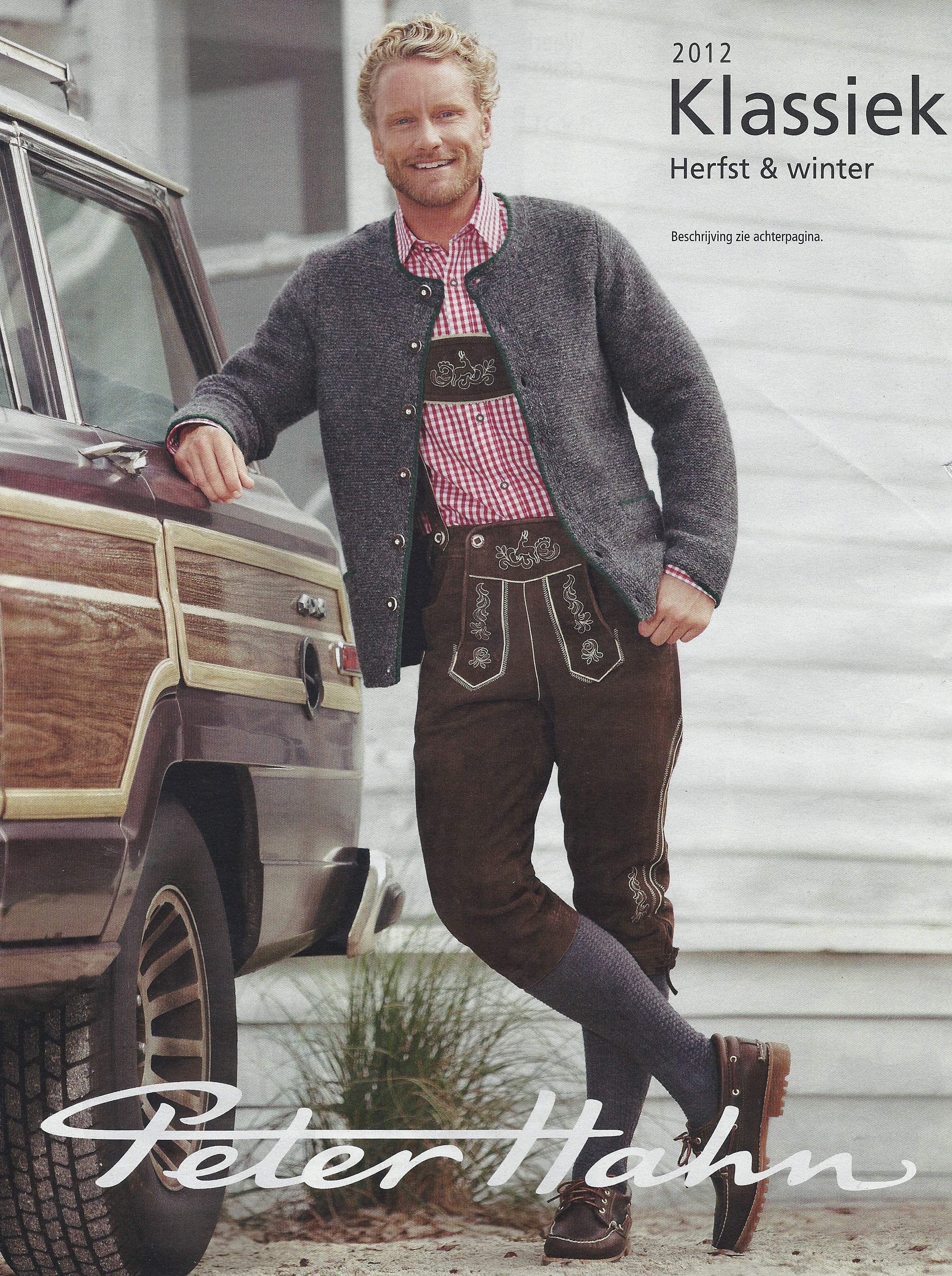
Go ahead. . .I know you want to laugh, to sneer, or to feel yourself superior to that poor sod who’s had a lapse of judgment (or an outrageous amount of beer) and decided to put on lederhosen. The ill-conceived costume of Oktoberfest.
Well, idiot that I am, I LOVE lederhosen! So far, I’ve resisted the urge to buy any dirndl or lederhosen for myself or my husband…actually, I’ve resisted with the gentle coaching (scolding?) of family and friends. “What are you thinking?” “You’d really wear THAT?” The ever popular, “BAAAAAD idea.” (But the inner voice that says, “You know, your cleavage would look awesome!” keeps my heart in the game.)
And, now that Oktoberfest is upon us, it’s open season for leaderhosen in Germany.
So what are lederhosen and dirndl and when/why/how did they become traditional? You’ve always wondered, haven’t you? Just been waiting and hoping that someone would bring you the story. Well, wait no more–I’m your girl.
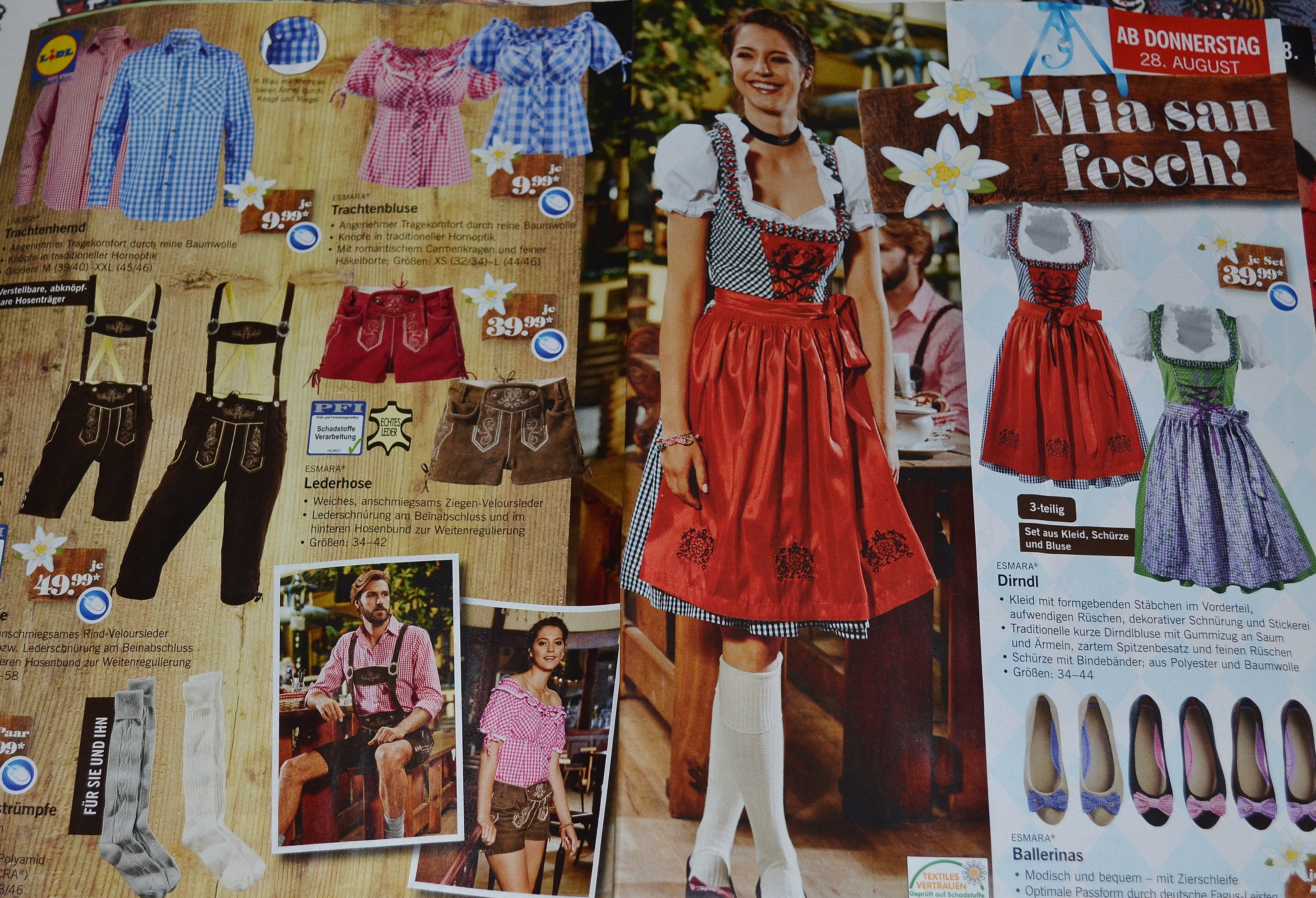
Some outlet Lederhosen from Lidl
Here’s my five cent version of the history of lederhosen:
Lederhosen (for men) and Dirndl (for women) are both called Tracht. “Tracht” derives from the word “tragen” which means “to wear.” Very practical origin, right? Well, that gives you a hint about the clothing’s past.
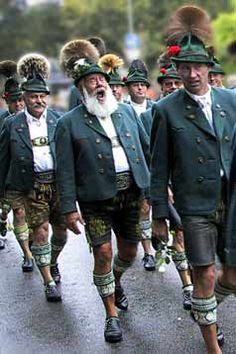
A photo of Bavarian Trachten from Pintrest
Tracht originated in the southern area of Germany and Austria. This sort of clothing (especially the leather pants) was associated with the working class/peasant community, and it seems to have grown out of 18th century traditional clothing. It was, above all else, very sturdy and practical garb–both for working and hunting. It’s possible that this clothing, most often associated with Bavaria, was also influenced by French fashion. Whether or not that’s true, it did take a “high brow” turn when it’s popularity rose and it became not just working clothing but fine, festival clothing, sometimes richly decorated and embroidered. (But, not to worry, it can be had on any budget. Mass produced Trachten can be found at discount stores, but some specialty stores sell very expensive, and very beautiful, outfits.)
Of course, the female version of Tracht, the Dirndl, isn’t characterized by leather pants. It comes from the 18th century peasant’s or maid’s dress: it has a blouse, a bodice, a skirt, and an apron. Winter dirndl would, obviously, have been heavier, and wouldn’t have featured the same (summer weight) tailored bodice and plunging neckline that has made St. Pauli Girl beer so famous in the USA!
I’ve read that some villages produce a regional Tracht that locals like to wear on festival days. It sounds like Tracht is to Germans what Tartan is to the Scots: a sign of cultural and regional (or clan) pride, as well as a festival costume. And that makes me like it even more! And no wonder that it may look silly to outsiders–anything that goes deep into your own personal, cultural psyche will ellude the grasp of the universal imagination. Roots that go deep don’t spread wide.
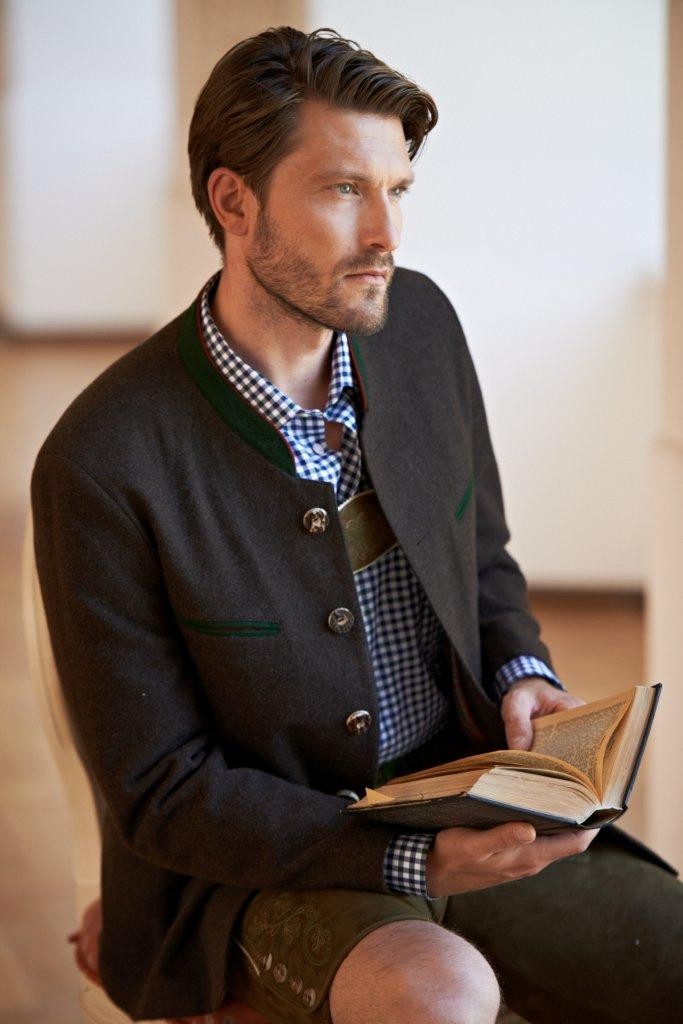
Despite my love of cultural costume, my husband is unlikely to wear a kilt or leather knee-britches anytime soon. It’s just too hard of a sell. I’m holding out some hope–based only on the fact that he’s recently taken to drinking good Scotch Whiskey. . . so some sort of cultural roots are beginning to grow. Maybe a small sartorial concession will come. . . A Tweed jacket in his future? A Bavarian wool jacket or a German gingham shirt? ( A spirited Scot or a barmy Bavarian? I’m not sure he’ll like these options–he’s more of a fanatical francophile.)
Well, regardless of who wins the wardrobe wars at my house, I love lederhosen! And, anyway, if it must be left to the Germans to carry that cultural torch themselves. . . I suppose that seems fitting.
Let’s file this one under “How to Play Hooky–European Style.”
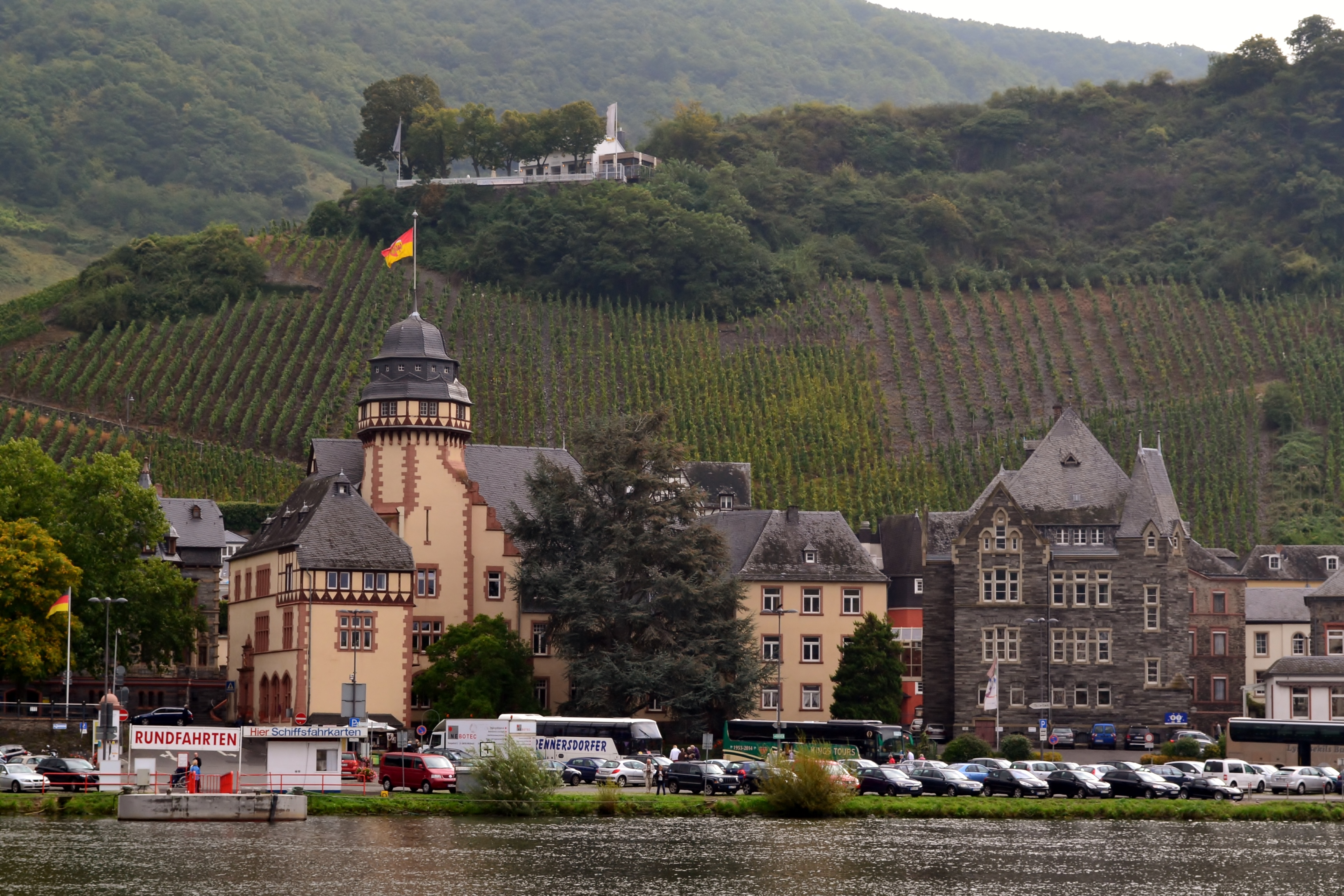
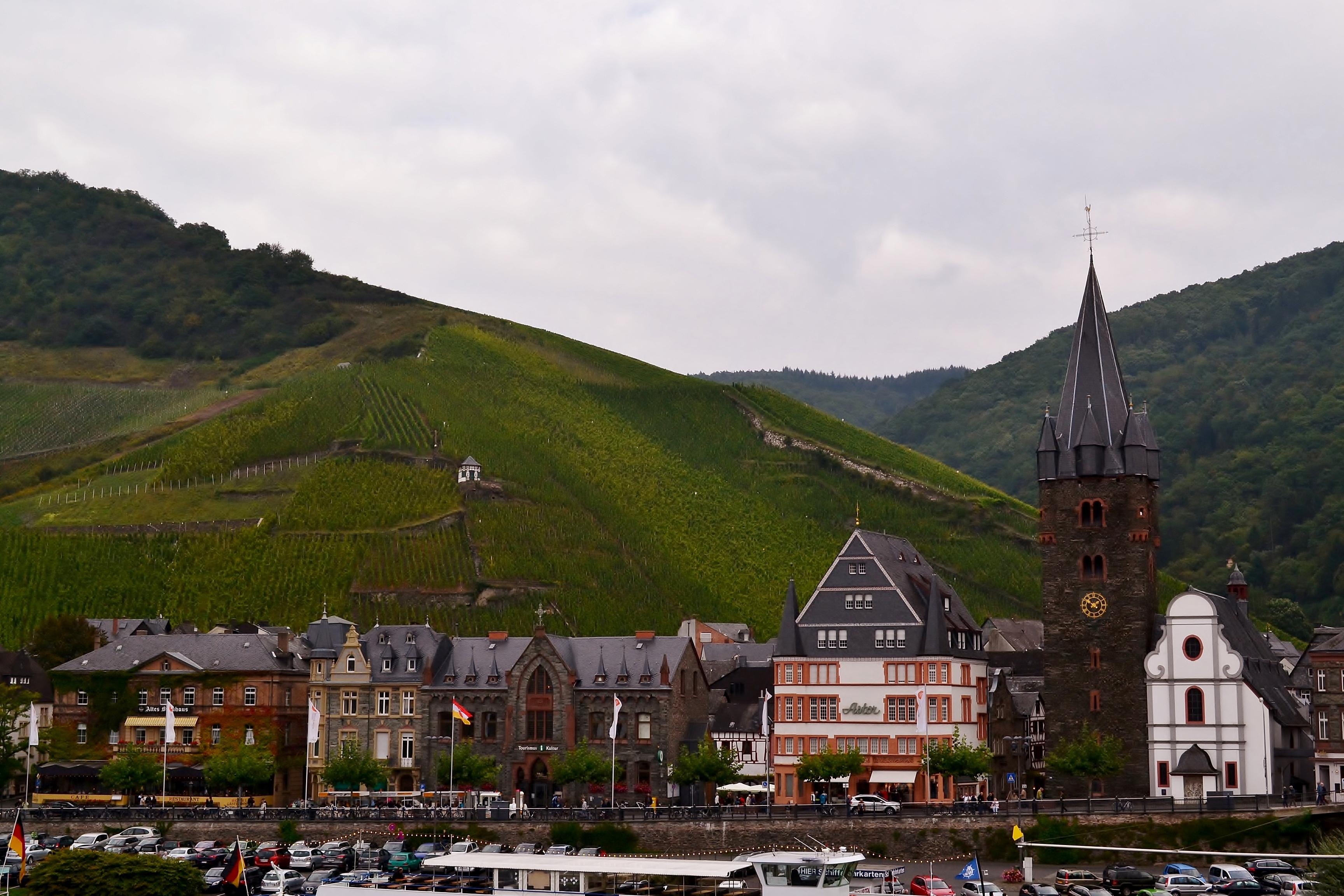
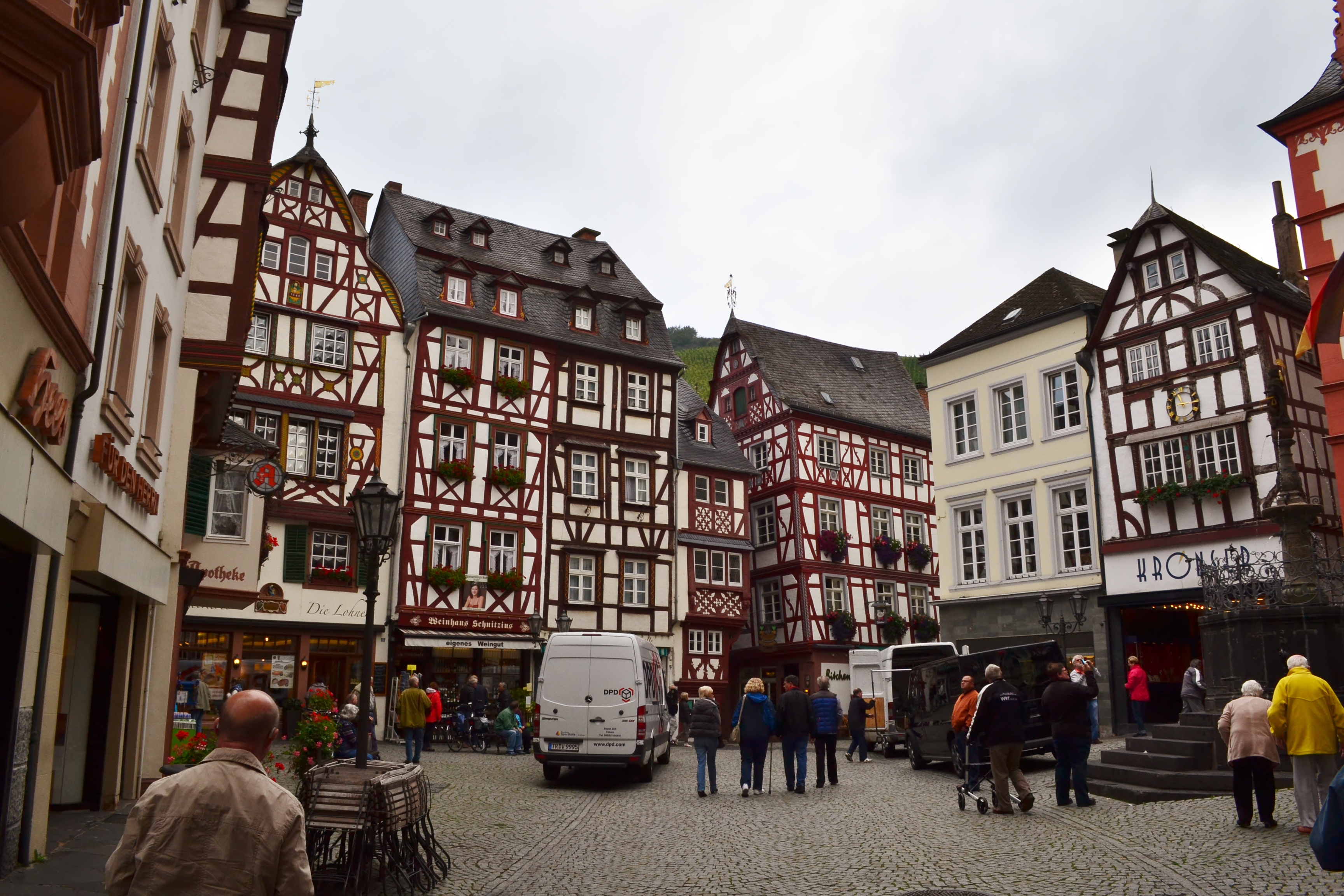
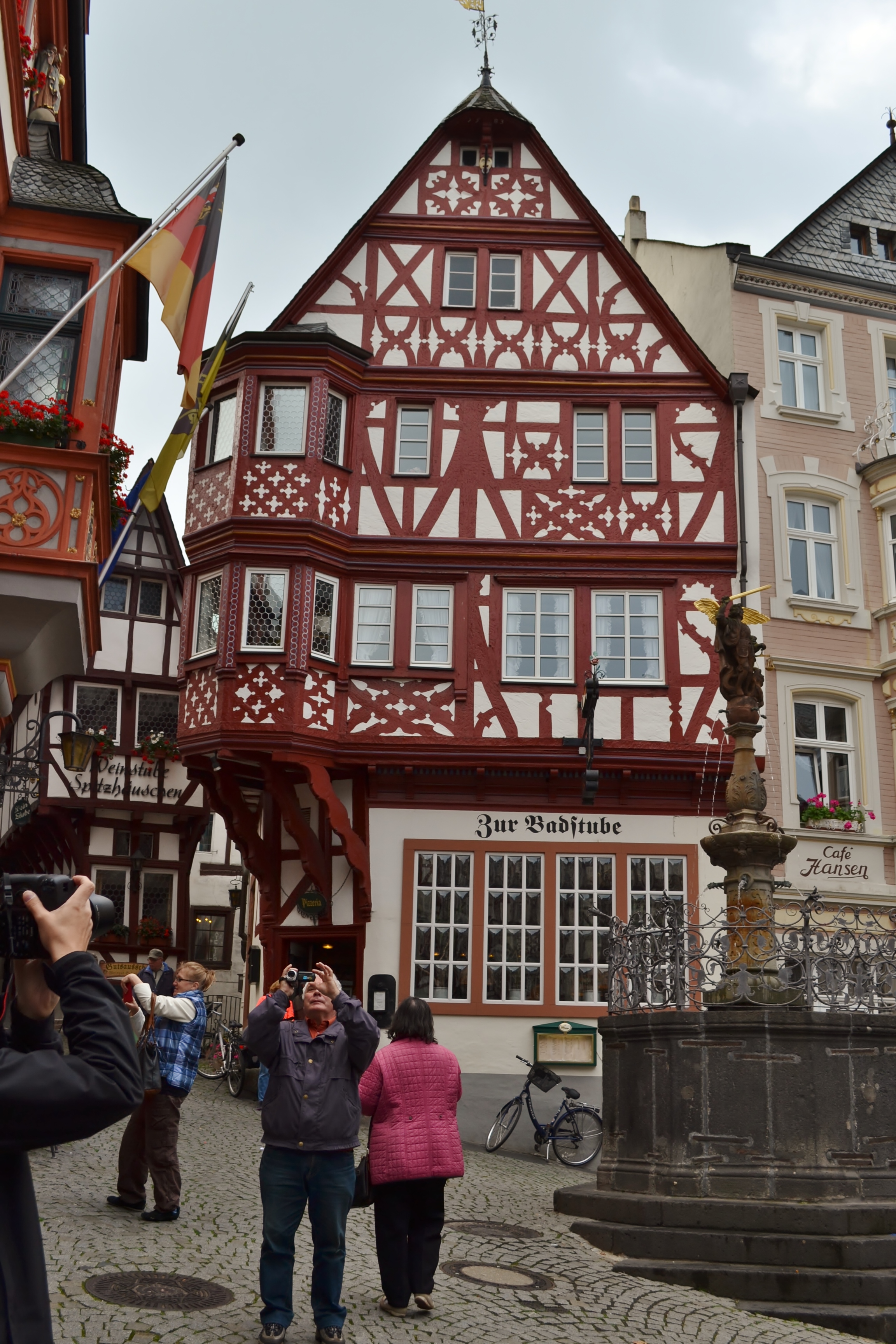
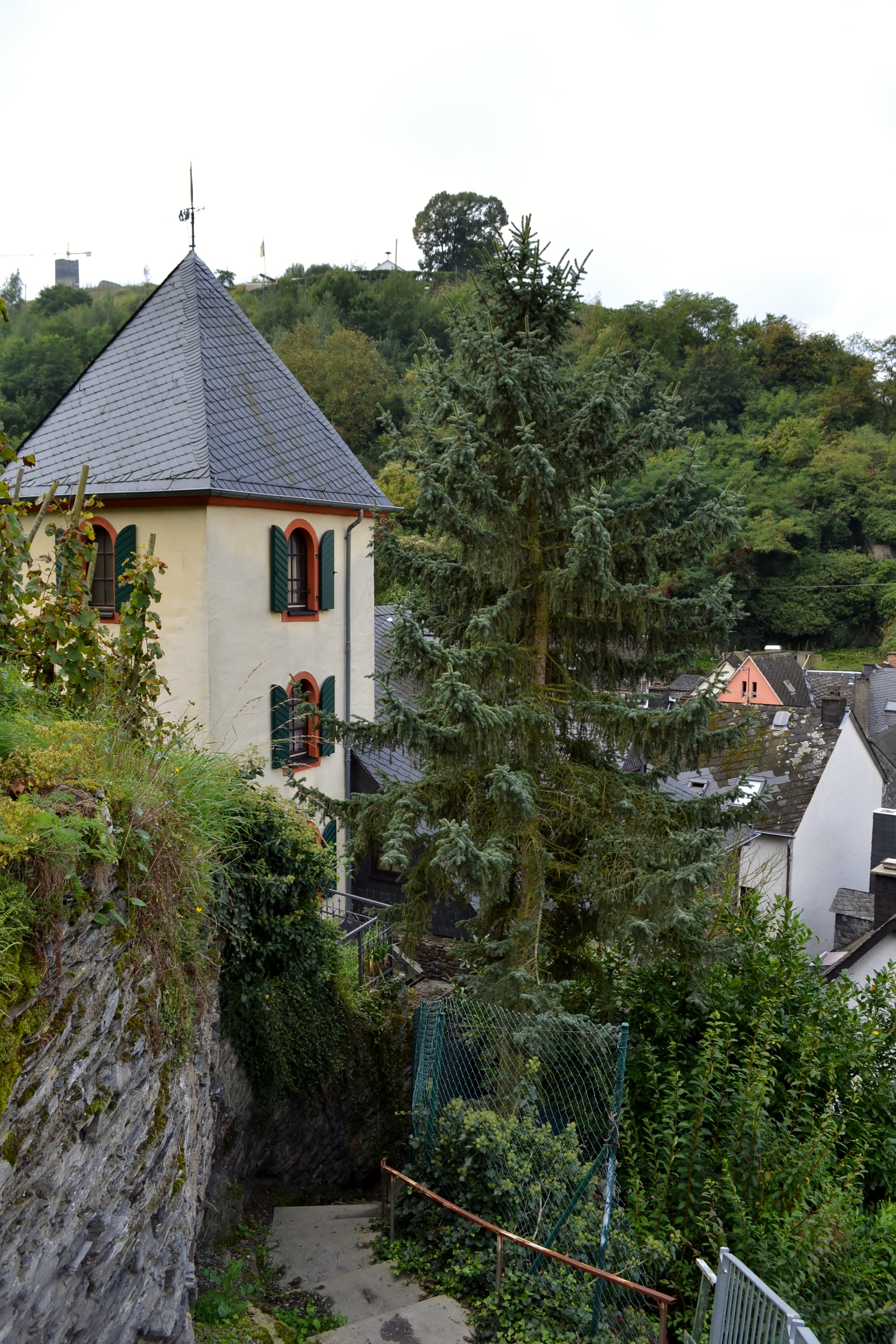
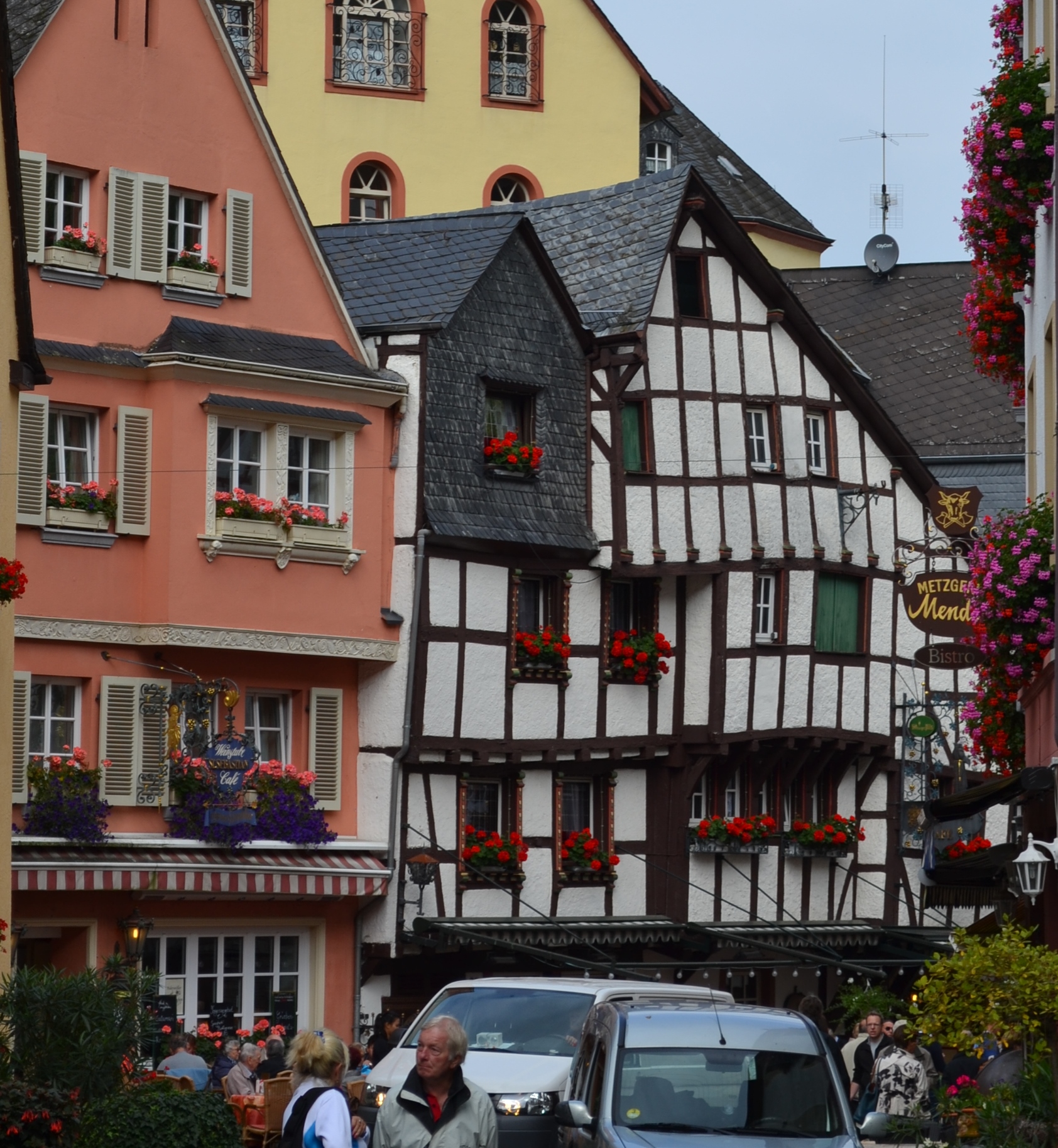
It’s a school day. It’s a work day. It’s a Monday. But with a little inspiration, you pack your kids off to school, your husband takes the day off of work, you scoop up a friend who is visiting from the States, and Day Trip! The perfect destination needs beautiful scenery and good wine–so off to Bernkastel-Kues on the Mosel River and surrounded by vineyards.
We’ve got the virus du jour this week, so our weekend was dead and our week is only showing a hint of vital signs. To boost our spirits–and maybe yours too–I’m posting some old and new travel/life abroad photos.
Hope you enjoy!
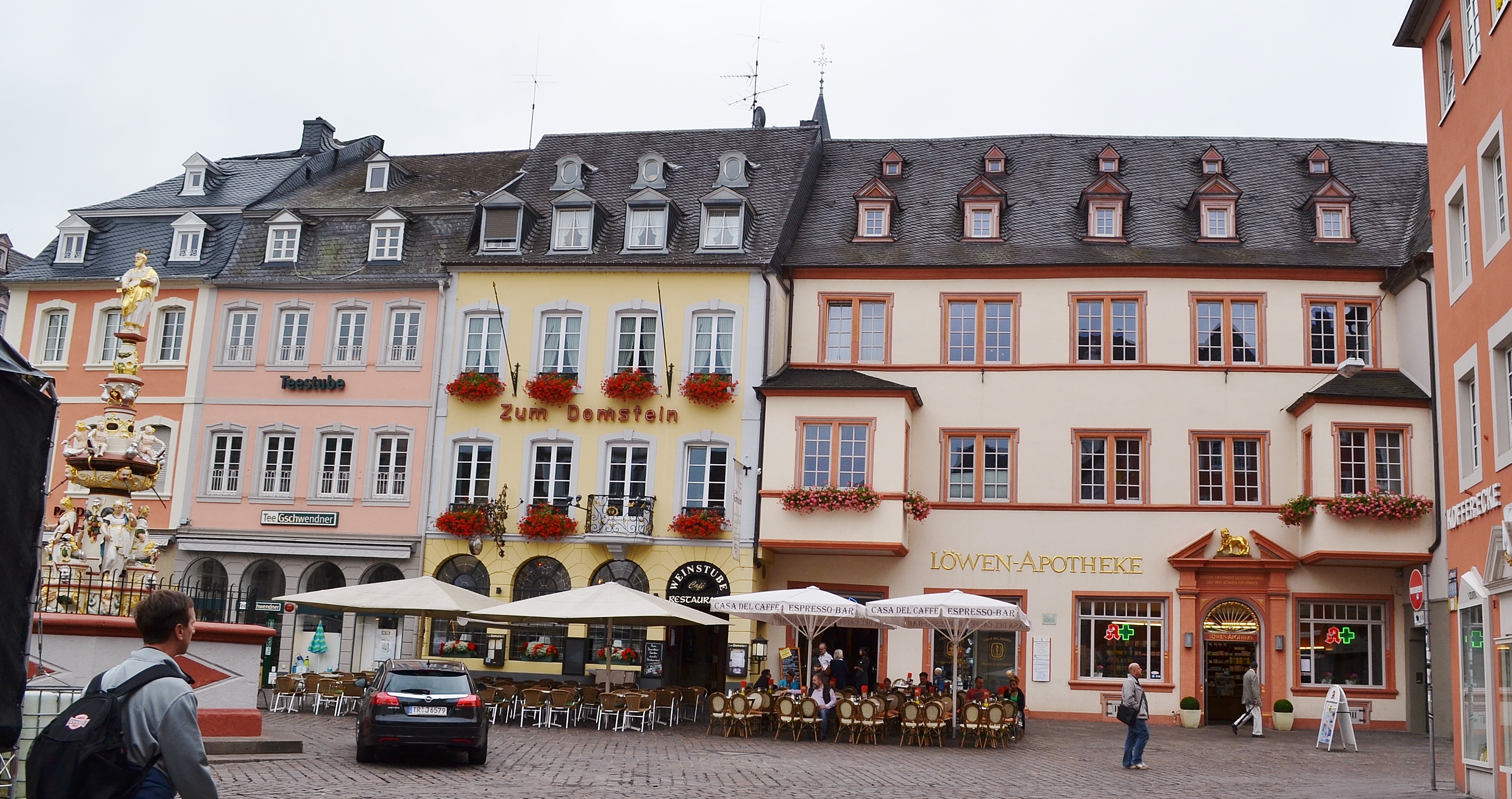
Trier, GermanyTrier
Doune Castle, Scotland, 2007–location of Monty Python’s Holy Grail scenes
Edinburgh, Scotland by night, Christmas 2007
Cappadocia, Turkey, 1998, near Guzelyurt. . .an old monastary in the foreground.
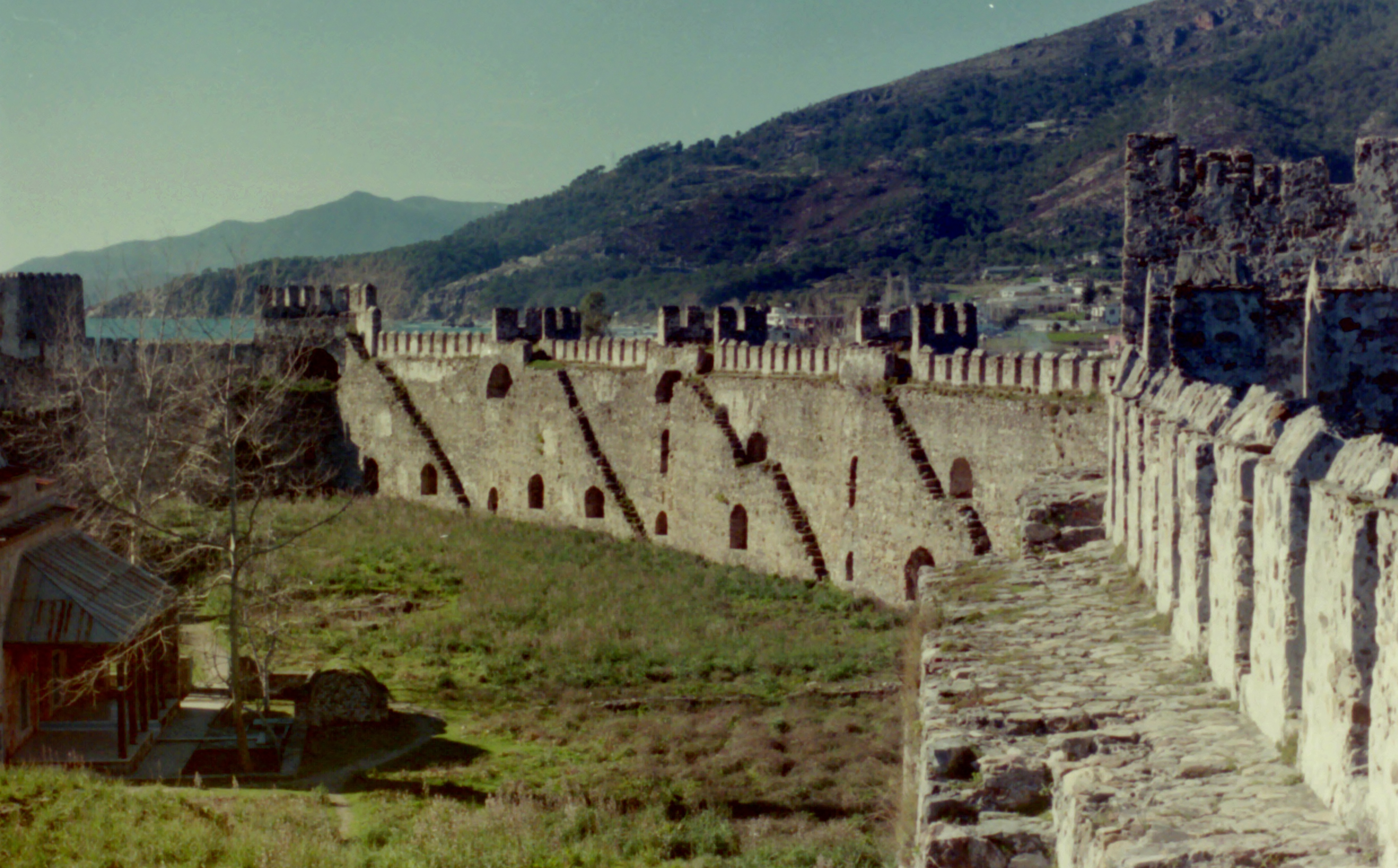
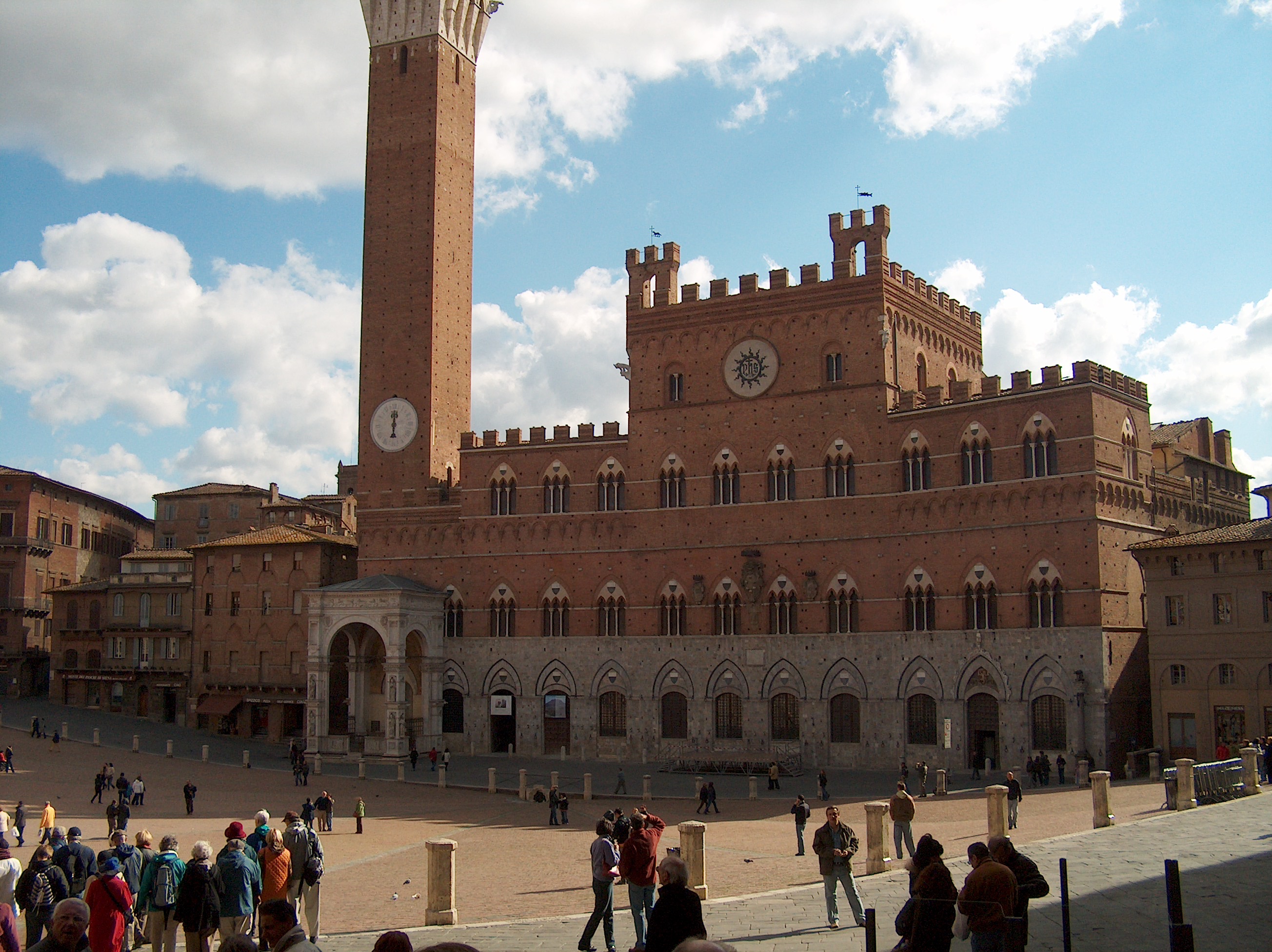
A castle on the Turkish Mediterranean, 1998Sienna, Italy
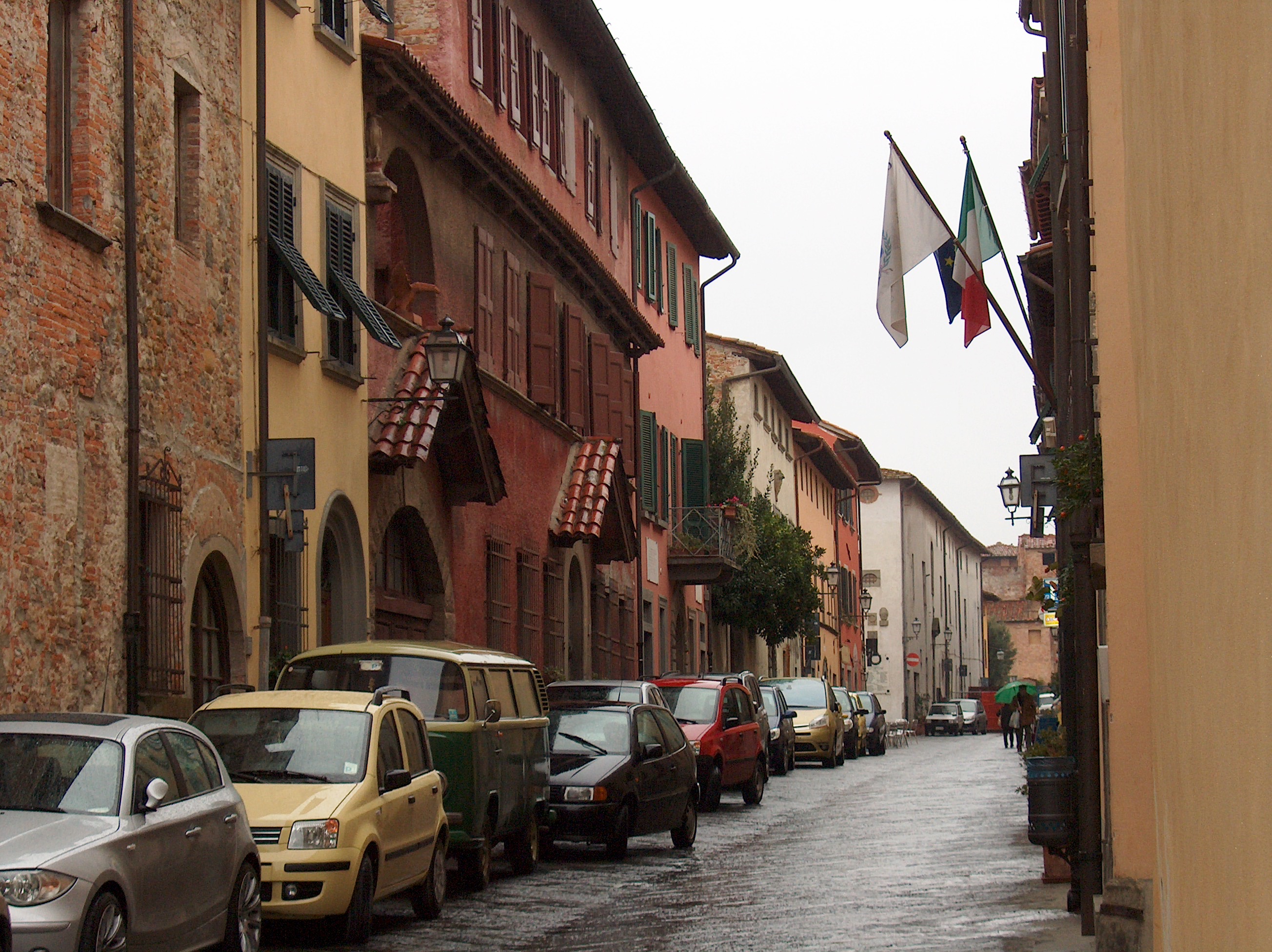
Montecarlo, Italy (Tuscany), 2006
Exeter Cathedral, England
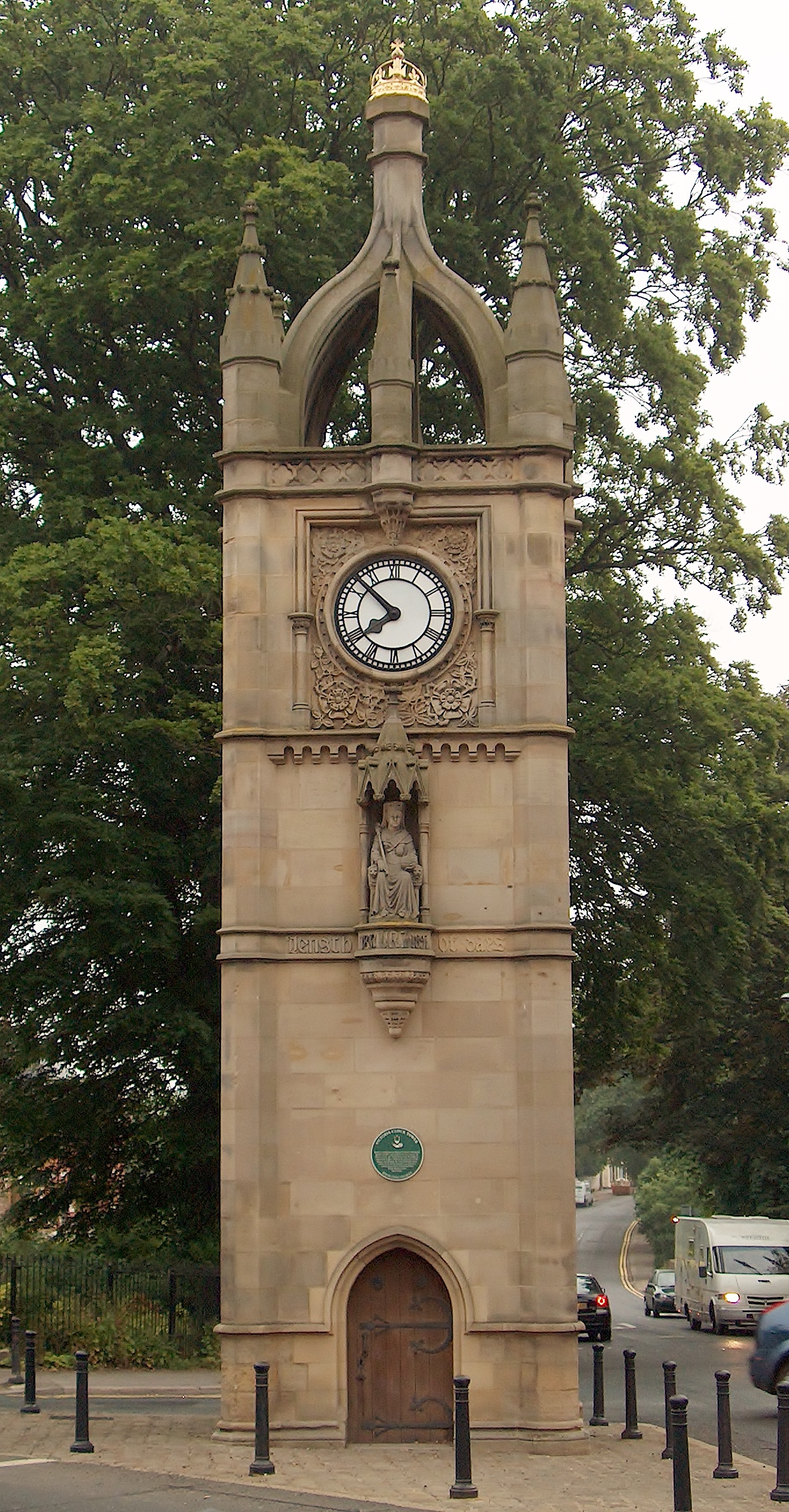
We capture the castle, at Alnwick Castle, England, 2007 or 2008Victoria Clock Tower, Ripon, England–a block from our old house
The Lake District, England, 2009. Just a couple of silly blokes.Exiting the cave of Hell at Cennet ve Cehennem (Heaven and Hell), near Silifke and Kiz Kalesi, Turkey.
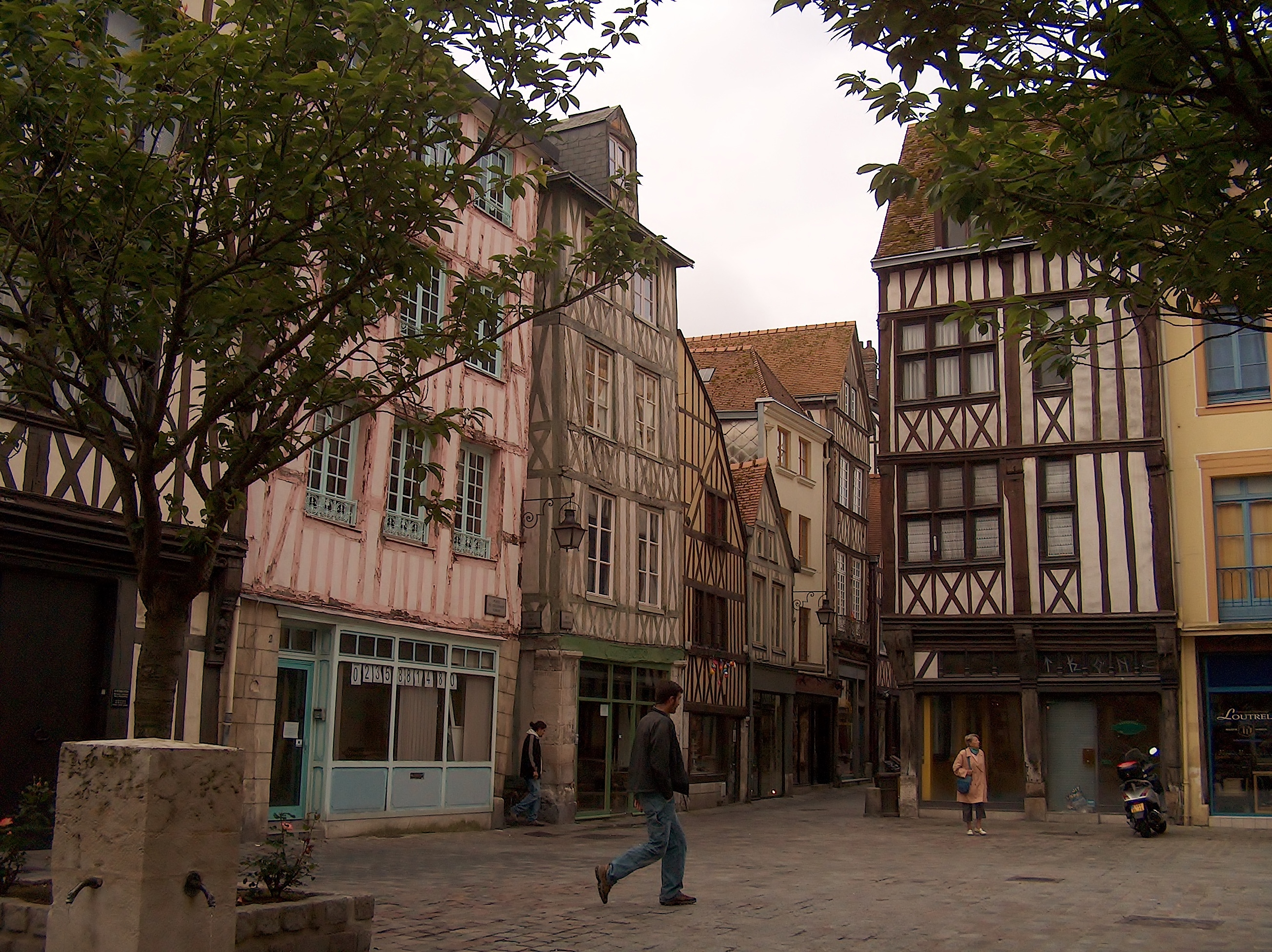
Rouen, France
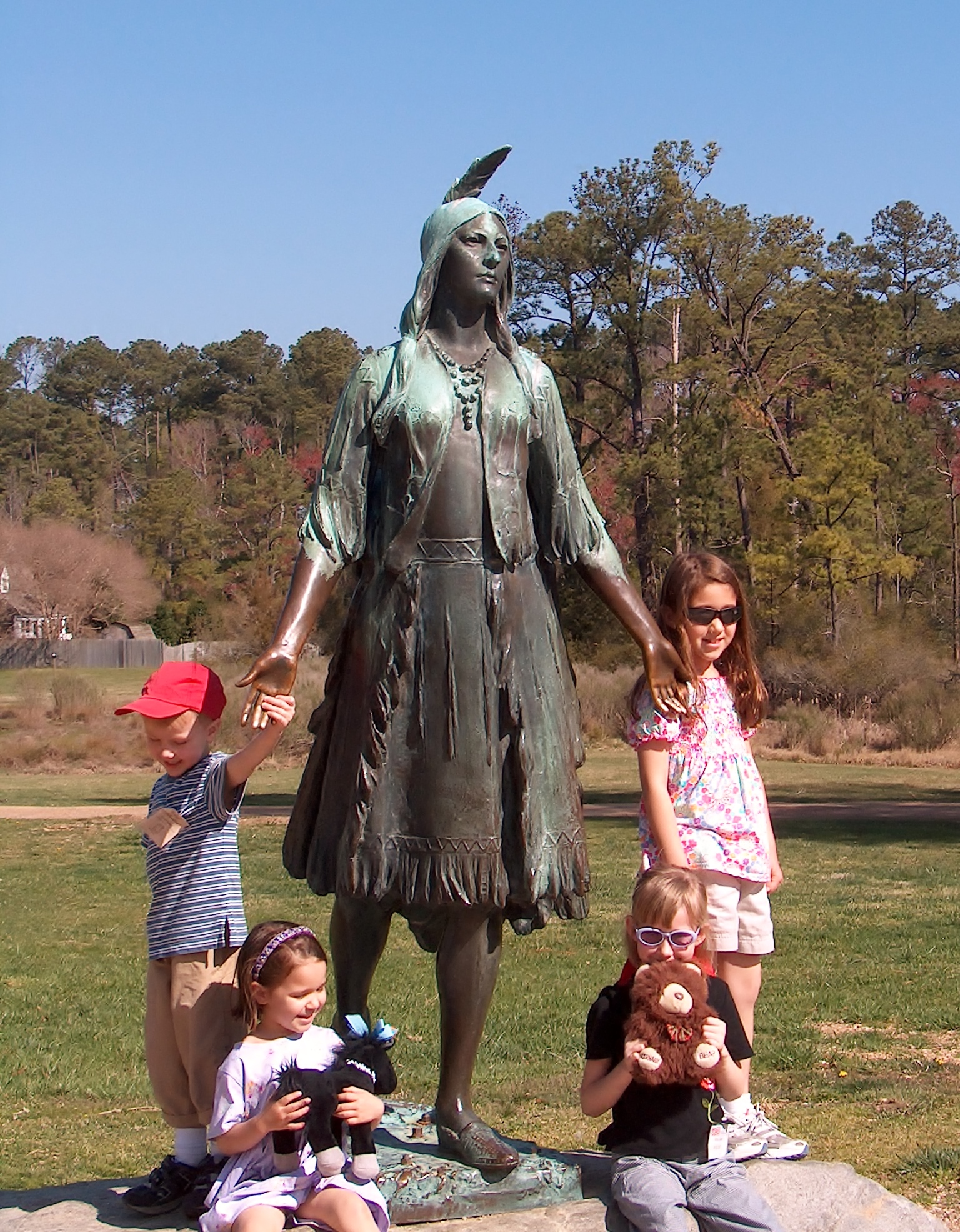
And finally, a shout out for my home country on this anniversary of September 11th–at the statue of Pocahontas at Jamestown (the first permanent English settlement in what would become the United States).


 Number one — YUM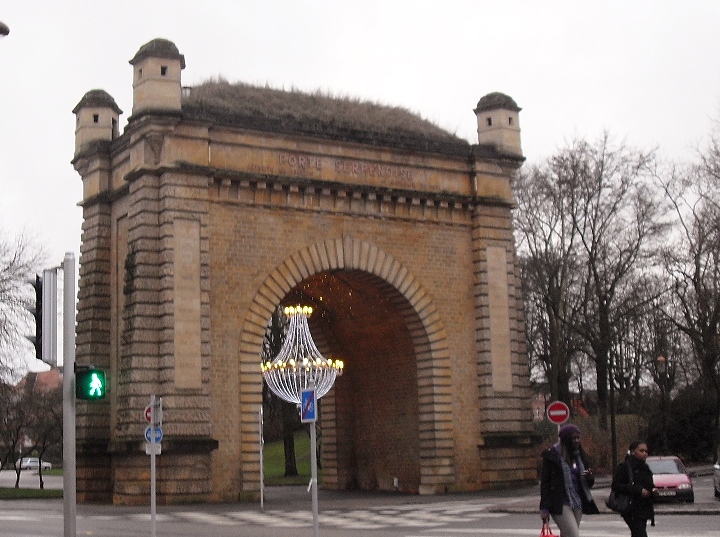








 Travels and Tomes: One Expat's Amblings and Ramblings