How We Eat: Banana Pudding, Banoffee Pie, Songs, and Stretchy Ice Cream

PicMonkey banana pud shoofly

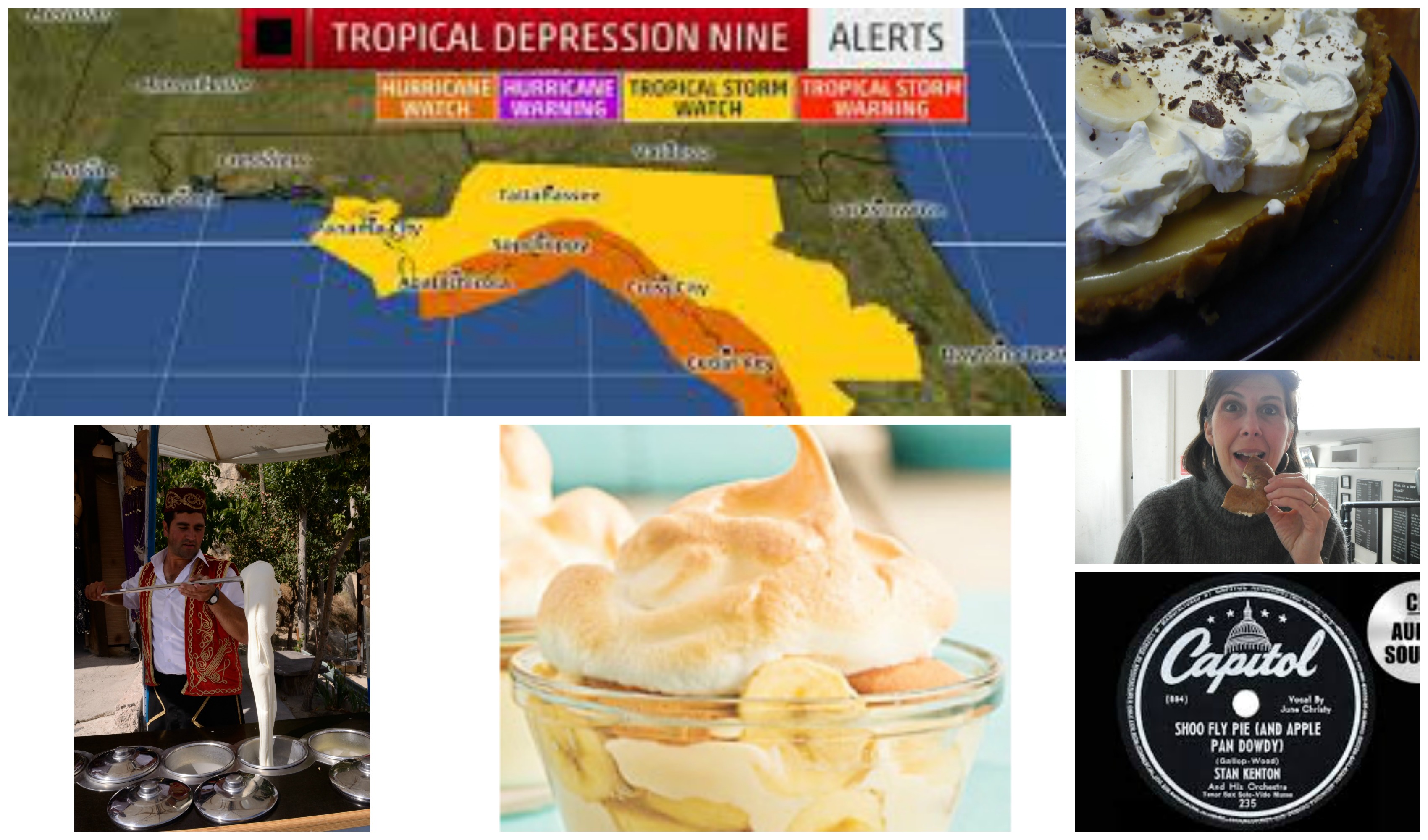
The title is a mouthful:  a delicious, caloric mouthful.  Inspired by a delicious and caloric, if somewhat stressful, week of cakes and puddings at our house.  An actual storm is sitting out in the Gulf, on our doorstep, and making vague threats, while the figurative storm of finding your bearings in a new environment is battering us around quite handily.  Under the circumstances, why not fatten our bodies and spirits for the fight, right?  Cakes and Ale is a fine battle strategy, I say.  Anyhoo, on with the post. . .

When I was young, my mother used to sing a song that would make us giggle and make us hungry at the same time: “Shoofly Pie and Apple Pan Dowdy, make your eyes light up and your tummy say ‘howdy.'”  Silly.  I’ve never had Apple Pan Dowdy, but I can imagine the cobbler-like creation with no problem.  Shoofly Pie is harder to conjure.  Obviously sweet and sticky– a fly magnet (yuck!)– but the closest thing I can picture is a chess pie, and I don’t think that’s exactly right.  Which brings me to stretchy ice cream.  What, you’ll ask, is that?  A Floridian taffy-ice cream hybrid?  An over-cooked custard that makes a chewy ice cream?  No and no.  I’m thinking of Turkish Dondurma– an ice cream made with wild orchid extracts and salep ( a milky Turkish drink containing orchids).

Dondurma doesn’t taste of orchids, it comes in many flavors.  My favorite was banana.

Image from website: http://www.lakshmisharath.com/
Image from wikicommons and website: http://www.lakshmisharath.com/

I only discovered dondurma toward the end of our life in Turkey, which is a shame because it is silky and delicious . . . and stretchy.  That doesn’t really affect the taste, but it makes for a great parlor trick.  Dondurma is often served in a dramatic way, dished out with a paddle and wrapped around your cone, only to be pulled back at the last moment.  The Turks love a laugh and good food, so why not marry the two?

I’ve been thinking about Dondurma lately.  August in Florida will bring out all of your ice cream fantasies, believe me.  But this week, I’m remembering Banana Dondurma while making a traditional Banana Pudding for my children.  A REAL Banana Pudding– no instant pudding and cool whip.  Ugh.  A silky homemade custard is the only way to go, people.

My mother made this Banana Pudding for us growing up, and I’m pretty sure that her mother made it too.  I’m printing the recipe at the end of this post.  It’s simple and satisfying, and I like it best when it’s still a tad warm (but I know people who only like it cold, so this is clearly a matter of personal taste).
Photo from myrecipes.com--sadly we ate into our pudding too quickly to get a good photo!
Photo from myrecipes.com–sadly we ate into our pudding too quickly to get a good photo!

Like all recipes for BP, this one layers Vanilla Wafers, banana slices, and pudding.  Like all the best recipes for BP, this one features a homemade pudding of milk/cream, eggs, and sugar– with a splash of vanilla tossed in after the pudding thickens.  Believe me, you’ll be licking the mixing spoon after making this one.  (And, as I’m writing this, I’m wondering if I could use this pudding, with banana and wafer bits thrown in to churn up a really delicious–though certainly un-stretchy– ice cream.  I’m going to try this soon and get back to you.)

Banana Pudding is a staple of the American South, a time-tested comfort food, welcome around any pot luck or picnic table.  Why is it Southern?  I have no idea.  It goes well with bourbon?  (There are worse theories.)   If you want a primer on the treat and its history, I’d suggest you read the article posted on the SeriousEats website– an interesting and remarkably in-depth read.  If you’re here for the yummy, not the history, feel free to skip the article, fast forward to my recipe, and judge for yourself.

But not before you consider Banoffee Pie.  It deserves a mention in a travel and culture blog, because what Banana Pudding is to the American South, Banoffee Pie seems to be to Brits.  A perfect comfort food, a sweet banana dessert that pops up everywhere.
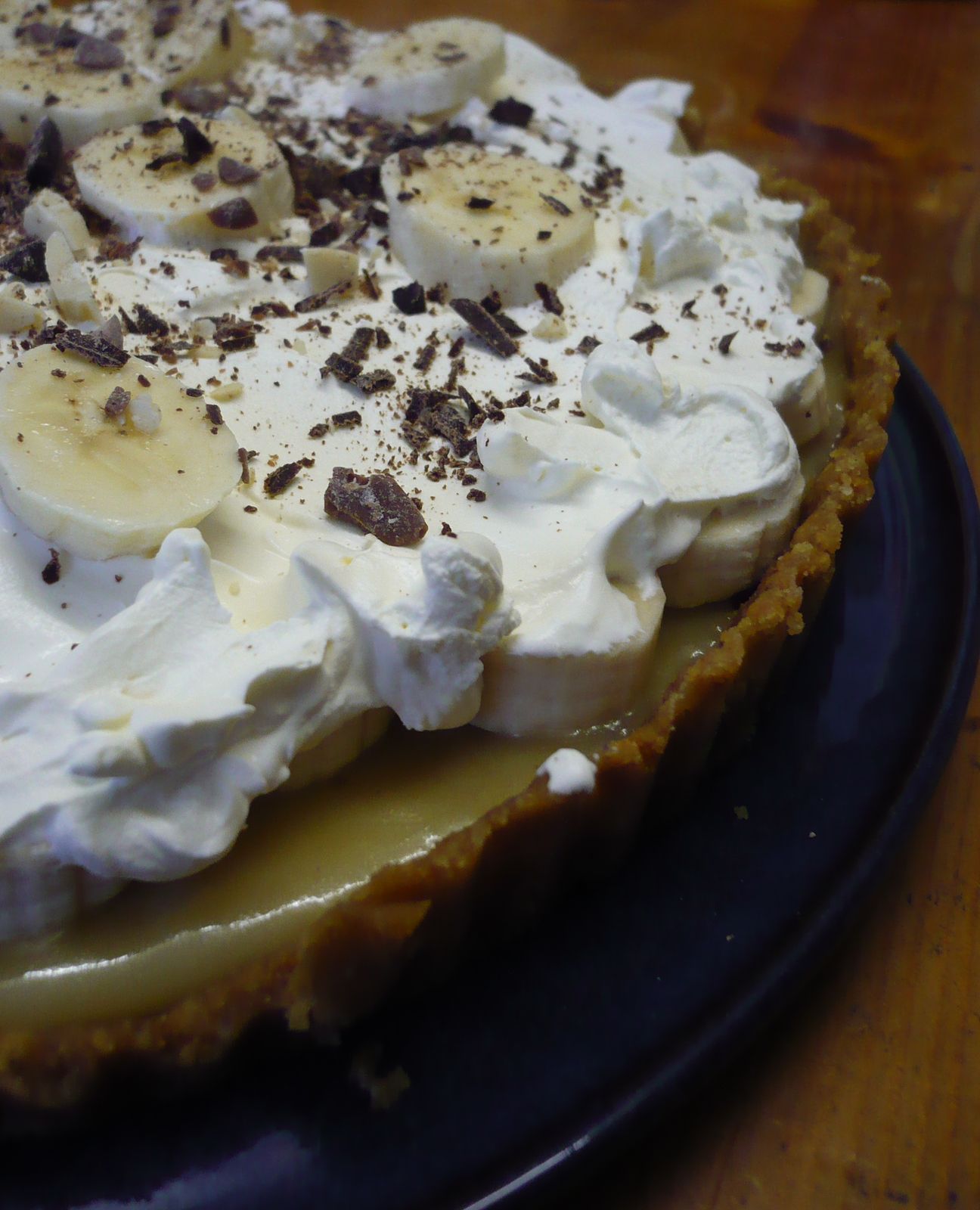
photo from commons.wikimedia.org

“Banoffee” you say?  Yes– bananas, cream, and toffee.  BAN. OFFEE.

Although it’s a British staple, it’s not one of those long-standing English recipes that dates back to the middle ages (think mincemeat pie).  No– bananas weren’t easy to come by before modern times.  Still, you find it in so many homes, on so many menus, and in endless incarnations these days. Nigella Lawson has a great looking Banoffee Cheesecake recipe, as well a Chocolate Banoffee recipe.  There are Banoffee sundaes and cupcakes and pastries.  If you can think up a twist to banoffee pie, it’s out there.

I have nibbled at Banoffee creations, but haven’t perfected my own version, so I’ll encourage you to find your own recipe.  If you already have the perfect recipe, feel free to share it with me!

* * *
moveable feastI’ll leave you with my pudding recipe and a final thought on comfort food.  On how we eat.  I love sugar, and I love rich puddings, and I love sharing these things with family.  But it’s not just the yumminess, and it’s not just the hospitality, it is the comfort that gets me this week– the ritual of sharing this favorite family recipe. Hemingway spoke of Paris as a moveable feast–a joy and light and influence, a wealth of experiences–that stays with you wherever you go.   Whether or not we have Paris, we all have a storehouse of moveable feasts.

This week, Banana Pudding is my moveable feast.  The world is spinning a bit fast for me, the Gulf is churning a bit violently, but I have my pudding (a tad warm yet) and I have my children with their spoons at the ready . . . and I find that I have a feast of friends around this table — I have my grandmother’s cooking, my mother’s singing, my Turkish ice cream man, and my British bakery, and I sit in the company of these fine things and dig in to my bowl, and I know, with a quiet conviction, that the world will be right soon enough.

*Ba’s BANANA PUDDING

  • For the custard: 1/2 cup sugar, 3 Tablespoons flour, dash of salt, 1 whole egg, 3 egg yolks (save the whites), 2 cups of milk.
  • Cook this in a medium saucepan over a low heat until it thickens.  Then take it off the stove and stir in 1/2 teaspoon of vanilla extract
  • Layer vanilla wafers and banana slices; pour some custard over the top; then repeat these layers.
  • For meringue topping: beat the 3 egg whites, gradually adding up to 1/4 cup of sugar (and 1/4 teaspoon cream of tartar, if you wish).  Bake this until browned (at 400 degrees, or using the broiler).
  • Enjoy!


Throwback Thursday: Van Gogh

Café Terrace at Night

PicMonkcafeterraceatnight

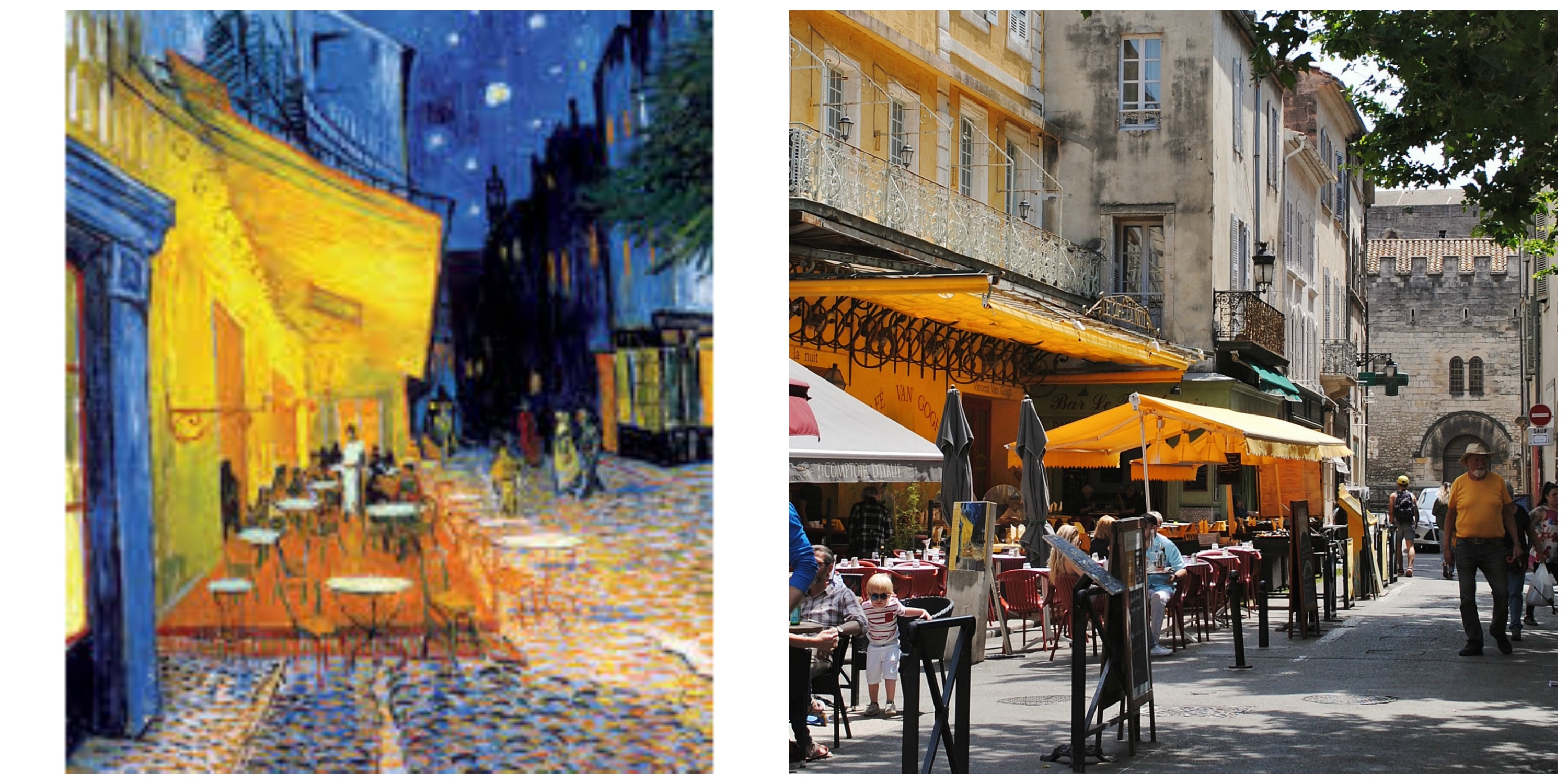
Left: Van Gogh’s Café Terrace at Night (on Place du Forum)  Arles, 1888

Right:  Same spot,  ‘Le Café La Nuit’ on Place du Forum in daylight, Arles, 2016

The spot may be less picturesque on a bright spring morning in 2016, but it’s still vibrant enough to cast its light into the darker streets.  Notice the yellow shirt on the passerby?  In my mind, it’s really a plain white tee that takes the gold cast once he steps within the fabled space of the Café Terrace .  After he strolls on past,  it resumes its ho-hum identity as a plain white tee.  (How could it possibly be otherwise?)

A little Van Gogh magic– it’s powerful stuff.


Punting Cambridge

Ah, Cambridge.  Two weeks ago, I was there.  This week, I wish I was still there.

DSC_0184 - Copy

A few days ago, my corner of Germany was a mess. Rain/snow/hail falling in scissor patterns (like the wind was blowing two directions at once), followed by a more languid thunder storm (minus the storm, because at that point the precipitation mostly left and only the thunder came swaggering through).  It was absolutely infuriating weather to have at the end of April. . . and with the pollen full out and everyone’s eyes swollen to the size of grapefruits.  Mother Nature is beating us senseless here!

So I’m meditating this week to keep my wits about me.  I’m closing my itchy eyes and thinking back to the bright evening we spent punting on the Cam in Cambridge, when the world was beautiful and spring was a given.

DSC_0219 - Copy
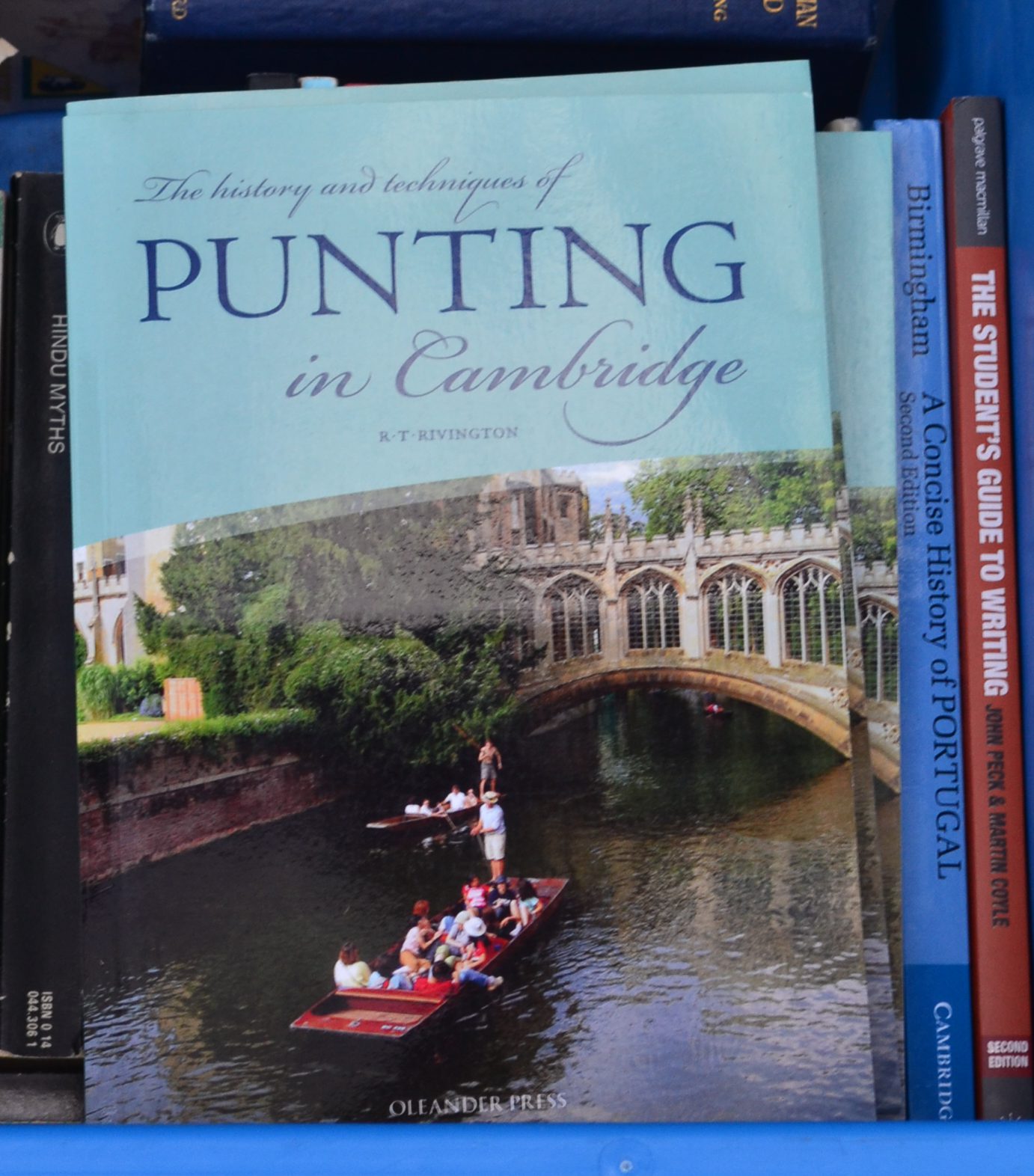
A book in the window of G. David Bookseller, St. Edward’s Passage, Cambridge

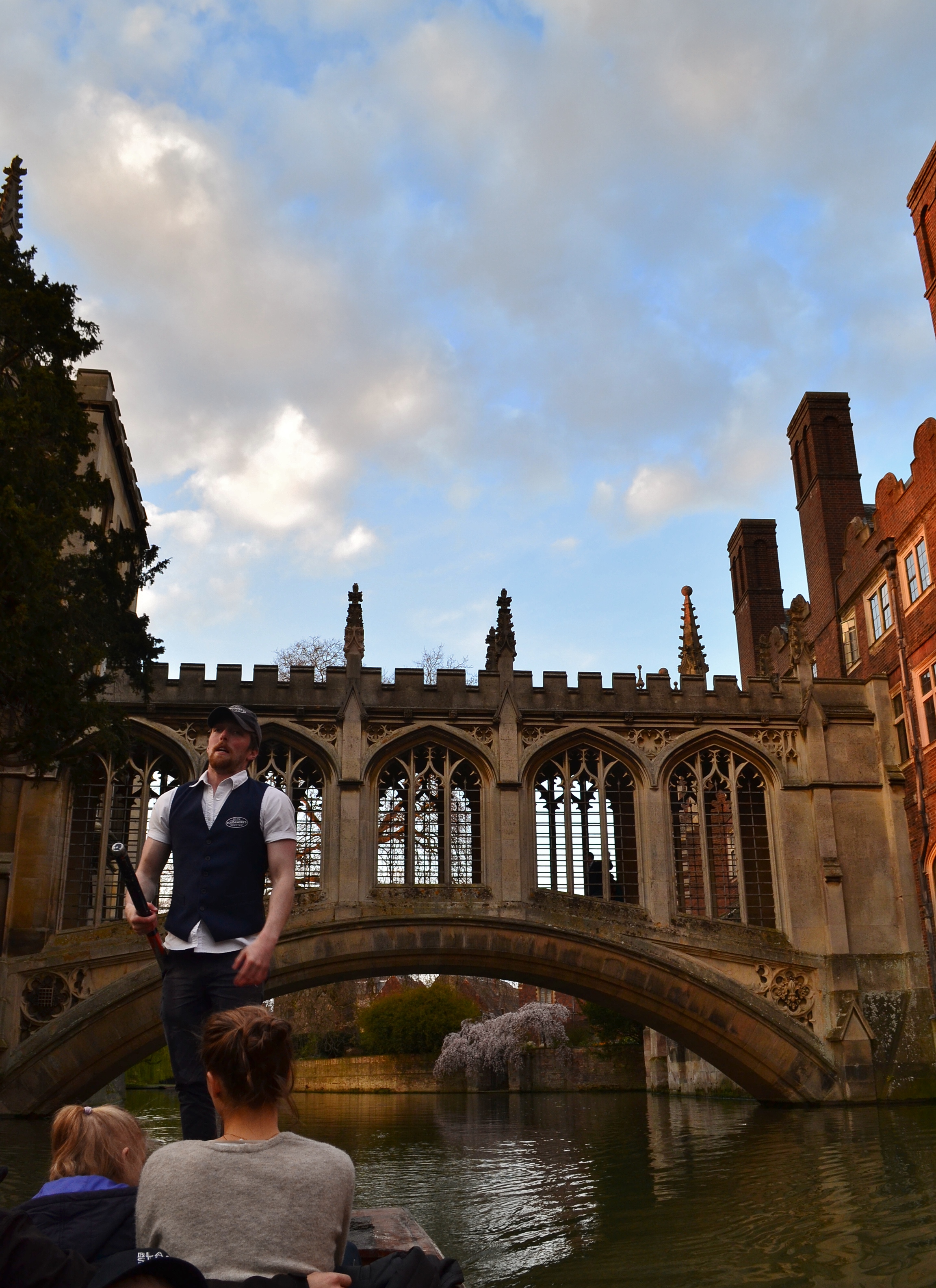
If “punting on the Cam” is a phrase that leaves you scratching your head, not to worry.  It has that effect on many people.  The Cam is the river that runs through Cambridge, and punt boats are traditional flat bottomed (square and stodgy looking) boats.  The “punter” is the unlucky bloke who stands at the back of the boat and both steers and propels the small vessel with a long pole.

It looks easy enough, but I’m told it’s a little tricky and tiring for beginners.  Conventional wisdom in Cambridge: if you live there, take the time to learn to punt and then enjoy self-hire boats at your liesure; if you’re a tourist, pay the boatman and enjoy the ride.  Most of the punting guides will offer their “puntees” a bit of history and Cambridge trivia along with the beautiful ride.

DSC_0190 - Copy
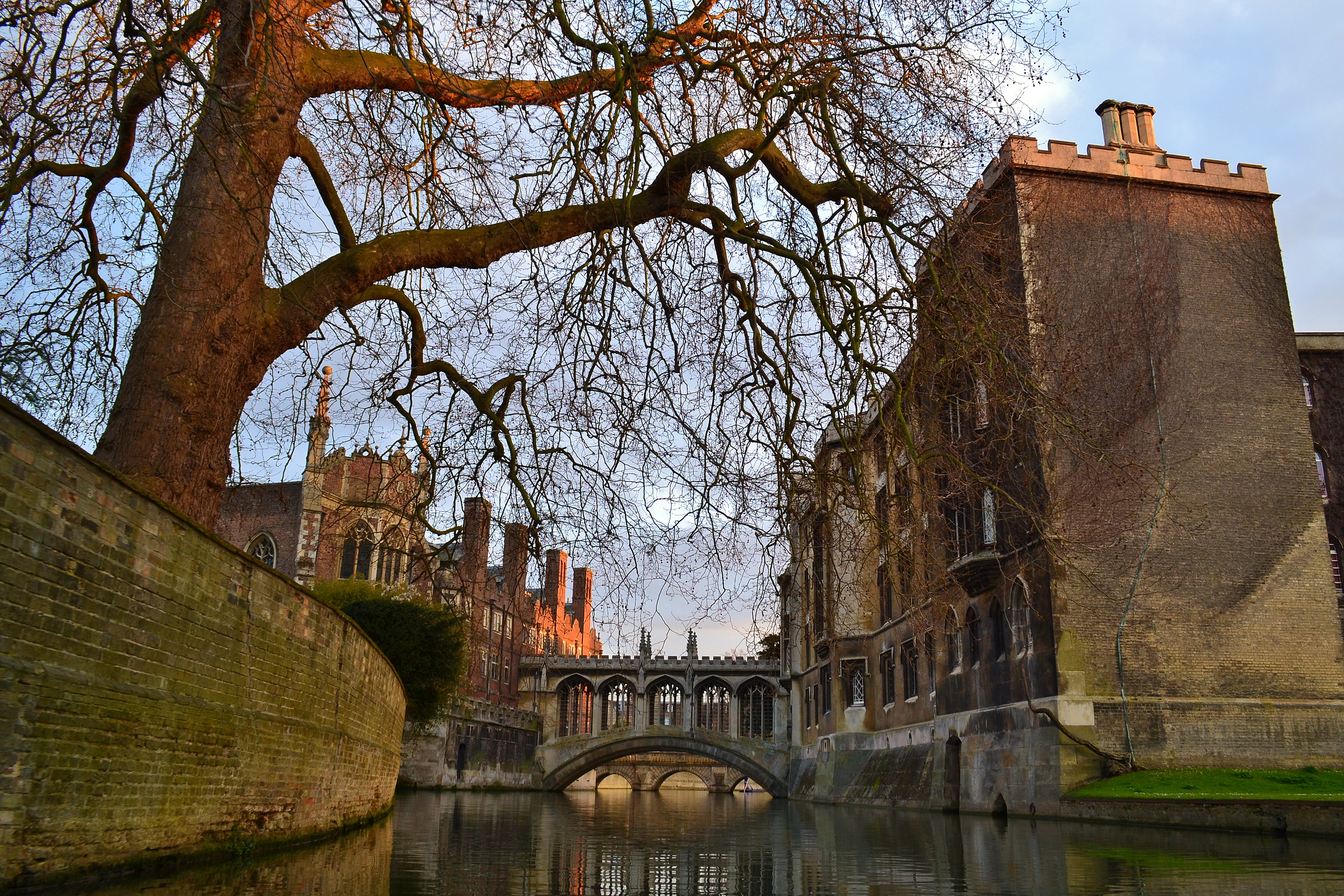
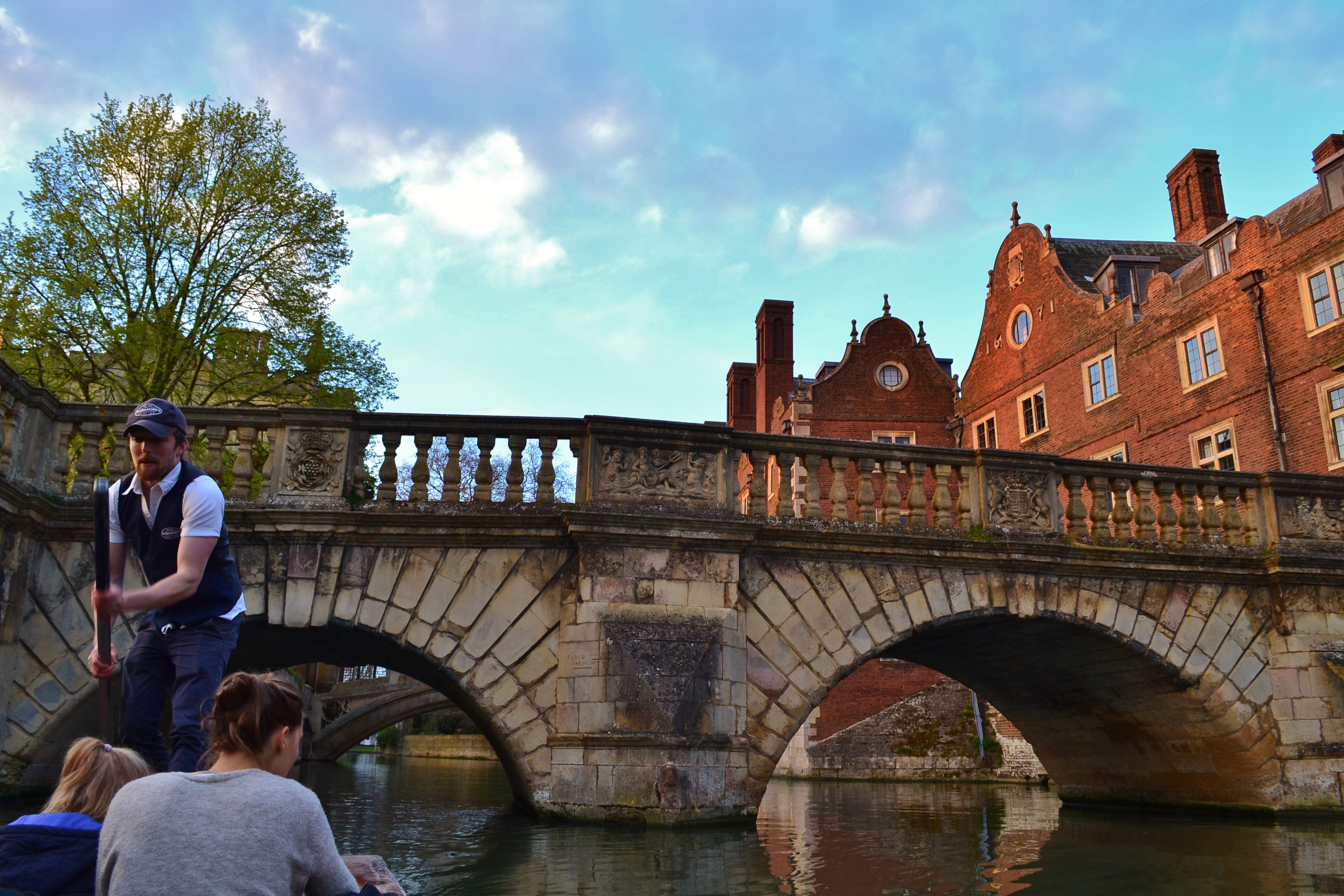
Punting under the Bridge of Sighs at St. Johns College, Cambridge U
DSC_0174
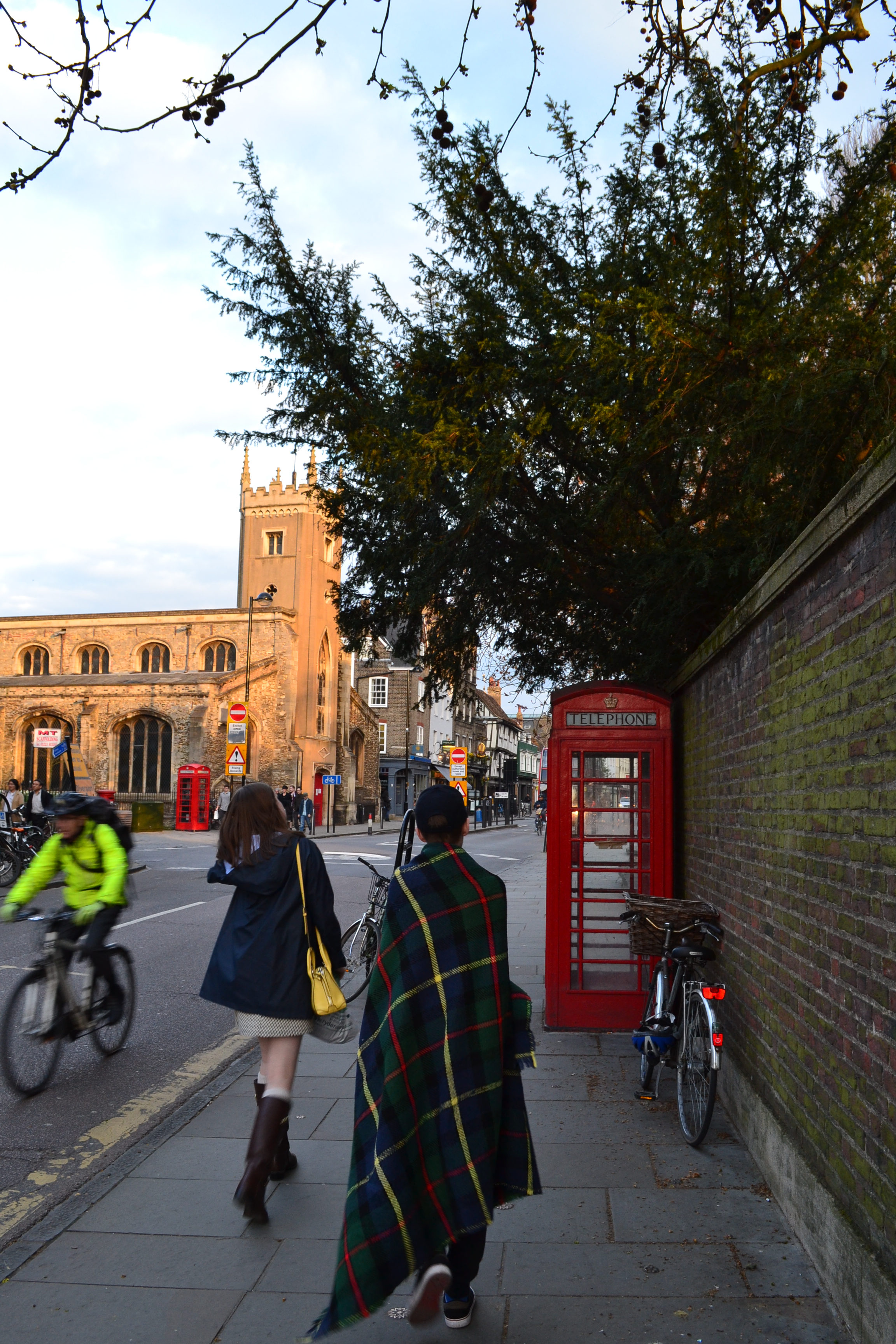
Church spires, red phone booths, and tartan blankets– very British.

We did our punting in the early evening.  It was still bright,  but it was a weeknight  and campus was mostly quiet along the backs by the river.  The air was growing crisp, to the point that our punter had to lend my son a blanket while we strolled around the block and waited for him to prepare our boat.


Pretty soon, we were afloat and learning about the many colleges that make up Cambridge University, ohhhing and ahhhing at the fabulous architecture, and occasionally being heckled by beer swilling students on the banks–which, as long as it’s done in lovely British accents, still sounds pretty posh to Americans.  (It’s embarassing, but true–it hardly matters whether a Brit is performing a Shakespearean sonnet, reading from the phone book, or berating us, we Americans will swoon regardless.)

DSC_0191 - Copy
Under another bridge we go. (Still looking at St. John’s College, I think.)

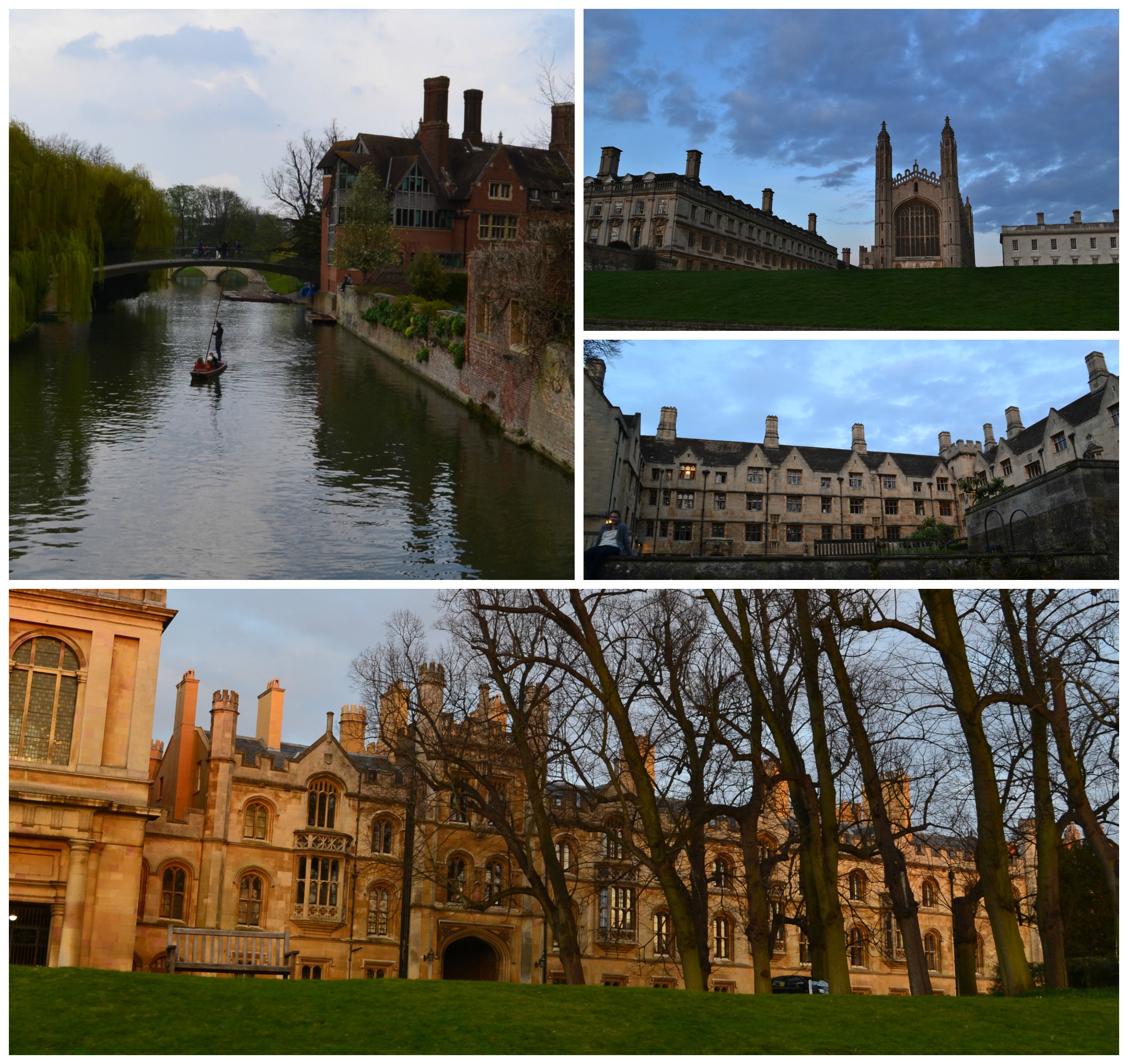
Cambridge University is made up of 31 colleges, many of which have backs along the River Cam.  Each college has its own architectural character, and even modern buildings (usually dormatories) occasionally pop up next to Tudor arches and ruddy red brick.

PicMonk camb b

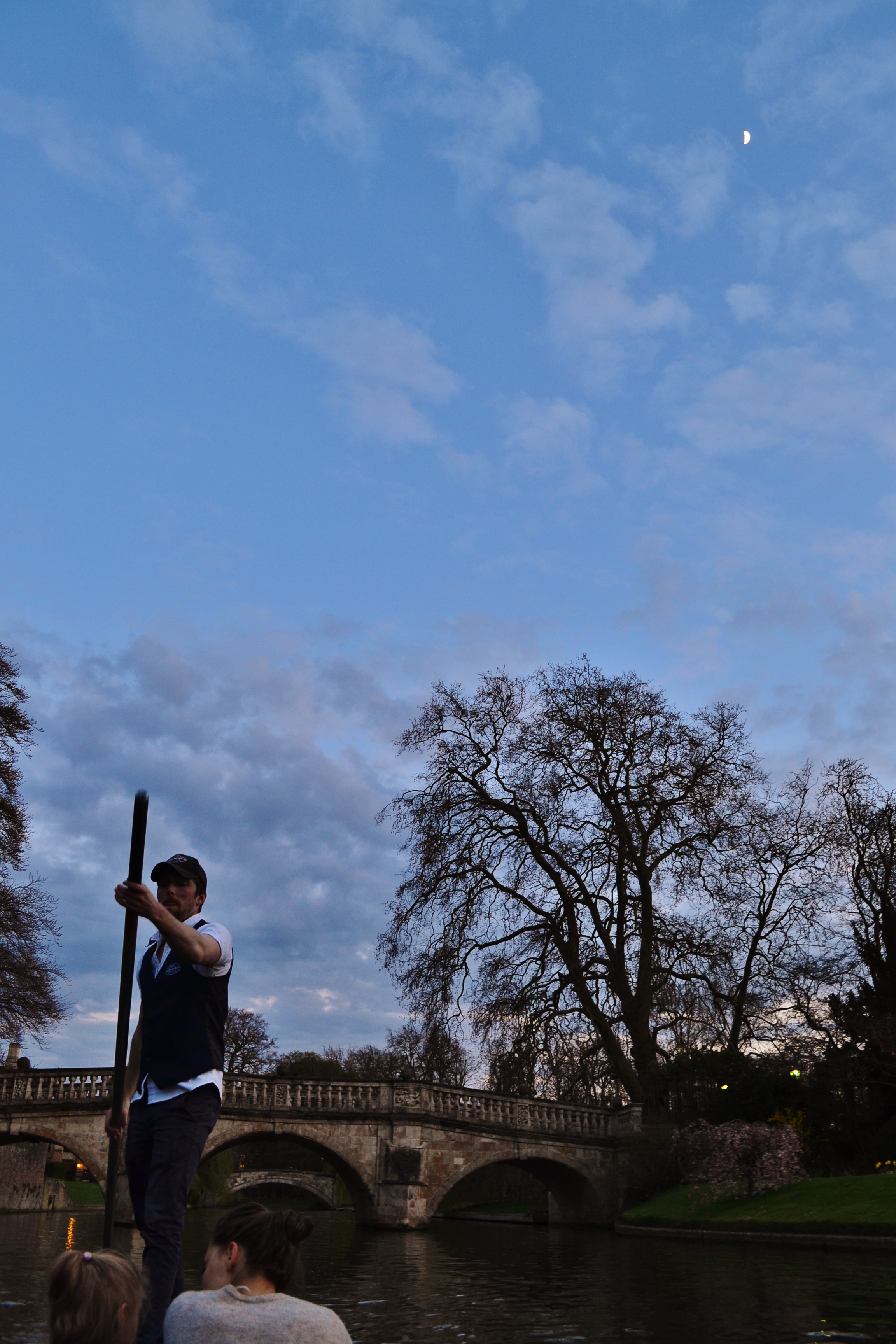
Our punt ride lasted just under an hour, and that was perfect– no time to get fidgety, plenty of time to be lulled into a serene trance on the tranquil river, to soak up a little history,  to nibble at the edges of tales of Kings, Queens, scholars, actors, and socialites.  As the sun began to fall over Cambridge and a sliver of moon showed itself in the sky, our punt, having come to the halfway point of our journey, turned itself around and we retraced our steps. This slow boat ride home offered us the chance to see the backs once again, from another angle, in another light. . . it seemed fitting in a place like this, where so much history has turned and turned again, and the water keeps dreamily floating its passengers on by.

DSC_0212 - Copy

March Madness, An American Tradition . . .


DSC_0686 - Copy

. . . watched from my German living room.

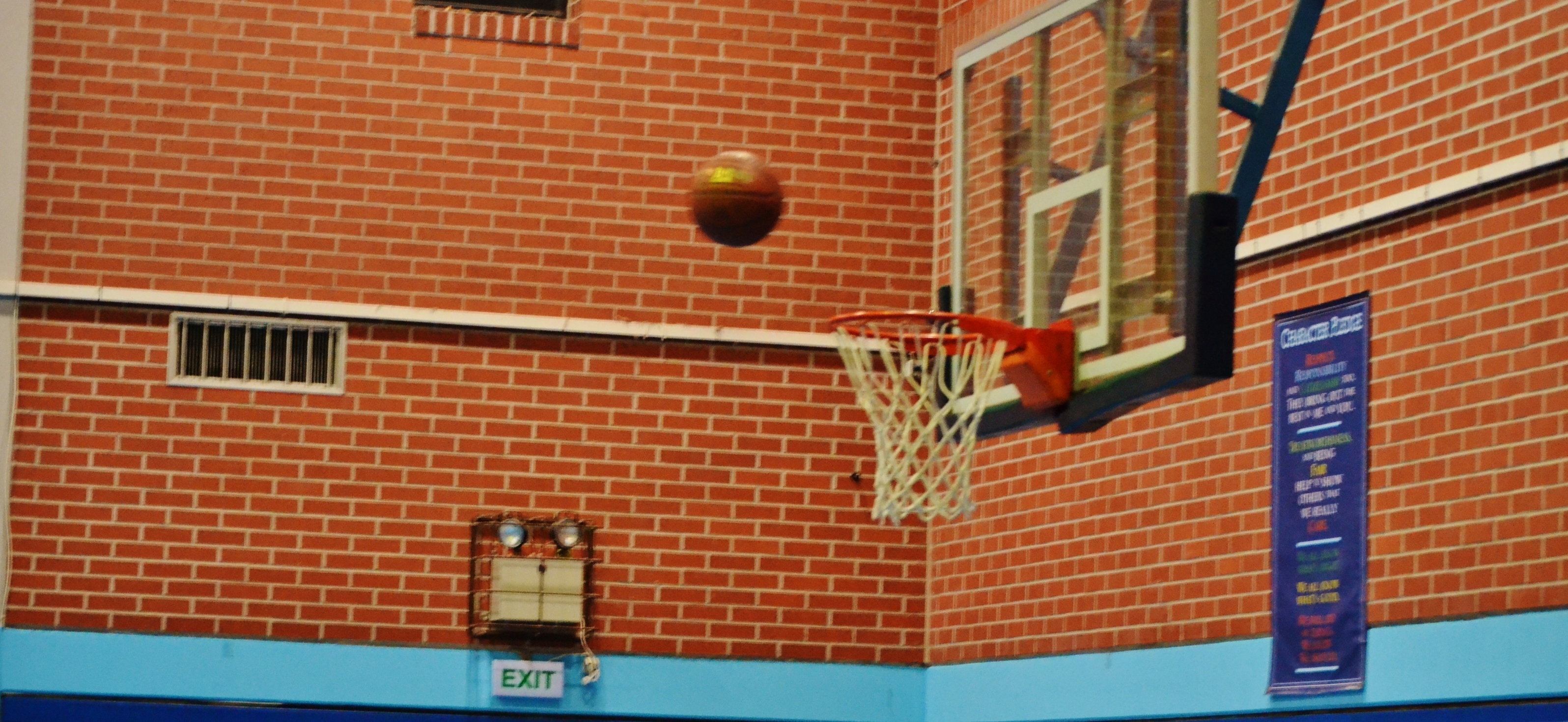
To my American readers,  March Madness needs no introduction.  To my European readers, a little explanation is in order.  “March Madness” is the moniker given to the American men’s college basketball tournament–the national playoff tournament–which takes place in March each year. (Actually March and April,  but “April Madness” sounds like rubbish.) Emotions run high, brackets are racked/stacked/bet on, parties are held, faces are painted, and sporting arenas are filled to capacity and shaken to their foundation.  It’s a good time.   marchmad

Every year, it’s a good time.

But this year, it feels especially good.  As the whole world knows, it’s an election year in the US of A, and so far it’s been a grueling process that still promises months of gruelishness.  (Is this a word?)

So enter March Madness– all of the rowdy, emotional, high stakes tournament, but with quick resolution and less character assassination.  Oh how our spirits have needed this.  Game on!!

So here I sit, in the Rheinland-Pfalz of Germany, drinking my beer and eating my pretzels and watching this American tradition.  It’s a moveable feast, as so many things are for us unsettled, unseated, or expated folks.  And that adds a layer of the absurd to the already frenzied tournament.  Will I be watching from a face-plant position on my couch at 2 a.m., hollering for my teams between snores?  Will I be sitting in a Spanish Tappas restaurant in a German village and fidgeting uncontrollably, wishing I was in a loud American sports bar with a thousand TV’s blaring out the ballgame? (An atmosphere I usually avoid, but would fly to like a moth to the flame during March Madness.)  These are moments when your Americaness screams out –when the thin veneer of European posh that you’ve tried so hard to develop peels back at lightning speed, and you stand proud for the face-painting, flag waving American sports nut that you are. But ask me about the American elections, and I’ll once again glaze over and pretend, in my pidgin-German, that I have no idea what you are asking me. 

I didn’t attend huge universities, but I often have a horse in the race.  A North Carolina native and daughter of a rabid UNC fan, I always root for the UNC Tarheels.  How do I feel about another North Carolina favorite–Duke University?  Ugh.  As UNC’s nemesis, I have a tough time with that one.  But in these championship games, I’ll root for Duke unless I have strong feelings for the team they are playing.

Which brings me to Yale.  Last night, Yale upset Baylor 79-75, in a game that was pure hustle from start to finish.  And what a finish!  The last 10 seconds were insane–Baylor only trailing by one point for a while, when Yale pulled ahead by 4 in about the last 3 seconds!  But who can track the last few seconds of a game like that?  Lungs screaming, head buzzing, it’s one of those epic moments when the world moves so fast and so slow all at once, you see every millisecond’s play, but later recall only a swirl and flow of arms, legs, net–adrenaline!  Or is that just me?  I saw every second but would be hard pressed to extract the moment by moment play from the emotion that clouds it all.  And that, you know, is the sign of a great game.

But back to the facts. Yale won.  Yale won.  Yale won.  And now Yale will meet Duke in the playoffs.   Yale is out-ranked and out-sized by Duke.  And the whole match has been much maligned and joked about as soon as it was announced.  Twitter is lighting up with jokes, like this:

Should Duke-Yale end in a tie, following will decide winner
1. BMW sprint to nearest J Crew
2. Windsor knot race
3. Sudden death chess match

preppyIn a tournament that hinges on astonishing athletic prowess and grit, these two teams offer a lot of fodder for jokes–too academic, too preppy, too privileged.  These schools have decidely ungritty images.  To have them play each other–just too funny to let it go, right?

But look where they are!  So, pelt me with rotten tomatoes– or funky bowties and textbooks– and let the preppy jokes fly, but I’m screaming loud and long on this game.  Duke looks like the winner based on rank and size, but I’m a Yale Bulldog fan and looking for an upset on this one.  If Yale takes it, you’ll hear me shout from across the ocean.

If Yale doesn’t . . . then my fickle heart will move on  to UNC and I’ll profess my love just as loudly. (If all my teams fail me, I’ll reminisce about  Davidson’s Steph Curry in 2009’s  tournament.) It’s not really a fickle heart, it’s just March Madness.

If only we could wear our political loves so lightly.

*For my European readers out there who may need a full primer on March Madness, you can check out this video-March Madness Explained. 


Here Comes Peter Cottontail: Easter Traditions in Germany

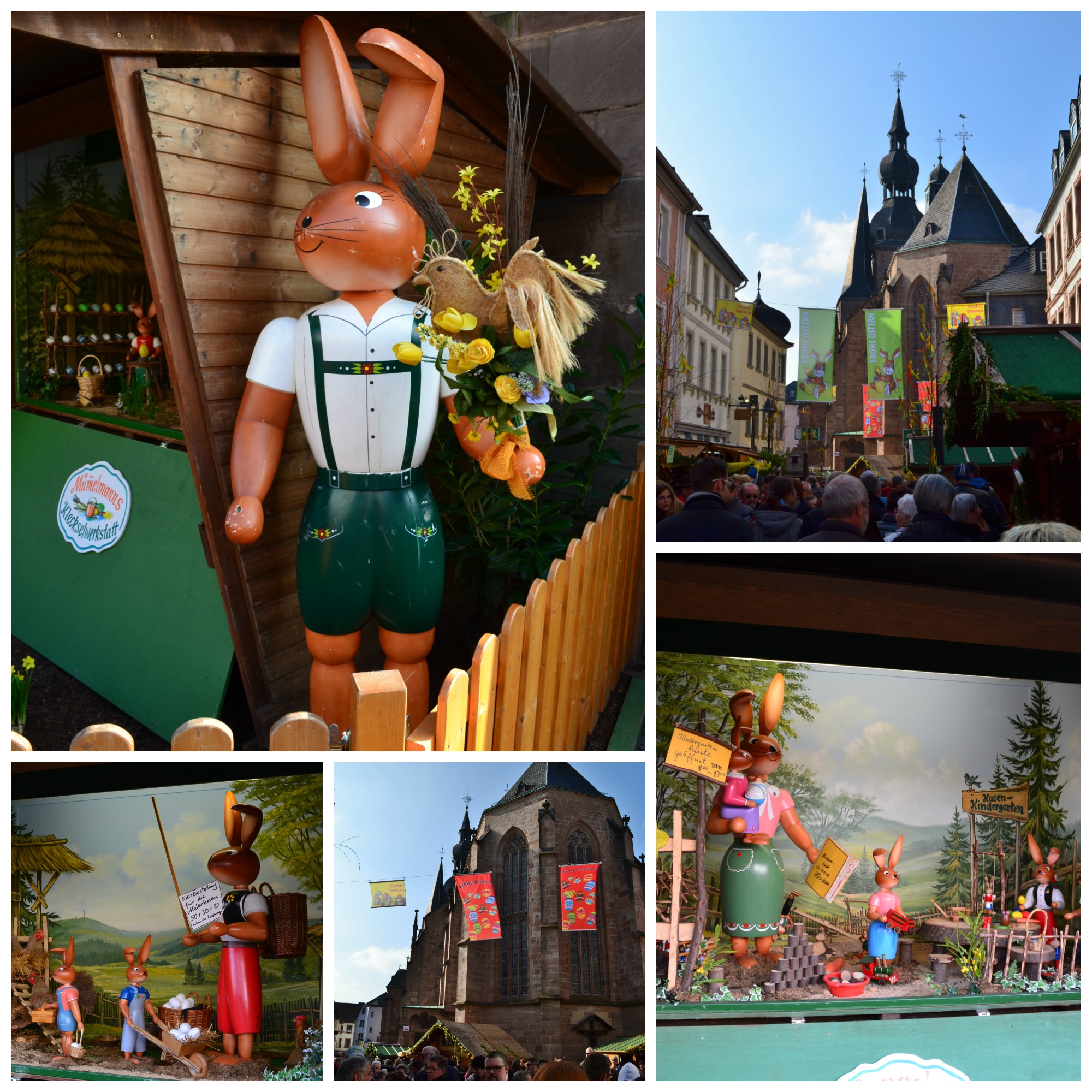
Dieser ist die Ostermarkt Sankt Wendel/This is the Easter Market in St. Wendel

PicMonkey Collage

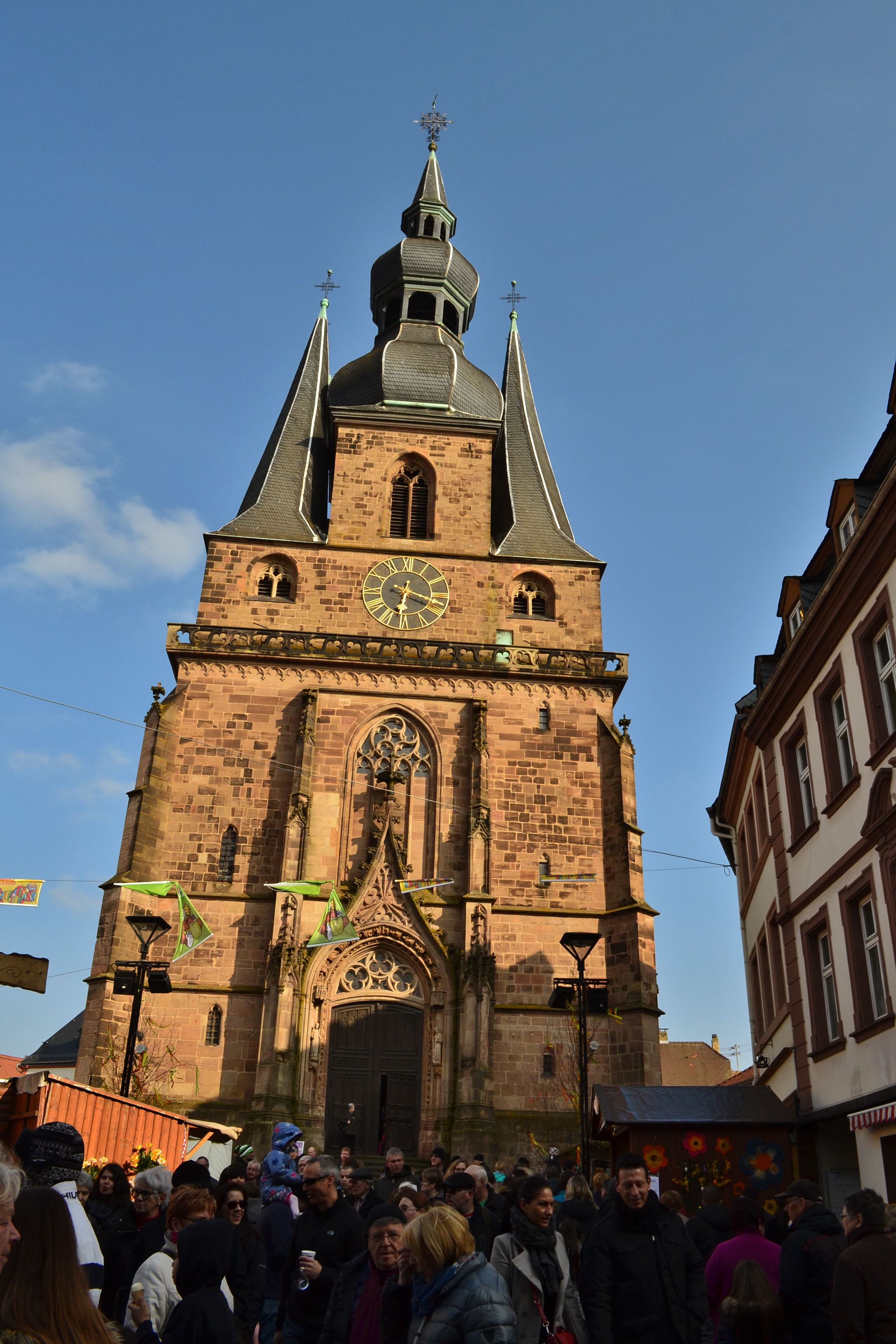
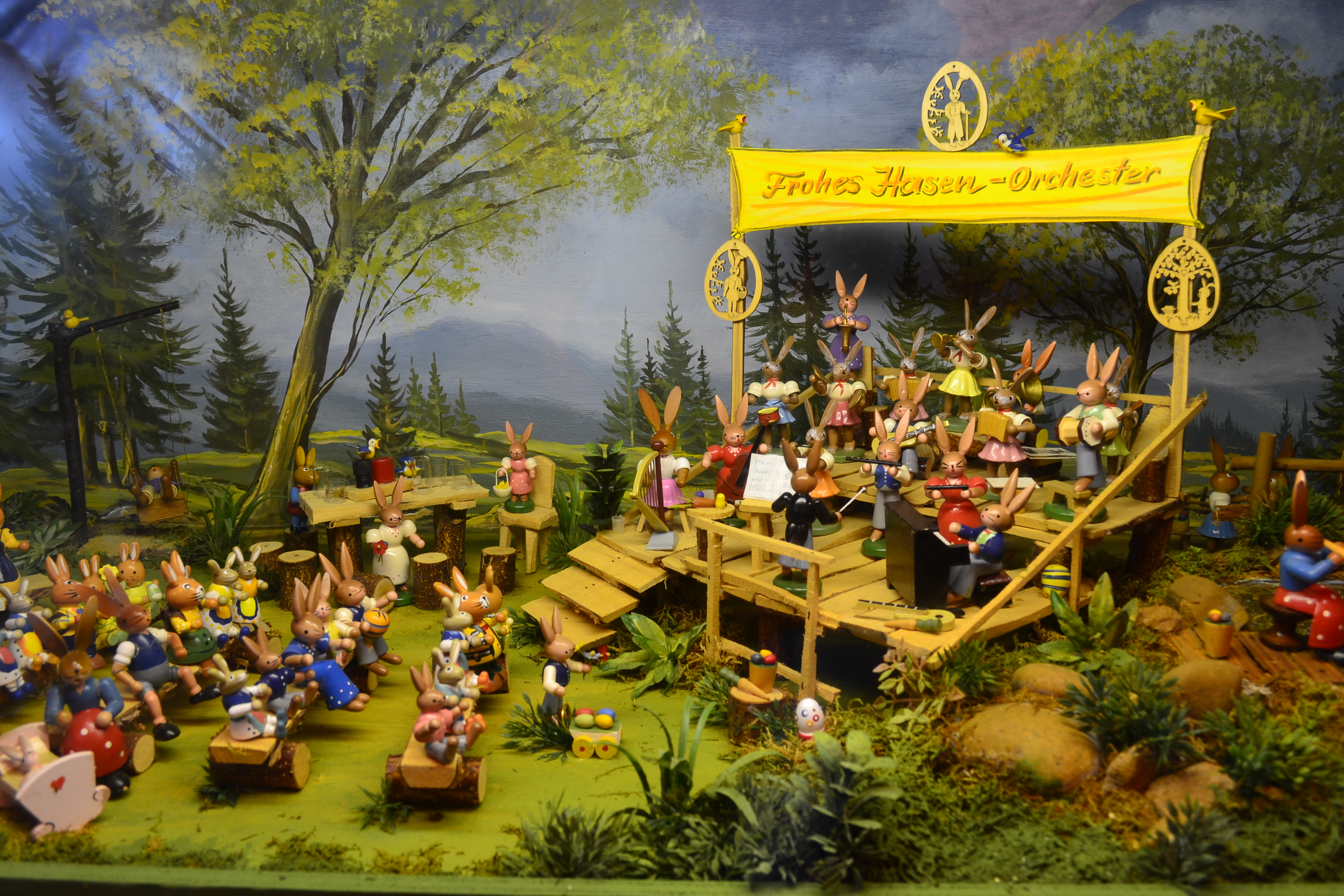
Easter markets are popping up all over Germany, and we visited the market at Sankt Wendel this weekend.  It was busy with market stalls full of painted Easter eggs, wooden Easter crafts, flowers, and jewelry.  There were craft stations for children and food and drink for everyone.  It was a nice day out, especially with the sun shining brighter than it has in many weeks.  Our favorite sights at the market were the Easter Bunny displays and the fantastic Dom (Church) in Sankt Wendel.

DSC_0867The church was the center point of the market festivities, with stalls huddled around her walls.  The photo at left doesn’t do the exterior of the church justice–in the busy, small streets around the church it was hard to get a photo that shows the fantastic double-onion dome (with a third tier “cap” and cross set above the domes) in proper perspective.  This church is stunning.

The interior of the church is equally beautiful. Here are a few photos for you:

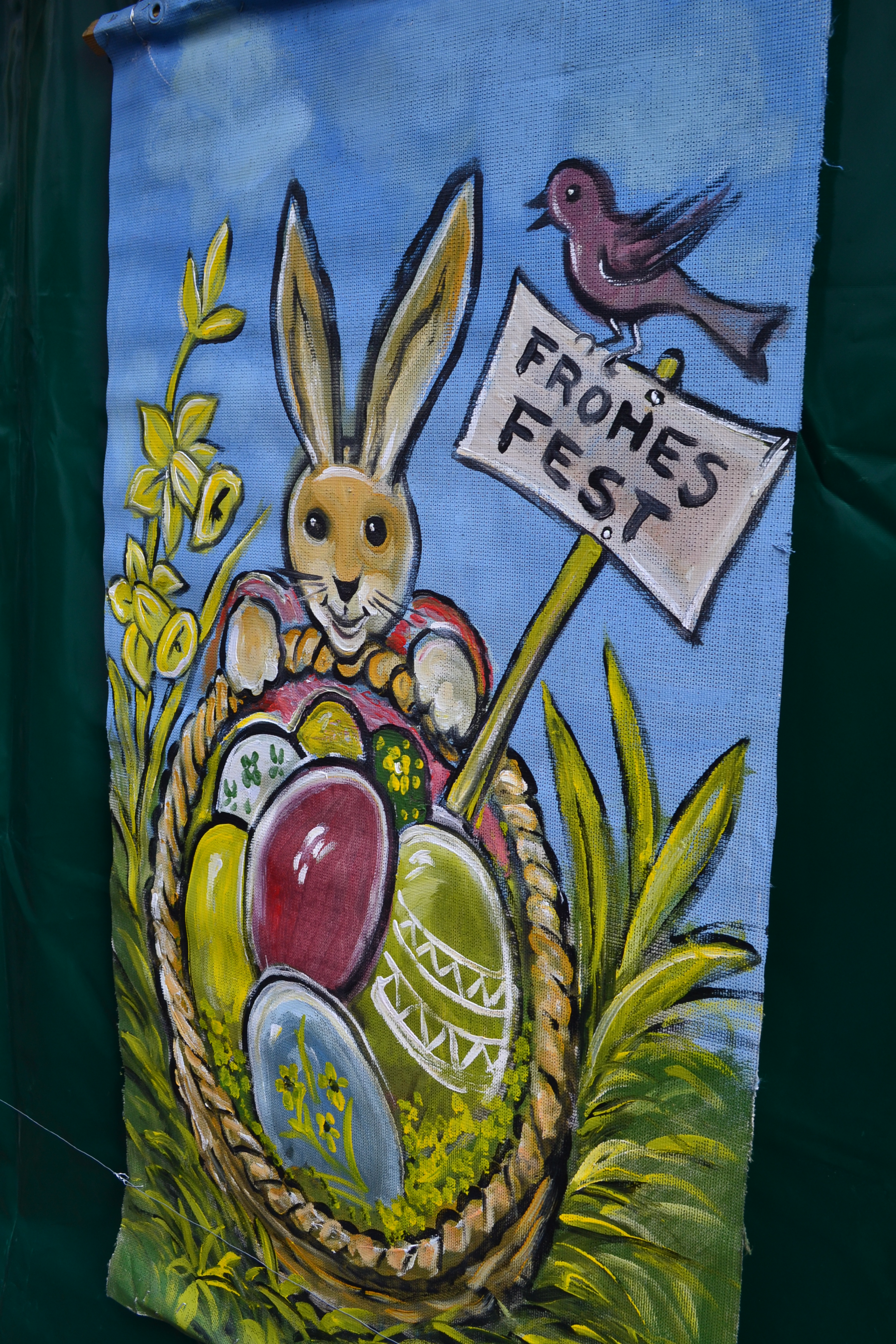
The Easter Bunny displays at Sankt Wendel DSC_0887 were lots of fun too–a little whimsy and a lot of artistry.  But, like so many German traditions, these displays got me thinking.  Where did this story of the Easter Bunny get started?  It seems obvious that America inherited its Easter Bunny traditions from Germany, as the Easter Bunny is not ubiquitous in Europe.  In France, for instance, the Easter Bells (Les Cloches), having flown off to Rome in the days before Easter morning, fly back home and bring eggs and chocolates to children.

The Easter Bunny seems to have started out as a German/Lutheran tradition.  Mention of the tradition dates back to texts from the 1600’s, and it does seem that the bunny did more than spoil children with treats.  There was an element of judgement–who had been good and who had been bad?  (There is, in German traditions, always an element of judgement.  If you don’t believe me, check out my past blogpost on St. Nikolaus and his sinister sidekick — Saints and Devils, Fire and Snow.)

DSC_0889But what made the Lutherans think up this magical bunny?  Well, they borrowed from earlier traditions too.  In German, this Easter Bunny is know as the “Osterhase”  (the Easter Hare), and it’s widely accepted that many roots of our present Easter traditions come from pre-Christian traditions.  The goddess Eostre (and her symbolic rabbits) were a focal point for spring fertility rituals.  Fertility, bunnies, eggs–you can certainly see the echoes in present day traditions.

You see the same pattern in Christmas traditions–the Christian holiday did pick up some flavoring from the Roman Saturnalia holiday that came before it.  We’re all magpies in some respect–we incorporate bright scraps we find and fancy here and there, and we add those scraps to our nests.  No holidays, religious or otherwise, spring fully formed from a doctrine or ideology–they incorporate the surrounding culture.  This may seem odd when the surrounding culture is pagan and the newer holiday is Christian, but hearts and minds change slowly, piece by piece, person by person.  Any slow turn of a culture will incorporate what its ancestors held dear, no matter how odd a pairing those ideas and traditions are.  Flying bells?  Easter bunnies?  A little odd if you think about it logically.  But, really, if all of our stories hinged solely on logic, we’d be all out of beauty and mystery. We’d be done for.

Long live the Osterhase!!  Frohe Ostern!  Happy Easter to you!