Remembering Days at Alnwick Castle

via Photo Challenge: Nostalgia
hpim0472

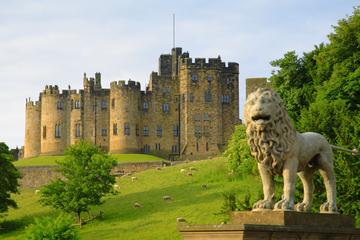
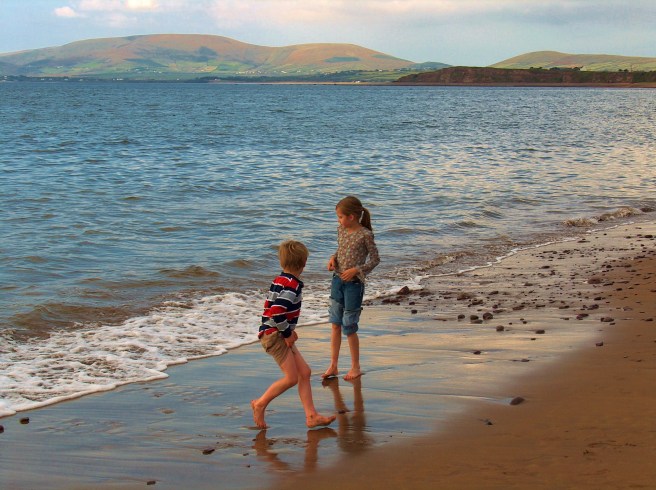
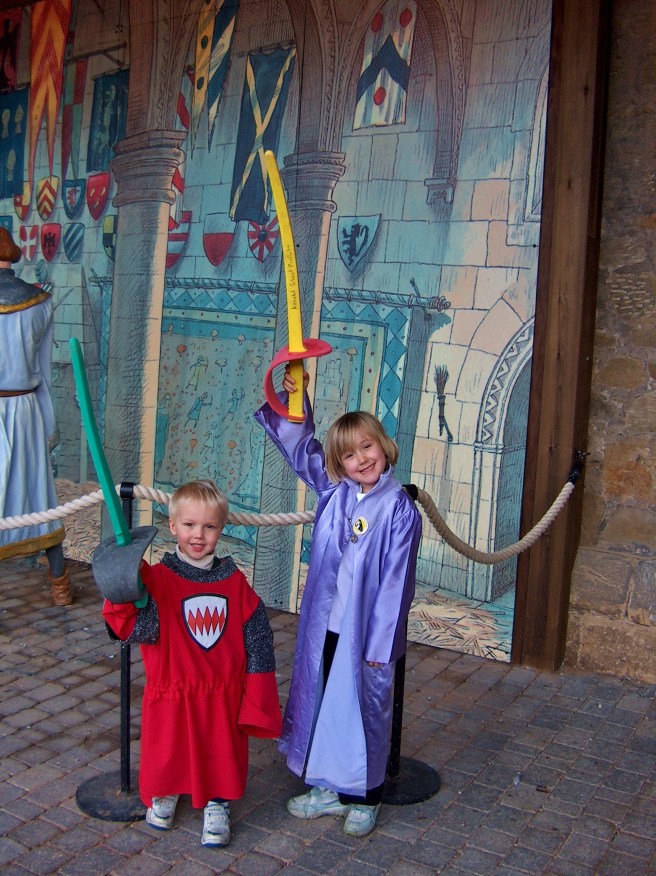
Move over Lancelot and Guinevere, Harry and Hermione– we’re storming the castle! (Alnwick Castle, 2006)

Traveling through the UK with my two knee-high knights was always a good time.  It’s easy to see a photo these days (when both of my kids have grown to my height) and feel a twinge of nostalgia.  But since moving back to the States recently, I’m a little overwhelmed by waves of nostalgia.  It’s a problem.  Nostalgia is a great place to visit, but it’s no place to live.  I’m aware of that.  And I know that, as I move forward with this blog (I still have plenty of stories and photos to share, and hopefully new travels in the works too), I don’t want this fug of nostalgia to take over entirely.

But, when logging into my blog account last week, I noticed many– so very many– other blog posts popping up about Nostalgia-this and Nostalgia-that.  I laughed a little, thinking the internet was riding some wistful wave–a viral mood gripping its readers as the autumn chill and  our nesting instincts kicked in.  As it turns out, that wasn’t it at all.  Wordpress had posted a weekly photo challenge entitled “Nostalgia.”   People were jumping on board the theme.

Although I’m a few days late for the weekly challenge, I think this gives me free reign to go nostalgic this week.  I’m sure it won’t be the last time my posts take this tone, but I hope (for both our sakes) that a little indulgence of my nostalgic mood will help it to pass.
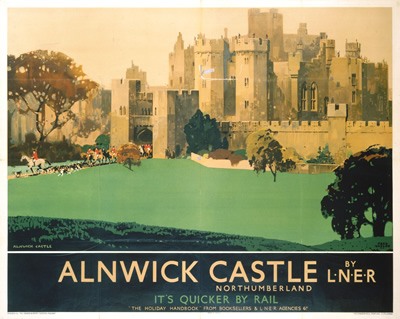
Old Railway Poster: Alnwick Castle, aka Hogwarts. (Alnwick was used in many scenes from the Harry Potter films.)

On offer today: some photos, and a few notes, from Alnwick Castle, Northumberland, England.  (“Alnwick” is pronounced “An-nick”)
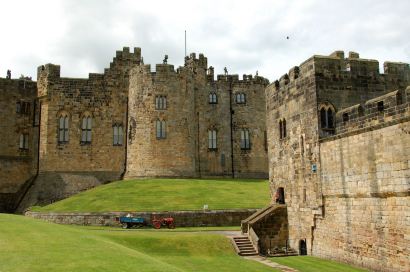
Alnwick Castle
Alnwick Castle – copyright J. Stringer, licensed for reuse under Creative Commons


Alnwick, on the river Aln, is set by the coast in Northumberland.  It is a couple of hours north of our old homebase of Ripon, N.Yorkshire, and a couple of hours south of Edinburgh.  That made it a great stopping off point when we would drive the beautiful coastal road up to Edinburgh . . . but it was also a great destination in its own right.

Alnwick Castle is, was, and quite possibly always will be, home to the Duke of Northumberland.  The family still lives in the castle, and, although tourism is big business for the castle, it is still very much a family home.  There are family photos in the living areas, family stories told by tour guides, and, if you are lucky, plenty of family sightings.

On one visit there, we had to scurry quickly through one of the stone entrance gates to make way for the Duchess of Northumberland to drive through.  (Jane Percy gave us an appreciative nod as she motored her convertible Audi through the gate– she was gracious and graceful, and yes, I envied her life in the castle and the convertible just a bit.)
2007-047
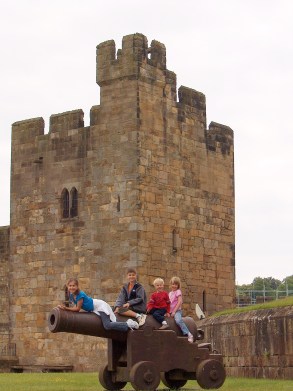
A family affair: we make the castle ours, if only for an afternoon.

Alnwick Castle is about 1,000 years old–yes, you heard that right.  Some nip, tuck, and augmentation over the years, but she’s a medieval beauty with a fantastic backstory (both illustrious and checkered) of exploits in British history.  Much of her prominence owes to the fact that she sits near the present day Scottish border.  The border lands have long been disputed territory, so Alnwick was strategically important. Her most famous son was Harry “Hotspur” Percy.  He became a knight, Sir Harry Hotspur (I kid you not), who earned some fame for his military prowess, and later for rebelling against Henry IV.
 

alnwick-as-hogwarts
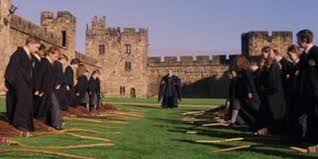
Alnwick as Hogwarts–quidditch lesson

But Alnwick’s past often takes a backseat for tourists who know her better as the backdrop for many scenes in the Harry Potter films and the Downtown Abbey Christmas Special.   Nevermind that– the Percy family is glad to entertain Potter fans and sneaky enough to slip a little British history into their experience, even if they only showed up to frolic on the Quidditch Lawn.
The Alnwick Treehouse

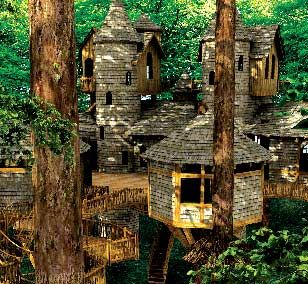
The grounds of Alnwick are beautiful and extensive.  The gardens are certainly worth a tour and they will surprise you.  There is a poison garden (clearly needed for horticulture and potions classes at a Hogwarts proxy) and the massive Treehouse restaurant that will blow your mind if you are, or ever were, a child.  When I was little, I used to dream of being part of the Swiss Family Robinson, just for the tree house– but this tree house puts that one to shame!  Also, the food is supposed to be fantastic. . . we never ate there, owing to very young children who were only interested in running full throttle through the structure.  (Only an adult would climb into  a huge treehouse and immediately set themselves in a seat, right?)
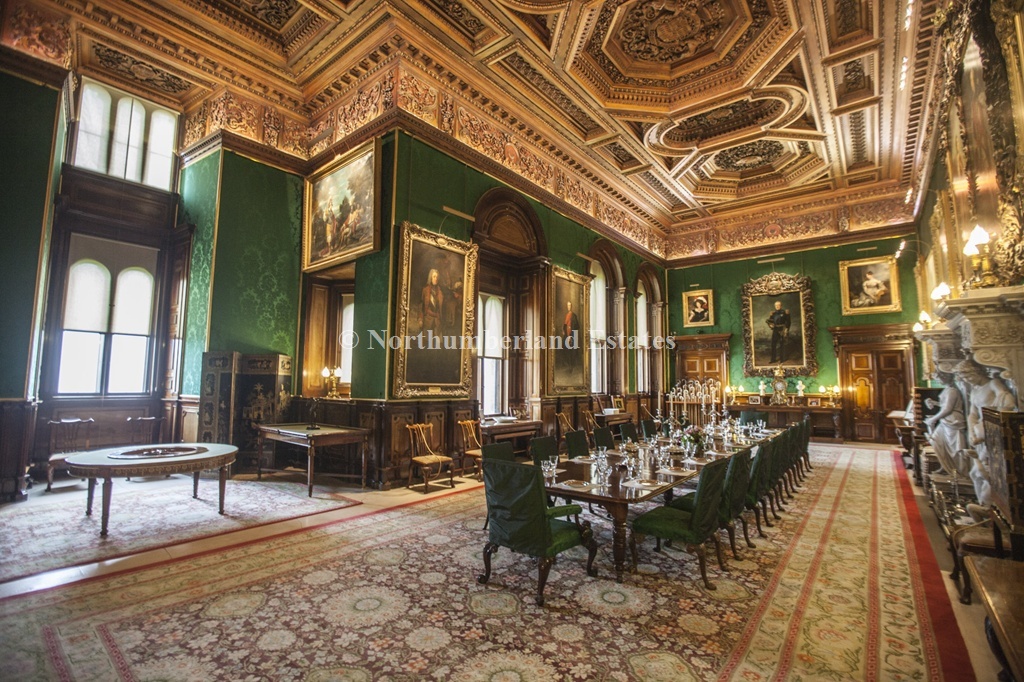
The Percy family dining room, impossible not to covet. Image from Alnwick Castle website.

As you can imagine, the interior rooms of Alnwick are extraordinary. My favorite rooms were the dining room and the library.  The library is grand, but also filled with family touches that remind you that this space isn’t a museum, it is very much a family home.  My only complaint with this room is that Jane Percy, in a misguided fit of whimsy (that steered right past whimsy and landed in the territory of macabre), has on display a taxidermied dog.  Yes, a stuffed dog.  (Not her own, we were assured.)  This is a step too far. . . even for a colorful dutchess who lives in a 1,000 year old castle.  Not cool, Jane Percy, not cool.

Moving on.
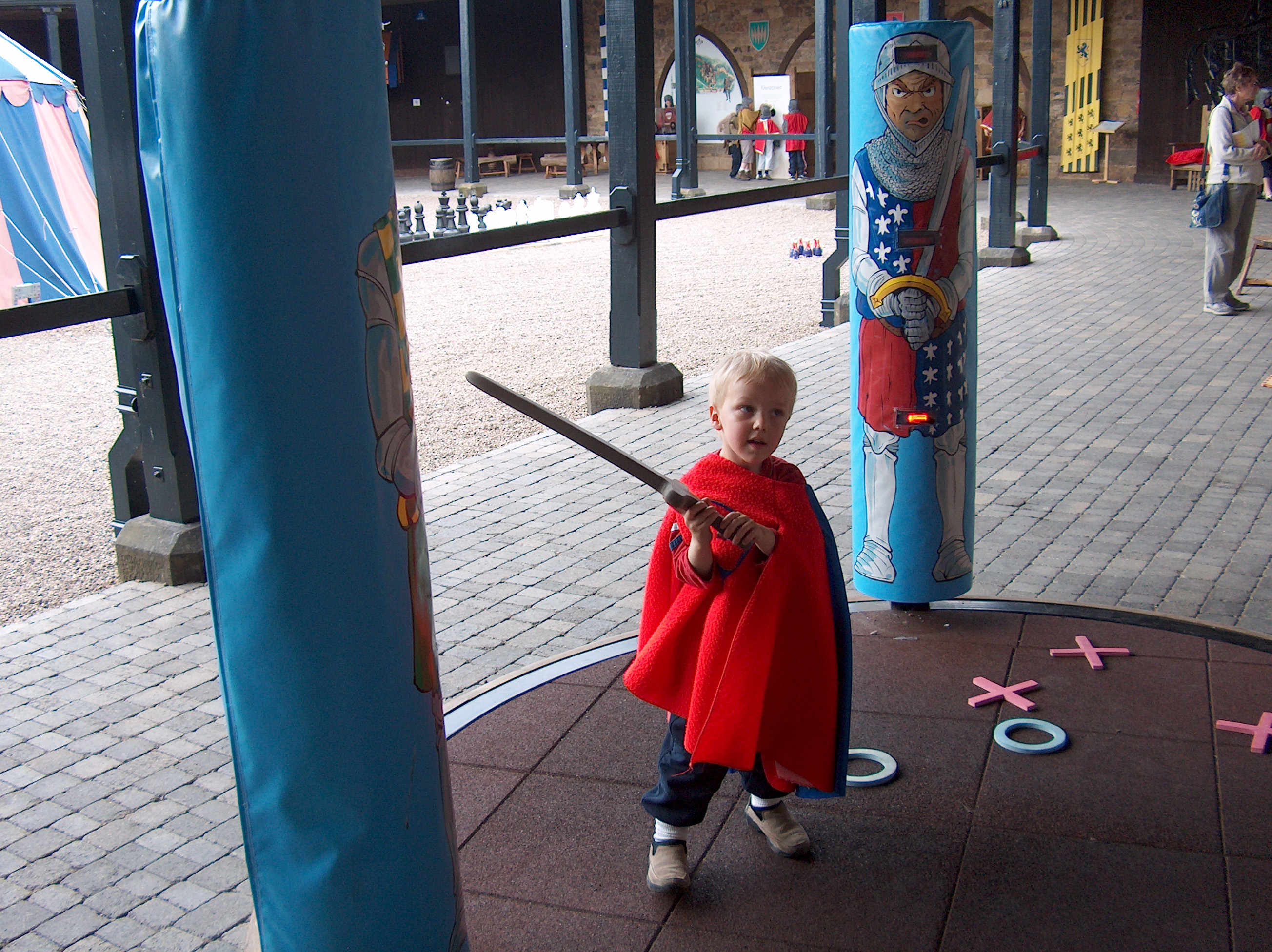
Training the next generation of Hotspurs.

Alnwick boasts a “Knights’ School” tucked into one of its courtyards, where children can have some hands-on time sharpening their medieval knight’s skills.  (The lead off photo on this post is my kids at the Knights’ School.)  By our second visit to Alnwick (nine or ten years ago), there were also Harry Potter exhibits (tastefully) in place around the castle.  I expect there might be even more Potter Paraphernalia in place these days.  It’s all in good fun, and the Percy’s seem to develop these exhibits and activities in ways that feel right and respectful to the space.

On that second visit, we stayed overnight in a small hotel in Alnwick (I can’t recall the name).  It was simple, but comfortable, and the English breakfast was fantastic.  It was a “Full English Breakfast” with toast, beans, eggs, tomato, sausage and bacon, and black pudding.  I couldn’t face the black pudding (a highly seasoned blood sausage, sliced and fried) –a little too medieval for me.  Honestly, I dodged a few items on the menu, having a pork allergy– but I always wonder how anyone can consume a “Full English” and still be ambulatory at 8 o’clock in the  morning.  That much food for breakfast would send me moaning back to bed. But I digress.
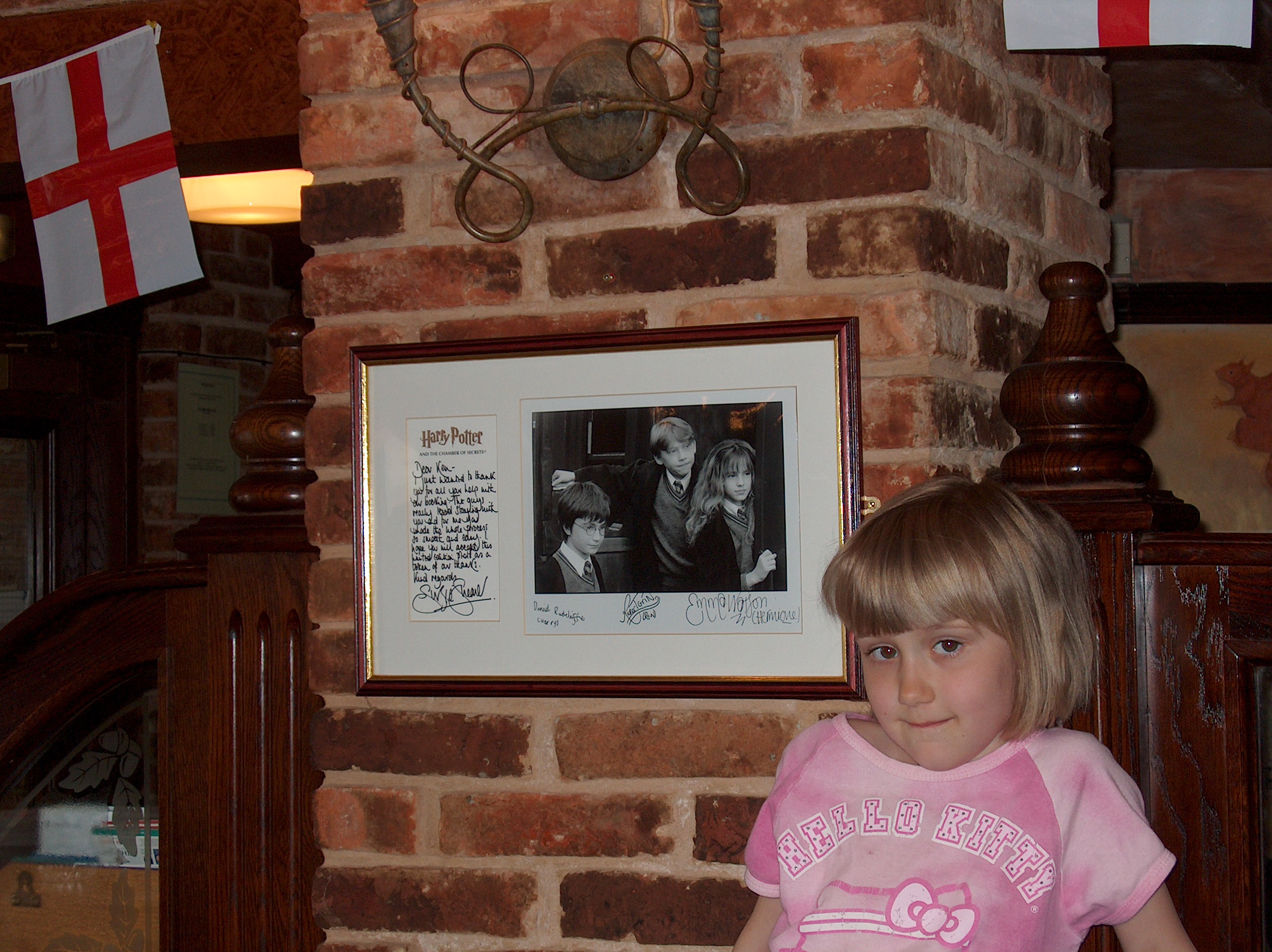
Hanging out where the Harry Potter cast and crew stayed.

The thing more impressive than the breakfast itself was the fact that we found ourselves eating under a signed photo and note from the cast of Harry Potter #1– a photo of, and signed by, the all important trifecta of young wizards, Harry, Ron, and Hermione.  I think parts of the cast and crew had stayed in the hotel during filming.  I would guess that half of the hotels in Alnwick would have been filled with cast and crew, it was such a big production in a small town.   Anyway, it brought a smile to our faces to sit under the gaze of our favorite wizards. (We may have gone to Knights’ School to learn to be Hotspurs, but our hearts have always yearned to be wizards!)

Although the castle dominates the town, there is plenty to do on a stroll through the town of Alnwick too.  Great restaurants and pubs, some lovely, small antique shops, and a bookstore that I still vividly remember 10 years later–very impressive.  Barter Books is housed in a former  Victorian Rail Station and is massive, with books new and used, fireplaces and cozy chairs, and a tea room right there in the store.  You might disappear into this place on a rainy day and not come back out until closing time.  (Unless, like us, you have two young “Hotspurs” running in circles and dragging you on to the next adventure.)

And so, Alnwick has a little something for everyone . . . or a little of everything for everyone.  It has history and Hollywood, medieval and muggle, sprawling grounds and mile-long dining rooms, tree houses and train stations . . .it has charm.   Who wouldn’t get nostalgic about days spent there?
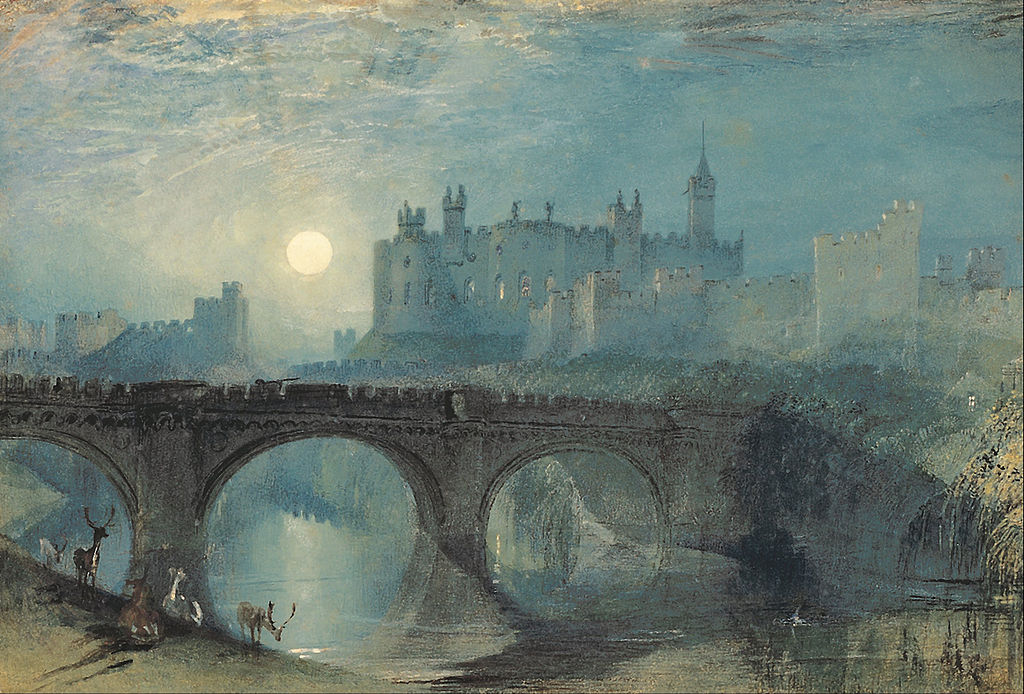
Alnwick Castle painting, by J.M.W. Turner

alnwick-castle-1

Van Gogh: Prodigal Art

Art in the Autumn #2   — via Daily Prompt: Facade

van-gogh-stolen
Stolen Van Goghs recovered, Associated Press

I woke up this morning to the news that two Van Gogh paintings, stolen 14 years ago, have been found in Italy.  (The news blurb can be found here.)  After 14 years, there was no expectation that these paintings would ever come back home to the Van Gogh museum in Amsterdam, and it’s fair to say that the museum director was absolutely giddy with excitement when the news broke: “‘The paintings have been found! That I would be able to ever pronounce these words is something I had no longer dared to hope for,'” said museum director Axel Ruger. ‘We have been waiting for this moment for 14 years.'”

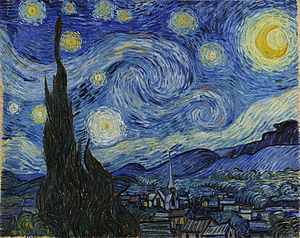
If Mr. Ruger had a fatted calf at hand, or if artwork was inclined to dine, for that matter, I’m sure a great feast would be in the works.   In fact, I imagine that a great feast and homecoming celebration are in the works anyhow–centering around the returning art, but fattening up the people who are ecstatic to welcome it.   How could you not celebrate the return of two Van Gogh paintings?  At the very least, you must revel in the return of the property: reportedly worth over 30 million dollars.  But beyond the quantifying, there is the qualifying value of Van Gogh.  The beauty, the daring, and  . . . that other thing about Van Gogh.  That thing, that hard to explain thing.    van-g-starry

Is it me, or is there something radically personal about Van Gogh and his art?  In every way, he and his art are prodigal.  And because of that, they are life.  Your life, my life, each moment of life that is extravagant.   The simple beauty of the crisp starry night that we had here in Florida last night– so mundane, I suppose, but so vibrant when you actually look up to notice it (and though the sky is not swirling, the breeze on your cheek gives the world that effect, if only you will notice).    van-gogh-1

Or the moment when you look in the mirror and actually see yourself today, as you are and without judgment, erasing the 20-some years of what you thought you looked like (and maybe  what you still look like in the right light, with your hair done just so, and your makeup expertly in place)– but at 50 years old, in the stark morning light, before you have raised your facade to meet the world, you find new movement to your face and new tones in your skin.  The jowls are sliding here, the eyes crinkle there, the furrows are surely evolving from expression lines to permanent fixtures.  You see the shade of your ancestors in your own face– and you recognize the movement and energy, and changing moods, of Van Gogh’s own self portraits.   (Some people try to uncover a descent into madness in his shifting self portraits– I see only lighting, only mood, only the natural movements and shifts of life. Changeable; life is nothing if not changeable.)

On the prodigality of his art, it is interesting to note that the two works that are returning home are early works– a traditional seascape and landscape with church.  They are lovely, but don’t show the hallmark of his later works–the lavish, thick paint (a month’s wages spent on one painting!) and movement that so well expresses mood and vigor.  If the earlier works capture moments in everyday life, the later works both capture and release those moments, those energies.

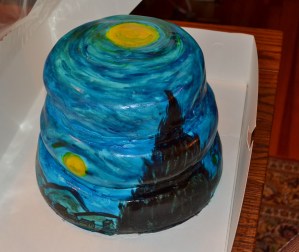
Sure, his work is pretty and bright, but that’s not what instills such fervor in his followers.  Why has my family pursued him in Paris, shadowed his footsteps in Arles, and greedily devoured his work in the form of a birthday cake?  What inspires that devotion?

PicMonkcafeterraceatnight
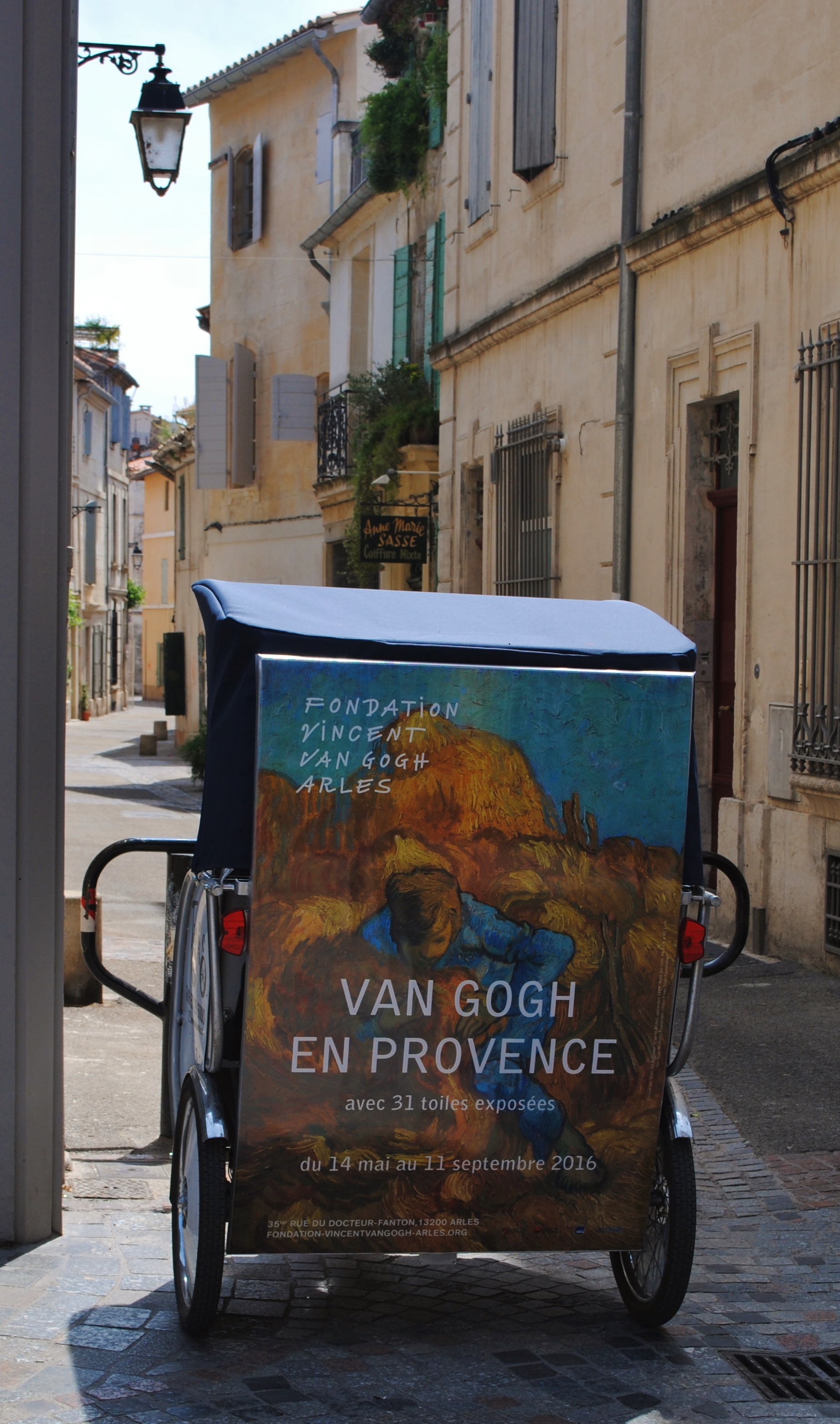
We shadowed his footsteps in Arles.
dsc_0689-copy
We  devoured The Starry Night, in birthday cake form.

It’s the capture and release that gets us.  The energy remains.  We feel the life, experience the life, rather than just observing it.

van-gogh-4-ear
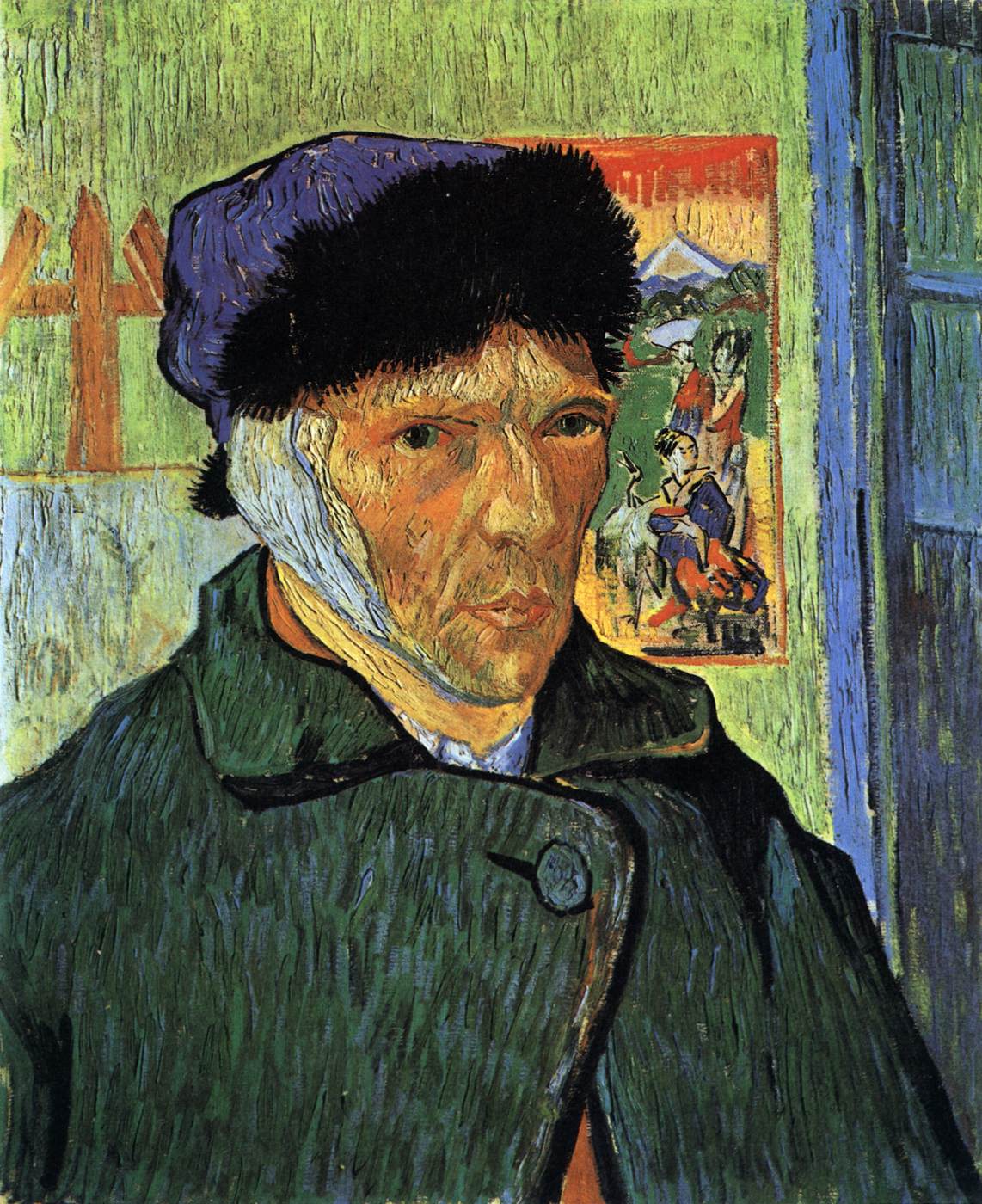
Self portrait, after ear mishap.

Or maybe it’s the sheer prodigality– in every sense.  Van Gogh went full throttle into his art–whole tubes of paint smeared across a canvas, skies that move and refuse to stand still  on a static canvas, and his proclivity for running headlong into his own canvases (on good days and bad, with ear or without).  Full throttle.

Did you know that Van Gogh left school early (out of financial necessity) to work as a dealer in an art gallery?  When that life turned sour, he threw himself into his faith and began to teach and then minister in the Church.  But in time it was clear that he didn’t fit the Church’s mold and he was released from his post.  He turned back to art, but as an artist, not a dealer.  Full throttle, he painted himself into the canvas, he became the creator.  

But, eventually, disaster.  The well told tale is of an unstable artist who died at his own hand, mad and destitute.  But that’s just one narrative, and recent investigations have brought that story into question. . . because, even in death, he won’t stand still.  Prodigals have a way of returning.

And, today, we can celebrate the fact that their art does too.

In the streets of Arles.


How We Eat: Banana Pudding, Banoffee Pie, Songs, and Stretchy Ice Cream

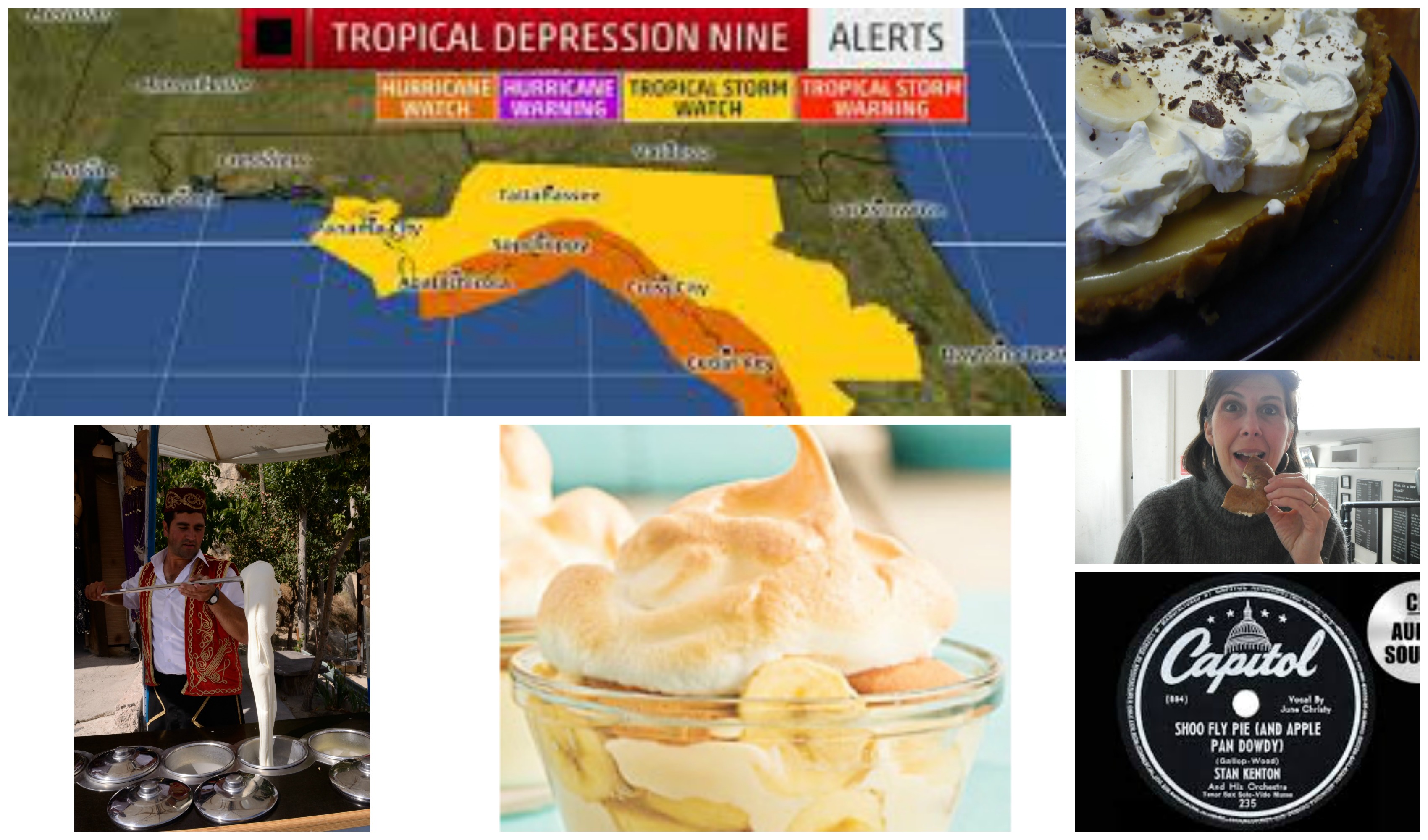
PicMonkey banana pud shoofly

The title is a mouthful:  a delicious, caloric mouthful.  Inspired by a delicious and caloric, if somewhat stressful, week of cakes and puddings at our house.  An actual storm is sitting out in the Gulf, on our doorstep, and making vague threats, while the figurative storm of finding your bearings in a new environment is battering us around quite handily.  Under the circumstances, why not fatten our bodies and spirits for the fight, right?  Cakes and Ale is a fine battle strategy, I say.  Anyhoo, on with the post. . .

http://www.youtube.com/watch?v=iW1jfXAfSXM

When I was young, my mother used to sing a song that would make us giggle and make us hungry at the same time: “Shoofly Pie and Apple Pan Dowdy, make your eyes light up and your tummy say ‘howdy.'”  Silly.  I’ve never had Apple Pan Dowdy, but I can imagine the cobbler-like creation with no problem.  Shoofly Pie is harder to conjure.  Obviously sweet and sticky– a fly magnet (yuck!)– but the closest thing I can picture is a chess pie, and I don’t think that’s exactly right.  Which brings me to stretchy ice cream.  What, you’ll ask, is that?  A Floridian taffy-ice cream hybrid?  An over-cooked custard that makes a chewy ice cream?  No and no.  I’m thinking of Turkish Dondurma– an ice cream made with wild orchid extracts and salep ( a milky Turkish drink containing orchids).

Dondurma doesn’t taste of orchids, it comes in many flavors.  My favorite was banana.

Image from website: http://www.lakshmisharath.com/
Image from wikicommons and website: http://www.lakshmisharath.com/

I only discovered dondurma toward the end of our life in Turkey, which is a shame because it is silky and delicious . . . and stretchy.  That doesn’t really affect the taste, but it makes for a great parlor trick.  Dondurma is often served in a dramatic way, dished out with a paddle and wrapped around your cone, only to be pulled back at the last moment.  The Turks love a laugh and good food, so why not marry the two?

I’ve been thinking about Dondurma lately.  August in Florida will bring out all of your ice cream fantasies, believe me.  But this week, I’m remembering Banana Dondurma while making a traditional Banana Pudding for my children.  A REAL Banana Pudding– no instant pudding and cool whip.  Ugh.  A silky homemade custard is the only way to go, people.

My mother made this Banana Pudding for us growing up, and I’m pretty sure that her mother made it too.  I’m printing the recipe at the end of this post.  It’s simple and satisfying, and I like it best when it’s still a tad warm (but I know people who only like it cold, so this is clearly a matter of personal taste).

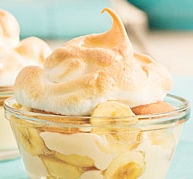
Photo from myrecipes.com--sadly we ate into our pudding too quickly to get a good photo!
Photo from myrecipes.com–sadly we ate into our pudding too quickly to get a good photo!

Like all recipes for BP, this one layers Vanilla Wafers, banana slices, and pudding.  Like all the best recipes for BP, this one features a homemade pudding of milk/cream, eggs, and sugar– with a splash of vanilla tossed in after the pudding thickens.  Believe me, you’ll be licking the mixing spoon after making this one.  (And, as I’m writing this, I’m wondering if I could use this pudding, with banana and wafer bits thrown in to churn up a really delicious–though certainly un-stretchy– ice cream.  I’m going to try this soon and get back to you.)

Banana Pudding is a staple of the American South, a time-tested comfort food, welcome around any pot luck or picnic table.  Why is it Southern?  I have no idea.  It goes well with bourbon?  (There are worse theories.)   If you want a primer on the treat and its history, I’d suggest you read the article posted on the SeriousEats website– an interesting and remarkably in-depth read.  If you’re here for the yummy, not the history, feel free to skip the article, fast forward to my recipe, and judge for yourself.

But not before you consider Banoffee Pie.  It deserves a mention in a travel and culture blog, because what Banana Pudding is to the American South, Banoffee Pie seems to be to Brits.  A perfect comfort food, a sweet banana dessert that pops up everywhere.

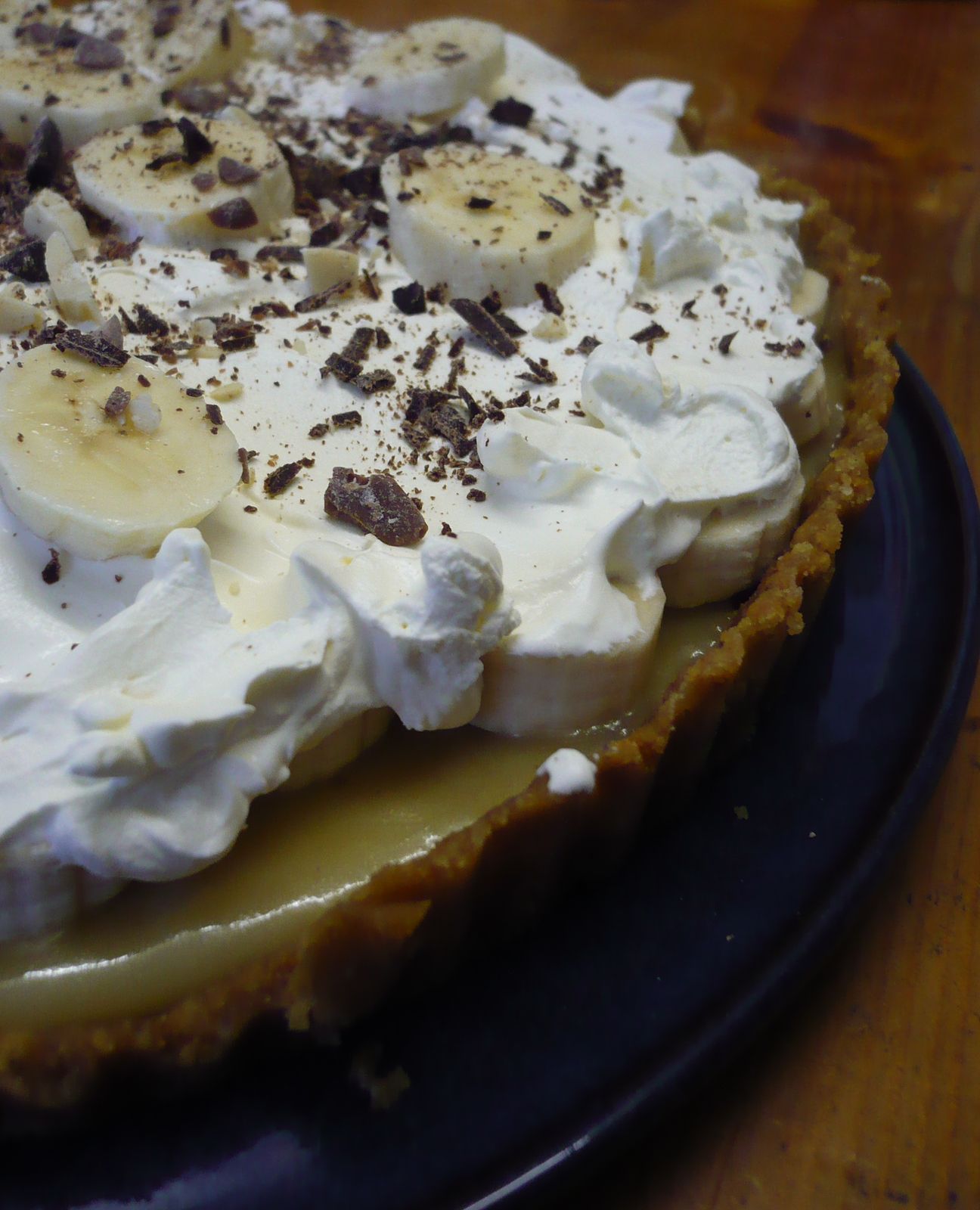
photo from commons.wikimedia.org

“Banoffee” you say?  Yes– bananas, cream, and toffee.  BAN. OFFEE.

Although it’s a British staple, it’s not one of those long-standing English recipes that dates back to the middle ages (think mincemeat pie).  No– bananas weren’t easy to come by before modern times.  Still, you find it in so many homes, on so many menus, and in endless incarnations these days. Nigella Lawson has a great looking Banoffee Cheesecake recipe, as well a Chocolate Banoffee recipe.  There are Banoffee sundaes and cupcakes and pastries.  If you can think up a twist to banoffee pie, it’s out there.

I have nibbled at Banoffee creations, but haven’t perfected my own version, so I’ll encourage you to find your own recipe.  If you already have the perfect recipe, feel free to share it with me!

* * *

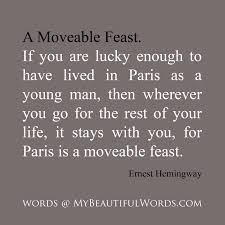
moveable feastI’ll leave you with my pudding recipe and a final thought on comfort food.  On how we eat.  I love sugar, and I love rich puddings, and I love sharing these things with family.  But it’s not just the yumminess, and it’s not just the hospitality, it is the comfort that gets me this week– the ritual of sharing this favorite family recipe. Hemingway spoke of Paris as a moveable feast–a joy and light and influence, a wealth of experiences–that stays with you wherever you go.   Whether or not we have Paris, we all have a storehouse of moveable feasts.

This week, Banana Pudding is my moveable feast.  The world is spinning a bit fast for me, the Gulf is churning a bit violently, but I have my pudding (a tad warm yet) and I have my children with their spoons at the ready . . . and I find that I have a feast of friends around this table — I have my grandmother’s cooking, my mother’s singing, my Turkish ice cream man, and my British bakery, and I sit in the company of these fine things and dig in to my bowl, and I know, with a quiet conviction, that the world will be right soon enough.

*Ba’s BANANA PUDDING

  • For the custard: 1/2 cup sugar, 3 Tablespoons flour, dash of salt, 1 whole egg, 3 egg yolks (save the whites), 2 cups of milk.
  • Cook this in a medium saucepan over a low heat until it thickens.  Then take it off the stove and stir in 1/2 teaspoon of vanilla extract
  • Layer vanilla wafers and banana slices; pour some custard over the top; then repeat these layers.
  • For meringue topping: beat the 3 egg whites, gradually adding up to 1/4 cup of sugar (and 1/4 teaspoon cream of tartar, if you wish).  Bake this until browned (at 400 degrees, or using the broiler).
  • Enjoy!


Throwback Thursday: Van Gogh

Café Terrace at Night

PicMonkcafeterraceatnight

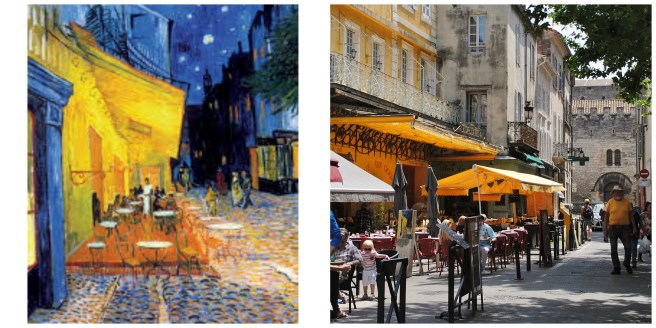
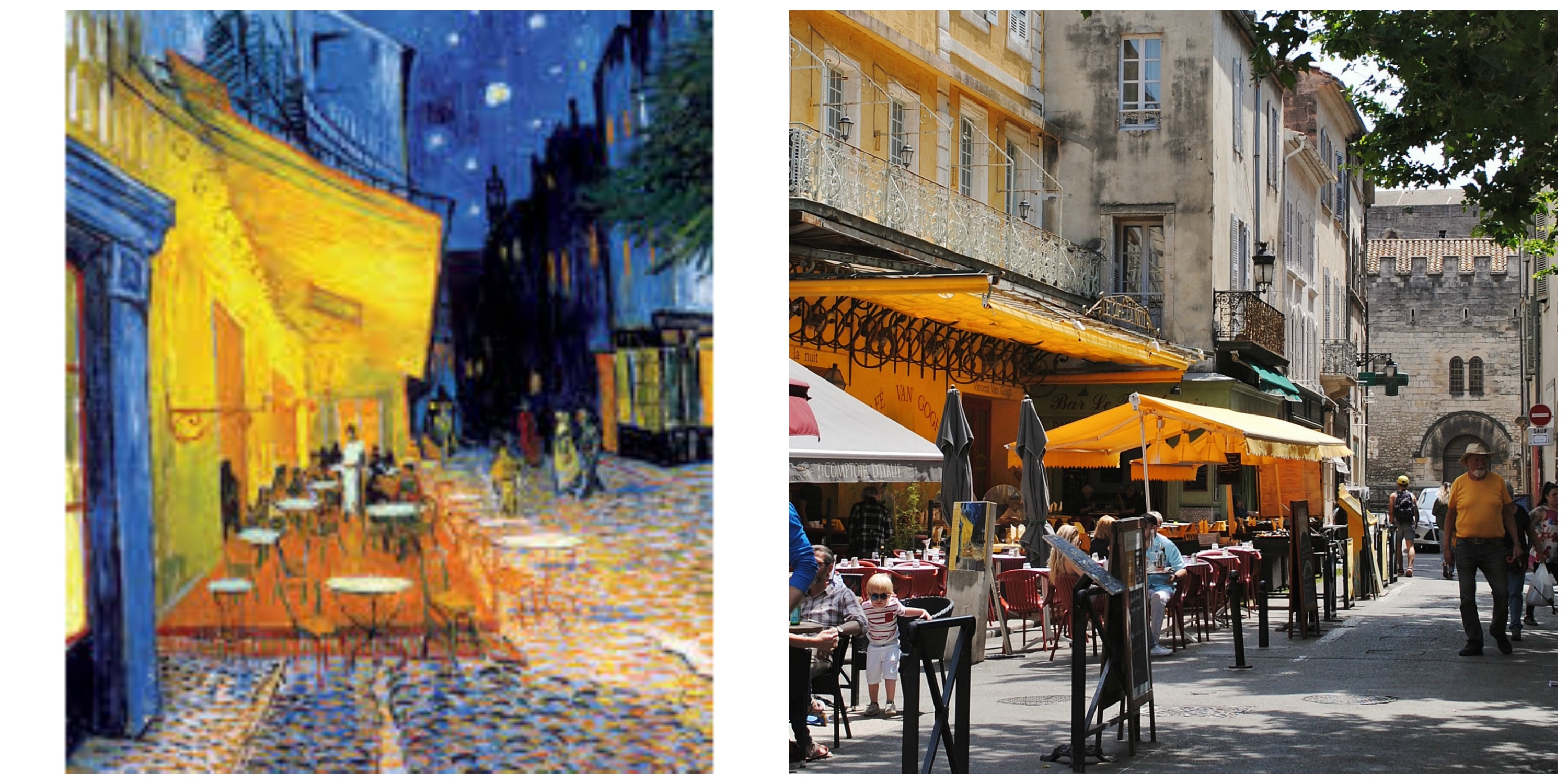
Left: Van Gogh’s Café Terrace at Night (on Place du Forum)  Arles, 1888

Right:  Same spot,  ‘Le Café La Nuit’ on Place du Forum in daylight, Arles, 2016

The spot may be less picturesque on a bright spring morning in 2016, but it’s still vibrant enough to cast its light into the darker streets.  Notice the yellow shirt on the passerby?  In my mind, it’s really a plain white tee that takes the gold cast once he steps within the fabled space of the Café Terrace .  After he strolls on past,  it resumes its ho-hum identity as a plain white tee.  (How could it possibly be otherwise?)

A little Van Gogh magic– it’s powerful stuff.