Lines Were Drawn: Simserhof and La Ligne Maginot


DSC_0393 - Copy


You have to draw a line somewhere, right?  And we’re a funny species…we draw lines everywhere.  But lines, once drawn, just ache to be crossed.  I’m not excusing this conduct, I’m just saying it seems to be a pattern of human behavior, or human misbehavior anyway.

So when you build a massive defensive fortification on your country’s border–though it may be a project of mind-boggling innovation and preparation, though it may seem impenetrable–well, it just seems like pressing your luck to call it The Maginot Line.   You are just begging for trouble.

But, of course, no one had to go begging for trouble in Europe in the late 1930’s.  Trouble sat on your doorstep with a capital T.   And I’m sure all of France slept better at night knowing that  the Maginot Line held its eastern border safe when the Third Reich escalated its rumblings in Germany.  Slept. . . until the rumblings got louder and louder.  Until countries to the east fell: Austria, Czechoslovakia, Poland.  Then the north: Norway, Denmark.  The border:  Belgium.    Until the line did not hold.

For the most part, our local expeditions these first two weeks in Germany have been uncomplicated:  vintage car shows and pastry shops. . . and more pastry shops.  Mindless, sleek, or sugar-and-cream-filled offered a nice counterpoint to the stress of the frantic first two weeks: jet lag, radical re-orientation, frantic house hunting, and a litany of drivers’ tests, briefings, and meetings.  But as life is beginning (just  beginning) to normalize, it seemed time to pull our heads out of their eclair-induced stupors and really SEE something.  And the first something that we really ventured out to see was pretty heavy stuff–perhaps not so much as a statement of gravitas on our part, but just owing to proximity and rainy weather.

We ventured just over the French border to Simserhof, to tour a fabulously intact section of the Maginot Line: a series of  unfathomably huge underground fortifications that were built  to defend the French border from the sort of threat that had manifest itself in the nightmarish realities of World War I.
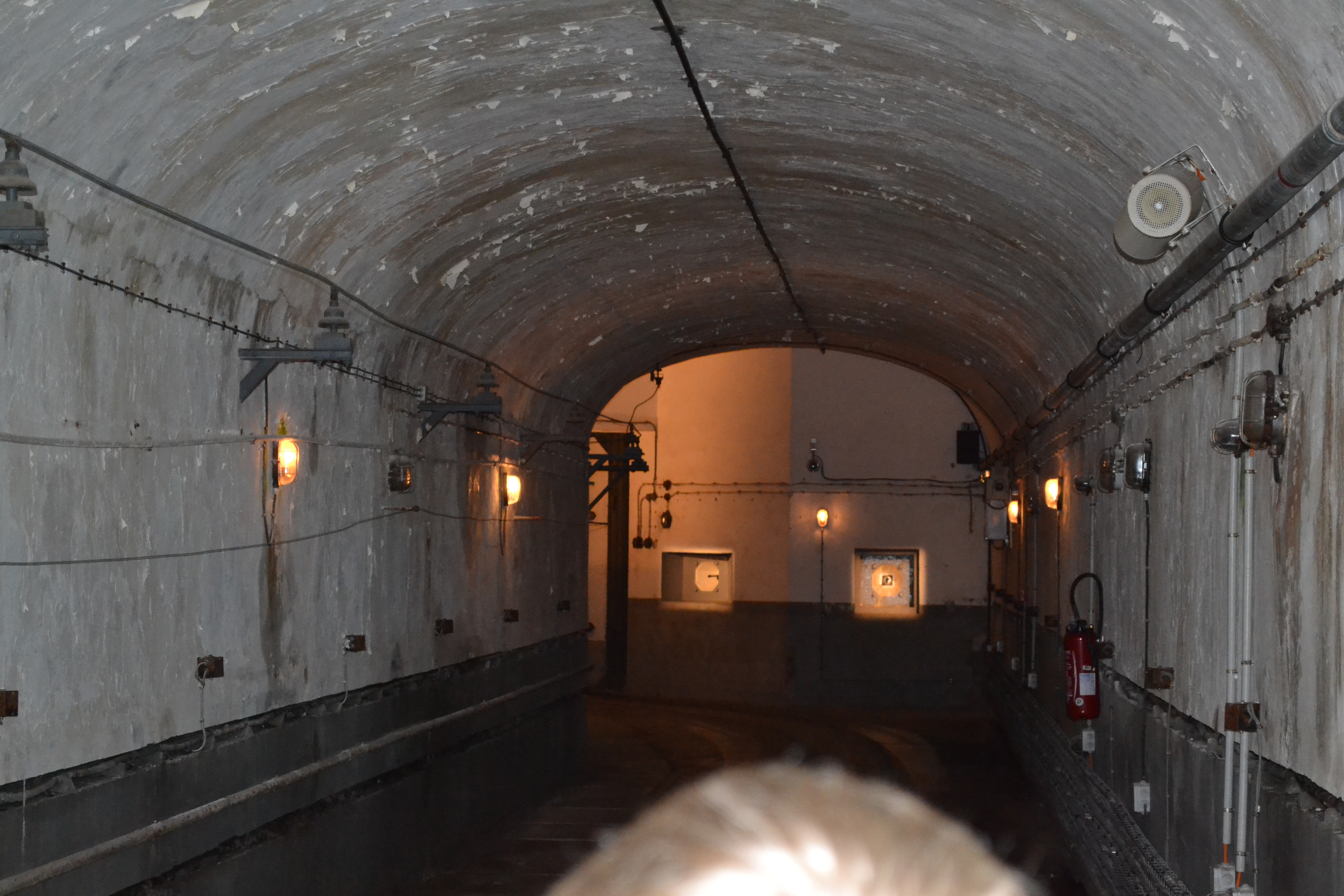
DSC_0395
A tunnel into the living and working areas underground at the Maginot’s Simserhof location.

For all of the brilliance of these fortifications–and they are truly amazing–the battle that arrived at their doors was not the First World War’s long drawn out trench warfare, but some new beast.   Where “the line” was static and uber-hardened, the blitzkrieg was fast, arguably  precise, and offered an element of surprise.  And surprises abounded: many thought the Ardennes Forest of Belgium was impassable to German tanks.  Mistake.  The Ardennes proved passable, and because of the break in Maginot line (it did not run along the border of Belgium), the Germans simply came around the fortifications.

It doesn’t pay to judge: hindsight is always 20/20.  But foresight is harder won.  (It’s true in our national foibles, and it’s true in our individual lives.  Personally, I’m questioning the decision to buy an entire box of eclairs at Cora Market in France–it’s calling to me as I drink my morning latte and just begging to be polished off before lunchtime.  Ouch.)

I wish I had taken more photos inside the facility, as it was fascinating and extravagant— not in it’s lavish interior (the interior was austere) but in the audacity of its scale and hopefulness.  It is like a military base built underground–with weapons and munitions, electrical generators, a “trolley system,” a filtration system for gas attack defense, multiple levels and elevators, chow halls and a modern (for its time) kitchen for officers, a pantry stocked with wine and cheese, bunk rooms, a state-of-the-art infirmary, etc.  It was optimistic:  after the hellacious First World War, this facility contained the hopes and promises of a secure border and a fighting force that could be effective from the shelter of a secure and dry “trench” stocked with coffee and wine, with relatively warm beds, with fresh air to breathe, full bellies, dry limbs, etc.  It was a desirable set up, but flawed.  War is a trickster and a shape shifter, and the Maginot Line was inflexible.

DSC_0390 - CopyI didn’t take more photos because my hands were shoved into my pockets and shaking.  This underground facility is very cold!  Our walking tour lasted maybe an hour, and the chill had plenty of time to seep into my bones.  If one hour of subterannean life and lack of sun can do this to you, what would it be like to be underground for months on end, even without a battle raging above and around you?  Mmm, I shudder just thinking about it.

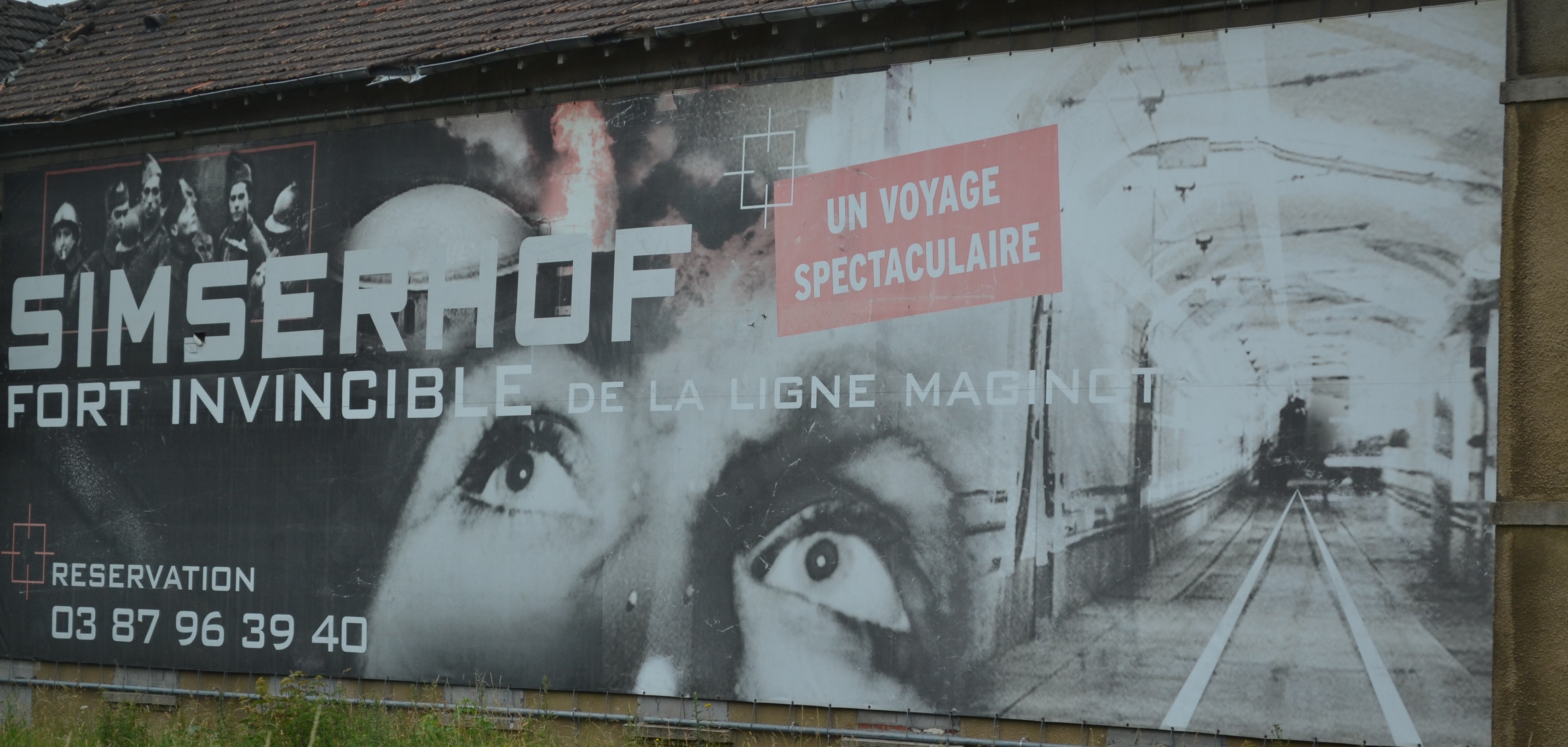
It’s a somber subject, but a fascinating place to visit.  Simserfhof is located in Northeastern France, near Bitche (yes, Bitche)  just over the border with Germany.  Bitche offers it’s own sights to see–most notably its citadel on a hill.  It was too rainy for us to tour the Citadel yesterday, but we drove through the town on our meandering way back home, and were delighted to see the following art above one of the town’s squares.  A little levity was just what we needed as we left the Maginot Line and planned our own attack on the pastry counter of the Cora Market.
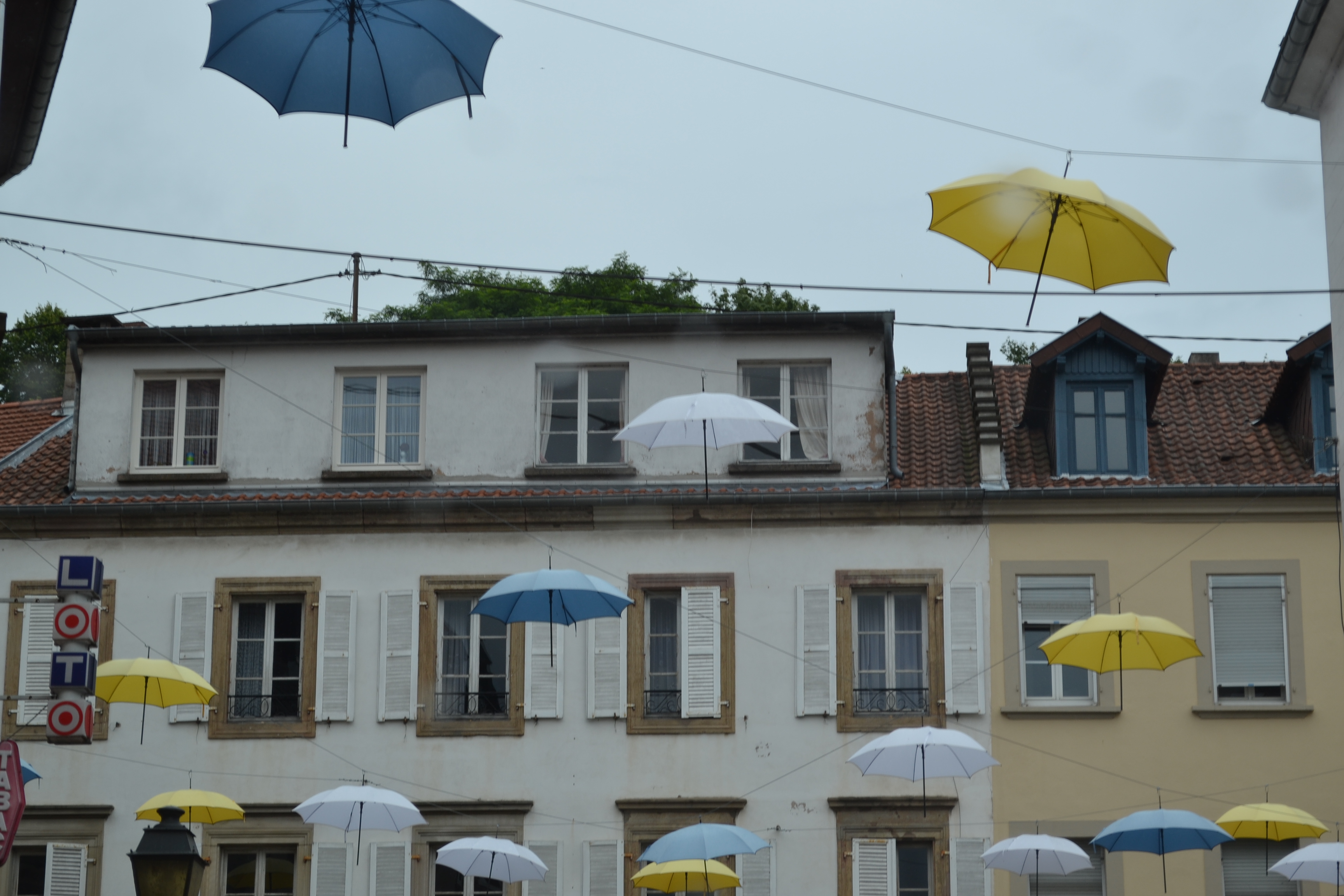
DSC_0408


The Stinking Bishop and the Shop Girl–A British Romance


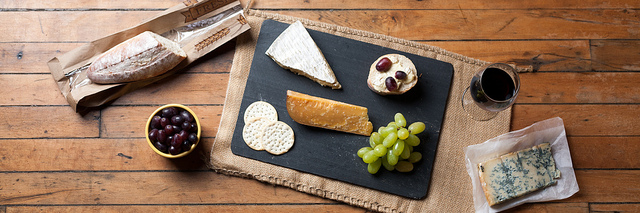
Photo licensed via Creative Commons by Flickr member winestyr

It is a tawdry tale.  A tale of woe.  Of unrequited lust.  Of temptations to be seen but not touched or tasted.

Of cheese.

Of what?

Of cheese.

***

Sometimes stories don’t travel the trajectory we expect.  Oftentimes, in fact.   In this story, the Stinking Bishop is not a sinister church cleric–although that would be the beginning of a great tale.  No, in this case, the Stinking Bishop is simply a British cheese named after a sinister church cleric.  A singular cheese of considerable stench.

Let me preface this story by saying that I am no fan of stinky cheese. On a visit with us in England, my father-in-law once mused, “How can something that smells so bad taste so good?”  My answer: it can’t!   Nature throws out certain warning signs that we shouldn’t ignore:  the glaring red hourglass on the belly of a Black Widow Spider, the earth-shaking roar of an angry lion. These are nature’s way of telling us to run–run fast and run far– we are in mortal danger!  And then there is the smell of very stinky cheese–same principle, folks.  Why would you want to eat the stuff?  But, I digress.  I did have a story to tell.

My husband likes a stinky cheese.  If it smells rotten and has veins of mold (blue, black, green–he has no prejudice), then he’s in!  My basic policy is that any mouth that eats that stuff will not be allowed near my mouth for 24 hours.  Sometimes this policy keeps him out of trouble, but other times the cheese is too powerful a mistress.

And so, when he heard of Stinking Bishop–the ultimate bombshell, the Marilyn Monroe of stinky cheeses–he was, sight unseen, smitten.  But the stuff turned out to be elusive.  To the point that he nearly believed it was a fable, a mirage, a Fata Morgana.

He had nearly given up his quest for the fabled cheese, when we found ourselves at Castle Howard in Yorkshire, England.  (Read this aloud in a dramatic voice, and channel all the best scenes from Monty Python and The Holy Grail, and you’ll understand the great and rediculous heart swell that overtook my husband as the following events unfolded.)

After a day spent touring the estate and playing with our children in the gardens,  we visited the shop–a sort of European farm market.  And there it was in the case of cheeses, shining as if an aura surrounded it and emitting a sound only perceptible to the true of heart–a siren song to draw in weary travelers.  Stinking Bishop cheese.

STINKING BISHOP CHEESE read the sign before the humble wheel.  You wouldn’t have known you were in the presence of greatness if not for that sign–it was like that scene in Indiana Jones where he has to pick the true Holy Grail from a room full of faux grails.  THE Grail is humble, unassuming.  As was my husband’s beloved cheese.  Or, at least, it looked that way.

As James approached the counter, the shop girl was handing samples of cheeses to prospective buyers.  I think James was drooling a little.  When his time came, he said, “I’d like to sample the Stinking Bishop, please.”   The shop girl recoiled from his advances.  Then she leaned over the counter and half-whispered, “Sir, we don’t open that cheese in the store.”   My husband’s whole countenance dropped.

He looked at me.  “No,” I said.  “But,” he said.  “No,” I said.  Then I leaned, as the shop girl had done a moment earlier, and said “We can’t carry that cheese in the car.”

Katie playing dress up at Castle Howard. AKA, "Someone call the medic, they are opening the cheese!"
“Katie playing dress up at Castle Howard.” Or, as I’ve come to think of it, “Someone call the medic, they are opening the cheese!”

He understood that I was right.  There are some things that are too powerful to be schlepped around in the profane world.  And WAY too powerful to sit, enclosed in the tight space of  a warm car.

The day did come when he was able to possess the object of his desire.  I can’t tell you much about that moment.  I was not in the room at the time.  I was, purposefully, not in the room at the time.  What’s more, we simply don’t speak of it.  It’s his private moment: an obsession that I can’t understand, but a conquest that I would not want to sully.  Some things are just too powerful.


Update to The Art of Losing

One house we "lost."
One house we “lost.” Ripon, England

Saying goodbye to our home, our family, our continent—it’s been tough.  Right, right, we’ve been really excited about moving to Germany–and it’s great to be here having adventures.  GREAT.   Still, these things are bittersweet:  bitter and sweet, not one or the other.  My daughter’s heart is still breaking because she misses her friends back home.   My son aches for a familiar friend to skateboard with in front of our house.  And  I’m still mourning the hope of having Thanksgiving with family, of playing golf with my gang, of walking back into my classroom for fall semester at AUM.  The list goes on for each of us.

But these lists aren’t ours alone, and they don’t apply only to us itinerant types.   You can live in the same state all your life and still experience moments of overwhelming loss:  when you walk into a room full of laughing relatives and expect to see your uncle, the consummate storyteller, sitting in the center of the laughter (but he passed away last year and his seat is empty); when you step out into a balmy southern evening and hear the cicadas and tree frogs and have an overwhelming sense that you’ve just stepped out of your grandmother’s house, headed to the backyard with a glass of sweet tea in hand (but she passed away 29 years ago);  or even when a Violent Femmes song at high decibel puts you right back into a moshpit of a party with your high school and college friends (but you are driving up I-85 with your kids in the back of a station wagon).  Memory is a sticky substance–thank God.  And I think that, as much as it sticks to us, we stick to  it also.

I’ve been mulling this over all morning after being hit by the sting of a lost “momento” of my life story.  It goes like this:   Yesterday, we picked up our car from a port on the North Sea.  We’d shipped it from the States about two months ago.  (Despite paying a hefty–h-e-f-t-y– sum to send it over the Atlantic and through customs, it seems that the shipper inflated a small raft underneath the chassis and paddled it over the ocean himself.  This is the only explanation I can offer for the insane timeline.  But back to my story–)  I had the car inspected before getting German plates put on this morning, and it passed with the stipulation that I scrape the dealer’s decal, indicating a city in North Carolina, off of the back of the car.  They had their reasons–logical enough, if uninspiring–but my heart sank a little as I scraped away.

I am a Carolina girl.  I may look like a vagabond to you, with a crazy long list of places I’ve called home in recent years: Chicago, DC, Connecticut, Texas, Georgia, Alabama, England, Turkey, Germany.  Each of those places has left an indelible mark.  I wouldn’t want to lose any of them, but especially not my roots in North Carolina.

However,  I lose a little bit of each of them in unexpected moments–like bits of produce that spill from my cart as I bump along a country road, I shed bits here and there–and I hate that.  So this morning, I obediently scraped the North Carolina decal from the back hatch of my wagon, mourning that badge of “who I am” that I’d been carrying around for over a decade.  I am still a Carolina girl, but I’m no longer emblazoned on the highway–that shouldn’t sting much, but it does.  Like everyone I’ve ever known, I like to hold tight to who I am and what (and whom) I’ve loved.  And the artifacts of life are dear to me for that reason.   But like everyone I’ve ever known, I find life prying little bits of this away from me.

As a postscript, I offer up the words of Elizabeth Bishop’s  beautiful poem about loss–in all of its incarnations, big and small.  She said it so much better than I can, so I’ll let her words stand:

One Art

BY ELIZABETH BISHOP

The art of losing isn’t hard to master;

so many things seem filled with the intent

to be lost that their loss is no disaster.

Lose something every day. Accept the fluster

of lost door keys, the hour badly spent.

The art of losing isn’t hard to master.

Then practice losing farther, losing faster:

places, and names, and where it was you meant

to travel. None of these will bring disaster.

I lost my mother’s watch. And look! my last, or

next-to-last, of three loved houses went.

The art of losing isn’t hard to master.

I lost two cities, lovely ones. And, vaster,

some realms I owned, two rivers, a continent.

I miss them, but it wasn’t a disaster.

—Even losing you (the joking voice, a gesture

I love) I shan’t have lied. It’s evident

the art of losing’s not too hard to master

though it may look like (Write it!) like disaster.

Boxing Up My Life

DSC_0011 - Copy

My material things don’t equate my life–let me just say that up front.

And yet.

I’m a magpie.   I collect threads and scraps as I move along, and they pad my nest.  No, that’s not exactly it.  They become the fabric of my nest.   The baubles I collect as I keep wandering represent my life. And it’s hard to watch them all be packed up, some to load onto a slow boat to Germany and some to sit in storage for a couple of years.  So many of my things feel like old friends, like artifacts of adventurous times, not like run of the mill stuff at all.

And, yes, in the interest of full disclosure, I have too much “stuff” too.  I’m not proud that among the boxes being packed up in my house there are “As Seen on TV” products, old DVD’s and VHS tapes of bad sitcoms, some dog figurines…well, it just gets ugly.  But let’s focus on the beauty here:

There’s the portrait of Teak, the first dog my husband and I owned–so beautiful and so smart.  He was the beginning of a small menagerie of children, dogs, and goldfish who share our life.

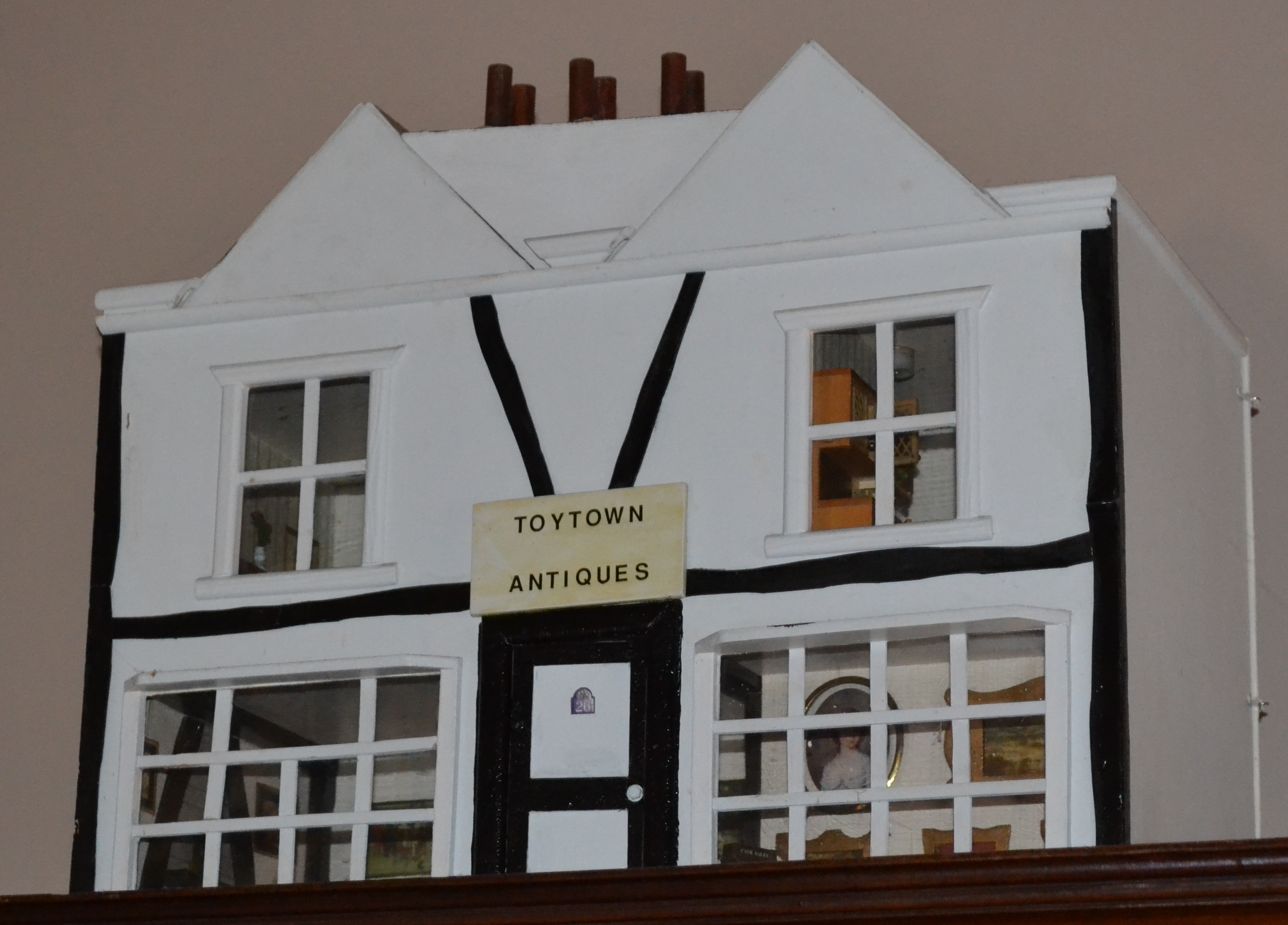
There’s the old dollhouse from England, bought at auction.  It’s a Tudor, half-timber design, handmade, and sporting a “Toy Town Antiques” sign over the door  and a little antique shop in the front room, visible through the window.

There’s the 300 year old walnut chest that may or may not house a ghost.  (We call her Emily.)

The church pew from the Ripon Cathedral in our old hometown of Ripon,  England  (legitimately bought, not carried out of the cathedral–thanks for asking).  It is quite beautiful, but impossible to look at without imagining the people who were there before you.  Brides and widows.  Carolers and clerics.  Young, old, rich, poor, inspired, and downtrodden.  A microcosm of life on one short bench.

There’s the  old pocket Bible from WWII that bears King George’s stamp and message to soldiers in the front cover, and is partially  hollowed out in the middle so the owner could hold cigarettes or pass notes.  It came from the estate of a former British soldier; he was a POW in the Pacific theater.

The Turkish carpet we bought from a man affectionately (?) known as “the one-armed bandit” in Kizkalesi, Turkiye.  He lived in a coastal town not too far from where we lived and knew our car the minute we drove into town for the weekend.  He’d flag us down, bring us into his home, close the curtains, and then pull out his stash of carpets, jewelry, and antiquities for sale.   All a little shady, but in a seductively  high intrigue way.  We felt like James Bond in Istanbul, wheeling and dealing.    And, yes, he  had just one arm. (No doubt, there’s an interesting back story there.)

The list goes on.  And on.  And on.

Each item is its own story–some love stories, some comedies, some tragedies, some mysteries.  Inanimate objects?  No way.

Some of it is just stuff.  But so much of it runs deeper than that.  The artifacts of a life lived and loved.  Who could possibly fit that into a box?

DSC_0259
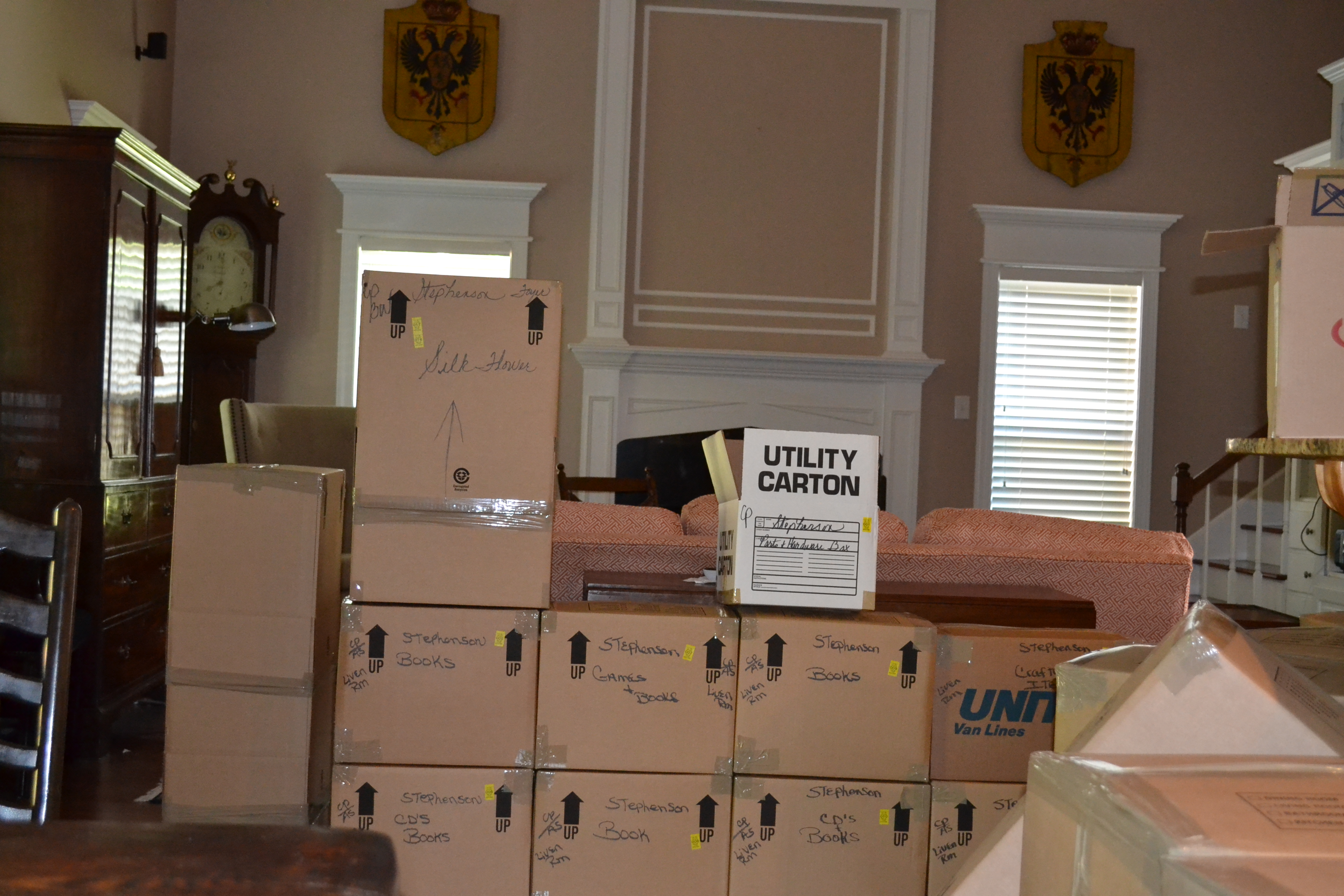
The boxing has begun.

And now for something completely different. . .

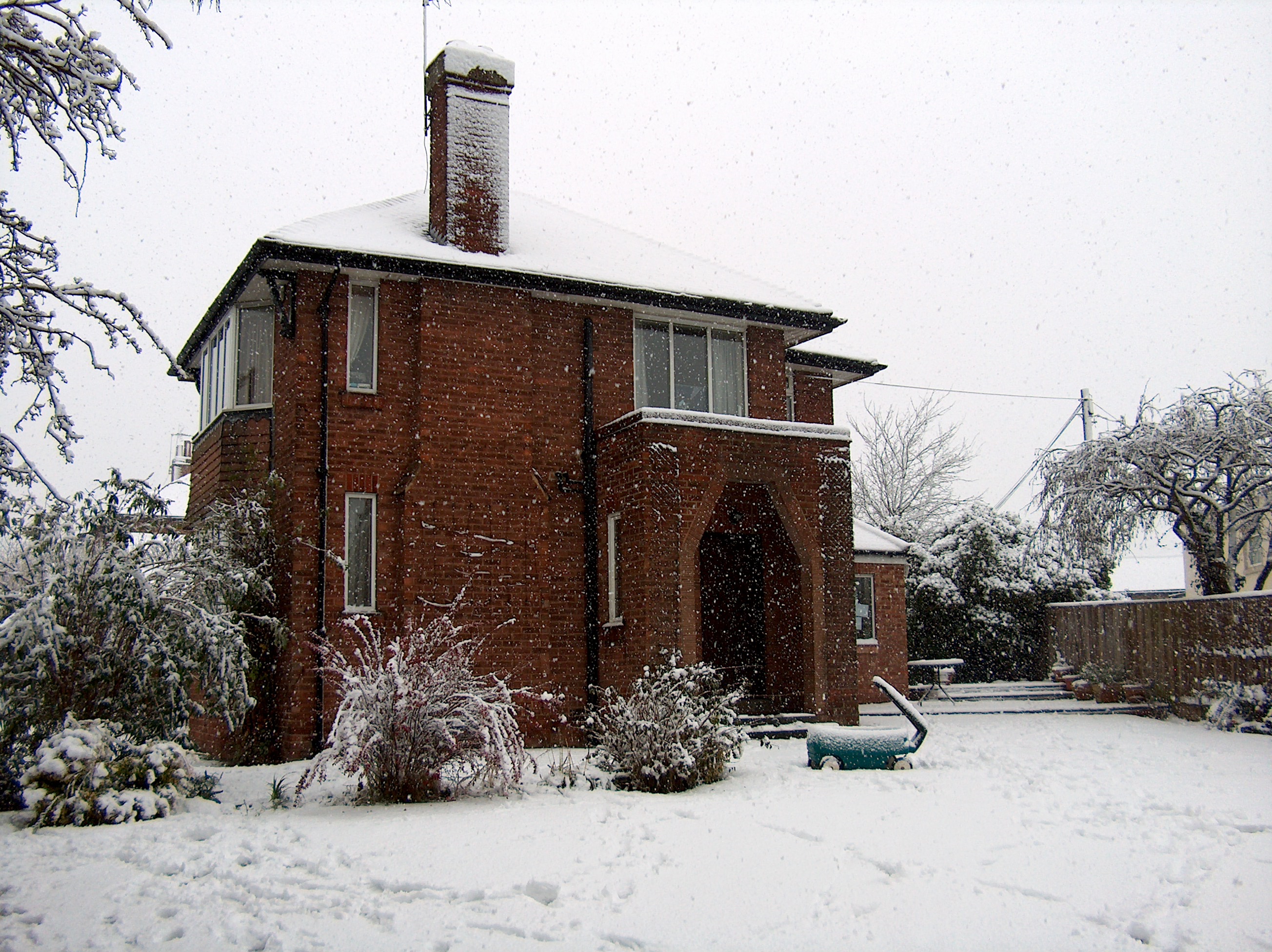
Snow in Ripon, England. Winter of 2009.

I should have seen it coming, this business of pulling up stakes and moving overseas again. All the signs were there. And I was no novice.

But I didn’t.

Back at Christmas, I told my sister that I thought something was coming on. I felt a re-invention, a sea change, just on the horizon, but I couldn’t pin down just what it was going to be about. A midlife crisis, I assumed. (At 47, that’s what you always assume.)

Scroll out by a few weeks, and I would find myself in the kitchen of my Montgomery, Alabama home, drinking coffee and looking out the window at snowfall. Yes, SNOWFALL. In Alabama. THAT, my friends, is a seismic event. And here’s the thing about seismic events: sometimes they are the main show, sometimes they are the aftershock, and sometimes they are the foreshock. The rumblings of something bigger to come.

Silly me, I treated this snow as an aftershock. I got nostalgic for the 4 years we’d spent living in Yorkshire, England–the cold, wet, and absolutely glorious years. Since moving back stateside, we’d been in the Deep South–just as wet as England (not usually rainy, but so muggy that you could wring your shirt out and collect a trough of water most summer days), but never, NO NEVER, snowy. Yet, here I was. Drinking coffee and watching downy flakes fall. Ah, nostalgia.

Scroll out by a few weeks again. My husband has just returned from a two week business trip to Vietnam and Cambodia. Home 36 hours. Sitting across the breakfast table over still-warm coffee. And comes the shock. Not the vague rumblings of something at a distance. The main event. “I got an email before you woke up this morning.” I sip my coffee and turn a sleepy Sunday morning eye his way. “We’re moving to Germany.” I choke on my coffee, splutter, and mutter, “What?” I don’t remember exactly the conversation that ensued, except (and this I’m not proud of) a threat that if this was his idea of a joke, bad things–seriously, seriously bad things–would come his way.

Suddenly it all made sense. The sea change. The rumblings of something on the horizon. The re-invention, the tough changes, the big adventure–the whole enchilada, man.

So, now, the hard part begins. Tying up the loose ends of our life here. Packing up our worldly goods. Figuring out the logistics of an overseas move. Comforting our kids, who are leaving a great life they know and love. Moves are hard; hard and sharp edged. But I keep putting my ear to the ground and hearing those rumblings of something out there, just a few short weeks away now. Something big and astonishing. Another chapter in our lives as expats. New travels, new customs, new eyes to see a new world.

I’ll send you postcards from the road.