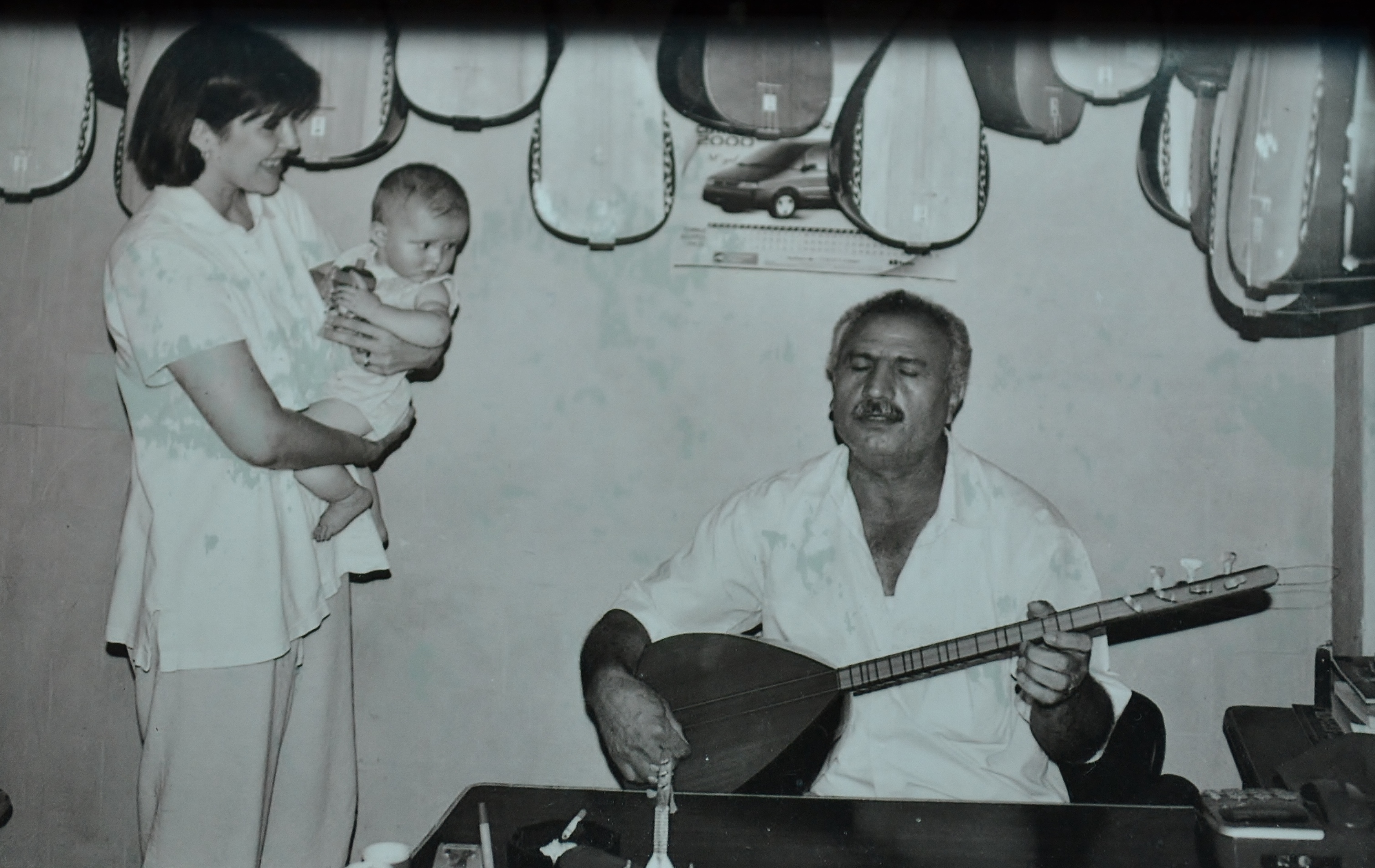
14 years ago, baby and me. This kind man is playing his Turkish Saz for us.
The year is 2000. The day is hotter than Hades in downtown Adana, Turkiye. . .but just when we think we will melt into the dust and sand, never to be seen again, we meet up with a very cool man and his storeful of Saz. (Sazes? Sazi? Sazzzzzs? What would the plural be?)
He serenandes us and gives us a cassette tape of his songs to take with us so that we can remember him after we get back on an airplane and return to our life in the States. Which we will do just a few weeks later.
Fourteen years have passed, and my daughter won’t remember this moment. . . but I do. So vividly that it still cools me on a hot day and reminds me what it felt like to hold her as a tiny child in my arms.
As the French say, le pain is mightier than the sword.
Okay, so they don’t say that, but somebody should, because:
Number one — YUM
Number two— You catch more flies with honeybuns
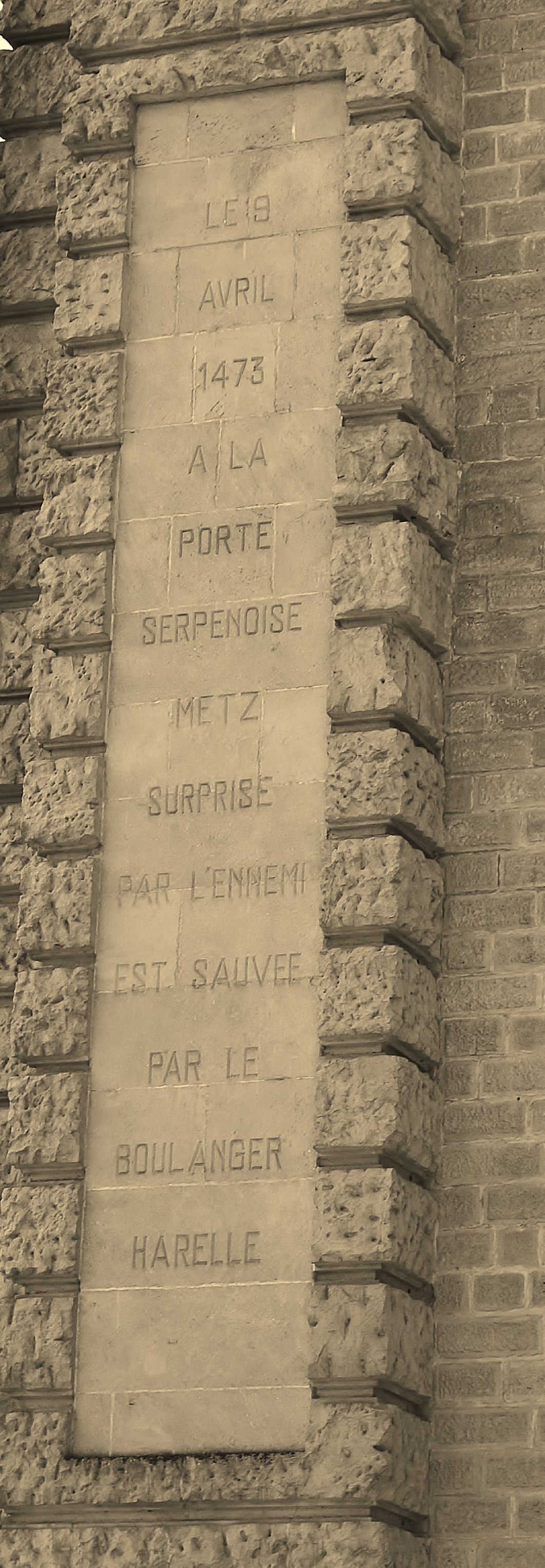
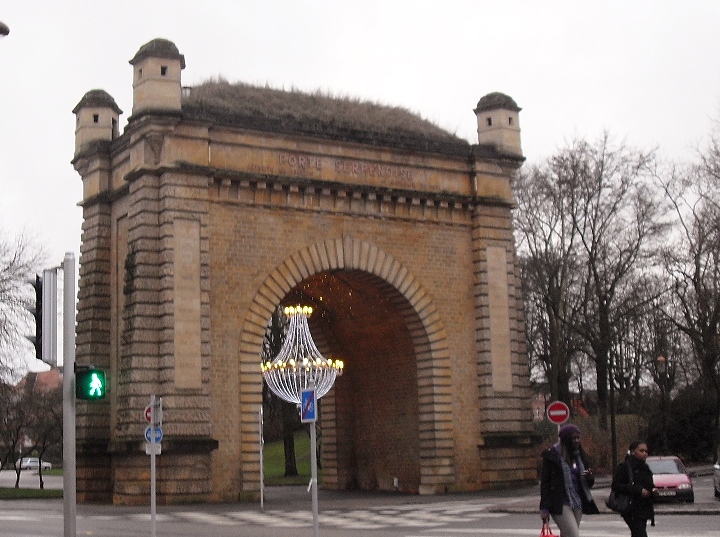
and Number three— There is historical proof that it’s true. In Metz, France, there is a gate in the Imperial Quarter that proves the point. Down the side of the gate (the Porte Serpenoise), there is a column commemorating an heroic event on April 9, 1473– “Surprised by the enemy, Saved by the baker Harelle.”
Now that’s history you can sink your teeth into!
Porte Serpenoise, from Wikipedia
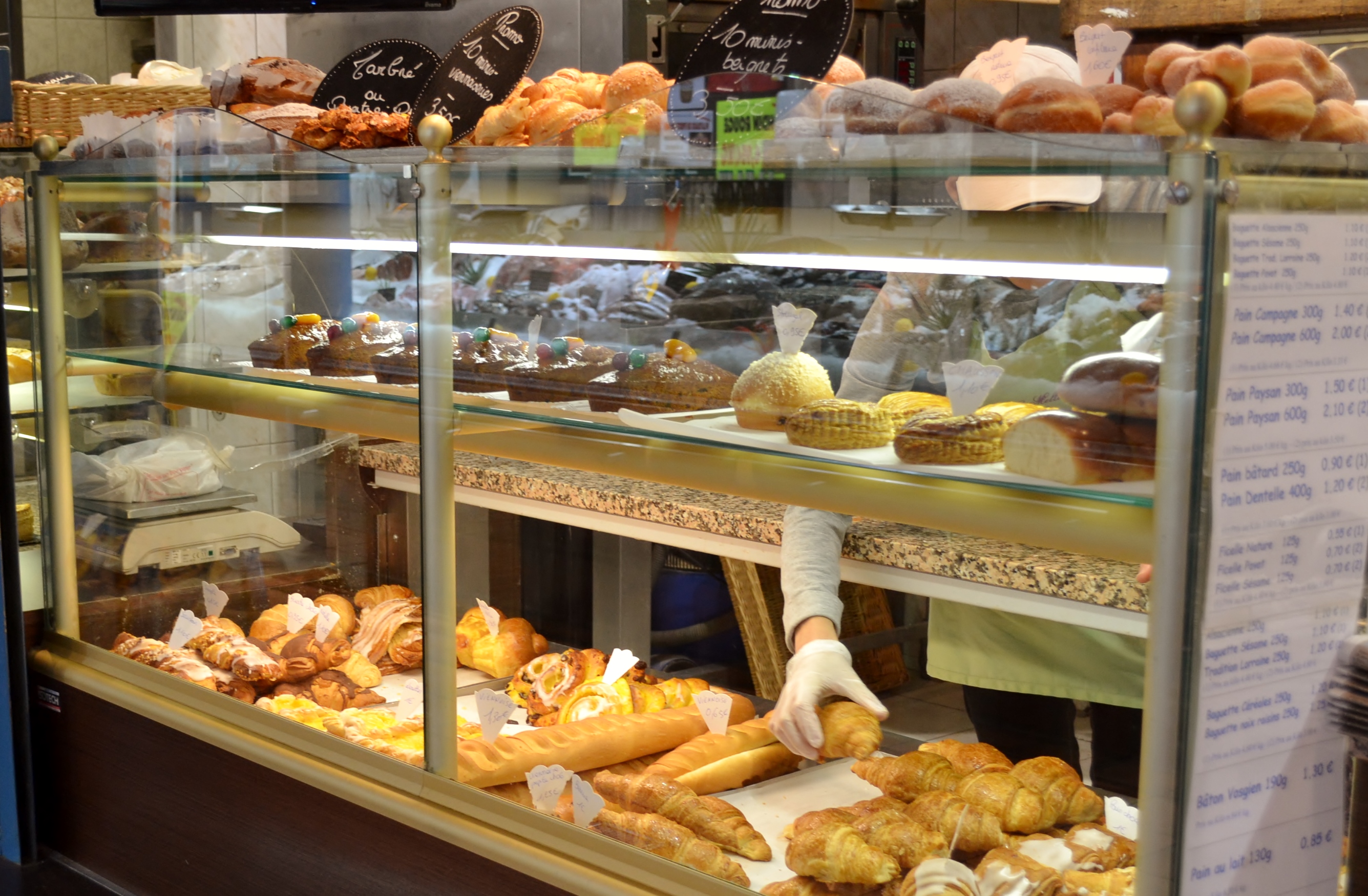
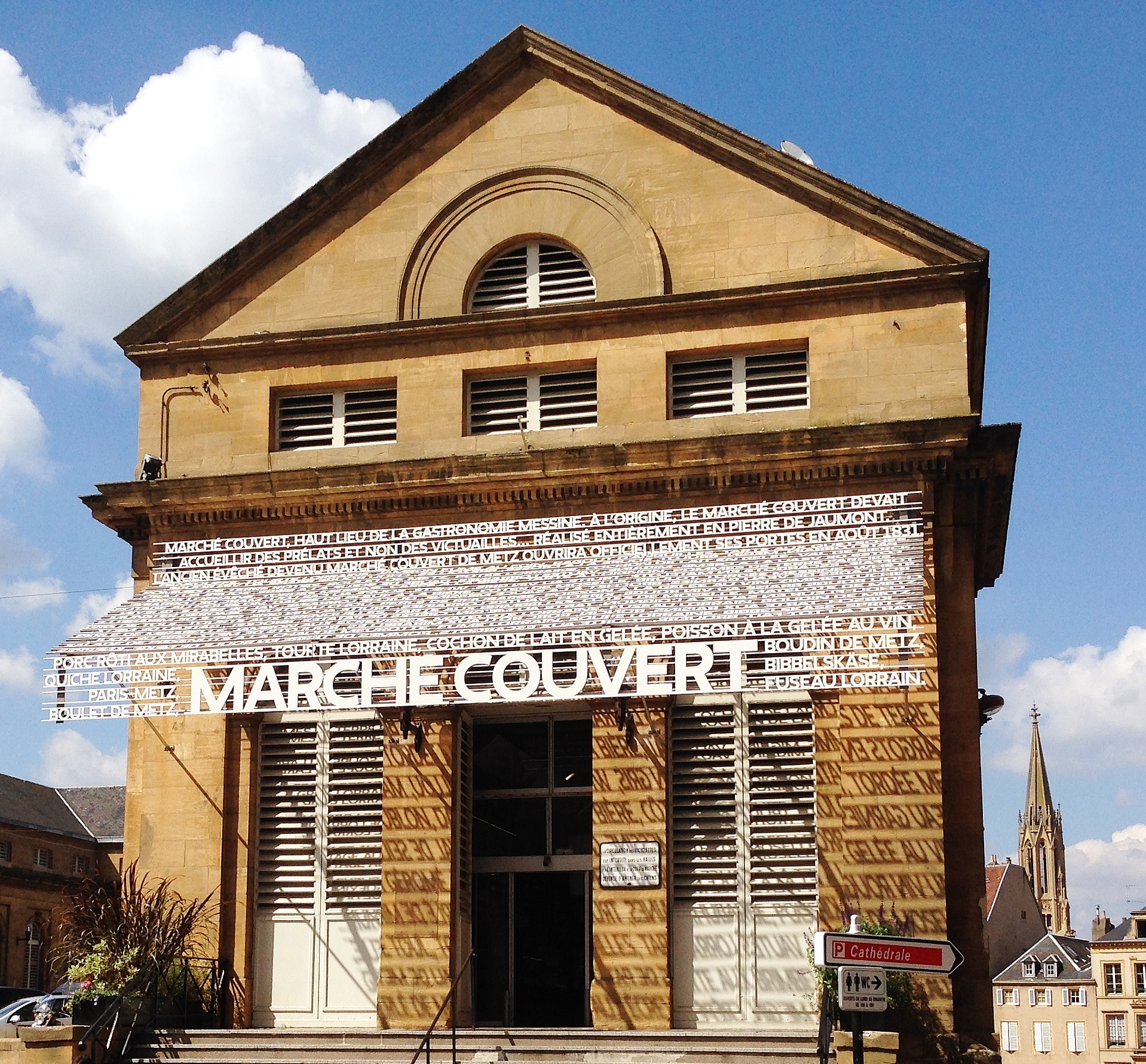
The fabulous Marche Couvert in Metz.
If you visit Metz, swing by the Porte Serpenoise. Then visit the incredible cathedral, and stop in at the Marche Couvert (the covered market)– it’s a great place to eat lunch; pick up fresh meats, cheeses, or produce; or nibble at the bakeries and pay tribute to the heroic baker Harelle.
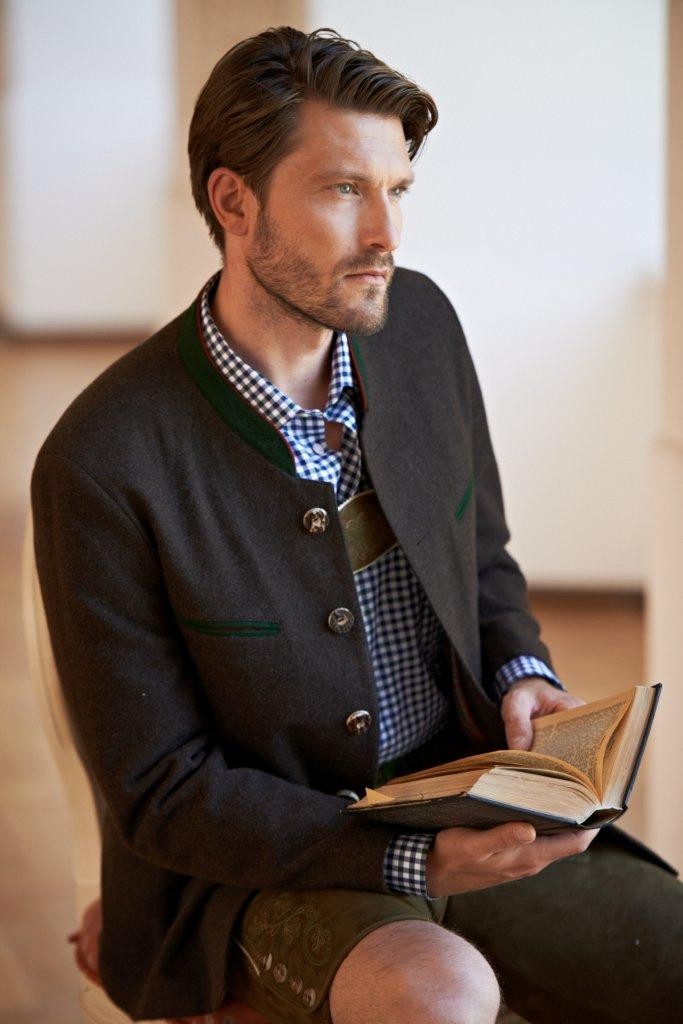
Go ahead. . .I know you want to laugh, to sneer, or to feel yourself superior to that poor sod who’s had a lapse of judgment (or an outrageous amount of beer) and decided to put on lederhosen. The ill-conceived costume of Oktoberfest.
Well, idiot that I am, I LOVE lederhosen! So far, I’ve resisted the urge to buy any dirndl or lederhosen for myself or my husband…actually, I’ve resisted with the gentle coaching (scolding?) of family and friends. “What are you thinking?” “You’d really wear THAT?” The ever popular, “BAAAAAD idea.” (But the inner voice that says, “You know, your cleavage would look awesome!” keeps my heart in the game.)
And, now that Oktoberfest is upon us, it’s open season for leaderhosen in Germany.
So what are lederhosen and dirndl and when/why/how did they become traditional? You’ve always wondered, haven’t you? Just been waiting and hoping that someone would bring you the story. Well, wait no more–I’m your girl.
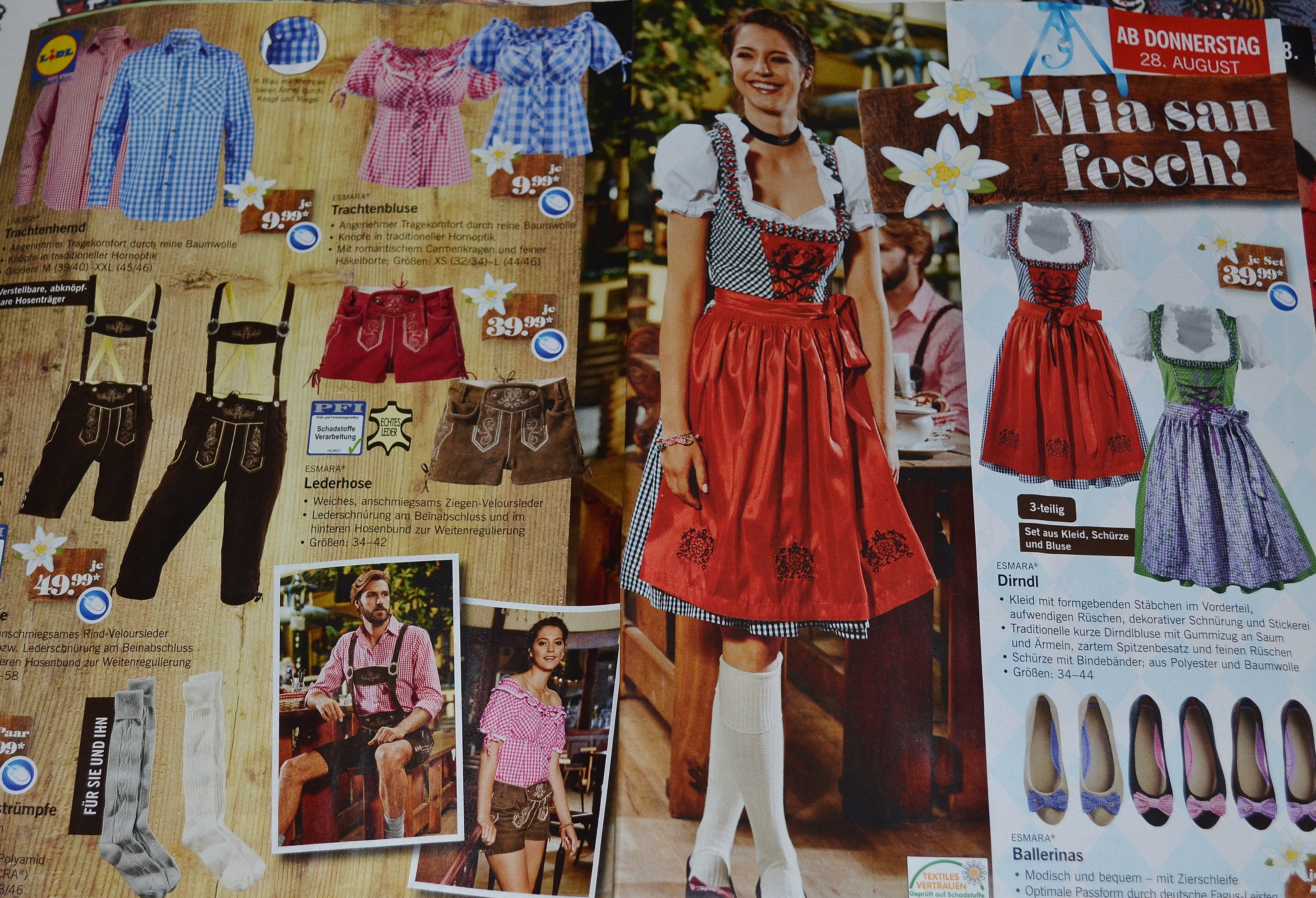
Some outlet Lederhosen from Lidl
Here’s my five cent version of the history of lederhosen:
Lederhosen (for men) and Dirndl (for women) are both called Tracht. “Tracht” derives from the word “tragen” which means “to wear.” Very practical origin, right? Well, that gives you a hint about the clothing’s past.
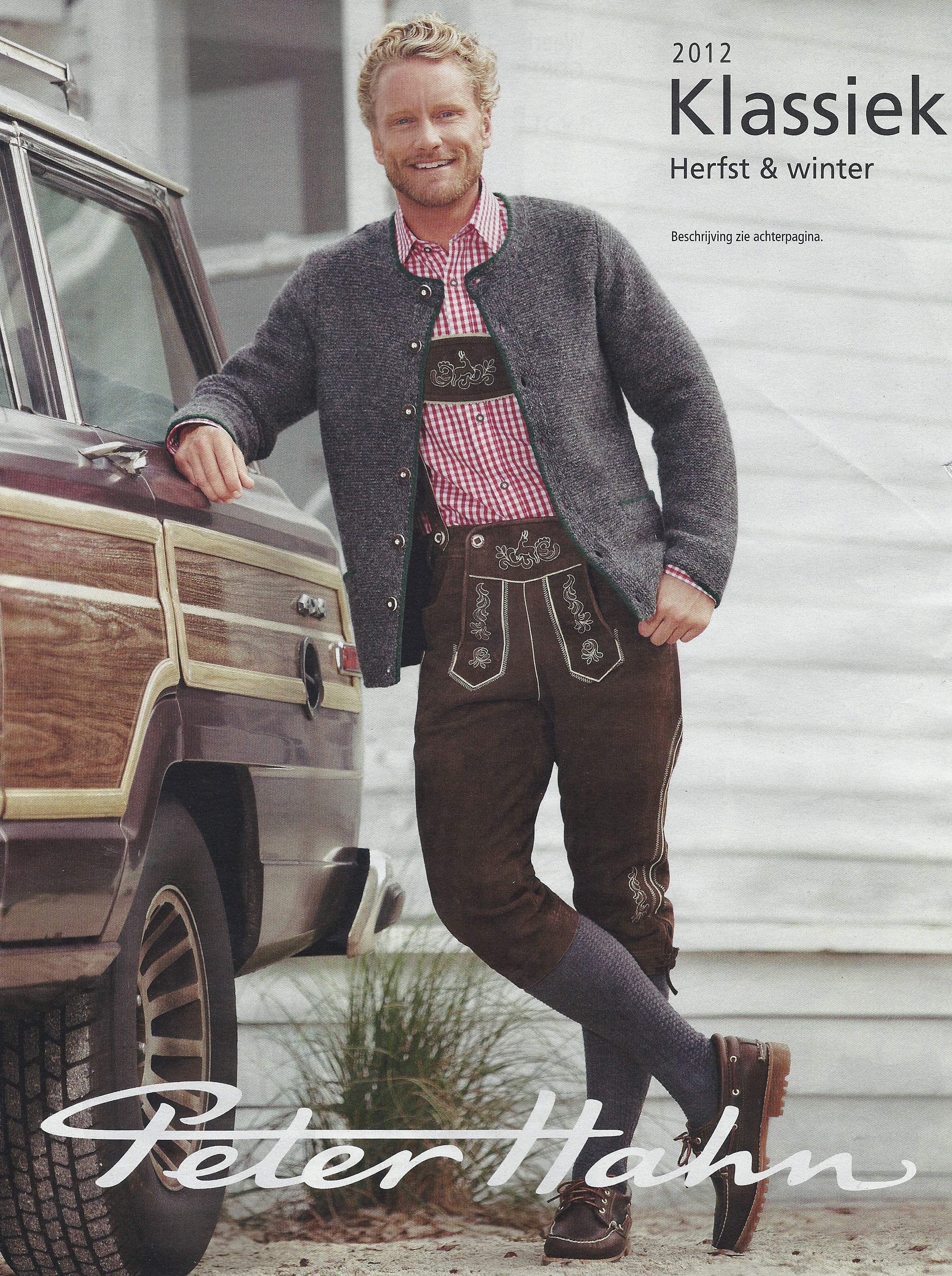
A photo of Bavarian Trachten from Pintrest
Tracht originated in the southern area of Germany and Austria. This sort of clothing (especially the leather pants) was associated with the working class/peasant community, and it seems to have grown out of 18th century traditional clothing. It was, above all else, very sturdy and practical garb–both for working and hunting. It’s possible that this clothing, most often associated with Bavaria, was also influenced by French fashion. Whether or not that’s true, it did take a “high brow” turn when it’s popularity rose and it became not just working clothing but fine, festival clothing, sometimes richly decorated and embroidered. (But, not to worry, it can be had on any budget. Mass produced Trachten can be found at discount stores, but some specialty stores sell very expensive, and very beautiful, outfits.)
Of course, the female version of Tracht, the Dirndl, isn’t characterized by leather pants. It comes from the 18th century peasant’s or maid’s dress: it has a blouse, a bodice, a skirt, and an apron. Winter dirndl would, obviously, have been heavier, and wouldn’t have featured the same (summer weight) tailored bodice and plunging neckline that has made St. Pauli Girl beer so famous in the USA!
I’ve read that some villages produce a regional Tracht that locals like to wear on festival days. It sounds like Tracht is to Germans what Tartan is to the Scots: a sign of cultural and regional (or clan) pride, as well as a festival costume. And that makes me like it even more! And no wonder that it may look silly to outsiders–anything that goes deep into your own personal, cultural psyche will ellude the grasp of the universal imagination. Roots that go deep don’t spread wide.
Despite my love of cultural costume, my husband is unlikely to wear a kilt or leather knee-britches anytime soon. It’s just too hard of a sell. I’m holding out some hope–based only on the fact that he’s recently taken to drinking good Scotch Whiskey. . . so some sort of cultural roots are beginning to grow. Maybe a small sartorial concession will come. . . A Tweed jacket in his future? A Bavarian wool jacket or a German gingham shirt? ( A spirited Scot or a barmy Bavarian? I’m not sure he’ll like these options–he’s more of a fanatical francophile.)
Well, regardless of who wins the wardrobe wars at my house, I love lederhosen! And, anyway, if it must be left to the Germans to carry that cultural torch themselves. . . I suppose that seems fitting.
Recently, another blogger I follow took note of the Germans’ penchant for pork. Took issue with it, really. And, while I think taking aim at another cultures’ tastebuds is a thorny undertaking at best, I do feel a little sympathy for other people who are swine-averse in Germany. There’s no easy way to steer clear of the pig when in the Palatinate.
And I should know. I am not a sausage eater. I don’t mind the aroma, the spice, the bite of garlic or pepper–those are all fabulous…seductive, even.
Not sure I like the idea of sausage, but sausage is not really one of those things anyone should think too closely about, so that’s not the problem.
I’m just allergic to pork. So I avoid it. No biggie. Up to this point in my life, there have always been lots of options. In the South, I go to BBQ joints and order shredded chicken or beef. I take a pass on bologna, and I feel no great loss. However, in the land of beer and brats, you find yourself adrift on a sea of sausage… absolutely schwimming in schwine.
The boys in my family think this is fabulous, and I won’t contradict them. But it does make for some awkward moments for me. I feel funny always asking what’s in a dish that I don’t recognize–it feels a little high maintenance. And, since my German is very rudimentary, I often don’t understand the answers I get back. So there’s a lot of just steering clear–taking the widest path around anything that might possibly contain pork.
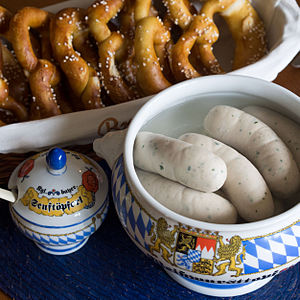
en.wikipedia.org, weisswurst
Which knocks out a lot of things in Germany. (I thought my Ritter chocolate bar smelled slightly bacony the other day…but I ate it anyway, and I’m still standing.)
So here’s the plan: Germany may be a swine-fest 24/7, but it’s also a chocolate and pastry and spatzle fest, so I will not suffer (although my waistline might). My household will savor all that Germany has to offer by the age old “Jack Spratt technique.” What I won’t eat (pork), my husband will relish; what he will only nibble around the edges (pastries), I will greedily gobble. You’ll recognize us if you sit nearby at a restaurant: we’ll be the people who’ve licked our platter clean.
Guten appetit!
A little sampler of facts about German Wurst:
*A wurst is a German or Austrian sausage–it is not necessarily made of pork, although pork is the most frequent ingredient.
*Wurst is sold both raw and cooked; it can be sold as a sausage or as cold cuts.
*If you happen to be near New Braunfels, Texas, you can go to the Wurstfest in November. It bills itself as “the best 10 days in sausage history”–the best of the wurst. Or the wurst at its best. And then, later, you can confuse people by saying, “I was once in Texas and had the best wurst.” ?! The Pocanos also advertise a Wurst fest, complete with Polka Bands, Bavarian dancing, Lederhosen, and hotdog races. The wurst at its worst best wurst …whatever. Chicago also has a three day Wurst fest. (This begs for a windy city joke, but I’m trying to be mature.)
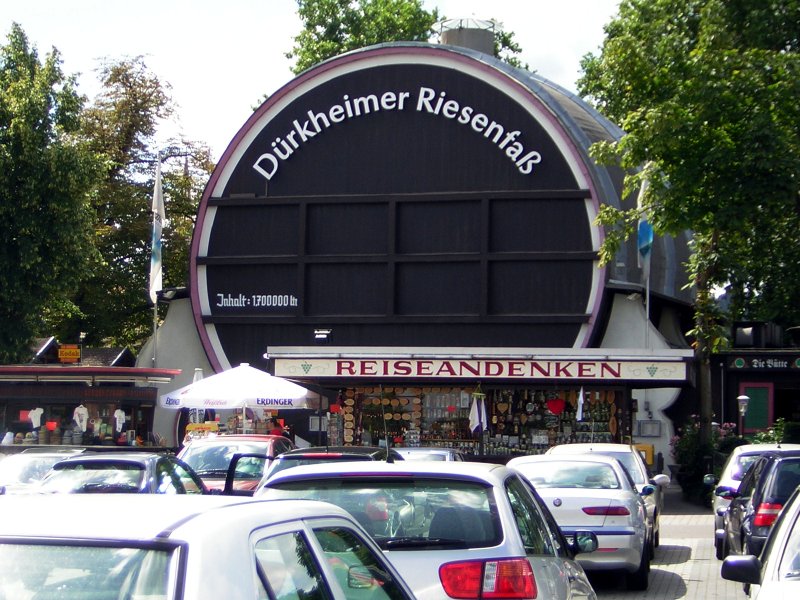
*Bad Durkheimer, Germany (in the Pfalz, which is part of the Rhineland-Palatinate and close to where I live) has a Wurstmarkt wine and wurst festival in September. Part of the national Oktoberfest fervor, but with wine. (And, I’m told, the wine is served in half-liter sized glasses, like beer. Ouch.) The Durkheimer Wurstfest is famous for being the biggest winefest in Germany. It bills itself as a nearly 600 year old festival. (The flyer should read “the best 570 years in sausage history”–that would show Texas!)
Bad Durkheimer
*Apparently, there are over 1,500 types of wurst available in Germany. It can be found on a German table at any time of day or night. It is the subject of festival and poetry. (Well, if Robert Burns can write a poem about Haggis, then sausage is certainly fair game!)
* Holzhausen, Germany boasts the Deutsches Bratwurstmuseum–yes, a wurst museum– which houses documents that can date the beginning of wurst from the year 1404. So there you go; plan your pilgrimage now.
**If this is the wurst post ever, I apologize. Consider the subject.
I’m sure there is some sort of Universal Karmic connection between my children’s behavior and the long history of border disputes between France and Germany. Just hear me out.
We made another jaunt over the border into France this weekend. (I’ll write more about that soon.) We live less than an hour’s drive from the border…but the border wasn’t always the border. In fact, given the history of the French-German border, I think they should just call it the Sorta-Borda, because (if history is any predictor) it will be shifting again any decade now. It’s like the San Andreas Fault in California—once the pressure builds, it will shift. It’s like my kids that way too…but more on that later.
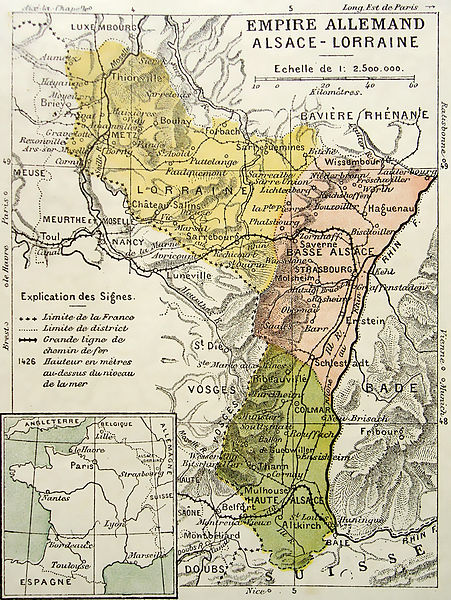
About the “borderlands” of Germany and France: I recall some long-ago history class lecture about the Alsace-Lorraine region of France being passed back and forth between German and French hands over the centuries. The cuisine, town names, and architecture make this blatantly obvious.
But I’ve only just learned that this geographic game of “hot potato” has continued into the 1900’s, and included some areas of the Rhineland-Saarland in Germany. In the 1870’s, the French lost much of the Alsace region—as far in as Metz—to the Germans, and it wasn’t returned again until 1918. On the flip side, my husband tells me that parts of the present-day German Saarland were only “re-Germanated” in the 1950’s.
About Snarky Siblings: This historical perspective makes me feel a little better about the “border disputes” that have been going on in our family since we moved into our Scooby Doo castle-house—we seem to be stuck in the “Hassle in the Castle” episode. The kids are constantly arguing about which room is better, who gets which room, who then lays claim to the room that falls between the two rooms, who gets dibs on the top floor of the house, etc.
Holy Crum! I think we are heir to two legacies here—the teen/preteen gimmees, and the French/German borderland disputes. That equals “land-grab squared,” and it ain’t pretty. Whatever developmental/hormonal forces are at play with my kids are ramped up by some sort of historical/geographic energy field that is beyond our control.
That’s how it seems… and it makes for the better story. Who’s to say that it’s not true? With a little parental intervention, our in-house border disputes seem to be slowly working themselves out. Let’s hope they hold more firm than their European historical precedents.


 Travels and Tomes: One Expat's Amblings and Ramblings