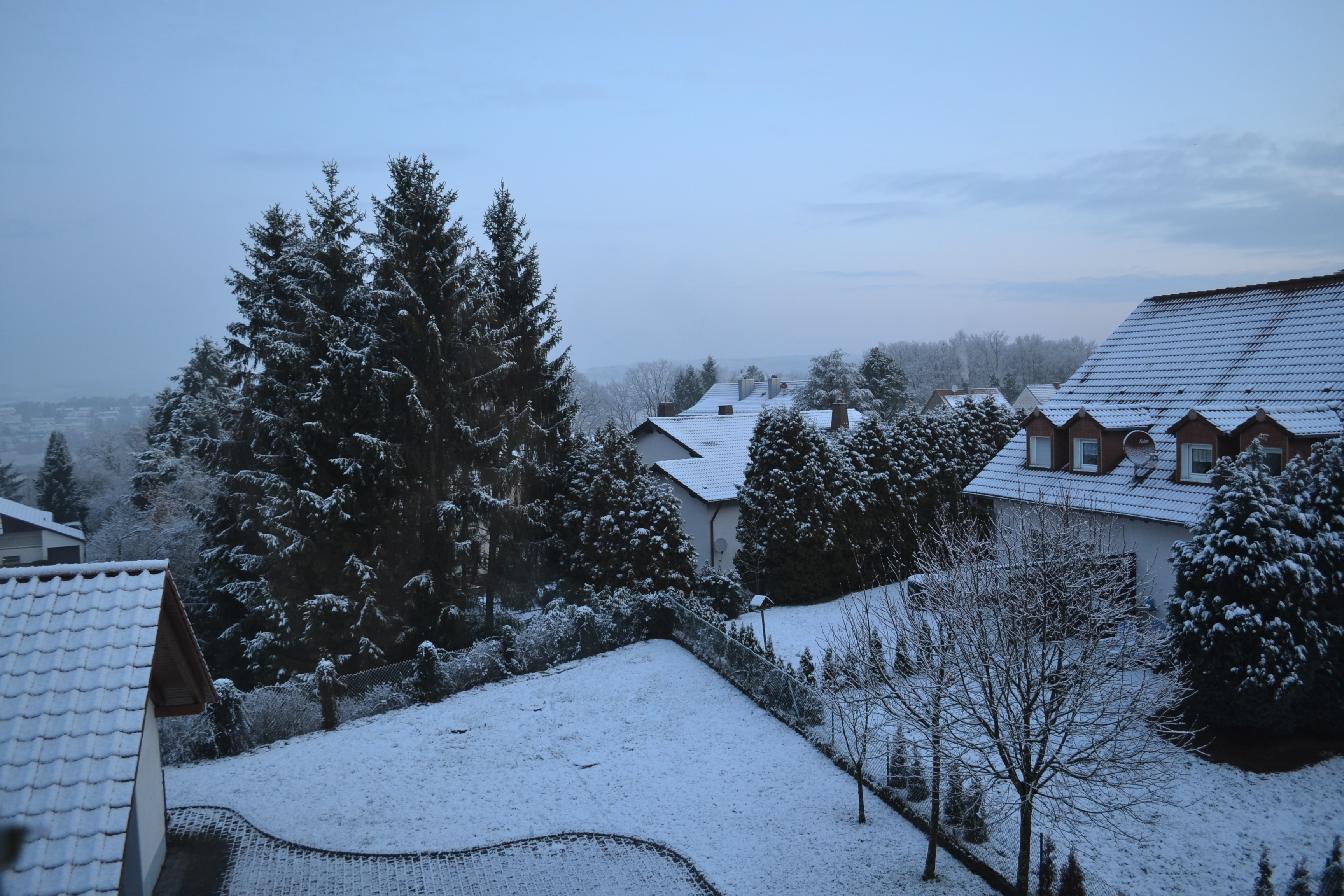
Tuesday morning: the snowy view over the hills around my house.
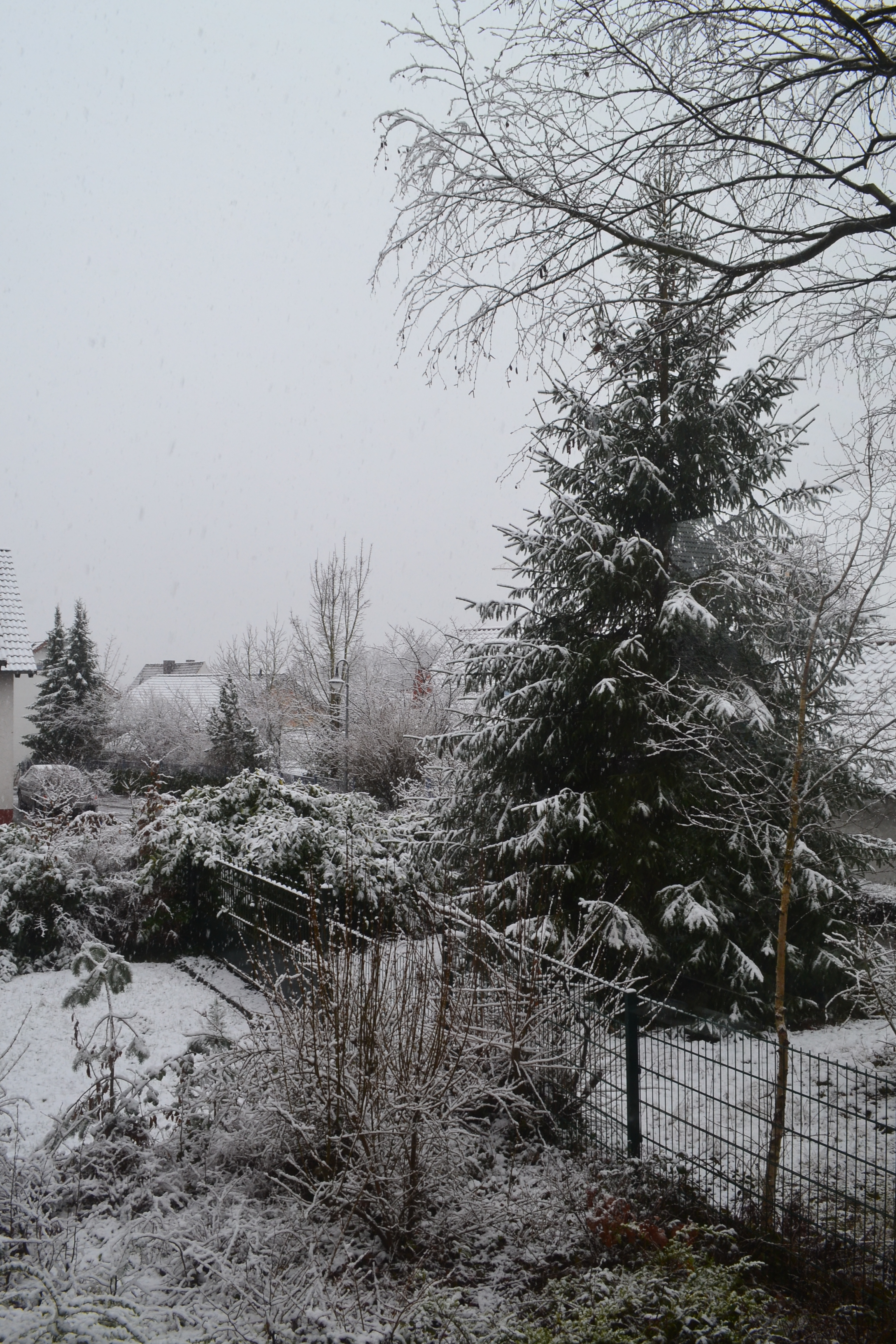
March has certainly come in like a lion to my corner of Germany. This past week saw snow showers almost every day. Each morning we’d wake up to a dusting, or much more (especially in the hills around us), and my kids would cross their fingers as I checked to see if their school would start late. No such luck for them.
The snow here is beautiful, and the way it sits on the feathery branches of the spruce and fir trees gives this area a fairy tale appearance. This is the view we dreamed of at Christmas, when the weather was just shy of balmy. But winter did finally come to us.
After a significant snow on Tuesday, we had a sunny day Wednesday, and, as I walked my dog that afternoon, I was reminded of a quote from Charles Dickens: “It was one of those March days when the sun shines hot and the wind blows cold: when it is summer in the light, and winter in the shade.”
So that’s where we stand now. The last patches of snow have melted in my yard, although I can still see some snowy fields on the surrounding hills. Next week the forecast promises 50 degrees in the afternoons.
I think the lion has roared his fill and is turning to leave. I’ll be glad to see March go out like a lamb.
Clearly no longer in-the-fields, St. Martin’s Church bustles with the energy of London. It sits just at the edge of Trafalgar Square, one of the busiest spots in a busy city.
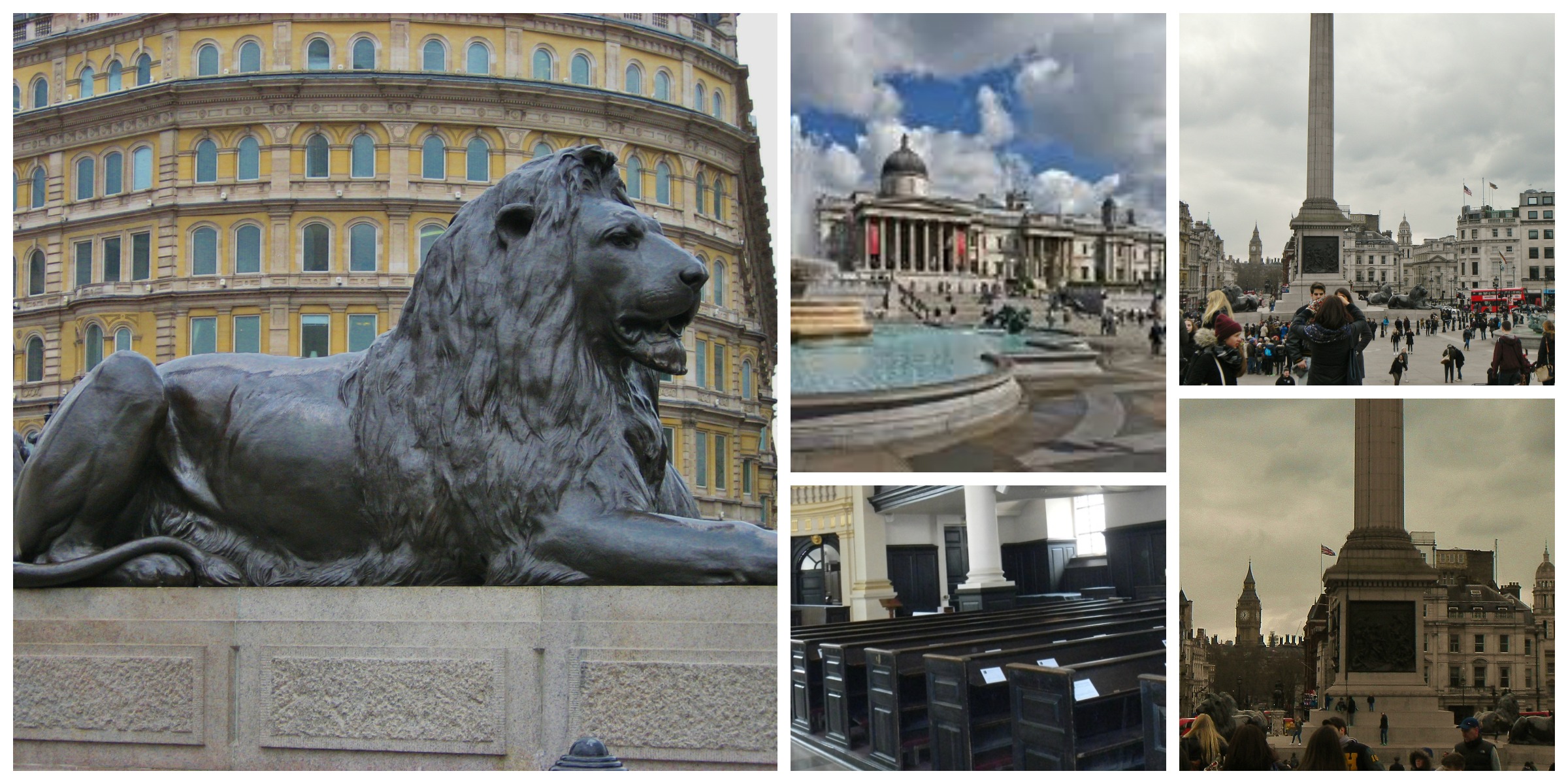
Trafalgar Square images
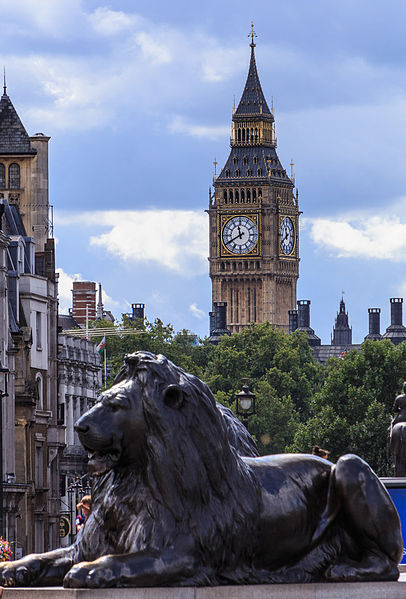
You’ll know Trafalgar Square from photos: Admiral Nelson’s column anchors its center, surrounded by those fierce lions, and the National Gallery sits to its back, while traffic circles all around. It is a manically busy spot, but also a fabulous place to catch the heart of London. If you look from the National Gallery to Nelson’s
Creative Commons image
Column, you see Big Ben in the distance. Then, if you walk to your right, you walk toward Buckingham Palace. The other direction, you’ll find the Strand (with its West End theaters) and St. Martin-in-the-fields.
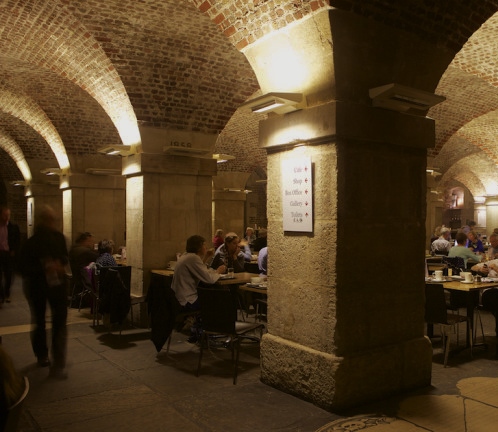
The beautiful stone church seems to have embraced its new “not at all in the fields, but at the heart of the crowd” identity very well. It is well known for its continued ministering to the city, and in so many ways. It has, historically, had a strong mission for working with the homeless. It’s also popular for its concert series. In fact, music is at the heart of much of St. Martin’s reputation– it’s Cafe in the Crypt is a hot spot for jazz lovers. The Cafe (open the week through for diners) has Jazz Nights on
Cafe in the Crypt
Wednesdays. If you like Swing, Dixieland, or R&B, this is the spot for you. I can’t vouch for the food, having not eaten there, but I can tell you that many of these “crypt cafes” in British churches are quite good. We’ve frequented dozens of them over the years, a few underwhelming and a few really spectacular. They are always worth a try–especially if a jazz night is thrown into the mix!
Earliest references to St. Martin-in-the-fields are traced back to records from 1222, but excavations have uncovered gravesites from about 400 A.D, when there was a Roman settlement in present day London. (At which point, this area would certainly have been “in the fields” and far from the small town’s city limits.) The church has undergone many changes through the centuries–some dramatic.
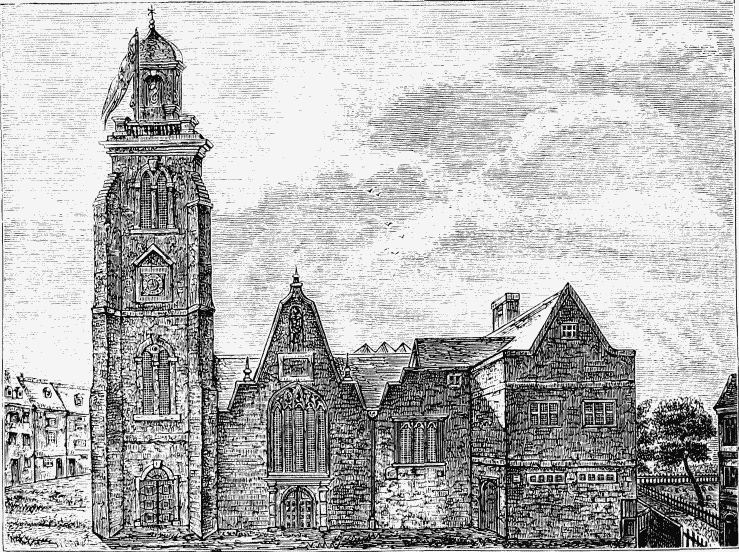
From a JT Smith print, published 1808
As the fields turned to city sprawl, Henry VIII extended the parish of St. Martin’s and made changes to the structure. The church survived the Great Fire of London (1666, I think), which was no small feat. Still, the old facade was pulled down in 1721 and the new marble structure was put into place. I’m a fan of the “new” neo-classical church, but it still seems a shame to me that a church could survive the fire that leveled so much of the city, just to be pulled down a few years later. But there were reasons for that–structural decay chief among them . . . and who can argue with that?
St. Martin-in-the-fields as it now stands
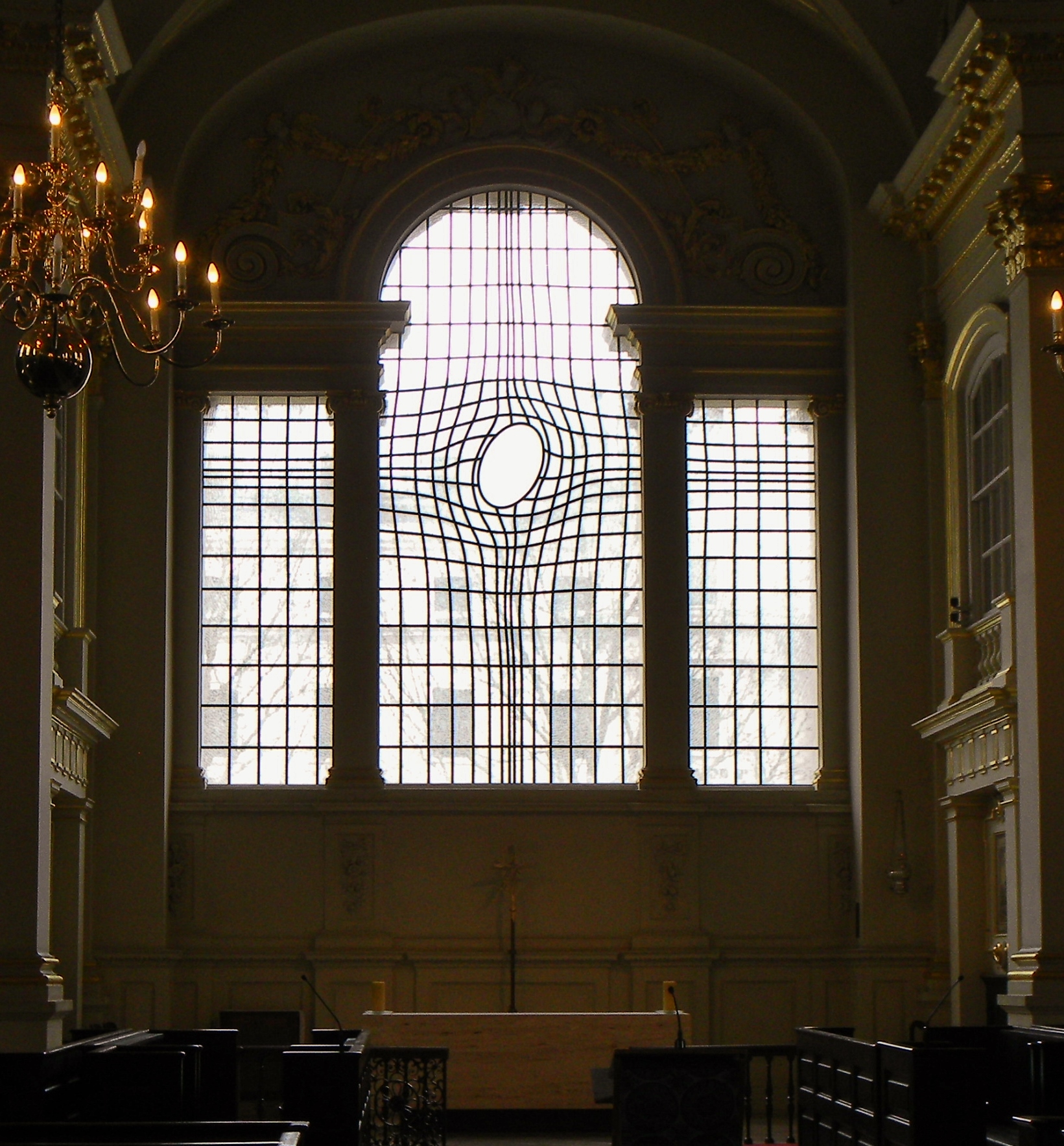
For us, St. Martin-in-the-fields was a great find as we meandered from Trafalgar Square toward the Strand and Covent Garden. We didn’t take the time to learn much history or eat in the crypt. We didn’t stumble into a service in progress (which would have been nice), but we knew the name and were curious to just have a look inside. And what we found made us curious to know more. We opened the doors of the old church, expecting to see what we usually see, but were greeted, instead, with a uniquely bright take on church windows. The East Window, sat directly behind the altar area, and the visual centerpiece of the church, looks like this:
It’s modern, but traditional at the same time. It’s so spare, but still manages to look like a cross. And the light it lends to the space is fantastic. You see something like this in London, and you immediately think the windows must have been bombed out in WWII, and apparently that was the case. And then you think, this window almost looks like it’s being hit with a shock–of sound or schrapnel– something that bends its fibers. And yet, it’s beautiful.
And then, if you are a slightly nerdy English major, like me, you hear the poetry of Yeats: “Things fall apart/The centre cannot hold.” The window appears to have a gapping hole at its center, and Yeats’s post WWI poem conjured the same image. But here, in St. Martin’s, the fantastic ovoid center holds. An entire world war later, and the center holds. With the bustle of this great city, and the enduring attacks that humans perpetuate on each other, and the center holds. In a community of faith, in a busy corner of tourism, in a jazz hot spot, with all of the sacred and profane met in this one thriving building, and the center holds, despite the evidence of warping and instability on its edges.
And this is why I love St. Martin-in-the-fields. Her facade has withstood fires, only to decay and be rebuilt and stand still. Her fields have given way to asphalt and traffic, but still a sort of urban beauty. Her focal point, so often anchored by predictable images in stained glass windows, has warbled, has warped, has shed its coloring, but let in more light, and, yes, it has held.
To recap from Part One: “First, the water came up to meet us. . .
. . . and then we went down to meet the water. Or, at least, my husband did.”
Before we traveled to Venice, we did a little research. We knew enough to ask about the acqua alta, to ask if we should pack high boots. Not to worry, we were told by our hotelier, this is not likely to be a problem while you are here. And, truly, there was no problem with the acqua alta– it came, it saw, it retreated quickly without particularly hampering our plans or wetting our socks. Our hotelier did not steer us wrong. He wasn’t counting, however, on my particular family’s foibles.
And that is a long and perplexing list of foibles. . . so before explaining our second run in (or, dive in, as it were) with the water of Venice, let me pause to tell you about our lovely hotelier and his cozy villa.
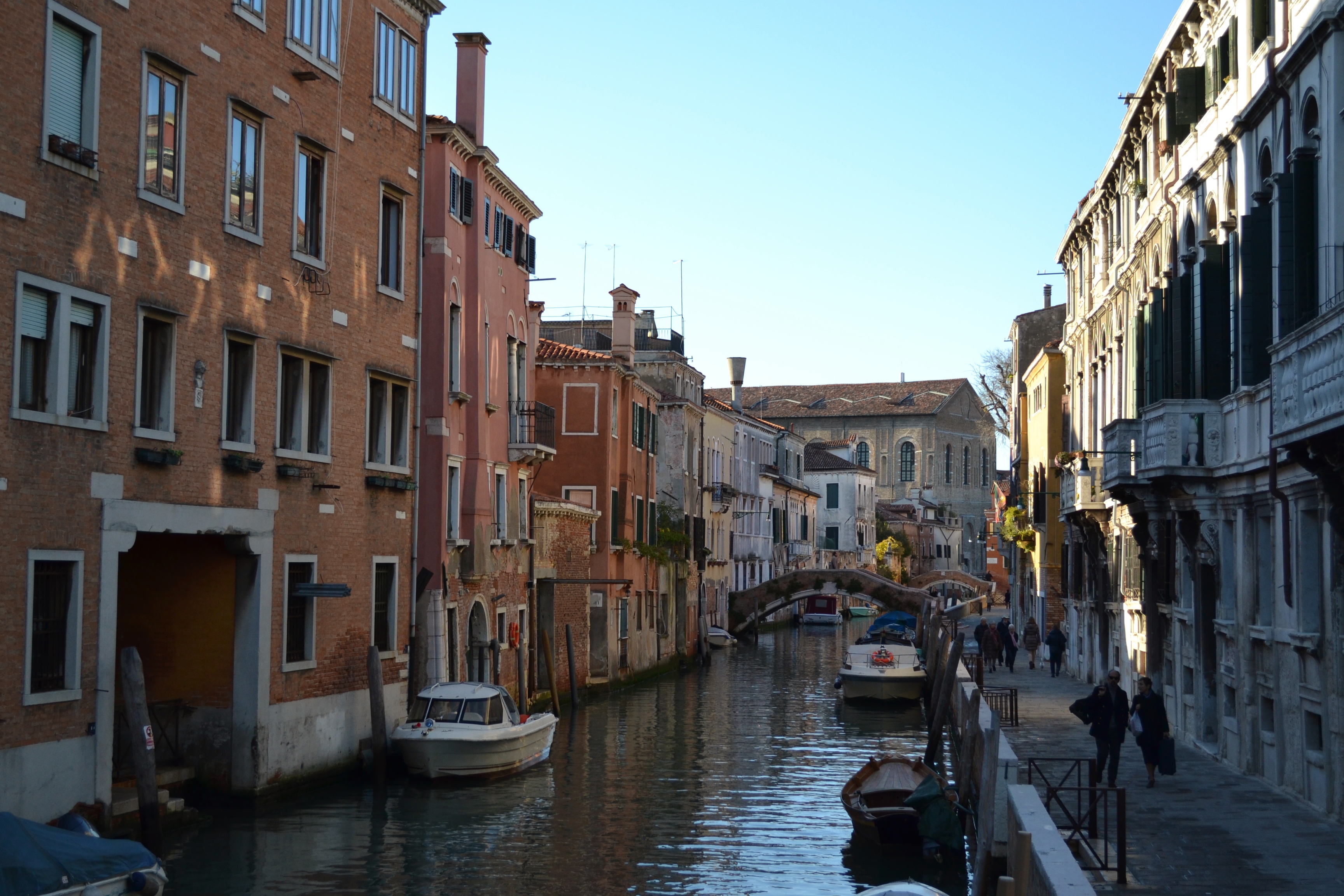
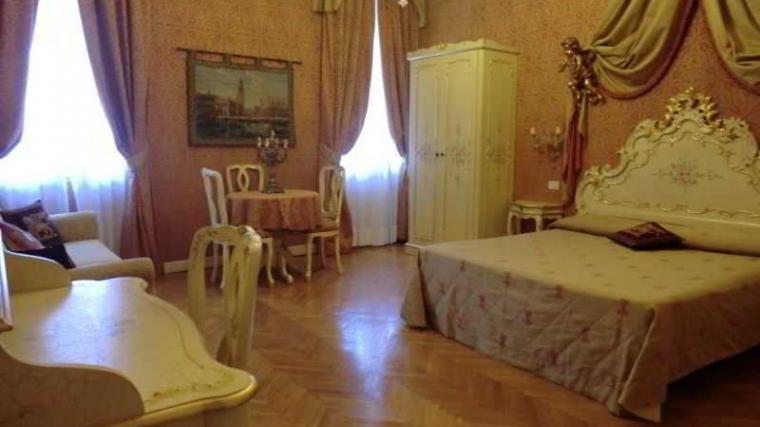
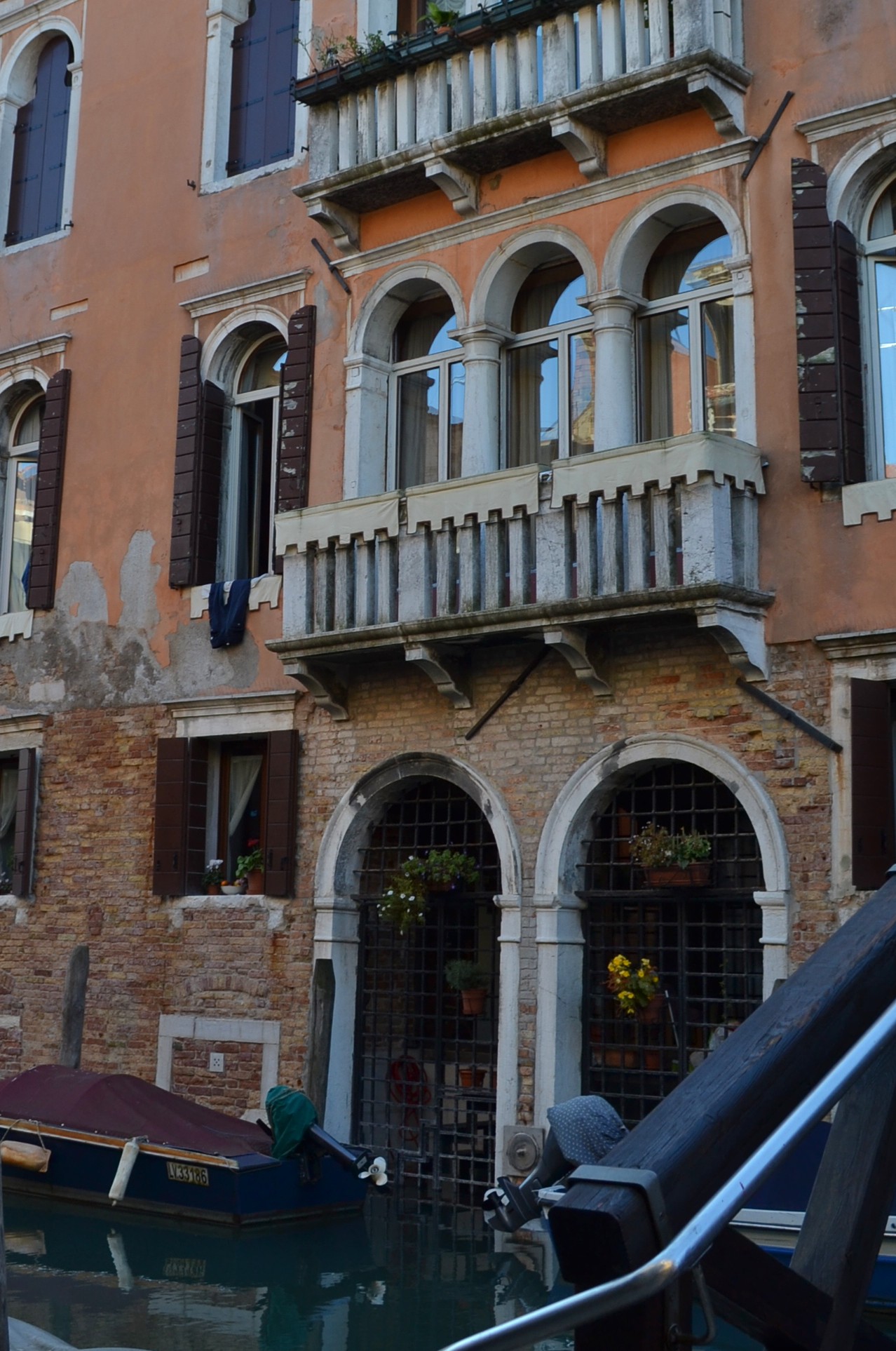
We stayed at Locanda Ca Le Vele, a charming, small hotel in an old Villa, sat right on a canal and just 3 minutes walk from the Grand Canal. The best of both worlds, then: it offered quiet charm and a convenient location.
There were only six rooms/suites to the hotel, and breakfast was served in our rooms each morning. We thoroughly enjoyed the old world charm of the Villa, and would recommend it to anyone traveling to Venice.
Now, whether our hotelier enjoyed our company as well, I can’t say. We were, as we generally are, quiet and respectful guests. With the exception of one incident.
One hell of an incident.
After a day of walking and boating around Venice, my son and I headed back to the hotel, while my husband and daughter decided to stop for coffee before walking home.
They weren’t far behind us, and we’d just kicked off our shoes and gotten comfortable at home when my daughter came flying through the door to our suite in a frantic, wild-eyed state. She was bent over, gasping for breath, and trying to communicate, but the sounds she was making didn’t translate into any language known to man. In thirty seconds time, my blood pressure went through the roof . . . until she finally spit out the words, “It was the best thing that’s ever happened to me!” Followed by a barrage of laughter.
A few more gasps of air later, and Kate was spilling a few details– namely that her father had fallen into the canal and was standing outside of the hotel in dire need of help and in a sorry, soggy, and silty state. Unfortunately, she left out the adjective “smelly,” because that’s what I should have prepared myself for when I went down to meet him. The silt of centuries in the Venice canals also means the stench of centuries will cling to anyone who wallows in those canals.
Ugh.
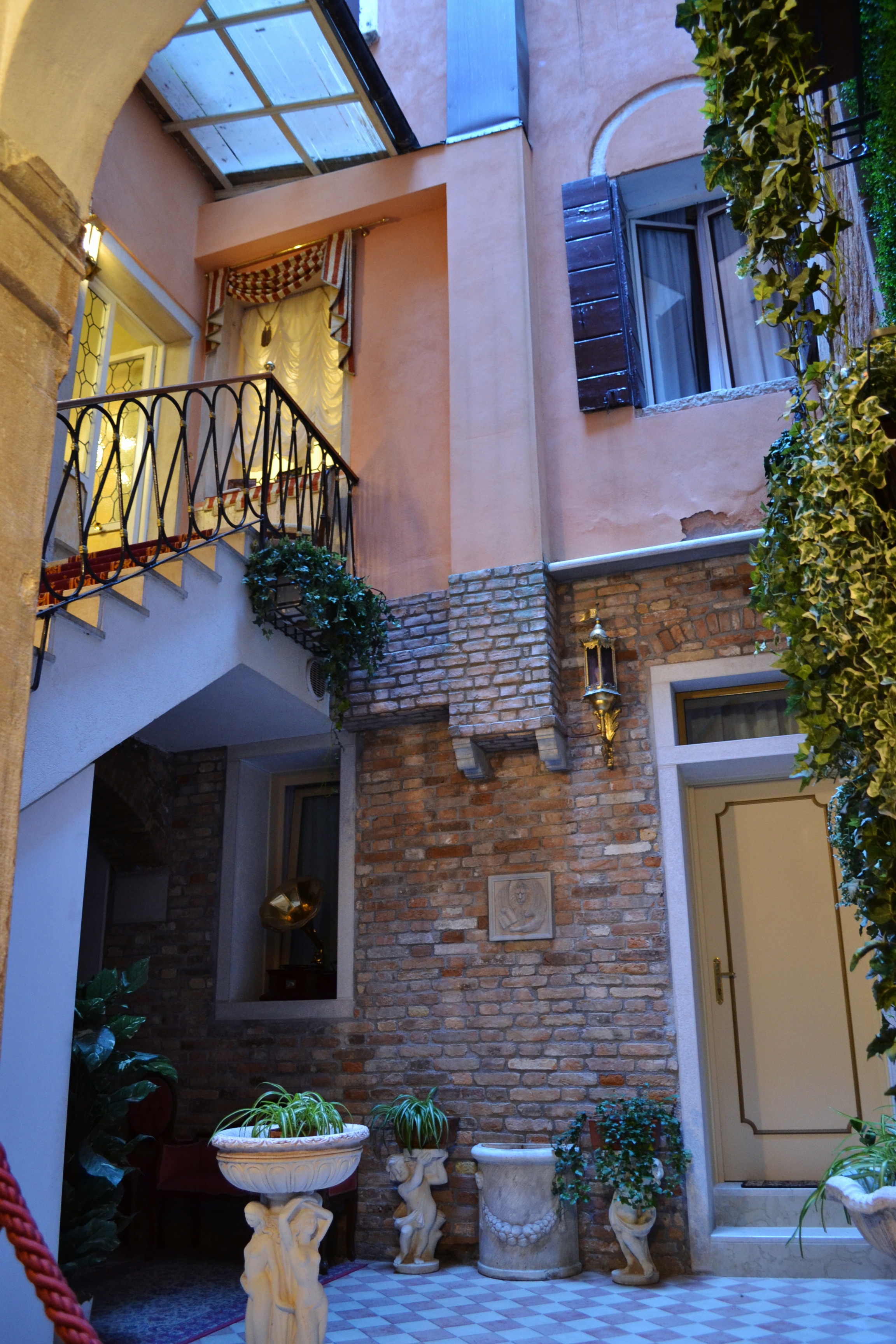
The stairs to our suite.
But I didn’t know about the stench yet, so I left my daughter, who was still doubled over with laughter, and ran down the stairs to help my soggy husband out.
The stairs led to an open air courtyard and the front door of the Villa. I was moving at a fast clip, so the smell didn’t hit me until I had stopped in front of my soggy, muddy husband. (Dripping sludge from the waist down, and his face contorted in disgust, he looked less like my husband and more like the creature from the black lagoon . . .which he kind of was at this point).
My senses, and sensibilities, went into overload. I wanted to burst out laughing too, but the smell–good Lord, the smell! I began retching. Violently retching. I really expected to lose my lunch as James handed me his filthy, muddy boots.
This didn’t go over well with my husband. After all, HE was the one covered in the stuff and HE wasn’t throwing up like me. NOR was he doubled over with laughter, like my daughter. (In fact, it would be some time before he saw any humor in the situation, whatsoever.)
This wasn’t an argument I cared to join (even if I’d been able to stop retching long enough to utter a word.) So I pivoted on my heels, holding the muddy boots out at an arm’s length, and gagged my way up the stairs–passing the front desk along the way. I’m sure the man at the desk was disheartened by the afternoon’s procession: first, my daughter doubled over with hysteria; then me, hauling something muddy and disgusting and making all of the motions (and noises) of someone about to vomit; and then the centerpiece of the parade–my husband, wet and filthy muddy from the waist down, smelling rotten and looking not the least amused. (You can dress us up, but you really can’t take us far before something like this happens . . . it’s inevitable. Other than that, we’re a nice family.)
But the poor desk clerk wasn’t done with us yet. My husband got into the shower, clothes and all. Having no laundry facilities, he figured he’d start with the outer layers and scrub all the way down, bit by bit, sort of like a wet archeological dig down to the original surface–and he quickly realized that the mud was so bad, he’d need extra towels to scub it away. He explained this to me at high decibels, since I wouldn’t come into the bathroom with him (have I mentioned the stench?), but I would have to be the one to go get more towels while he continued the scrub down.
Jeans hanging out of our hotel window to dry.
So I went for the towels. An easy task . . .for someone who can communicate coherently . . . which I couldn’t at this moment. The hysteria that had taken over my daughter a few minutes before had now hit my son and me too, and we were all doubled over with laughter.
But I did my best to request more towels. I went to the hotel desk and, between fits of laughter and gasps of breath, tried to form coherent sentences about our situation. To a man whose English was sketchy to start with.
He probably thought we’d all taken a dive. . . into a barrel of wine. But he did his best for us, and handed me a large stack of newspapers.
Newspapers? Well, beggars can’t be choosers and hysterical laughter doesn’t lend itself to subtle communication–so I took the newspapers and ran.
It was something.
The scrub down continued in our room, and, eventually, we laughed just a little less and my husband fumed just a little less, and the full story came out.
They were almost back to our hotel when James decided that he wanted to see how far the water had receded from earlier in the day (when the acqua alta had spilled into the streets). So, he explained with psuedo-scientific precision, he went to the edge of the canal behind our hotel and began counting the stairs down into the canal. Apparently walking down them as he counted. Great idea.
“One, two, thrrrr…,” and, oops, down he went after hitting the muddy, wet third step. (Who would have guessed that a recently flooded canal step could be so slimy?)
He slipped entirely into the canal–waist high– while my daughter had continued to walk down the street. Hearing some commotion behind her, she turned to see her dad flailing. Of course, she ran to help doubled over in a frenzy of laughter, while two elderly Venetians, cigarettes dangling from their lips, pulled him out of the canal (all the while, he’s explaining loudly, “I slipped, I slipped!”–just in case they hadn’t noticed.) And there was also some detail about him trying to save the KinderEgg chocolate that had floated out of his coat pocket and was lazily drifting down the canal. Sadly, it was too far gone. (And, I’m asking you, would either of my children have eaten it with canal stench rising off of it? No thanks.)
With my husband cleaned off, the room beginning to air out, and his pants hanging out of the elegant window of our room to dry, we gathered our wits and called home to family. It was the American Thanksgiving holiday, and we had plenty to be thankful for. Not least of all, that James had made such a splash in Venice and “it was the best thing that ever happened!” to my daughter.
For many years now, Venice and Prague have been on my short list of travel destinations. A list that was thwarted back in 2008-2009, because of unexpected work obligations. That was supposed to be the year of Prague, the year of Venice, the year of far flung travel adventures. But, best laid plans and all that.
So 2015 turned out to be the year of Prague and Venice, and many towns in between. I wasn’t going to be thwarted this time around: come Hell or high water, my trip to Venice was going to happen.
Well, I’m happy to report that Hell stayed at bay. High water did, however, make an appearance.
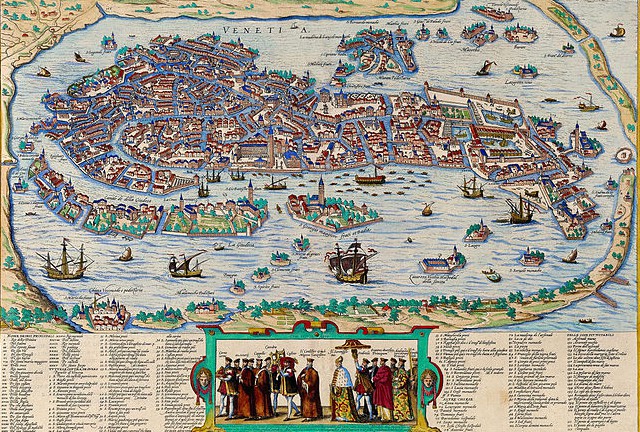
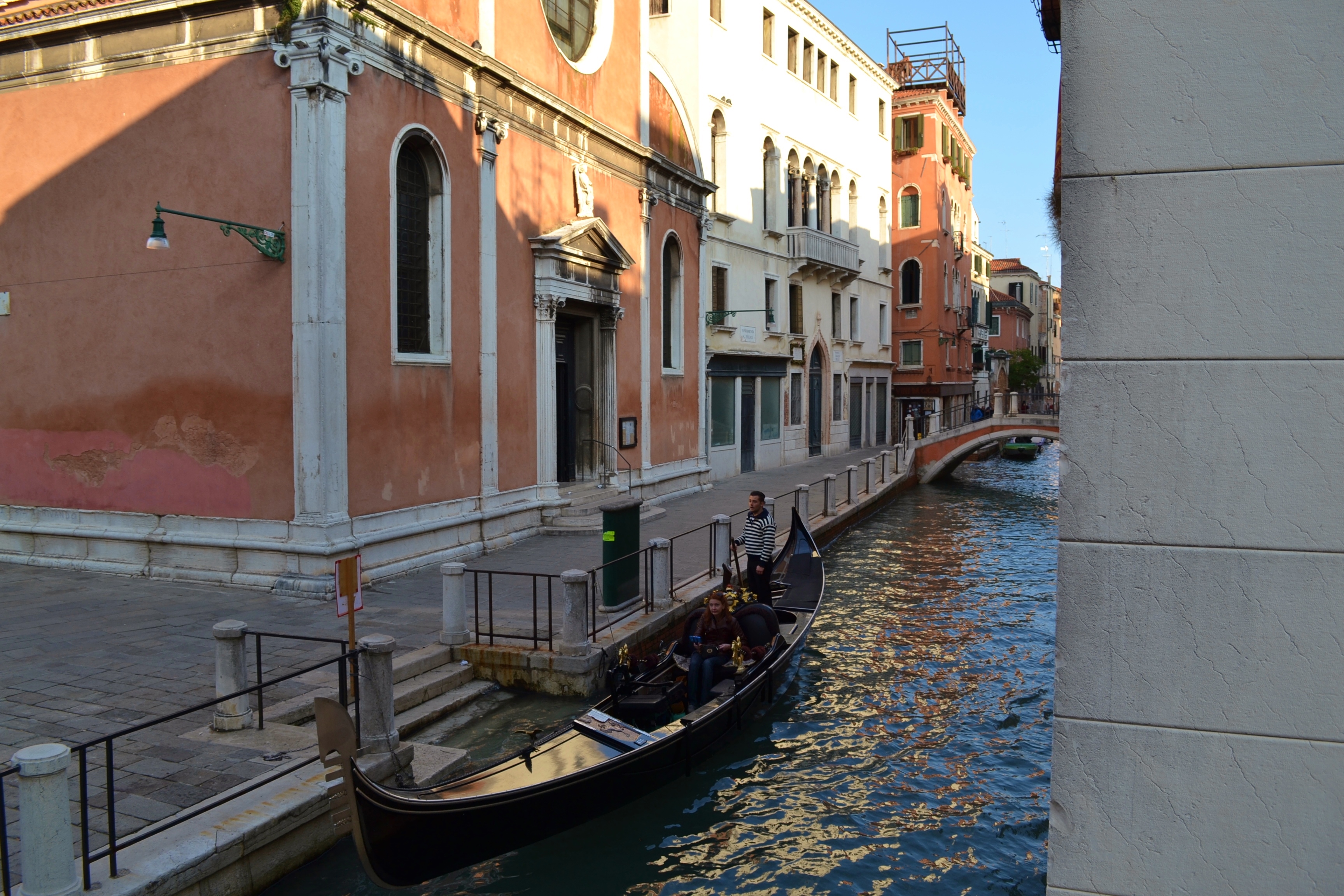
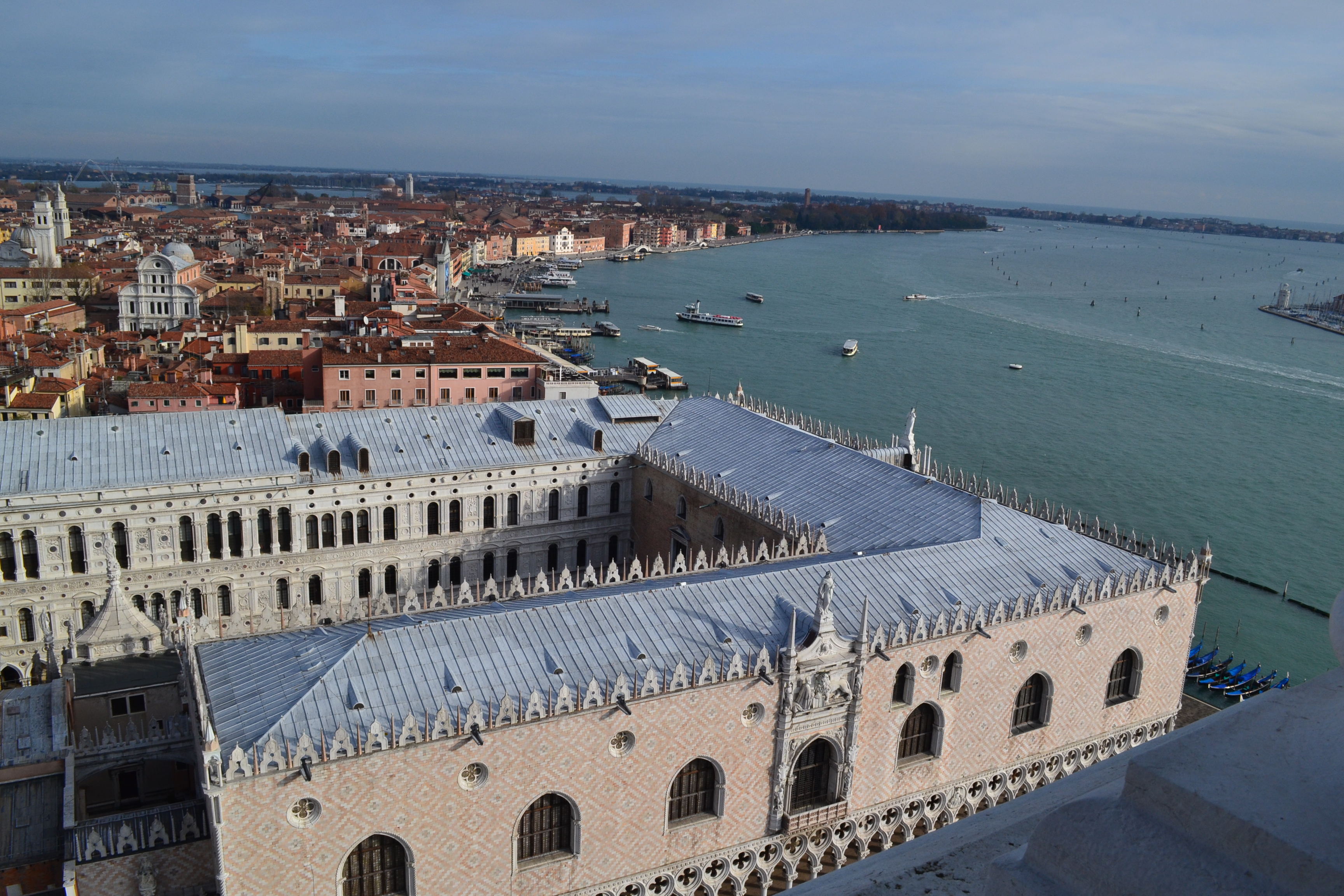
Venice is prone to this problem, especially in November and December. Seasonal winds, high tides, and full moons all play a hand in this, but, you know, the island of Venice is in a lagoon. The original settlers of Venice moved to the marshland from the mainland to get away from the constant threat of marauders. They knew no one would bother them in the middle of the marsh–no one would make the effort. Check out the old map above–note that water is not only all around Venice, but it snakes its way through every “street” of Venice. In fact, water actually IS the roadway of Venice. No cars, just boats.
The “streets” of Venice.View from St. Mark’s Campanile (bell tower) over the Dogges Palace and out to sea.
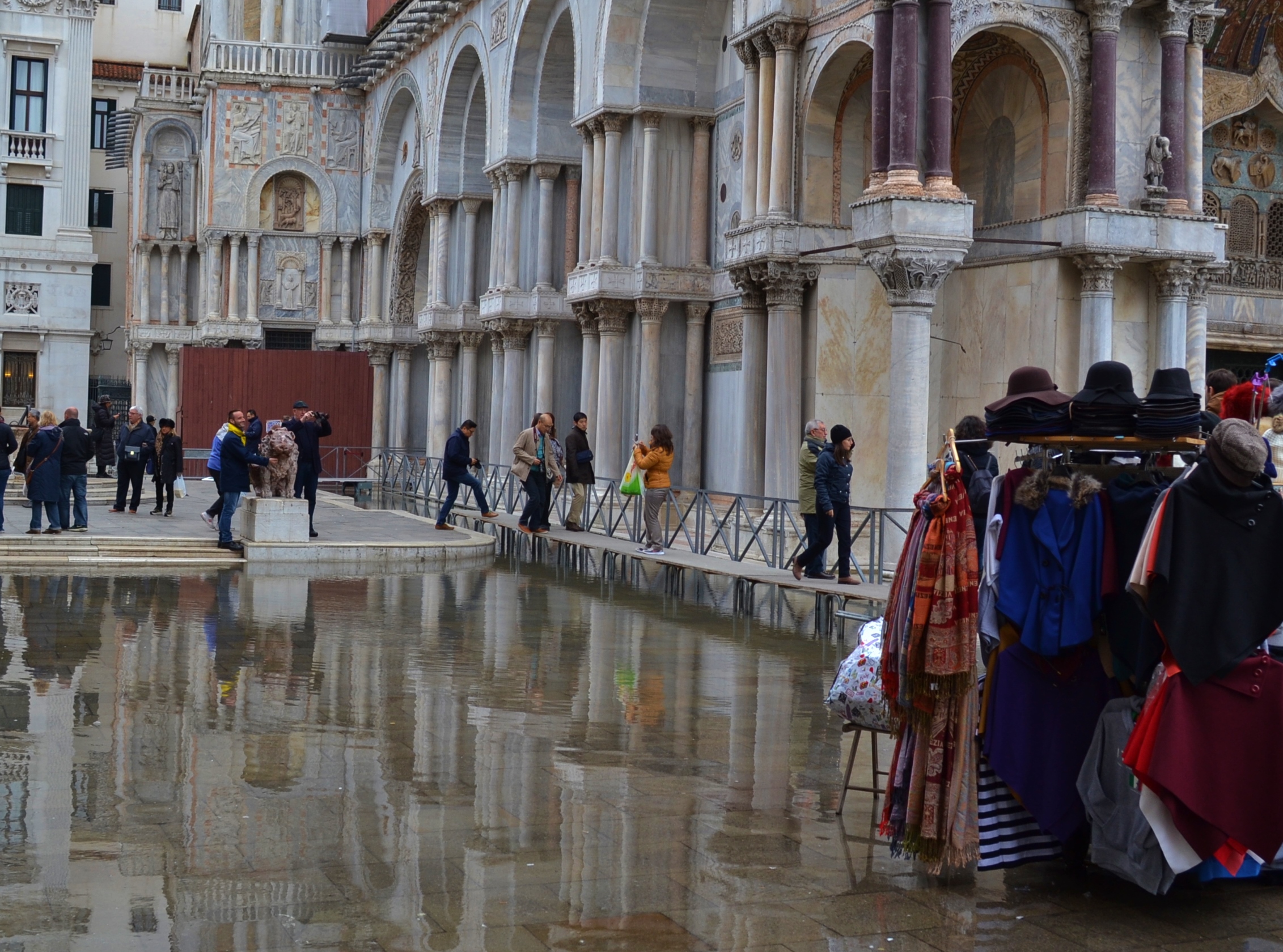
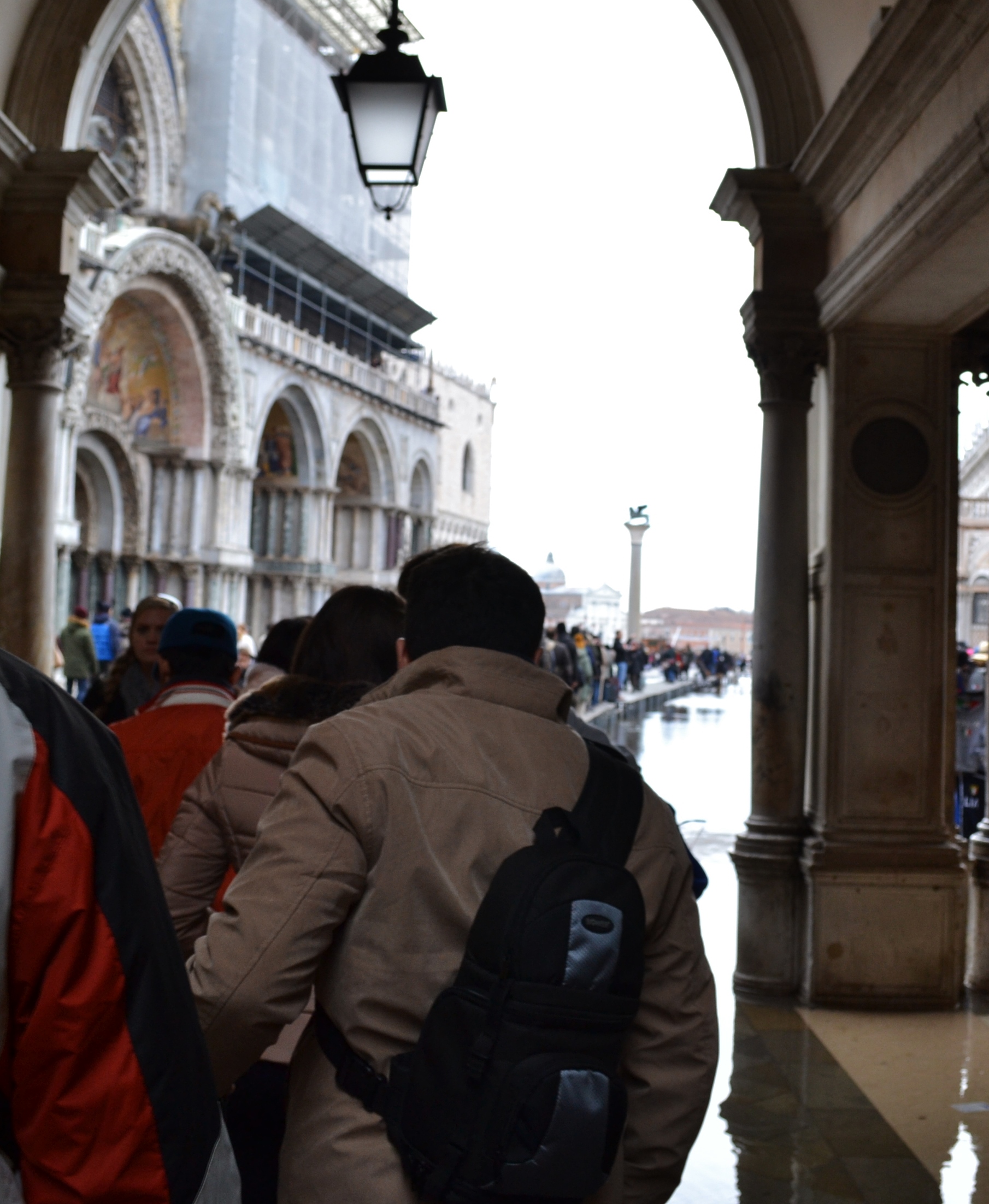
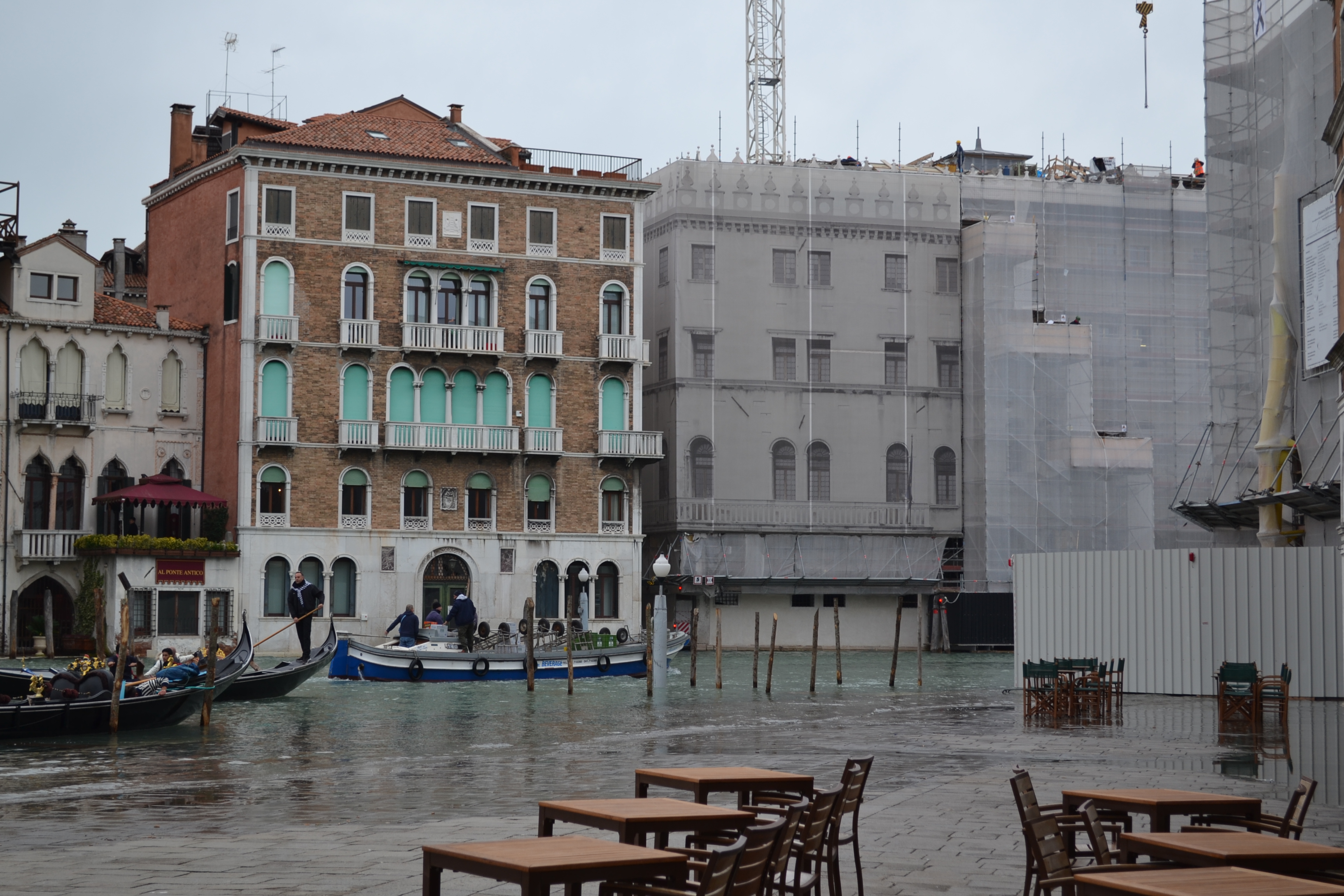
Obviously Venice has flourished and the marauders were kept at bay, but the sea must be built over the top of and constantly drained out. And when the Acqua Alta comes, raised walkways are put in place and life goes on.
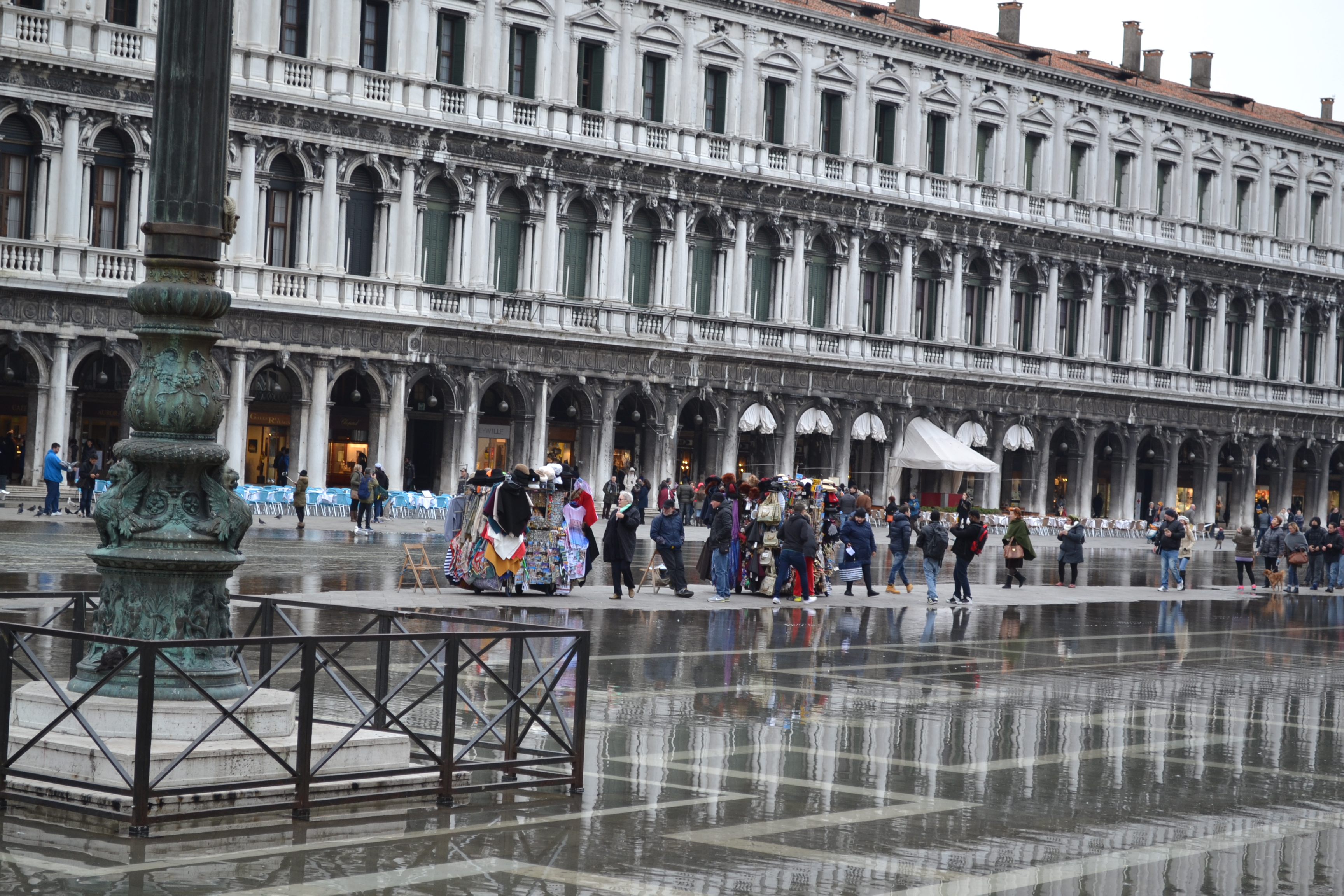
Pedestrians in single file, walking on “risers” above the flooded walkways.Cafe tables–plenty of open seats, if you don’t mind wet feet!
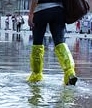
Makeshift waders in Venice’s acqua alta.
Even St. Mark’s Cathedral isn’t spared. In fact, maybe especially St. Mark’s isn’t spared. Piazza San Marco is right by the water, so it’s a first stop for the flood waters. The water seems to wash in and linger like an old friend with the locals–and the locals greet it as such. The tempo of life is not much paused: merchants continue their sales as best they can, in boots and waders, while tourists whimper and moan, and eventually just get on with it, taking their cue from the locals.
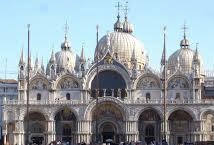
Any port in a storm? Any dry strip in a flood! Piazza San MarcoSan Marco Cathedral
Inside of the Cathedral, the tile floors were beginning to lap with seawater on the morning of our visit. The flooding wasn’t bad this time, but it’s clearly a frequent enough event. The beautiful tile floors of the cathedral are far from level–they are wavy like the sea itself. Whether that’s from years upon years of flood waters spilling through the doors, or from the foundation being built on sinking marshland and bolstered by wooden pilings under the soil I don’t know (every structure in Venice has underlying wooden stakes sunk into the ground/marsh below it to stabilize the building). I will say that I’ve never seen such a wavy floor before . . . but I was absolutely in awe of it. It seemed nautical, like the city itself–as if the very character of the sea, its rise and fall, its most essential quality, was purposefully captured in tile and stone for Venice’s magnificent cathedral. It was beautiful.
It was also a reminder of the absolute impossibility of erecting such a massive cathedral in the middle of a marshland . . . and yet, here it is, still standing all these centuries later. Not swallowed by the sea, not sunken in the sludge. I don’t care what your religious affiliation is (or isn’t)–this is the sort of sight that makes you burst into a Hallelujah chorus. They must have been brilliant architects, engineers, and laborers to have ever built this place! (Hallelujah!) They must have been absolute mad men to have ever thought that this was a good idea! (Hallelujah!) And we must be very lucky travelers to have the chance to come and see this, knowing that there is just no way it can live forever under these circumstances! Unless, perhaps, it can.. . because, so far, it has. (Hallelujah!)
So there you have it–our first brush with high water in Venice. First, the water came up to meet us. . .
. . . and then we went down to meet the water. Or, at least, my husband did.
But I’m getting ahead of myself–that’s a story for part two of this post. Maybe next week.*
If you are interested in a short “Wonder List” video on Venice’s Acqua Alta, click here.
*My daughter and I are about to fly off to catch London Fashion Weekend, so there may be radio silence for a while. But I’ll be back, with photos of London, and a “part two” post about Venice’s Acqua Alta. Until then, Ciao!


 luck for them.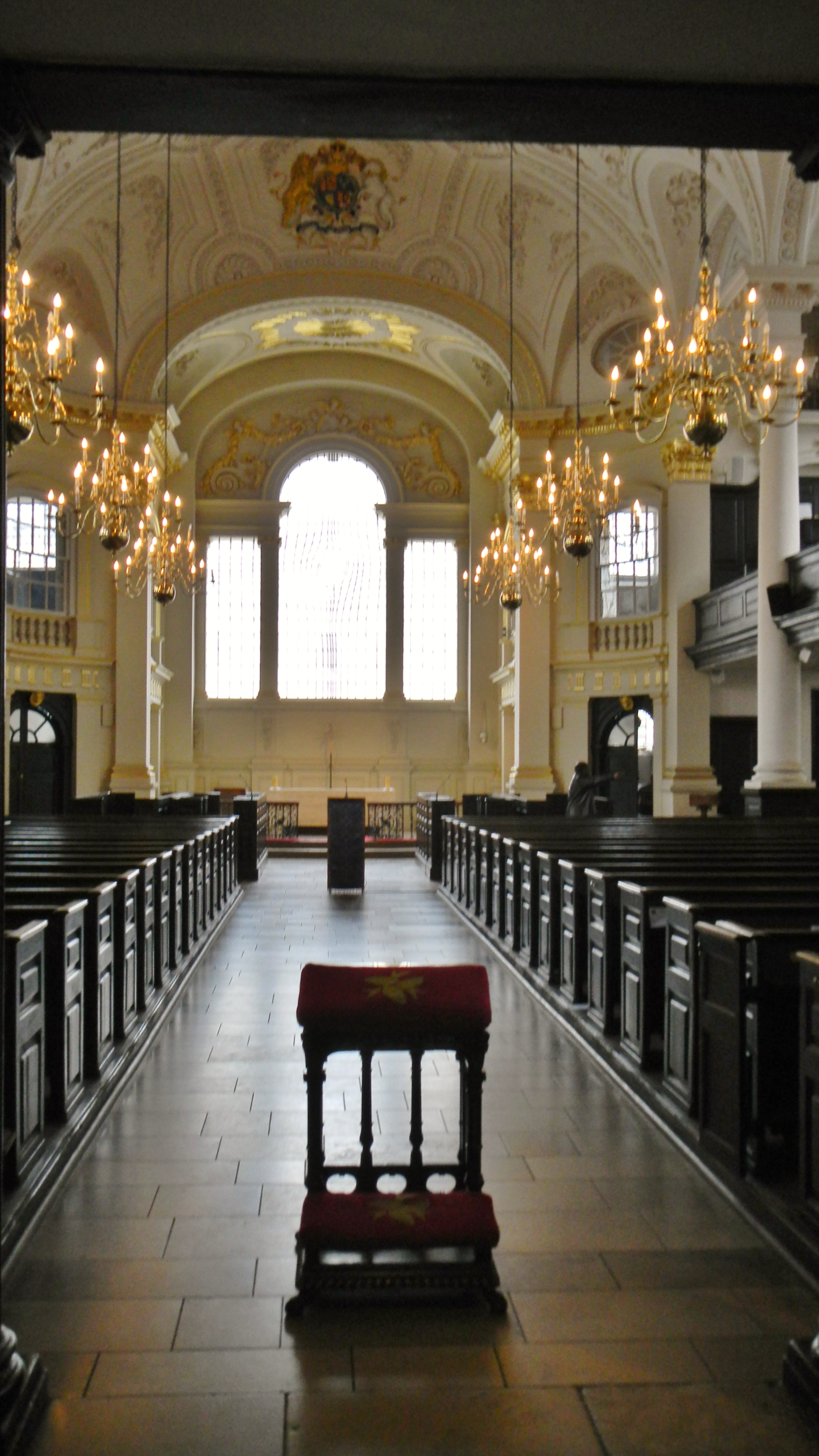


 Travels and Tomes: One Expat's Amblings and Ramblings